
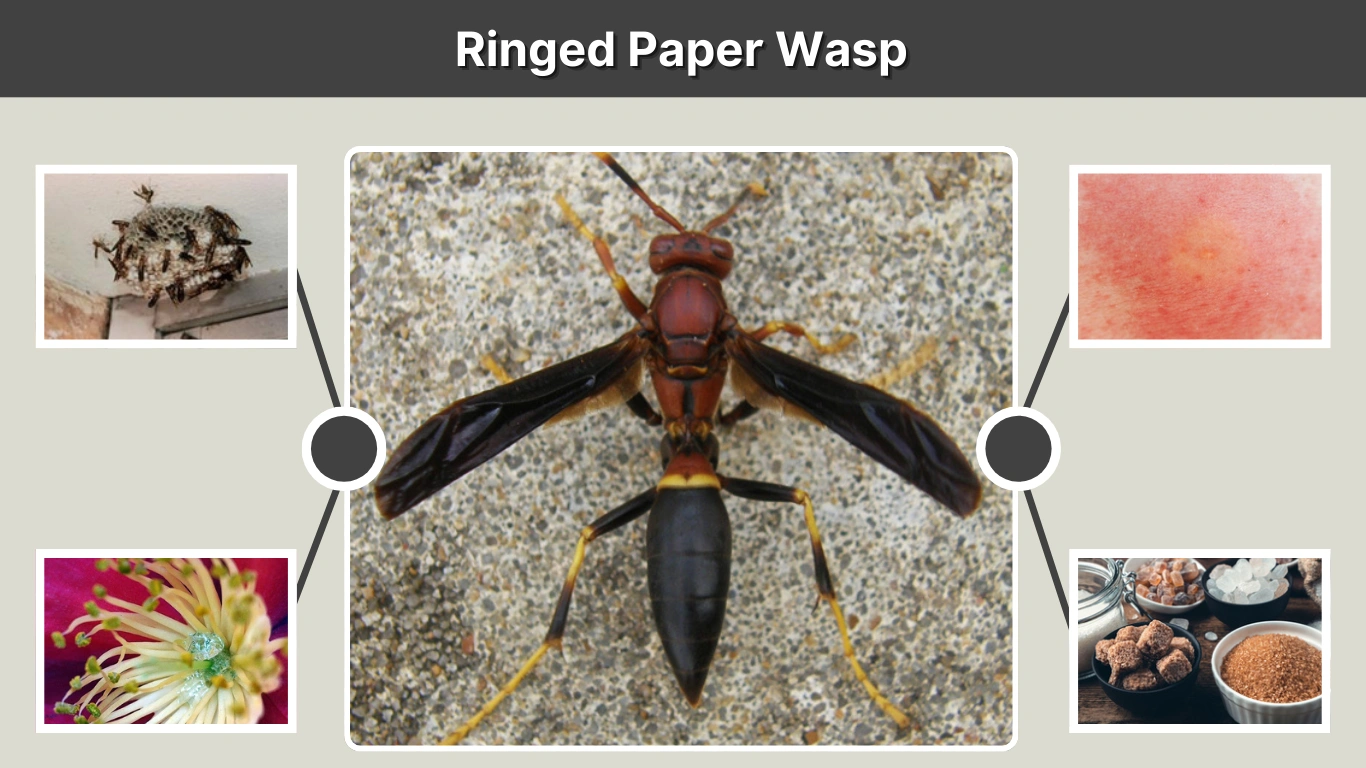
The ringed paper wasp (Polistes annularis) is a fascinating insect belonging to the Vespidae family. Known for its striking coloration and distinctive nesting behavior, this wasp is commonly found across parts of North America. Like other paper wasps, it plays a dual role in ecosystems—acting as both a predator that helps control pest populations and a pollinator that aids plant reproduction. While many people view wasps with fear due to their painful stings, learning more about the ringed paper wasp reveals its ecological significance and unique behaviors.
Physical Characteristics

Size
Ringed paper wasps are considered medium-sized compared to other wasp species. On average, their body length ranges from 16 to 20 millimeters (0.6 to 0.8 inches). Females, which include the queens and workers, tend to be slightly larger and more robust than males. Males, though smaller, can often be recognized by their curled antennae, which differ from the straight antennae of females.
Color & Markings
The coloration of the ringed paper wasp makes it easy to identify. Their bodies are primarily reddish-brown to black, with distinctive yellow bands or rings along the abdomen, giving them their common name. The wings are typically a smoky brown or slightly translucent, adding to their unique appearance. These markings not only serve as a form of warning coloration to potential predators but also make them stand out from other closely related wasp species.
Habitat & Distribution

Ringed paper wasps are native to North America, especially abundant in the eastern United States. They are often found in rural areas, woodlands, gardens, and even suburban neighborhoods where conditions are favorable for nesting.
Nesting Preferences
The nests are usually built in sheltered outdoor spaces, such as:
- Under roof eaves or porches.
- Tree branches and shrubs.
- Barns, sheds, and other structures.
Their nests are open and umbrella-shaped, made of a papery material created by chewing wood fibers mixed with saliva. Colonies are relatively small compared to other social wasps, often housing only a few dozen individuals.
Behavior & Diet

Diet
Ringed paper wasps play a vital role in maintaining ecological balance through their diet. Adult wasps primarily feed on nectar and other sugary substances, making them occasional pollinators. However, they are also skilled predators, especially important for controlling insect populations. They frequently hunt caterpillars, flies, and other small insects, chewing them up and feeding the protein-rich pulp to developing larvae inside the nest.
Social Structure
Like other paper wasps, they live in colonies with a social hierarchy. A single queen establishes the nest in early spring and lays eggs, which hatch into workers. These workers then expand the nest, care for the larvae, and protect the colony. Toward the end of the season, new queens and males are produced, which mate before the colony naturally declines in winter.
Activity Patterns
Ringed paper wasps are most active during the warmer months, especially in spring and summer. During this time, they are busy foraging, nest-building, and rearing brood. By late fall, the colony dies out, with only fertilized queens surviving to overwinter and establish new nests in the following year.
Sting & Defense Mechanism
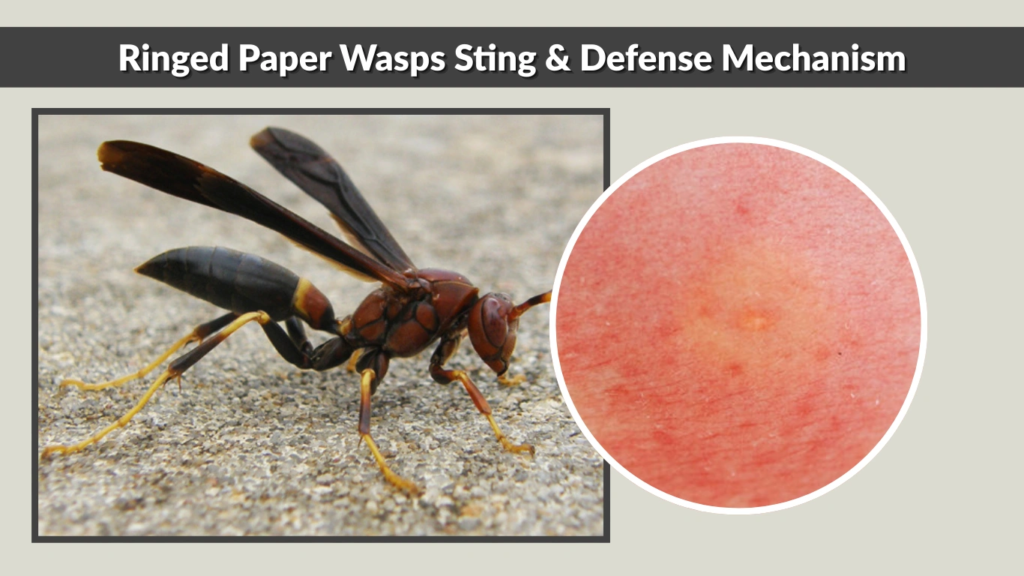
The sting of the ringed paper wasp is often the main reason people are wary of them. Like other wasps, they use their stingers as a defense tool rather than a hunting weapon.
- Pain Level: Their sting is sharp and painful, though generally less severe than that of hornets or yellowjackets.
- When They Sting: Stings usually occur when humans or animals accidentally disturb their nests. They are not naturally aggressive and often avoid confrontation unless threatened.
- Allergic Reactions: For most people, the sting results in localized pain, swelling, and redness. However, individuals allergic to wasp venom may experience severe reactions and should seek medical help immediately.
Understanding their defensive behavior can help people coexist with them while minimizing risk. Avoiding nests and keeping a safe distance is usually enough to prevent stings.
Identification Tips
Spotting a ringed paper wasp is relatively easy once you know the key features. Their reddish-brown body with yellow rings makes them stand out from other paper wasps, which are often darker or more uniformly colored. Their nests are also distinctive—umbrella-shaped with open cells—and usually suspended in sheltered outdoor spaces. Another way to identify them is by observing their slender build and long legs, which dangle noticeably while flying.
Ecological Importance

Though many people view wasps as pests, ringed paper wasps serve important roles in the environment.
- Natural Pest Control: By hunting caterpillars, flies, and other small insects, they help regulate populations of species that would otherwise damage crops and plants.
- Pollination: While not as efficient as bees, adult wasps contribute to pollination when they feed on nectar, transferring pollen between flowers.
- Biodiversity Support: Their presence supports balance in ecosystems, providing food for birds, spiders, and other insect predators.
Prevention & Safety Around Nests
Living near ringed paper wasps doesn’t always mean danger, but safety is essential.
- Avoiding Disturbance: Do not touch or move nests, as this triggers defensive stings.
- Safe Distance: Maintain at least a few feet when nests are spotted around homes or gardens.
- Professional Removal: If a nest is too close to living spaces, hiring pest control is the safest method for removal.
- Preventive Measures: Seal cracks in outdoor structures and check sheltered areas during spring to discourage nesting.
These simple steps can reduce conflicts while allowing these wasps to continue their ecological role.
Fun Facts
The ringed paper wasp is more fascinating than many realize:
- Colonies are seasonal and typically last only one year.
- Fertilized queens overwinter in protected areas, such as hollow logs or human structures, before starting new nests in spring.
- Their nests are created from a papery pulp, making them one of nature’s most resourceful builders.
- Unlike hornets or yellowjackets, ringed paper wasps are generally less aggressive, stinging only when provoked.
- Their dangling legs during flight are a quick clue for identification.
Conclusion
The ringed paper wasp is more than just an insect to avoid—it is a vital part of the ecosystem. With its distinctive size, reddish-brown and yellow markings, umbrella-shaped nests, and balanced role as both predator and pollinator, this species highlights the complexity of nature. While their sting can be painful, understanding their behavior and ecological importance encourages coexistence rather than fear.
FAQs
What is the average size of a ringed paper wasp?
They typically measure 16 to 20 millimeters in length, with females being slightly larger than males.
How painful is their sting compared to a bee?
Their sting is sharp and painful, though usually less severe than hornets or yellowjackets. It’s similar in intensity to a bee sting.
Where are ringed paper wasps most commonly found?
They are widespread in the eastern United States, often nesting in woodlands, gardens, barns, and sheltered outdoor structures.
How can I safely remove a nest near my home?
It is best to contact professional pest control services for removal. Avoid DIY removal to prevent multiple stings.
Do ringed paper wasps help with pollination?
Yes. While not as efficient as bees, they transfer pollen between flowers while feeding on nectar, contributing to plant reproduction.
