

Carpenter bees are among the most recognizable pollinators in California, thanks to their large size, shiny bodies, and habit of drilling into wood. While many homeowners mistake them for bumblebees or see them as destructive pests, California carpenter bees are actually important native pollinators that contribute to local ecosystems.
In this article, we’ll explore the Valley Carpenter Bee (Xylocopa varipuncta), its appearance, nesting habits, distribution across California, and whether it’s truly dangerous.
What Is the California Carpenter Bee?

The term “California carpenter bee” usually refers to the Valley Carpenter Bee (Xylocopa varipuncta), one of the largest carpenter bee species in North America. This species is native to California and other western states, and it thrives in both wild and urban environments.
Scientific classification – Belongs to the genus Xylocopa, which includes over 500 carpenter bee species worldwide.
Native pollinator – Plays a major role in pollinating local plants, especially in hot, dry regions where other pollinators are less active.
Distinctive species – Unlike smaller carpenter bees, the Valley Carpenter Bee is famous for its large size and dramatic appearance.
These bees are frequently spotted across California gardens, farms, and woodlands, especially during spring and summer when flowers are abundant.
Appearance and Size

One of the easiest ways to identify the California carpenter bee is by its size and coloration.
- Size – Females can reach over 1 inch (25–28 mm) long, making them among the largest bees in North America. Males are slightly smaller but still impressive compared to other bees.
- Coloration
- Females – Glossy black bodies with a shiny abdomen. They may have a faint violet sheen under sunlight.
- Males – Golden brown or yellowish hairs covering their thorax, often giving them a fuzzy appearance.
- Females – Glossy black bodies with a shiny abdomen. They may have a faint violet sheen under sunlight.
- Wings – Dark, translucent wings with a metallic sheen.
- Body shape – Stocky and robust, with powerful mandibles designed for drilling wood.
Because of their large size and buzzing flight, they are often mistaken for bumblebees, but the smooth, hairless abdomen is the key difference.
Male vs. Female Carpenter Bees in California
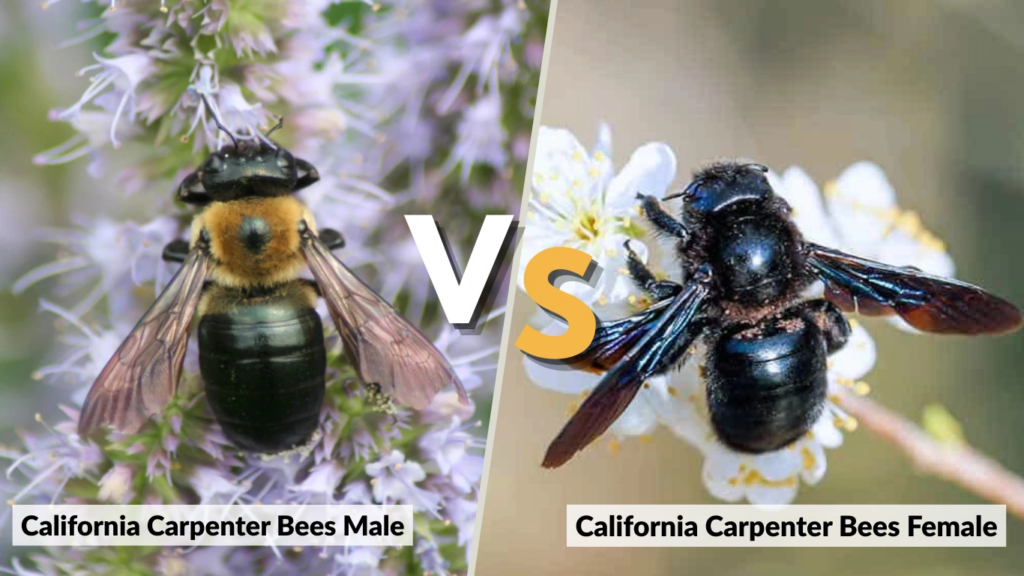
Male and female Valley Carpenter Bees look different enough that many people mistake them for separate species. Their behavior also differs:
| Feature | Male Carpenter Bee | Female Carpenter Bee |
| Color | Golden-colored with dense yellow or tan hairs | Shiny black body with a metallic sheen |
| Stinger | Lacks a stinger – completely harmless | Has a stinger but rarely uses it |
| Behavior | Very territorial; hovers and confronts intruders | Focused on nesting and drilling tunnels |
| Aggression | Appears aggressive but cannot sting | Generally non-aggressive, stings only if provoked |
| Role | Guards flowers and territory during mating season | Drills tunnels, lays eggs, and pollinates plants |
Where Are Carpenter Bees Found in California?
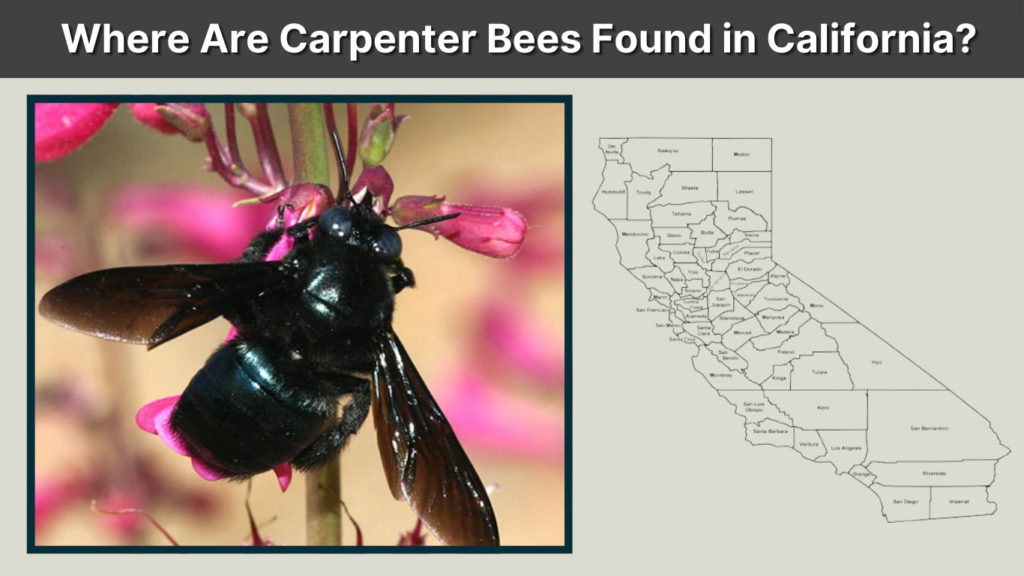
Carpenter bees are widely distributed across the state, from coastal areas to inland valleys and desert regions.
- Southern California – Common in urban gardens, citrus groves, and desert edges.
- Northern California – Found in woodlands, farmlands, and backyards with untreated wooden structures.
- Mojave Desert – Adapted to hot, arid climates, where they pollinate desert plants that other bees may avoid.
- Urban Areas – Frequently seen in residential neighborhoods, where they drill into decks, fences, sheds, and pergolas.
Their adaptability allows them to thrive in a wide range of habitats. As long as there are flowering plants for food and exposed wood for nesting, carpenter bees can establish themselves.
Carpenter Bee Nests in California

The nesting behavior of California carpenter bees is one of the main reasons homeowners notice them. Unlike honeybees, they don’t form hives but instead excavate tunnels inside wood.
- Entry Holes – Round, clean holes about ½ inch in diameter, resembling a drilled hole.
- Tunnels – After boring inward for about an inch, the female turns the tunnel at a right angle and continues along the wood grain.
- Brood Chambers – She creates multiple chambers where eggs are laid, each supplied with a ball of pollen and nectar.
- Nest Reuse – Old tunnels are often reused or expanded by new generations, leading to clusters of holes in the same structure.
In California homes, nests are often found in fences, roof eaves, pergolas, barns, and patio furniture, especially when wood is untreated or weathered.
Are California Carpenter Bees Dangerous?
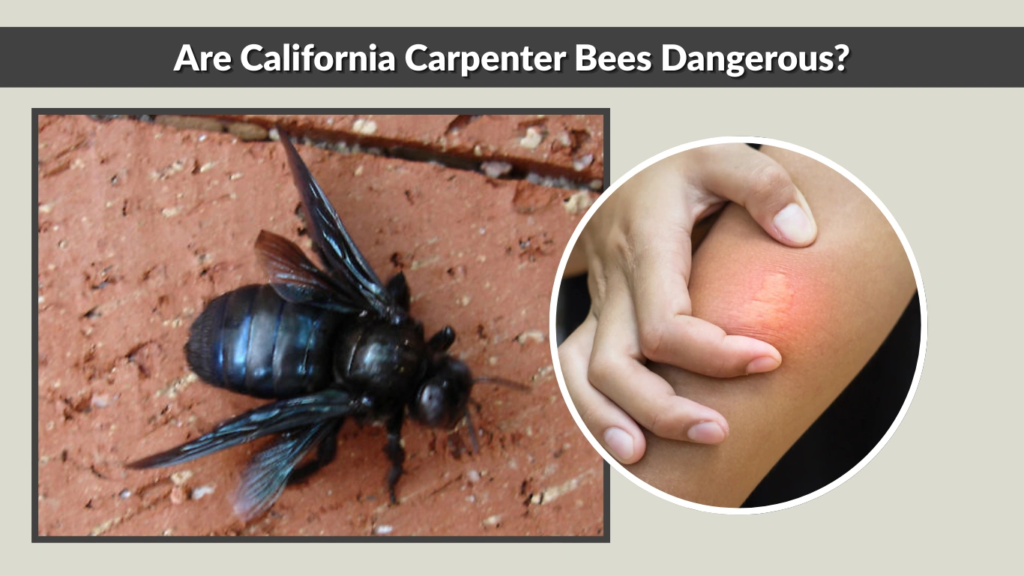
The appearance and behavior of carpenter bees often raise concerns, especially when large numbers hover around gardens or houses.
- Do They Sting?
- Only females have stingers, and they rarely sting unless directly handled.
- Males look aggressive but cannot sting at all.
- Only females have stingers, and they rarely sting unless directly handled.
- How Painful Is the Sting?
- A female carpenter bee sting can cause mild to moderate pain, similar to a wasp sting, but they are not highly venomous.
- Stings are generally not dangerous unless someone is allergic.
- A female carpenter bee sting can cause mild to moderate pain, similar to a wasp sting, but they are not highly venomous.
- Are They Toxic?
- No, California carpenter bee venom is not especially toxic. It’s less harmful than many wasp stings.
- No, California carpenter bee venom is not especially toxic. It’s less harmful than many wasp stings.
In short, while intimidating in appearance, carpenter bees in California are not dangerous to humans. The real concern is the damage they cause to wooden structures over time.
Benefits of Carpenter Bees in California
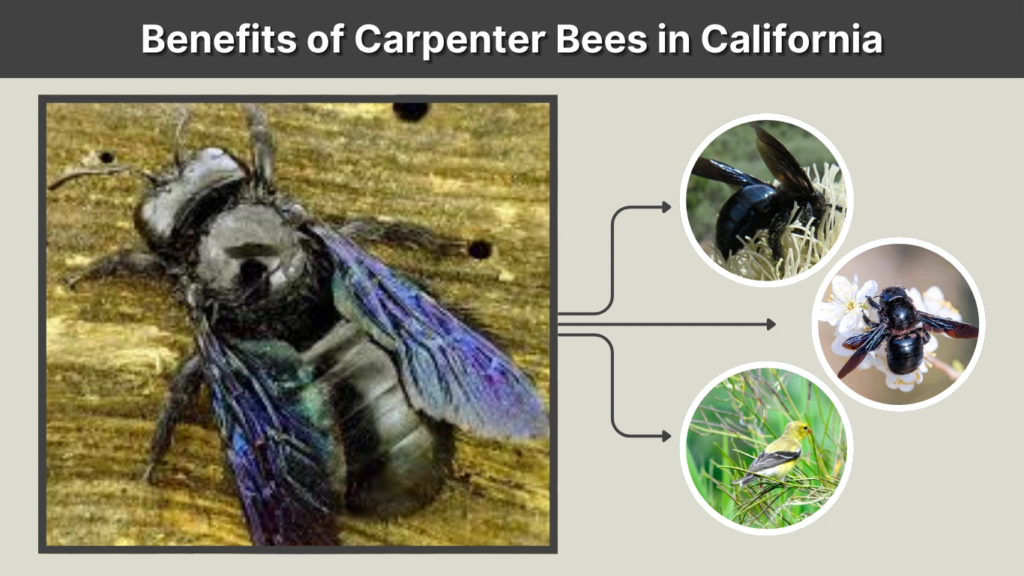
While carpenter bees sometimes cause frustration for homeowners, they play an essential role in California’s ecosystems.
- Native Pollinators – Unlike European honeybees, carpenter bees are native to North America and have co-evolved with many California plants.
- Buzz Pollination – They vibrate flowers to release pollen, making them especially effective for plants like tomatoes, eggplants, and peppers.
- Year-Round Pollination – In California’s warm climate, carpenter bees can remain active for longer periods, supporting pollination when other bees are scarce.
- Biodiversity Support – By pollinating wildflowers and native plants, they help maintain habitats for birds, insects, and other wildlife.
Despite their reputation for damaging wood, their ecological benefits make them valuable contributors to California’s natural environment.
Common Misidentifications
Because of their large size and buzzing presence, carpenter bees are often confused with other insects.
- Black Carpenter Bees vs. Bumblebees
- Bumblebees are fuzzy all over, with hairy abdomens.
- Carpenter bees have smooth, shiny abdomens.
- Bumblebees are fuzzy all over, with hairy abdomens.
- Violet Carpenter Bee Sightings
- Occasionally, people report “violet carpenter bees” in California. In reality, these are often female Valley Carpenter Bees reflecting light in a metallic sheen.
- Occasionally, people report “violet carpenter bees” in California. In reality, these are often female Valley Carpenter Bees reflecting light in a metallic sheen.
- Other Look-Alikes
- Certain wasps and large hoverflies can mimic carpenter bees.
- Male Valley Carpenter Bees (golden brown) are often mistaken for completely different species.
- Certain wasps and large hoverflies can mimic carpenter bees.
Learning these differences helps avoid misidentifying harmless pollinators.
California Carpenter Bee Facts
Beyond appearance and behavior, carpenter bees have unique traits that make them fascinating to study.
- Size – Among the largest bees in North America, with females reaching over 1 inch long.
- Lifespan – Most carpenter bees live about one year, though females may survive into a second season.
- Sleep Habits – Carpenter bees rest inside tunnels or flowers. Males may even sleep clinging to stems at night.
- Desert Adaptation – In regions like the Mojave Desert, they can withstand extreme heat, making them important desert pollinators.
- Male vs. Female – The stark color difference (golden males vs. black females) makes them one of the most visually striking bee species.
These facts highlight why the California carpenter bee is both admired and misunderstood.
Human Interaction and Coexistence
Carpenter bees in California often bring homeowners mixed feelings. While they are vital pollinators, their nesting habits can cause visible damage to property.
- Damage to Homes
- Drilling holes into fences, decks, eaves, and pergolas.
- Reuse of tunnels leading to clusters of holes.
- Stains from bee waste around entry points.
- Drilling holes into fences, decks, eaves, and pergolas.
- Managing Infestations
- Filling holes with wood filler or wooden plugs to prevent reuse.
- Painting or sealing wood surfaces to make them less attractive.
- Installing carpenter bee traps in heavily infested areas.
- Filling holes with wood filler or wooden plugs to prevent reuse.
- Providing Alternatives
- Building “bee blocks” or artificial nesting sites gives carpenter bees a safe alternative to drilling into homes.
- Encourages coexistence while reducing structural damage.
- Building “bee blocks” or artificial nesting sites gives carpenter bees a safe alternative to drilling into homes.
By balancing prevention with habitat support, Californians can protect their homes while preserving an important pollinator.
FAQs
1. Are California carpenter bees dangerous?
No, California carpenter bees are not dangerous. Males cannot sting at all, and females sting only if handled or threatened. Their real risk lies in wood damage from nesting tunnels, not in human harm. Most encounters are harmless, though they may appear aggressive.
2. Do male carpenter bees in California sting?
Male carpenter bees do not have stingers, so they cannot sting. However, they often hover aggressively near flowers or wooden structures to defend their territory. This behavior can seem intimidating, but it is purely defensive posturing and poses no real threat to people.
3. How big do California carpenter bees get?
California carpenter bees, particularly the Valley Carpenter Bee (Xylocopa varipuncta), are among the largest in North America. Females can grow over 1 inch long, while males are slightly smaller. Their large size, combined with their buzzing flight, makes them very noticeable around gardens and homes.
4. Where are carpenter bees found in California?
Carpenter bees are found across California, including Northern and Southern regions as well as the Mojave Desert. They thrive in both urban and rural settings, nesting in untreated wood, fences, decks, barns, and natural deadwood. They are especially active during spring and summer when flowers bloom.
5. What do California carpenter bees eat?
Like other bees, California carpenter bees feed on nectar and pollen from flowers. They do not eat wood; instead, females drill into wood only to build nests for laying eggs. By foraging, they play an important role as native pollinators in California gardens, farms, and wild landscapes.
