

Not every buzzing insect with yellow and black stripes is a bee. Many species of flies have evolved to look like bees through mimicry, gaining protection from predators by copying their appearance. From hoverflies to robber flies, these mimics are harmless pollinators or predators that often confuse people. In this guide, we’ll explore 7 flies that look like bees, highlighting their key traits, habitats, and behaviors so you can tell them apart from true bees.
1. Hoverfly (Syrphidae family)

Hoverflies are among the most common insects mistaken for bees. With their bright yellow and black markings, they mimic bees for protection, but they are completely harmless. Unlike bees, hoverflies cannot sting, yet their appearance often confuses both predators and people.
Identification
- Coloration: Bright yellow and black stripes that make it look like a bee.
- Body shape: Slender body compared to the robust build of true bees.
- Wings: Only one pair of wings (flies), while bees have two pairs.
- Antennae: Short and stubby, unlike the longer antennae of bees.
- Flight style: Ability to hover in place, dart quickly, and move sideways.
Similarity to Bees
Hoverflies look like bees due to their mimicry coloration—yellow and black banding that deters predators. From a distance, they resemble honeybees or small wasps. This resemblance is a form of Batesian mimicry, where harmless species imitate stinging insects for protection.
Habitat
Hoverflies thrive in a wide variety of habitats including:
- Gardens and flower beds.
- Meadows and fields rich in wildflowers.
- Woodlands and forest edges.
- Urban parks and backyard landscapes.
Their presence is often strongest where flowering plants are abundant.
Behaviors and Diet
- Behaviors: Hoverflies are skilled fliers, often seen hovering in place before darting to the next flower. They are non-aggressive and will not sting.
- Diet (Adults): Feed mainly on nectar and pollen, making them excellent pollinators.
- Diet (Larvae): Many species’ larvae feed on aphids and small pests, making them beneficial for natural pest control in gardens.
2. Drone Fly (Eristalis tenax)
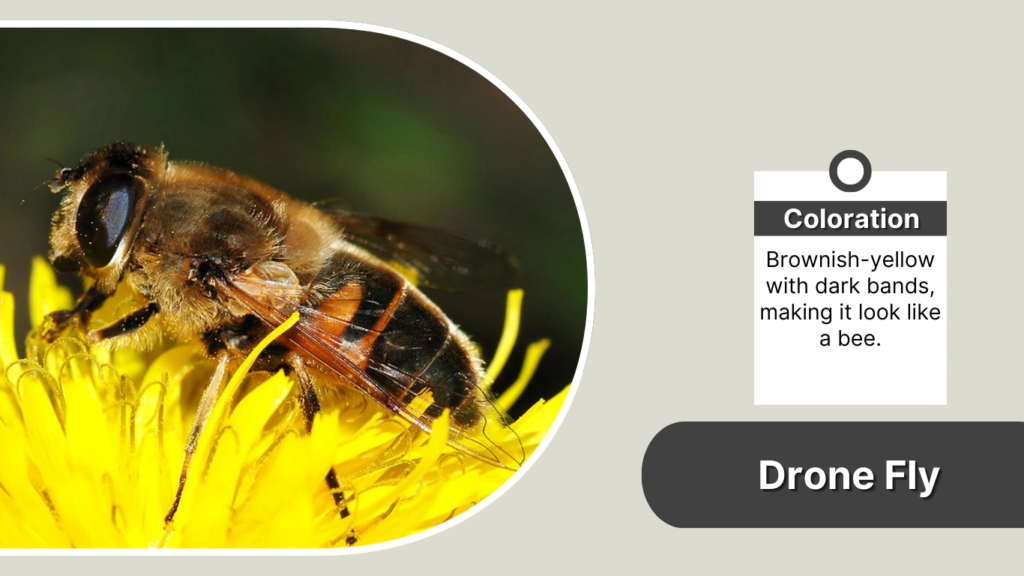
The Drone fly is a common bee mimic that closely resembles a honeybee. Its name comes from its strong resemblance to male honeybees (drones), though it is a harmless species of hoverfly. Because of its appearance, it often confuses both predators and people observing it in gardens.
Identification
- Coloration: Brownish-yellow with dark bands, making it look like a bee.
- Body shape: Stout and hairy, very similar to honeybee drones.
- Wings: Single pair of wings, unlike the two pairs bees have.
- Eyes: Large compound eyes covering much of the head.
- Flight style: Slow, buzzing flight, often hovering near flowers.
Similarity to Bees
Drone flies look like bees because of their hairy bodies, striped abdomens, and buzzing flight. From a distance, they are almost indistinguishable from honeybee drones. This mimicry helps protect them from predators that avoid stinging insects.
Habitat
Drone flies are widespread and adaptable, found in:
- Gardens and parks.
- Fields and meadows.
- Near ponds or stagnant water (larvae develop in such habitats).
They are particularly abundant in areas rich with flowering plants.
Behaviors and Diet
Drone flies are active during warm, sunny days and are frequently seen visiting flowers. They play a vital role in pollination, much like bees. Adults feed primarily on nectar and pollen, while their larvae, known as “rat-tailed maggots,” live in stagnant water and feed on organic matter.
3. Bee Fly (Bombyliidae family)
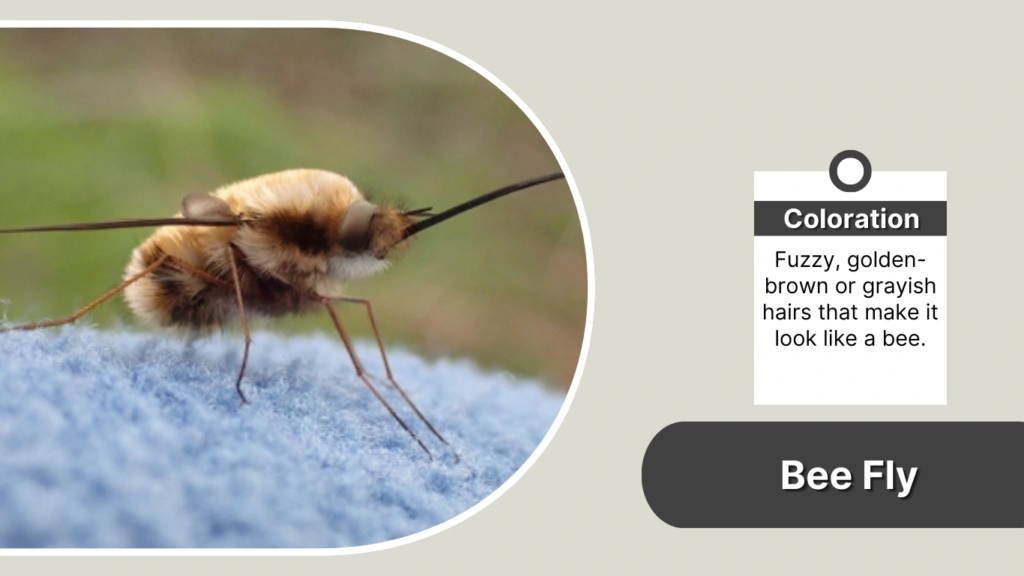
The Bee fly is another insect that looks like a bee but belongs to the fly family. Known for its fuzzy body and hovering flight, it mimics bees for protection but behaves very differently. Bee flies are harmless to humans, though some species have parasitic larvae that affect other insects.
Identification
- Coloration: Fuzzy, golden-brown or grayish hairs that make it look like a bee.
- Body shape: Round and stout, often resembling a bumblebee.
- Wings: Only one pair of wings, usually patterned or clear.
- Proboscis: Long, needle-like mouthpart for sipping nectar.
- Flight style: Able to hover in place like a bee.
Similarity to Bees
Bee flies look like bees because of their dense body hair and hovering flight. Their buzzing sound and fuzzy appearance easily fool predators into thinking they are stinging insects. This mimicry helps them survive in open, flower-rich habitats.
Habitat
Bee flies are commonly found in:
- Meadows and fields.
- Flower gardens.
- Woodland clearings.
- Dry sandy areas where they lay eggs near host insect burrows.
Behaviors and Diet
Bee flies hover near flowers, feeding on nectar with their long proboscis. They rarely land directly on flowers but instead feed while hovering. Adult bee flies are pollinators, while larvae are often parasitic, feeding on the eggs or larvae of solitary bees and other insects.
4. Thick-headed Fly (Conopidae family)

The Thick-headed fly is a bee-mimicking insect that often resembles wasps or bumblebees. With its elongated body and patterned abdomen, it takes on the appearance of stinging insects to ward off predators. Unlike bees, however, it is harmless to humans.
Identification
- Coloration: Yellow and black markings that make it look like a bee or wasp.
- Body shape: Slender with a narrow “waist,” similar to wasps.
- Wings: One pair of clear wings, typical of flies.
- Head: Distinctively rounded with noticeable “thick” head features.
- Antennae: Short and stubby compared to bees.
Similarity to Bees
Thick-headed flies look like bees because of their yellow-black coloration and narrow body shape. Their mimicry makes them easy to mistake for small wasps or bees, especially when buzzing around flowers. This resemblance discourages predators that avoid stinging insects.
Habitat
These flies are often found in:
- Wildflower meadows.
- Gardens and hedgerows.
- Wooded edges and grassy clearings.
They are most common in areas with abundant flowering plants.
Behaviors and Diet
Adult Thick-headed flies feed on nectar and pollen, making them helpful pollinators. Their larvae, however, are parasitic—developing inside wasps, bees, or other insects after eggs are laid on or near them. This dual lifestyle makes them fascinating yet often overlooked in ecosystems.
5. Tachinid Fly (Tachinidae family)

The Tachinid fly is a diverse insect group that sometimes mimics bees in appearance. With their bristly bodies and striped abdomens, many species look like small bees or wasps. Despite the resemblance, they are true flies and play a vital role as natural pest controllers.
Identification
- Coloration: Black, gray, or brown with stripes that make it look like a bee.
- Body shape: Stout and hairy, similar to worker bees.
- Wings: Single pair of wings, unlike bees’ two pairs.
- Eyes: Large compound eyes typical of flies.
- Antennae: Short, not long like true bees.
Similarity to Bees
Tachinid flies look like bees due to their bristly bodies and banded patterns. From a distance, their shape and coloring make them resemble worker bees, which helps them avoid predators. However, they lack stingers and are completely harmless to humans.
Habitat
Tachinid flies thrive in a wide range of environments, including:
- Gardens and agricultural fields.
- Meadows with flowering plants.
- Forest edges and hedgerows.
They are particularly common where host insects (for their larvae) are abundant.
Behaviors and Diet
Adult Tachinid flies feed on nectar and pollen, visiting flowers much like bees. Their larvae are parasitic, developing inside caterpillars, beetles, or other insects. This makes them important for biological pest control, helping to naturally manage insect populations.
6. Robber Fly (Asilidae family)

The Robber fly is a predatory insect that often mimics bees or wasps. Its hairy body and strong flight can make it difficult to distinguish from real bees at first glance. Unlike harmless bee mimics, robber flies are aggressive hunters of other insects.
Identification
- Coloration: Yellow, brown, or black markings that make it look like a bee or wasp.
- Body shape: Slender to stout with a hairy thorax, giving it a bee-like look.
- Wings: One pair of strong, clear wings.
- Eyes: Large, bulging compound eyes for spotting prey.
- Mouthparts: Sharp, piercing beak-like proboscis.
Similarity to Bees
Robber flies look like bees due to their hairy bodies and striped patterns. Many species are nearly identical to bumblebees or honeybees in appearance. This mimicry not only protects them from predators but also allows them to approach other insects unnoticed.
Habitat
Robber flies are found in diverse habitats, including:
- Open fields and meadows.
- Forest edges.
- Gardens and agricultural areas.
- Sandy or dry soils where they lay eggs.
Behaviors and Diet
Unlike true bees, robber flies are predators. They capture insects mid-flight, piercing them with their proboscis to inject digestive enzymes, then consume the liquefied insides. Their diet includes bees, wasps, butterflies, and even other flies. While adults mimic bees, their behavior is more aggressive and predatory.
7. Flower Fly (Volucella bombylans)

The Flower fly, also known as Volucella bombylans, is a classic bee mimic found across Europe and parts of Asia. Its fuzzy body and buzzing flight make it almost indistinguishable from bumblebees, yet it is a harmless hoverfly species.
Identification
- Coloration: Black and yellow banding, often with orange or red hairs that make it look like a bee.
- Body shape: Stout and hairy, closely resembling bumblebees.
- Wings: Single pair of transparent wings.
- Eyes: Large compound eyes covering much of the head.
- Antennae: Short and stubby, unlike bees’ longer antennae.
Similarity to Bees
Flower flies look like bees because of their dense body hairs, coloration, and buzzing flight. They are one of the most convincing bumblebee mimics, fooling both predators and humans. This mimicry is a survival strategy, as predators tend to avoid stinging insects.
Habitat
These flies are commonly found in:
- Flower-rich meadows and gardens.
- Woodland clearings and hedgerows.
- Urban parks with plenty of blossoms.
They prefer habitats with abundant flowering plants, as both adults and larvae depend on them.
Behaviors and Diet
Adult Flower flies feed on nectar and pollen, playing an important role in pollination. They are peaceful insects and pose no threat to humans. Their larvae are often associated with bumblebee nests, where they scavenge waste material, helping keep the nests clean.
FAQs
Why do some flies look like bees?
Many flies mimic bees as a form of Batesian mimicry, which helps them avoid predators. The bee-like stripes and buzzing sound make predators think they can sting, even though they cannot.
How can you tell the difference between a fly and a bee?
The easiest way is to check the wings and antennae. Flies have one pair of wings and short antennae, while bees have two pairs of wings and longer, elbowed antennae.
Are bee-mimicking flies dangerous?
No, most of these flies are harmless. They cannot sting and are either pollinators (like hoverflies) or predators of pests (like robber flies).
Do bee-like flies pollinate flowers?
Yes, many mimicking flies, such as hoverflies and flower flies, are excellent pollinators and play an important role in ecosystems alongside true bees.
Why is it important to identify flies that look like bees?
Correct identification prevents unnecessary fear or extermination of harmless insects. Many bee-like flies are beneficial for pollination or pest control, making them allies in gardens and farms.
