
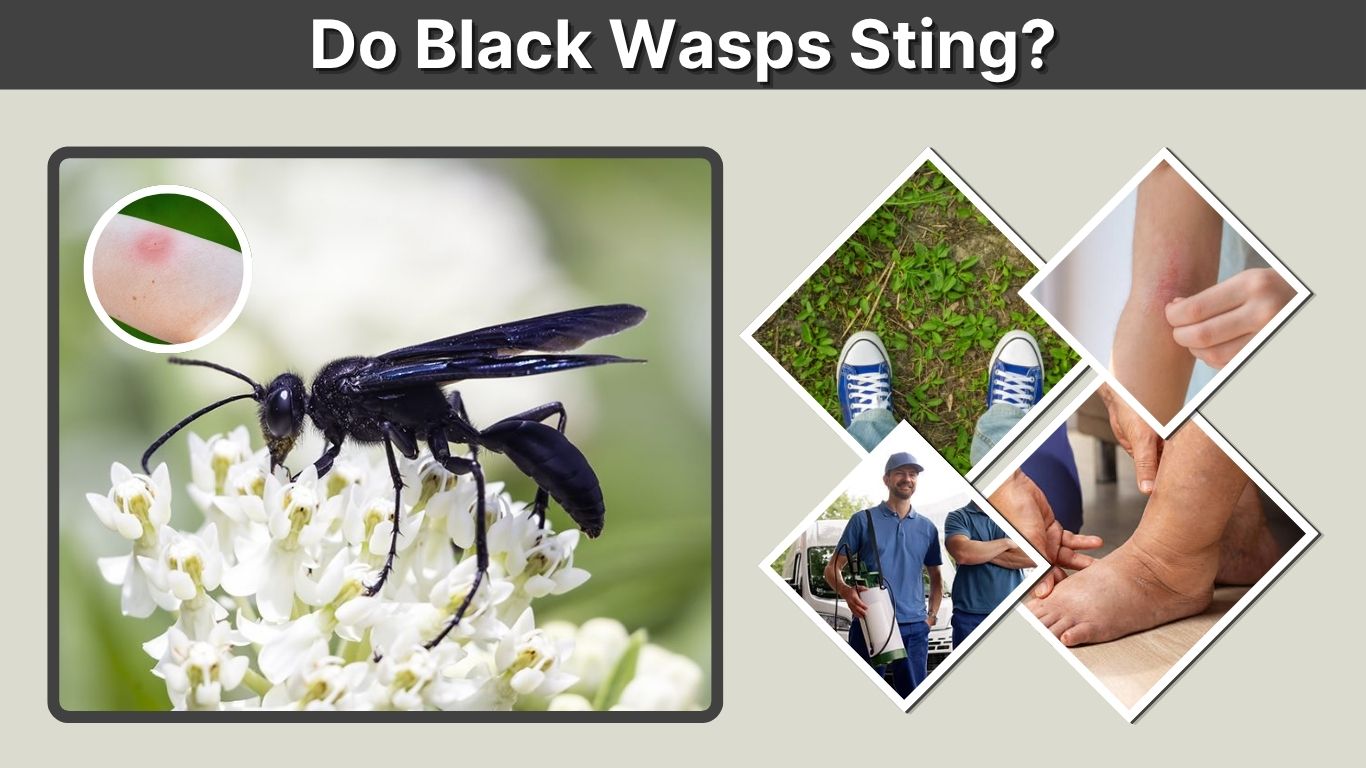
Do black wasps sting? Yes, many female black wasps are capable of stinging, but most solitary species are far less aggressive than social wasps such as yellowjackets. Great black wasps, black mason wasps, digger wasps, and some dark mud wasps generally use their stingers to capture prey or defend themselves when threatened. Males cannot sting. Understanding which black wasp you have encountered, why it might sting, and how it behaves around people can help you determine the actual level of risk.
Do Black Wasps Sting Humans?
Many insects described as black wasps are solitary hunting species rather than colony-forming wasps. Female solitary wasps usually possess functional stingers, but they primarily use them to immobilize insects or spiders. Most avoid confrontation with people and rarely sting unless physically handled, trapped against the skin, stepped on, or otherwise threatened.
When Black Wasps May Sting
A black wasp may sting when:
- It is grabbed or handled.
- It becomes trapped inside clothing.
- Someone accidentally steps on it.
- It is crushed against the skin.
- Its immediate nesting area is heavily disturbed.
- It cannot easily escape from a perceived threat.
Simply seeing a black wasp flying nearby does not mean it is preparing to attack.
Are Black Wasps Aggressive?
Many black solitary wasps are relatively calm around humans. Instead of protecting a large communal colony, females generally work independently to construct nests and provide prey for their offspring.
University of Minnesota Extension notes that solitary wasps are not aggressive toward people and rarely sting. They usually try to avoid humans whenever possible.
Can Male Black Wasps Sting?
Male wasps cannot sting because the stinger evolved from the female egg-laying structure. A male may fly toward people or behave territorially around nesting areas, but it cannot deliver a venomous sting.
This distinction is especially important with large solitary wasps, where males can appear intimidating despite being unable to sting.
Do Great Black Wasps Sting?
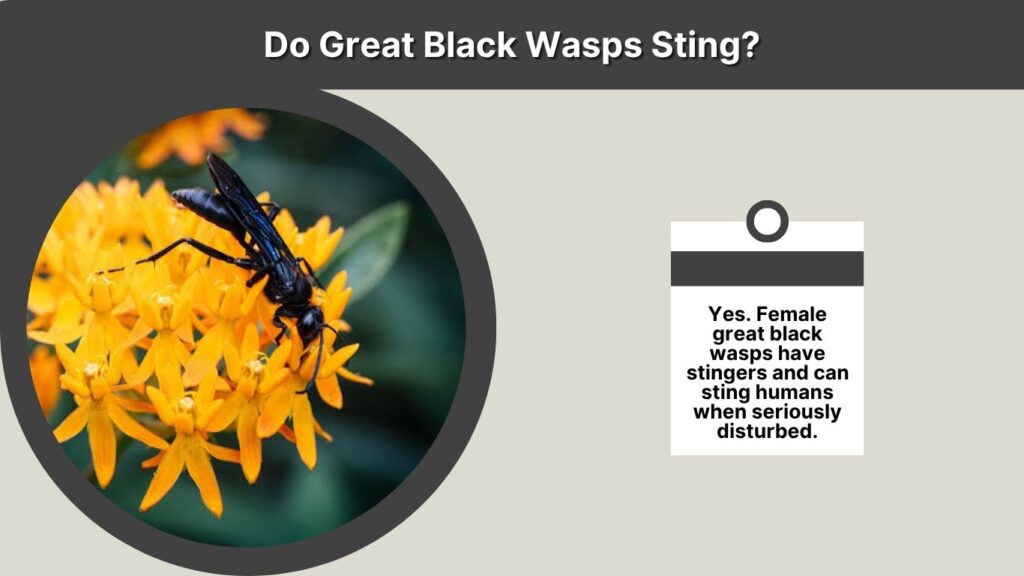
The great black wasp (Sphex pensylvanicus) is one of the species most commonly associated with searches for giant or big black wasps. Its shiny black body, dark wings, and relatively large size can make it look dangerous. However, this species is solitary and is generally much less defensive than social colony-forming wasps.
Can Great Black Wasps Sting Humans?
Yes. Female great black wasps have stingers and can sting humans when seriously disturbed.
University of Minnesota Extension describes the great black wasp as having a stinger while being nonaggressive and rarely stinging people. Its imposing appearance therefore does not accurately reflect its typical behavior.
Why Great Black Wasps Have Stingers
Female great black wasps primarily use venom for hunting rather than attacking humans. They capture insects such as katydids, paralyze them, and transport them to underground nests where the prey becomes food for developing larvae.
This hunting behavior explains why a female needs an effective stinger even though she generally has little reason to use it against people.
How Many Times Can a Great Black Wasp Sting?
Unlike a honeybee, a great black wasp does not normally leave its stinger embedded in the victim. This means a female is physically capable of stinging more than once.
Repeated stings are still uncommon because great black wasps are solitary and normally prefer escaping a disturbance instead of repeatedly attacking someone.
Do Black Wasps Sting or Bite?
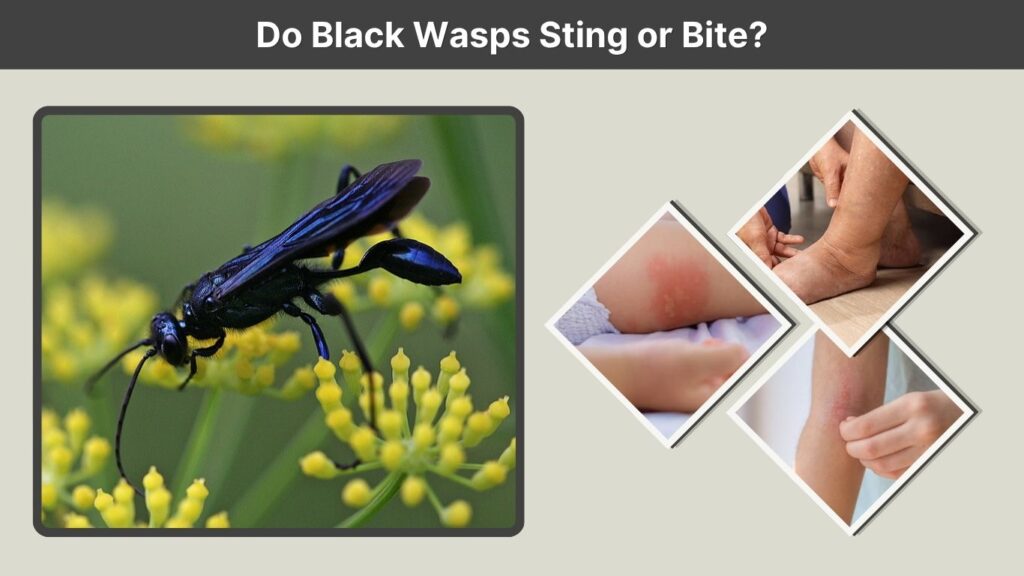
People frequently search whether black wasps sting or bite because the resulting skin reaction may resemble a bite. Wasps do have strong mouthparts for feeding, nest construction, and handling prey, but the painful defensive injury people typically experience comes from the female’s venom-delivering stinger rather than her jaws.
Sting vs. Bite
A black wasp sting commonly causes:
- Sudden sharp or burning pain
- Redness around the puncture
- Local swelling
- Tenderness
- Itching
- Warmth around the affected skin
The severity can differ substantially among individuals.
Why People Call It a Wasp Bite
After a sting, a small red mark or raised bump may resemble an insect bite. Because people may not actually see the wasp insert its stinger, the injury is often casually called a “black wasp bite.”
In most cases involving a defensive black wasp encounter, sting is the more accurate term.
Do Black Mason Wasps Sting?
Black mason wasps and related potter wasps belong to groups of solitary wasps that frequently build nests in cavities or construct cells using mud. Their dark bodies may be completely black or include white, yellow, or reddish markings depending on the species.
Black Mason Wasp Sting Risk
Female mason wasps are capable of stinging, but they are generally considered nonaggressive. Utah State University Extension describes mason, potter, and mud-dauber wasps as posing only a slight health risk and notes that they are not aggressive.
A sting is most likely when the wasp is handled or accidentally trapped.
Red and Black Mason Wasps
Red-and-black mason wasps may look more threatening because of their contrasting warning colors. However, coloration alone does not indicate that a species is unusually aggressive.
These solitary wasps are typically focused on finding prey and preparing nests rather than defending territory from people.
White-Striped Black Mason Wasps
Some mason wasps have noticeable white or ivory markings against a predominantly black body. Females may sting defensively, but they generally do not behave like social yellowjackets that aggressively protect a large colony.
Leaving an undisturbed solitary wasp alone usually presents very little sting risk.
Do Black Digger and Mud Wasps Sting?
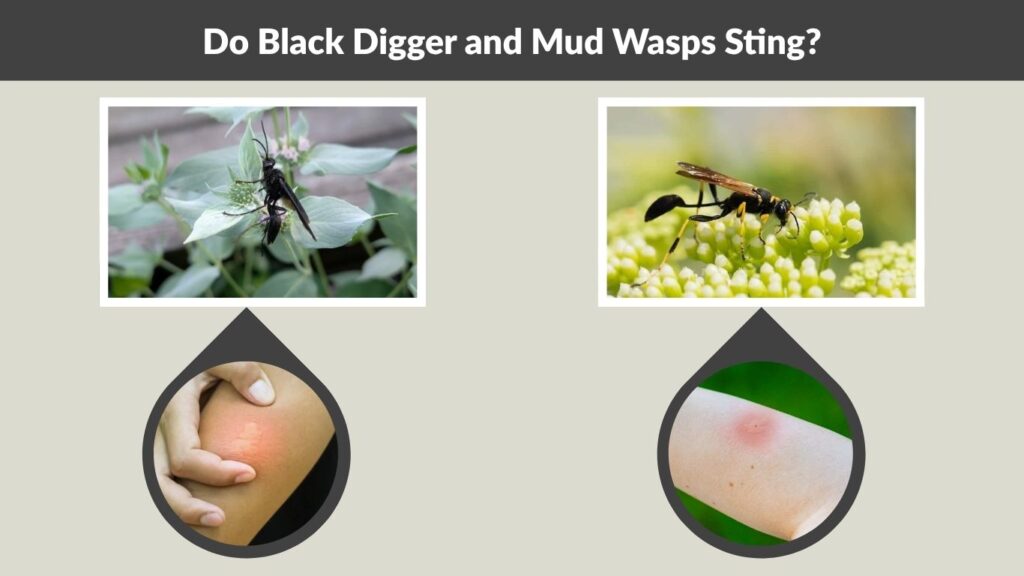
Digger wasps and mud-nesting wasps include numerous dark or black species. Many are beneficial predators that capture other insects or spiders. Because they generally live solitary lives, they have little reason to defend a nest collectively and usually present a much lower sting risk than social wasps.
Black Digger Wasps
Female black digger wasps can sting, particularly if someone picks them up or traps them against the body.
Their normal behavior involves searching for prey and nesting locations. Even when several digger wasps nest in the same favorable patch of soil, they may still be individual females rather than members of a single defensive colony.
Black Mud Wasps
Mud daubers and similar mud-nesting wasps can also possess functional stingers. They build characteristic mud cells on sheltered structures and frequently hunt spiders.
Extension guidance notes that mud daubers do not normally defend their nests, so the sting risk around an undisturbed nest is generally low.
Do Black Wasps Die After They Sting?
A common misconception is that all stinging insects die after using their stingers. This largely comes from the familiar behavior of worker honeybees. Black wasps have a different type of stinger and usually do not suffer the same injury after stinging.
Black Wasps Can Survive a Sting
Most wasps have relatively smooth stingers that can be withdrawn from the skin. Consequently, a female black wasp normally survives after stinging.
She can potentially use her stinger again, although solitary black wasps rarely have a reason to repeatedly sting humans.
Why Honeybees Are Different
A worker honeybee has a strongly barbed stinger that can become lodged in mammalian skin. When the bee attempts to fly away, the sting apparatus may tear from its abdomen.
Most wasps do not have this strongly barbed arrangement, allowing them to withdraw the stinger instead.
What Should You Do Around a Black Wasp?
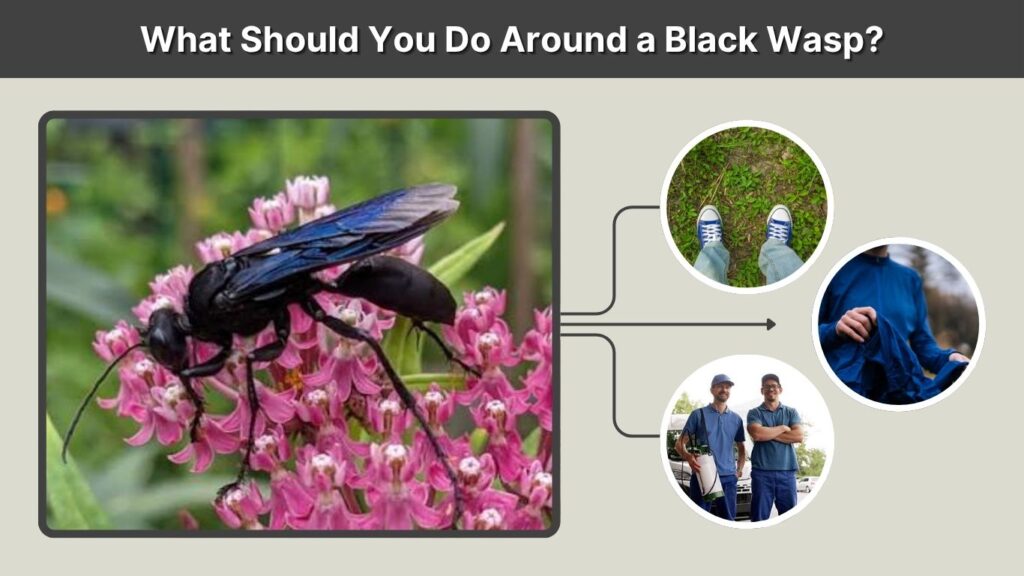
Seeing a large black wasp can be alarming, but sudden swatting can increase the chance of defensive contact. Most solitary species are simply hunting insects, visiting flowers for nectar, or looking for suitable nesting sites.
Reduce Your Risk of Being Stung
When a black wasp is nearby:
- Avoid grabbing or swatting it.
- Give the wasp room to fly away.
- Wear shoes around ground-nesting areas.
- Avoid disturbing unidentified nests.
- Shake out outdoor clothing before wearing it.
- Keep windows and screens in good condition.
- Seek professional identification if numerous wasps appear around a busy area.
An individual black wasp visiting flowers or crossing a yard generally does not need to be destroyed.
FAQs
Do black wasps sting humans?
Yes, female black wasps of many species can sting humans. However, many black wasps are solitary and rarely behave aggressively toward people. They usually sting only when physically handled, stepped on, trapped against the skin, or otherwise threatened. Males cannot sting because they do not possess functional stingers.
Do great black wasps sting people?
Female great black wasps can sting, but they rarely do so without provocation. Their stingers are primarily used to paralyze prey for their developing young. Despite their large size and intimidating black appearance, great black wasps are solitary insects and generally prefer avoiding humans rather than confronting them.
Do black wasps sting for no reason?
Black wasps generally do not sting humans without a defensive reason. A sting may seem unprovoked when a wasp becomes trapped in clothing, is accidentally stepped on, or feels threatened by sudden movement. Solitary black wasps have little incentive to chase people because they do not defend large communal colonies.
Do small black wasps sting?
Some small black wasps can sting, but many tiny parasitic species pose very little practical threat to people. Small solitary hunting wasps may use their stingers defensively if handled. Correct identification is important because the term “small black wasp” can describe numerous unrelated species with very different sizes and behaviors.
Do black wasps die after they sting?
No. Most black wasps do not die after stinging because their stingers can normally be withdrawn from human skin. A female may therefore be physically capable of stinging more than once. This differs from worker honeybees, whose strongly barbed stingers can remain embedded and fatally injure the bee as it escapes.
