
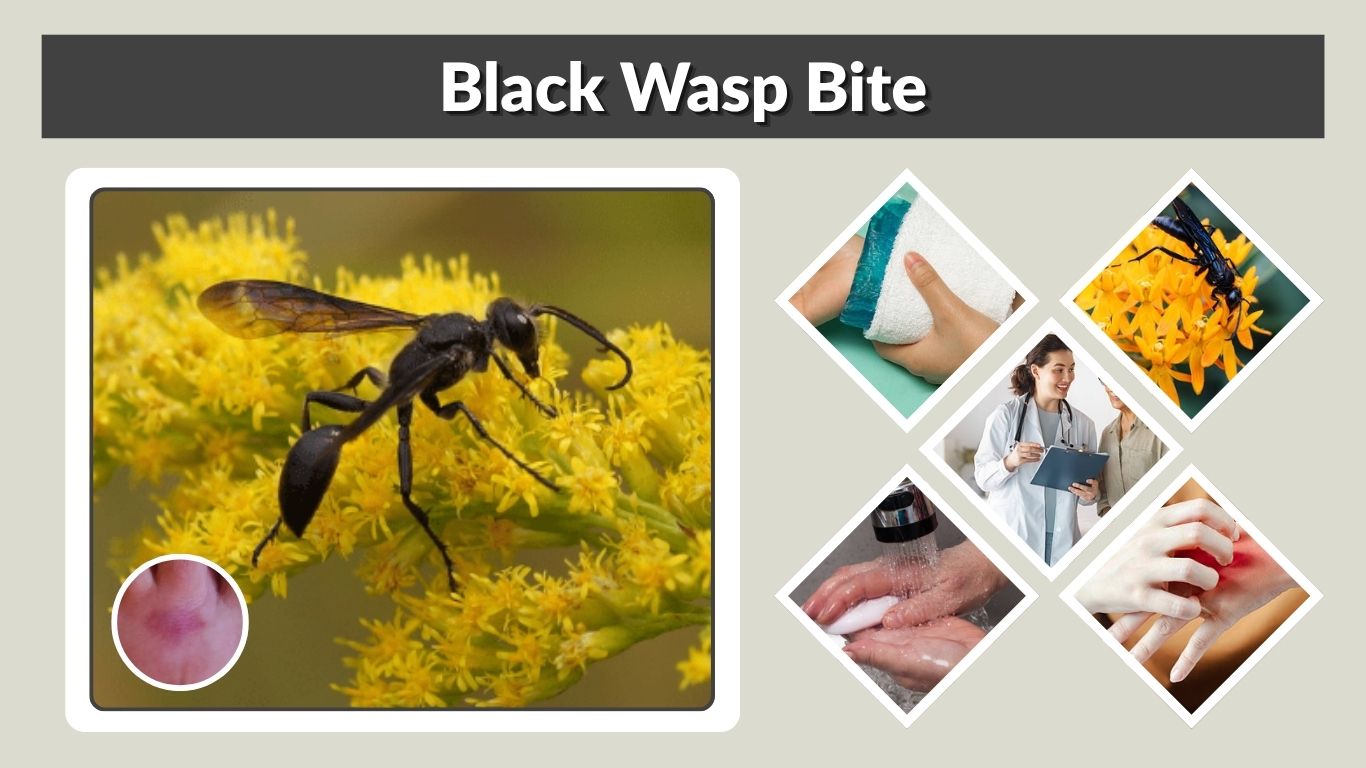
A black wasp bite can cause sudden pain, redness, swelling, and concern about whether the insect is dangerous. Technically, most injuries people call black wasp bites are actually wasp stings, because female wasps inject venom through a stinger. Great black wasps and several similar dark-colored species can sting, although many solitary wasps are reluctant to attack people. Knowing the expected symptoms, proper treatment, warning signs of an allergic reaction, and differences between normal and severe reactions can help you respond safely.
Do Black Wasps Bite or Sting?
The phrase black wasp bite is commonly searched, but a sting is usually responsible for the painful skin reaction. Wasps possess chewing mouthparts and can use their mandibles when handling prey or nest material, but their primary defensive weapon is the stinger. Only females of species such as the great black wasp possess a functional stinger.
Black Wasp Bite vs. Sting
When a black wasp causes immediate sharp or burning pain followed by redness or swelling, a sting is the most likely explanation.
The stinger delivers venom beneath the skin. Unlike honeybees, many wasps can withdraw their stinger after using it, so you generally will not find a stinger left behind.
What people describe as a bite may therefore be the visible puncture and skin reaction left by a sting.
Do Great Black Wasps Bite?
The great black wasp (Sphex pensylvanicus) is a solitary digger wasp. Females use their stingers primarily to paralyze katydids, crickets, and related prey that will become food for their larvae.
They can also sting humans when trapped, handled, stepped on, or seriously disturbed. However, they are generally nonaggressive and rarely sting people. Male great black wasps cannot sting.
Black Wasp Bite or Sting Symptoms
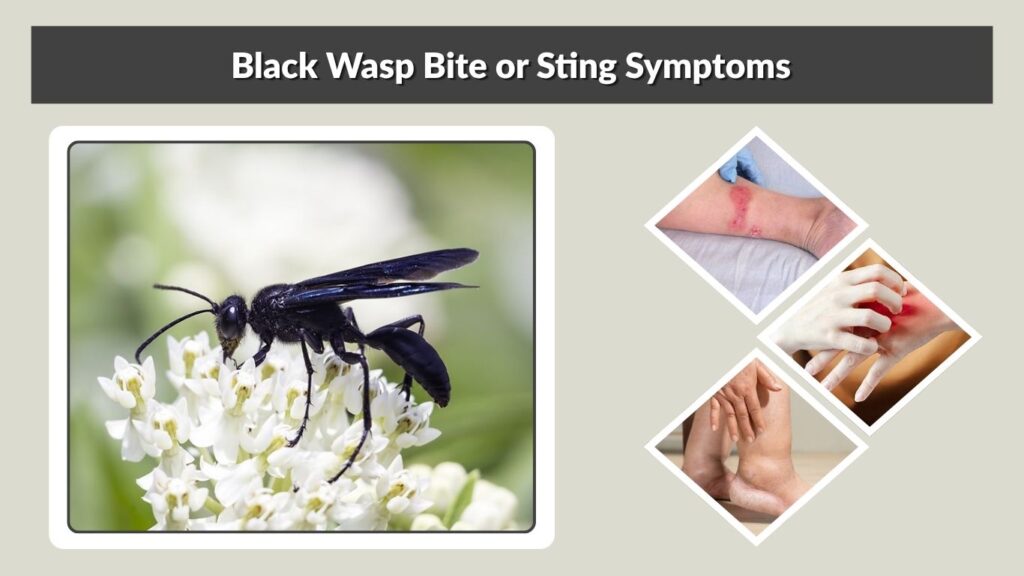
Most reactions to a wasp sting remain limited to the area around the puncture. Pain can begin immediately, followed by redness, itching, tenderness, or swelling. The intensity varies according to the species, sting location, amount of venom, and individual sensitivity. More extensive swelling can occur without necessarily indicating a life-threatening allergic reaction.
Common Symptoms
Typical black wasp bite symptoms may include:
- Sudden sharp, burning, or stinging pain
- A small raised bump
- Redness around the sting
- Local swelling
- Itching
- Tenderness or warmth
- Mild discomfort lasting several hours or days
A small local reaction usually improves gradually with basic home care.
Large Local Reaction
Some people develop swelling that extends well beyond the immediate sting site. For example, a sting on a finger could cause much of the hand to swell.
A large local reaction can look alarming, but it is different from anaphylaxis when symptoms remain limited to the surrounding area. Significant or worsening swelling should still be discussed with a healthcare professional, particularly when it interferes with normal movement.
Signs of a Serious Allergic Reaction
Emergency symptoms can include:
- Difficulty breathing or wheezing
- Swelling of the tongue, lips, face, or throat
- Widespread hives or itching
- Dizziness or fainting
- Rapid or weak pulse
- Nausea, vomiting, or diarrhea
- Sudden weakness or loss of consciousness
These may indicate anaphylaxis, which requires immediate emergency medical treatment.
Black Wasp Bite Treatment
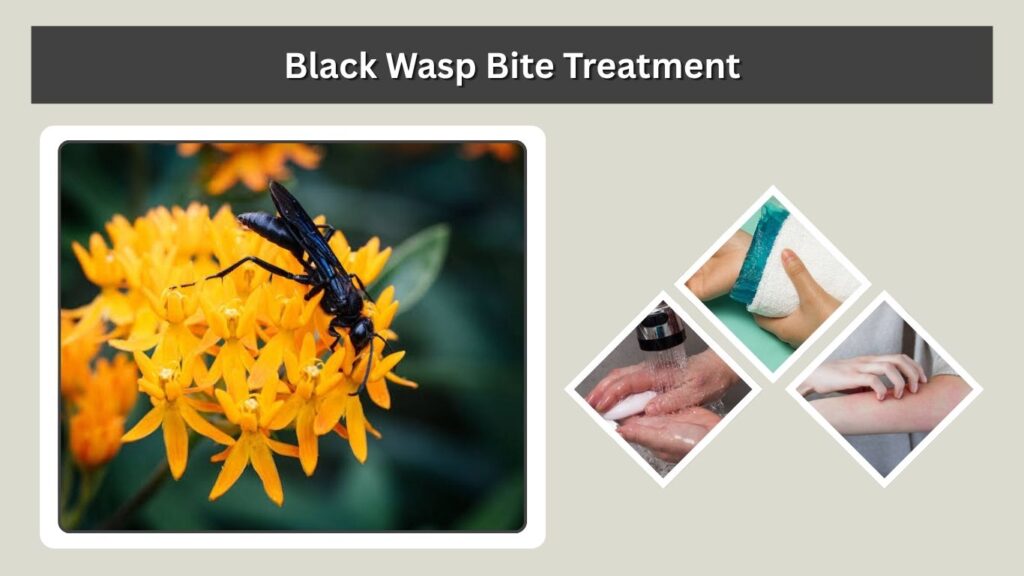
Most uncomplicated wasp stings can be treated at home. The main goals are to clean the affected skin, decrease pain and swelling, and watch for symptoms suggesting an allergic reaction. Because reactions can occasionally progress quickly, pay particular attention during the period immediately after the sting, especially if the person has previously experienced a serious insect-sting allergy.
First Aid for a Black Wasp Sting
For a mild reaction:
- Move away from the wasp and nesting area.
- Wash the sting site with soap and water.
- Apply a cold pack or cool compress.
- Elevate the affected arm or leg when practical.
- Avoid scratching the skin.
- Monitor for increasing swelling or systemic symptoms.
A cold compress can help reduce local pain and swelling.
Relieving Pain and Itching
For an uncomplicated local reaction, commonly used over-the-counter pain medicines or antihistamines may help some people when those medicines are appropriate for them. A pharmacist or healthcare professional can advise which option is suitable based on age, medical conditions, pregnancy, allergies, and other medicines being taken.
Keeping the area clean also helps reduce problems caused by scratching.
What Not to Do
Avoid repeatedly squeezing, cutting, or aggressively scratching the sting site. Such actions do not remove venom that has already been injected and may damage the skin.
Unlike a honeybee sting, a typical wasp sting usually does not leave a stinger embedded in the skin. If something remains in the wound and its identity is uncertain, avoid digging deeply into the skin to remove it.
When Is a Black Wasp Sting Dangerous?
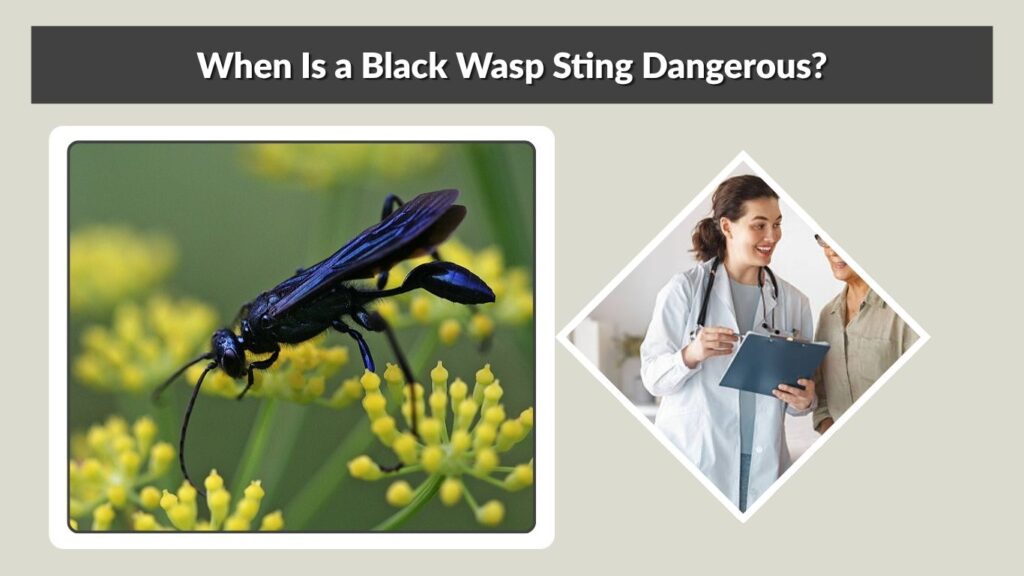
For most people, a single black wasp sting causes a temporary local reaction rather than a medical emergency. The main concern is an allergic reaction to venom. Multiple stings can also increase the amount of venom received. Stings involving the mouth or throat deserve particular attention because swelling in these areas can potentially interfere with breathing.
When to Get Emergency Help
Seek emergency medical help immediately if the person develops breathing difficulty, throat or tongue swelling, widespread hives accompanied by other symptoms, dizziness, fainting, or other signs of anaphylaxis.
If the person has been prescribed an epinephrine auto-injector for insect-sting allergy, follow their emergency treatment plan and seek emergency care even if symptoms begin improving. Anaphylaxis can be life-threatening and should not be managed by simply waiting for symptoms to pass.
When to Contact a Doctor
Medical advice may also be appropriate if pain or swelling continues to worsen, the reaction covers a very large area, numerous stings occurred, or the skin later develops signs that could suggest infection.
Someone who has experienced a serious systemic reaction to a wasp sting should discuss the episode with an allergy specialist. Testing and preventive treatment may be appropriate for people with confirmed venom allergy.
Great Black Wasp Bite and Sting Risk
The great black wasp can appear intimidating because females may reach roughly an inch or more in length and have an entirely dark body with blue-black or violet-tinged wings. Despite their appearance, these solitary wasps do not maintain a large social colony requiring aggressive defense. University of Minnesota Extension describes them as nonaggressive insects that rarely sting unless disturbed.
Why Great Black Wasps Sting
Female great black wasps normally reserve their venom for hunting. They dig underground nests and capture katydids and similar insects, paralyzing them before carrying them back for their developing larvae.
A person is most likely to be stung after grabbing a wasp, trapping it against clothing or skin, stepping on one, or directly interfering with its activity.
Are Great Black Wasp Stings Dangerous?
For someone without a venom allergy, a great black wasp sting is generally expected to cause pain and a localized reaction rather than severe illness. However, individual responses to insect venom differ.
Anyone with a known insect-sting allergy should take the encounter seriously. The color or species of the wasp does not eliminate the possibility of an allergic reaction.
FAQs
Do black wasps bite humans?
Black wasps have chewing mouthparts, but the injury people usually describe as a black wasp bite is actually a sting. Female wasps use a venom-delivering stinger for defense and capturing prey. Most solitary black wasps avoid humans and are unlikely to sting unless they are grabbed, trapped, stepped on, or strongly disturbed.
What does a black wasp bite look like?
A black wasp sting can produce a small raised area surrounded by redness and swelling. The skin may feel warm, itchy, painful, or tender. Appearance varies considerably between people. A reaction spreading throughout the body, especially with breathing trouble, dizziness, facial swelling, or widespread hives, requires immediate medical attention.
How do you treat a black wasp bite?
Wash the area with soap and water and use a cold compress to help control pain and swelling. Avoid scratching the skin and monitor the reaction. Mild stings generally improve with home care. Seek medical advice for unusually severe or worsening symptoms and emergency help immediately if signs of anaphylaxis develop.
Can a great black wasp bite or sting?
Female great black wasps can sting, while males lack a stinger. The female normally uses her sting to paralyze insects such as katydids that provision her underground nest. Despite their large size, great black wasps are solitary and generally nonaggressive toward people, with stings occurring mainly when the insect is threatened or handled.
How long does a black wasp sting last?
Pain from a mild wasp sting may begin immediately, while redness, itching, or swelling can remain afterward and gradually improve. The exact duration varies by person and reaction severity. If swelling continues expanding, symptoms become more painful instead of improving, or symptoms develop away from the sting site, medical evaluation may be appropriate.
