
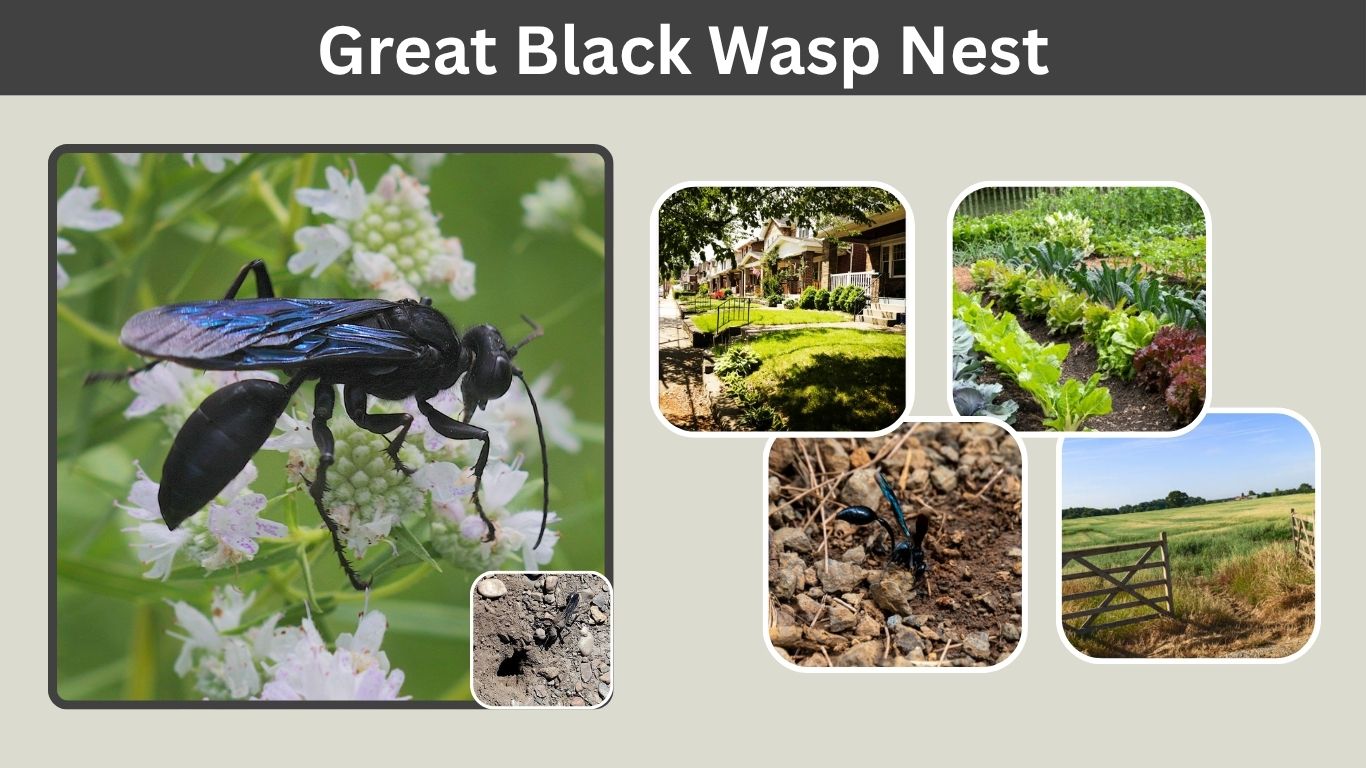
A great black wasp nest is usually hidden underground, so you may notice the large black wasp before you ever see its burrow. The great black wasp (Sphex pensylvanicus) is a solitary digger wasp that builds nests in soft soil and stocks underground chambers with paralyzed katydids for its young. Although its size and dark appearance can seem intimidating, it is generally less defensive than social wasps. This guide explains nest appearance, location, larvae, identification, and when removal may be appropriate.
What Does a Great Black Wasp Nest Look Like?
A great black wasp nest is very different from the hanging paper nests commonly associated with hornets and social wasps. Most of the structure is underground, so the visible portion may simply look like a hole surrounded by disturbed soil. Watching a female repeatedly enter the opening is often the easiest way to confirm an active nest.
Appearance of the Nest Entrance
The entrance typically appears as a small opening in loose or relatively soft soil. Excavated dirt may accumulate near the hole as the female digs.
Common signs include:
- A noticeable hole in bare or lightly vegetated soil
- Freshly disturbed or loose dirt around the entrance
- A large black wasp repeatedly entering the same opening
- A wasp carrying a katydid or similar prey toward the hole
- Nesting activity in sunny gardens, fields, or landscaped areas
Great black wasps are ground nesters and commonly choose soft soil in gardens and fields.
What Is Below the Ground?
The visible entrance leads to an underground burrow containing brood chambers. A female prepares these protected areas for her offspring rather than constructing an above-ground communal nest.
She stocks the nest with paralyzed prey and lays eggs so developing larvae have a food supply available when they hatch.
Where Do Great Black Wasps Nest?
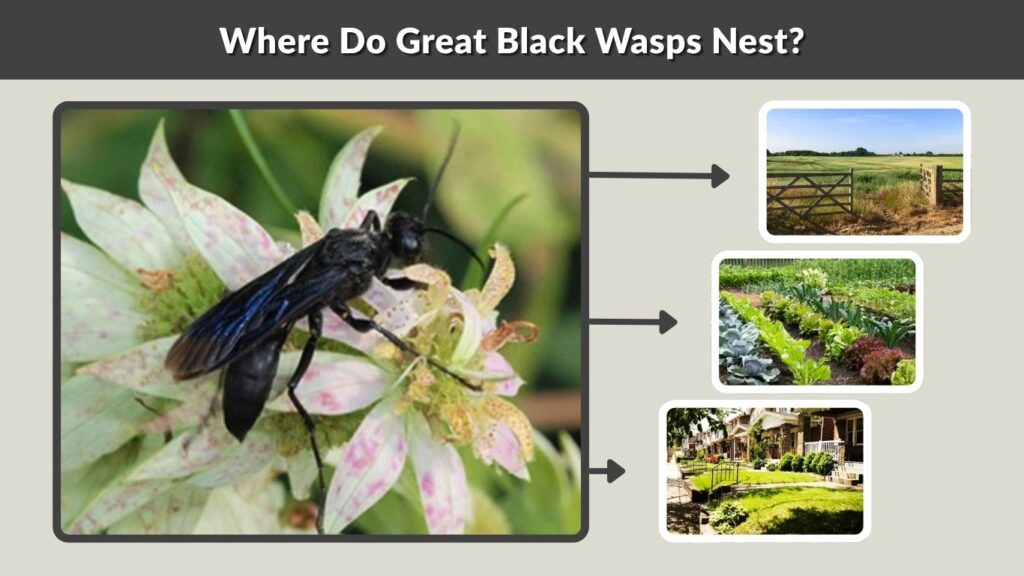
Great black wasps primarily choose locations where soil can be excavated without excessive difficulty. The University of Minnesota Extension describes them as nesting in soft soil in fields and gardens. Because suitable ground can also occur near homes, their nests sometimes appear beside patios, foundations, sidewalks, driveways, and other landscaped spaces.
Common Great Black Wasp Nest Locations
A female may choose areas such as:
- Flower or vegetable gardens
- Bare patches of soil
- Open fields
- Landscaped beds
- Soil beside sidewalks or driveways
- Areas underneath or beside concrete
- Sunny portions of yards
- Loose soil near building foundations
There are documented observations of great black wasps carrying prey through cracks in concrete into nests underneath structures.
Great Black Wasp Nest in the Ground
An underground great black wasp nest is normal for this species. Unlike paper wasps, great black wasps do not normally suspend exposed combs from branches or eaves.
Seeing a large glossy black wasp repeatedly disappearing into a ground hole is therefore an important identification clue.
Can Great Black Wasps Nest Above Ground?
A typical Sphex pensylvanicus nest is underground. If you find an exposed paper, mud, or clay structure above ground with black wasps around it, another species may be responsible.
Mud daubers, mason wasps, paper wasps, and other insects can be dark-colored but have very different nesting habits.
How to Identify a Great Black Wasp Near Its Nest
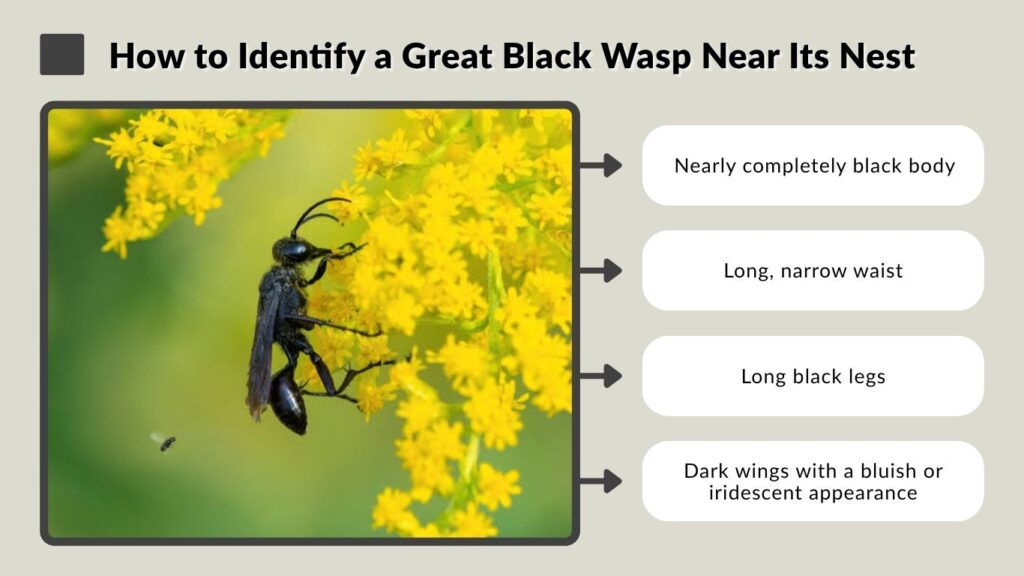
Correctly identifying the insect is important because the phrase “black wasp” can describe several species. The great black wasp, also called the great black digger wasp, is Sphex pensylvanicus. Females average about 28 mm in body length, and individuals can approach 1½ inches, making them noticeably larger than many familiar wasps.
Great Black Wasp Identification
Look for these characteristics:
- Nearly completely black body
- Long, narrow waist
- Long black legs
- Dark wings with a bluish or iridescent appearance
- Large body, often around an inch or more
- Solitary behavior rather than a busy colony
- Frequent activity around flowers or bare ground
The dark blue-black wings can become particularly noticeable in bright sunlight.
Great Black Wasp vs. Other Black Wasps
Great black wasps are digger wasps. Mud daubers, paper wasps, and mason wasps may also be dark, but their nests provide useful identification clues.
A mud structure attached to a wall suggests a mud-building species. An open paper comb suggests a paper wasp. A simple ground entrance with a large solitary black wasp is more consistent with a digger wasp.
What Is Inside a Great Black Wasp Nest?
The underground nest functions as a nursery rather than a permanent home for a large wasp colony. Female great black wasps hunt other insects, especially katydids, and transport immobilized prey back to their burrows. BugGuide notes that nests are provisioned with katydids, commonly with several prey items supplying developing offspring.
Prey Stored in the Nest
A female hunts suitable prey, stings it to paralyze it, and carries it back to her underground burrow.
Important parts of this process include:
- Hunting primarily for katydids
- Paralyzing prey instead of immediately killing it
- Transporting prey to an underground chamber
- Laying an egg in the provisioned chamber
- Providing food for the developing larva
This behavior can look dramatic because the prey may be quite large relative to the wasp.
Great Black Wasp Larvae
After the egg hatches, the larva feeds on the stored prey. It develops inside the protected underground chamber rather than being continuously fed by adult workers.
That life cycle illustrates an important difference between great black wasps and social species. There is no large worker force caring for a communal brood.
Are Great Black Wasp Nests Dangerous?
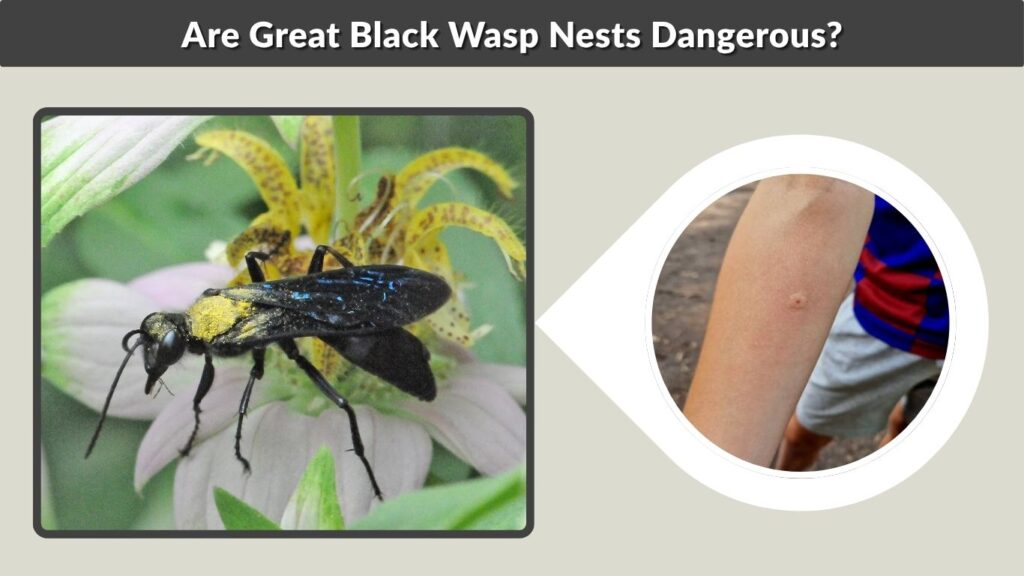
Despite their intimidating appearance, great black wasps are solitary wasps. Each female works independently rather than defending a large social colony. Solitary wasps generally create much less defensive nest activity than yellowjackets and other social species. Several solitary females can sometimes nest in the same favorable area without forming a true colony.
Will Great Black Wasps Sting?
Females can sting because their stingers are used to immobilize prey. However, they generally do not aggressively defend a nesting area against people.
A sting becomes more likely if a wasp is grabbed, stepped on, trapped against clothing, or directly handled.
When Should You Be Careful?
Avoid disturbing the area when:
- The nest is directly beside a busy walkway.
- Children or pets regularly use the location.
- Someone nearby has a severe insect-sting allergy.
- You cannot confidently identify the wasp.
- Many wasps are streaming through one entrance.
A continuous stream of numerous wasps entering the same ground hole is more consistent with a social species and deserves greater caution.
How to Find a Great Black Wasp Nest
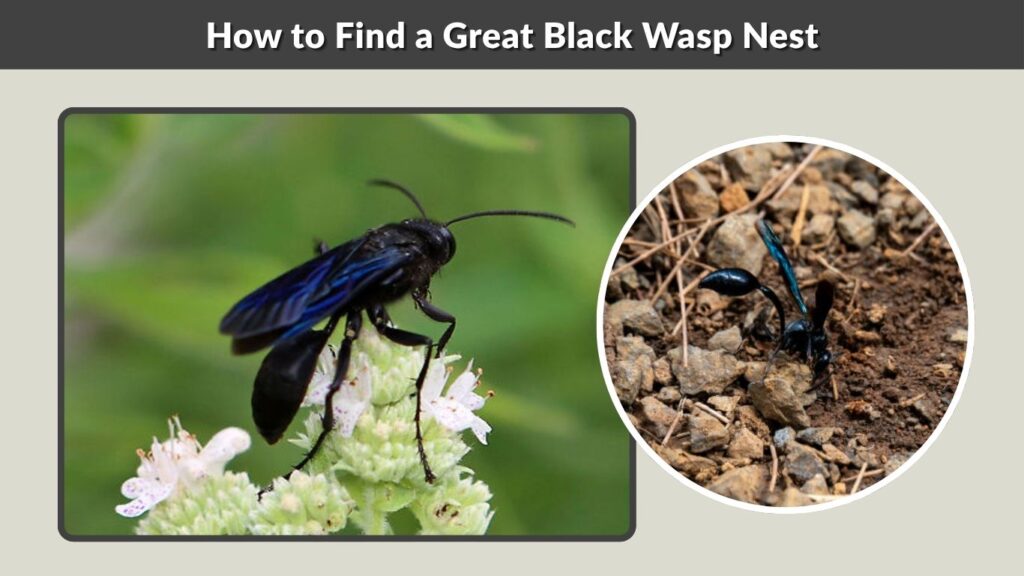
Because most of the nest is concealed underground, searching for the structure itself is difficult. Behavioral observation is much more useful. Watch a great black wasp from a safe distance and note whether it repeatedly returns to a particular patch of ground, crack, or opening.
Signs That Lead to the Nest
Look for:
- Wasps flying low across the ground
- Repeated trips to one soil opening
- Freshly excavated dirt
- Females dragging or flying with katydids
- Activity around cracks beside concrete
- A recurring flight path between flowers and the nesting area
Do not dig into an active nest simply to confirm its identity. Watching from a distance usually provides enough information.
Great Black Wasp Nest in a House
A true great black wasp normally nests in soil rather than building a colony inside living spaces. However, a nest can occur beneath a foundation, patio, driveway, or concrete slab, making the wasps appear to be entering the house.
An individual accidentally flying indoors does not necessarily mean there is a nest inside.
Great Black Wasp Nest Removal
Finding a nest does not automatically mean it should be destroyed. Great black wasps prey on katydids and also visit flowers. Because they are solitary and usually not highly defensive, nests located away from high-traffic areas can often remain undisturbed.
When to Leave the Nest Alone
If the nest is in an unused garden or distant area of the yard, giving the wasp space is often sufficient. The female’s nesting activity is seasonal rather than the development of a permanent multi-year colony.
When Removal May Be Necessary
Professional assessment can make sense when the nest is immediately beside a doorway, heavily used path, play area, or another place where accidental contact is unavoidable. Identification is especially important if numerous insects are entering one opening, since that could indicate a social wasp species rather than a great black wasp.
FAQs
What does a great black wasp nest look like?
It usually appears above ground as a hole in soft soil, sometimes surrounded by freshly excavated dirt. Most of the actual nest consists of underground burrows and brood chambers.
Where do great black wasps nest?
They typically nest in soft soil in gardens, fields, landscaped areas, and other suitable ground. Nests may occasionally occur beneath or next to concrete structures.
How big is a great black wasp nest?
Most of the nest is underground, so its full dimensions cannot be judged from the entrance. It contains burrows and individual brood chambers rather than a large exposed paper structure.
What is inside a great black wasp nest?
The nest contains developing offspring and paralyzed prey, primarily katydids, which the female collects as food for her larvae.
Should I remove a great black wasp nest?
Usually not if it is away from people and clearly belongs to a solitary great black wasp. Consider professional removal when its location creates unavoidable contact or when the species cannot be confidently identified.
