
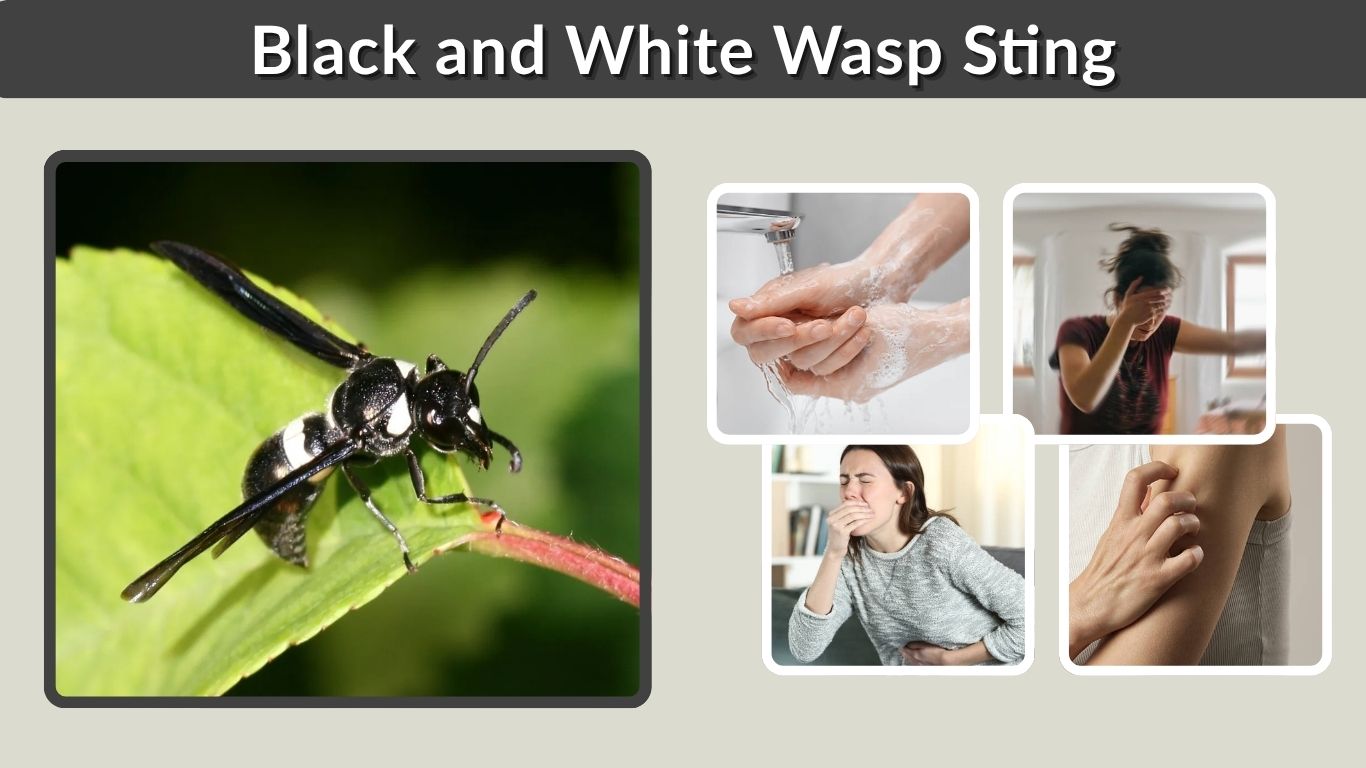
A black and white wasp sting can cause sudden pain, redness, itching, and swelling around the affected area. Several wasps have black-and-white markings, including the bald-faced hornet and some mason or solitary wasps, so appearance alone does not identify the exact species. Most uncomplicated wasp stings can be managed with basic first aid, but severe allergic reactions require immediate medical attention. Understanding typical symptoms, proper sting treatment, stinger concerns, and warning signs can help you respond safely after an unexpected sting.
What Is a Black and White Wasp?
“Black and white wasp” is a descriptive term rather than the name of a single species. One familiar example is the bald-faced hornet, Dolichovespula maculata, which is actually a type of yellowjacket. It has a predominantly black body with white or cream markings. Other solitary wasps can also have contrasting black-and-white patterns.
Bald-Faced Hornet
The bald-faced hornet is among the most recognizable black and white stinging insects. Workers are mostly black with pale markings on the face and abdomen. They live in social colonies and typically construct enclosed paper nests in trees, shrubs, buildings, or other elevated locations.
Because they defend their colony, approaching or disturbing an active nest can increase the likelihood of being stung.
Black and White Mason Wasps
Some mason wasps have predominantly dark bodies combined with pale bands or markings. Mason wasps are generally solitary rather than colony-forming insects.
Their behavior differs significantly from that of social wasps. Solitary wasps encountered while searching for food or nesting materials are usually less defensive than social species protecting a large nest.
Black and White Ichneumon Wasps
Some ichneumon wasps may also appear black and white and possess a long structure at the end of the abdomen. In many species, a structure that looks like a huge stinger is actually an ovipositor, which females use to lay eggs.
Therefore, seeing a long projection does not automatically mean an insect has an unusually dangerous sting.
Do Black and White Wasps Sting?
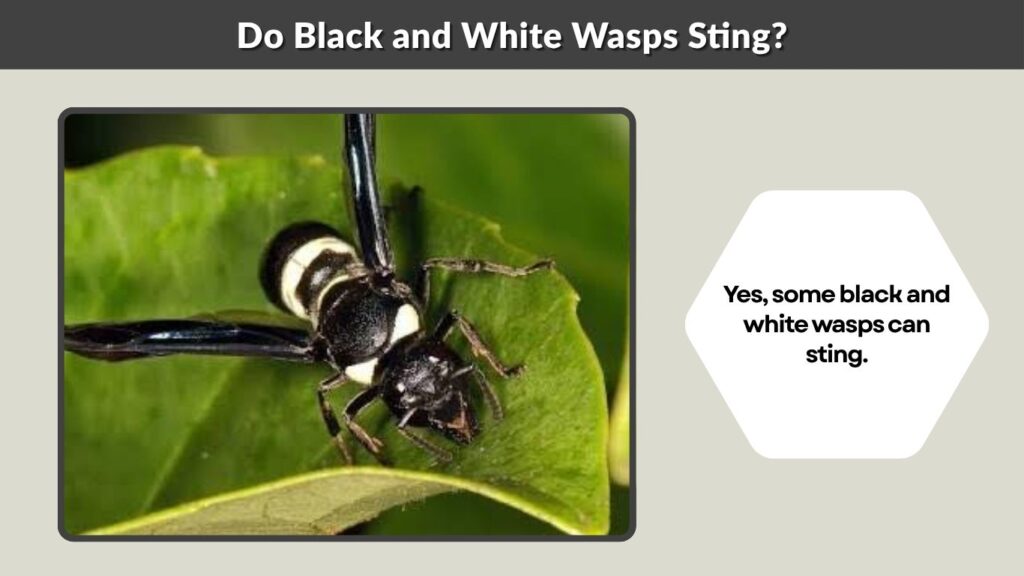
Yes, some black and white wasps can sting. The likelihood of a sting depends largely on which species is involved and whether it is handled or its nest is threatened. Bald-faced hornets can sting and may defend their nests, while many solitary wasps are much less defensive during ordinary encounters.
Why a Wasp May Sting
A sting is more likely when a wasp is:
- Grabbed or handled
- Trapped against the skin
- Stepped on accidentally
- Swatted or crushed
- Defending a nearby nest
- Disturbed during yard work
- Caught inside clothing
Can a Black and White Wasp Sting More Than Once?
Many wasps can deliver more than one sting. Unlike honey bees, which may leave a barbed stinger behind, wasps generally retain their stinging apparatus and may sting repeatedly when defending themselves or their colony.
This is one reason disturbing a social wasp nest can result in multiple stings rather than a single injury.
Black and White Wasp Sting Symptoms
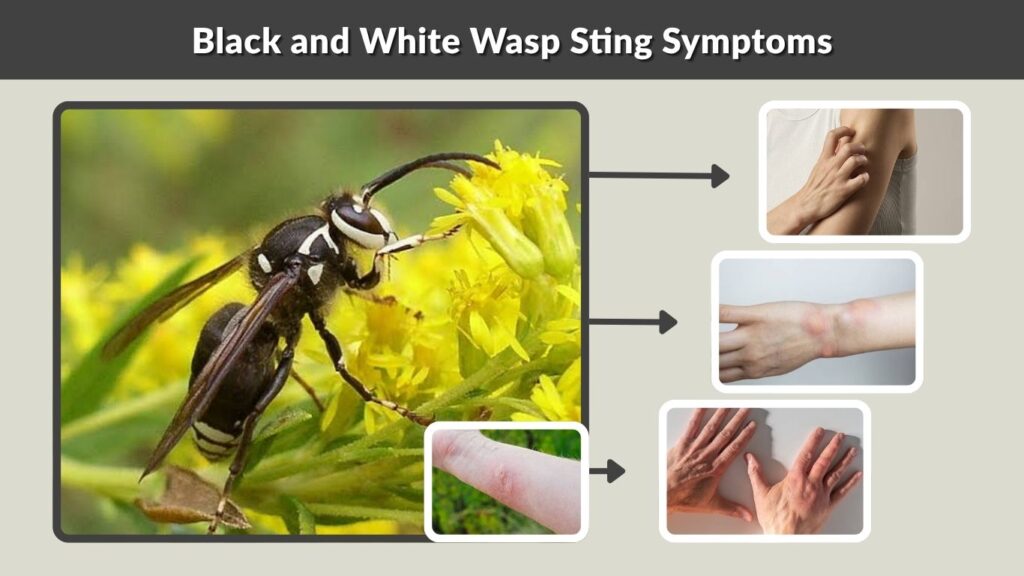
The severity of a wasp sting varies from person to person. Most people develop a localized reaction involving pain and swelling. Larger local reactions can spread beyond the immediate sting site, while a small number of people experience a serious systemic allergic reaction known as anaphylaxis.
Common Local Symptoms
Typical symptoms can include:
- Immediate sharp or burning pain
- A small raised welt
- Redness around the sting
- Mild to moderate swelling
- Itching
- Tenderness
- Warmth around the affected skin
These symptoms frequently improve gradually over several hours or days.
Large Local Reaction
Some people develop more extensive swelling after a sting. The affected area may become increasingly red, itchy, painful, and swollen during the following day or two.
A large local reaction does not automatically mean anaphylaxis, but persistent, unusually severe, or worsening symptoms should be discussed with a healthcare professional.
Severe Allergic Reaction Symptoms
Emergency symptoms can include:
- Difficulty breathing
- Swelling of the lips, tongue, mouth, or throat
- Widespread hives
- Wheezing
- Dizziness or fainting
- Weak or rapid pulse
- Nausea, vomiting, or diarrhea
- Difficulty swallowing
- Loss of consciousness
These can indicate anaphylaxis, which is a medical emergency.
Black and White Wasp Sting Treatment
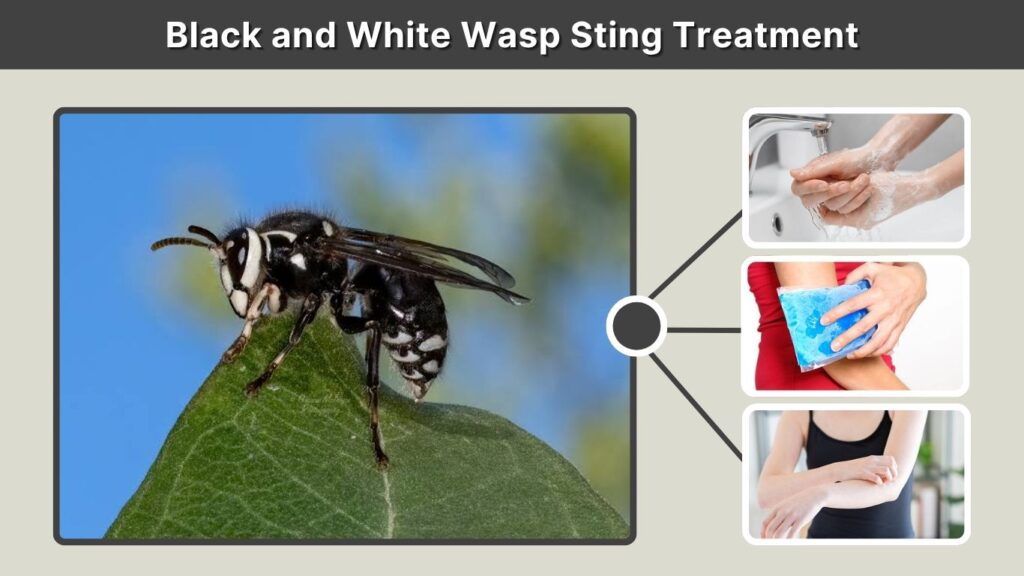
Most mild wasp stings can be managed with simple first-aid measures. The priorities are moving away from additional wasps, cleaning the skin, controlling swelling, and monitoring your symptoms. Treatment should never delay emergency care when breathing problems, throat swelling, fainting, or other signs of anaphylaxis appear.
Immediate First Aid
For a mild sting:
- Move to a safe location away from the wasp or nest.
- Wash the sting area with soap and water.
- Apply a cold pack wrapped in cloth.
- Keep the affected area elevated when practical.
- Avoid scratching the skin.
- Continue monitoring the reaction.
A cold compress can help reduce discomfort and swelling.
Managing Pain and Itching
Over-the-counter pain relievers may help with discomfort when they are safe for you to use. Products such as calamine lotion or hydrocortisone cream may help reduce itching and irritation. An oral antihistamine may also help some people with bothersome itching or swelling.
Follow product directions and check with a healthcare professional or pharmacist if you have medical conditions, take other medicines, are pregnant, or are uncertain which product is appropriate.
Watch the Sting Area
Mild swelling should gradually improve. Contact a healthcare professional if pain, swelling, or other symptoms become unusually severe, continue worsening, or fail to improve as expected.
Increasing warmth, spreading redness, drainage, or fever can also warrant medical evaluation because skin that has been scratched or damaged can sometimes become infected.
Black and White Wasp Stinger
People sometimes search for a “black and white wasp stinger” after finding a dark point or mark in the skin. Determining what stung you solely from the wound can be difficult. Most wasps do not characteristically leave their stinger behind in the way a honey bee can, so a missing stinger does not mean no sting occurred.
Should You Look for a Stinger?
Inspect the area gently. If an obvious insect stinger remains in the skin, removing it promptly is generally recommended. Mayo Clinic advises removing a visible retained stinger as soon as possible.
Do not repeatedly cut, squeeze, or dig into the skin searching for a stinger that is not clearly present.
What Does the Sting Mark Look Like?
A wasp sting may produce a small central mark surrounded by a raised, red, swollen area. Appearance can vary depending on skin tone and the person’s reaction.
The sting mark alone usually cannot reliably identify whether the insect was a bald-faced hornet, mason wasp, yellowjacket, or another wasp.
When Is a Black and White Wasp Sting Dangerous?
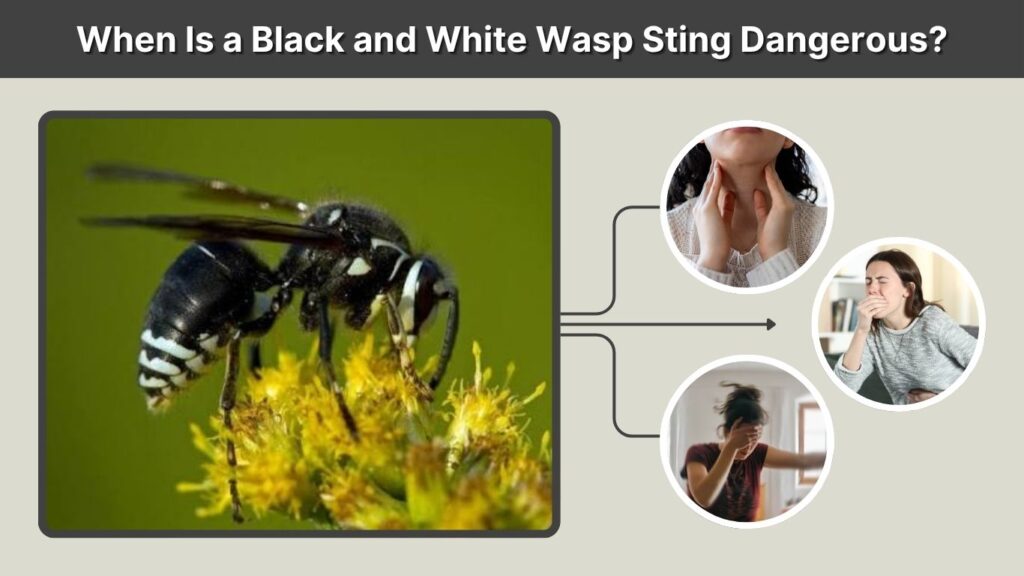
Most single wasp stings cause only local symptoms. The greatest immediate concern is anaphylaxis, which can develop quickly after exposure to insect venom. Multiple stings can also require medical attention, particularly when a large number of insects are involved or the person has significant symptoms.
Get Emergency Help If You Develop
Seek emergency medical assistance immediately for:
- Trouble breathing or wheezing
- Swelling of the tongue or throat
- Difficulty swallowing
- Fainting or severe dizziness
- Widespread hives with other symptoms
- Weak, rapid pulse
- Severe vomiting or diarrhea
- Signs of shock or loss of consciousness
If you have been prescribed an epinephrine auto-injector for insect-sting allergy, use it according to your healthcare professional’s instructions and obtain emergency medical care. Anaphylaxis can be life-threatening and requires prompt treatment.
How to Avoid Another Black and White Wasp Sting
Preventing stings mainly involves avoiding accidental contact and recognizing active nesting areas. A wasp feeding away from its nest may behave differently from one defending a colony. Bald-faced hornets and other social wasps deserve particular caution when an active nest is present near a home or frequently used outdoor area.
Around an Active Nest
Do not strike, shake, or closely approach an active aerial nest. Social wasps can defend their colony when they perceive a threat.
If a nest is positioned near an entrance, walkway, children’s area, or another location where people cannot easily avoid it, professional pest management may be safer than attempting removal at close range.
When a Wasp Is Flying Nearby
Remain calm and avoid trapping or crushing the insect against your skin. Foraging wasps away from a nest are generally less likely to sting unless they are trapped or threatened.
FAQs
1. Do black and white wasps sting?
Yes. Several black-and-white wasps can sting, including bald-faced hornets. Sting risk varies by species and increases when a social wasp’s nest is threatened.
2. What are the symptoms of a black and white wasp sting?
Common symptoms include immediate pain, redness, itching, swelling, tenderness, and a raised welt. Severe allergy symptoms can include breathing difficulty, throat swelling, widespread hives, dizziness, or fainting.
3. What is the best treatment for a black and white wasp sting?
For a mild reaction, move away from the insects, wash the area, apply a cold compress, and monitor symptoms. Appropriate over-the-counter treatments may help with pain or itching.
4. Does a black and white wasp leave a stinger?
Usually, wasps do not leave a stinger in the skin after an ordinary sting. However, inspect the area gently, and if an obvious retained stinger is visible, remove it promptly.
5. When should I seek emergency care after a wasp sting?
Seek emergency medical help for trouble breathing, swelling of the mouth or throat, fainting, severe dizziness, widespread allergic symptoms, or other signs of anaphylaxis.
