
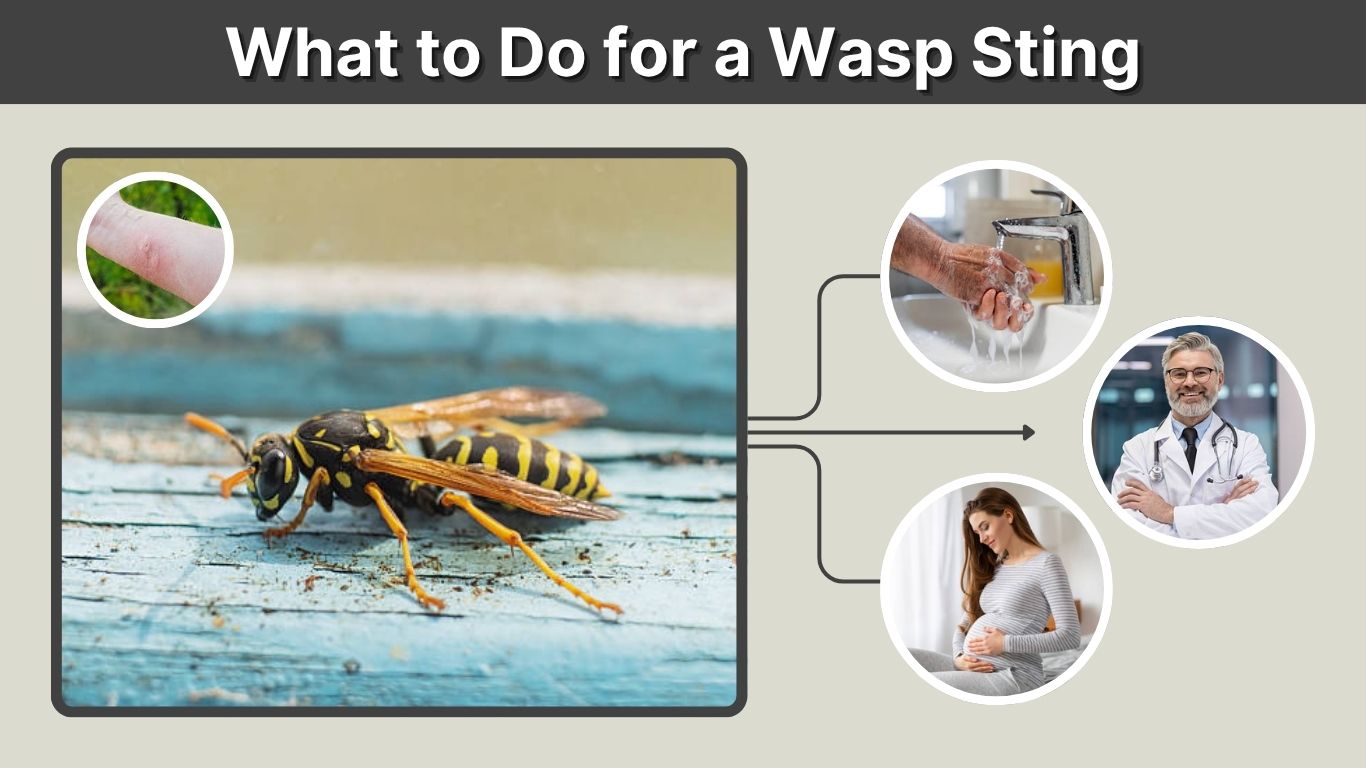
A wasp sting can cause sudden burning pain, itching, and swelling. If you are wondering what to do for a wasp sting, start by moving away from the insect and checking for signs of a serious allergic reaction. For a mild reaction, wash the area, apply a wrapped cold pack, and raise the affected limb. However, breathing difficulty, throat swelling, or faintness requires emergency help immediately. This guide explains practical first aid, ways to manage swelling, and when stings affecting children, sensitive body areas, or dogs need professional attention.
Check for an Allergic Reaction First
Before treating the skin, check how the person feels overall. Pain and swelling around the sting are different from symptoms affecting breathing, circulation, or other parts of the body. A severe allergic reaction, called anaphylaxis, can develop quickly. Do not wait for every warning sign to appear before taking action.
Emergency Warning Signs
Call your local emergency number immediately if a sting causes:
- Difficulty breathing, wheezing, or throat tightness.
- Swelling of the tongue or throat.
- Fainting, collapse, or severe dizziness.
- A hoarse voice or difficulty swallowing.
- Widespread hives accompanied by breathing problems, vomiting, or faintness.
Anaphylaxis can happen without a visible rash, so breathing and circulation symptoms deserve immediate attention.
What to Do While Help Arrives
Use a prescribed epinephrine, also called adrenaline, auto-injector immediately when anaphylaxis is suspected. Follow the device instructions and call for an ambulance.
Lie down and avoid standing or walking. If breathing is difficult, raise the shoulders or sit up slowly with the legs extended. A pregnant person should lie on their left side. If symptoms have not improved after five minutes and a second injector is available, use it. Emergency assessment remains necessary even after improvement. Antihistamines do not replace epinephrine.
What to Do for a Wasp Sting Immediately
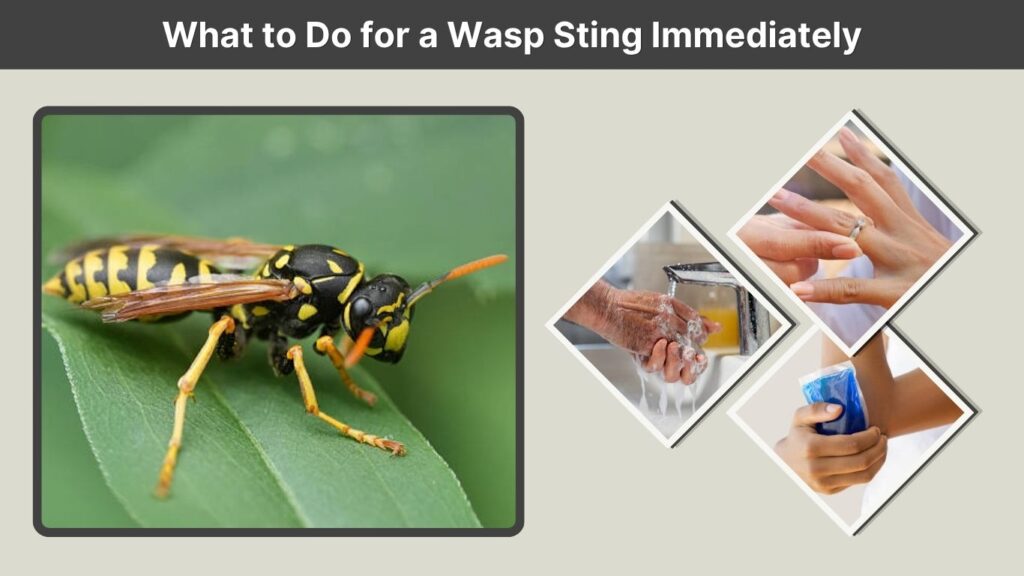
If there are no emergency symptoms, focus on preventing another sting and easing discomfort. Simple first aid is usually enough for a mild local reaction. You do not need to identify the exact wasp before beginning treatment. Keep watching for new symptoms while cleaning and cooling the affected area.
Follow These First-Aid Steps
- Move somewhere safe. Leave the area where the sting happened.
- Check the skin. Wasps usually do not leave a stinger. If one is visible, remove it promptly by brushing or scraping sideways.
- Wash gently. Clean the area with soap and water.
- Remove nearby rings. Do this before swelling makes them difficult to take off.
- Apply cold. Use an ice pack wrapped in a cloth for 10–20 minutes.
- Elevate the limb. Raise a stung arm or leg when practical.
Never place ice directly against the skin or dig beneath the surface looking for a stinger.
Bee, Hornet, and Different Wasp Stings
The initial approach is similar for a red wasp, paper wasp, yellow jacket, hornet, or bee sting. Honeybees commonly leave a stinger behind; wasps generally do not and can sting repeatedly.
Treat the person’s symptoms rather than assuming an insect’s color determines the seriousness of the reaction. Multiple stings or a previous severe sting allergy warrant prompt medical advice.
How to Reduce Wasp Sting Swelling and Itching
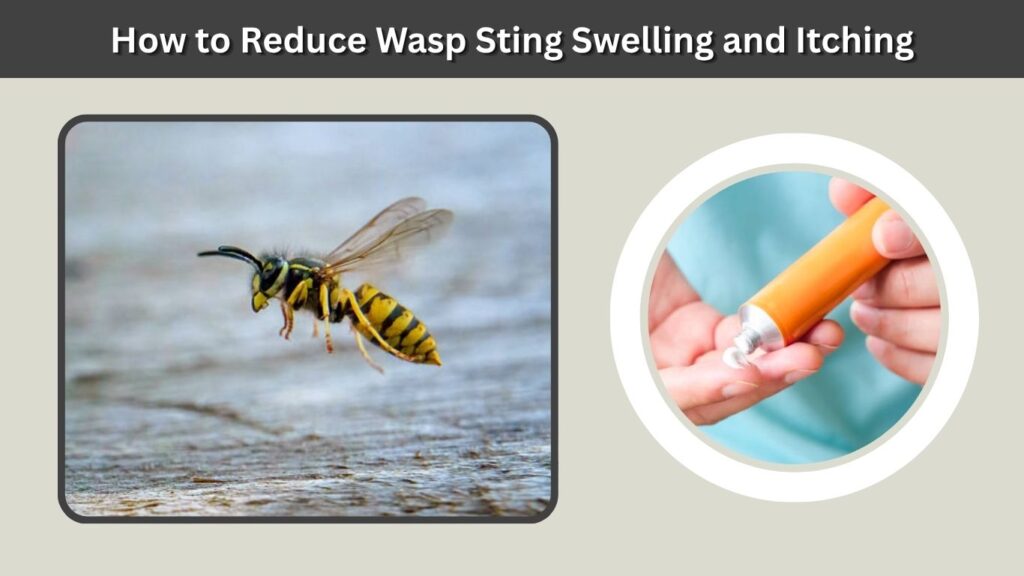
Swelling after a sting can be uncomfortable without being an emergency. The important distinction is whether symptoms remain near the sting or involve the whole body. Cooling and elevation can help local discomfort. Medicines may ease itching or pain, but they should be suitable for the person’s age, health conditions, and other treatments.
Options for Symptom Relief
A pharmacist can advise about:
- An oral antihistamine for itching.
- Hydrocortisone cream for localized itching and swelling.
- Paracetamol, also called acetaminophen, for pain.
- Ibuprofen when appropriate for the person.
Follow the product label rather than combining medicines unnecessarily. Some antihistamines cause drowsiness. Ask before using medicines during pregnancy or giving them to a child. Keep creams away from the eyes and avoid applying them to broken skin unless advised.
How Long Does Swelling Last?
A mild reaction may settle within hours, while a stronger local reaction can enlarge over the next day or two and last several days. Large local swelling may persist for a week or more.
Swelling alone does not automatically mean infection or anaphylaxis. However, very large, unusually painful, or worsening swelling needs medical assessment. A clinician may prescribe additional treatment when ordinary measures are insufficient.
Treating Stings on Different Body Parts
The same cleaning and cooling steps apply to many locations, but some areas need extra caution. A swollen finger may become restricted by a ring, while an eye or mouth sting can create more serious problems. Consider both the location and the person’s overall condition when deciding whether home care is enough.
Finger, Hand, Foot, Arm, or Leg
For a wasp sting on a finger or hand, remove rings promptly and elevate the hand. For a foot or leg sting, rest and raise the limb when possible.
Seek urgent care if swelling traps a ring or causes numbness, unusual discoloration, or severe pain. Do not force tight jewelry over swollen skin. Cold packs should remain wrapped, even when the sting feels intensely painful.
Face, Lip, Neck, or Near the Eye
Get urgent medical advice for a sting near the eye, on the eyelid, or inside the mouth or throat. Do not rub the eye, apply skin creams into it, or attempt to remove an embedded stinger yourself.
Sudden tongue or throat swelling, breathing difficulty, or trouble swallowing requires emergency help. Facial swelling away from the original sting can also indicate a wider allergic reaction.
Wasp Stings in Children and During Pregnancy
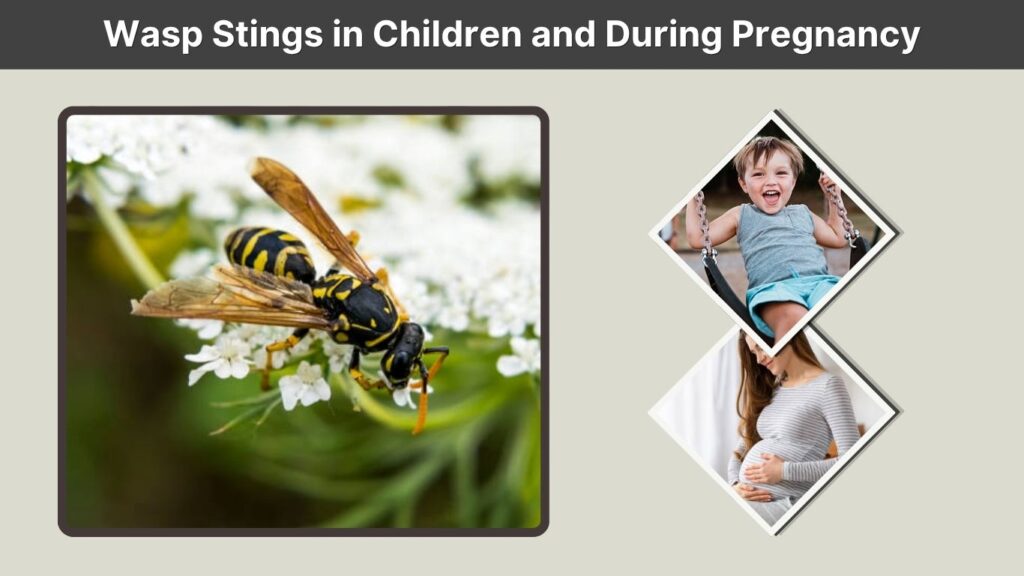
Children may struggle to explain dizziness, throat discomfort, or breathing changes, so careful observation matters. Pregnancy also affects which medicines are appropriate. Begin with gentle cleaning and a wrapped cold pack when symptoms are mild, but obtain professional advice before choosing medication. Severe allergic symptoms require immediate treatment in either situation.
Babies, Toddlers, and Older Children
Comfort the child and discourage scratching. Use only age-appropriate medicines at the recommended dose, with pharmacist or clinician guidance.
A baby younger than one year should receive medical advice after an insect sting. Seek emergency help if a child becomes limp, unusually unresponsive, or has difficulty breathing. For multiple stings, obtain prompt medical advice rather than relying entirely on home treatment.
What to Do While Pregnant
For a mild sting, start with washing, cooling, and elevation. Check with a pharmacist, midwife, or doctor before taking painkillers or antihistamines.
If anaphylaxis occurs, use prescribed epinephrine and call emergency services immediately. Pregnancy is not a reason to delay emergency treatment; lie on the left side while waiting for help.
What to Do for a Wasp Sting on a Dog
Dogs often encounter wasps while exploring with their noses or paws. A sting may cause limping, licking, drooling, or localized swelling. Move the dog away from the insects and contact your veterinarian for advice. Facial swelling, mouth stings, and symptoms affecting breathing or general behavior deserve particular attention.
Safe First Aid and Veterinary Warning Signs
For mild localized discomfort, gently apply a cold pack wrapped in a towel if your dog tolerates it. Do not give human painkillers or antihistamines unless a veterinarian specifies the exact product and dose.
Seek emergency veterinary care for breathing difficulty, collapse, vomiting, rapidly increasing swelling, or a sting inside the mouth or throat. Puppies and dogs with multiple stings should receive prompt veterinary advice.
Home Remedies and When to See a Doctor
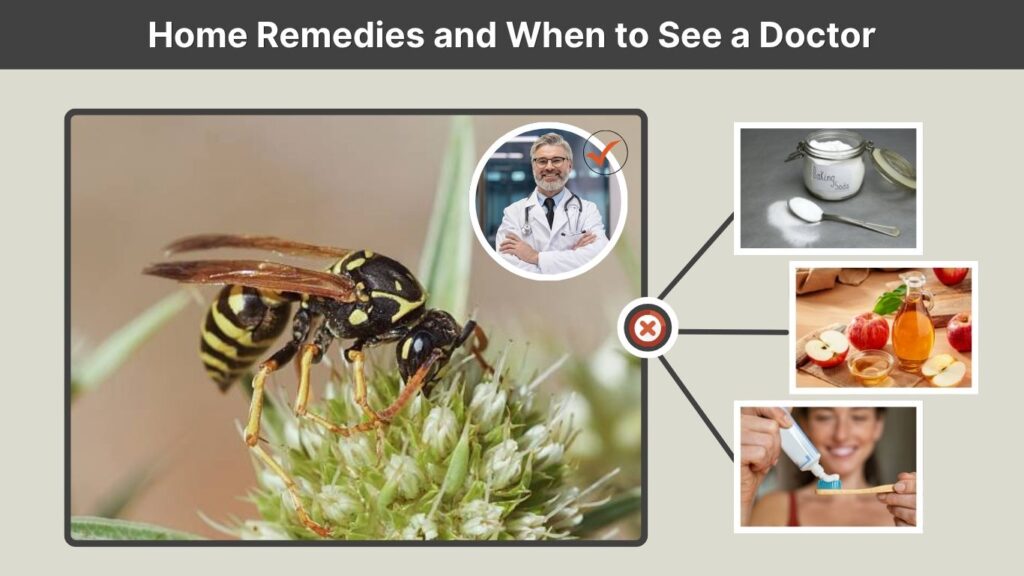
An effective treatment process uses simple first aid and clear warning signs. Household mixtures can distract from useful care, and scratching can damage the skin. Monitor whether symptoms are improving over time. Persistent discomfort, possible infection, or symptoms beyond the sting site should prompt professional assessment rather than repeated home treatment.
Avoid Unproven Treatments
Do not rely on baking soda, vinegar, toothpaste, or similar mixtures to neutralize injected venom. NHS guidance advises against home remedies such as bicarbonate of soda.
Avoid scratching, applying heat, or rubbing mud onto the sting. These measures can worsen irritation or introduce germs.
Recognize Problems That Need Assessment
Seek medical advice for increasing warmth, pain, spreading redness, pus, fever, or symptoms that are not improving. Antibiotics are not automatically needed for swelling; a clinician should assess whether infection is present.
After a serious allergic reaction, arrange an allergy specialist review. Testing, an emergency action plan, and venom immunotherapy may help reduce future risk.
FAQs
1. What Is the First Thing to Do for a Wasp Sting?
Move away from the wasp and check for emergency symptoms. For a mild reaction, wash the area, remove nearby rings, and apply a wrapped cold pack.
2. Is Swelling the Next Day Normal?
It can be. Local swelling may increase over the first one or two days. Seek advice if it becomes unusually painful, very extensive, or accompanies other symptoms.
3. Does a Wasp Leave Its Stinger Behind?
Usually not. If a stinger is visible, remove it promptly. Do not dig into the skin when nothing is visible.
4. Can an Antihistamine Treat a Severe Allergic Reaction?
No. It may relieve itching, but suspected anaphylaxis requires epinephrine and emergency medical care.
5. Should I Put Vinegar on a Wasp Sting?
Vinegar is not a reliable treatment for injected venom. Washing, a wrapped cold pack, and appropriate symptom relief are better first-aid choices.
