
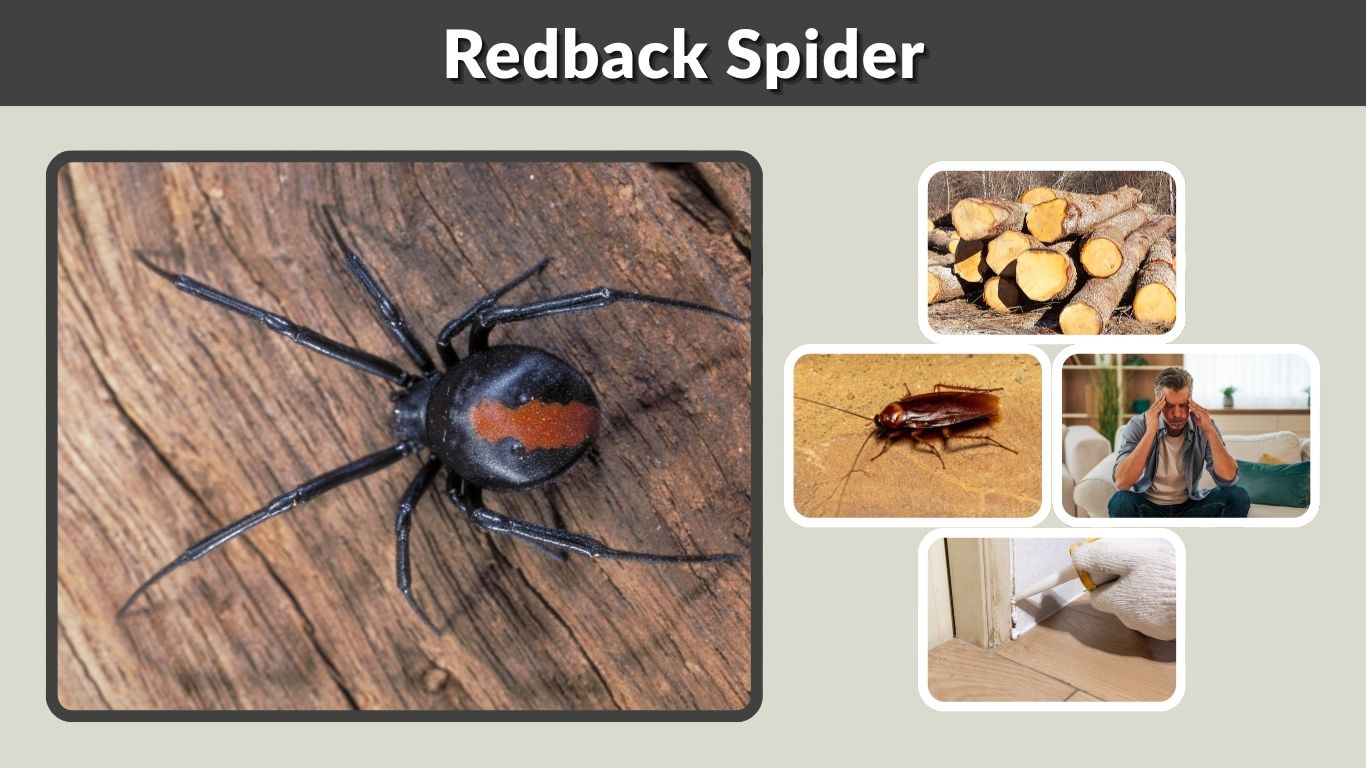
The redback spider is one of Australia’s best-known venomous spiders, recognizable by the bright red marking on the abdomen of many adult females. Scientifically known as Latrodectus hasselti, it belongs to the widow spider group and is closely related to black widows. Redbacks commonly live around homes, sheds, gardens, and other sheltered places. Although their venom can cause significant illness, serious outcomes are uncommon with appropriate medical care. This guide covers identification, size, habitat, bites, venom, behavior, and redback spider vs black widow differences.
What Is a Redback Spider?
The Australian redback spider is a member of the genus Latrodectus, a group that includes widow spiders around the world. Females are responsible for most medically significant bites because they are substantially larger than males and have more powerful fangs. Redbacks usually remain close to their irregular webs rather than actively chasing prey or people.
Redback Spider Identification
- Scientific name: Latrodectus hasselti
- Adult females are usually glossy black or dark brown.
- Females commonly have a red or orange stripe on the upper abdomen.
- A red or orange hourglass-like marking may occur underneath.
- Males are much smaller and often lighter brown.
- Young spiders may have pale, white, red, or patterned markings.
- The abdomen is rounded and relatively large in mature females.
- Their webs are irregular and tangled rather than circular.
Redback Spider Size
Adult female redbacks generally have a body around 1 centimeter long, with the legs making their overall span considerably larger. Males are much smaller, often only a few millimeters in body length.
The large, dark female with a red dorsal stripe is the form most people recognize. A particularly well-fed female may look much larger because of her swollen abdomen.
Male vs Female Redback Spider
Female redbacks are larger, darker, and more medically important. Mature females usually have the characteristic red stripe and remain in or near their webs.
Males are tiny by comparison and are typically light brown with pale markings. Male bites are considered far less significant because their smaller fangs and lower venom delivery make serious envenomation unlikely.
Where Do Redback Spiders Live?
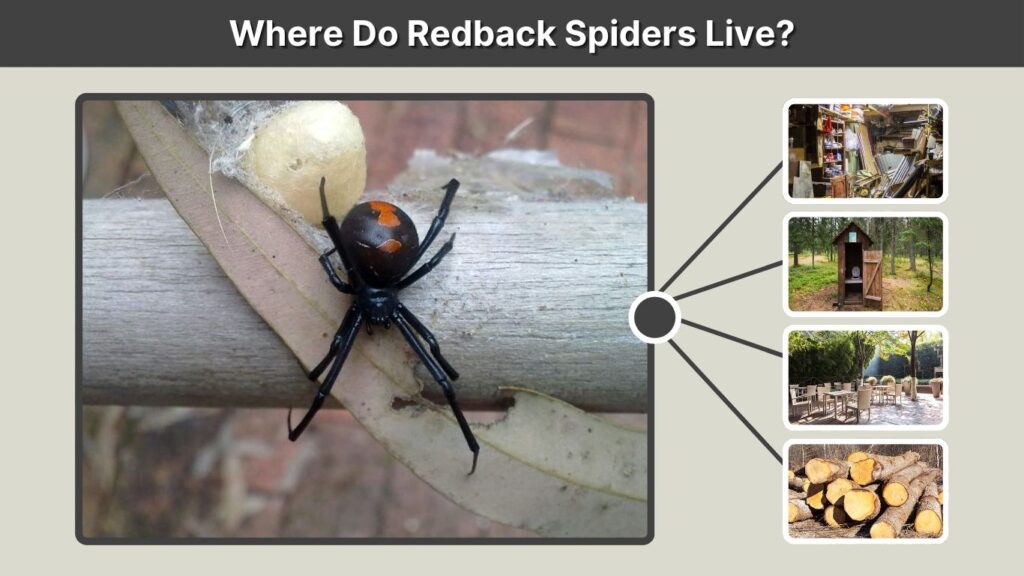
Redback spiders are strongly associated with Australia, where they occur across much of the country. They have adapted particularly well to human-modified environments because sheds, garages, outdoor furniture, storage areas, and other structures provide dry shelter and suitable locations for webs.
Common Redback Spider Habitats
- Sheds and garages
- Outdoor toilets
- Garden equipment
- Wood piles
- Under outdoor furniture
- Mailboxes
- Storage containers
- Beneath ledges
- Around fences
- Dark corners of buildings
- Under rocks and debris
- Children’s outdoor toys left undisturbed
Redback Spider Inside the House
Redbacks prefer sheltered outdoor locations but occasionally appear inside structures. Garages, storage rooms, utility areas, and other places that remain relatively undisturbed offer particularly suitable conditions.
Keeping clutter under control, wearing gloves when moving stored materials, and checking outdoor objects before bringing them indoors can reduce accidental encounters.
Are Redback Spiders Found in Texas or California?
The true Australian redback spider is native to Australia, although populations have been introduced to some places outside its natural range.
People in Texas or California who see a black spider with red markings are more likely to encounter one of the North American widow spiders. Because widow species can look similar, geographic location is important for identification.
Redback Spider Web and Behavior
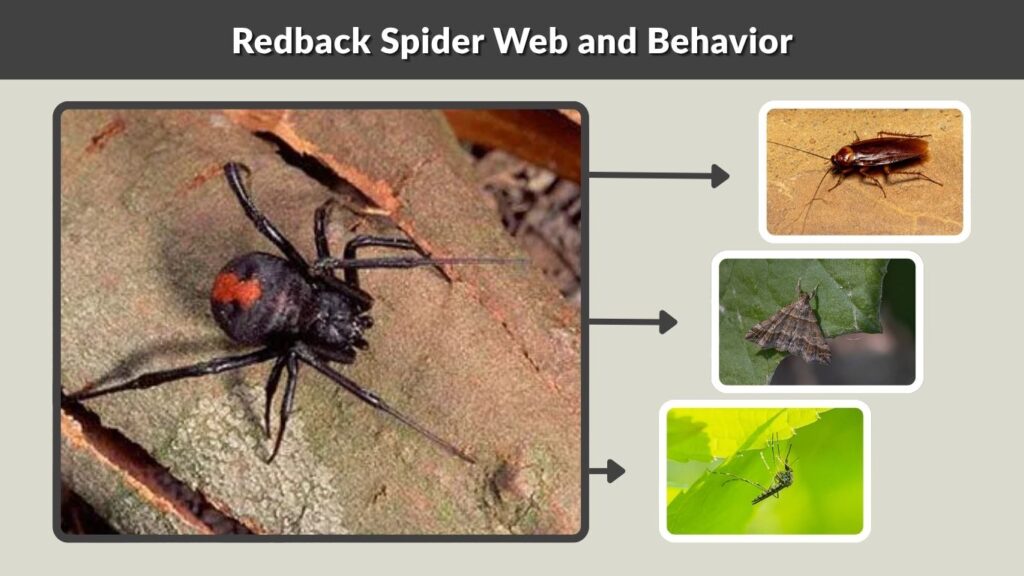
Redback spiders do not build the symmetrical circular webs associated with garden orb-weavers. Instead, females construct strong, messy-looking webs containing irregular supporting threads and sticky capture lines.
Redback Spider Web
- Irregular and tangled in appearance
- Usually built in sheltered locations
- Contains strong silk threads
- Often positioned close to the ground
- May contain wrapped prey
- Females commonly remain near the retreat portion of the web
What Do Redback Spiders Eat?
Redbacks mainly feed on insects and other arthropods captured by their webs. Prey may include beetles, cockroaches, flies, moths, and other spiders.
Larger individuals can occasionally capture surprisingly large animals that become entangled in their strong webs, but dramatic cases involving reptiles or other vertebrates are unusual rather than typical feeding behavior.
Redback Spider Mating
Redback mating behavior is particularly unusual. The much smaller male approaches the female cautiously and may place himself near her mouthparts during mating. Sexual cannibalism can occur, although it is not guaranteed in every mating encounter.
After mating, females produce silk egg sacs containing numerous eggs. A female may produce several sacs during her lifetime.
Redback Spider Bite
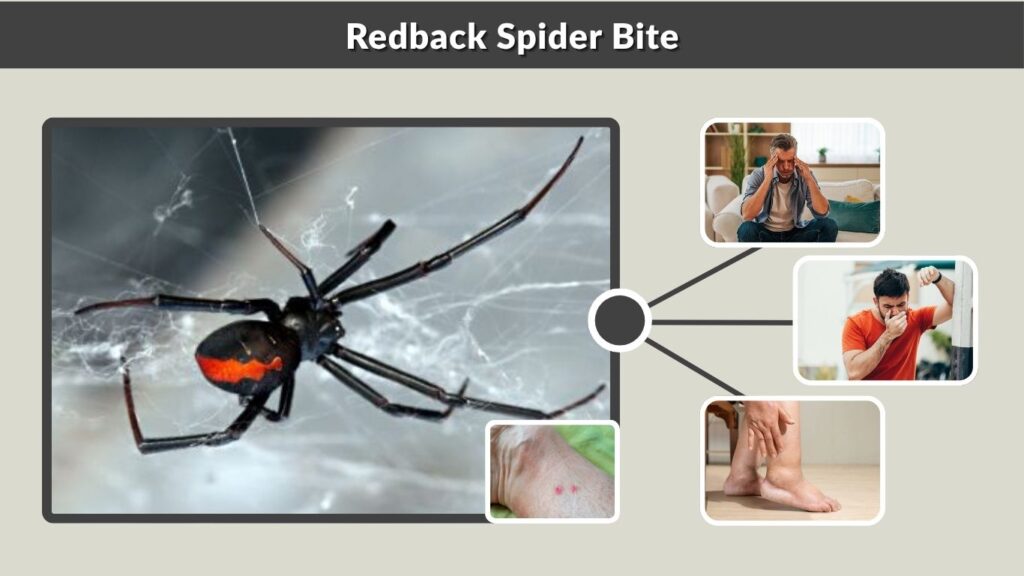
A redback spider bite can be medically significant, particularly when a mature female successfully injects venom. The initial bite may cause mild or sharp pain, but symptoms can intensify over the following minutes or hours.
Redback Spider Bite Symptoms
- Increasing pain around the bite
- Redness or swelling
- Sweating near the bite site
- Generalized sweating
- Nausea or vomiting
- Headache
- Muscle pain
- Abdominal discomfort
- Restlessness or weakness
- Increased heart rate in some cases
The combination of severe pain and unusual sweating is particularly associated with widow-spider envenomation.
What to Do After a Redback Spider Bite
Stay as calm as possible and limit unnecessary activity. Apply a cold pack wrapped in cloth to the affected area to help manage pain.
Seek medical advice promptly, especially if pain becomes severe or spreads, or if sweating, vomiting, weakness, breathing difficulty, or other significant symptoms develop.
Do not attempt to cut the bite, suck out venom, or use dangerous home remedies. Pressure immobilization bandaging, commonly recommended for some Australian snake bites and funnel-web spider bites, is generally not recommended for redback spider bites.
Can a Redback Spider Kill You?
Redback venom can cause serious illness, but deaths are extremely rare, particularly where modern medical treatment is available. Most bites do not result in life-threatening complications.
Children, older adults, and people experiencing severe systemic symptoms should receive prompt professional medical assessment.
Redback Spider Venom
Redback spiders possess neurotoxic venom designed to immobilize prey. One of its important components belongs to the alpha-latrotoxin group, which affects nerve signaling and causes the characteristic pain, sweating, and muscular symptoms associated with significant widow-spider envenomation.
How Dangerous Is the Venom?
The severity varies considerably. Some bites produce limited local symptoms, while others cause intense, persistent pain and systemic illness.
Medical treatment focuses heavily on pain management and monitoring. Antivenom exists for redback envenomation and may be considered by clinicians in selected circumstances, particularly when significant symptoms are difficult to control.
Redback Spider vs Black Widow
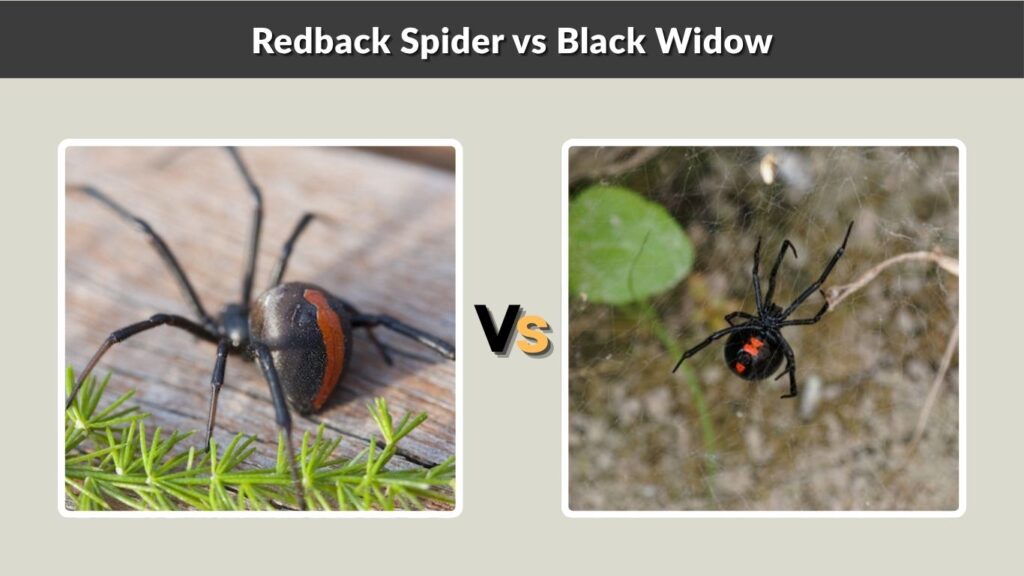
Redbacks and black widows are close relatives belonging to the same genus, Latrodectus. This relationship explains their similar body shapes, venom effects, web structures, and red markings. However, a redback is not simply another name for every black widow.
Main Differences
- The redback is Latrodectus hasselti.
- Several different species are called black widows.
- Redbacks are most strongly associated with Australia.
- Black widows are particularly well known in North America.
- Female redbacks often have a prominent red stripe along the upper abdomen.
- Many adult female black widows are identified by a red hourglass underneath the abdomen.
- Both produce medically important neurotoxic venom.
Is a Redback Spider a Black Widow?
Not exactly. Redback spiders and black widows belong to the same genus and are close relatives, but they represent different species.
They share enough physical and biological characteristics that a redback can reasonably be described as part of the broader widow-spider group.
How to Control Redback Spiders Around the Home
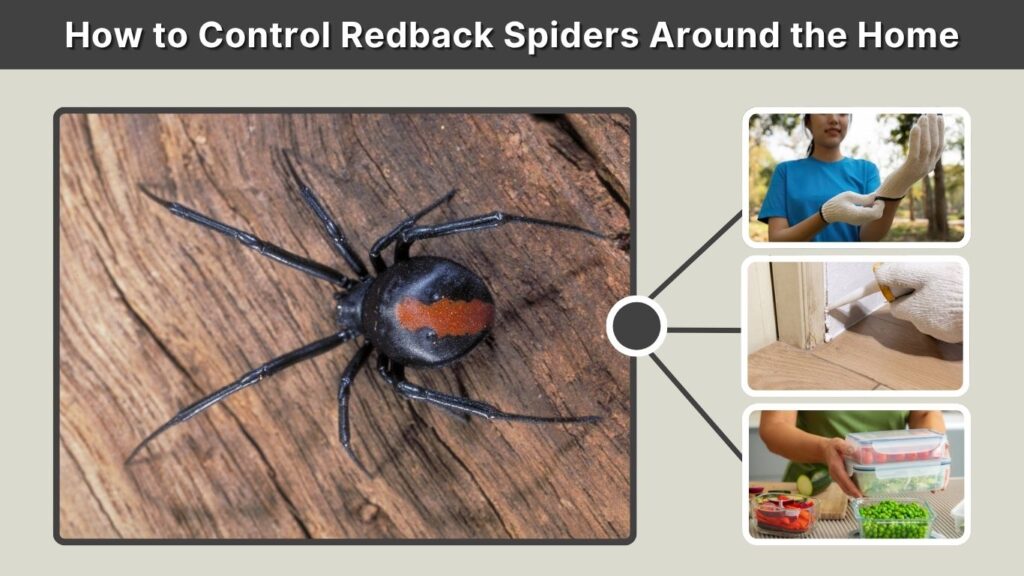
Redbacks tend to establish webs in places that remain dry, protected, and undisturbed. Making these locations less suitable can reduce the chance of spiders establishing themselves close to frequently used areas.
Redback Spider Prevention
- Remove unused clutter around sheds and garages.
- Wear gloves when moving stored outdoor objects.
- Shake out shoes or clothing stored outside.
- Keep children’s toys away from undisturbed corners.
- Remove unwanted webs from frequently used areas.
- Seal obvious cracks and gaps around buildings.
- Keep storage containers closed.
- Avoid reaching blindly underneath furniture or equipment.
Professional pest control may be appropriate when numerous redbacks repeatedly occur around high-use areas of a property.
FAQs
1. Is the redback spider venomous?
Yes. Redback spiders are venomous, and adult females can deliver medically significant bites. Their venom affects the nervous system and can cause severe pain, sweating, nausea, and other symptoms.
2. How big can a redback spider get?
Adult females usually have a body around 1 centimeter long, although their leg span makes them appear considerably larger. Males are much smaller and may be only a few millimeters long.
3. Is a redback spider the same as a black widow?
No. They are closely related members of the genus Latrodectus, but the Australian redback is Latrodectus hasselti, while several other Latrodectus species are commonly called black widows.
4. Can you die from a redback spider bite?
Fatal redback spider bites are extremely rare with modern medical care. However, bites can produce severe pain and systemic symptoms, so suspected significant envenomation should receive professional medical assessment.
5. Where do redback spiders make their nests?
Redbacks build irregular webs in sheltered, relatively dry locations. Common sites include sheds, garages, outdoor furniture, wood piles, storage areas, fences, garden equipment, and other places that remain undisturbed for long periods.
