
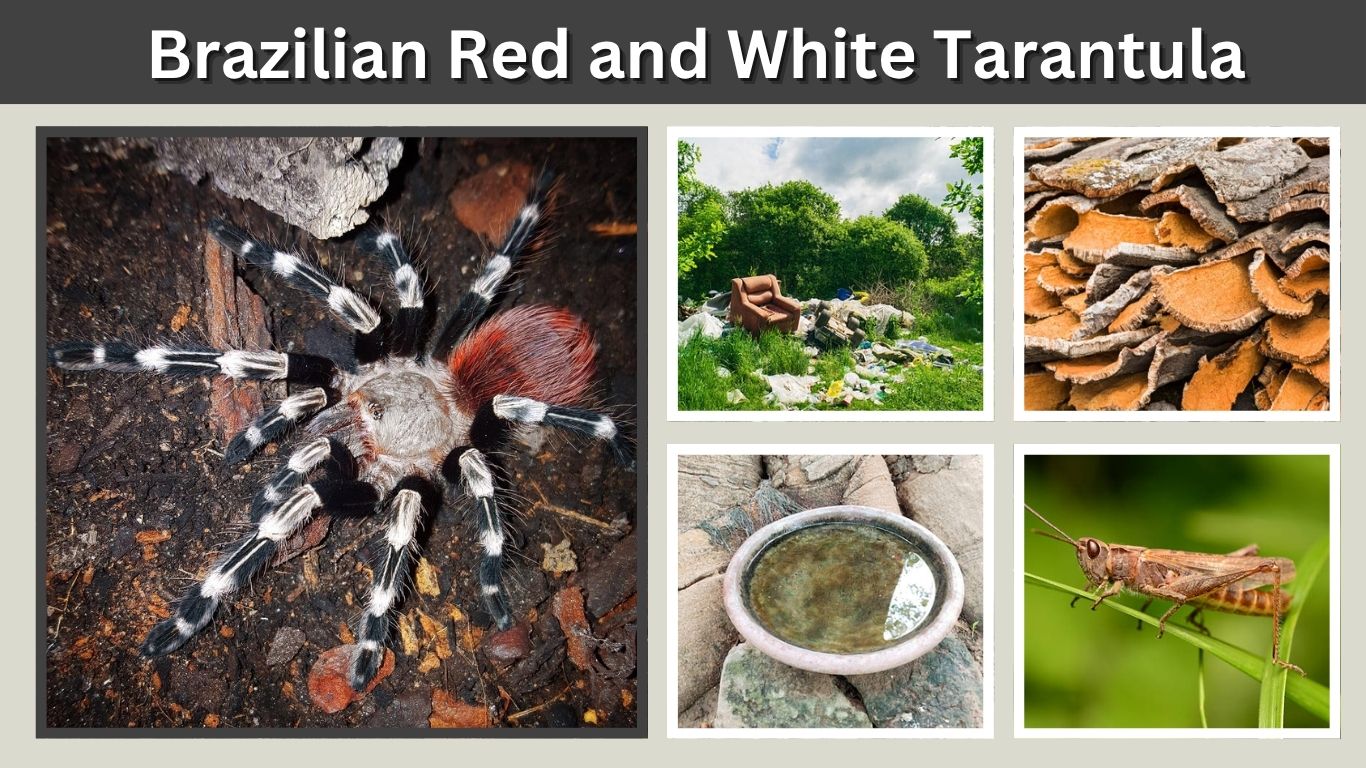
The Brazilian red and white tarantula is a large, fast-growing species recognized by its bright white leg bands, reddish abdominal hairs, and pale carapace. Although generally hardy in captivity, it can be skittish and defensive, frequently releasing irritating hair when disturbed. A secure terrestrial enclosure, deep substrate, moderate moisture, reliable ventilation, and minimal handling are essential. This guide covers its size, habitat, temperament, diet, enclosure setup, sling care, molting, lifespan, venom, and purchasing considerations.
What Is a Brazilian Red and White Tarantula?
The Brazilian red and white tarantula is currently classified as Nhandu chromatus. It was temporarily placed in the genus Vitalius, so older care sheets and sellers may still use Vitalius chromatus. A 2026 taxonomic redescription restored it to Nhandu.
Identification
- Scientific name: Nhandu chromatus
- Common name: Brazilian red and white tarantula
- Alternative name: White-striped birdeater
- Family: Theraphosidae
- Native range: Brazil
- Type: New World terrestrial tarantula
- Adult leg span: Approximately 6–7 inches
- Growth rate: Moderate to fast
- Temperament: Skittish and defensive
- Experience level: Intermediate
- Urticating hairs: Present
Its legs are dark brown or black with prominent cream-white bands. The abdomen is covered with reddish or orange hairs, while the carapace usually appears beige, gray, or light brown.
Brazilian Red and White Knee Tarantula
“Brazilian red and white knee tarantula” is an informal variation of the common name rather than a separate breed. The white markings occur around several leg joints, creating a banded appearance.
This species is sometimes confused with the Brazilian whiteknee tarantula, Acanthoscurria geniculata. The whiteknee usually has a darker carapace, heavier build, and bolder white bands without the same concentration of reddish abdominal hairs.
Adult Size and Growth Rate
The Brazilian red and white is a relatively large tarantula. A full-grown specimen usually reaches a diagonal leg span of 6–7 inches, although individual size depends on sex, feeding, temperature, and genetics.
How Fast Does It Grow?
Spiderlings grow moderately quickly and may reach an impressive size within a few years. Warmer conditions and frequent feeding can accelerate growth, but power-feeding is unnecessary and may create an excessively swollen abdomen.
Females generally develop heavier bodies, while mature males become leggier and slimmer. Males also develop enlarged emboli on their pedipalps and tibial hooks after their final molt.
Natural Habitat and Behavior
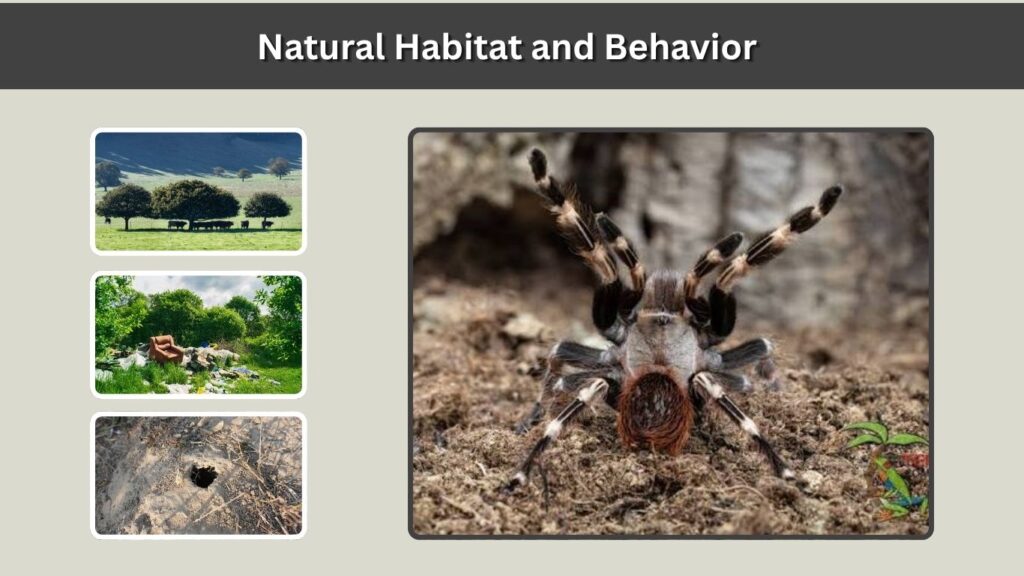
Nhandu chromatus is native to Brazil, where it occupies terrestrial habitats and shelters beneath vegetation, natural debris, or inside shallow burrows. It spends most of its time close to the ground.
Burrowing Behavior
This tarantula may excavate a burrow when given enough substrate. Others simply enlarge a prepared retreat beneath cork bark. It may also cover nearby surfaces with silk, particularly around the entrance to its shelter.
A hidden tarantula is not necessarily unhealthy. Hiding becomes especially common after rehousing, during daylight, and before molting.
Temperament
Brazilian red and white tarantulas are often active feeders but can be nervous when disturbed. Their first defense is frequently to retreat or kick urticating hairs. A cornered individual may display its fangs, slap the ground, or bite.
Temperament varies among individuals. Even a normally calm spider can react defensively during maintenance, feeding, or premolt.
Brazilian Red and White Tarantula Enclosure Setup
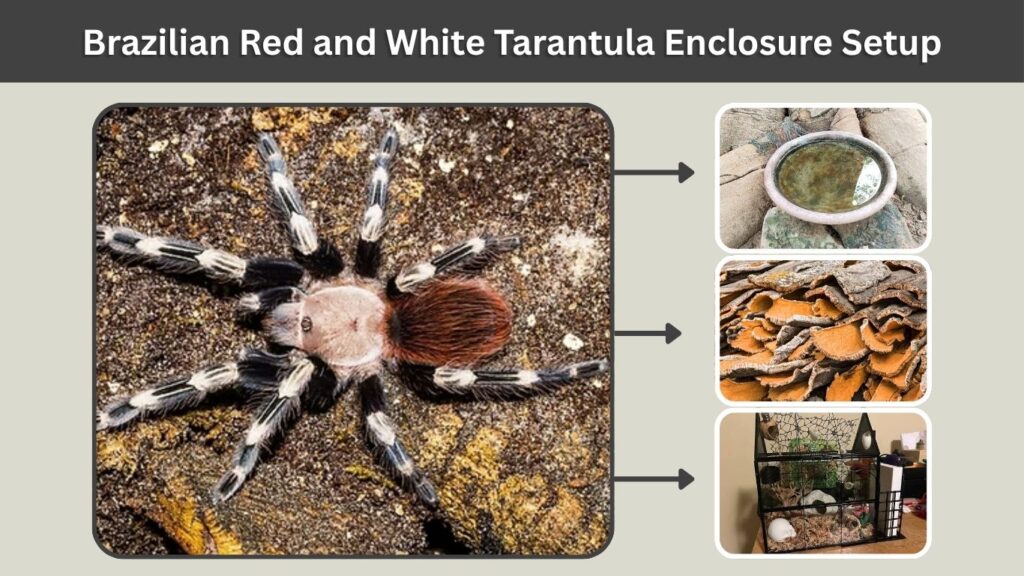
This is a terrestrial species, so floor space is more important than height. Excessive climbing is dangerous because a fall can rupture its abdomen.
Adult Enclosure Requirements
- Floor space: Approximately three times the spider’s leg span
- Typical enclosure: Around 18 × 12 × 12 inches or larger
- Substrate depth: Approximately 4–6 inches
- Temperature: 70–80°F
- Humidity: Moderate with a moisture gradient
- Water: Clean, shallow water dish
- Hide: Cork bark or another dark retreat
- Ventilation: Cross-ventilation
- Lid: Secure and escape-proof
Coconut fiber, organic topsoil, or a compacted mixture of both works well. Avoid substrate containing fertilizers, pesticides, sharp wood chips, or strongly scented additives.
Provide artificial plants, leaf litter, or cork pieces as cover and web anchors. Heavy rocks should not rest loosely on substrate because burrowing beneath them could cause a collapse.
Temperature and Moisture
Normal household temperatures are usually suitable. Additional heat is unnecessary unless the room regularly becomes cold. Never place a heat mat beneath the enclosure because the spider may burrow downward to escape heat.
Keep the lower substrate slightly moist while allowing the surface to become drier. Occasionally overflow the water dish or moisten one corner instead of spraying the entire enclosure. Constantly saturated substrate combined with weak airflow encourages mold and mites.
Brazilian Red and White Tarantula Sling Care
Spiderlings require smaller enclosures that make it easy to find prey and maintain suitable moisture. A ventilated vial or small deli cup is generally appropriate, depending on the sling’s size.
Sling Setup
- Provide several inches of slightly moist substrate
- Create a starter burrow with a finger or small tool
- Add a tiny piece of cork bark or artificial foliage
- Provide ventilation without escape-sized openings
- Offer water droplets until the sling can safely use a dish
- Remove uneaten prey within 24 hours
Feed small crickets, roach nymphs, flightless fruit flies, or pieces of pre-killed prey once or twice weekly. Pre-killed food is useful when prey is larger than the sling.
Transfer the spider to a larger enclosure once its current container becomes cramped. Avoid oversized setups because monitoring feeding and finding a small sling can become difficult.
Brazilian Red and White Tarantula Diet and Feeding
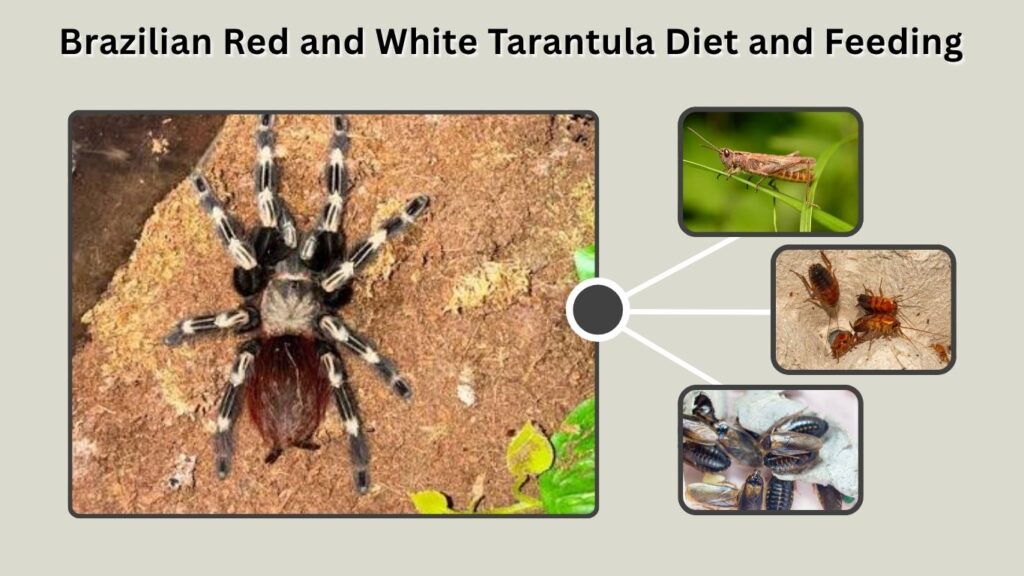
Brazilian red and white tarantulas are opportunistic ambush predators. They respond strongly to prey vibrations and usually have an excellent feeding response.
Suitable Foods
- Crickets
- Dubia roaches
- Red runner roaches
- Locusts
- Mealworms
- Superworms
- Black soldier fly larvae
Juveniles can be fed one or two appropriately sized meals weekly. Adults commonly need one substantial meal every 7–10 days. Adjust the schedule according to the size of the abdomen rather than following a rigid calendar.
Do not feed wild insects because they may contain pesticides, parasites, or other contaminants. Vertebrate prey is unnecessary and can injure the tarantula or create an unhygienic enclosure.
Molting and Color Changes
A tarantula must periodically shed its old exoskeleton to grow. Its activity, appetite, and coloration often change as a molt approaches.
Premolt Signs
- Refusing food
- Spending more time inside the retreat
- Reduced movement
- Darkening of a bald abdominal patch
- Dull leg and body coloration
- Increased webbing
- Lying on its back or side
A pale or reddish bald spot can result from kicking urticating hairs. When that exposed area becomes dark and shiny, a molt may be approaching. The spider’s red and white coloration can also become dull before molting and appear brighter afterward.
Never turn over a tarantula lying on its back. Remove live prey and allow it to complete the process without disturbance. Wait until its fangs have hardened and turned black before feeding again—usually five to seven days for juveniles and seven to fourteen days for large adults.
Venom, Urticating Hairs, and Handling
All tarantulas are venomous because venom helps them subdue prey. However, the Brazilian red and white is not considered dangerously poisonous through ordinary contact.
Defensive Risks
Its bite may cause pain, swelling, redness, muscle discomfort, or other symptoms. Individual reactions vary, and an allergic response is possible. Seek medical attention for severe pain, spreading swelling, breathing difficulty, dizziness, or other significant symptoms.
Urticating hairs are generally a more likely problem. The spider can brush these irritating hairs from its abdomen toward a perceived threat. They may cause intense itching and inflammation, particularly if they enter the eyes or respiratory system.
Handling is strongly discouraged. This species can move suddenly, and a fall from a person’s hand may be fatal to the spider. Use a catch cup and long tools when rehousing it.
Lifespan and Breeding
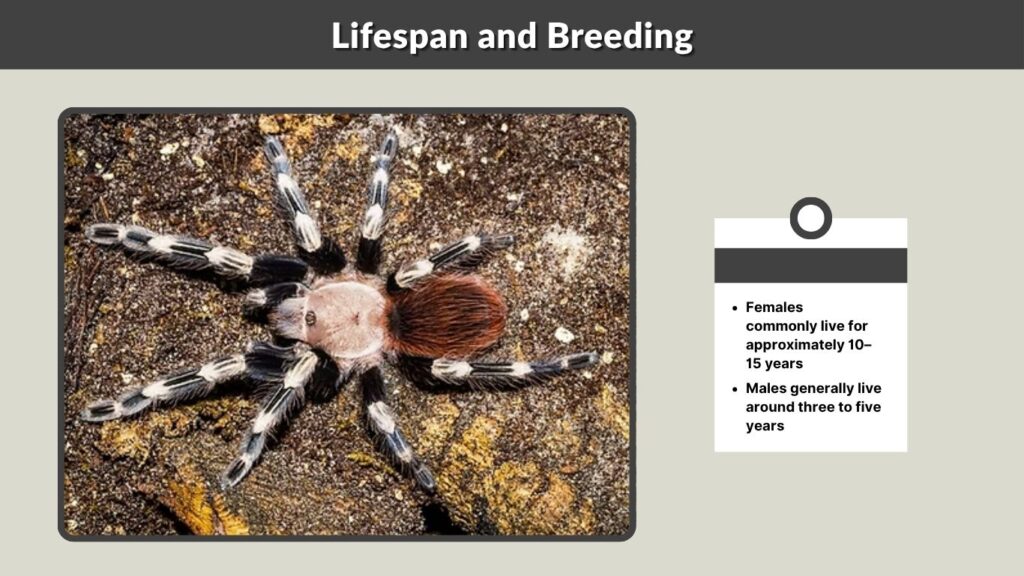
Females commonly live for approximately 10–15 years, with longevity varying according to care and age at purchase. Males generally live around three to five years and survive a much shorter time after their final molt.
Breeding
A receptive female may allow mating, but she can also attack and eat the male. Breeding therefore requires close supervision and an escape route for the male.
After producing an egg sac, the female guards it inside her retreat. Successful sacs can contain numerous spiderlings. Breeding should only be attempted by experienced keepers who already have appropriate containers, feeders, and responsible homes for the offspring.
Buying a Brazilian Red and White Tarantula
Prices depend on size, sex, availability, and location. Spiderlings are generally less expensive than confirmed females, while mature males may cost less because they have shorter remaining lifespans.
Before buying, check:
- Whether the spider is captive-bred
- Its approximate leg span
- Whether its sex is confirmed
- Its latest molt and feeding history
- The seller’s live-arrival guarantee
- Shipping temperature restrictions
- Local ownership and import regulations
Select a seller who uses the scientific name and provides accurate husbandry information. Captive-bred specimens are preferable to wild-collected spiders.
FAQs
Is the Brazilian red and white tarantula suitable for beginners?
It is hardy, but its speed, defensive behavior, strong feeding response, and urticating hairs make it better for an intermediate keeper.
How large does a Brazilian red and white tarantula get?
A full-grown specimen commonly reaches approximately 6–7 inches in diagonal leg span.
Can you handle a Brazilian red and white tarantula?
Handling is not recommended. The spider may kick irritating hairs, bite, run suddenly, or suffer a fatal injury if dropped.
Is the Brazilian red and white tarantula venomous?
Yes. Like almost all tarantulas, it uses venom to capture prey. Bites should be taken seriously, although severe human reactions appear uncommon.
Why did my tarantula’s abdomen change color?
A darkening abdominal patch often indicates an approaching molt. A pale or reddish bald area may result from kicking urticating hairs, while abnormal discoloration accompanied by weakness may indicate injury or illness.
