
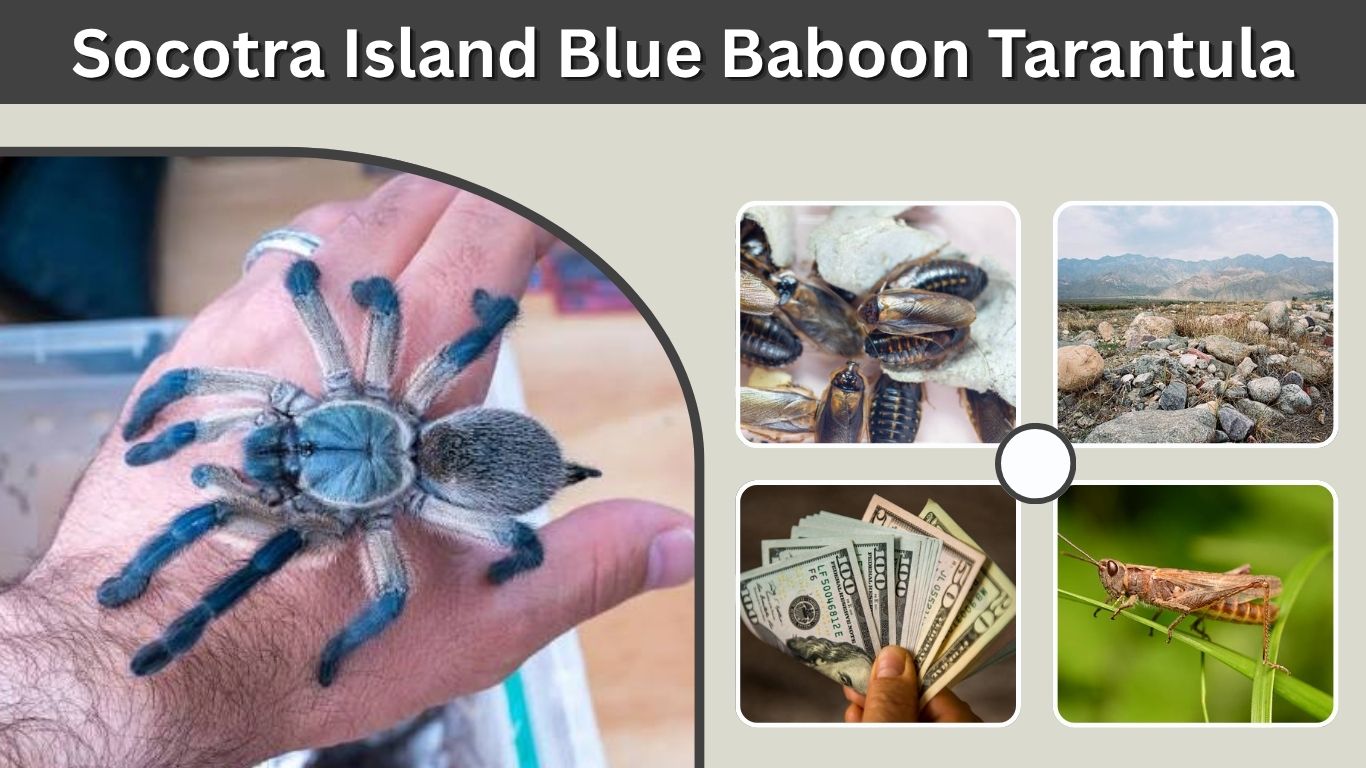
The Socotra Island blue baboon tarantula is admired for its metallic blue legs, pale body, dense webbing, and unusual social tolerance. Native to Yemen’s isolated Socotra Archipelago, this Old World species is hardy in a correctly prepared enclosure but is unsuitable for beginners. It is extremely fast, defensive, and medically significant if it bites. Keepers should provide deep substrate, excellent ventilation, a secure retreat, suitable prey, and minimal disturbance rather than attempting to handle this remarkable tarantula.
What Is a Socotra Island Blue Baboon Tarantula?
The Socotra Island blue baboon tarantula, Monocentropus balfouri, belongs to the family Theraphosidae. It was scientifically described in 1897 and naturally occurs on Socotra, an island belonging to Yemen. Its accepted distribution remains limited to Socotra, making it one of the island’s distinctive endemic animals.
Identification
- Scientific name: Monocentropus balfouri
- Common name: Socotra Island blue baboon tarantula
- Family: Theraphosidae
- Type: Old World terrestrial burrower
- Adult leg span: Approximately 4.5–6 inches
- Growth rate: Moderate
- Temperament: Defensive and extremely fast
- Experience level: Intermediate to advanced
- Native range: Socotra, Yemen
- Urticating hairs: Absent
Adults typically have cream or sandy-colored upper legs and abdomen combined with darker undersides and vivid blue lower legs. The carapace may display a blue, gray-blue, or violet sheen, especially following a molt.
Is Its Color Truly Metallic Blue?
The spider’s blue appearance is structural rather than produced by metallic material. Microscopic structures associated with its hairs and outer surface reflect light, creating an intense blue or violet sheen.
Coloration often appears brightest after molting. Before a molt, the spider may look dull, gray, or faded. Spiderlings initially have relatively plain coloration, with the distinctive blue becoming more noticeable as they mature.
Natural Habitat and Behavior
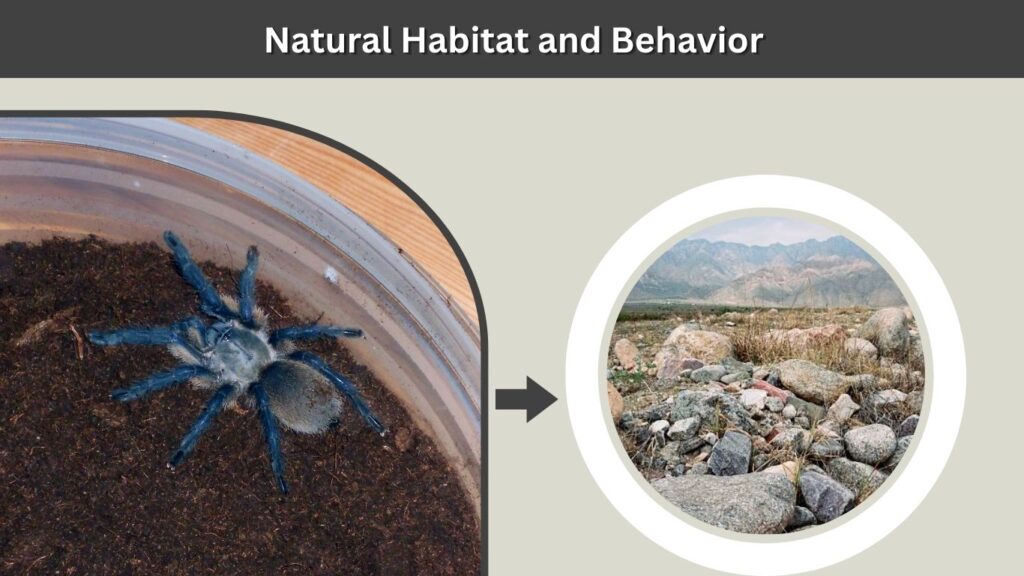
Socotra has rocky, dry landscapes with seasonal changes in temperature and moisture. The tarantula avoids harsh surface conditions by building a silk-lined burrow beneath stones, roots, or other protected structures.
Burrowing and Webbing
Monocentropus balfouri is a terrestrial tarantula with strong burrowing tendencies. In captivity, it commonly excavates beneath cork bark and constructs extensive sheets or tunnels of silk.
Owners may rarely see the entire spider after it becomes established. This does not necessarily indicate poor health. It often waits at the entrance of its webbed retreat after dark and quickly retreats when disturbed.
Temperament
This species usually chooses escape before confrontation, but it can adopt a threat posture or bite when cornered. Its speed makes enclosure maintenance particularly challenging.
Unlike many New World tarantulas, it does not possess defensive urticating hairs. Its primary defenses are rapid movement, threat displays, and biting. Handling should never be attempted.
Enclosure Setup and Care
An enclosure must be escape-proof and provide enough horizontal space for normal movement. Excessive height should be avoided because a fall can rupture the tarantula’s abdomen.
Enclosure Requirements
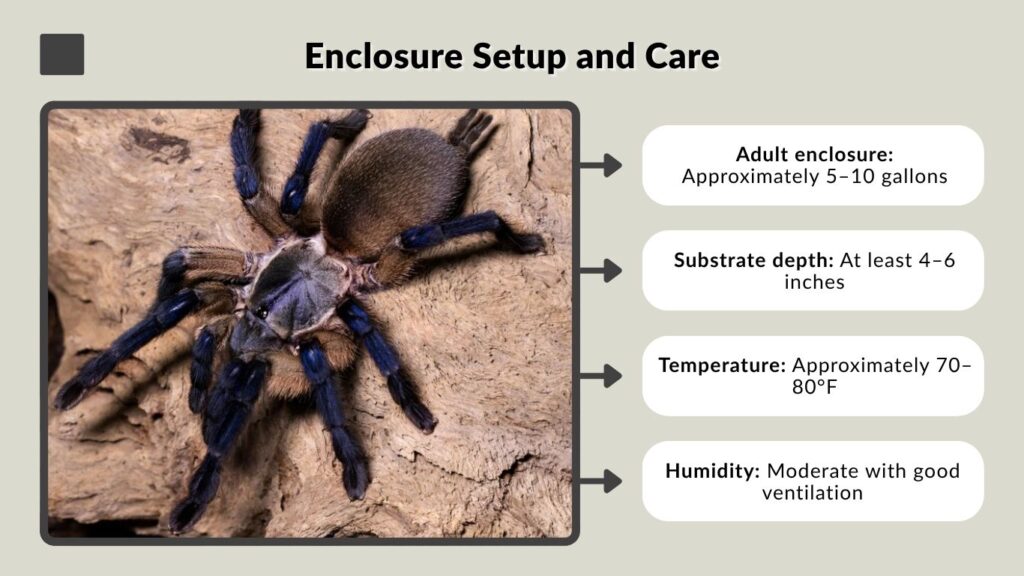
- Adult enclosure: Approximately 5–10 gallons
- Minimum floor area: About three times the spider’s leg span
- Substrate depth: At least 4–6 inches
- Temperature: Approximately 70–80°F
- Humidity: Moderate with good ventilation
- Water: Clean, shallow water dish
- Décor: Cork bark, artificial plants, and web anchor points
- Security: Tight-fitting, locking lid
Use a moisture-retaining mixture such as coconut fiber and pesticide-free topsoil. Compact the substrate enough to support stable tunnels. Place a piece of cork bark partially against the substrate to provide a starting point for the burrow.
Moisture and Ventilation
Avoid keeping the entire enclosure constantly wet. Stagnant, waterlogged conditions encourage mold and may create an unhealthy environment. Allow the surface to remain mostly dry while occasionally moistening one lower corner.
Provide cross-ventilation through holes on opposite sides of the enclosure. A water dish should always be available, even if the tarantula is seldom observed drinking.
Additional heating is normally unnecessary when the room remains within the recommended range. If heat is required, warm the room instead of placing a heat mat beneath the enclosure, where it could overheat the spider’s burrow.
Diet and Feeding
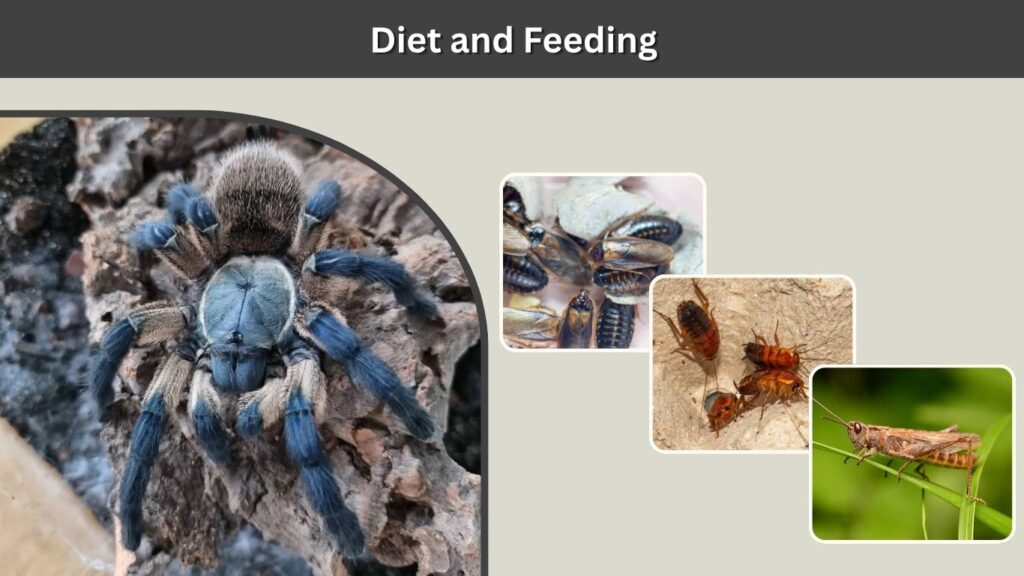
Socotra Island blue baboon tarantulas are ambush predators. Their silk helps them detect vibrations from insects entering the area around their retreat.
Suitable Feeder Insects
- Dubia roaches
- Red runner roaches
- Crickets
- Locusts
- Mealworms
- Superworms
- Black soldier fly larvae
Spiderlings can receive appropriately sized roach nymphs, small crickets, or pre-killed prey. Juveniles may be fed once or twice weekly, while adults usually need one suitable meal every 7–10 days.
Remove uneaten prey within 24 hours, particularly when the tarantula is preparing to molt. Crickets can injure a soft, defenseless spider during or immediately after molting.
Signs of Overfeeding
A very large, rounded abdomen indicates that feeding should be reduced. The abdomen should appear healthy and well developed but not excessively swollen.
Tarantulas may refuse food for weeks or even months before a molt. A well-conditioned adult that has access to water can safely tolerate lengthy fasting periods.
Molting and Growth
A tarantula must shed its exoskeleton to grow. This process is normal but leaves it temporarily soft and vulnerable.
Premolt Signs
- Refusing food
- Remaining inside the burrow
- Reduced activity
- Darkening or fading coloration
- Sealing the retreat with webbing or substrate
- Enlarged abdomen
The spider usually molts on its back or side. Do not touch or turn it over. Remove live prey and avoid disturbing the enclosure.
Wait approximately five to seven days before feeding a juvenile and seven to fourteen days for a large adult. The fangs should become completely dark and hardened before prey is introduced.
Can Blue Baboon Tarantulas Live Together?
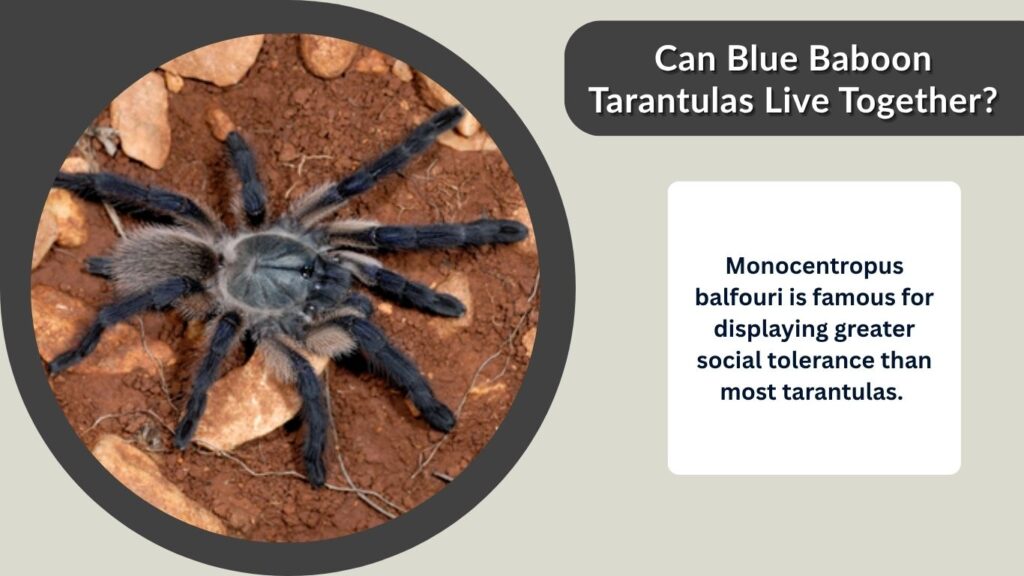
Monocentropus balfouri is famous for displaying greater social tolerance than most tarantulas. Related individuals sometimes share interconnected retreats and extensive communal webbing.
Communal-Keeping Risks
- Cannibalism remains possible
- Food competition can occur
- Molting spiders may be vulnerable
- One spider may grow faster than the others
- Separating individuals can become extremely difficult
- An escape is more likely during maintenance
Communal success is not guaranteed. A group requires considerably more room, multiple retreats, plentiful food, and careful observation. Starting with similarly sized siblings may reduce conflict, but it cannot eliminate the risk.
Keepers should gain experience maintaining this species individually before attempting a communal setup. A single spider does not require companionship and can live normally by itself.
Bite Risk and Safe Maintenance
This is a venomous Old World tarantula that should be treated with considerable caution. A documented bite has been associated with pain, tingling, muscle cramps, and serious systemic complications, although reactions can differ between individuals.
Safety Practices
- Never handle the tarantula
- Work inside a clear, uncluttered area
- Keep doors and windows closed during maintenance
- Use long feeding tongs
- Prepare a catch cup before opening the enclosure
- Keep children and pets away
- Never leave the enclosure unlocked
- Label the enclosure clearly
If bitten, wash the area and seek prompt medical advice. Urgent medical attention is particularly important if muscle cramps, spreading pain, breathing problems, severe weakness, or other systemic symptoms develop.
Lifespan and Sex Differences
Female Socotra Island blue baboons may live approximately 10–14 years under appropriate care. Males mature earlier and generally live only a few years after reaching adulthood.
Male vs. Female
Mature males are usually slimmer and leggier than females. They develop mating hooks on the pedipalps, and some may have tibial hooks on the front legs. Females maintain a heavier build and typically live much longer.
Reliable sex identification is performed by examining the inside of a preserved molt. Visual assumptions based only on body size or coloration are often inaccurate.
Buying a Socotra Island Blue Baboon Tarantula

Prices vary according to size, sex, availability, and whether the spider is sold individually or as part of a communal group. Captive-bred spiderlings are generally more readily available and responsible choices than wild-collected adults.
Before purchasing, verify:
- The spider’s approximate size
- Whether it is captive-bred
- Its feeding and molting history
- The seller’s live-arrival policy
- Shipping temperature restrictions
- Local ownership and import regulations
- Whether the specimen is sold individually or communally
Choose an experienced exotic-animal seller with clear photographs and recent reviews. Avoid sellers who encourage handling or describe the species as suitable for complete beginners.
FAQs
Is the Socotra Island blue baboon suitable for beginners?
No. Its exceptional speed, defensive nature, medically significant venom, and lack of urticating hairs make it better suited to experienced keepers.
How large does a Socotra blue baboon grow?
Most adults develop a diagonal leg span of approximately 4.5–6 inches, although size varies by sex and individual.
Does this tarantula need high humidity?
It requires access to water and some moisture in the lower substrate, but continuously wet conditions should be avoided. Ventilation is essential.
Can I handle a Socotra Island blue baboon?
No. Handling creates an unnecessary risk of escape, injury, or a defensive bite. Observe the spider inside its enclosure.
Why is my blue baboon hiding?
Hiding is normal for this burrowing species. It may be resting, waiting for prey, preparing to molt, or expanding its silk-lined retreat.
