
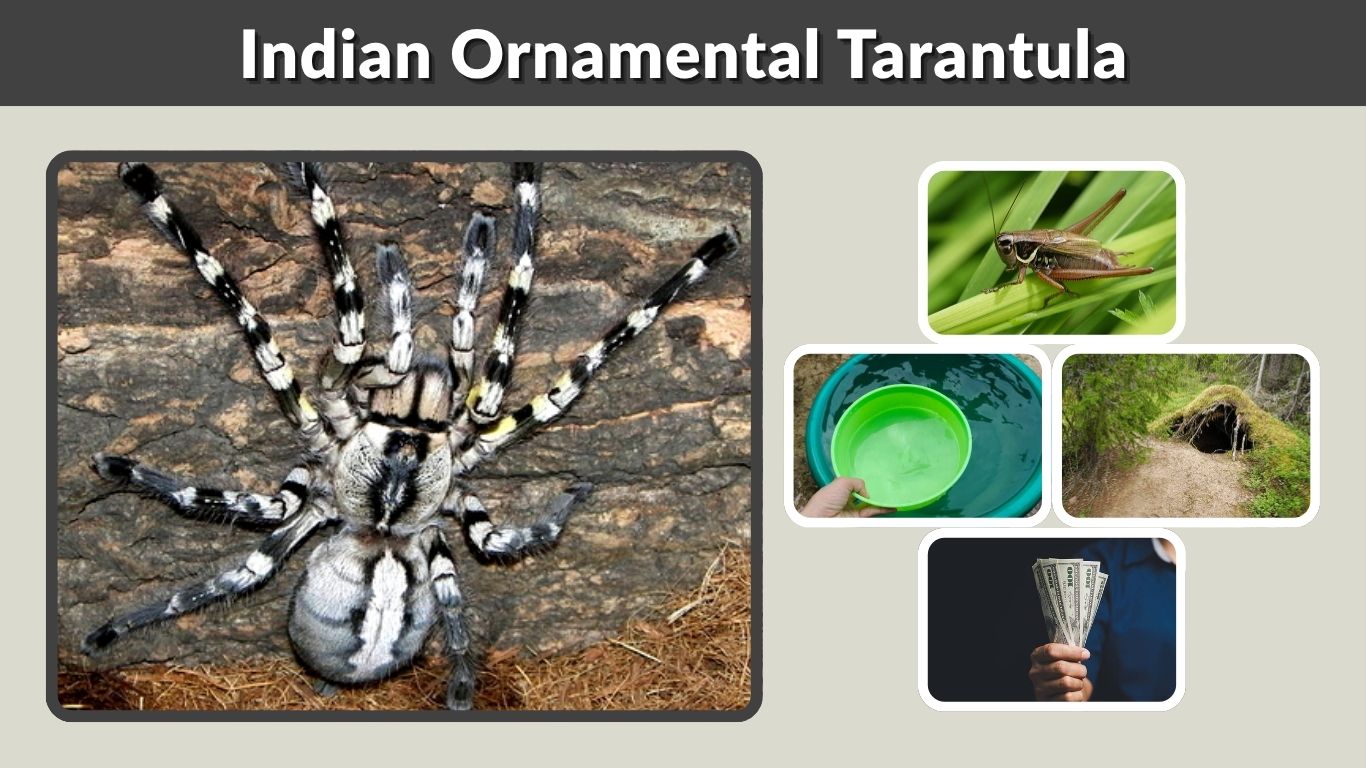
The Indian ornamental tarantula (Poecilotheria regalis) is a large, fast-moving tree tarantula native to India. Its dramatic black, white, gray, and yellow markings make it popular among experienced keepers, but its speed and medically significant venom demand considerable caution. This species needs a tall, secure enclosure, good ventilation, appropriate moisture, and live insect prey. It is unsuitable for handling or beginner collections. This guide covers identification, natural habitat, size, lifespan, temperament, feeding, enclosure design, venom, and responsible purchasing.
Indian Ornamental Tarantula Facts
The Indian ornamental is an arboreal Old World tarantula belonging to the family Theraphosidae. It spends much of its life inside tree hollows and bark crevices. Its slender build, long legs, rapid movement, and elaborate patterns distinguish it from many heavy-bodied terrestrial tarantulas.
Classification
- Scientific name: Poecilotheria regalis
- Common names: Indian ornamental tarantula, Indian ornamental tree spider, regal parachute spider
- Family: Theraphosidae
- Native range: India
- Lifestyle: Arboreal and primarily nocturnal
- Adult leg span: Commonly 6–7 inches
- Diet: Insects and other suitable prey
- Experience level: Advanced
- Handling: Strongly discouraged
The World Spider Catalog recognizes Poecilotheria regalis as a distinct Indian species first described by R. I. Pocock in 1899.
Appearance and Identification
This tarantula has an ornamental pattern of gray, white, and black across its body and legs. The upper side provides camouflage against bark, while the undersides of the front legs display bright yellow warning markings.
A pale band across the underside of the abdomen is one of the features commonly used to distinguish P. regalis from related ornamental tarantulas. Females normally become larger and heavier than males. Mature males are slimmer, leggier, and may appear less vividly patterned.
Indian Ornamental Tarantula Natural Habitat and Behavior
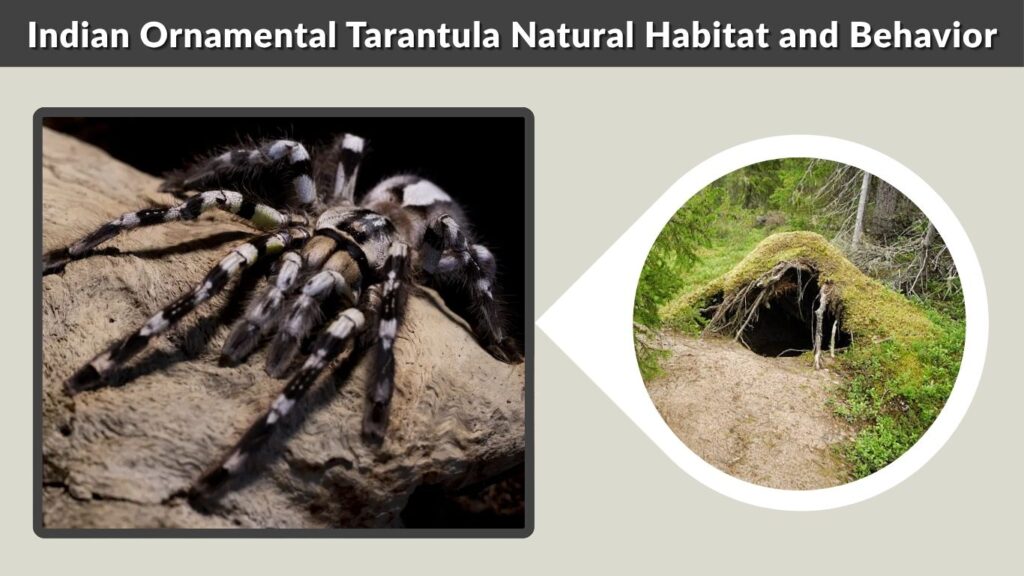
Indian ornamental tarantulas inhabit warm forested regions where mature trees provide hollows, cracks, and loose bark. They build silk-lined retreats and emerge mainly after dark. Their speed is useful for catching prey and escaping predators, but it also makes captive maintenance more challenging.
Habitat and Distribution
The species is endemic to India and has been recorded in forested areas of the Western and Eastern Ghats. It generally occupies trees rather than ground burrows. A suitable hollow gives the spider protection from bright light, predators, extreme heat, and moisture loss.
Although warmth and seasonal humidity are characteristic of its range, the spider does not live on constantly wet surfaces. Its retreat may remain protected while the surrounding habitat experiences changing rainfall and humidity.
Temperament and Defensive Behavior
The Indian ornamental tarantula is usually shy and prefers escaping into its retreat. However, a cornered spider may raise its front legs, expose its yellow warning colors, strike, or bite.
It does not possess the irritating abdominal hairs used defensively by many New World tarantulas. Therefore, it relies more heavily on speed, hiding, threat displays, and biting. It can also make sudden short jumps when escaping or moving between surfaces.
Indian Ornamental Tarantula Care
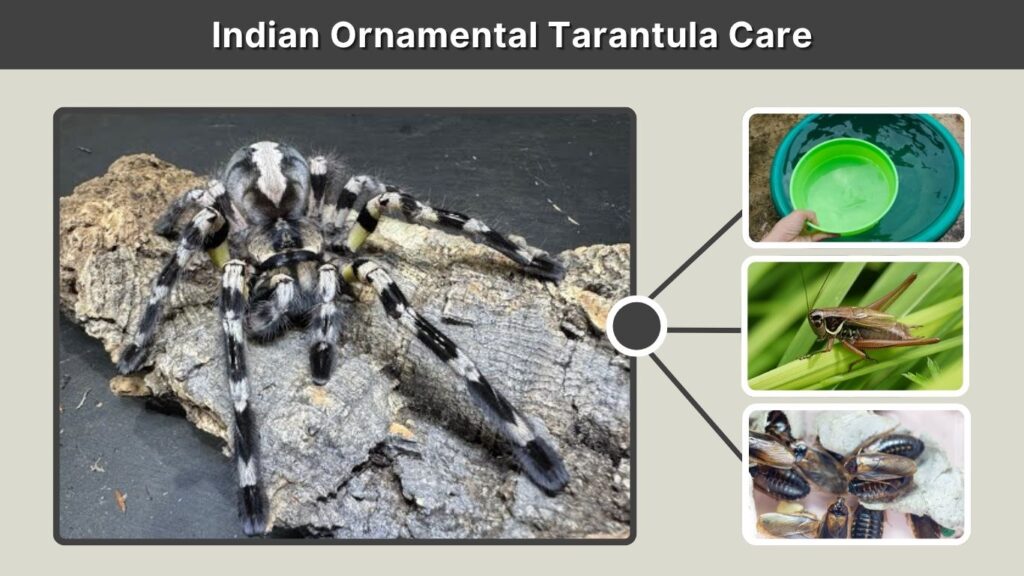
This is not a beginner-friendly tarantula. Its enclosure must support climbing while preventing escapes during feeding, cleaning, or rehousing. Husbandry should prioritize secure access, cross-ventilation, a dark retreat, and a dependable water source instead of chasing one rigid humidity number.
Enclosure Setup
- Use a tall, escape-proof arboreal enclosure.
- Provide ventilation openings on multiple sides.
- Add an upright cork-bark tube or slab as a retreat.
- Include artificial foliage or branches for web anchors.
- Add several inches of moisture-retaining substrate.
- Keep a shallow water dish available.
- Ensure doors, vents, and cable openings are tightly secured.
- Position the retreat away from the main access door.
Adults generally need enough height to climb naturally, but the enclosure should not contain dangerous gaps or sharp decorations. A practical adult setup may be approximately 12 inches wide, 12 inches deep, and 18 inches tall, adjusted for the spider’s size.
Temperature and Moisture
Normal warm-room temperatures of approximately 72–80°F (22–27°C) are usually suitable. Avoid direct sunlight and overheating. A thermostat is essential if supplemental heating is required, although heating the room is normally safer than attaching an uncontrolled heater to the enclosure.
Keep part of the lower substrate slightly moist while allowing the surface to dry somewhat between waterings. Good airflow is critical because stagnant, constantly saturated conditions may encourage mold and other problems.
Feeding
Offer appropriately sized captive-bred feeder insects such as:
- Crickets
- Dubia roaches
- Red runner roaches
- Locusts where legally available
- Mealworms or superworms
- Other suitable feeder invertebrates
Juveniles may eat once or twice weekly, while adults often accept a suitable meal every 7–14 days. Feeding frequency depends on prey size, temperature, abdomen condition, and proximity to molting. Remove uneaten prey, especially when the tarantula begins refusing food or seals itself inside its retreat.
Indian Ornamental Tarantula Size, Growth, and Lifespan
Growth rate depends on temperature, feeding, sex, and individual genetics. Spiderlings can grow relatively quickly under stable conditions. Females become more robust and live considerably longer, while mature males devote their remaining lives primarily to finding a mate.
Adult Size
A mature Indian ornamental tarantula commonly reaches a diagonal leg span of around 6–7 inches, with some individuals approaching 7 inches or slightly more. Its long, narrow legs can make it appear larger than a similarly sized terrestrial tarantula.
Expected Lifespan
Females may live approximately 10–15 years in captivity, sometimes longer with excellent care. Males have a much shorter lifespan and commonly survive only around 3–5 years in total. Exact longevity varies, so these figures should be treated as estimates rather than guarantees.
Bite, Venom, and Handling Risks

The Indian ornamental is venomous, not poisonous. Venom is delivered through its fangs during a bite, whereas “poisonous” would mean that touching or eating it causes poisoning. No handling method makes this fast and defensive species reliably safe.
Is It Bite Dangerous?
A bite may cause immediate pain, swelling, sweating, nausea, weakness, and delayed muscle cramps or spasms. Published reports indicate that muscle symptoms can be severe and may last for days. Research has also demonstrated that P. regalis venom can damage muscle tissue under experimental conditions.
No human fatality is widely confirmed, but that does not make a bite harmless. Children, older adults, and people with existing medical conditions may face greater risks.
What to Do After a Bite
- Move away from the spider without attempting to grab it.
- Wash the wound gently with soap and water.
- Remove rings or tight items before swelling develops.
- Keep the affected limb relatively still.
- Contact a medical professional or poison-control service.
- Provide the scientific name, Poecilotheria regalis.
- Seek urgent help for breathing difficulty, faintness, severe pain, vomiting, or spreading muscle cramps.
- Ensure tetanus vaccination is current.
Do not cut the wound, apply a tourniquet, attempt to extract venom, or treat serious symptoms solely at home.
Blue and Purple Indian Ornamental Tarantulas
Several ornamental tarantulas come from India, and sellers sometimes use colorful names inconsistently. Scientific names are therefore essential when purchasing one. A standard Indian ornamental may show subtle bluish or purple tones after molting, but it is not the intensely blue species commonly advertised as a sapphire ornamental.
Is There a Blue Indian Ornamental?
The bright blue Gooty sapphire ornamental is Poecilotheria metallica, a separate species. It should not be sold as an unusual blue color form of P. regalis. The two species differ in coloration, distribution, availability, and conservation concerns.
“Purple Indian ornamental” may refer to lighting, a freshly molted individual, another Poecilotheria species, or an unreliable marketing label. Buyers should request the scientific name and breeder records.
Is It a Baboon Tarantula?
Indian ornamentals are sometimes incorrectly described as ornamental baboon tarantulas. “Baboon spider” generally refers to African tarantulas, whereas P. regalis is Asian. Both belong to the Old World tarantula group, but the regional common names are not interchangeable.
Buying an Indian Ornamental Tarantula
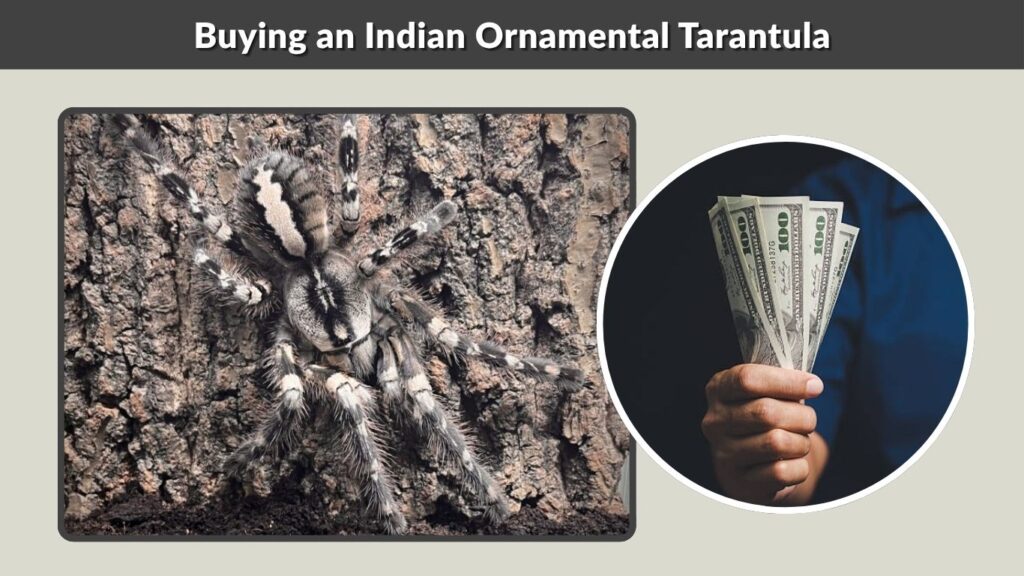
Buyers should research local regulations and prepare the enclosure before purchasing. International trade in ornamental tarantulas may involve wildlife documentation, so captive-bred animals from reputable domestic breeders are generally the responsible choice.
Buying Checklist
- Confirm the scientific name.
- Choose a documented captive-bred spider.
- Ask about its sex, size, feeding history, and last molt.
- Inspect photographs of the actual animal.
- Avoid sellers unable to explain its origin.
- Check wildlife and import laws in your location.
- Be suspicious of unusually low prices.
- Never buy a wild-caught specimen without lawful documentation.
Price varies according to country, size, sex, availability, and shipping costs. Confirmed females are usually more expensive because they grow larger and live longer.
FAQs
Can you handle an Indian ornamental tarantula?
No. Handling is unnecessary and carries serious risks of escape, falling, and biting. Use long tools and a secure catch cup during maintenance.
How often should it be fed?
Juveniles may eat once or twice weekly. Adults generally eat every 7–14 days, depending on prey size and body condition.
Does it need a humid enclosure?
It needs access to moisture, but not a soaked, poorly ventilated enclosure. A water dish, slightly moist lower substrate, and strong cross-ventilation create safer conditions.
How can you identify a female?
Adult females are generally larger and heavier. Reliable sexing requires examination of a suitable molt or expert inspection of the underside.
Is the Indian ornamentation suitable for beginners?
No. Its extreme speed, arboreal movement, defensive potential, and medically significant venom make it appropriate only for experienced keepers.
