
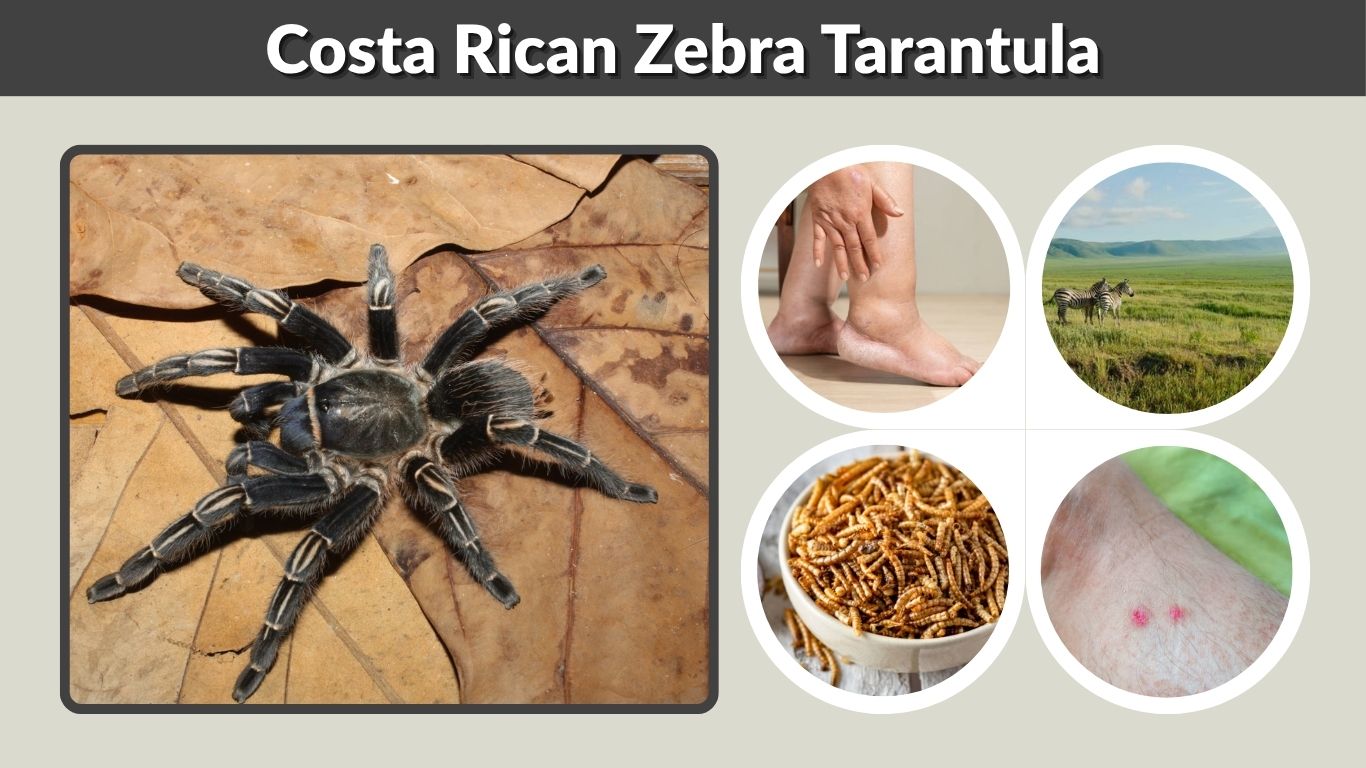
The Costa Rican zebra tarantula (Aphonopelma seemanni) is a striking terrestrial species recognized by the pale stripes running down its dark legs. Native to Central America, this burrowing tarantula is popular for its manageable size, simple diet, and relatively straightforward care. However, individuals can be nervous, fast, and reluctant to remain visible. A safe enclosure must provide deep substrate, a secure hide, moderate moisture, and minimal climbing height. Proper care can allow a female to live for nearly two decades.
Costa Rican Zebra Tarantula Identification
Also called the striped-knee or zebra-knee tarantula, this species belongs to the New World genus Aphonopelma. Its contrasting leg markings can resemble those of several other pet tarantulas, so buyers should confirm the scientific name instead of relying exclusively on common names.
Identifying Features
- Scientific name: Aphonopelma seemanni
- Family: Theraphosidae
- Type: Terrestrial and fossorial
- Adult leg span: Approximately 5–6 inches
- Primary color: Dark brown, gray, or nearly black
- Leg markings: Cream, tan, or white longitudinal stripes
- Native region: Central America
- Defensive feature: Urticating abdominal hairs
- Activity: Primarily nocturnal
- Experience level: Beginner to intermediate
Its pale stripes run along the legs rather than forming the broad orange bands seen on species such as the Mexican red-knee tarantula. The abdomen and carapace are generally covered with brown or dark-gray hairs.
Blue and Unusual Color Forms
Some Costa Rican zebra tarantulas display bluish-gray coloration, particularly after molting or under bright lighting. Specimens from different localities may also vary from deep brown to charcoal gray. “Blue form” is commonly used in the pet trade, but it does not necessarily represent a formally recognized separate species.
The pink zebra beauty, Eupalaestrus campestratus, is an entirely different South American species. A pink zebra beauty should not be advertised as a pink Costa Rican zebra tarantula.
Costa Rican Zebra Tarantula Habitat and Distribution
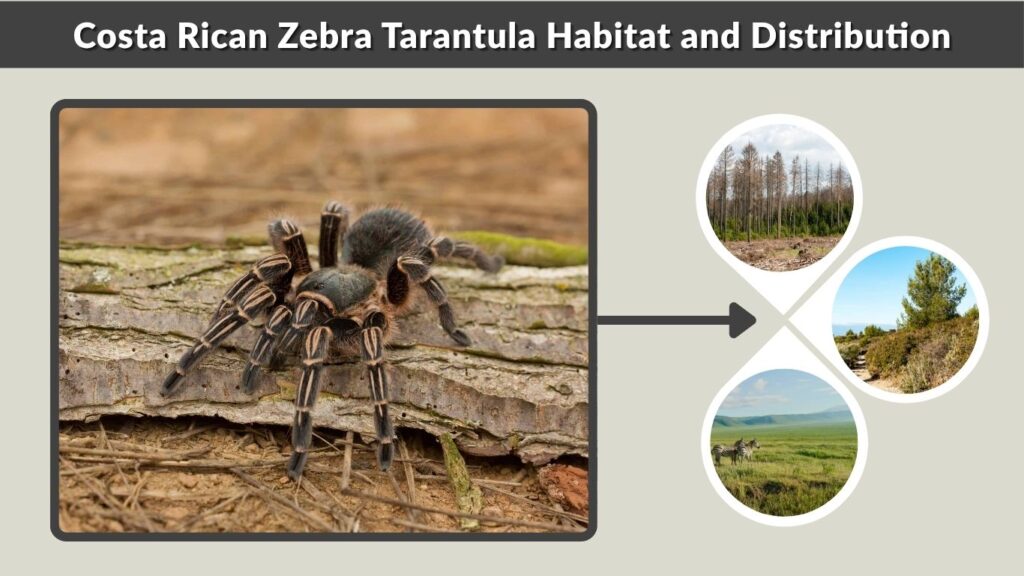
Despite its common name, the Costa Rican zebra is not limited to Costa Rica. The accepted range includes El Salvador, Honduras, Nicaragua, and Costa Rica. These tarantulas use deep burrows to avoid temperature extremes, predators, and excessive surface dryness.
Natural Habitat
Costa Rican zebra tarantulas inhabit seasonally dry forests, scrubland, grassland, and other warm environments with soil suitable for burrowing. They may excavate their own retreat or enlarge an existing opening beneath roots, rocks, or other natural cover.
The underground chamber provides a more stable microclimate than the surface. It protects the spider during hot daytime conditions and helps retain moisture during dry periods. The entrance may be reinforced with silk and surrounding plant material.
Where Are They Most Commonly Found?
The species is associated with parts of western Costa Rica and neighboring Central American countries. It usually remains underground during the day and waits near the burrow entrance at night for passing prey.
Wild distribution should not be used as a reason to keep the entire enclosure hot or excessively humid. The protected conditions inside a deep burrow are different from the exposed surface climate.
Costa Rican Zebra Tarantula Behavior and Diet
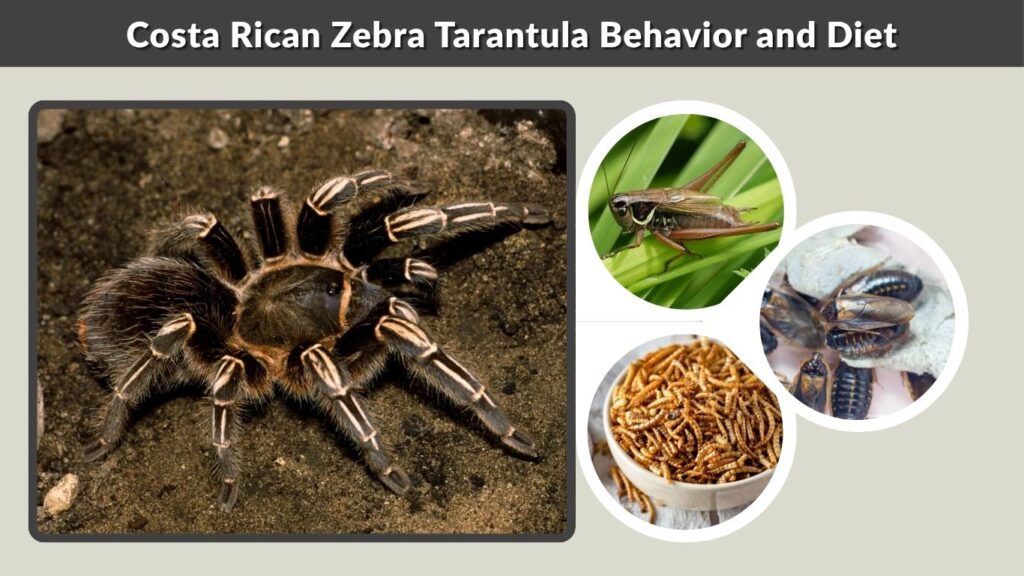
The Costa Rican zebra tarantula is generally reclusive and defensive rather than openly aggressive. Some individuals remain calm during routine maintenance, while others sprint toward their burrow when disturbed. Temperament varies considerably between individual spiders.
Temperament and Handling
Although frequently described as docile, this species can be surprisingly quick and nervous. When threatened, it may retreat, kick irritating abdominal hairs, assume a defensive posture, or bite as a last resort.
Handling is not recommended. A fall from even a modest height could rupture the tarantula’s abdomen and cause fatal injuries. Urticating hairs may also irritate the skin, eyes, or respiratory system. A catch cup and long feeding tools are safer for transfers and enclosure maintenance.
Feeding
In captivity, appropriately sized live invertebrates are suitable foods, including:
- Crickets
- Dubia roaches
- Red runner roaches
- Locusts where legally permitted
- Mealworms
- Superworms
- Other captive-bred feeder insects
Juveniles can usually be offered food once or twice a week. An adult may eat one or two suitable prey items every 7–14 days. Adjust feeding according to abdomen size, temperature, and activity.
Remove uneaten prey after approximately 24 hours. Never leave crickets with a molting tarantula because they may injure the defenseless spider.
Are They Heavy Webbers?
Costa Rican zebra tarantulas are not normally considered heavy webbers. They may lay silk over the substrate and around the burrow entrance, especially before molting or feeding. Most of their construction effort is directed toward excavating and lining a retreat rather than covering the enclosure with dense webbing.
Costa Rican Zebra Tarantula Care
Successful care depends on creating a safe terrestrial environment with plenty of digging depth. Floor space and substrate are more valuable than vertical climbing room. The enclosure should support natural burrowing without remaining waterlogged or poorly ventilated.
Enclosure Requirements
An adult enclosure can provide approximately 2.5–3 times the tarantula’s leg span in horizontal length. Important features include:
- At least 5–8 inches of compactable substrate
- A low ceiling to reduce fall distance
- A cork-bark hide or starter burrow
- Secure ventilation on the sides or lid
- A shallow water dish
- A tightly locking, escape-resistant top
- Decorations without sharp edges
A smaller enclosure is appropriate for spiderlings and juveniles. Oversized setups can make it difficult to monitor feeding and locate the spider safely.
Substrate and Bedding
A mixture of pesticide-free topsoil and coconut fiber works well because it holds its shape when excavated. Other safe soil-based tarantula substrates may also be used. Pack the lower layers firmly so that tunnels are less likely to collapse.
Aspen bedding is unsuitable. It does not retain moisture properly, is difficult to compact into stable burrows, and may contain sharp pieces. Avoid gravel, wood chips, scented bedding, fertilizer, and chemically treated soil.
Temperature and Moisture
Keep the enclosure at approximately 70–78°F (21–26°C). Most comfortable homes remain within this range without additional heating. If heating is necessary, warm the room rather than placing an uncontrolled heat mat under the enclosure.
Provide a full water dish and maintain a moisture gradient. The deeper substrate can remain slightly moist while the upper surface is allowed to dry somewhat. Avoid swampy conditions, condensation-covered walls, and stagnant air.
Burrowing and Enclosure Problems
Some Costa Rican zebras immediately create deep tunnels, while others occupy a supplied hide or remain visible for weeks. A tarantula that does not burrow is not automatically unhealthy. The enclosure may already provide adequate shelter, or the spider may still be adjusting.
Why Won’t My Tarantula Burrow?
Possible reasons include:
- The substrate is too shallow.
- The soil is too loose to support a tunnel.
- A provided hide already feels secure.
- The tarantula is exploring a new enclosure.
- The individual simply prefers remaining above ground.
- A mature male is wandering in search of a female.
Provide deeper, firmly packed substrate and a partially buried cork-bark hide. Do not force the spider into a hole or repeatedly destroy its chosen retreat.
Lifespan and Life Cycle
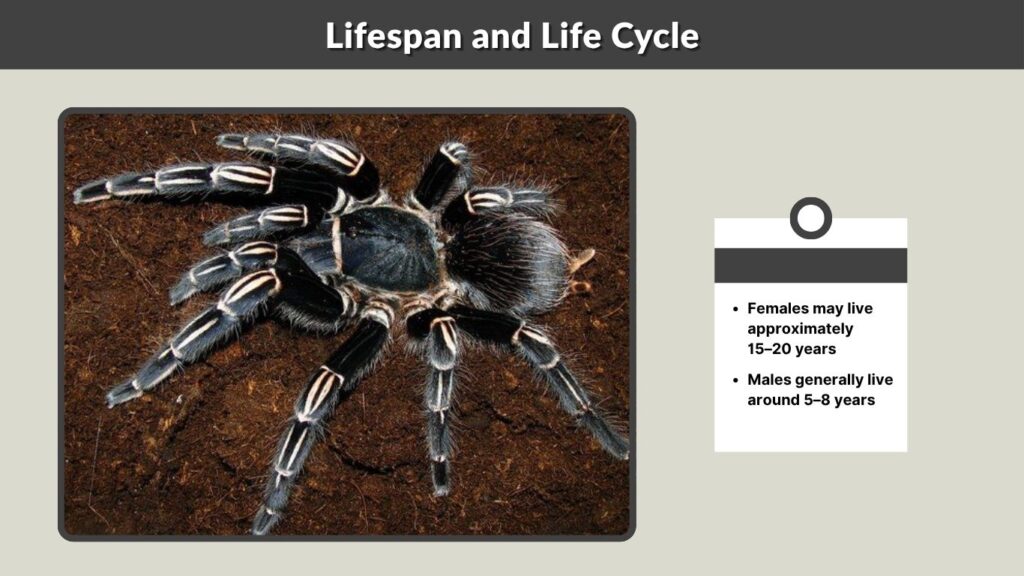
Costa Rican zebra tarantulas grow slowly and may take several years to reach maturity. Their growth rate depends on sex, temperature, food availability, and individual genetics. Females continue molting after maturity, while mature males have a much shorter remaining lifespan.
Lifespan
Females may live approximately 15–20 years with appropriate care. Males generally live around 5–8 years in total and often survive only a limited time after reaching maturity.
An adult female is normally heavier and more robust than a mature male. Mature males develop emboli on their pedipalps and may have tibial hooks, although reliable sexing of younger specimens usually requires examination of a suitable molt.
Molting
Spiderlings may molt several times each year, while large adults can go a year or longer between molts. Before molting, a tarantula may:
- Refuse food for several weeks or months
- Become less active
- Darken in color
- Develop a dark patch on the abdomen
- Seal the entrance to its burrow
- Create a silk mat
- Lie on its back
A tarantula lying on its back is usually preparing to molt and should not be disturbed. Wait until its new fangs have hardened before feeding again—approximately one week for juveniles and 10–14 days for large adults.
Breeding
Breeding should only be attempted by experienced keepers. The female must be well fed, and the male requires an escape route because cannibalism is possible. After mating, the female may produce an egg sac containing numerous spiderlings. Breeders must be prepared to house, feed, and responsibly distribute the offspring.
Costa Rican Zebra Tarantula Bite, Venom, and Safety
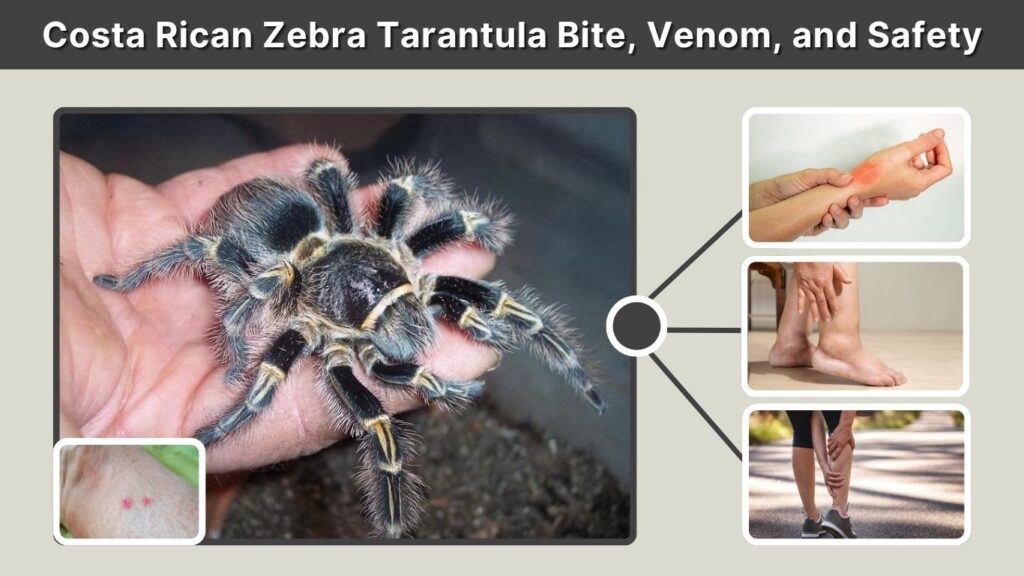
The Costa Rican zebra tarantula is venomous, not poisonous. It uses venom to subdue prey, but its venom is not generally considered medically significant to a healthy adult. Nevertheless, every bite should be taken seriously because reactions can vary.
Bite Symptoms
A bite may cause:
- Local pain
- Redness
- Mild swelling
- Tenderness
- Muscle discomfort
- Allergic symptoms in sensitive individuals
- Secondary infection if the wound is not cleaned
Wash a bite with soap and water and contact a medical professional for concerning symptoms. Seek urgent care for breathing difficulty, facial swelling, faintness, severe pain, or rapidly worsening symptoms. Urticating hairs that enter the eyes also require prompt medical attention.
Buying a Costa Rican Zebra Tarantula
Price depends on size, sex, locality, availability, and country. Confirmed adult females normally cost more than males or unsexed juveniles because females have a substantially longer lifespan.
Choose a captive-bred specimen from a reputable seller. Ask for the scientific name, approximate size, sexing method, last molt date, feeding history, and photographs of the actual animal. Check local regulations before purchasing or transporting any exotic spider.
FAQs
Is the Costa Rican zebra tarantula a good pet?
It can be a suitable pet for a prepared beginner, but it is a display animal rather than a handling pet. Its nervous temperament and sudden speed require caution.
Is it a New World or Old World tarantula?
It is a New World tarantula from Central America. It possesses urticating hairs that can be released defensively.
How large does a Costa Rican zebra tarantula get?
Adults commonly reach approximately 5–6 inches in diagonal leg span. Females usually develop a heavier body than males.
How often should it be fed?
Juveniles can eat once or twice weekly. Adults typically accept an appropriate meal every 7–14 days, although long fasting periods may occur before molting.
Are Costa Rican zebra tarantulas poisonous?
They are venomous rather than poisonous. Their venom helps capture prey, but handling is still discouraged because bites and irritating hairs can cause unpleasant reactions.
