
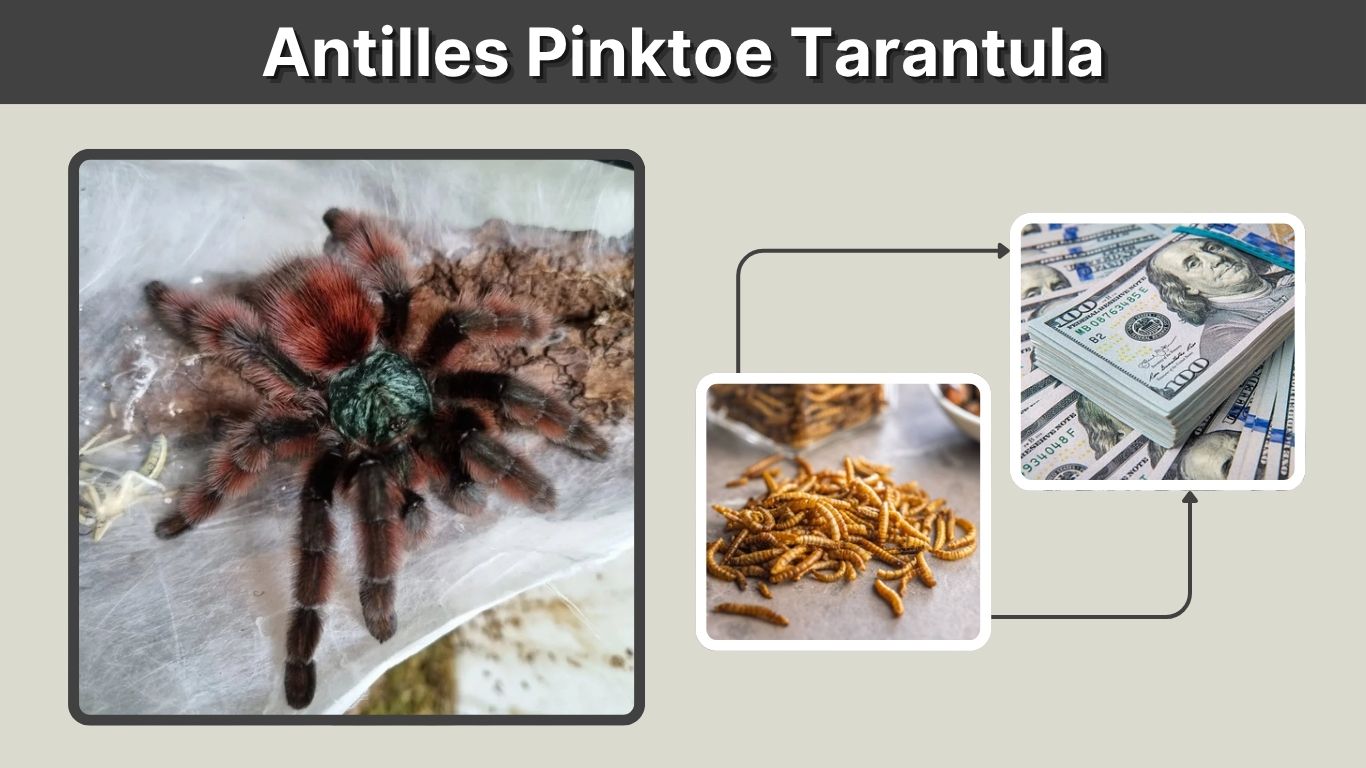
The Antilles pinktoe tarantula (Caribena versicolor) is an arboreal species admired for its remarkable color transformation. Spiderlings begin life metallic blue, while adults display combinations of green, purple, red, and pink. Native to Martinique, this active tree-dwelling tarantula requires a tall enclosure with excellent cross-ventilation, climbing surfaces, and reliable access to water. Although usually reluctant to bite, it can move quickly and jump when frightened. This guide covers its identification, habitat, size, lifespan, enclosure, feeding, temperament, safety, and purchasing considerations.
Antilles Pinktoe Facts and Identification
The Antilles pinktoe is also called the Martinique pinktoe, Martinique red tree spider, purple pinktoe, or rainbow tarantula. These colorful names describe the same species rather than separate varieties. It belongs to the New World arboreal tarantulas and spends most of its time resting inside a silk retreat built above the ground.
Quick Facts
- Scientific name: Caribena versicolor
- Former scientific name: Avicularia versicolor
- Native range: Martinique, Lesser Antilles
- Type: Arboreal
- Adult leg span: Approximately 5–6 inches
- Female lifespan: Commonly 10–12 years
- Male lifespan: Approximately 3–4 years
- Growth rate: Moderate to fast
- Experience level: Advanced beginner to intermediate
Is it Caribena versicolor or Avicularia versicolor?
Both names may appear in older care sheets and sales listings, but Caribena versicolor is the accepted scientific name. A major 2017 taxonomic revision transferred this species from Avicularia into the newly established genus Caribena. The change is recognized by the World Spider Catalog.
Using the current scientific name helps buyers distinguish it from other pinktoe species with different appearances and native ranges.
Color Changes From Spiderling to Adult
Few tarantulas undergo a transformation as dramatic as the Antilles pinktoe. Its colors change with age and become especially vivid immediately after molting. An approaching molt can make the spider look darker or less vibrant, but its brilliant appearance usually returns after the new exoskeleton hardens.
Blue Antilles Pinktoe Spiderlings
Young spiderlings have metallic blue legs and a patterned abdomen. This electric-blue appearance makes slings highly desirable, although it does not remain unchanged throughout the spider’s life.
As juveniles molt, green, purple, red, and pink tones gradually replace the blue. The speed of this transition differs among individuals.
Purple and Rainbow Adults
Adults usually have an iridescent green carapace, a reddish abdomen, dark green or purple legs, and pinkish hairs around the feet. Lighting and viewing angle can significantly affect how the colors appear.
“Purple Antilles pinktoe” and “rainbow Antilles pinktoe” are descriptive trade names. They do not normally represent separate species, subspecies, or officially recognized color varieties.
Natural Habitat, Size, and Lifespan
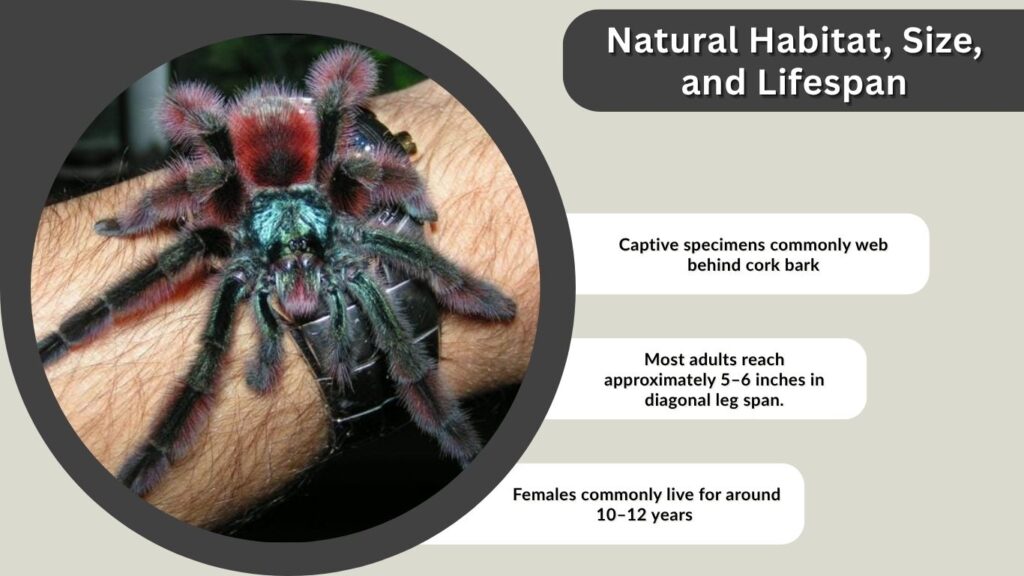
This species is native to the Caribbean island of Martinique, where it lives above ground in trees and other elevated retreats. Its body and feet are adapted for climbing. Rather than digging a deep terrestrial burrow, it builds a thick silk tunnel among branches, bark, vegetation, and natural crevices.
Habitat and Arboreal Behavior
The Antilles pinktoe often creates a funnel-like web with more than one opening. It may remain hidden inside during daylight and emerge after dark to wait for passing prey.
Captive specimens commonly web behind cork bark or between artificial leaves. Destroying this retreat unnecessarily can cause stress, so enclosure cleaning should focus on removing prey remains and maintaining the water dish.
Adult Size and Growth Rate
Most adults reach approximately 5–6 inches in diagonal leg span. Females tend to be heavier-bodied, while mature males are usually slimmer and leggier.
This species grows moderately quickly under warm, suitable conditions. Spiderlings may molt several times during their first year, but growth becomes slower as they approach adulthood.
Male and Female Lifespan
Females commonly live for around 10–12 years and may occasionally live longer. Males generally have a total lifespan of approximately 3–4 years, although individual development rates vary.
The most reliable way to identify a female before maturity is to examine the inside of a well-preserved molt. Body shape and coloration alone cannot reliably determine the sex of a juvenile.
Antilles Pinktoe Enclosure and Care
Proper ventilation is the most important feature of an Antilles pinktoe enclosure. This species needs moisture and access to water, but it should not be confined in warm, stagnant, constantly saturated air. A tall enclosure with ventilation on multiple sides creates safer airflow while supporting its natural climbing and web-building behavior.
Recommended Enclosure Setup
- Choose a vertically oriented enclosure taller than it is wide.
- Provide ventilation holes on the sides and near the top.
- Install upright cork bark as the primary climbing surface.
- Add artificial or safe live foliage as web anchor points.
- Use approximately 2–3 inches of suitable substrate.
- Supply a secure water dish, preferably in an elevated holder.
- Select a front-opening design that preserves the upper web.
- Ensure ventilation holes are too small for the spider to escape.
An adult commonly does well in an enclosure around 8–12 inches wide and 12–18 inches tall. The spider should have climbing room without excessive empty height or dangerous hard decorations beneath it.
Temperature and Moisture
Maintain an ambient temperature of approximately 70–78°F (21–26°C). Normal indoor temperatures are often adequate. Avoid direct sunlight, heat lamps, and unregulated heating devices.
Keep a clean water dish available continuously. Lightly moisten part of the substrate when necessary, but allow the surface to dry between waterings. Heavy misting inside a poorly ventilated enclosure is more dangerous than allowing brief periods of lower humidity.
Caring for an Antilles Pinktoe Sling
House a sling in a small, escape-proof arboreal container with numerous cross-ventilation holes. Add a narrow piece of cork bark, foliage, and other anchor points for webbing.
A bottle cap can serve as a water dish once the sling is large enough. For extremely small spiderlings, place occasional water droplets on webbing while preventing the container from remaining saturated.
Diet, Feeding, and Molting
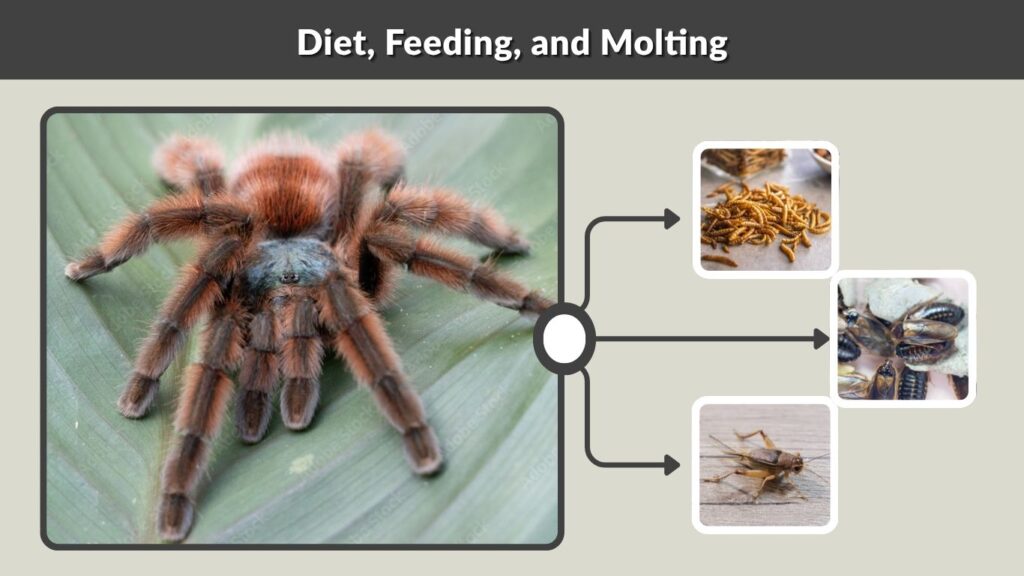
Antilles pinktoes are ambush predators that detect vibrations from nearby prey. Their elevated silk retreats allow them to attack insects that climb or fly near their hiding place. Captive-raised feeder insects are safer than wild prey, which may carry pesticides or parasites.
Suitable Foods
- Crickets
- Dubia roaches
- Red runner roaches
- Mealworms
- Small locusts
- Black soldier flies
- Flightless fruit flies for tiny slings
Offer prey appropriate to the spider’s body size. Roaches that immediately hide in the substrate can be placed in a feeding cup or gently introduced near the web entrance.
Feeding Schedule
Small slings may eat one or two small meals weekly. Juveniles can generally be fed every five to seven days, while adults may eat every 7–14 days. Adjust portions according to the abdomen’s size and the spider’s condition.
Remove uneaten prey within 24 hours. Never leave live feeders with a tarantula that is preparing to molt.
Molting Behavior
Before molting, an Antilles pinktoe may stop eating, become less active, darken, or close the entrances to its web retreat. Do not open the web or attempt to reposition the spider.
Wait until its new fangs become dark and firm before resuming feeding. This usually takes about one week for a juvenile and potentially longer for a large adult.
Temperament, Handling, and Venom
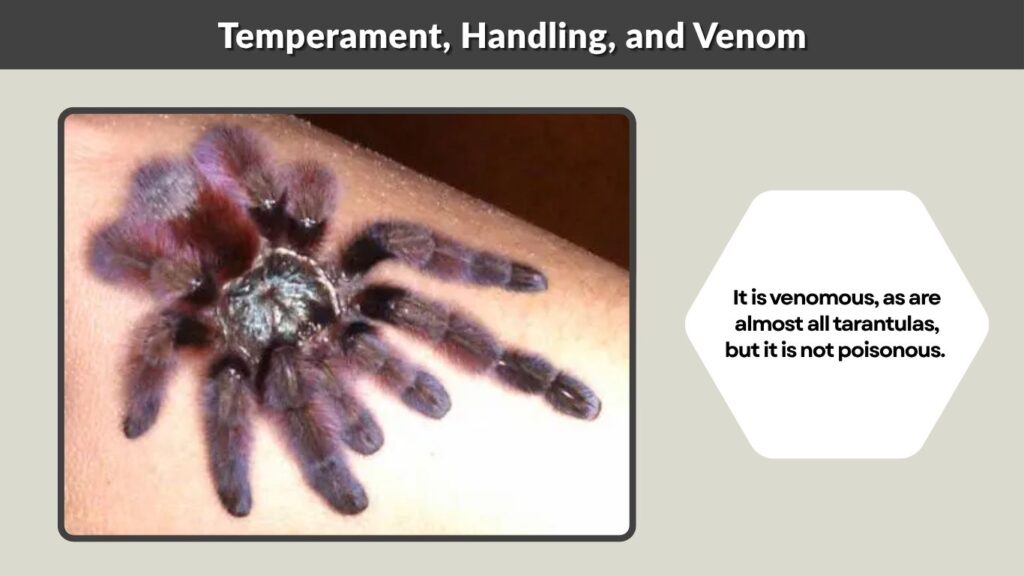
An Antilles pinktoe is generally more inclined to retreat than confront a person. However, calm behavior should not be confused with domestication. The spider may bolt, jump, release waste, expose irritating hairs, or bite when frightened. Its speed is particularly important during feeding and enclosure maintenance.
Is the Antilles Pinktoe Dangerous?
It is venomous, as are almost all tarantulas, but it is not poisonous. A defensive bite can cause puncture pain, redness, and swelling, while individual reactions may differ. Its urticating hairs may also irritate the skin, airways, or eyes.
Seek medical attention for serious swelling, breathing difficulty, worsening symptoms, or eye exposure. Keep the enclosure inaccessible to children and other pets.
Can You Handle an Antilles Pinktoe?
Handling is not recommended. Arboreal tarantulas can accelerate suddenly and may jump from an open hand. A fall onto a hard surface can seriously injure the spider.
Use a catch cup, soft brush, and long tools during transfers. Perform maintenance slowly and avoid breathing directly toward the animal because air movement can trigger an escape response.
Buying an Antilles Pinktoe Tarantula
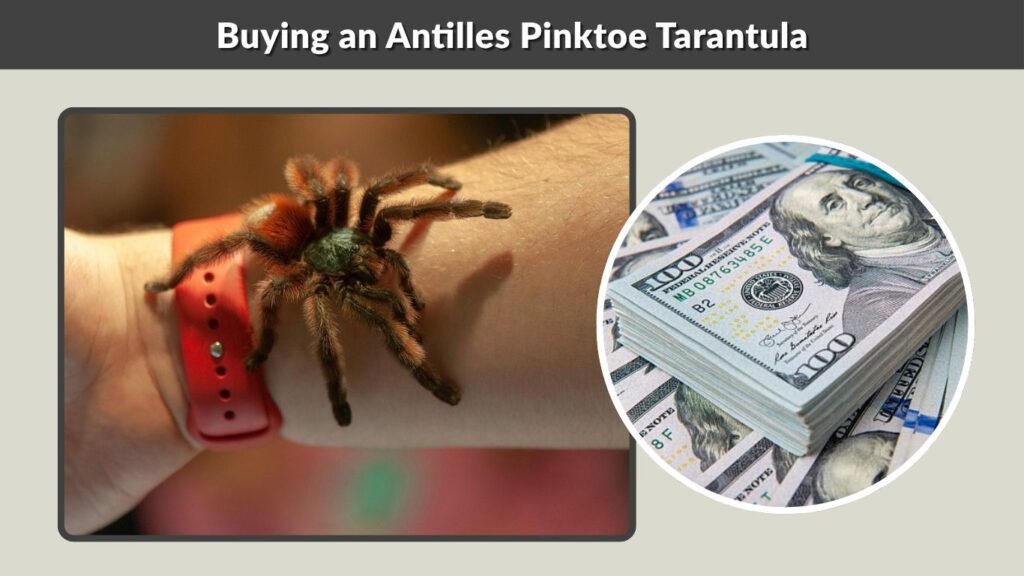
Prices vary according to the spider’s size, sex, availability, location, and breeder. Slings usually cost less than confirmed females, but they require more attentive care and cannot normally be sexed accurately. A captive-bred juvenile may provide a practical balance between affordability and stability.
Choosing a Healthy Tarantula
Purchase from a reputable breeder who provides the scientific name, approximate size, feeding history, and live-arrival terms. The spider should move normally and have a reasonably proportioned abdomen.
Confirm that the seller uses suitable insulated packaging and ships only in safe weather. Check local ownership, import, and wildlife-trade rules before placing an order.
FAQs
Successful Antilles pinktoe care depends on understanding its arboreal behavior rather than treating it like a ground-dwelling tarantula. The following answers address common questions about beginner suitability, enclosure ventilation, jumping, coloration, and sex identification.
Is an Antilles Pinktoe Good for Beginners?
It can suit a well-researched beginner, but its speed and sensitivity to stagnant conditions make it less forgiving than many terrestrial species. Previous tarantula experience is helpful.
How Big Does an Antilles Pinktoe Get?
Most adults reach approximately 5–6 inches in diagonal leg span. Females usually have heavier bodies, while mature males appear slimmer.
Can Antilles Pinktoe Tarantulas Jump?
Yes. They can make short jumps when frightened or navigating between surfaces. Maintenance should therefore occur in a controlled area with a catch cup ready.
Why Is My Antilles Pinktoe No Longer Blue?
The metallic-blue color belongs mainly to spiderlings. Green, red, pink, and purple shades naturally develop as the tarantula matures.
How Can You Tell a Male From a Female?
Examining the internal structures of a suitable molt is the most reliable method. Mature males develop visibly enlarged emboli on their pedipalps, but juvenile body shape and color are unreliable indicators.
