
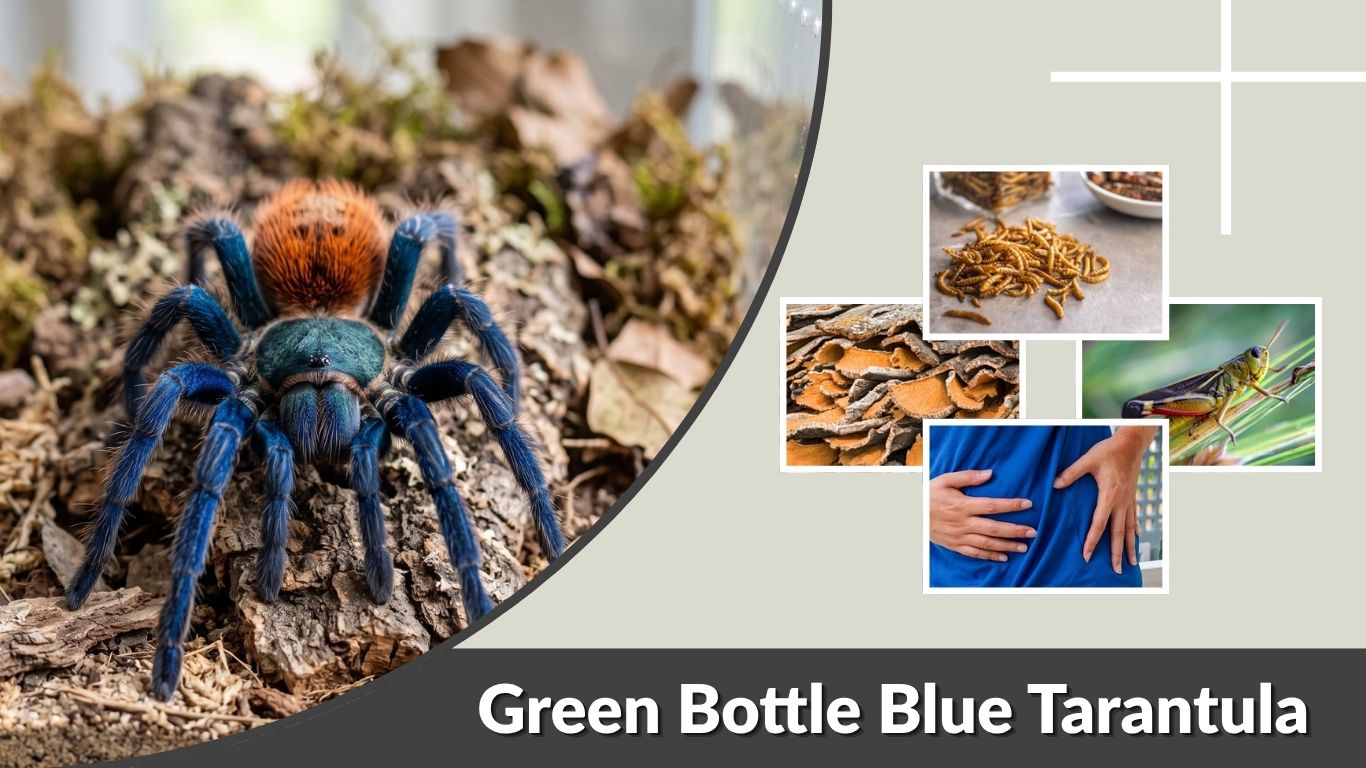
The green bottle blue tarantula is one of the most colorful tarantulas kept as a pet. Known scientifically as Chromatopelma cyaneopubescens, this Venezuelan species has bright blue legs, a metallic green-blue carapace, and a vivid orange abdomen. Besides its striking appearance, it is famous for producing large amounts of webbing throughout its enclosure. Green bottle blue tarantulas are relatively hardy, fast-growing, and easy to feed, making them appealing to both experienced keepers and careful beginners who understand proper tarantula care.
Green Bottle Blue Tarantula Facts
The green bottle blue tarantula, often shortened to GBB tarantula, comes from the dry regions of northern Venezuela. Its combination of blue, green, and orange coloration makes it difficult to confuse with most other commonly kept species.
Identification
- Scientific name: Chromatopelma cyaneopubescens
- Common name: Green bottle blue tarantula
- Origin: Venezuela
- Type: New World tarantula
- Lifestyle: Terrestrial/semi-arboreal tendencies
- Adult leg span: Around 4.5–6 inches
- Temperament: Skittish and defensive rather than highly aggressive
- Diet: Insects and other small invertebrates
- Special feature: Extremely heavy webbing
Juveniles look somewhat different from adults. Spiderlings often have darker legs and a patterned abdomen before gradually developing the brilliant adult coloration through successive molts.
Is the Green Bottle Blue Tarantula Arboreal or Terrestrial?
The green bottle blue tarantula is generally considered a terrestrial species, although its behavior is somewhat different from typical ground-dwelling tarantulas.
GBBs frequently web plants, cork bark, enclosure walls, and other objects together. They may spend considerable time climbing across these silk-covered structures.
Because of this behavior, some keepers describe them as semi-arboreal. However, they should still be housed primarily as terrestrial tarantulas with plenty of horizontal space.
Natural Habitat
In the wild, green bottle blue tarantulas occur in relatively dry and scrubby areas of Venezuela.
Unlike tropical rainforest tarantulas requiring constantly moist conditions, GBBs generally prefer good ventilation and comparatively dry substrate. They create extensive silk retreats around vegetation, rocks, and available hiding places.
Replicating these conditions is one of the keys to successfully keeping this species.
Green Bottle Blue Tarantula Size and Growth Rate
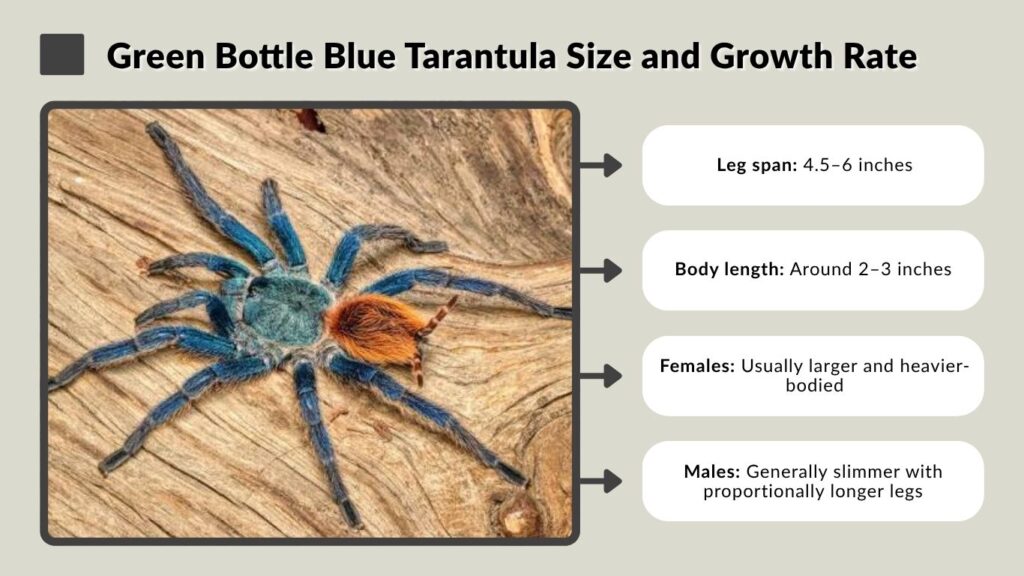
Green bottle blue tarantulas grow to a medium size compared with some of the giant tarantula species.
Their relatively fast growth and dramatic color changes make raising a spiderling especially interesting.
How Big Do Green Bottle Blue Tarantulas Get?
Adult green bottle blue tarantulas generally reach approximately:
- Leg span: 4.5–6 inches
- Body length: Around 2–3 inches
- Females: Usually larger and heavier-bodied
- Males: Generally slimmer with proportionally longer legs
Exact adult size varies according to genetics, sex, feeding frequency, and environmental conditions.
Green Bottle Blue Tarantula Growth Rate
GBBs are considered relatively fast growers compared with many popular New World tarantulas.
Spiderlings given appropriate temperatures and regular feeding may show noticeable growth between molts. However, overfeeding should still be avoided.
Young tarantulas molt more frequently than adults because their bodies are developing rapidly.
Adult females typically molt less often, sometimes only once every year or longer.
Green Bottle Blue Tarantula Lifespan
Female green bottle blue tarantulas can live significantly longer than males.
Sex therefore has a major influence on how long a GBB tarantula may live.
How Long Do Green Bottle Blue Tarantulas Live?
A female may live approximately 10–14 years, with some potentially living longer under excellent captive conditions.
Adult males usually have much shorter lifespans. Males commonly live around 3–5 years overall, depending on how quickly they mature.
After reaching maturity, males generally stop growing and focus primarily on finding females.
Good housing, appropriate feeding, access to clean water, and minimal stress can help maximize a tarantula’s lifespan.
Green Bottle Blue Tarantula Enclosure Setup
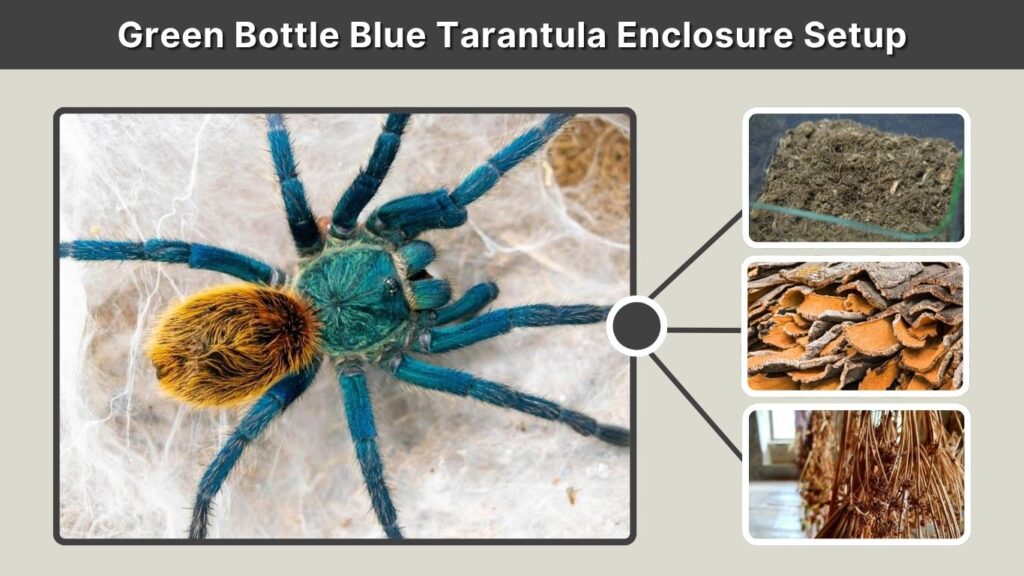
An appropriate enclosure should provide enough floor space, ventilation, substrate, and structures for web building.
This species often transforms a simple enclosure into an impressive network of silk.
Recommended Enclosure Setup
A suitable setup should include:
- Secure enclosure with excellent ventilation
- Several inches of dry substrate
- Cork bark or similar hide
- Artificial or dried plants for web anchors
- Shallow water dish
- Adequate horizontal floor space
- Secure lid
- Limited excessive height
An adult enclosure measuring roughly 12 × 12 × 12 inches can work well, although enclosure dimensions may vary with the individual spider.
Spiderlings should be kept in appropriately smaller containers.
Substrate
Coconut fiber, organic topsoil, peat-based mixtures, or suitable tarantula substrates can be used.
The substrate should normally remain relatively dry.
Providing several inches of substrate also reduces the risk of serious injury if the tarantula falls.
Do Green Bottle Blue Tarantulas Burrow?
They can burrow, particularly when young, but adults often rely heavily on webbing rather than creating deep underground burrows.
Providing a starter hide allows the spider to establish a secure retreat.
Eventually, it may cover much of its enclosure with dense silk.
Green Bottle Blue Tarantula Temperature and Humidity
GBBs are relatively tolerant of normal indoor conditions, which contributes to their popularity in captivity.
Their enclosure generally should not be kept constantly wet.
Temperature and Humidity Requirements
Useful guidelines include:
- Temperature: Approximately 70–80°F
- Humidity: Moderate rather than constantly high
- Keep most substrate relatively dry
- Maintain a clean water dish
- Provide strong cross-ventilation
- Avoid excessively wet or stagnant conditions
Normal comfortable room temperatures are usually appropriate.
Supplemental heating is often unnecessary unless the room regularly becomes unusually cold.
Keeping the enclosure permanently damp can create conditions favorable to mold and other problems.
Green Bottle Blue Tarantula Feeding
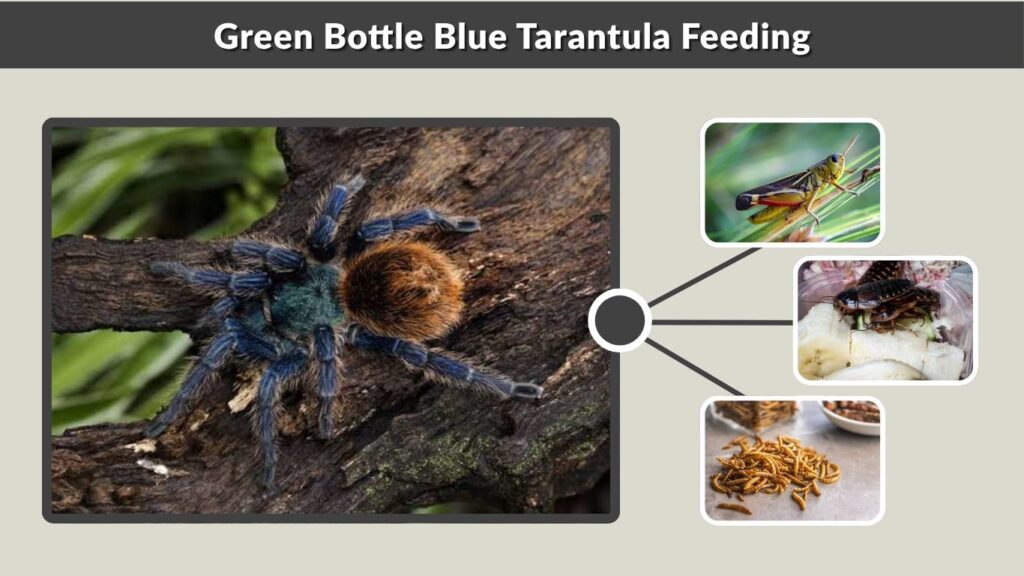
Green bottle blue tarantulas usually have strong feeding responses and readily accept commonly available feeder insects.
Their appetite makes feeding one of the more entertaining aspects of keeping this species.
What Do Green Bottle Blue Tarantulas Eat?
Common foods include:
- Crickets
- Dubia roaches
- Mealworms
- Superworms
- Other appropriately sized feeder insects
Young spiderlings can be offered smaller prey or pre-killed insects if necessary.
Adults generally do well when offered appropriately sized prey once or twice per week, although feeding frequency depends on body condition.
Remove uneaten live prey, especially when the tarantula appears to be preparing for a molt.
Green Bottle Blue Tarantula Temperament
Green bottle blue tarantulas are visually spectacular, but they are generally better regarded as display animals rather than handling pets.
They tend to be quick and may react rapidly when disturbed.
Are Green Bottle Blue Tarantulas Aggressive?
GBBs are not usually aggressive in the sense of actively seeking confrontation.
However, they can be:
- Fast-moving
- Skittish
- Defensive when disturbed
- Capable of kicking urticating hairs
- Capable of biting if severely threatened
Their speed can surprise inexperienced keepers during enclosure maintenance.
Working slowly and using long feeding tongs when appropriate helps reduce the chance of escape or accidental contact.
Are Green Bottle Blue Tarantulas Good for Beginners?
They can be suitable for well-prepared beginners, but they are not necessarily the easiest first tarantula.
Their advantages include hardy care requirements, good feeding responses, beautiful coloration, and relatively forgiving environmental needs.
Their speed and somewhat defensive nature make them more challenging than extremely calm beginner species such as some curly hair or Arizona blonde tarantulas.
A beginner who researches proper enclosure maintenance and avoids unnecessary handling can successfully keep a GBB.
Green Bottle Blue Tarantula Venom and Bite
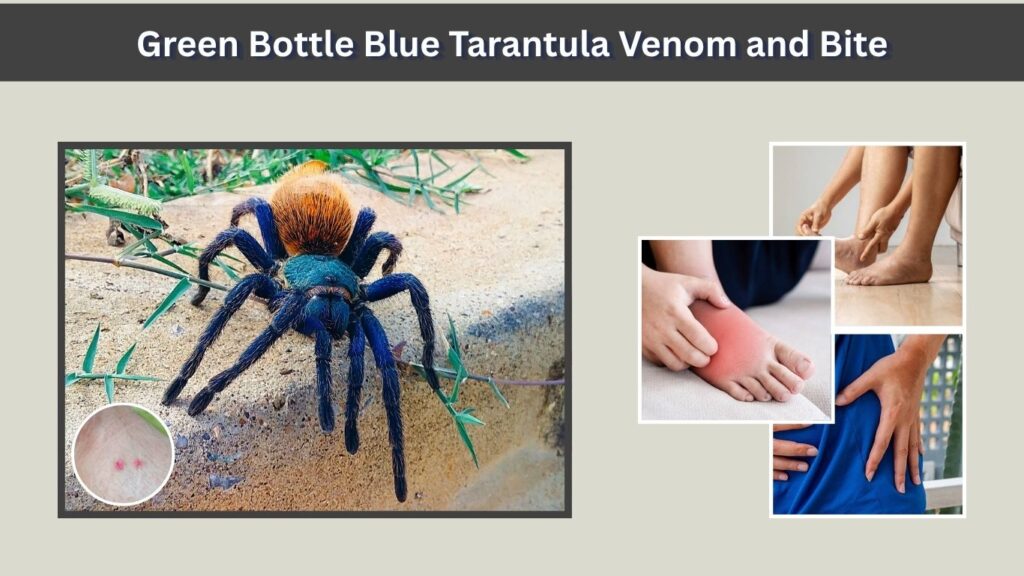
Like other true tarantulas, the green bottle blue tarantula is venomous rather than poisonous.
Its venom is primarily used to immobilize prey.
Is the Green Bottle Blue Tarantula Poisonous?
No. It is venomous because venom is delivered through its fangs.
A bite may potentially cause:
- Localized pain
- Redness
- Swelling
- Burning sensations
- Tenderness
GBBs are New World tarantulas, and their venom is generally not considered among the most medically significant tarantula venoms.
Nevertheless, bites should always be avoided.
The urticating hairs on their abdomen can also irritate the skin, nose, and eyes.
Male vs Female Green Bottle Blue Tarantula
Male and female GBBs look similar when young, and accurately determining sex may require examination of a mole.
Differences become more noticeable as they reach maturity.
Male and Female Differences
- Females: Heavier body and longer lifespan
- Males: Slender body and longer-looking legs
- Mature males may develop reproductive structures
- Females can live more than twice as long as males
- Molt examination provides one of the more reliable methods of determining sex
Female green bottle blue tarantulas are often more desirable among long-term keepers because of their considerably longer lifespan.
Green Bottle Blue Tarantula Webbing
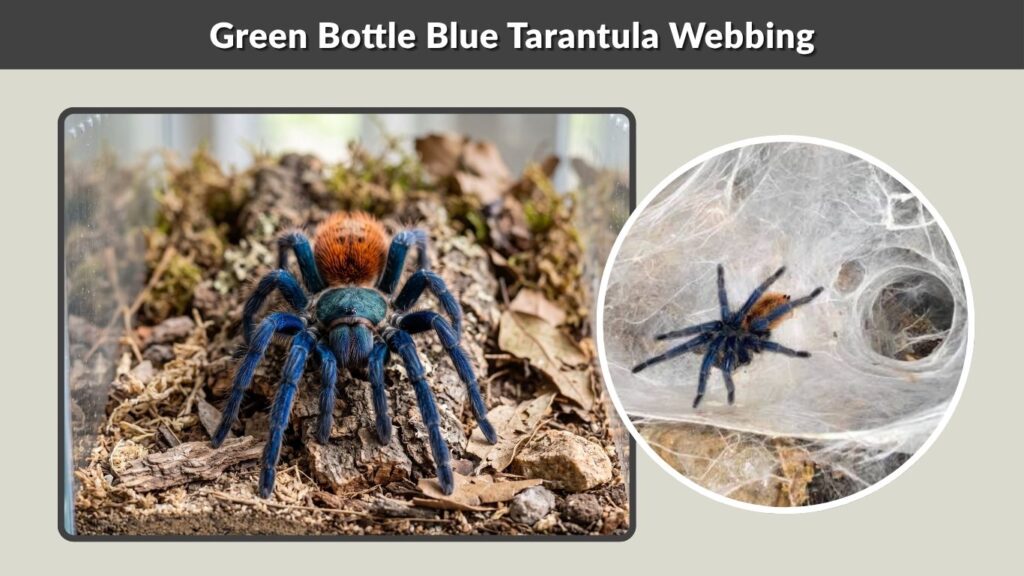
One of the most impressive characteristics of this species is its enormous amount of silk production.
GBBs are among the heaviest webbing tarantulas commonly kept in captivity.
Once established, an individual may cover substrate, hides, plants, and enclosure decorations with thick sheets and tunnels of webbing.
Providing anchor points such as cork bark and artificial plants encourages this natural behavior and can result in an exceptionally attractive display enclosure.
FAQs
What is the scientific name of the green bottle blue tarantula?
The scientific name is Chromatopelma cyaneopubescens. It is a colorful New World tarantula native to Venezuela.
Are green bottle blue tarantulas docile?
They are generally considered skittish rather than truly docile. They frequently retreat when disturbed but may kick urticating hairs or defend themselves if they feel threatened.
Can you handle a green bottle blue tarantula?
Handling is generally discouraged. Their speed increases the risk of escape or dropping the spider, and a fall can seriously injure a terrestrial tarantula.
How big should a green bottle blue tarantula enclosure be?
An adult can generally be housed in an enclosure around 12 × 12 × 12 inches, provided it has sufficient floor space, ventilation, substrate, hiding places, and web anchor points.
Why does my green bottle blue tarantula make so much web?
Heavy webbing is completely normal for this species. Green bottle blue tarantulas naturally build extensive silk structures that provide shelter, movement pathways, and areas for detecting prey.
