
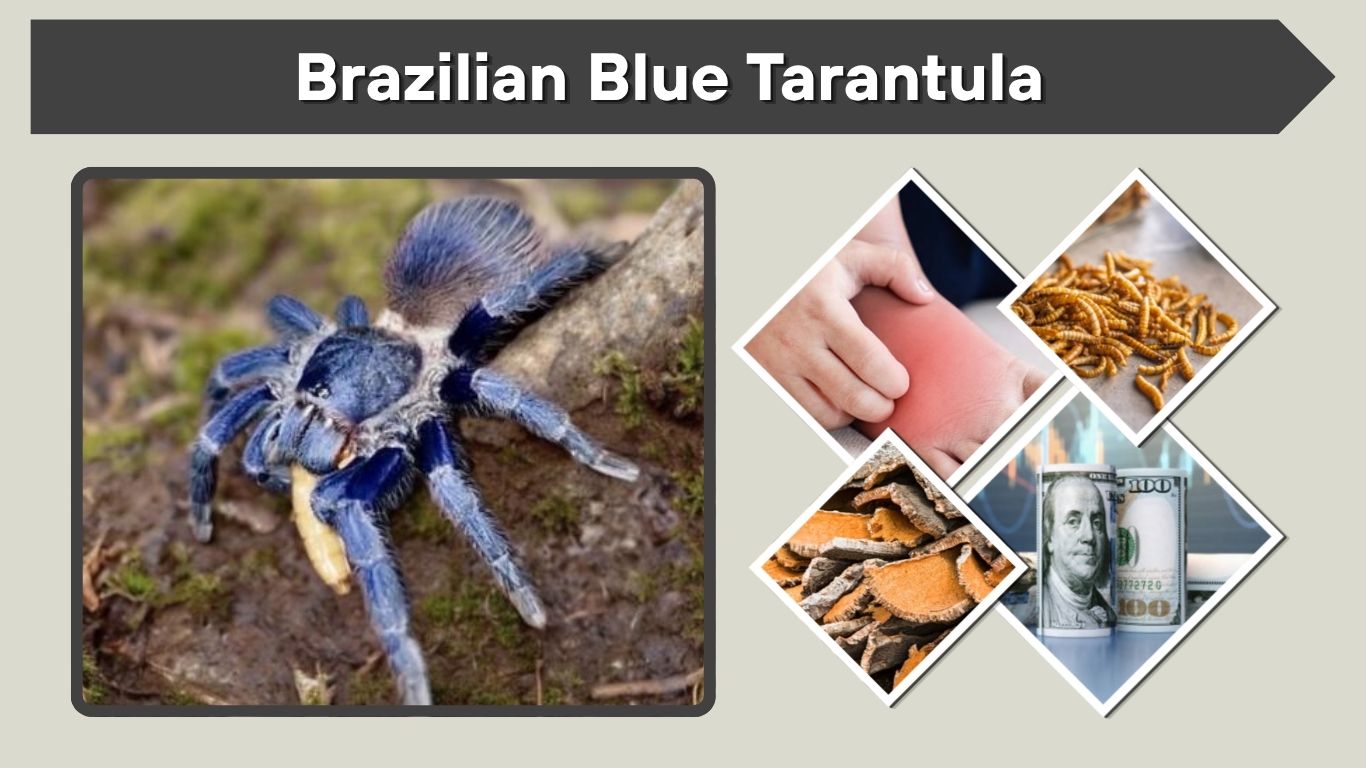
The Brazilian blue tarantula is a striking New World species admired for its intense metallic-blue coloration and relatively manageable care requirements. Its accepted scientific name is Lasiocyano sazimai, although many hobby listings still use its former name, Pterinopelma sazimai. Native to Brazil, this terrestrial tarantula has become popular among collectors because of its beautiful appearance, hardy nature, and fascinating behavior. Proper housing, feeding, moisture control, and minimal handling are important for keeping this spectacular blue spider healthy.
Brazilian Blue Tarantula Facts
The Brazilian blue tarantula belongs to the family Theraphosidae and occurs naturally in Brazil. It was originally described as Pterinopelma sazimai, but current taxonomy places it in the genus Lasiocyano.
Its brilliant coloration is especially noticeable after a fresh molt.
Identification
- Scientific name: Lasiocyano sazimai
- Former name: Pterinopelma sazimai
- Common name: Brazilian blue tarantula
- Origin: Brazil
- Type: New World terrestrial tarantula
- Adult size: Roughly 5–6 inches in leg span
- Temperament: Usually defensive or skittish rather than aggressive
- Diet: Insects and other small invertebrates
- Color: Dark body with striking iridescent blue legs
The World Spider Catalog currently recognizes Lasiocyano sazimai as the accepted name and lists its distribution as Brazil.
Brazilian Blue Tarantula Habitat
In nature, Brazilian blue tarantulas are associated with Brazilian upland habitats where they can take shelter beneath rocks, vegetation, and available ground cover.
They are terrestrial spiders and should therefore be provided with more floor space than climbing height in captivity.
A deep substrate layer and secure hide allow the tarantula to establish a retreat and behave naturally.
Brazilian Blue Tarantula Size
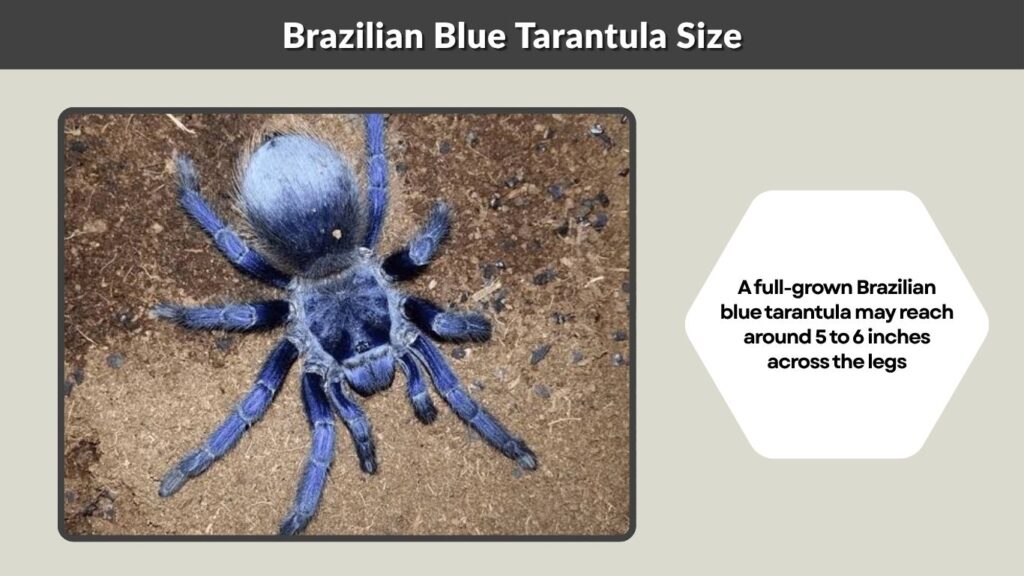
The Brazilian blue is a medium-sized tarantula rather than a true giant species.
Its impressive blue coloration can make an adult appear particularly dramatic despite its moderate size.
How Big Does a Brazilian Blue Tarantula Get?
A full-grown Brazilian blue tarantula may reach around 5 to 6 inches across the legs, although individual size varies.
Females usually develop heavier abdomens and more robust bodies. Mature males generally become slimmer and appear leggier.
Spiderlings are naturally tiny and may look considerably less colorful than adults. Their blue coloration becomes increasingly noticeable as they grow and molt.
Growth Rate
Brazilian blue tarantulas generally have a moderate growth rate.
Growth depends on:
- Temperature
- Food availability
- Sex
- Individual genetics
- Frequency of molts
- Overall husbandry
Spiderlings molt much more frequently than mature adults. Growth naturally slows as the tarantula approaches its adult size.
Brazilian Blue Tarantula Lifespan
As with many tarantulas, females can live considerably longer than males.
A well-maintained female may potentially live for more than a decade, while males normally have much shorter adult lives.
Male vs Female Lifespan
Females can commonly live approximately 10–15 years or potentially longer under suitable captive conditions.
Males may live only several years overall and usually survive for a much shorter period after reaching sexual maturity.
The lifespan difference is one reason confirmed females are often more desirable—and usually more expensive—than unsexed spiderlings or mature males.
Brazilian Blue Tarantula Care
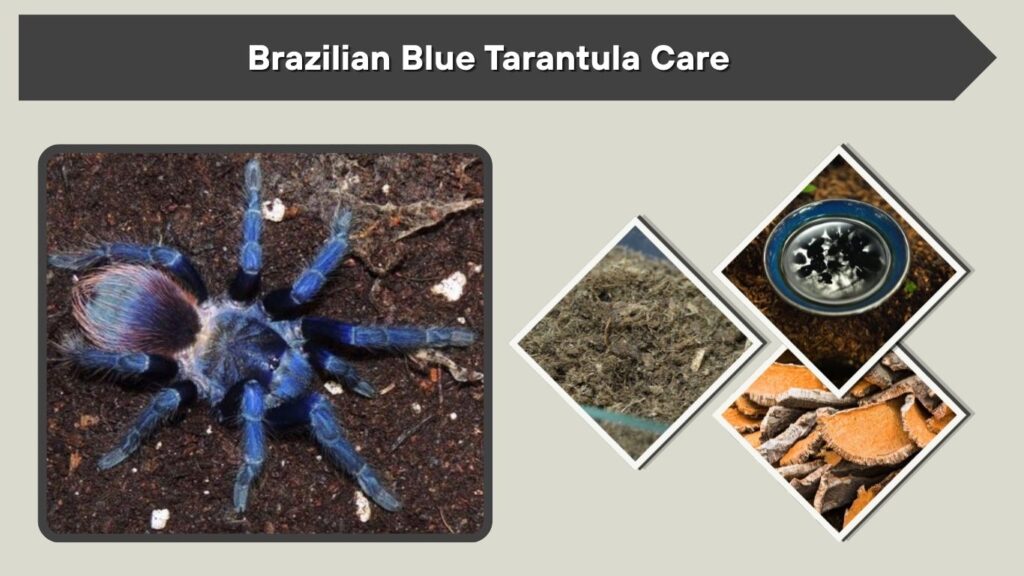
Brazilian blue tarantula care is relatively straightforward once its basic terrestrial requirements are understood.
An overly complicated enclosure is unnecessary. Stability, ventilation, clean water, and suitable substrate are more important than decorative equipment.
Brazilian Blue Tarantula Enclosure
A suitable adult enclosure should provide:
- Adequate horizontal floor space
- Several inches of substrate
- A secure hide
- Good ventilation
- A shallow water dish
- Secure, escape-proof lid
- Cork bark or similar cover
An enclosure approximately three times the tarantula’s leg span in length can provide adequate room for an adult.
Avoid excessive enclosure height. Heavy terrestrial tarantulas can suffer serious abdominal injuries if they fall from a considerable distance.
Substrate and Moisture
Coconut fiber, organic topsoil, peat-based mixtures, or other tarantula-safe substrates can work well.
The enclosure should not be swampy or constantly soaked.
Providing a water dish while maintaining some moisture in the lower substrate is generally safer than repeatedly saturating the entire enclosure.
Good airflow helps prevent stagnant conditions and mold growth.
Temperature
Normal indoor temperatures are generally suitable.
A range of approximately 70–80°F (21–27°C) works well for many captive tarantulas of this type.
If the room remains comfortably warm for people, additional heating is usually unnecessary.
Never place a heating pad directly underneath a tarantula enclosure because tarantulas naturally burrow downward when attempting to escape unfavorable conditions.
Brazilian Blue Tarantula Feeding
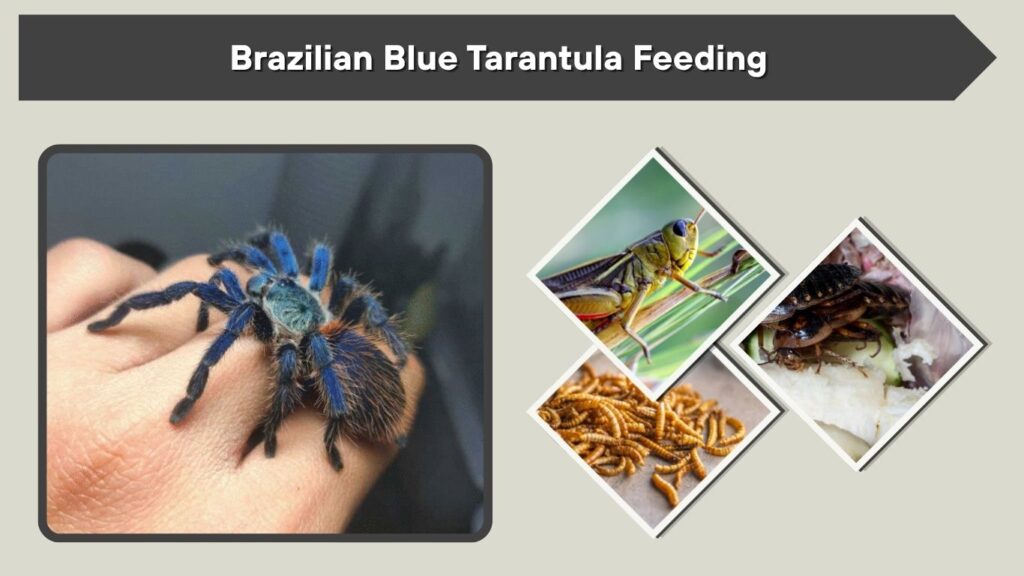
Brazilian blue tarantulas are predators and readily consume appropriately sized live insects.
Juveniles require smaller meals more frequently, while adults can go much longer between feedings.
What Do Brazilian Blue Tarantulas Eat?
Suitable feeder insects include:
- Crickets
- Dubia roaches
- Mealworms
- Superworms
- Other properly sized captive-bred feeder insects
Adults can generally be offered one or two suitably sized prey items every 7–10 days, adjusting according to body condition.
Spiderlings can receive smaller prey more frequently.
Remove uneaten insects when a tarantula refuses food, especially if it appears to be entering premolt.
Brazilian Blue Tarantula Temperament
Brazilian blue tarantulas can be relatively calm when undisturbed, but temperament varies between individuals.
They should be considered display animals rather than spiders meant for frequent physical handling.
Are Brazilian Blue Tarantulas Aggressive?
They are not normally described as actively aggressive toward people.
However, they may become defensive when frightened and can:
- Retreat quickly
- Kick urticating hairs
- Raise a defensive posture
- Strike if heavily provoked
- Bite when unable to escape
Slow movements during feeding and enclosure maintenance reduce unnecessary stress.
Can You Handle a Brazilian Blue Tarantula?
Handling is not recommended.
Even if an individual appears calm, a sudden movement can cause it to run or fall. A fall of only a modest distance can rupture a tarantula’s abdomen.
Urticating hairs are another reason unnecessary contact should be avoided.
Is the Brazilian Blue Tarantula Poisonous?
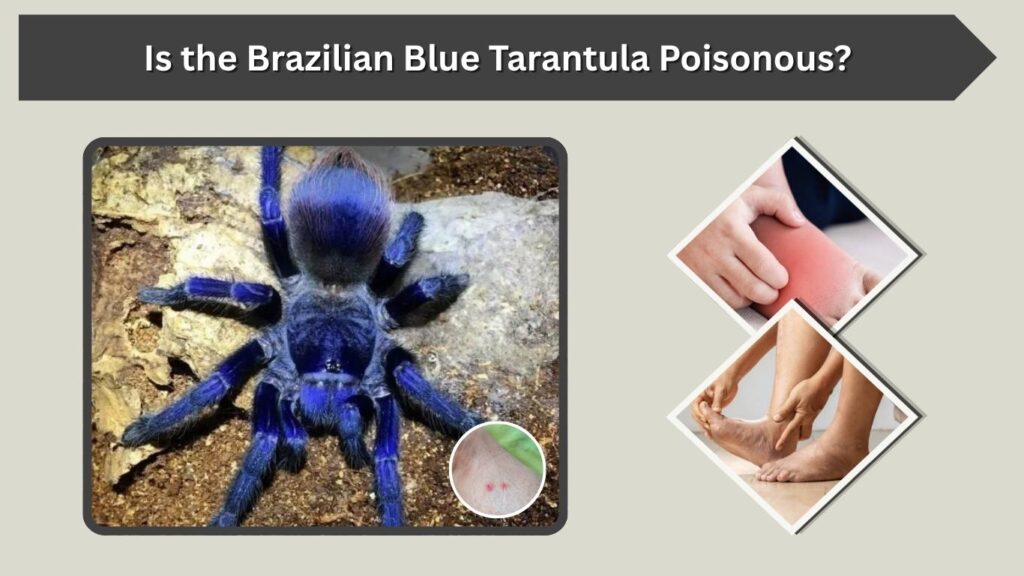
Brazilian blue tarantulas are venomous, not poisonous.
Like other tarantulas, they use venom primarily to subdue prey.
Brazilian Blue Tarantula Bite
A defensive bite may cause symptoms such as:
- Pain
- Redness
- Local swelling
- Tenderness
- Burning or irritation
Their venom is not generally regarded among the most medically significant tarantula venoms, but any bite should still be taken seriously.
Seek medical attention if severe swelling, breathing difficulties, widespread symptoms, or signs of an allergic reaction develop.
Brazilian Blue Tarantula Male vs Female
Male and female Brazilian blues can look similar when immature.
Examining a properly preserved molt is one of the more reliable ways experienced keepers determine sex.
Main Differences
Females generally have heavier bodies and dramatically longer lifespans.
Mature males tend to become slimmer and develop reproductive structures associated with adulthood.
Because females may live many additional years, people looking for a long-term display animal often prefer females.
Unsexed spiderlings are typically less expensive because their eventual sex is unknown.
Brazilian Blue Tarantula for Sale and Price
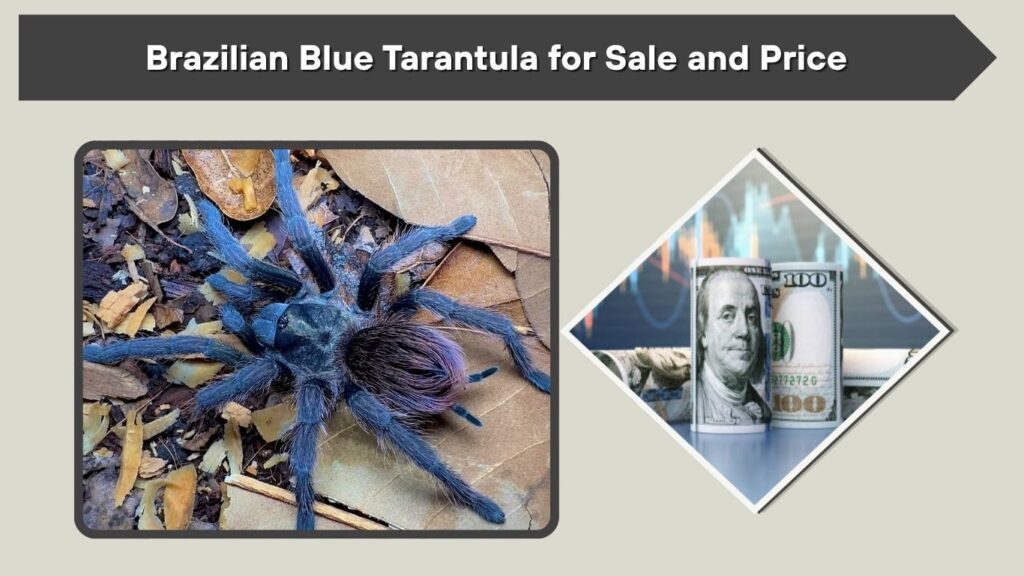
Brazilian blue tarantulas may be offered as spiderlings, juveniles, unsexed specimens, confirmed males, or confirmed females.
Prices vary considerably according to age, size, availability, sex, locality, and breeder.
When searching for a Brazilian blue tarantula for sale, prioritize established captive breeders and verify the scientific name before purchasing.
This is particularly important because several unrelated blue Brazilian tarantulas are sold under similar common names.
Brazilian Blue vs Brazilian Blue Dwarf Tarantula
The Brazilian blue dwarf beauty is not simply a smaller version of Lasiocyano sazimai.
It is a different species called Dolichothele diamantinensis, also known as the Brazilian blue dwarf beauty, Brazilian blue beauty, or blue diamond tarantula.
It remains much smaller and is known for bright blue coloration and extensive webbing.
Names such as “Brazilian blue violet,” “Brazilian blue beauty,” and “Brazilian blue jewel” can sometimes be used inconsistently in the pet trade. Checking the scientific name is therefore the safest way to identify exactly which tarantula is being offered.
FAQs
What is the scientific name of the Brazilian blue tarantula?
The accepted scientific name is Lasiocyano sazimai. Many older websites and pet listings still identify it as Pterinopelma sazimai.
How big does a Brazilian blue tarantula get?
A full-grown Brazilian blue tarantula commonly reaches approximately 5–6 inches in leg span, with females generally becoming heavier-bodied than males.
Are Brazilian blue tarantulas poisonous?
No. They are venomous rather than poisonous. Venom is delivered through the fangs when biting prey or defending themselves.
Is a Brazilian blue tarantula good for beginners?
It can be manageable for a prepared beginner, but its defensive behavior and urticating hairs make some calmer terrestrial species easier first tarantulas.
What is the difference between Brazilian blue and Brazilian blue dwarf tarantulas?
The Brazilian blue is Lasiocyano sazimai, while the Brazilian blue dwarf beauty is Dolichothele diamantinensis. They are separate species with different adult sizes and husbandry characteristics.
