
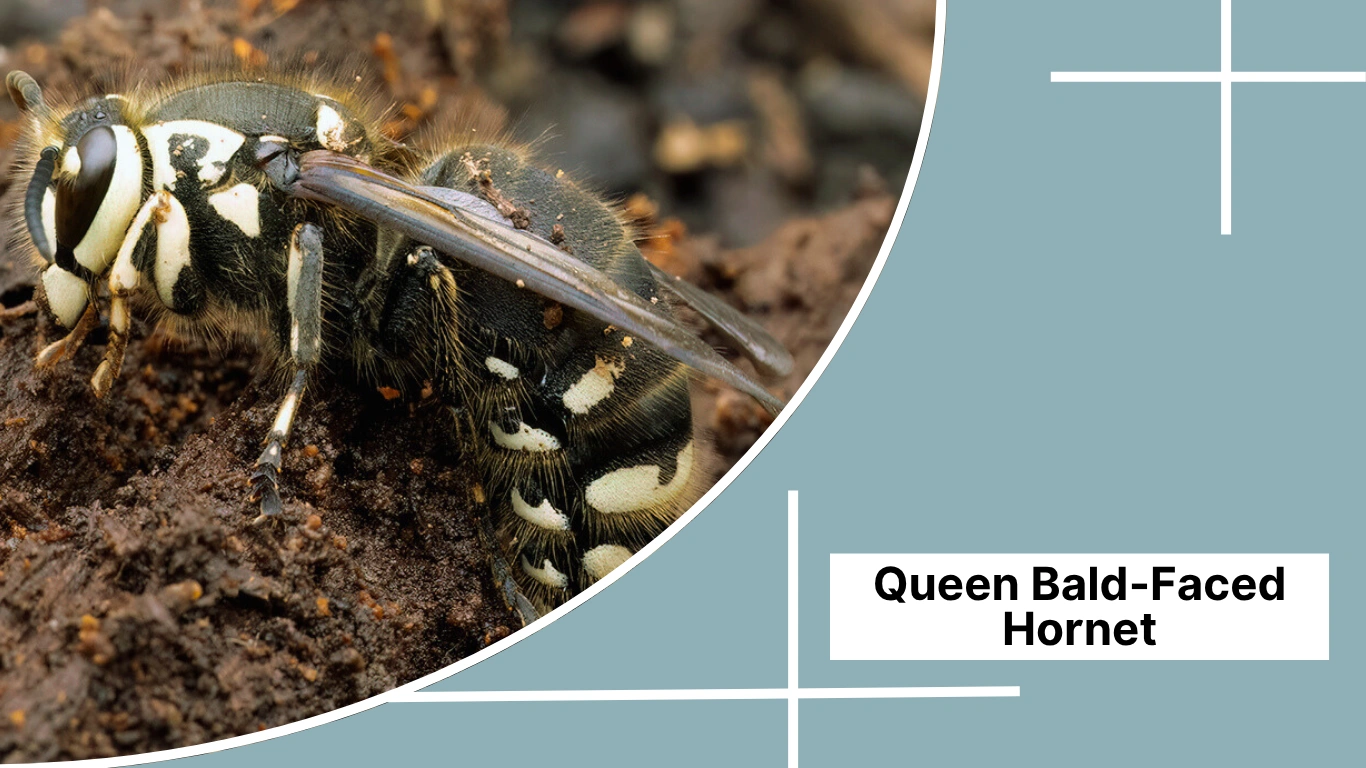
The bald-faced hornet (Dolichovespula maculata) is a social wasp known for its aggressive defense tactics and large paper nests. At the center of every colony stands the queen—larger, more robust, and the single fertile female responsible for reproduction and founding the colony. Understanding the queen’s role, behavior, and how she differs from the workers is key to grasping how these fascinating insects function as a colony. This article dives into the lifecycle, identification, sting potential, and seasonal habits of the bald-faced hornet queen.
Bald-Faced Hornet Queen Identification
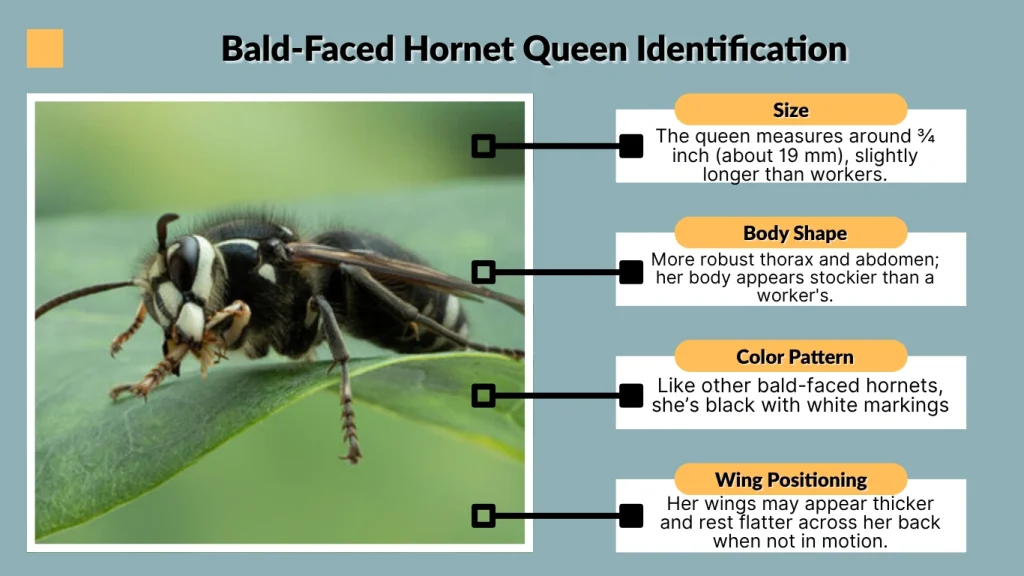
While bald-faced hornets all share the iconic black and white coloration, the queen stands out due to her size and role in the colony. Identifying her can be tricky once the colony matures and hundreds of workers swarm the nest, but during early spring or in isolated observations, the queen can be recognized through specific features.
Key Identification Features:
- Size: The queen measures around ¾ inch (about 19 mm), slightly longer than workers.
- Body Shape: More robust thorax and abdomen; her body appears stockier than a worker’s.
- Color Pattern: Like other bald-faced hornets, she’s black with white markings on her face and abdomen, but her segments may appear more pronounced.
- Solitary Behavior in Spring: Before the colony is established, the queen is the only active member, foraging alone and building the initial nest structure.
- Wing Positioning: Her wings may appear thicker and rest flatter across her back when not in motion.
Bald-Faced Hornet Queen vs Worker

Despite being of the same species, the queen and worker bald-faced hornets differ in both physical structure and function. Their distinct roles within the colony define the very hierarchy of wasp society.
Physical Differences:
- Queen: Longer and broader body; more developed reproductive organs; slightly wider head and thorax.
- Worker: Smaller and slimmer; built for agility and fast flight; non-reproductive females.
Behavioral Differences:
- Queen: Focuses exclusively on reproduction; starts the nest and lays all the colony’s eggs; rarely leaves the nest after the first brood matures.
- Worker: Feeds larvae, hunts insects, defends the nest, and expands the nest structure throughout the season.
This difference in behavior becomes evident by mid-summer when hundreds of workers manage all colony functions, leaving the queen inside the nest, continuously laying eggs.
Bald-Faced Hornet Queen vs Worker
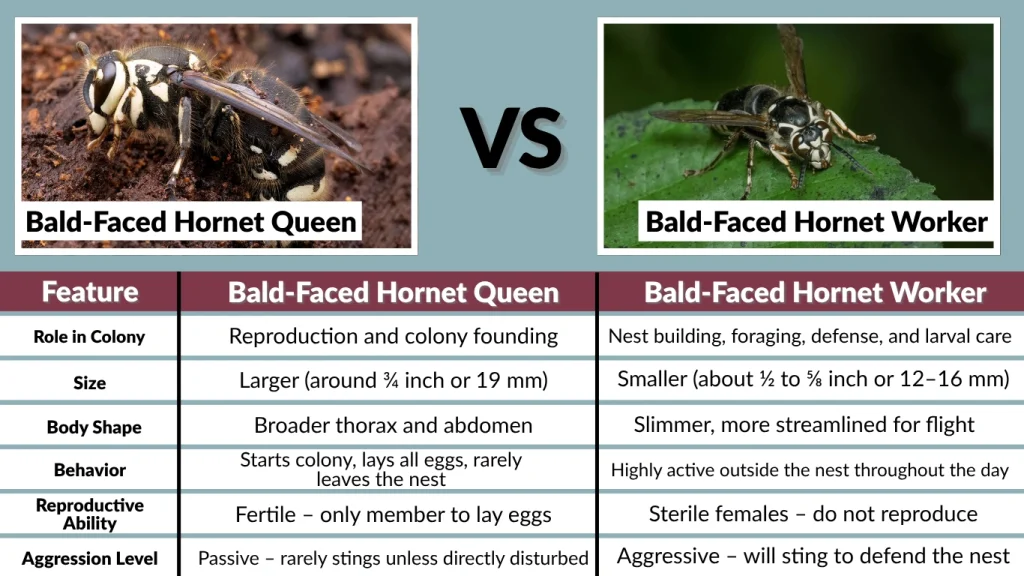
| Feature | Bald-Faced Hornet Queen | Bald-Faced Hornet Worker |
| Role in Colony | Reproduction and colony founding | Nest building, foraging, defense, and larval care |
| Size | Larger (around ¾ inch or 19 mm) | Smaller (about ½ to ⅝ inch or 12–16 mm) |
| Body Shape | Broader thorax and abdomen | Slimmer, more streamlined for flight |
| Behavior | Starts colony, lays all eggs, rarely leaves the nest | Highly active outside the nest throughout the day |
| Reproductive Ability | Fertile – only member to lay eggs | Sterile females – do not reproduce |
| Aggression Level | Passive – rarely stings unless directly disturbed | Aggressive – will sting to defend the nest |
| Visibility | Mostly visible in early spring or late fall | Frequently seen during summer around the nest |
| Sting Use | Rarely used, more for defense if threatened | Commonly used to defend the colony |
| Wings | Slightly broader wings that may appear more veined | Narrower wings adapted for frequent flight |
| Lifespan | Up to 12 months | Around 3–4 weeks |
| Winter Behavior | Hibernates and starts a new colony in spring | Dies by early winter |
Bald-Faced Hornet Queen vs Worker Sting
Though both the queen and workers are capable of stinging, they differ in how often and why they use this defense mechanism.
Queen Sting Characteristics:
- Usage: Queens rarely sting unless physically disturbed. Their role is not to defend the nest but to reproduce.
- Pain Level: Comparable to a worker sting—sharp, burning, and capable of causing swelling.
- Function: Unlike bees, hornets do not lose their stinger, allowing them to sting multiple times.
Worker Sting Characteristics:
- Aggression: Workers are highly territorial and will sting if the nest is approached or disturbed.
- Defense Role: They are the front-line defenders of the nest and the most likely to sting humans or animals.
- Venom: Contains acetylcholine and kinins that cause pain and can trigger allergic reactions.
While both are equipped to sting, the frequency and context of their sting behavior are what set them apart.
Is the Bald-Faced Hornet Queen Dangerous?

Although the queen has the physical capability to sting, she is far less dangerous than her worker counterparts. Her primary focus is reproduction, and she usually stays deep inside the nest.
Potential Risk to Humans:
- Low Exposure: Humans rarely encounter the queen outside of early spring or late fall.
- Still Venomous: Her sting can still cause pain and allergic reactions, just like a worker’s.
- Not Aggressive: Queens are not known to chase or attack unless directly handled or crushed.
In general, unless you’re disturbing a nest or happen upon a queen in spring, she poses little danger.
Bald-Faced Hornet Queen Lifespan

The queen has the longest life span in the colony and is central to its entire existence.
How Long Does a Queen Live?
- Total Lifespan: Up to 12 months.
- Timeline:
- Spring: Emerges from hibernation and begins building a nest.
- Summer: Remains in the nest laying thousands of eggs.
- Fall: Lays eggs that will become new queens and males.
- Late Fall: Dies shortly after the first frost or is killed naturally as the colony collapses.
- Spring: Emerges from hibernation and begins building a nest.
New queens fertilized in late summer go on to hibernate and start their own colonies the next year.
Bald-Faced Hornet Queen Nest Behavior
The queen is solely responsible for starting the colony and constructing the first stages of the nest.
Nest Construction in Spring:
- Solo Effort: The queen chews wood fibers to build a small starter nest, usually the size of a golf ball.
- Initial Eggs: She lays 10–20 eggs in hexagonal paper cells and cares for them alone.
Nest Expansion:
- Handed Off to Workers: Once the first workers hatch and mature, they take over nest-building responsibilities.
- Queen Stays Inside: She becomes a full-time egg layer for the rest of the season.
- Total Nest Size: A mature nest can house over 400–700 hornets and grow larger than a football.
The queen’s early investment in nest building ensures the success of the colony throughout the year.
FAQs
1. How can I tell if a bald-faced hornet is a queen?
A bald-faced hornet queen can be recognized by her larger and more robust body compared to the workers. She is most visible in early spring when she emerges alone to start building a new nest. Her behavior is less frantic than the workers, and she usually appears calm, deliberate, and focused on nest-building or foraging activities.
2. Do queen bald-faced hornets sting?
Yes, queen bald-faced hornets can sting, and their sting is just as painful as a worker’s. However, they rarely use their stinger unless they are directly threatened or physically handled. Unlike workers, queens are not involved in nest defense, so they do not actively seek to sting unless defending themselves during early nesting or hibernation periods.
3. What happens to the queen in winter?
In winter, the queen enters a dormant state called diapause to survive cold temperatures. After mating in the fall, she leaves the nest and hides in sheltered areas like under bark or in logs. During this time, she remains inactive without eating, waiting for spring to emerge and begin building a new nest and laying eggs.
4. Will a queen reuse an old nest the following year?
No, bald-faced hornet queens never reuse old nests. The nests deteriorate over the winter and can harbor parasites or disease. Each queen builds a brand-new nest in spring, typically in a different location. Even if an old nest is still intact, it serves no further purpose and will not be inhabited again by any hornet.
5. Are bald-faced hornet queens aggressive?
Bald-faced hornet queens are not considered aggressive. Their primary role is reproduction, and once workers hatch, the queen remains inside the nest for the rest of the season. She does not defend the nest and typically avoids confrontation. Unless disturbed directly, such as being accidentally touched or handled, the queen poses little risk of aggression.
