
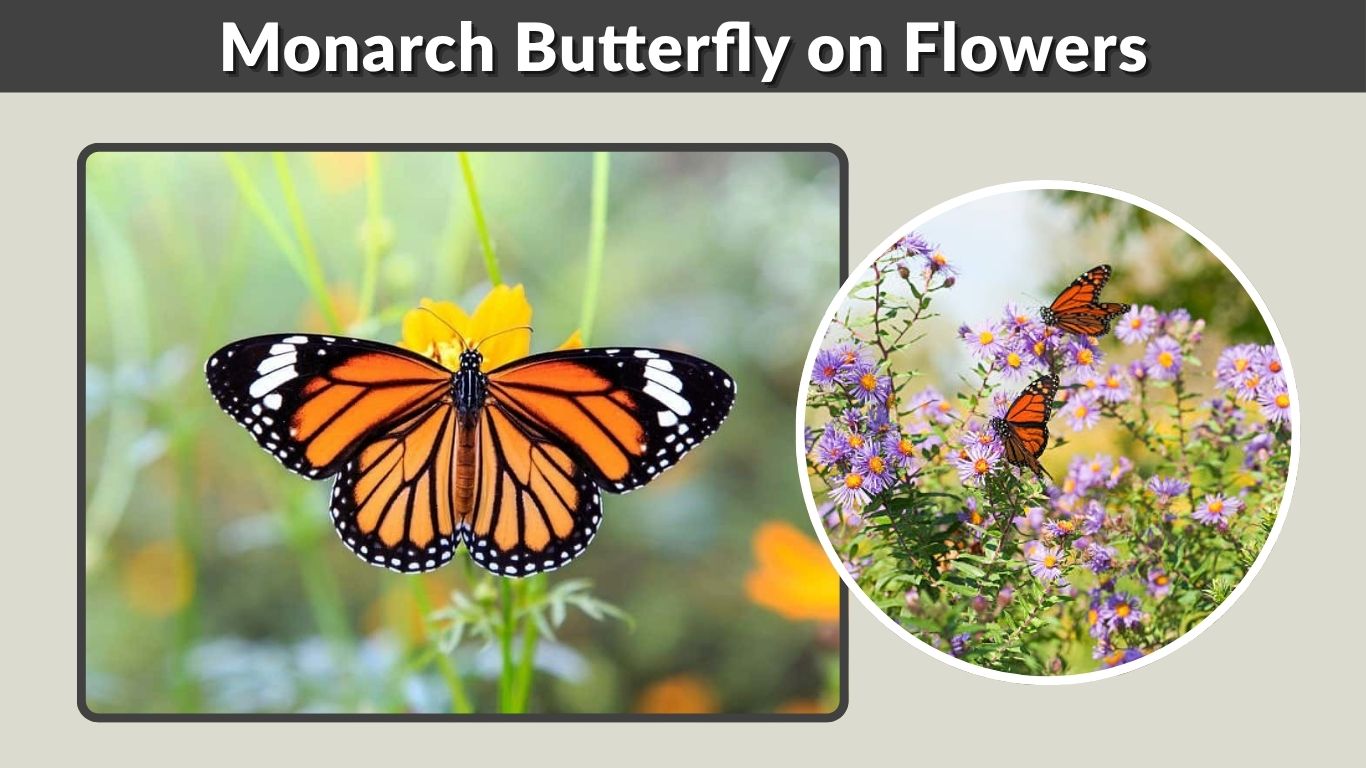
A monarch butterfly on a flower is usually feeding on nectar through its long, straw-like proboscis. Adult monarchs visit many kinds of nectar-rich flowers, including milkweed, asters, goldenrods, blazing stars, sunflowers, coneflowers, and other seasonal blooms. There is no single flower that every monarch prefers. The best monarch garden provides a variety of pesticide-free flowers blooming from spring through fall, plus native milkweed for egg laying and caterpillar development. Nectar becomes especially important during fall migration when monarchs need large energy reserves for their journey.
What Do Monarch Butterflies Do on Flowers?
When a monarch lands on a flower, it usually uncurls its proboscis and inserts it into nectar-producing parts of the bloom.
Nectar is a sugary liquid that supplies the carbohydrates adult monarchs need for flying, mating, migration, and everyday activity. During migration, finding abundant nectar flowers at stopover sites can be especially important because butterflies need to replenish their energy reserves repeatedly.
As monarchs move between blooms, pollen may stick to their bodies and be transferred to other flowers, so they can also contribute to pollination.
What Do Monarchs Get From Flowers?
Flowers primarily provide adult monarchs with:
- Nectar for energy
- Sugar needed for long flights
- Moisture
- Feeding opportunities during migration
- Resources during breeding periods
- Energy reserves for overwintering
Adult monarchs can feed from many flowering plants. Caterpillars, however, have a much more specialized diet.
What Is a Monarch Butterfly’s Favorite Flower?
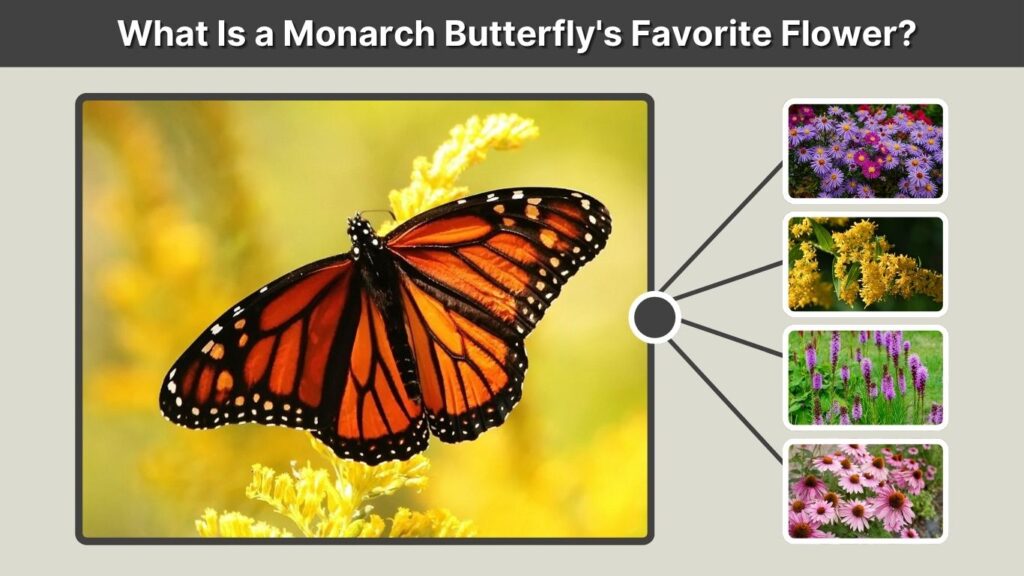
There is no scientifically established single favorite flower for all monarch butterflies.
Which flowers receive the most visits depends on geographic region, season, bloom abundance, nectar availability, and the plants naturally growing along a monarch’s migration route.
Good nectar plants commonly include:
| Flower | Typical Color | Value to Monarchs |
| Milkweed | Pink, orange, white | Nectar + larval host |
| Aster | Purple, blue, pink | Excellent late-season nectar |
| Goldenrod | Yellow | Important fall nectar |
| Blazing star | Purple/pink | Strong nectar source |
| Sunflower | Yellow/orange | Nectar source |
| Coneflower | Purple/pink | Summer nectar |
| Joe-Pye weed | Pink/purple | Nectar source |
| Ironweed | Purple | Late-season nectar |
| Bee balm | Pink/red/purple | Nectar source |
| Verbena | Purple | Nectar source |
U.S. Fish and Wildlife Service guidance highlights flowers such as goldenrod, coneflower, black-eyed Susan, aster, bee balm, ironweed, and sunflowers as valuable nectar plants.
Is Milkweed the Best Flower for Monarch Butterflies?
Milkweed is the most important plant for monarch reproduction, but adult monarchs do not depend exclusively on its flowers for nectar.
Females lay their eggs on suitable milkweed, and monarch caterpillars depend on milkweed as their host plant. Adult butterflies, meanwhile, feed from milkweed flowers as well as many other nectar-producing plants.
A successful monarch garden therefore needs both milkweed and diverse nectar flowers.
Monarch Butterfly on Orange Flowers
Orange flowers produce some of the most recognizable monarch garden scenes because their color closely matches the butterfly’s wings.
One especially relevant plant is butterfly milkweed (Asclepias tuberosa), which produces bright orange to yellow-orange flowers. It serves as a monarch host plant while also supplying nectar to adult butterflies and other pollinators.
Other orange-flowering garden plants may also receive monarch visits when they offer accessible nectar.
Do Monarchs Like Mexican Sunflower?
Mexican sunflower, or Tithonia rotundifolia, is widely grown as a butterfly nectar plant, and monarchs are often photographed feeding on its bright orange blossoms.
However, gardeners should not assume one ornamental species is universally the “best” monarch flower. Conservation organizations recommend prioritizing regionally appropriate native plants and providing several species that bloom at different times.
Monarch Butterfly on Purple Flowers
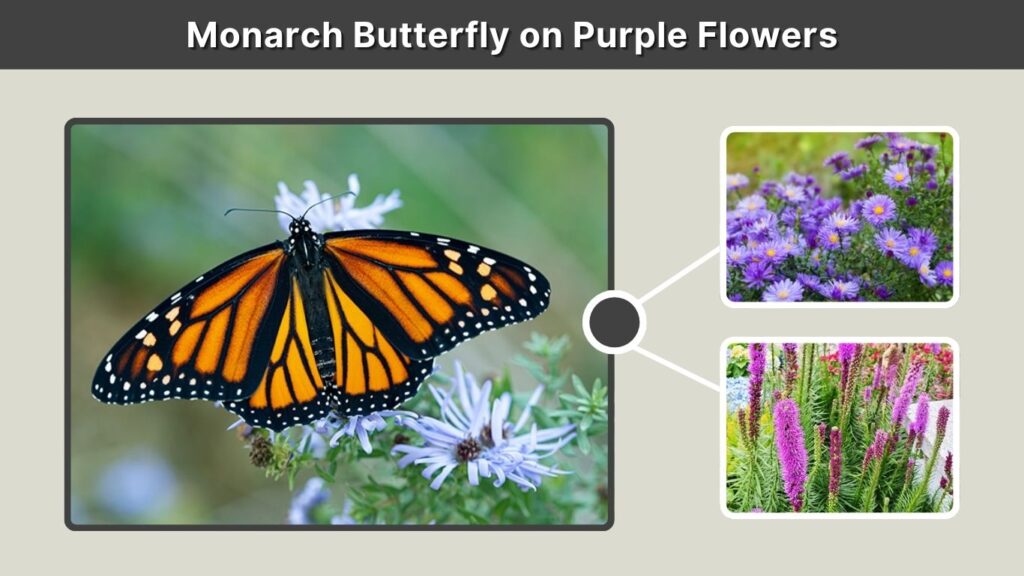
Purple flowers are commonly visited by monarchs, especially during late summer and fall.
Excellent examples include asters, blazing stars, ironweeds, vervains, and Joe-Pye weeds. Xerces Society regional monarch guides document monarch visitation to numerous purple and pink-purple native plants.
Asters
Asters are particularly valuable during fall migration because many bloom when monarchs are moving south.
The U.S. Fish and Wildlife Service recommends maintaining diverse goldenrods and asters to provide late-season nectar for migrating adults.
Blazing Star
Blazing star (Liatris species) produces tall spikes of purple or pink flowers and is another documented monarch nectar source.
Regional species differ, so choosing a Liatris native to your area is preferable when possible.
Monarch Butterfly on Yellow Flowers
Yellow flowers can also provide valuable nectar.
Goldenrod is particularly important because many species flower in late summer and fall, overlapping with monarch migration.
At Fire Island National Seashore, the National Park Service identifies seaside goldenrod among important fall nectar plants used by migrating monarchs.
Other useful yellow blooms can include:
- Sunflowers
- Black-eyed Susans
- Golden asters
- Certain milkweeds
- Other native composite flowers
Rather than selecting flowers solely by color, choose plants with good nectar production and overlapping flowering periods.
Monarch Butterfly on Pink Flowers
Monarchs frequently visit pink flowers as well.
Swamp milkweed (Asclepias incarnata) is particularly valuable because it produces clusters of pink flowers while also serving as a caterpillar host plant. Xerces Society plant guides identify swamp milkweed as both an important host and nectar resource.
Joe-Pye weed is another pink to mauve flowering plant documented in monarch nectar-plant recommendations.
A garden containing pink, purple, yellow, orange, and white flowers can provide a long sequence of blooms rather than forcing monarchs to depend on one plant.
Crown Flower and Monarch Butterflies
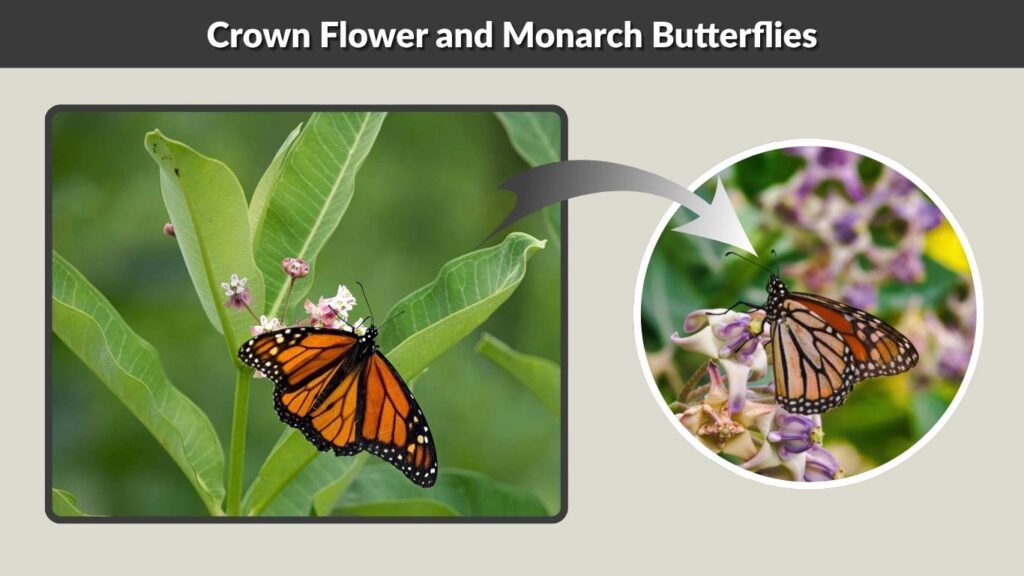
Crown flower, often referring to giant milkweed (Calotropis gigantea), is related to traditional milkweeds and can serve as a monarch caterpillar host.
It is a large tropical plant with pale purple or white crown-shaped flowers. University of Florida Extension notes that giant milkweed is also called crown flower and is native to Asia and tropical Africa.
Monarch caterpillars can feed on it, but because it is non-native in the continental United States, gardeners should consider locally native Asclepias species first where practical. Regional native milkweeds generally provide better alignment with local ecosystems.
Do Monarch Butterflies Eat Flowers?
Adult monarchs do not chew flower petals in the way a caterpillar eats leaves.
Instead, they drink nectar.
Their proboscis works somewhat like a flexible drinking tube. When not feeding, it coils beneath the head. When the butterfly lands on a suitable bloom, it extends the proboscis into the flower to access liquid nectar.
Monarch caterpillars feed differently. They use chewing mouthparts and consume milkweed leaves rather than drinking flower nectar.
Milkweed Flowers and Monarch Butterflies
Milkweed has a unique double role in the monarch’s life cycle.
For Adult Monarchs
Milkweed flowers provide nectar.
For Female Monarchs
Suitable milkweed plants provide locations for laying eggs.
For Caterpillars
Milkweed leaves provide their essential food.
The National Park Service states that monarchs lay their eggs on milkweed and that milkweed is the food plant used by monarch caterpillars.
This makes milkweed fundamentally different from ordinary nectar flowers such as asters or goldenrods.
What Flowers Attract Monarch Butterflies?
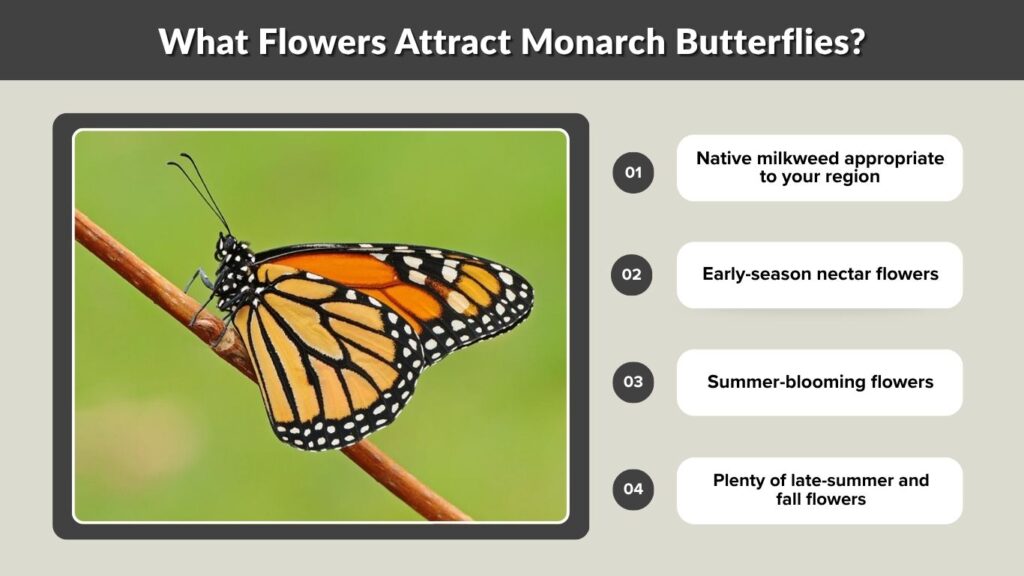
The most effective approach is to grow several locally native species that bloom at different times of year.
Xerces Society guidance emphasizes that adults require diverse nectar resources throughout spring and summer breeding, fall migration, and even overwintering periods where flowers remain available.
Creating a Monarch Flower Garden
Include:
- Native milkweed appropriate to your region
- Early-season nectar flowers
- Summer-blooming flowers
- Plenty of late-summer and fall flowers
- Several flowers of each species grouped together
- Sunny planting areas
- Pesticide-free plants
Goldenrods and asters are especially useful for fall migrants, while milkweeds provide the host plants needed earlier in the monarch life cycle.
Avoid choosing plants purely because a package says “butterfly flower.” Regional native plants that actually provide nectar or host resources are generally a better foundation.
Does Flower Color Matter to Monarchs?
Monarchs visit flowers of many colors, including:
Orange, yellow, pink, purple, red, and white.
This means gardeners do not need to create an entirely orange garden just because monarch butterflies themselves are orange.
The availability and quality of nectar, flower structure, blooming season, abundance, and location all influence which plants butterflies use. Xerces monarch plant lists include documented nectar plants ranging from yellow sunflowers and goldenrods to purple blazing stars and pink Joe-Pye weeds.
A diverse planting is therefore more useful than focusing on a single flower color.
Why Are Flowers Important During Monarch Migration?
Migrating monarchs require tremendous amounts of energy.
The fall migratory generation may travel long distances toward overwintering areas, stopping repeatedly to drink nectar and build energy reserves. Monarch Watch notes that without sufficient flower nectar, fall migrants would be unable to complete their long journey to Mexican overwintering grounds.
Late-blooming flowers are therefore particularly valuable.
Goldenrods, asters, blazing stars, ironweeds, and other regionally native fall bloomers can act like fuel stations along the migration route.
FAQs
What flower do monarch butterflies like most?
Monarchs do not have one universal favorite flower. Adults feed from many nectar-rich species, including milkweed, asters, goldenrods, blazing stars, sunflowers, coneflowers, and ironweeds. The best choices depend on your region and season.
What is the best flower for monarch butterflies?
Milkweed is essential because it provides both adult nectar and, more importantly, the host plant required by monarch caterpillars. For adult feeding alone, a diverse collection of native nectar plants blooming throughout the season is best.
Do monarch butterflies like purple flowers?
Yes. Monarchs commonly visit purple flowers such as asters, blazing stars, ironweed, vervain, and other nectar-rich species. Several of these plants are especially valuable during late summer and fall migration.
Why do monarch butterflies land on flowers?
Adult monarchs primarily land on flowers to drink nectar. Nectar supplies sugar and energy for flight, reproduction, and migration. During fall migration, abundant flowering plants at stopover sites help butterflies replenish the energy needed to continue south.
Do monarch butterflies need flowers other than milkweed?
Yes. Milkweed is essential for reproduction and caterpillar development, but adult monarchs need a broad selection of nectar flowers. Providing flowers that bloom from spring through fall gives adults reliable food throughout breeding and migration periods.
