
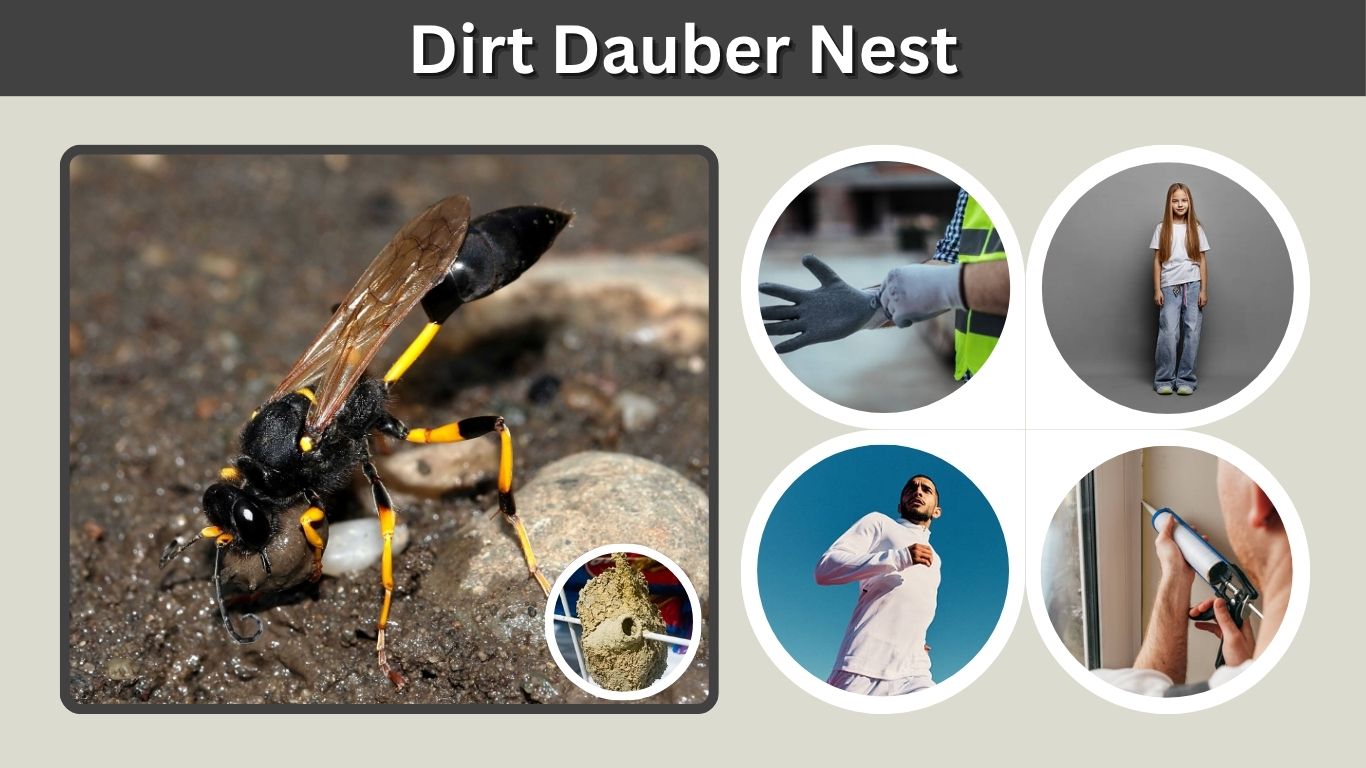
A dirt dauber nest, more commonly called a mud dauber nest, is a small structure made from mud by solitary wasps. These nests are often attached to walls, ceilings, garages, sheds, porches, barns, and other sheltered surfaces. At first glance, they may look like dried clumps of dirt or narrow mud tubes stuck to a wall.
Unlike social wasps, dirt daubers do not usually build large colonies or aggressively defend their nests. One of their most interesting behaviors is collecting spiders and placing them inside the nest as food for developing larvae. Understanding what a dirt dauber nest looks like, whether it is active, and how to remove it can help you deal with these unusual structures safely.
What Is a Dirt Dauber Nest?
A dirt dauber nest is built from small pieces of wet soil or mud. The female wasp gathers mud, carries it to a protected location, and gradually constructs individual chambers.
Each chamber becomes a nursery for one developing wasp.
After completing a chamber, the female typically:
- Hunts spiders
- Paralyzes them with her sting
- Carries them back to the nest
- Places them inside the chamber
- Lays an egg
- Seals the chamber with mud
The larva eventually hatches and feeds on the stored spiders before developing into an adult wasp.
Because mud daubers are solitary, a nest is generally associated with an individual female rather than a large colony containing hundreds or thousands of workers.
What Does a Dirt Dauber Nest Look Like?
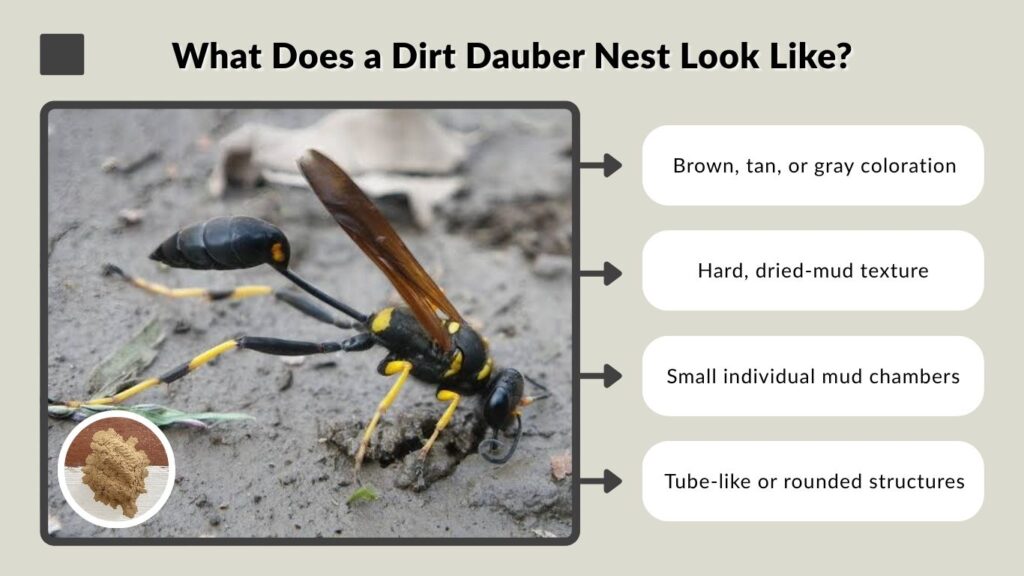
Dirt dauber nests vary depending on the species, but they usually resemble hardened mud attached to a protected surface.
Common characteristics include:
- Brown, tan, or gray coloration
- Hard, dried-mud texture
- Small individual mud chambers
- Tube-like or rounded structures
- Placement beneath roofs or inside sheltered structures
Some nests resemble a group of narrow organ pipes, while others appear as irregular lumps of dried mud.
Where Are Dirt Dauber Nests Commonly Found?
These wasps prefer locations protected from heavy rain.
You may find nests:
- Under porch ceilings
- Beneath roof overhangs
- Inside garages
- In sheds
- Inside barns
- Beneath bridges
- Around window frames
- On exterior walls
- Behind shutters
- Around attic entrances
Occasionally, nests are constructed on stored equipment or other objects that remain undisturbed for long periods.
Dirt Dauber Nest With Spiders Inside
Finding spiders inside a dirt dauber nest is completely normal.
Mud daubers are well known for hunting spiders and using them as food for their young. The female does not kill the spiders immediately. Instead, she stings and paralyzes them before storing them inside the nest chamber.
Depending on the mud dauber species, a single chamber may contain several spiders.
Why Do Dirt Daubers Collect Spiders?
Adult dirt daubers mainly consume nectar and other sugary liquids. Their larvae, however, require protein to develop.
Spiders provide this protein.
The female therefore creates a stocked food supply before sealing her egg inside the chamber. Once the larva hatches, it begins consuming the immobilized spiders.
This behavior is also why people sometimes discover numerous small spiders after accidentally breaking open an active dirt dauber nest.
Are Dirt Dauber Nests Dangerous?
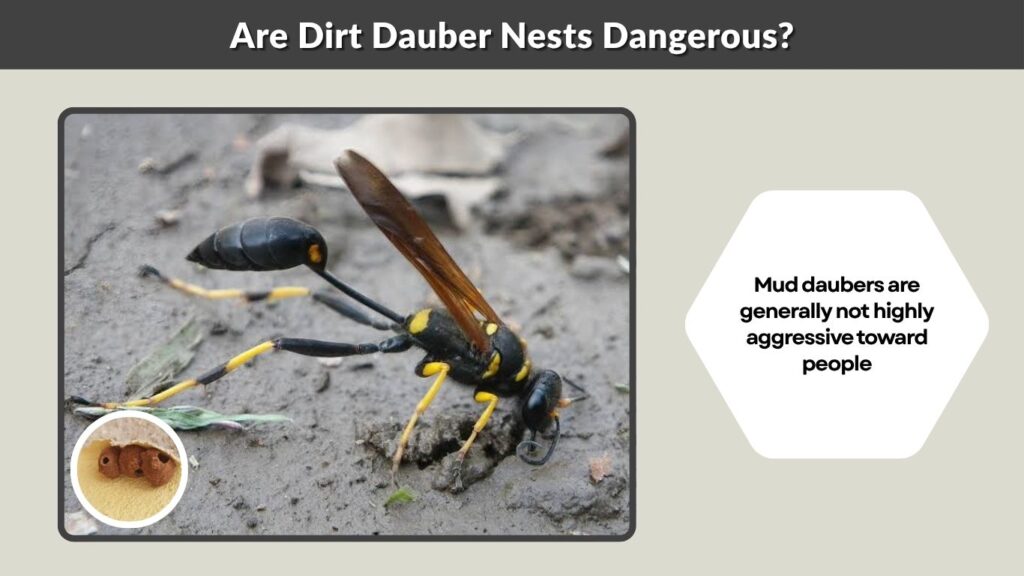
In most situations, dirt dauber nests are considerably less concerning than nests built by yellow jackets, hornets, or other social wasps.
Mud daubers are generally not highly aggressive toward people because they do not have large colonies to defend.
However, they are still wasps and females are capable of stinging.
Will Dirt Daubers Sting?
A dirt dauber may sting if it is:
- Trapped against the skin
- Grabbed
- Stepped on
- Handled roughly
- Directly threatened
Simply walking near a nest usually does not provoke the defensive behavior commonly associated with social wasps.
Anyone with a history of severe reactions to insect stings should still avoid handling the insects or active nests.
How Can You Tell if a Dirt Dauber Nest Is Active?
Before removing a nest, determine whether it appears active.
A newly constructed nest often has smooth, intact mud chambers. You may also see a female repeatedly arriving with mud or spiders.
Signs of an active nest include:
- Wasps frequently visiting it
- Fresh-looking or damp mud
- Chambers that remain completely sealed
- A wasp actively adding material
- Wasps carrying spiders toward the nest
An older dirt dauber nest may contain round exit holes where adult wasps have emerged.
What Do Exit Holes Mean?
A neat hole in a mud chamber often indicates that an adult mud dauber has already emerged.
If every chamber contains an emergence hole and no wasps have been visiting for some time, the nest is probably abandoned.
Keep in mind that abandoned mud dauber nests can sometimes be reused by other small insects.
How to Get Rid of a Dirt Dauber Nest
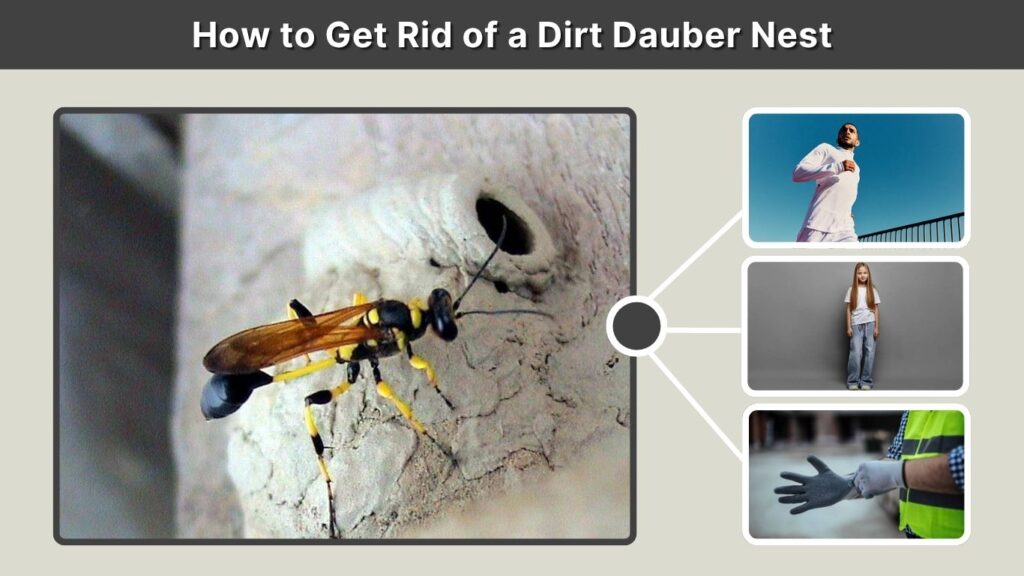
If a nest is outside and not causing a problem, removal is often unnecessary. Mud daubers can actually help reduce spider populations around a property.
However, nests located on doors, siding, indoor structures, patios, or frequently used areas may need to be removed.
1. Confirm Whether the Nest Is Active
Watch the nest from a safe distance.
If you repeatedly see a wasp entering, leaving, or working on the structure, assume it is active.
An abandoned nest is much easier to remove.
2. Choose the Right Time
Whenever possible, remove nests after they have become inactive.
Trying to scrape down a nest while an adult female is actively working on it increases the chance of an unwanted encounter.
3. Wear Basic Protection
When dealing with an uncertain nest, wear:
- Long sleeves
- Long pants
- Closed shoes
- Gloves
Avoid placing your face close to nest openings.
4. Scrape Away the Mud
For an abandoned nest, use a scraper, putty knife, or similar tool to carefully loosen the dried mud from the surface.
Hold a container or bag below the nest to collect debris.
Avoid crushing an active nest with your bare hands because chambers may contain larvae and paralyzed spiders.
5. Dispose of the Material
Place the removed nest material in a sealed bag or outdoor waste container.
Vacuuming small fragments can also help indoors, provided the nest is clearly inactive.
How to Remove a Dirt Dauber Nest From a Wall
Mud can adhere strongly to painted walls, brick, concrete, siding, or wood.
After scraping away the main structure, a thin stain may remain.
The cleaning method should depend on the surface.
| Surface | Suggested Cleaning Approach |
|---|---|
| Painted wall | Mild soap and water |
| Vinyl siding | Soft cloth or sponge |
| Brick | Brush with water and mild detergent |
| Concrete | Stiff brush and water |
| Wood | Gentle scraping followed by light cleaning |
Test any cleaner in an inconspicuous area first, especially on painted or finished surfaces.
How to Clean Dirt Dauber Nest Residue
Once the dried nest has been removed, soften remaining mud using warm water.
A simple cleaning process is:
- Remove loose dried mud.
- Wet the remaining stain with warm water.
- Allow it to soften for several minutes.
- Wipe or gently scrub the surface.
- Repeat if necessary.
- Allow the area to dry.
Avoid aggressive scraping on painted surfaces because it may remove paint along with the mud.
For stubborn residue, mild dish soap may help loosen dried soil.
Should You Spray a Dirt Dauber Nest?
Spraying is usually unnecessary when dealing with an abandoned dirt dauber nest.
Because these wasps are solitary and generally not highly defensive, physical removal after the nest becomes inactive is often enough.
If an active nest is positioned somewhere dangerous—such as immediately beside an entrance—or if you are allergic to wasp stings, contacting a pest-management professional may be safer than attempting removal yourself.
How to Prevent Dirt Dauber Nests
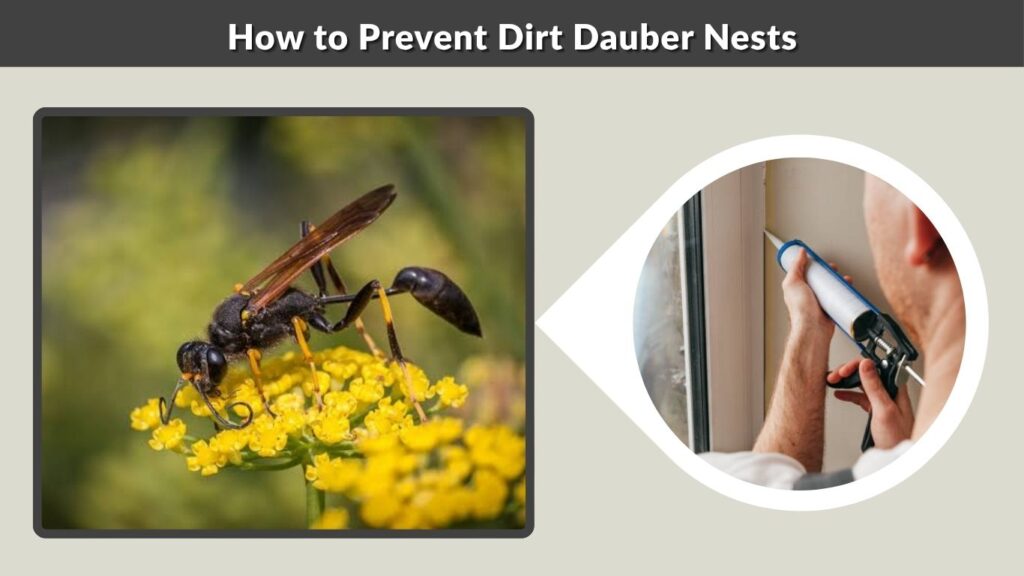
Completely preventing mud daubers outdoors can be difficult because they naturally occur around homes and gardens.
You can, however, reduce attractive nesting locations.
Seal Openings
Inspect gaps around:
- Windows
- Doors
- Attics
- Garages
- Utility openings
- Rooflines
Sealing unnecessary openings helps keep dirt daubers from constructing nests indoors.
Regularly Inspect Sheltered Areas
Check porches, garages, sheds, and overhangs periodically.
Removing newly started mud structures is usually easier than dealing with a completed nest.
Reduce Spider Activity Around Structures
Since spiders are important prey, locations containing many spiders can provide convenient hunting grounds.
Cleaning webs around frequently used structures may make these locations somewhat less attractive.
Dirt Dauber Nest vs Other Wasp Nests
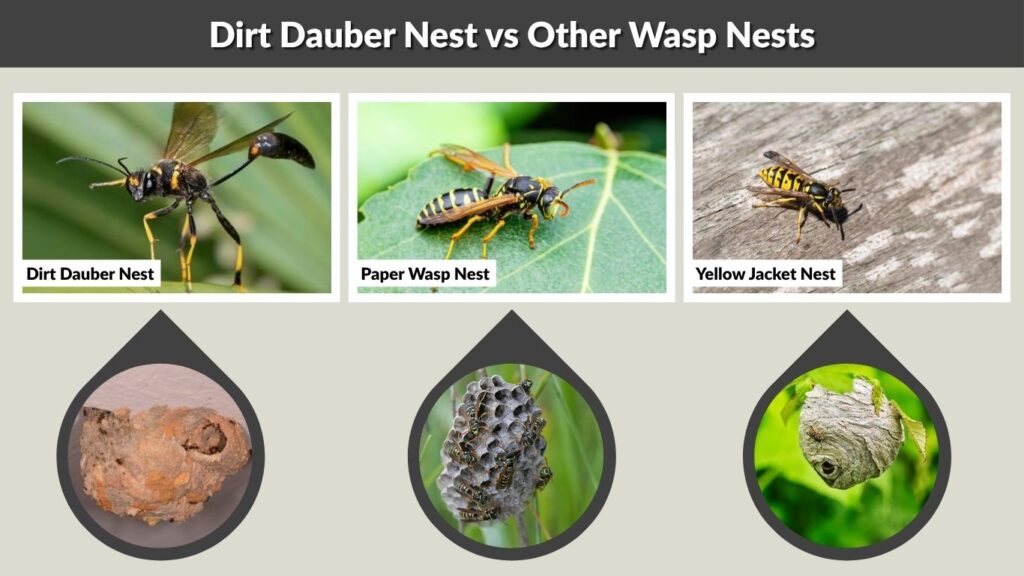
Dirt dauber nests are very different from the paper nests produced by many social wasps.
| Feature | Dirt Dauber Nest | Paper Wasp Nest | Yellow Jacket Nest |
|---|---|---|---|
| Material | Mud | Paper-like fibers | Paper-like fibers |
| Colony | Solitary | Social | Social |
| Shape | Tubes or mud chambers | Open comb | Enclosed or underground |
| Aggressiveness | Usually low | Moderate | Can be high |
| Spider prey | Common | No | No |
Correct identification is important because removal methods suitable for a solitary mud dauber may not be appropriate for a large social-wasp colony.
Why Dirt Daubers Can Be Beneficial
Although dried mud nests can be unsightly, dirt daubers are not automatically pests.
They can provide natural spider control by capturing substantial numbers of spiders to provision their nests.
They also visit flowers as adults and are generally much less interested in human food than yellow jackets.
For this reason, a dirt dauber nest in an unused outdoor location can often simply be left alone.
FAQs
How do you get rid of a dirt dauber nest?
If the nest is abandoned, scrape the dried mud from the surface using a putty knife or similar tool. Dispose of the debris and clean remaining mud with warm water and mild soap. Active nests near frequently used areas may be better handled by a pest professional.
What does a dirt dauber nest look like?
A dirt dauber nest looks like hardened brown or gray mud attached to a wall, ceiling, or other protected surface. Depending on the species, it may consist of several narrow tubes or an irregular collection of rounded mud chambers.
Why are there spiders in dirt dauber nests?
Female dirt daubers capture and paralyze spiders before storing them inside nest chambers. After laying an egg in the chamber, the female seals it. When the larva hatches, the stored spiders provide the food needed for development.
Can dirt daubers sting you?
Yes, female dirt daubers are physically capable of stinging, but they are generally much less aggressive than social wasps. Stings are uncommon unless the insect is trapped, grabbed, stepped on, or otherwise strongly threatened.
Should I remove a dirt dauber nest?
Not necessarily. A nest in an unused outdoor area can often be left alone because dirt daubers are beneficial spider predators. Removal makes more sense when nests are indoors, on frequently used structures, causing staining, or creating concerns for someone with a serious sting allergy.
