
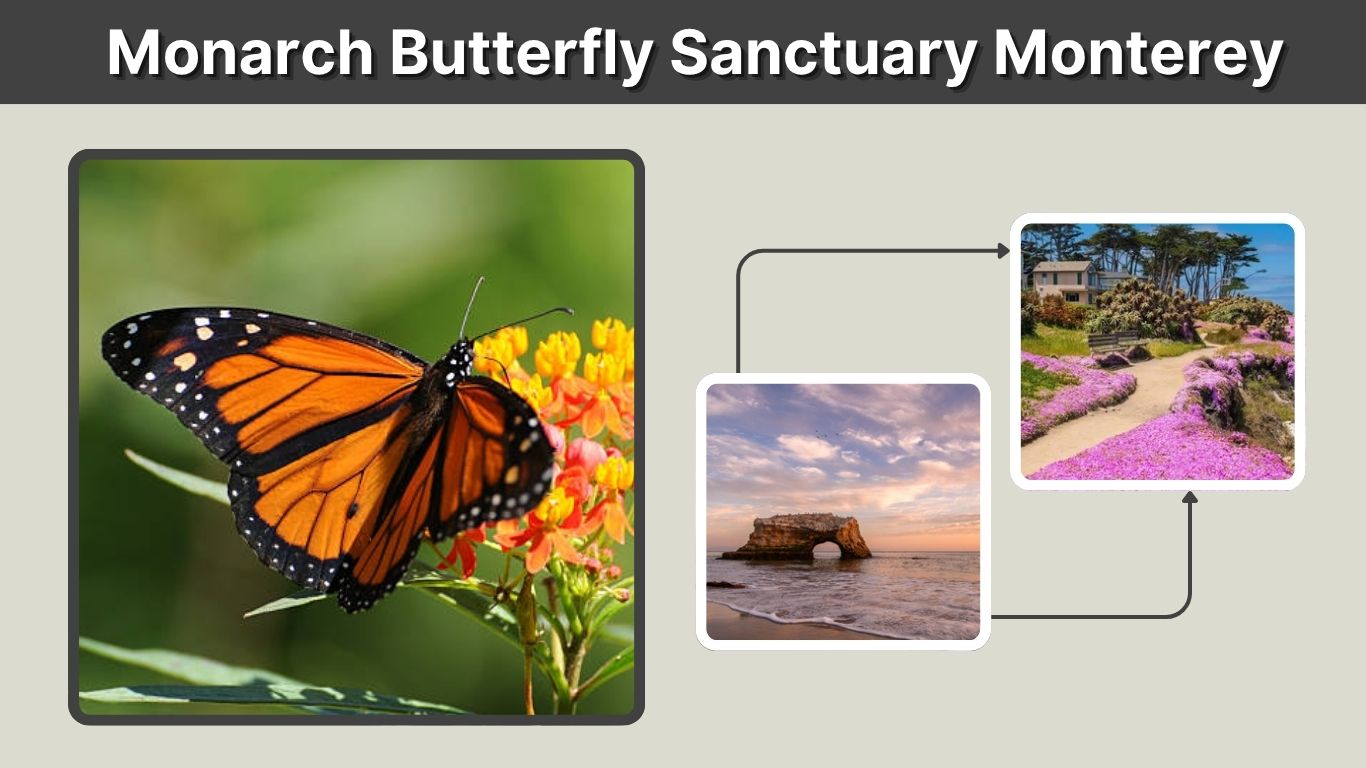
The famous monarch butterfly sanctuary near Monterey, California, is the Pacific Grove Monarch Sanctuary. Located in Pacific Grove on the Monterey Peninsula, this protected grove serves as an important winter shelter for western monarch butterflies. Visitors can walk beneath eucalyptus, pine, and cypress trees while searching for monarchs clustered among the branches or flying through sunny clearings. The sanctuary is free, open to the public, and especially rewarding during the late-fall and winter migration season.
Where Is the Monterey Butterfly Sanctuary?
Although many people call it the Monterey butterfly sanctuary, the site is officially located in Pacific Grove, a coastal city beside Monterey. Pacific Grove is commonly associated with monarch butterflies because large numbers have historically gathered there during winter.
Location and Address
The Pacific Grove Monarch Sanctuary is located at:
250 Ridge Road, Pacific Grove, California 93950
The site is approximately one mile from the Pacific Grove Museum of Natural History and a short drive from downtown Monterey. It is one of Monterey County’s largest monarch overwintering sites and one of California’s most accessible public places for observing wintering monarchs.
Admission and Opening Hours
Admission to the sanctuary is free, and visitors do not need reservations. The park is normally open every day from sunrise to sunset, including weekends and holidays. It may close temporarily during extreme weather, particularly when strong winds make the grove unsafe.
| Visitor information | Details |
| Official name | Pacific Grove Monarch Sanctuary |
| Address | 250 Ridge Road, Pacific Grove, CA |
| Admission | Free |
| Reservations | Not required |
| Opening hours | Sunrise to sunset |
| Main season | Mid-October through February |
| Peak viewing | November through January |
| Trail | Packed gravel with a slight incline |
| Pets | Not permitted |
Best Time to See Monarch Butterflies in Monterey
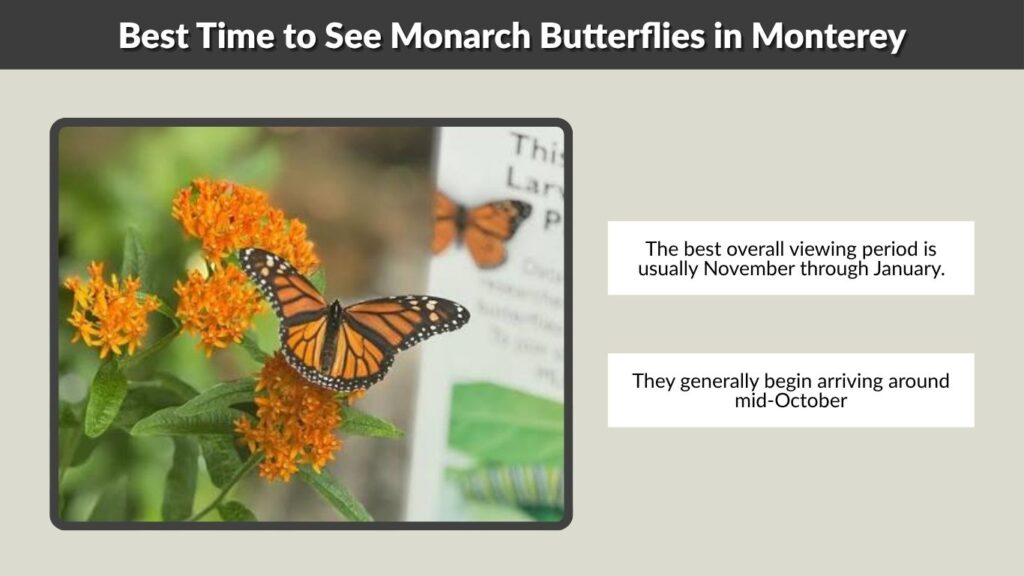
Western monarchs are not present at the sanctuary throughout the year. They generally begin arriving around mid-October, remain through winter, and leave during February for their spring and summer habitats.
The best overall viewing period is usually November through January. Numbers vary each year according to weather, migration success, habitat conditions, and wider population changes. During monarch season, the Pacific Grove Museum of Natural History updates its monarch page with recent counts and viewing information.
As of March 1, 2026, the museum reported that the latest season had ended and the butterflies had departed for inland California and the Pacific Northwest. Visitors planning a future trip should therefore look for the next arrivals beginning around mid-October 2026.
Best Time to See Clusters
Visit before approximately 11 a.m. when the weather is cool, cloudy, or below about 55°F. Monarchs are ectothermic, so cool temperatures reduce their activity. They often remain tightly clustered on branches with their wings closed.
These groups may resemble brown leaves, pinecones, or hanging chandeliers rather than bright orange butterflies. Binoculars can make the clusters much easier to see.
Best Time to See Monarchs Flying
Visit around midday or during the afternoon when temperatures rise above approximately 55°F and sunlight reaches the grove. Warmer monarchs leave their clusters to fly, drink nectar, and move among the trees.
The nectar beds near the southern end of the trail are particularly useful places to watch active butterflies on warm days.
Why Do Monarchs Gather in Pacific Grove?
Western monarch butterflies migrate to protected areas along coastal California for winter. The Pacific Grove grove offers a mild coastal climate, shelter from strong winds, suitable trees for roosting, and nearby nectar sources.
The butterflies hang from branches in dense groups that may contain hundreds or thousands of individuals. They are not huddling to generate body heat. Instead, clustering helps them remain still, conserve stored energy, and survive winter conditions until warmer weather returns.
Monarchs do not necessarily choose the same tree each year—or even remain on the same tree throughout a single week. Wind, sunlight, temperature, and shelter conditions influence their location inside the sanctuary.
What to Expect During Your Visit

The sanctuary is a quiet natural grove rather than a traditional indoor butterfly house. The butterflies are wild, and visitors are not guaranteed to see large numbers on every trip.
Trail and Accessibility
The sanctuary has a packed-gravel trail with a slight downhill incline. It is described as ADA accessible, although visitors using wheelchairs or mobility equipment should consider that the surface is natural rather than paved.
The walking route is relatively short. Most visitors can explore it comfortably without needing several hours.
Parking
Parking is free but limited. Street parking is available around nearby roads, including Lighthouse Avenue. Large buses cannot park directly at the sanctuary and must arrange alternatives with the City of Pacific Grove.
Monarch Docents
Volunteer monarch docents are often present from October through February, generally between 11 a.m. and 3 p.m., weather permitting. They can explain monarch behavior, identify the trees currently holding clusters, and help visitors locate butterflies that may otherwise be difficult to notice.
Monarch Viewing Etiquette
The butterflies are resting and conserving energy during a demanding part of their annual cycle. Responsible behavior helps protect them and improves the experience for other visitors.
- Stay on the designated trail.
- Do not shake trees or branches.
- Never touch or capture a monarch.
- Avoid loud noises around large clusters.
- Keep food and litter out of the grove.
- Do not bring pets into the sanctuary.
- Follow instructions from signs and volunteer docents.
Pets are prohibited because they may disturb the butterflies or damage sensitive habitat. Photography is welcome, but visitors should use zoom lenses instead of approaching or disturbing roosting clusters.
Pacific Grove vs Santa Cruz Monarch Sites

The Monterey Bay region contains more than one well-known monarch destination. The Pacific Grove Monarch Sanctuary is located on the Monterey Peninsula, while Natural Bridges State Beach is in Santa Cruz.
| Location | Area | Main experience |
| Pacific Grove Monarch Sanctuary | Monterey Peninsula | Free public grove and seasonal docents |
| Natural Bridges State Beach | Santa Cruz | Monarch grove within a state park |
| Pismo State Beach Butterfly Grove | San Luis Obispo County | Major coastal overwintering site farther south |
Pacific Grove and Natural Bridges usually share a similar viewing season, with monarchs arriving in fall and departing toward the end of winter. Visiting more than one site can improve the chance of seeing butterflies because yearly numbers and local conditions differ.
Conservation of Monterey’s Monarch Butterflies
Western monarch populations have undergone substantial long-term declines, and numbers can change dramatically between seasons. Habitat loss, extreme weather, drought, heat, and pesticide exposure are among the pressures affecting them.
A 2025 peer-reviewed study linked a January 2024 monarch die-off near the Pacific Grove sanctuary to pesticide exposure. The tested butterflies contained several pesticides, including concentrations of certain pyrethroids considered lethal. The findings highlight the importance of reducing pesticide use near overwintering areas and nectar sources.
Residents can support monarchs by growing suitable native nectar plants, avoiding unnecessary insecticides and herbicides, and protecting coastal overwintering habitat. The museum advises planting native milkweed only at least five miles inland because milkweed is not naturally part of California’s immediate coastal overwintering habitat and may interfere with normal migration.
FAQs
When are monarch butterflies in Monterey?
Monarchs generally arrive in Pacific Grove around mid-October and remain until February. Peak viewing usually occurs from November through January, although butterfly numbers and exact arrival dates vary annually with weather and migration conditions.
Is the Monterey monarch sanctuary free?
Yes. Admission to the Pacific Grove Monarch Sanctuary is free, and no reservation is required. The sanctuary is normally open from sunrise to sunset every day, except when extreme weather creates unsafe conditions.
What time of day is best for viewing monarchs?
Visit before 11 a.m. to see monarchs clustered on branches during cool weather. Visit after 11 a.m. on a warm, sunny day to see more butterflies flying and feeding around the nectar beds.
Can dogs enter the Pacific Grove Monarch Sanctuary?
No. Pets are not permitted inside the sanctuary because they may disturb monarchs and damage their protected overwintering habitat. Service-animal policies should be confirmed with the sanctuary or city before visiting.
Are monarch butterflies present in Monterey year-round?
No. They are migratory and normally spend only the fall and winter months in Pacific Grove. By February, they begin leaving for inland and northern breeding grounds, and the grove may have no clustering monarchs during spring and summer.
