
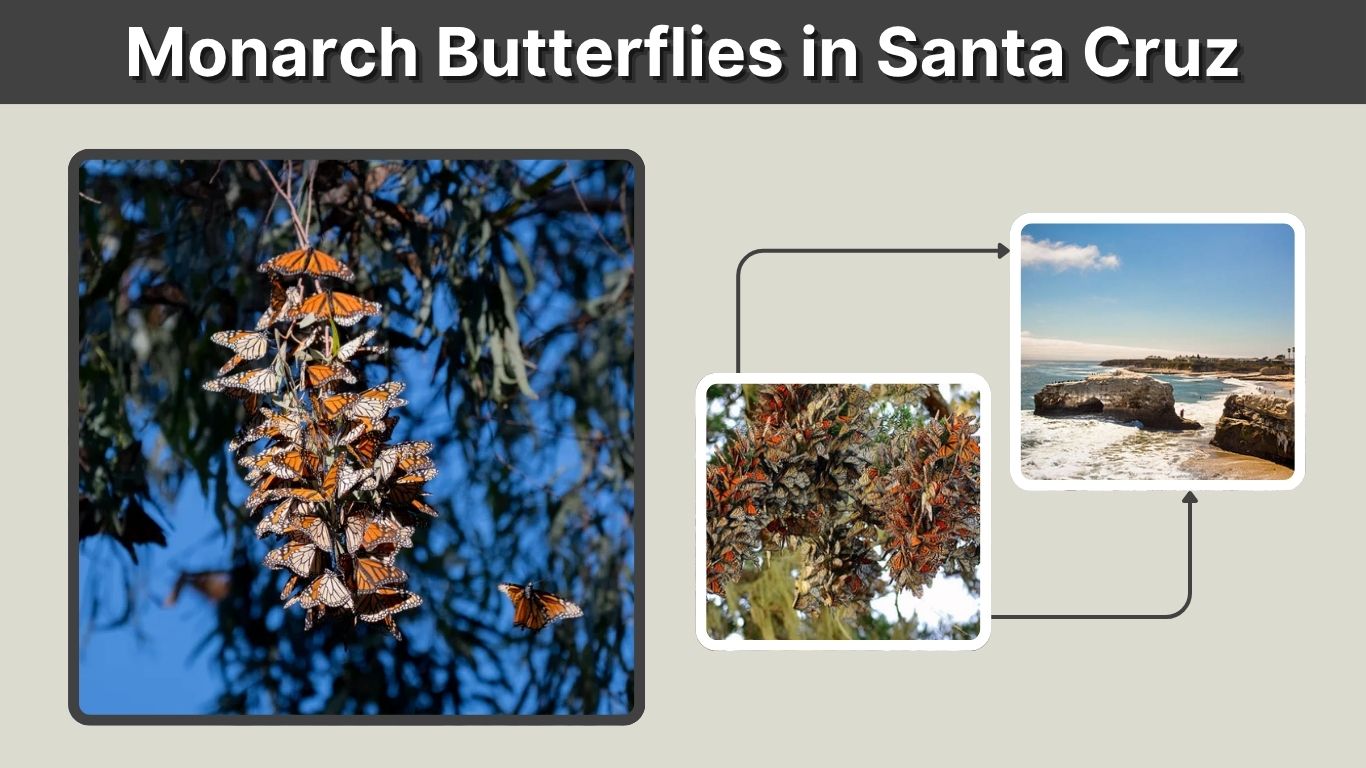
Each fall, western monarch butterflies arrive along the Santa Cruz coast and gather in sheltered groves for winter. Natural Bridges State Beach is the city’s best-known viewing location, offering a protected eucalyptus grove, an accessible boardwalk, and seasonal educational programs. Although butterfly numbers change dramatically from year to year, Santa Cruz remains one of California’s most important monarch overwintering areas.
When Are Monarch Butterflies in Santa Cruz?
Monarchs generally begin arriving in Santa Cruz around mid-October. They remain in coastal groves through winter and usually depart by mid-February, although weather conditions can cause earlier or later movement. California State Parks identifies late October and November as particularly favorable times to visit Natural Bridges.
| Time of year | Typical monarch activity |
| Mid-October | First groups begin arriving |
| Late October–November | Numbers rise and clusters form |
| Mid-November–December | Usually the peak viewing period |
| January | Monarchs remain but numbers may decline |
| February | Butterflies begin dispersing |
| Spring–summer | Few or no overwintering clusters remain |
Across California, the broad peak viewing season is usually from mid-November through December. Cool weather, storms, drought, habitat conditions, and breeding success can all affect the number of butterflies that reach Santa Cruz in a particular year.
Where to See Monarch Butterflies in Santa Cruz
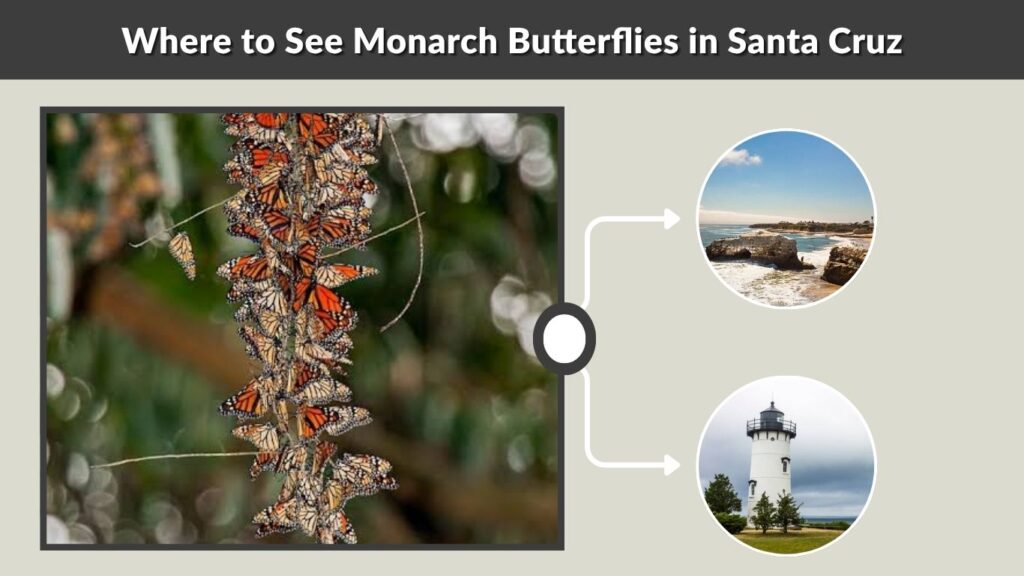
Santa Cruz County contains several documented overwintering sites. However, not every site is open to visitors, and some sensitive locations are deliberately obscured to protect the butterflies and private property. Natural Bridges and Lighthouse Field are the most practical public destinations.
Natural Bridges State Beach
The Monarch Butterfly Natural Preserve at Natural Bridges State Beach is the most famous monarch location in Santa Cruz. It is also California’s only state-designated monarch preserve.
The butterflies gather in a gently sloping eucalyptus grove that provides protection from strong coastal winds. Winter-flowering eucalyptus trees can also provide nectar during the overwintering season. Visitors reach the observation area by following a wheelchair- and stroller-accessible boardwalk through the grove.
Natural Bridges charges a $10 vehicle day-use fee, although conditions and charges should always be checked before visiting. The park has restrooms, picnic facilities, a visitor center, and access to the beach and tide pools.
Lighthouse Field State Beach
Lighthouse Field State Beach is another public monarch site near Natural Bridges. Its groves of Monterey cypress and eucalyptus have regularly supported overwintering monarchs, although annual numbers vary.
The park is located along West Cliff Drive and has nearby street and paved-lot parking. Because clusters can shift within a grove or disappear during a poor season, visitors should not assume that butterflies will always be easy to find.
Other Santa Cruz County Sites
Monarchs have also been recorded at locations such as Moran Lake and several smaller coastal groves. Some are privately owned, environmentally sensitive, or unsuitable for public visits.
The Western Monarch Count provides a map of documented overwintering sites, but it warns visitors not to enter private property. When the access status of a grove is unclear, it should be treated as private.
Best Time of Day to See the Monarchs
Cool mornings are usually best for seeing monarchs gathered in compact clusters. When temperatures are low, they hang together from branches to conserve energy and protect themselves from the weather. At Natural Bridges, monarchs may remain clustered when temperatures fall below approximately 60°F.
During sunny, warmer periods, the butterflies become more active. They may separate from their clusters, open their wings, drink nectar, and fly throughout the grove. Visitors who want to see both resting clusters and active butterflies may benefit from arriving in the late morning and remaining as the temperature rises.
Binoculars are helpful because clusters can be high in the trees and may initially resemble masses of dead leaves. The orange wings become more obvious when sunlight reaches the branches or the butterflies begin moving.
Santa Cruz Monarch Butterfly Count
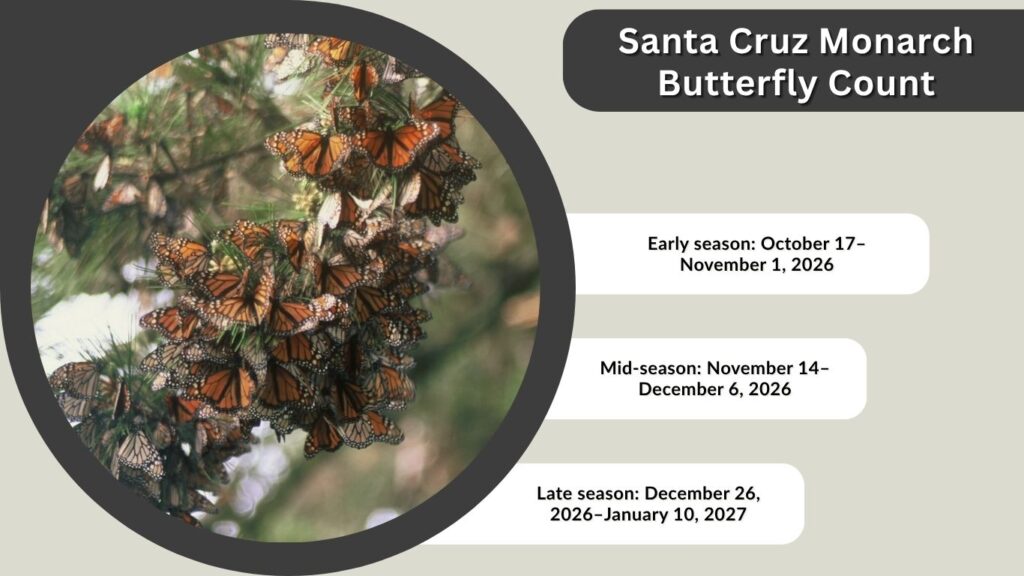
Butterfly numbers at Santa Cruz groves fluctuate greatly. A location that holds thousands one winter may contain only hundreds the next.
During the peak 2025–2026 survey, approximately 12,260 western monarchs were counted across 249 overwintering sites. This was the third-lowest total since the Western Monarch Count began in 1997. However, Natural Bridges State Beach recorded approximately 2,500 monarchs in early December 2025, the highest count at any site that season.
For comparison, the Natural Bridges count was approximately 1,400 during the late-November 2024 survey and 6,500 during the 2023 survey. These differences show why visitors should check current reports rather than relying on photographs or counts from previous years.
The next official Western Monarch Count survey periods are scheduled for:
- Early season: October 17–November 1, 2026
- Mid-season: November 14–December 6, 2026
- Late season: December 26, 2026–January 10, 2027
These surveys will provide a clearer picture of the 2026–2027 Santa Cruz monarch season after the butterflies arrive.
Why Do Monarchs Migrate to Santa Cruz?
Western monarchs travel toward California’s coast because its mild winter temperatures and sheltered tree groves provide better survival conditions than colder inland regions. The butterflies use dense tree canopies and protected valleys to reduce exposure to wind, rain, and extreme temperatures.
They do not hibernate in the same way as mammals. Instead, they enter a period of reduced reproductive activity and conserve energy while resting in clusters. On warm days, they may leave the trees temporarily to drink nectar and water before returning to their roost.
As winter ends, surviving monarchs leave Santa Cruz and move inland or northward. Females search for milkweed on which to lay eggs, beginning the next generation of the migration cycle.
Santa Cruz vs. Pacific Grove for Monarch Viewing
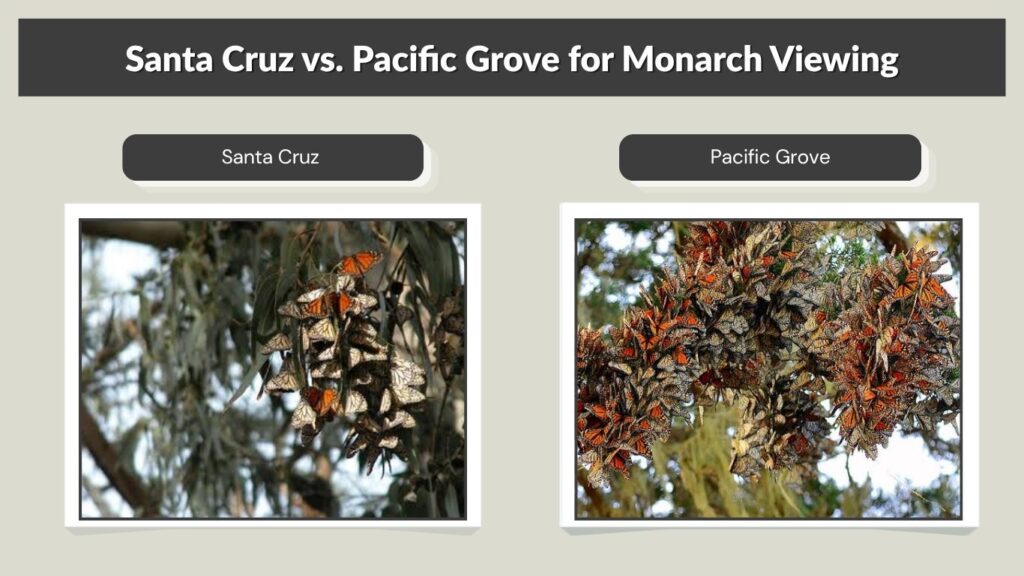
Natural Bridges in Santa Cruz and the Pacific Grove Monarch Sanctuary near Monterey are both popular public viewing destinations.
| Feature | Santa Cruz | Pacific Grove |
| Main site | Natural Bridges State Beach | Pacific Grove Monarch Sanctuary |
| Typical season | Mid-October to mid-February | October through winter |
| Access | Boardwalk and observation area | Paved sanctuary paths |
| Other attractions | Beach, tide pools and sea arch | Museum and Monterey Peninsula |
| Butterfly numbers | Vary annually | Vary annually |
Neither location is guaranteed to have the largest gathering in a given year. In early December 2025, Natural Bridges held approximately 2,500 monarchs, while Pacific Grove recorded 188. Another season may produce a very different result.
Responsible Viewing Tips
Remain on designated paths and observation platforms. Never touch a monarch, shake a branch, throw objects into the trees, or attempt to make clustered butterflies fly for photographs.
Natural Bridges prohibits disturbing butterfly clusters. Dogs, bicycles, skates, skateboards, and smoking are also prohibited on the monarch boardwalk. Visitors should speak quietly and avoid blocking the path or viewing platform.
Before traveling, contact the park or check current reports. California State Parks specifically advises visitors to confirm the current population and docent availability because migration numbers are unpredictable. Seasonal docent visits have traditionally been offered from mid-October through December.
FAQs
What Is the Best Time to See Monarch Butterflies in Santa Cruz?
Late October through December is generally the best period. Mid-November through early December often brings the largest seasonal concentrations, although arrival dates and numbers vary. Check with Natural Bridges State Beach before making a special trip.
Where Is the Monarch Butterfly Grove in Santa Cruz?
The best-known grove is inside Natural Bridges State Beach. Visitors can reach it by following the Monarch Trail, a gently graded wooden boardwalk leading through the eucalyptus grove to an observation area.
Are Monarch Butterflies at Natural Bridges All Year?
No. Overwintering monarchs generally arrive around mid-October and leave by mid-February. Between spring and early fall, the butterflies are dispersed across breeding and feeding habitats, so winter clusters are normally absent.
Is Natural Bridges Better Than Pacific Grove?
It depends on the year. Both are established public overwintering sites, but butterfly numbers fluctuate. Natural Bridges had substantially more monarchs during the 2025 peak count, although Pacific Grove may perform better during another season.
Can Visitors Touch the Monarch Butterflies?
No. Visitors should observe monarchs without touching them or disturbing their branches. Handling can damage their wings and wastes energy they need to survive winter and begin their spring migration.
