
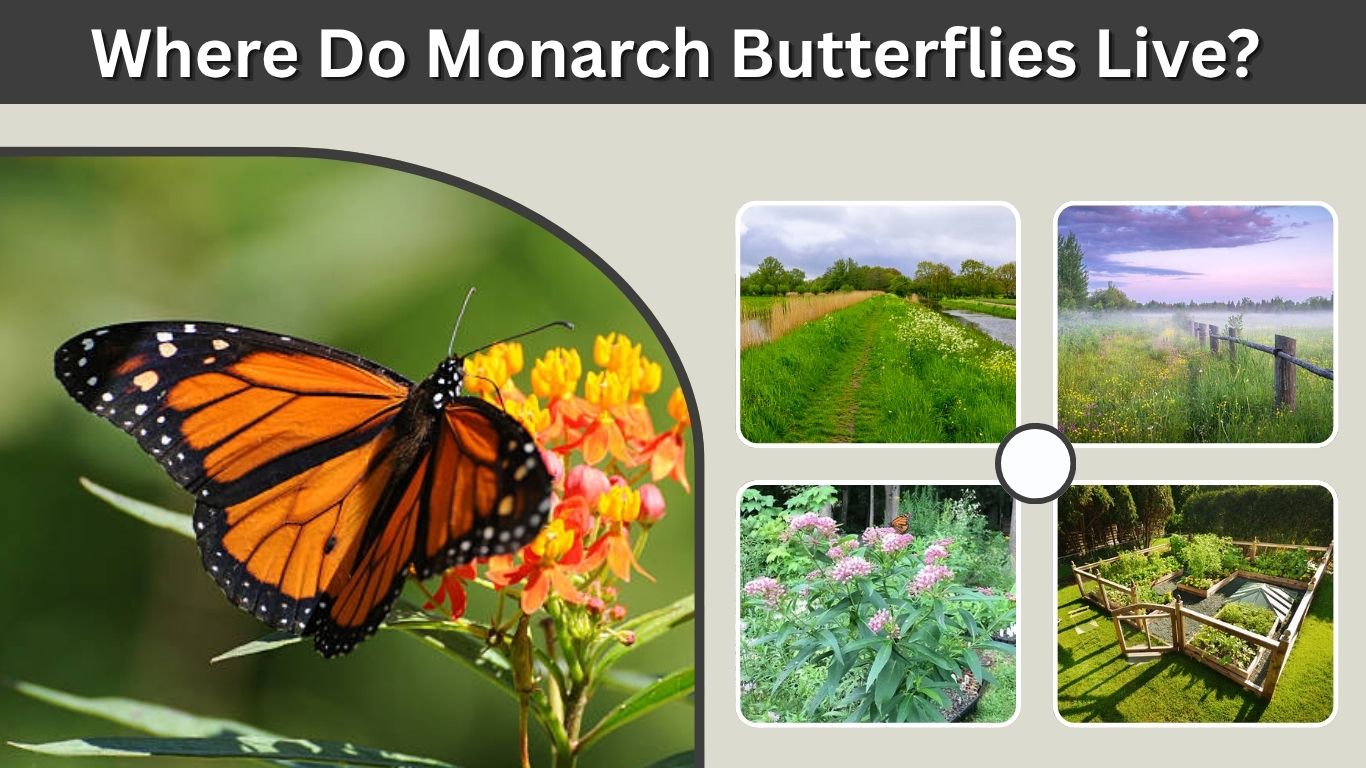
Monarch butterflies live mainly across North America, where they occupy meadows, prairies, gardens, roadsides, wetlands, and other sunny places containing milkweed and nectar-rich flowers. Their location changes seasonally because most North American monarchs migrate. During summer, they spread across the United States and southern Canada. In winter, eastern monarchs gather in central Mexico, while many western monarchs shelter along coastal California. Established populations also occur in Hawaii, Australia, New Zealand, the Caribbean, and several Pacific islands.
Monarch Butterfly Range at a Glance
The monarch butterfly, Danaus plexippus, originated in North America but has spread to other warm regions of the world. North America still supports the largest and best-known migratory population.
| Region | Where monarchs are commonly found | Seasonal pattern |
| United States | Fields, prairies, gardens, roadsides, wetlands | Breeding, migration, and limited year-round populations |
| Canada | Southern provinces with milkweed | Mainly present during late spring and summer |
| Mexico | Mountain forests and breeding areas | Major winter destination for eastern monarchs |
| Coastal California | Sheltered tree groves | Winter habitat for many western monarchs |
| Hawaii | Gardens, grasslands, and areas with milkweed | Mostly year-round residents |
| Australia and Pacific islands | Warm areas containing suitable host plants | Generally non-migratory or locally mobile |
Where Do Monarch Butterflies Live in North America?

North American monarchs are usually divided into eastern and western populations. The Rocky Mountains roughly separate their main breeding and migration regions, although some butterflies cross between them.
Eastern Monarch Population
Eastern monarchs live mainly east of the Rocky Mountains. During spring and summer, successive generations spread throughout the central and eastern United States and into southern Canada.
They breed wherever milkweed is available, including open fields, pastures, prairies, roadsides, railway corridors, gardens, and agricultural edges. As autumn approaches, the final summer generation begins flying south toward central Mexico.
Western Monarch Population
Western monarchs are found primarily west of the Rocky Mountains, including California, Oregon, Washington, Nevada, Arizona, Idaho, Utah, and portions of western Canada.
Many spend winter in sheltered tree groves along the California coast and into northern Baja California. Some western monarchs may also travel toward Mexico or mix with the eastern population.
Where Do Monarch Butterflies Live in the United States?
Monarch butterflies can be observed across most of the continental United States during some part of the year. Their numbers and seasonal presence depend on location, temperature, milkweed growth, and migration routes.
Northern and Central United States
Monarchs usually reach northern states during late spring and summer. They breed in grasslands, farms, gardens, natural areas, and roadside habitats where native milkweed grows.
The Midwest is particularly important because it contains extensive summer breeding habitat. New generations produced in this region help form the large population that migrates to Mexico in autumn.
Southern United States
Southern states provide important breeding and migration habitat. Texas is especially significant because large numbers of eastern monarchs pass through it while traveling between Mexico and northern breeding areas.
Monarchs may remain active for much of the year in warm areas. A small, mostly non-migratory population lives in southern Florida, where suitable temperatures and host plants can remain available through winter.
Where Do Monarch Butterflies Live in Canada?
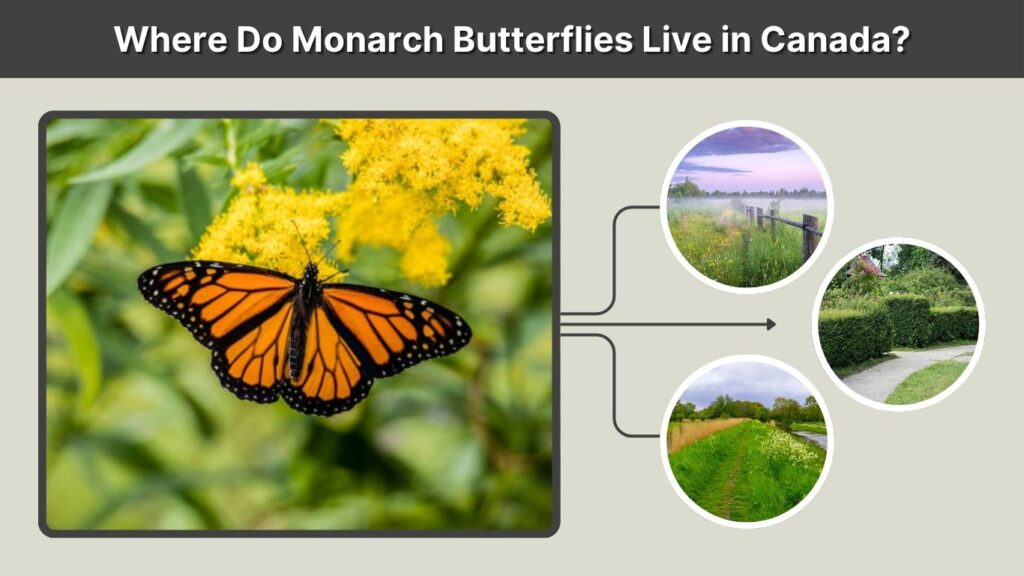
Monarchs spend the warmer months in southern Canada wherever milkweed and flowering plants are available. Eastern monarchs breed from the Prairie Provinces through Ontario, Quebec, and parts of Atlantic Canada. Western monarchs occur mainly in southern British Columbia.
Southern Ontario and southern Quebec provide some of Canada’s most extensive monarch habitat. Meadows, hedgerows, ditches, abandoned fields, and other open spaces support common milkweed and nectar plants. Monarch numbers generally decrease farther north because the climate becomes colder and milkweed is less available.
Canadian monarchs cannot survive a normal northern winter outdoors. In autumn, eastern individuals travel toward Mexico, while many western Canadian monarchs fly toward coastal California.
Where Do Monarch Butterflies Live in Mexico?
Mexico provides the primary winter habitat for the eastern North American monarch population. The butterflies gather in high-elevation forests within the Trans-Mexican Volcanic Belt, particularly in parts of Michoacán and the State of Mexico.
Oyamel Fir Forests
Millions of monarchs may cluster on oyamel fir trees in cool mountain forests. The tree canopy protects them from extreme temperature changes, storms, and excessive moisture while allowing them to remain cool enough to conserve stored energy.
These sites also contain surrounding trees, shrubs, water, and suitable microclimates. Monarchs remain relatively inactive through much of winter before beginning their northward journey in spring.
Where Do Monarch Butterflies Live in Winter?
Monarchs require protected winter locations because they cannot tolerate prolonged freezing conditions. Their winter destination depends on the population.
Eastern Monarchs
Most eastern monarchs spend winter in the high-elevation oyamel fir forests of central Mexico. They form dense clusters on tree trunks and branches, sometimes covering large sections of the forest.
Western Monarchs
Many western monarchs overwinter in forested groves near the California coast. They commonly gather in sheltered stands containing eucalyptus, Monterey pine, Monterey cypress, and native trees.
The most suitable groves provide protection from strong wind and storms while maintaining moderate temperatures and access to moisture.
Where Do Monarch Butterflies Live in Summer?
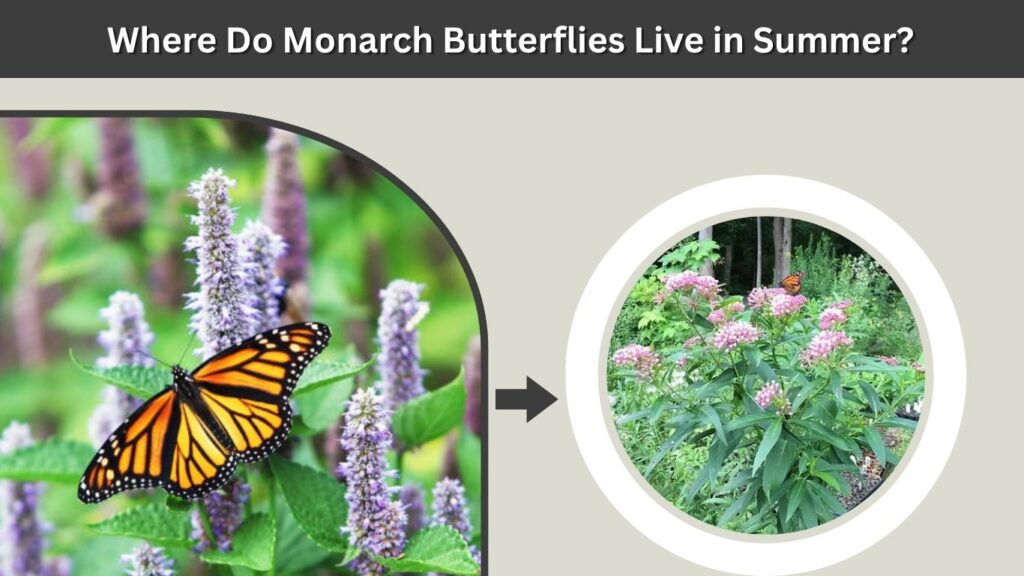
During summer, monarchs occupy their broadest North American range. Multiple generations move northward, reproduce, and establish temporary breeding populations across the United States and southern Canada.
Summer monarch habitat must offer two essential resources:
- Milkweed plants on which females can lay eggs and caterpillars can feed
- Nectar-producing flowers that supply adult butterflies with energy
Monarchs may live in native prairies, urban gardens, farms, parks, wildlife areas, drainage ditches, power-line corridors, and even small patches of milkweed beside roads.
Where Do Monarch Butterfly Caterpillars Live?
Monarch caterpillars live directly on or near milkweed plants. Female monarchs normally lay one egg at a time on a milkweed leaf, frequently on its underside.
After hatching, the caterpillar remains on the plant and eats its leaves, flowers, or tender growth. Milkweed is essential because monarch larvae cannot develop normally on ordinary garden plants. Young caterpillars are frequently found feeding near the upper portion of the plant.
Suitable caterpillar habitats include:
- Native grasslands and prairies
- Meadows and abandoned fields
- Roadsides and drainage ditches
- Wetland edges
- Farms and pastures
- Pollinator gardens containing native milkweed
Do Monarch Butterflies Live Outside North America?
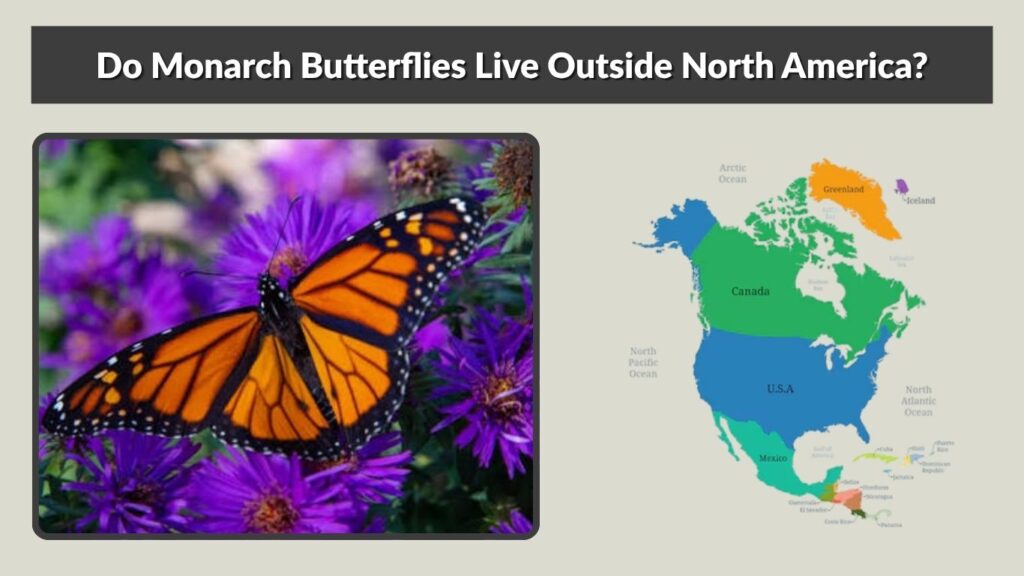
Although monarchs are strongly associated with North America, established populations also occur in parts of Central and South America, the Caribbean, Australia, New Zealand, Hawaii, and other Pacific islands. They have also reached limited areas near the western edge of Europe.
Many populations outside continental North America do not complete the famous migration to Mexico. In warm climates where milkweed remains available, monarchs may reproduce locally throughout much or all of the year.
Monarchs in Hawaii
Monarch butterflies are introduced rather than native to Hawaii. They can live and breed throughout the year because of the islands’ warm climate and the availability of introduced milkweed plants.
Monarchs in Australia
Monarchs are known as wanderer butterflies in Australia. They occur in warm regions where milkweed-family plants and nectar sources grow. These populations generally make shorter local movements rather than performing the long North American migration.
What Makes a Good Monarch Habitat?
An area does not need to be a large wilderness to support monarchs. Even gardens and small habitat patches can be useful when they provide the correct plants and are managed safely.
Milkweed for Breeding
Milkweed is the only food source for monarch caterpillars. Females search for suitable milkweed plants before laying their eggs, making these plants the foundation of every monarch breeding habitat.
Nectar Flowers for Adults
Adult monarchs drink nectar from many flower species. They benefit from locations containing flowers that bloom from spring through autumn, particularly during migration when they must build energy reserves.
Sunlight, Water, and Shelter
Monarchs often prefer open, sunny habitats because warmth helps them fly and remain active. Nearby trees or shrubs can provide resting places and protection from severe weather, while moist soil and natural water sources may supply additional moisture.
FAQs
Where do most monarch butterflies live?
The largest monarch population occupies eastern North America. It breeds throughout the eastern and central United States and southern Canada before migrating to mountain forests in central Mexico for winter.
Can monarch butterflies live in a backyard?
Monarchs can use backyards containing milkweed and pesticide-free nectar flowers. Females may lay eggs on healthy milkweed, while adults visit a variety of flowering plants. A small garden can function as temporary breeding, feeding, or migration habitat.
Do monarch butterflies live in trees?
Adult monarchs rest and roost in trees, especially during migration and winter. However, they do not spend their entire lives there. Eggs and caterpillars occur primarily on milkweed, while adults travel between flowers, open habitats, and sheltered roosting sites.
Where do blue monarch butterflies live?
The familiar monarch, Danaus plexippus, is orange and black rather than blue. “Blue monarch” may refer to Tirumala petiverana, a different butterfly found in sub-Saharan Africa, or it may describe artwork and digitally altered images rather than a blue form of the North American monarch.
Do monarch butterflies return to the same place every year?
Monarch populations return to the same general breeding and wintering regions, but usually not as the same individual butterflies. Several short-lived generations complete the northward movement, while one long-lived generation makes the autumn journey south.
