
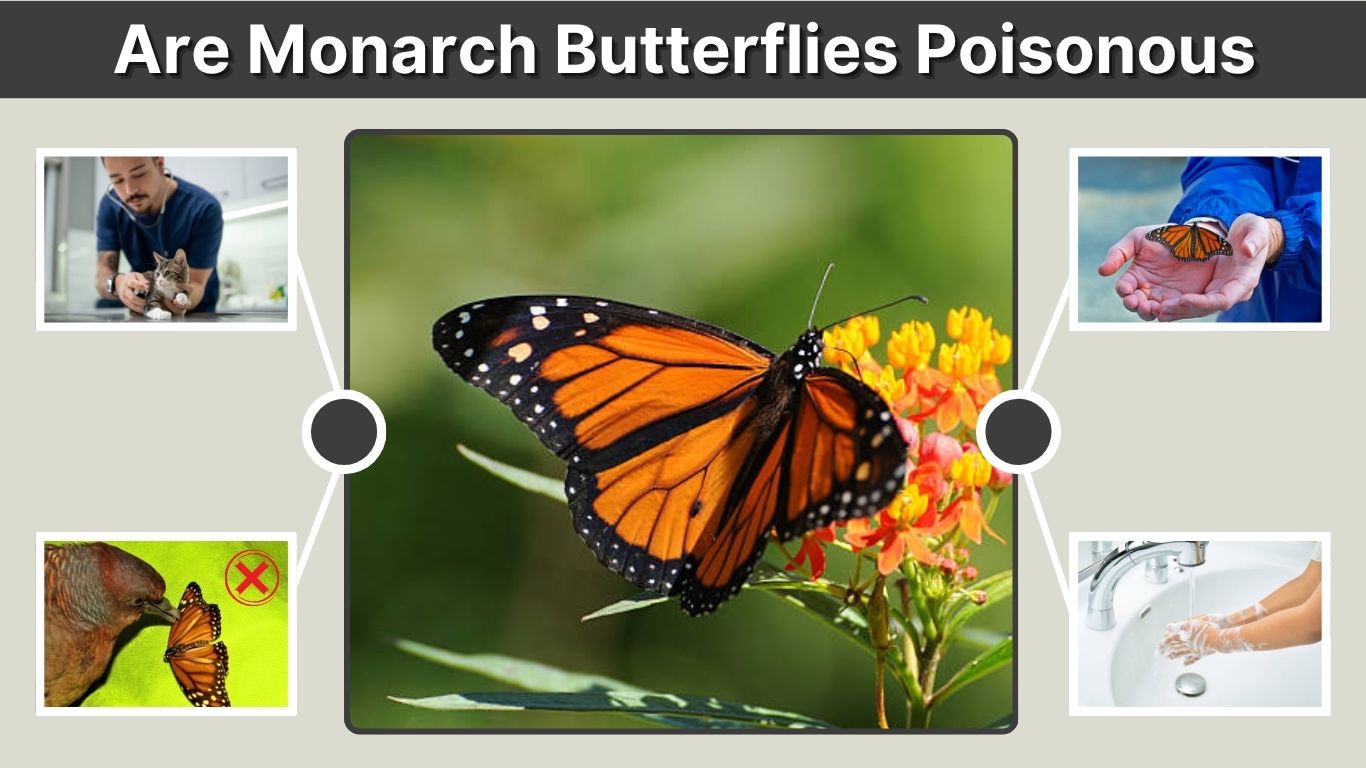
Monarch butterflies are poisonous when eaten, but they are not venomous and do not inject toxins through bites or stings. Their bodies contain defensive chemicals called cardenolides, which originate from the milkweed plants eaten during the caterpillar stage.
These substances make monarch caterpillars and adult butterflies bitter or toxic to many predators. However, monarchs are generally safe for people to observe and gently touch. The greatest concern arises when a person or animal eats a monarch, its caterpillar, or the more strongly toxic milkweed plant.
Why Are Monarch Butterflies Poisonous?
Monarch caterpillars feed almost exclusively on milkweed. Milkweed contains cardiac glycosides known as cardenolides, which help protect the plant from being eaten by most animals.
Monarchs have evolved a strong resistance to these chemicals. Instead of eliminating all the compounds, caterpillars store selected cardenolides in their tissues. This process is called sequestration. Some of the stored chemicals remain in the monarch’s body after it changes into an adult butterfly.
The monarch therefore gains a chemical defense from its host plant:
- A caterpillar eats milkweed leaves.
- It absorbs and stores certain cardenolides.
- The chemicals remain through the chrysalis stage.
- The adult butterfly becomes unpleasant or harmful to many predators.
The amount of toxin is not identical in every monarch. Milkweed species differ significantly in their cardenolide levels, and monarchs selectively store some compounds more effectively than others.
Poisonous vs. Venomous
A poisonous animal causes harm when another animal eats or absorbs its toxic chemicals. A venomous animal actively delivers toxins through a bite, sting, spine, or similar structure.
Monarch butterflies are poisonous rather than venomous.
| Question | Answer |
| Do monarchs sting? | No |
| Do monarchs bite people? | No |
| Can they inject venom? | No |
| Can touching one poison you? | No |
| Can eating one cause illness? | Potentially, because it may contain cardenolides |
| Are all monarchs equally toxic? | No, toxin levels vary |
Are Monarch Butterflies Poisonous to Humans?
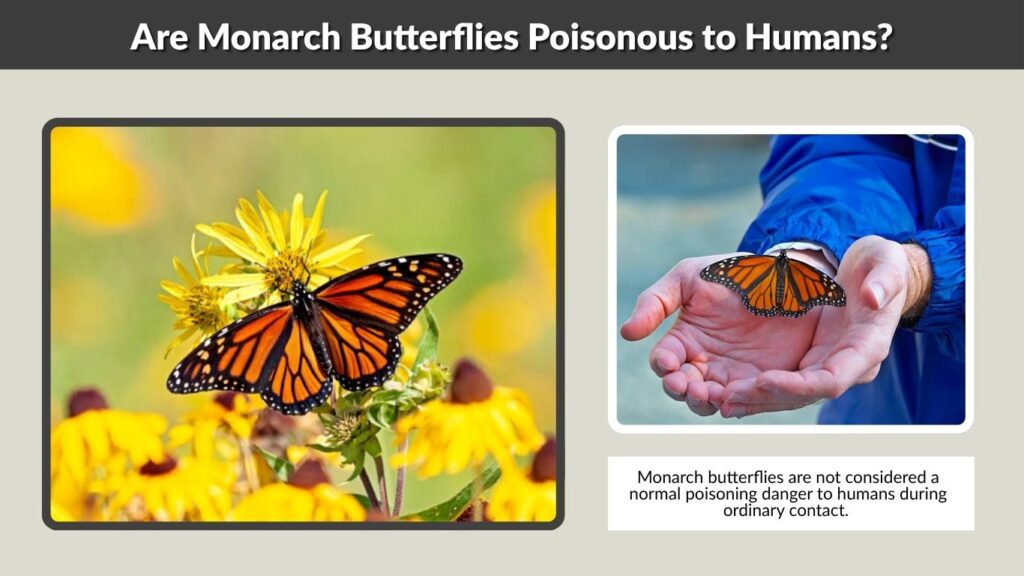
Monarch butterflies are not considered a normal poisoning danger to humans during ordinary contact. They can land on a person without causing harm, and holding one briefly does not transfer a dangerous dose of toxin through healthy skin.
Monarchs cannot sting, and their mouthparts are designed for drinking liquid nectar rather than biting people.
However, monarch butterflies should not be eaten. Their defensive chemicals can affect sensitive biological systems, particularly the heart. The actual risk would depend on the butterfly’s toxin concentration, the amount consumed, and the health and size of the person.
Children should be taught not to place butterflies, caterpillars, chrysalises, or milkweed in their mouths. Milkweed itself presents a more significant poisoning risk because all parts of many milkweed species contain toxic compounds.
Are Monarch Butterflies Poisonous to Touch?
No. Touching a monarch butterfly does not normally poison a person.
The cardenolides are stored within the butterfly’s tissues rather than being secreted as a venom through the skin. Nevertheless, unnecessary handling should be avoided because butterflies are fragile. Rough handling can damage their legs or remove scales from their wings.
Wash your hands after handling monarch caterpillars or working around milkweed. The milky sap produced by damaged milkweed can irritate the skin and may cause more serious irritation if transferred to the eyes.
Are Monarch Butterfly Wings Poisonous?
Cardenolides can be distributed through different parts of the monarch’s body, including the wings. Research has found substantial concentrations in monarch wing tissues, which may help predators recognize and reject the butterfly after tasting it.
This does not mean that merely touching a wing will poison someone. The danger is associated with eating the tissue, not normal skin contact.
Are Monarch Caterpillars Poisonous?
Monarch caterpillars contain cardenolides obtained directly from the milkweed leaves they consume. This makes them distasteful or toxic to many potential predators.
Their black, white, and yellow bands function as warning coloration. Bright warning patterns that advertise toxicity or an unpleasant taste are known as aposematic coloration.
Monarch caterpillars are not dangerous to touch. They have no venomous spines or stinging hairs, and their long black filaments are soft sensory structures. However, caterpillars should be handled as little as possible because their bodies are delicate.
Are Monarch Butterflies Poisonous to Birds?
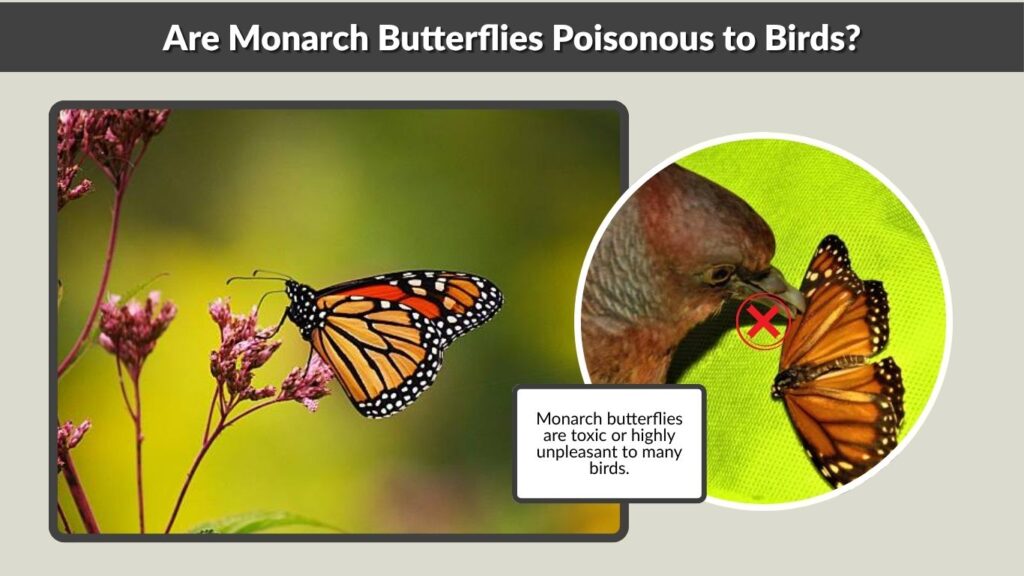
Monarch butterflies are toxic or highly unpleasant to many birds. An inexperienced bird may attack a monarch, taste or swallow part of it, and then become sick. That experience can teach the bird to avoid butterflies with the monarch’s distinctive orange-and-black pattern.
The reaction may include rejection, vomiting, or learned avoidance. The butterfly’s bright wings effectively advertise that it is unsuitable food.
However, monarchs are not completely protected. Some birds can tolerate cardenolides and regularly prey on monarchs. Black-headed grosbeaks, for example, can consume monarchs at Mexican overwintering sites. Predators may also choose butterflies containing lower toxin levels.
Are Monarchs Poisonous to Other Predators?
The effectiveness of monarch toxins varies among predators. Some animals avoid monarchs, while others tolerate the chemicals or have developed ways to reduce their exposure.
Spiders and Predatory Insects
Spiders, ants, beetles, true bugs, mantises, and wasps may attack monarch eggs, caterpillars, or adults. The toxins do not make monarchs immune to predation.
Some praying mantises remove the caterpillar’s digestive tract before eating the remaining tissue. This behavior discards a large portion of the milkweed material and associated cardenolides.
Frogs and Other Small Animals
A monarch’s bitter taste and toxins may discourage frogs and other insect-eating animals, but reactions vary by species and individual. A hungry or inexperienced predator may still attack one.
Chemical protection reduces the chance of being eaten; it does not guarantee survival.
Are Monarch Butterflies Poisonous to Dogs and Cats?
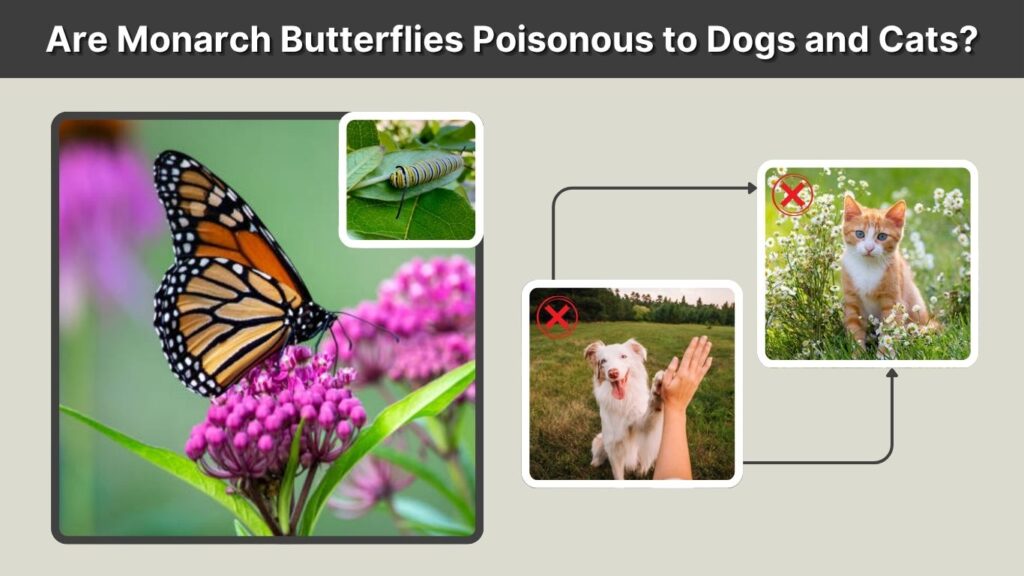
A dog or cat should not be allowed to eat monarch butterflies or caterpillars. Monarch tissues can contain cardiac glycosides, although the amount varies considerably.
The more clearly documented household danger is milkweed ingestion. Milkweed is considered toxic to dogs and cats. Possible signs include drooling, vomiting, diarrhea, weakness, depression, abnormal heart rate, tremors, seizures, or breathing difficulties. Serious poisoning requires prompt veterinary treatment.
A pet touching, sniffing, or watching a monarch is unlikely to be poisoned. Concern increases when the animal chews or swallows the butterfly, caterpillar, or milkweed plant.
Contact a veterinarian promptly when a pet has eaten milkweed or develops symptoms after consuming a monarch. Do not induce vomiting unless instructed by a veterinary professional.
Are All Monarch Butterflies Equally Poisonous?
No. Monarch toxicity depends largely on the milkweed consumed during larval development.
Some milkweed species contain high concentrations of potent cardenolides, while others contain smaller amounts or different chemical combinations. Monarch caterpillars also transform, reject, store, and excrete these compounds in different ways.
As a result, one monarch may be considerably more distasteful than another. Toxin levels may also decline as a butterfly ages, potentially making older migratory monarchs more vulnerable to tolerant predators.
How Do Predators Recognize Poisonous Monarchs?
Monarchs use their orange, black, and white wing pattern as a visual warning. Many predators naturally hesitate around bright warning colors, while others learn through experience.
A bird that becomes sick after tasting a monarch may remember its wing pattern and avoid similar butterflies later. This provides protection not only to the attacked monarch population but also to other insects with a similar appearance.
The viceroy butterfly is a famous monarch look-alike. Its resemblance can make predators hesitate before attacking either species.
Safe Ways to Observe Monarch Butterflies
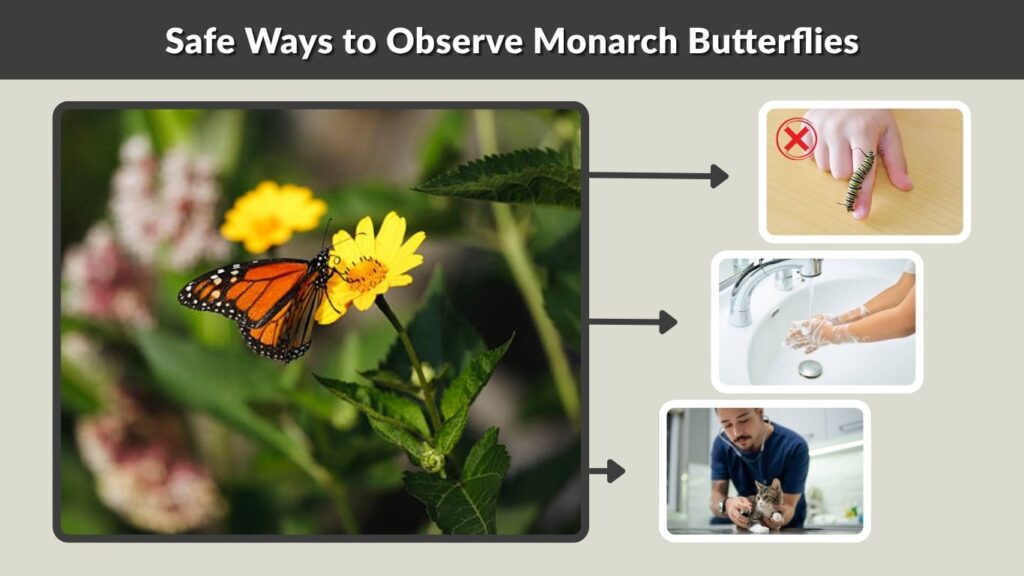
Monarchs are safe to enjoy when simple precautions are followed:
- Observe adults without chasing or squeezing them.
- Avoid touching caterpillars unless moving one from immediate danger.
- Never taste a butterfly, caterpillar, chrysalis, or milkweed plant.
- Keep milkweed away from pets that chew plants.
- Wash your hands after gardening around milkweed.
- Prevent milkweed sap from entering your eyes.
- Contact a veterinarian when a pet eats milkweed or becomes ill.
FAQs
Can a Monarch Butterfly Kill a Human?
A monarch is not likely to kill a person through ordinary contact. It cannot bite or sting. However, monarchs and milkweed should never be eaten because they may contain cardiac glycosides that affect the heart.
What Happens if You Touch a Monarch Butterfly?
Usually, nothing harmful happens to the person. Monarch toxins are not injected or readily transferred through normal skin contact. The butterfly is at greater risk because rough handling can damage its legs and wing scales.
What Happens if a Dog Eats a Monarch Butterfly?
The dog may experience no obvious reaction or could develop drooling, vomiting, diarrhea, weakness, or other symptoms. Because monarch toxin levels vary, contact a veterinarian for guidance, especially when symptoms appear or milkweed was also eaten.
Can Birds Die From Eating Monarch Butterflies?
Many birds become sick and learn to avoid monarchs. The outcome depends on the bird species, number of butterflies consumed, and toxin concentration. Some birds tolerate cardenolides and regularly eat monarchs without immediately dying.
Why Can Monarchs Eat Poisonous Milkweed?
Monarchs possess specialized biological adaptations that make them far more resistant to milkweed cardenolides than most animals. They can process and selectively store some of the compounds, using the plant’s chemical defenses for their own protection.
