
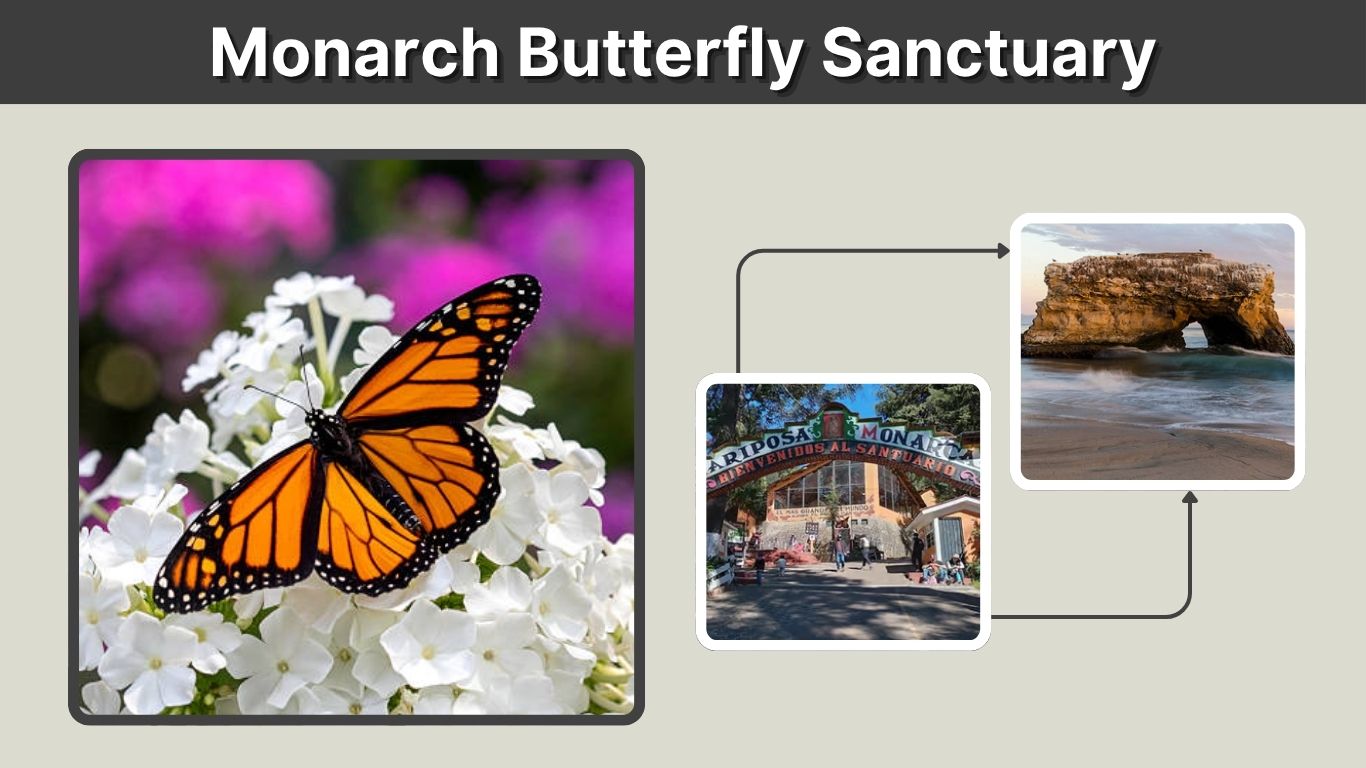
A monarch butterfly sanctuary protects the forests and coastal groves where millions of monarchs rest during winter. The best-known sanctuaries are found in central Mexico and along coastal California. Visitors can watch monarchs hanging from trees in dense clusters or flying through the forest when sunlight raises the temperature.
However, monarchs are seasonal, and every sanctuary offers a different experience. Understanding the best locations, visiting periods, admission rules, trails, and viewing etiquette will help you plan a responsible and rewarding trip.
What Is a Monarch Butterfly Sanctuary?
A monarch butterfly sanctuary is a protected habitat where migrating monarchs gather to spend the winter. These locations provide shelter from wind, rain, freezing temperatures, and other severe weather.
The butterflies cluster on tree branches to conserve energy and protect themselves from the elements. Disturbing them can force them to fly and use stored fat that they need for winter survival and their return migration.
Sanctuary vs. Grove vs. Reserve
These terms are related but have slightly different meanings:
- Sanctuary: A protected place managed for monarch conservation.
- Grove: A group of trees where monarchs gather, particularly in California.
- Reserve: A larger protected landscape containing forests, communities, wildlife, and sometimes multiple sanctuaries.
- Overwintering site: Any location where monarchs remain during winter.
The Monarch Butterfly Biosphere Reserve in Mexico, for example, covers a large mountainous area containing several individual sanctuaries.
Best Monarch Butterfly Sanctuaries
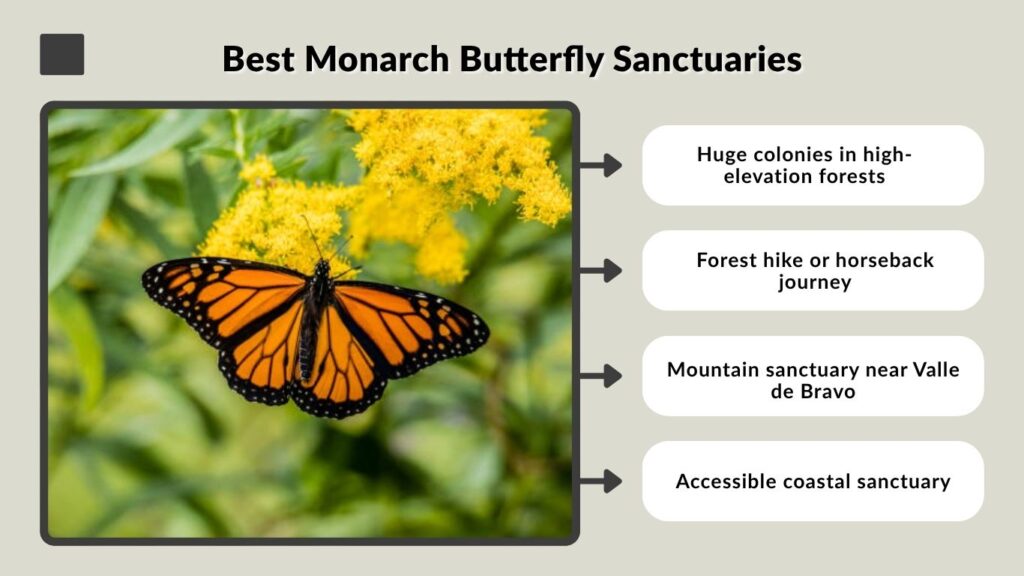
The most famous sanctuaries are divided between two major regions. Eastern monarchs generally overwinter in central Mexico, while many western monarchs gather at coastal sites in California.
| Sanctuary | Location | Typical season | Main experience |
| El Rosario | Michoacán, Mexico | November–March | Huge colonies in high-elevation forests |
| Sierra Chincua | Michoacán, Mexico | November–March | Forest hike or horseback journey |
| Piedra Herrada | State of Mexico | November–March | Mountain sanctuary near Valle de Bravo |
| Pacific Grove | California | Mid-October–February | Accessible coastal sanctuary |
| Pismo State Beach | California | November–February | Eucalyptus grove near the beach |
| Natural Bridges | Santa Cruz, California | Fall–winter | Grove, boardwalk, beach, and tide pools |
The number of butterflies varies each season, so no location can guarantee enormous clusters on a particular day.
Monarch Butterfly Sanctuaries in Mexico
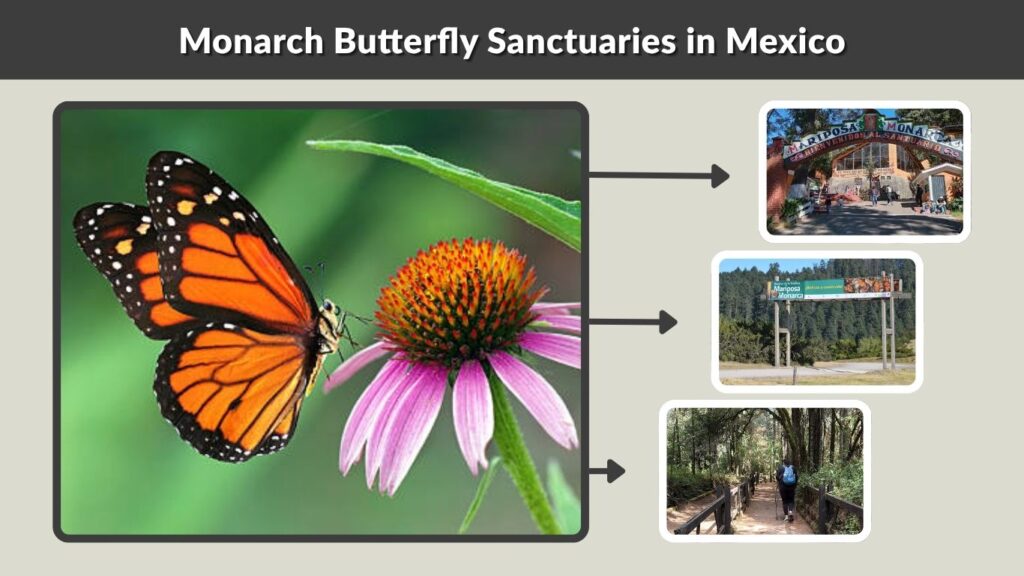
Mexico protects the primary winter habitat of the eastern monarch population. These butterflies migrate from Canada and the United States to high-elevation oyamel fir forests in Michoacán and the State of Mexico.
The UNESCO-listed Monarch Butterfly Biosphere Reserve covers 56,259 hectares of rugged mountain habitat about 100 kilometers northwest of Mexico City. It protects several important overwintering colonies and was added to the World Heritage List in 2008.
El Rosario Monarch Butterfly Sanctuary
El Rosario, located near Ocampo and Angangueo in Michoacán, is the most widely visited monarch sanctuary in Mexico. It is known for large butterfly colonies and developed visitor facilities.
Reaching the butterflies normally requires walking uphill through a high-elevation forest. Depending on where the colony settles, the hike may be physically demanding. Local guides and horses are commonly available.
The sanctuary generally operates during the November-to-March overwintering season. Visitor services may include restaurants, craft stalls, restrooms, guided walks, and educational displays.
What to Expect at El Rosario
The butterflies may be located deep inside the forest rather than near the entrance. Visitors should prepare for:
- High elevation and thinner air
- Steep paths and many steps
- Cool mornings and changing weather
- A guided forest walk
- Separate charges for admission, guides, or horses
- Limited time near the butterfly colony
Wear comfortable hiking shoes and layered clothing. Moving slowly and taking breaks can make the climb easier.
Sierra Chincua Monarch Sanctuary
Sierra Chincua is another major sanctuary near Angangueo. It usually provides a quieter and more natural-feeling experience than the busiest parts of El Rosario.
Visitors travel from the visitor center toward the butterfly colonies on foot or horseback. The final location changes as the butterflies move through the forest during the season. The site also has local guides, food stalls, craft sellers, and ecological visitor facilities.
Sierra Chincua is a strong choice for visitors who want a mountain walk and fewer crowds. However, the elevation and uneven ground can still make the journey challenging.
Cerro Pelón and El Capulín
Cerro Pelón contains important monarch habitat extending across parts of Michoacán and the State of Mexico. El Capulín is one of its recognized public access points.
The route from El Capulín includes several kilometers through conifer forest. Visitors must stay with local guides and remain on established paths.
Cerro Pelón may appeal to experienced hikers and travelers seeking a less-commercialized experience. Access and visitor facilities can be more limited, so planning with a local operator is advisable.
Piedra Herrada Sanctuary
Piedra Herrada is in the State of Mexico near Valle de Bravo and Temascaltepec. Its location makes it a popular choice for travelers coming from Mexico City or staying around Valle de Bravo.
The route to the colonies involves mountain trails, and horse rentals are commonly offered. Visitors should still expect to walk part of the route because horses may not continue to the final viewing point.
Best Time to Visit Mexico’s Sanctuaries
Mexico’s public monarch season generally extends from November through March. December and January are best for seeing dense, relatively inactive colonies. February often provides more flight activity because warmer conditions encourage monarchs to move, drink, and begin mating.
Early November may be less dependable because the butterflies are still arriving and selecting their winter locations. By March, they may begin leaving for their northward migration.
A sunny day can create dramatic flight activity. On cold or cloudy days, monarchs are more likely to remain clustered with their wings closed.
Pacific Grove Monarch Butterfly Sanctuary
The Pacific Grove Monarch Sanctuary is located at 250 Ridge Road, Pacific Grove, California. It is one of California’s largest publicly accessible western monarch overwintering sites.
Monarchs typically arrive in mid-October and leave in February. November through January is normally the strongest viewing period. The sanctuary is not a year-round butterfly attraction.
Hours, Admission, and Parking
The sanctuary is open from sunrise to sunset, including weekends and holidays. Admission is free, and ordinary visits do not require reservations.
Free street parking is available nearby but can be limited during busy periods. The packed-gravel trail is ADA accessible, although it has a slight incline. Pets are not allowed inside the sanctuary.
Volunteer docents are often available between October and February, generally from 11 a.m. to 3 p.m., weather permitting. They can help visitors locate clusters that resemble dead leaves or small pinecones.
Best Time of Day at Pacific Grove
Visit before 11 a.m. or during cool, cloudy weather to see monarchs gathered in motionless clusters.
Visit after 11 a.m. on a sunny day to increase your chance of seeing monarchs flying and feeding. Temperatures above approximately 55°F generally encourage more activity.
Other California Monarch Sanctuaries
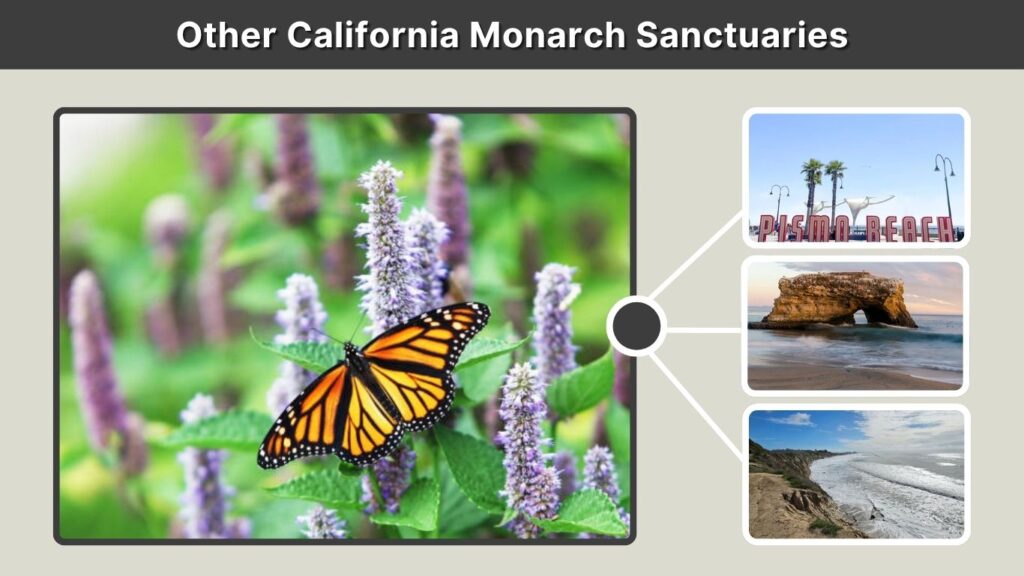
California contains numerous historic western monarch overwintering locations. Some are called groves rather than sanctuaries, but they serve the same protective purpose.
Pismo State Beach
The Pismo State Beach Monarch Butterfly Grove is located along California’s Central Coast between Pismo Beach and Grover Beach. Monarchs generally gather there from November through February.
Its short trails and convenient viewing area make it suitable for families and travelers who prefer an easier visit.
Natural Bridges State Beach
Natural Bridges State Beach in Santa Cruz has a seasonal monarch preserve reached by a boardwalk. Visitors can combine butterfly viewing with beach walks, tide pools, and other park activities.
Vehicle day-use fees may apply even when there is no separate butterfly-viewing ticket.
Goleta Butterfly Grove
Goleta’s butterfly habitat is located around Ellwood Mesa near Santa Barbara. Reaching the main viewing area requires a longer walk through natural open space.
Butterfly numbers have varied significantly in recent years, so checking current conditions before visiting is particularly important.
Tickets and Tour Costs
Pacific Grove does not charge admission or require reservations. Some other California sites may charge park parking or vehicle day-use fees rather than a separate sanctuary ticket.
Mexico’s sanctuaries generally charge entrance fees, and visitors may also pay separately for local guides, parking, food, or horse transportation. Prices can change between seasons and locations.
Guided tours from Mexico City, Morelia, Valle de Bravo, or Angangueo often include transportation and sanctuary assistance. Compare whether a tour includes admission, a guide, horse rental, meals, and hotel pickup before booking.
Rules for Visiting a Monarch Sanctuary
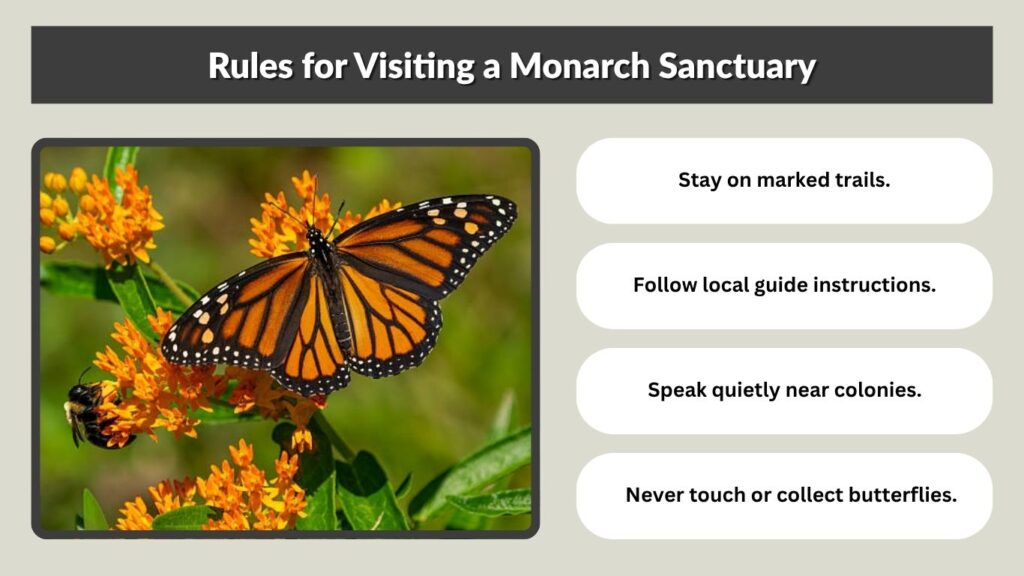
Sanctuaries protect resting butterflies, not simply provide tourist attractions. Responsible behavior prevents unnecessary energy loss and habitat damage.
Follow these basic rules:
- Stay on marked trails.
- Follow local guide instructions.
- Speak quietly near colonies.
- Never touch or collect butterflies.
- Do not remove plants, insects, or forest materials.
- Avoid flash photography.
- Keep food and alcohol outside restricted areas.
- Do not smoke or light fires.
- Leave pets at home where prohibited.
- Carry all waste out of the sanctuary.
Mexican conservation guidance asks visitors to limit their time inside the immediate colony-viewing area to approximately 18 minutes. Flash photography is discouraged because repeated light can disturb resting butterflies.
How to Create a Monarch Sanctuary at Home
A home butterfly garden cannot replace a major overwintering forest, but it can provide valuable breeding and feeding habitat.
Plant native milkweed appropriate for your region so female monarchs have somewhere to lay eggs. Add nectar-producing flowers that bloom from spring through fall, especially during migration periods.
Avoid insecticides and herbicides, provide shallow water sources, and grow plants in sunny areas protected from strong wind. Select several flower species with different blooming periods so nectar remains available throughout the season.
In coastal California, follow regional recommendations before planting milkweed. Some conservation groups advise emphasizing native winter nectar plants near overwintering sites rather than introducing milkweed directly along the coast.
FAQs
Where Is the Most Famous Monarch Butterfly Sanctuary?
El Rosario in Michoacán is the best-known public monarch sanctuary. It lies inside Mexico’s Monarch Butterfly Biosphere Reserve and is famous for large winter colonies in high-elevation oyamel fir forests.
What Is the Best Month to Visit?
January and February are usually excellent months in Mexico. California sanctuaries are often best from November through January. Exact conditions depend on temperature, storms, migration timing, and annual butterfly numbers.
Do Monarch Sanctuaries Require Tickets?
Pacific Grove is free and requires no reservation. Mexican sanctuaries normally charge local entrance fees, while California state parks may charge vehicle parking or day-use fees. Prices should be confirmed before traveling.
Can You Visit a Monarch Sanctuary From Mexico City?
Yes. El Rosario, Sierra Chincua, Piedra Herrada, and Cerro Pelón can be reached from Mexico City by car or organized tour. Because travel and hiking may require a full day, leaving early is recommended.
Can Visitors Touch the Monarch Butterflies?
No. Touching can remove delicate scales from their wings and expose them to environmental dangers. Disturbing clustered monarchs also makes them use energy reserves needed for winter survival and spring migration.
