
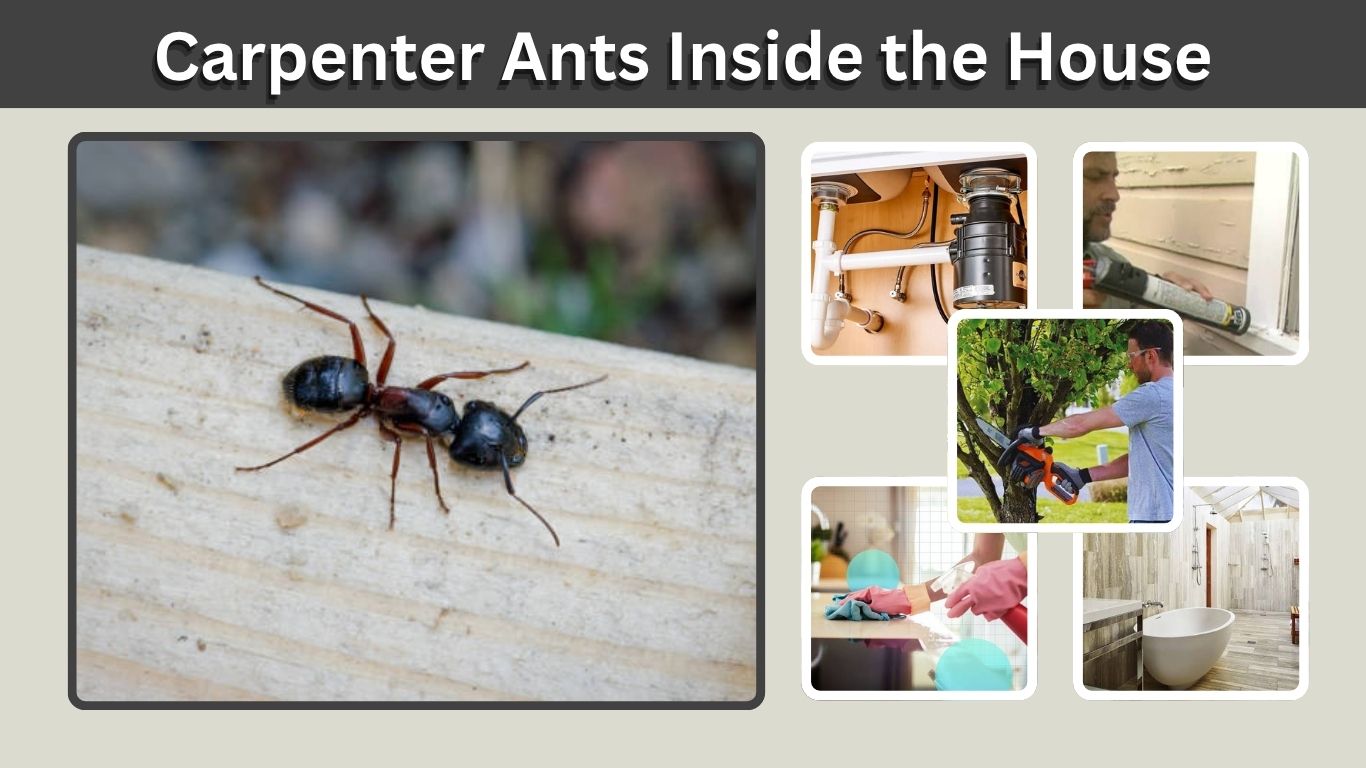
Finding carpenter ants inside the house can be worrying, especially when they appear in kitchens, bathrooms, walls, or near windows. These ants do not eat wood like termites, but they can tunnel through soft or damp wood to build nests. Knowing why they come indoors, where they hide, and how to remove them helps protect your home from bigger damage.
What Are Carpenter Ants?
Carpenter ants are large ants that build nests by chewing tunnels through wood. They are common around homes with moisture problems, old wood, tree branches, or hidden leaks. A few ants may only be foraging, but repeated sightings indoors can mean a nearby nest or an active colony inside the structure.
Carpenter ants are usually black, reddish-black, or dark brown. They are larger than many common house ants. Workers may vary in size, and winged carpenter ants may appear when a mature colony releases swarmers.
Unlike termites, carpenter ants do not consume wood for food. Instead, they remove wood to create smooth galleries for nesting. This makes them less silent than termites in some cases, because homeowners may notice sawdust-like material, rustling sounds, or ants moving in lines.
Key Identification Signs
- Large black or reddish-black ants inside rooms
- Workers often seen near sinks, windows, doors, or baseboards
- Winged ants appearing indoors, especially in spring or summer
- Small piles of wood shavings or debris near walls or trim
- Ant trails leading to food, water, or hidden gaps
- Rustling sounds inside walls at night
- Activity near damp wood, leaking pipes, or old framing
Why Do Carpenter Ants Come Inside the House?
Carpenter ants come inside the house mainly for food, water, shelter, and nesting space. They are attracted to moisture and damaged wood because it is easier to tunnel through. A home with leaks, condensation, poor drainage, or rotting wood can become a suitable nesting site.
Sometimes carpenter ants enter only to search for food. They may come from an outdoor nest in a tree stump, fence post, firewood pile, or mulch bed. In that case, you may see them mostly in kitchens or pantry areas. However, if they are seen often in different rooms, they may already be nesting indoors.
Warm indoor spaces also attract ants during certain seasons. In spring and summer, workers travel more actively. During colder months, carpenter ants inside the house may suggest an indoor colony, because outdoor ants are usually less active in cold weather.
Common Indoor Attractants
- Leaky pipes under sinks
- Damp bathroom walls
- Wet window frames
- Roof leaks or attic moisture
- Food crumbs and sugary spills
- Pet food left out overnight
- Firewood stored indoors
- Tree branches touching the roof
- Cracks around doors, vents, and foundations
Are Carpenter Ants Inside the House Dangerous?
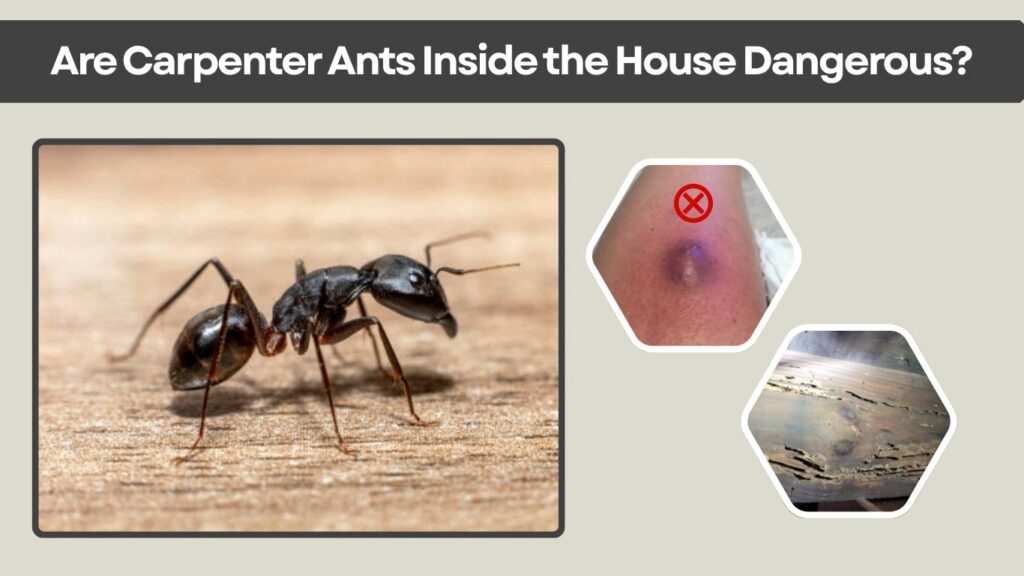
Carpenter ants are not usually dangerous to people, but they can be a serious problem for the house. They can bite if handled, yet their main risk is structural damage. Over time, a large colony can weaken wood by creating tunnels inside beams, wall voids, floors, or window frames.
The damage is usually slower than termite damage, but it should not be ignored. Carpenter ants prefer wood that is already softened by moisture. That means their presence may also point to hidden water damage, mold risk, or poor ventilation.
A single ant does not always mean an infestation. However, regular sightings, winged ants, or sawdust-like debris are stronger warning signs. If you see many ants inside, especially at night, it is important to inspect the area carefully.
| Sign Inside the House | What It May Mean | Action to Take |
| A few ants near food | Outdoor ants may be foraging | Clean food sources and watch trails |
| Ants near sinks or tubs | Moisture may be attracting them | Check for leaks and damp wood |
| Winged ants indoors | A mature colony may be nearby | Inspect walls, windows, and attic |
| Wood shavings or debris | Nesting may be inside wood | Locate the nest and treat it |
| Night activity in walls | Hidden colony is possible | Consider professional inspection |
Where Carpenter Ants Hide Indoors
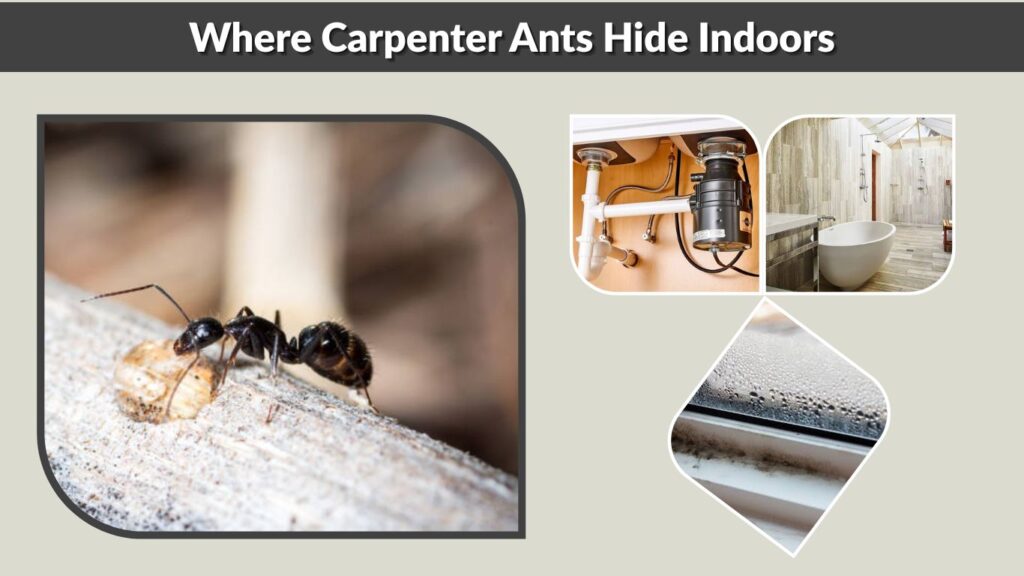
Carpenter ants prefer hidden, quiet spaces with moisture or damaged wood. They often nest inside walls, ceilings, crawl spaces, attics, floors, window frames, and door frames. Bathrooms and kitchens are common because these areas provide water and food.
A colony may also have satellite nests. The main nest can be outside, while smaller nests develop inside the house. This is why killing visible ants may not solve the problem. The colony can keep sending workers from another location.
To find where they are hiding, follow ant trails during evening or night hours. Carpenter ants are often more active after dark. Look for ants moving toward cracks, wall gaps, plumbing openings, or exterior entry points.
High-Risk Areas to Check
- Under kitchen sinks
- Around bathtubs and showers
- Behind dishwashers
- Around window sills
- Near sliding doors
- Attic beams and roof leaks
- Crawl spaces and basement joists
- Wall voids near plumbing
- Damp porch or deck connections
- Firewood piles close to the house
Winged Carpenter Ants Inside the House
Seeing winged carpenter ants inside the house is a stronger warning sign than seeing a few worker ants. Winged ants are reproductive ants that leave mature colonies to start new ones. If many winged ants appear indoors, the colony may be established somewhere inside or very close to the home.
Winged carpenter ants are sometimes confused with winged termites. Carpenter ants have a narrow waist, bent antennae, and front wings that are longer than the back wings. Termites have a thicker waist, straight antennae, and wings of equal length.
If you saw around 30 winged carpenter ants inside the house, treat it as a possible infestation sign. Do not only spray the ants you see. You need to locate the nest source, check moisture areas, and inspect nearby wood.
How to Get Rid of Carpenter Ants Inside the House
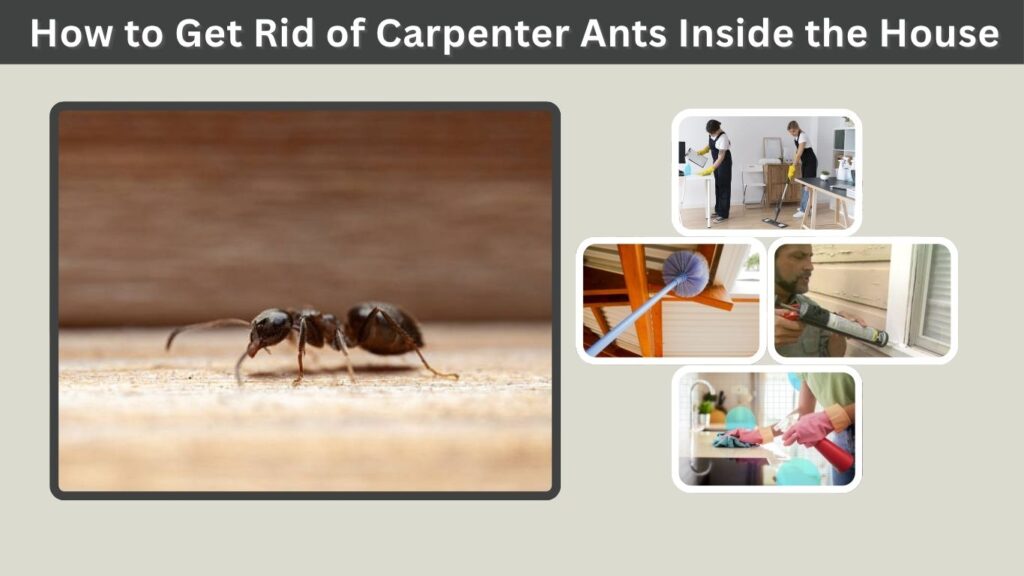
Getting rid of carpenter ants inside the house requires more than killing visible ants. The main goal is to find and eliminate the nest. If the colony remains hidden, ants may return even after sprays or cleaning.
Start by watching their movement. Follow trails to see where they enter walls or floors. Check wet wood, roof leaks, plumbing areas, and exterior gaps. Remove food sources and reduce moisture so the home becomes less attractive.
Baits can work when ants carry the product back to the colony. However, carpenter ants may be picky eaters. Sometimes they prefer sweets, and other times they prefer protein. Using the wrong bait may not work well.
Step-by-Step Removal Plan
- Clean food crumbs, grease, sugar, and pet food daily.
- Fix leaks under sinks, around tubs, and near appliances.
- Follow ant trails at night to find entry points.
- Check damp wood, window frames, and wall voids.
- Use carpenter ant bait near trails, not directly on top of ants.
- Avoid spraying trails before baiting, because sprays can scatter them.
- Remove rotting wood, old stumps, and firewood near the house.
- Seal cracks around windows, doors, pipes, and vents.
- Call a pest control expert if ants keep returning.
What Kills Carpenter Ants Inside the House?
Carpenter ants can be killed with baits, insecticidal dusts, non-repellent sprays, and direct nest treatments. The most effective method depends on where the nest is located. If the nest is hidden in a wall, treating only the surface will not fully solve the issue.
Baits are often useful because worker ants carry the poison back to the colony. Non-repellent treatments can also help because ants do not immediately detect them. Dust products may be used in wall voids or cracks, but they should be applied carefully and according to label instructions.
Household sprays may kill ants on contact, but they are usually not enough. Repellent sprays can make ants split into new areas, making the problem harder to control.
Best Control Options
- Carpenter ant bait for active trails
- Non-repellent insect treatment near entry points
- Dust treatment for wall voids and cracks
- Direct nest treatment when the nest is found
- Moisture repair to stop future nesting
- Professional treatment for large or hidden colonies
How to Keep Carpenter Ants From Coming Inside
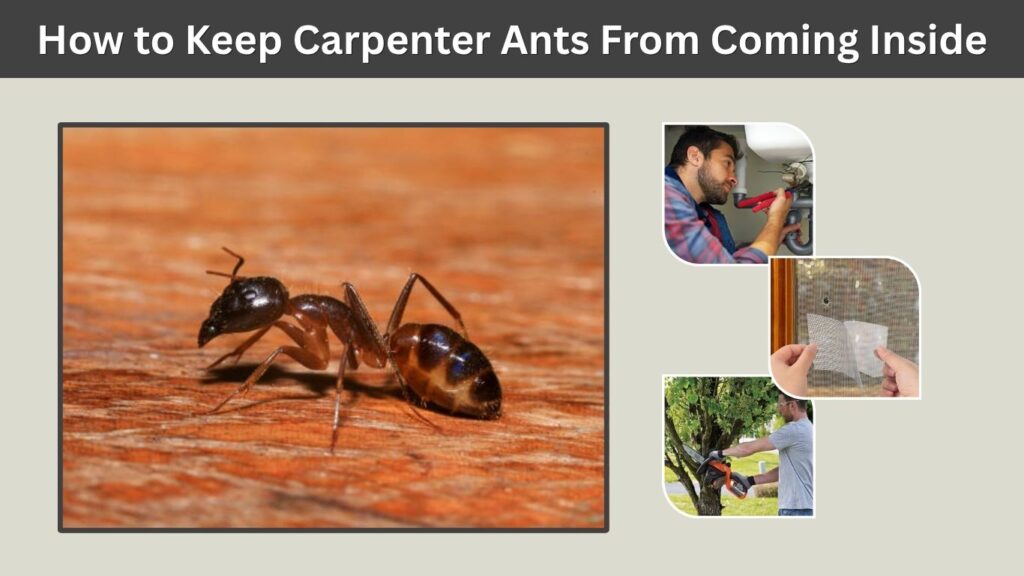
Prevention is the best long-term solution. Carpenter ants often enter through small gaps or follow branches and wires that touch the house. They are also drawn to damp wood, so moisture control is very important.
Keep the house dry and clean. Repair leaks quickly, improve ventilation, and remove wood that touches soil. Store firewood away from the home and keep mulch from piling against siding. Trim branches so ants cannot use them as bridges.
Outdoor nests can also create indoor problems. Old stumps, logs, wooden fences, and rotting landscape timbers near the house can support colonies. Removing these nesting areas lowers the chance of ants moving indoors.
Carpenter Ants vs Termites Inside the House
Carpenter ants and termites can both damage wood, but they behave differently. Carpenter ants excavate wood to create tunnels, while termites eat cellulose in wood. Carpenter ant galleries are often smooth and clean. Termite galleries may contain mud or soil.
Carpenter ants are more visible because workers often leave the nest to search for food. Termites are usually more hidden. Winged forms of both insects may appear indoors, which is why many homeowners confuse them.
If you are not sure which pest you have, compare the body shape. Carpenter ants have a narrow waist and bent antennae. Termites have a broad waist and straight antennae. Because both can cause damage, a professional inspection is helpful when signs are unclear.
When to Call a Professional
You should call a pest control professional if carpenter ants keep coming back, if you see winged ants indoors, or if you find sawdust-like debris near walls. Professional help is also wise when ants are coming from ceilings, wall voids, crawl spaces, or structural wood.
A professional can locate hidden nests, identify moisture problems, and choose the correct treatment. This is especially important for large colonies or homes with repeated infestations.
DIY methods may work for small foraging problems, but established indoor colonies need stronger control. The sooner the nest is found, the easier it is to stop damage.
FAQs
Do carpenter ants come inside the house?
Yes, carpenter ants can come inside the house to search for food, water, or nesting space. A few ants may come from an outdoor colony, but regular sightings can mean a nest is nearby. Indoor activity near damp wood, sinks, or walls should be checked carefully.
Why do carpenter ants come inside the house?
Carpenter ants come inside because they are attracted to moisture, food, and soft wood. Leaky pipes, wet window frames, roof leaks, and crumbs can draw them indoors. They may also enter through cracks, vents, gaps around pipes, or branches touching the house.
How do I get rid of carpenter ants inside the house?
Start by cleaning food sources, fixing leaks, and following ant trails to locate the nest. Use carpenter ant bait near active trails and avoid spraying before baiting. If ants keep returning or you see winged ants, professional treatment may be needed.
What kills carpenter ants inside the house?
Carpenter ant baits, non-repellent treatments, insecticidal dusts, and direct nest treatments can kill carpenter ants. The best option depends on where the colony is hiding. Contact sprays kill visible ants but often fail to remove the main nest.
Are winged carpenter ants inside the house a bad sign?
Yes, winged carpenter ants indoors can be a warning sign of a mature colony. If many winged ants appear inside, the nest may be in the house or very close to it. Check damp wood, windows, walls, and attic areas for activity.
