
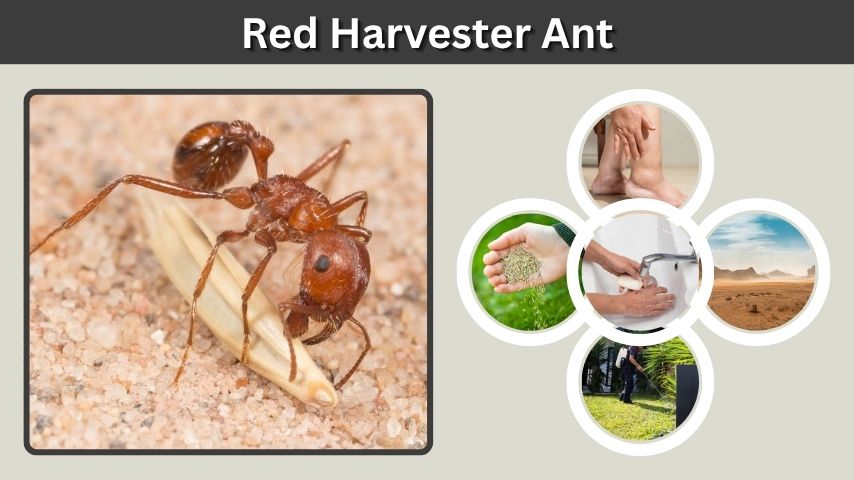
The red harvester ant is one of the most recognizable ants in dry grasslands, open fields, and parts of the American Southwest. Known for its large red body, cleared nest mound, seed-collecting behavior, and painful sting, this ant is often confused with fire ants. However, red harvester ants are a different species with different habits, risks, and ecological value. Understanding how they live helps homeowners, parents, gardeners, and ant keepers respond safely and responsibly.
What Is a Red Harvester Ant?
The red harvester ant is commonly associated with the species Pogonomyrmex barbatus. It is a seed-harvesting ant that builds underground colonies and sends workers out to collect food from the surrounding area. These ants are not just pests; they are also important parts of grassland ecosystems because they move seeds, aerate soil, and provide food for wildlife.
A worker red harvester ant is usually reddish to reddish-brown and larger than many household ants. People often notice them because they travel in open areas during the day and because their nests create bare, circular patches of ground. Unlike tiny sugar ants that invade kitchens, red harvester ants are mainly outdoor ants.
They are best known for three things:
- Collecting seeds as a major food source
- Building visible mounds or cleared nest areas
- Defending the colony with a painful sting
Because of that sting, they should not be handled casually, especially by children or pets.
Red Harvester Ant Identification
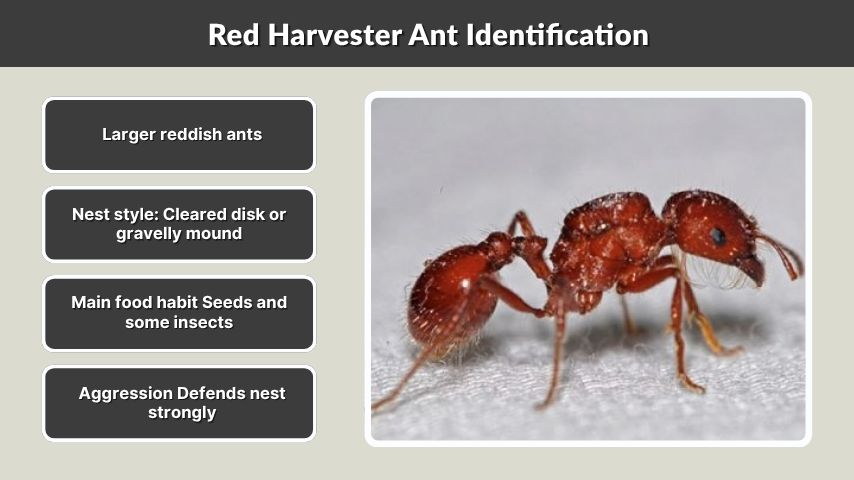
Correct identification matters because red harvester ants are often mistaken for red imported fire ants. Both can sting, both may appear reddish, and both nest in soil. Still, they are not the same ant.
Red harvester ants are generally larger, slower-moving, and more commonly seen around open, dry ground. Their nest area often looks like a cleared disk with little vegetation nearby. Fire ant mounds, by comparison, are often dome-shaped piles of loose soil and may appear in lawns, disturbed soil, pastures, and wet areas.
| Feature | Red Harvester Ant | Fire Ant |
|---|---|---|
| Common appearance | Larger reddish ants | Smaller reddish-brown ants |
| Nest style | Cleared disk or gravelly mound | Dome-like soil mound |
| Main food habit | Seeds and some insects | Omnivorous, oily foods, sweets, insects |
| Aggression | Defends nest strongly | Swarms aggressively when disturbed |
| Sting risk | Very painful sting | Painful sting, often multiple stings |
If you see large red ants around a bare circular patch of soil, there is a good chance you are looking at a red harvester ant colony. Avoid stepping on the mound or disturbing it to confirm.
Where Do Red Harvester Ants Live?
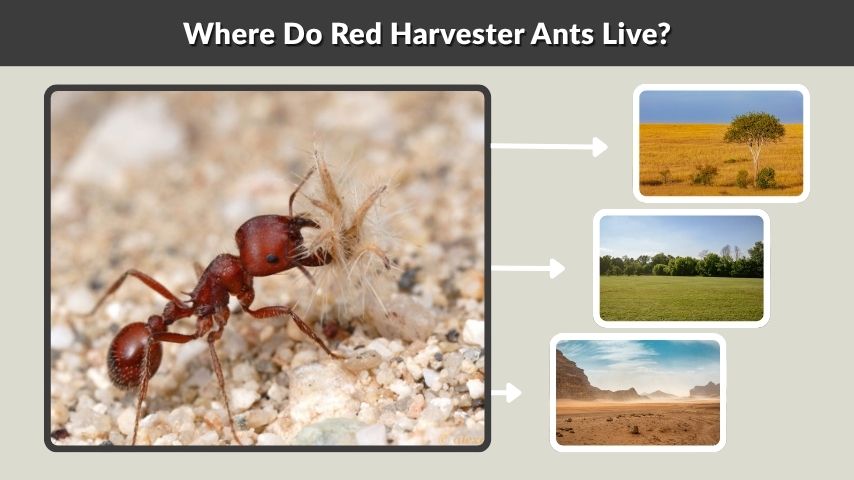
Red harvester ants prefer warm, dry, open habitats. They are commonly associated with grasslands, deserts, semi-arid areas, pastures, roadsides, and open fields. In the United States, they are especially linked with Texas and the broader Southwest, though related harvester ants may be found in other western states.
The Texas red harvester ant is often noticed on ranches, rural properties, dry lots, and open land where vegetation is not too dense. These ants need enough open ground for foraging and enough seed-producing plants nearby to support the colony.
Typical red harvester ant habitat includes:
- Dry grasslands and prairies
- Open fields and pastures
- Desert or semi-desert areas
- Roadsides and bare soil patches
- Rural yards with sandy or loose soil
They are less likely to thrive in heavily watered lawns, dense forests, or constantly disturbed urban areas.
Red Harvester Ant Hill, Mound, and Nest
A red harvester ant hill can be easy to spot once you know what to look for. The nest entrance is usually surrounded by a cleared area where workers remove plants, debris, and small objects. Some mounds may include gravel, seed husks, or soil particles.
The underground nest may be much larger than the visible surface suggests. Inside, the colony contains tunnels, chambers, brood areas, food storage spaces, workers, and the queen. The bare area around the mound helps workers move freely and may also reduce cover for predators or competing insects.
Common signs of a red harvester ant nest include:
- A round or oval cleared patch of ground
- One or more entrance holes
- Large red ants moving in trails
- Seed husks or debris near the opening
- A mound in dry, open soil
Do not kick, dig, or pour random chemicals into a nest. Disturbing the mound can trigger defensive behavior and increase sting risk.
What Do Red Harvester Ants Eat?
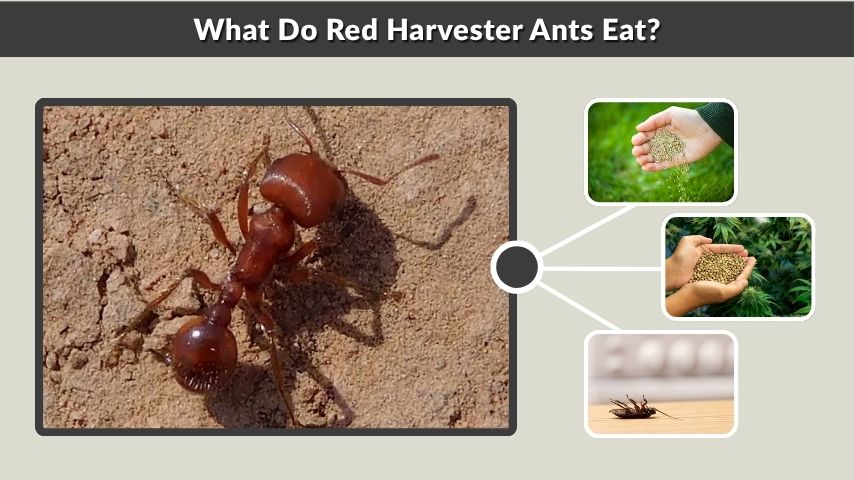
Red harvester ants are best known for eating seeds. Workers collect seeds from grasses and other plants, carry them back to the nest, and store them underground. This behavior is why they are called “harvester” ants.
Their diet is not limited to seeds, though. They may also collect dead insects and other organic material when available. In captivity, people who keep harvester ants often feed them seeds along with small insect protein sources, but wild colonies are adapted to local food sources.
Common red harvester ant food sources include:
- Grass seeds
- Weed seeds
- Small plant parts
- Dead insects
- Occasional arthropod prey
- Stored seed fragments inside the colony
Their seed-collecting habit can affect plant communities around the nest. In natural settings, that makes them ecologically important rather than simply destructive.
Red Harvester Ant Queen and Colony Life
A red harvester ant colony depends on its queen. The queen’s main role is reproduction, while workers handle foraging, nest maintenance, brood care, and defense. A mature colony can contain many workers, but usually only one main egg-laying queen.
During mating season, winged males and young queens leave established colonies. After mating, a new queen searches for a suitable nesting site, sheds her wings, and attempts to start a new colony. Many young queens do not survive, but successful ones can establish colonies that last for years.
The colony life cycle generally includes:
- Winged reproductive ants leaving the nest
- Mating flights after suitable weather conditions
- A newly mated queen starting a nest
- Eggs developing into larvae, pupae, and adults
- Workers expanding the nest and collecting food
Seeing a red harvester ant with wings does not always mean there is an infestation indoors. It may simply be a reproductive ant during seasonal mating activity.
Red Harvester Ant Bite vs Sting
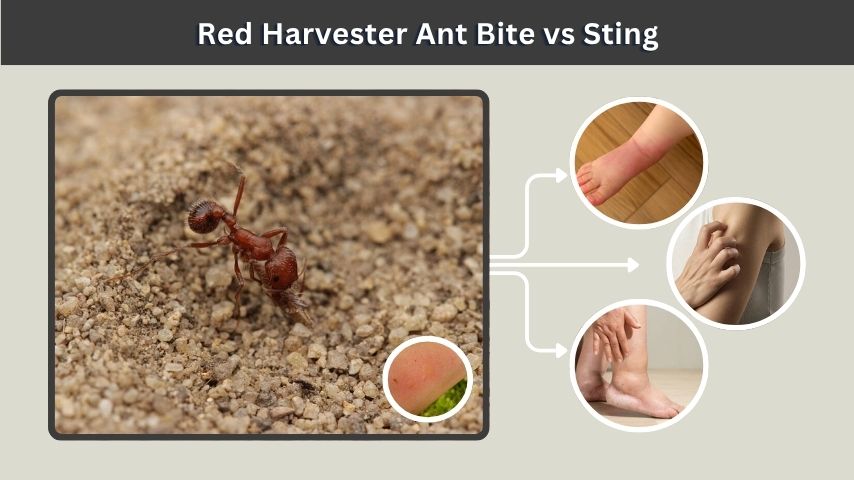
Many people search for “red harvester ant bite,” but the more important injury is usually the sting. Like many stinging ants, a harvester ant may bite to grip the skin and then use its stinger to inject venom. The sting is what causes the strong burning pain.
A red harvester ant sting can feel sharp, hot, and intense. Local redness and swelling may follow. Some people experience itching or tenderness that lasts for hours or longer. Multiple stings can be more serious, especially for children, pets, or people with insect venom allergies.
Possible red harvester ant sting symptoms include:
- Sudden burning or sharp pain
- Redness around the sting site
- Swelling or a raised welt
- Itching or warmth
- Lingering soreness
- Rare allergic reaction symptoms
Seek emergency help if someone develops trouble breathing, dizziness, widespread hives, facial swelling, throat tightness, confusion, or fainting after a sting. Those symptoms may indicate a severe allergic reaction.
Red Harvester Ant Bite Treatment
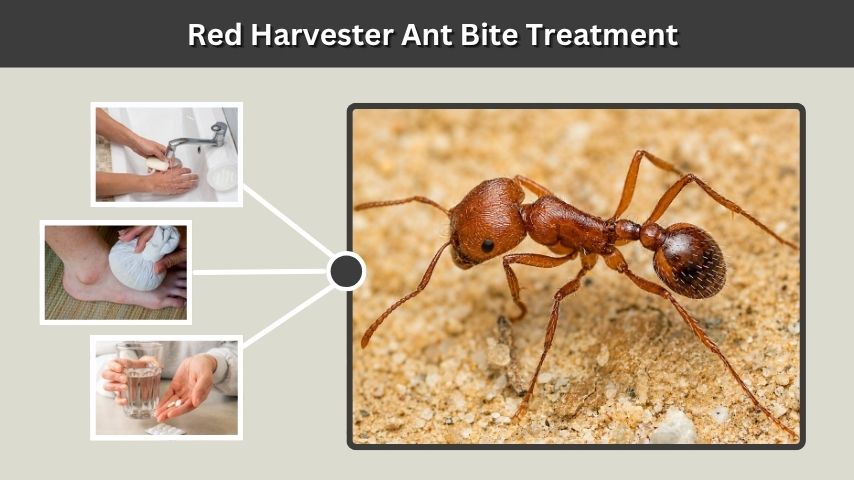
Most mild red harvester ant stings can be treated with basic first aid. The goal is to reduce pain, prevent infection, and watch for allergic symptoms. Avoid scratching the sting site because broken skin can increase the risk of irritation or infection.
Basic red harvester ant sting treatment:
- Move away from the nest immediately.
- Wash the area with soap and water.
- Apply a cold compress for swelling and pain.
- Use an over-the-counter antihistamine if itching is bothersome.
- Use pain relief medicine if appropriate for the person.
- Watch for worsening swelling or allergic symptoms.
For pets, especially dogs that are stung and then vomit, become weak, swell around the face, or struggle to breathe, contact a veterinarian immediately. Pets may disturb mounds with their paws or nose and receive multiple stings before owners notice.
Are Red Harvester Ants Dangerous?
Red harvester ants can be dangerous if handled carelessly or if their nest is disturbed. Their sting is painful, and allergic reactions are possible. However, they are not usually aggressive unless their colony is threatened. Most encounters happen when someone steps near a nest, sits on the ground near a mound, lets a pet investigate, or tries to collect the ants.
For kids, red harvester ants are not appropriate for casual handling. They may be fascinating to observe from a safe distance, but children should be taught not to poke mounds, collect workers, or place ants in open containers.
They are most risky for:
- Small children
- Curious pets
- People with insect sting allergies
- Outdoor workers
- Gardeners and ranchers
- Anyone walking barefoot near nests
Respecting the nest area is the easiest way to reduce risk.
Red Harvester Ant vs Fire Ant
The red harvester ant and the fire ant are often mixed up, but they are different in appearance, nesting, and behavior. Fire ants are usually smaller and may attack in large numbers when their mound is disturbed. Red harvester ants are larger and strongly defend the area around their nest, but they are more tied to dry open habitats and seed harvesting.
Fire ants are also more likely to become major lawn and household-edge pests in many regions. Red harvester ants are often more noticeable in rural or dry open areas. Both should be treated with caution, but control decisions should be based on correct identification.
A quick field clue: if the mound sits in a cleared, bare disk with larger red ants moving around it, think red harvester ant. If it is a soft dome of soil in a lawn or disturbed area with many smaller ants swarming quickly, fire ants may be more likely.
How to Get Rid of Red Harvester Ants
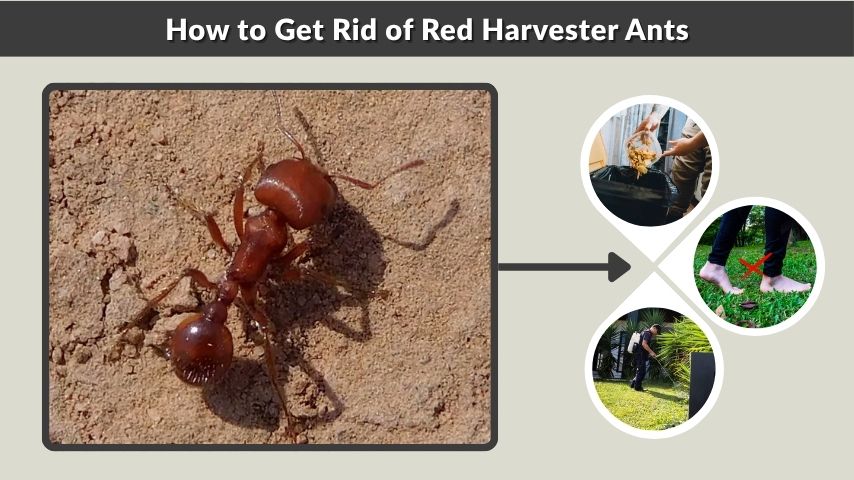
Red harvester ant control should be targeted, not random. These ants can be ecologically useful, and in some regions they are part of the natural food web. If the colony is far from people, pets, walkways, patios, or play areas, leaving it alone may be the best option.
Control becomes more reasonable when a nest is close to a home, school area, animal pen, walkway, or place where people may be stung. The safest approach is to identify the ant correctly and use a product labeled for harvester ants according to the instructions.
Safer control steps include:
- Marking the mound so people avoid it
- Keeping children and pets away
- Removing food waste that attracts other pests
- Avoiding barefoot walking in known nest areas
- Using labeled ant bait or mound treatment when needed
- Calling a pest professional for high-risk areas
Do not use gasoline, fire, boiling water near structures, or excessive pesticide. These methods can be dangerous, environmentally harmful, and ineffective.
Red Harvester Ants in Ant Farms
Live red harvester ants are sometimes sold for ant farms, but they must be handled with care. Worker ants can sting, and a queen is usually not included in basic ant farm kits. Without a queen, the colony will not reproduce long-term, but workers may survive for a limited period if properly cared for.
Before buying red harvester ants for an ant farm, check local rules and supplier policies. Some areas restrict shipping certain ants to prevent ecological problems. Also consider whether the setup is appropriate for children. A sealed, escape-proof ant farm is essential.
Basic ant farm safety tips:
- Never open the container indoors casually.
- Keep the ant farm away from small children.
- Do not shake or overheat the enclosure.
- Do not release nonlocal ants outdoors.
- Follow the supplier’s feeding instructions carefully.
For many families, observing wild ants from a distance may be safer than keeping stinging ants at home.
Red Harvester Ant Facts
Red harvester ants are more than painful stingers. They are highly organized social insects with complex colony behavior. Their daily activity depends on heat, humidity, food availability, and colony needs. In very hot weather, they may reduce activity during the harshest part of the day.
Notable facts include:
- Their scientific name is commonly given as Pogonomyrmex barbatus.
- They collect and store seeds underground.
- Their nests can create bare circular patches.
- Their sting is painful and used for defense.
- Queens start new colonies after mating flights.
- They are often confused with fire ants.
- They help shape soil and seed movement in dry habitats.
The best way to live around red harvester ants is to identify them correctly, respect their nest space, and use control only when their location creates a real safety problem.
FAQs
Do red harvester ants bite or sting?
Red harvester ants can bite, but the painful reaction people notice usually comes from the sting. The ant may bite to hold onto the skin, then inject venom with its stinger. This can cause sharp burning pain, redness, swelling, and itching around the sting site.
How long do red harvester ants live?
Worker red harvester ants may live for months, while a successful queen can live much longer and support the colony for years. The exact lifespan depends on colony health, predators, weather, food supply, and whether the ants are wild or kept in a controlled ant farm.
What do red harvester ants eat?
Red harvester ants mainly eat seeds, especially grass and weed seeds collected by workers. They may also feed on dead insects or other small organic materials. In an ant farm, they are usually given seeds and carefully chosen protein sources based on supplier instructions.
Are red harvester ants the same as fire ants?
No. Red harvester ants and fire ants are different ants. They can both sting and may look reddish, but red harvester ants are usually larger and often build cleared nest areas. Fire ants are smaller, swarm quickly, and commonly build dome-shaped soil mounds in lawns.
How do you kill red harvester ants safely?
Use a labeled ant bait or mound treatment designed for the target species, and follow the product directions exactly. Avoid gasoline, fire, or unsafe home remedies. If the mound is near children, pets, livestock, or a high-traffic area, hiring a pest control professional is safer.
