
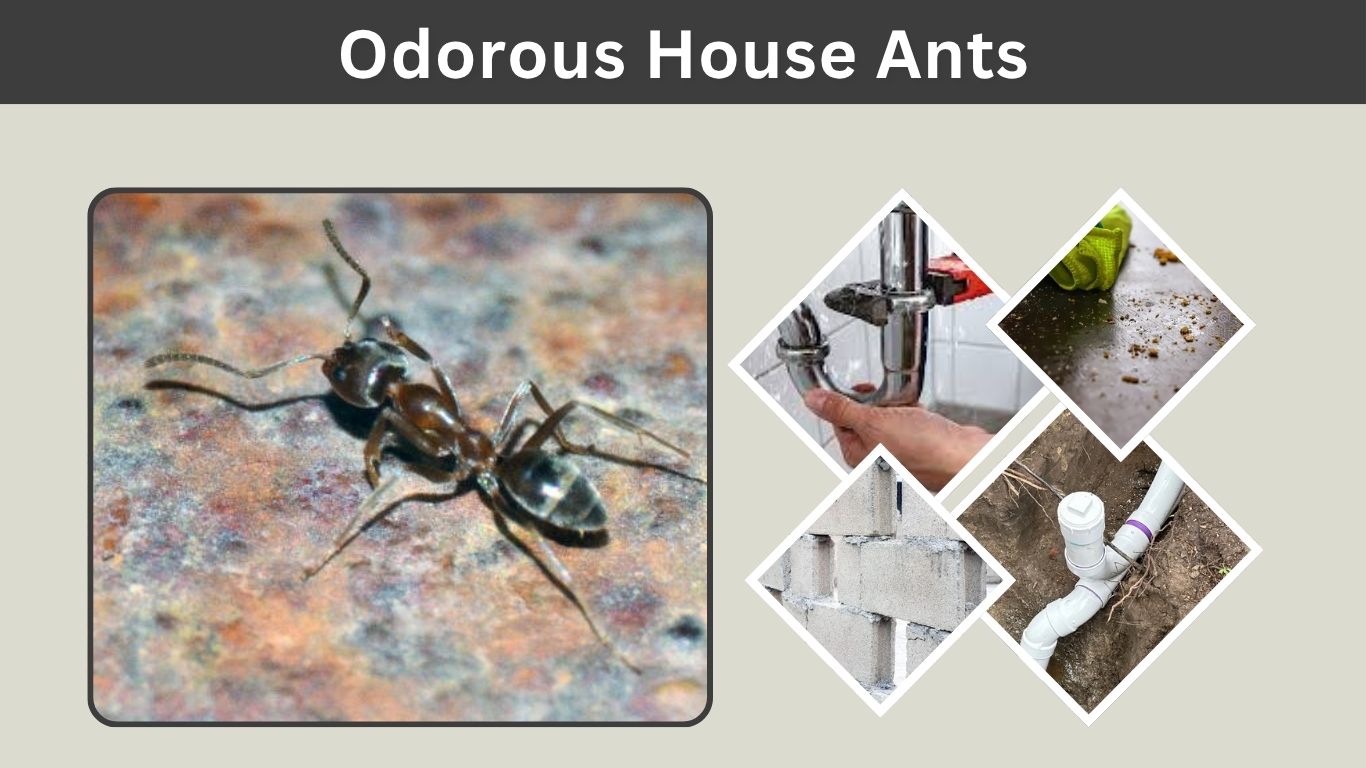
Odorous house ants are tiny dark ants that often invade kitchens, bathrooms, wall voids, outlets, and food storage areas. Their name comes from the unpleasant smell they release when crushed, often compared to rotten coconut, blue cheese, or a musty odor. Although they are not considered highly dangerous, odorous house ants can become frustrating indoor pests because their colonies may be large, mobile, and difficult to eliminate without the right control strategy.
What Are Odorous House Ants?
Odorous house ants are small nuisance ants known scientifically as Tapinoma sessile. They are common across much of North America and can live both outdoors and indoors. Outside, they nest under rocks, mulch, logs, soil, leaf litter, and around foundations. Indoors, they often move into wall voids, bathrooms, kitchens, insulation, and spaces near moisture.
They are sometimes called “stink ants” because of the smell they release when crushed. Many homeowners first notice them as trails of tiny ants moving across countertops, sinks, baseboards, windowsills, or electrical outlets. They are especially attracted to sweet foods but may also feed on grease, proteins, and dead insects.
Odorous house ants are not the same as carpenter ants, pavement ants, Argentine ants, or sugar ants, although people often confuse them because they are small and enter homes in search of food.
Odorous House Ant Identification
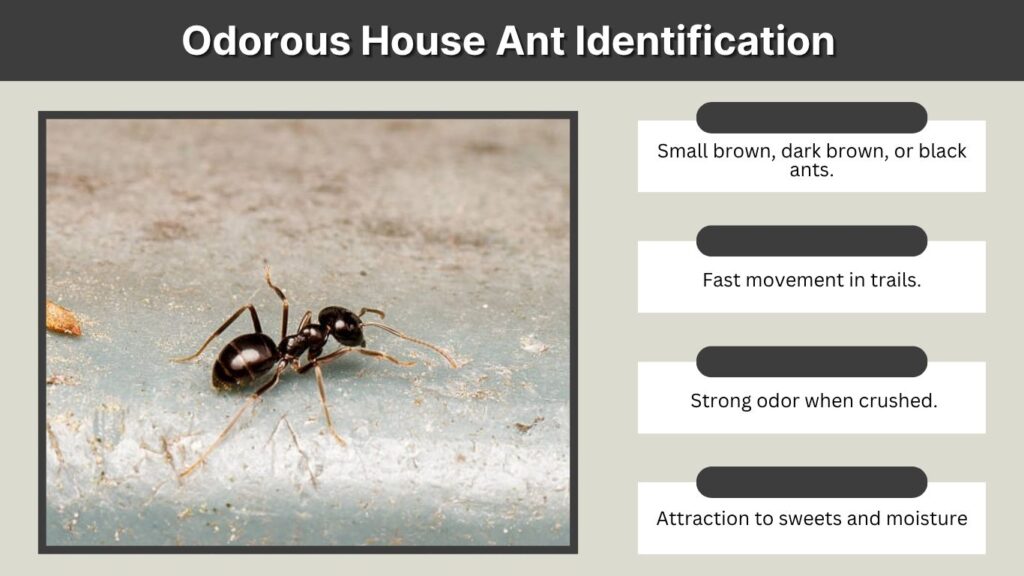
Correct identification is important because different ants need different control methods. Odorous house ants are usually brown to black and very small. They move quickly and often trail in long lines between the nest and food source.
A key identification clue is the smell. If crushed, odorous house ants release a strong odor that many people describe as rotten coconut. Some sources and homeowners also compare it to blue cheese or a cleaning-chemical smell. This smell is one of the easiest field clues, although it is better not to crush ants indoors because it can spread odor and does not solve the infestation.
Common odorous house ant identification signs include:
- Small brown, dark brown, or black ants
- Fast movement in trails
- Strong odor when crushed
- Attraction to sweets and moisture
- Indoor trails near sinks, counters, and outlets
- Nests in wall voids, mulch, soil, or under objects
- Sudden activity after rain, heat, or weather changes
They are small enough to enter through tiny gaps, cracks, utility openings, and foundation spaces. This is why sealing entry points is an important part of long-term control.
Odorous House Ant Size
Odorous house ants are small compared with carpenter ants and many outdoor ants. Most workers are only a few millimeters long. Because they are so small, they may look like ordinary “sugar ants” to homeowners.
Their small size allows them to travel through cracks around windows, plumbing lines, baseboards, door frames, and outlets. When many workers appear at once, the infestation may look worse than it really is, but heavy trailing can indicate a large colony nearby.
A quick size comparison:
| Ant Type | General Size | Common Clue |
|---|---|---|
| Odorous house ant | Very small | Rotten coconut-like smell when crushed |
| Carpenter ant | Much larger | May nest in damaged or moist wood |
| Pavement ant | Small | Often nests near pavement cracks |
| Argentine ant | Small | Large trails and multiple queens |
| Little black ant | Very small | Dark color and indoor food trails |
If the ants are large and appear near wood damage, consider carpenter ants. If they are tiny, smell when crushed, and trail to sweets, odorous house ants are more likely.
What Do Odorous House Ants Smell Like?
Odorous house ants smell unpleasant when crushed. The smell is commonly described as rotten coconut, but some people notice blue cheese, rancid butter, or a musty odor. This odor comes from chemicals released by the ants and is useful for identification.
The smell is strongest when several ants are crushed at once. You may notice it after wiping a trail with a tissue, stepping on them, or squashing ants on a counter. However, crushing ants is not a good control method. It kills only a few workers and may leave behind odor and alarm signals.
Instead of crushing them, clean the trail with soapy water or a mild household cleaner, then place bait near the trail where ants are actively feeding.
Where Do Odorous House Ants Nest?
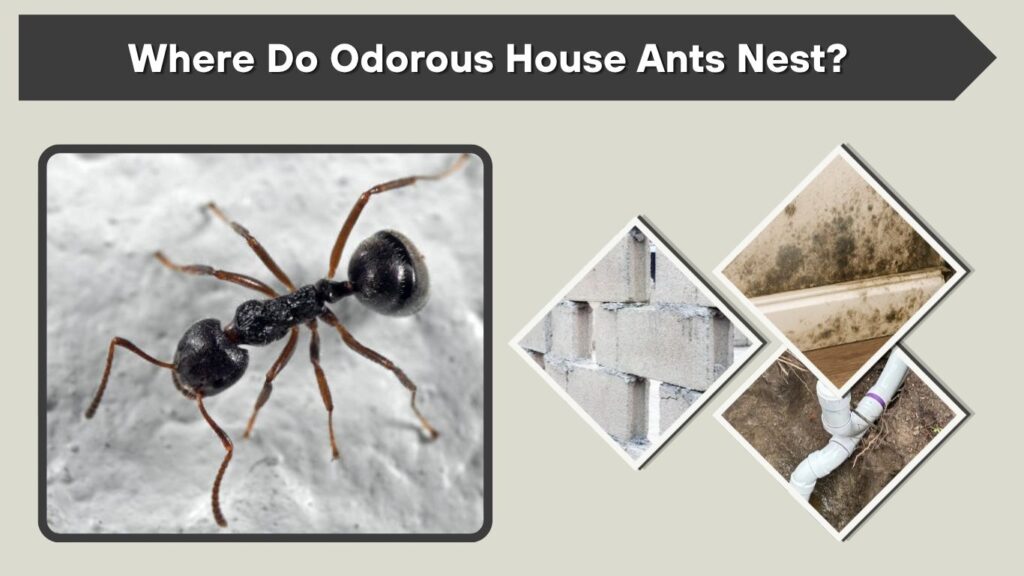
Odorous house ants are flexible nesters. Outdoors, they may nest in soil, mulch, under stones, under logs, beneath patio blocks, around tree roots, or near foundations. Indoors, they often choose warm, protected, moist spaces.
Common indoor nesting areas include:
- Wall voids
- Behind baseboards
- Around plumbing
- Under sinks
- Bathrooms
- Kitchens
- Insulation
- Near water heaters
- Around windows
- Electrical outlets and switch plates
The keyword “odorous house ants indoors outlet” reflects a real homeowner concern. Ants can appear around outlets because wall voids provide hidden travel routes. Do not spray liquids into electrical outlets. If ants are emerging from outlets, use safe baiting strategies nearby or call a professional.
What Attracts Odorous House Ants?
Odorous house ants enter homes searching for food, water, and shelter. They are especially attracted to sweet foods, but they can also feed on proteins and greasy materials. Moisture is another major factor, which is why they often show up in kitchens and bathrooms.
Things that attract odorous house ants include:
- Sugar, syrup, honey, fruit, and juice
- Crumbs and spilled drinks
- Pet food
- Grease and food residue
- Leaky pipes or dripping faucets
- Wet wood or damp insulation
- Trash cans
- Outdoor mulch against the foundation
- Gaps around windows and doors
They may become more noticeable after rain, drought, or temperature shifts. Heavy rain can disturb outdoor nests, while dry weather may push ants indoors for water.
Do Odorous House Ants Bite?
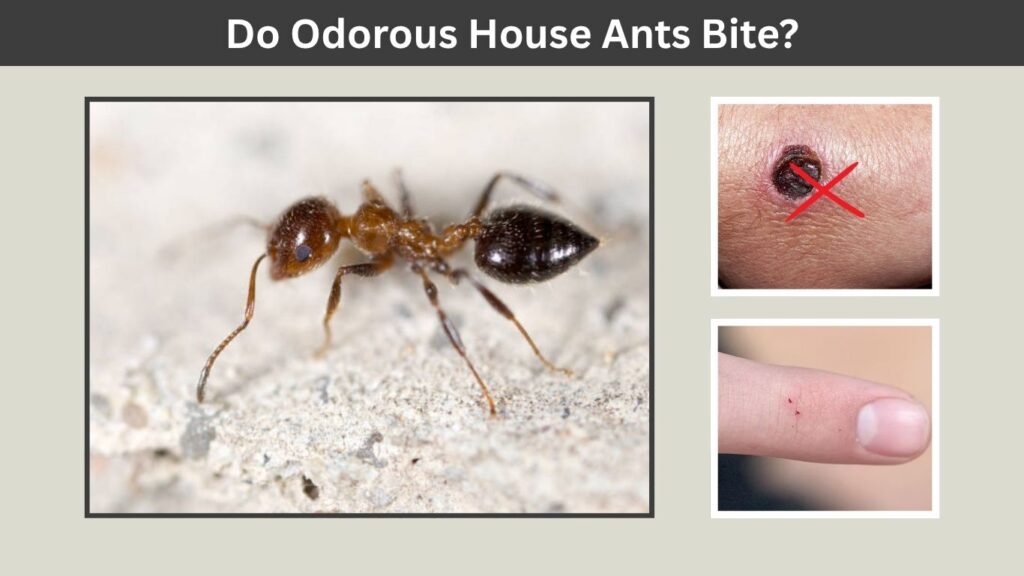
Odorous house ants can technically bite, but they are not known as aggressive biting ants. They do not sting and are not considered a major medical threat. Most people are more bothered by their numbers, odor, and contamination risk than by bites.
If an odorous house ant does bite, it is usually mild and may feel like a tiny pinch. Serious symptoms are uncommon. If someone has swelling, rash, or irritation after contact with ants, it may be from another insect, skin sensitivity, or a different ant species.
Odorous house ants are not poisonous. They are mainly nuisance pests. The main concern is that they can crawl over food, counters, sinks, and trash areas, which makes sanitation important.
Odorous House Ant Queen and Colony
Odorous house ant colonies can be difficult to control because they may have multiple queens and many workers. A colony can also split into smaller groups, a process often called budding. When this happens, part of the colony moves to a new location with workers and one or more queens.
This is one reason surface sprays often fail. Spraying visible ants may kill foragers but can cause the colony to scatter or relocate. If queens remain alive, the infestation can return quickly.
The queen’s job is to lay eggs. Workers forage for food, feed the colony, move brood, defend nesting areas, and maintain trails. Mature colonies can create satellite nests, which means ants may appear in several rooms even when the main colony is outside.
Odorous House Ants With Wings
Odorous house ants with wings are reproductive ants, also called swarmers. Winged males and females leave mature colonies to mate and start new colonies. Seeing winged odorous house ants indoors may suggest a nest is nearby or inside the structure.
Winged ants are different from termites. Ant swarmers have a narrow waist, elbowed antennae, and front wings that are usually larger than the hind wings. Termites have straighter antennae, a thicker waist, and wings of similar length.
If you see flying odorous house ants indoors, do not ignore them. A few winged ants near a window may be seasonal, but repeated sightings can point to a nesting problem.
Odorous House Ants in Winter
Odorous house ants can appear indoors during winter if they have established nests in warm protected spaces. Heated buildings provide warmth, moisture, and food access. Ants may trail from wall voids into bathrooms, kitchens, or around pipes even when outdoor temperatures are low.
Winter activity often means the colony is not simply entering from outside each day. It may already be nesting in or very close to the structure. Baiting can still work in winter, but results may be slower if ants are less active.
How to Get Rid of Odorous House Ants
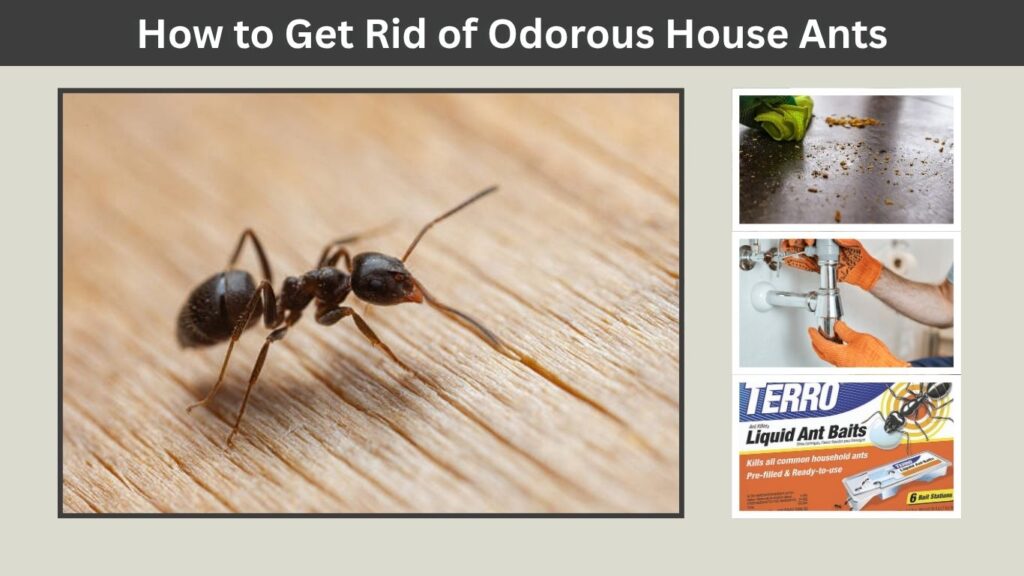
Getting rid of odorous house ants requires patience. The goal is not just to kill the ants you see, but to reach the colony. Baits are usually more effective than sprays because workers carry bait back to queens, larvae, and nestmates.
Follow these steps:
- Identify the ants before treatment.
- Track trails to find where ants are entering.
- Clean food spills and remove crumbs.
- Fix moisture problems and leaks.
- Place bait near active trails.
- Avoid spraying over bait trails.
- Seal cracks after activity decreases.
- Treat outdoor nesting areas if found.
Do not expect instant results. Good baiting may take several days or longer. If the trail disappears from one area and appears somewhere else, the colony may be shifting. Continue monitoring and avoid overusing repellent sprays.
Best Bait for Odorous House Ants
The best bait for odorous house ants depends on what they are feeding on at the time. They often prefer sweet liquid baits, but their needs can change. Sometimes they may accept protein or grease-based bait better than sugar bait.
Good baiting tips include:
- Place bait near trails, not in random corners.
- Use small amounts in several locations.
- Keep bait away from children and pets.
- Do not clean bait away too soon.
- Do not spray insecticide near bait.
- Replace dried or contaminated bait.
- Try a different bait type if ants ignore it.
Products containing borax or boric acid are common in ant baits, but concentration matters. Too strong a mixture may kill workers before they share it with the colony. Use labeled commercial bait products according to directions for safer and more reliable results.
How to Get Rid of Odorous House Ants Naturally
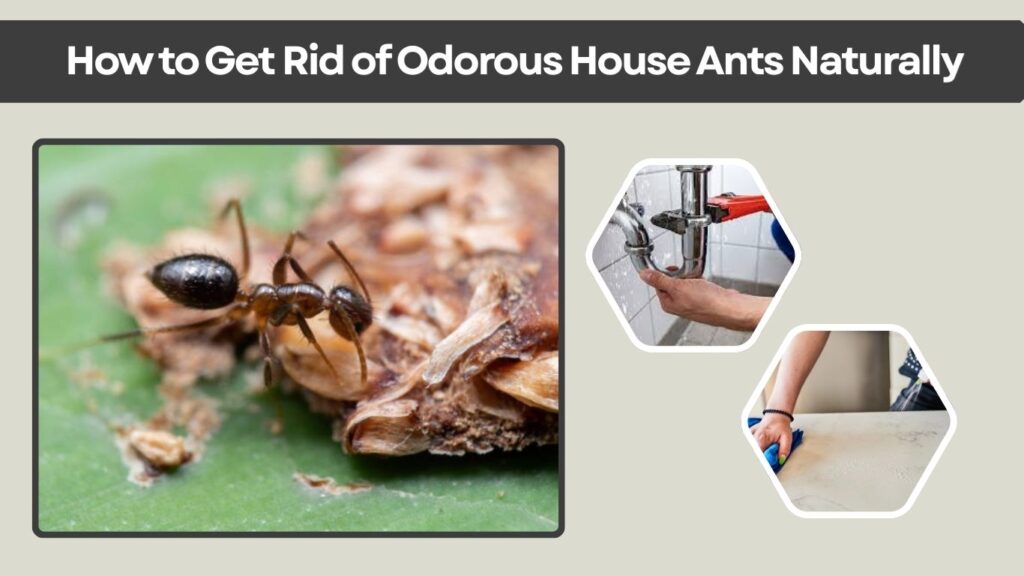
Natural control focuses on sanitation, exclusion, moisture reduction, and non-chemical prevention. These methods can reduce ant pressure, but heavy infestations may still require bait or professional treatment.
Natural steps include:
- Wipe counters daily.
- Store sugar and pantry foods in sealed containers.
- Rinse recycling and drink containers.
- Empty trash regularly.
- Fix leaking pipes and faucets.
- Remove damp cardboard and clutter.
- Seal gaps around windows, doors, and utilities.
- Keep mulch away from the foundation.
- Trim branches touching the house.
Vinegar or soapy water can help remove ant trails, but it will not kill the colony. Essential oils may repel ants temporarily, but they can also interfere with baiting and may not solve the root problem.
Odorous House Ant Control Near Me
For minor activity, DIY baiting and sanitation may be enough. For persistent infestations, ants in outlets, multiple indoor trails, or repeated seasonal problems, professional pest control may be the better option.
A good exterminator should inspect both inside and outside, identify the ant species, locate nesting areas, use bait where appropriate, and address entry points. Local searches such as “odorous house ant control near me” or “Kansas City odorous house ant exterminators” are usually from homeowners who have tried sprays but still see ants returning.
Professional help is especially useful when:
- Ants appear from electrical outlets
- Trails occur in several rooms
- DIY bait fails repeatedly
- Nests are hidden in walls
- Ants return every season
- You are unsure whether they are carpenter ants
Odorous House Ants vs Carpenter Ants
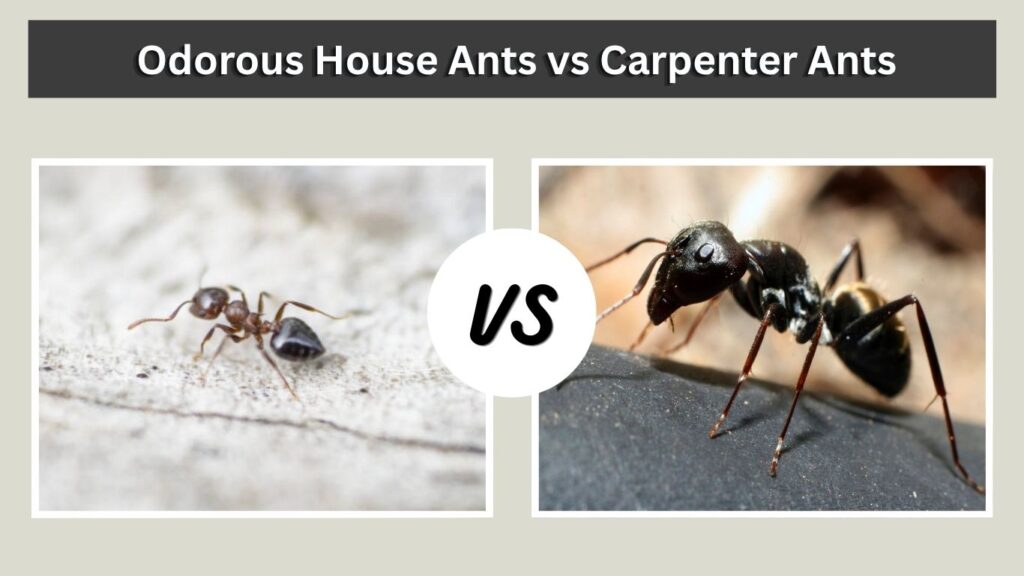
Odorous house ants and carpenter ants are very different. Carpenter ants are much larger and may nest in damp, damaged, or decaying wood. They do not eat wood like termites, but they can excavate galleries inside wood.
Odorous house ants are smaller and do not damage wood structurally. They are mainly food and moisture pests.
Key differences:
- Carpenter ants are larger.
- Odorous house ants smell when crushed.
- Carpenter ants may be linked with wood damage.
- Odorous house ants commonly trail to sweets.
- Carpenter ants may produce sawdust-like frass.
- Odorous house ants are more likely to form large indoor food trails.
If you see large black ants indoors, especially near damaged wood, get a proper inspection.
Odorous House Ants vs Sugar Ants, Pavement Ants, and Argentine Ants
“Sugar ant” is a casual name people use for many small ants attracted to sweets. Odorous house ants are often called sugar ants, but not every sugar-loving ant is an odorous house ant.
Pavement ants are also small and may nest near sidewalks, driveways, and foundations. Argentine ants are invasive in many areas and can form massive trails with multiple queens. Moisture ants, meanwhile, are often associated with damp wood and moisture problems.
The best clue for odorous house ants is the odor when crushed, along with small size, indoor trails, and attraction to sweets.
Are Odorous House Ants Dangerous?
Odorous house ants are not considered highly dangerous. They do not sting, are not known for serious bites, and do not eat wood. However, they can contaminate food and become a major nuisance when colonies spread through a home.
They are dangerous mainly in an indirect way: they indicate food access, moisture issues, or entry points that need attention. If they are emerging near outlets or plumbing, the hidden area may need inspection.
Odorous House Ant Facts
Odorous house ants are small, but their behavior makes them persistent pests. They can nest indoors or outdoors, form large colonies, follow chemical trails, and shift locations when disturbed.
Useful facts include:
- Their scientific name is Tapinoma sessile.
- They smell like rotten coconut or blue cheese when crushed.
- They are common across North America.
- They are attracted to sweets and moisture.
- They can have multiple queens.
- They may appear from wall voids or outlets.
- They do not sting.
- Bait usually works better than sprays.
- Moisture control helps prevent infestations.
- They are nuisance pests, not wood-destroying ants.
FAQs
How do I get rid of odorous house ants?
Use ant bait near active trails, clean up food sources, fix moisture problems, and seal entry points after activity drops. Avoid spraying visible ants because sprays may scatter the colony and interfere with bait. Persistent infestations may require professional inspection and treatment.
Do odorous house ants bite?
Odorous house ants can technically bite, but they rarely cause noticeable injury and do not sting. They are considered nuisance pests rather than dangerous biting ants. If you experience strong pain or swelling, another ant species or insect may be responsible.
What do odorous house ants smell like?
Odorous house ants release a strong smell when crushed. Many people describe it as rotten coconut, while others compare it to blue cheese, musty odor, or rancid butter. The smell is one of the most useful clues for identifying this species.
Where do odorous house ants nest?
They nest outdoors under rocks, mulch, logs, soil, and around foundations. Indoors, they may nest in wall voids, bathrooms, kitchens, insulation, around pipes, and near electrical outlets. Moisture, warmth, and food access make indoor spaces more attractive.
Are odorous house ants dangerous?
Odorous house ants are not highly dangerous. They do not sting, do not damage wood, and are not known as major disease spreaders. However, they can contaminate food, invade kitchens, and become difficult to control when colonies grow or split into multiple nesting sites.
