
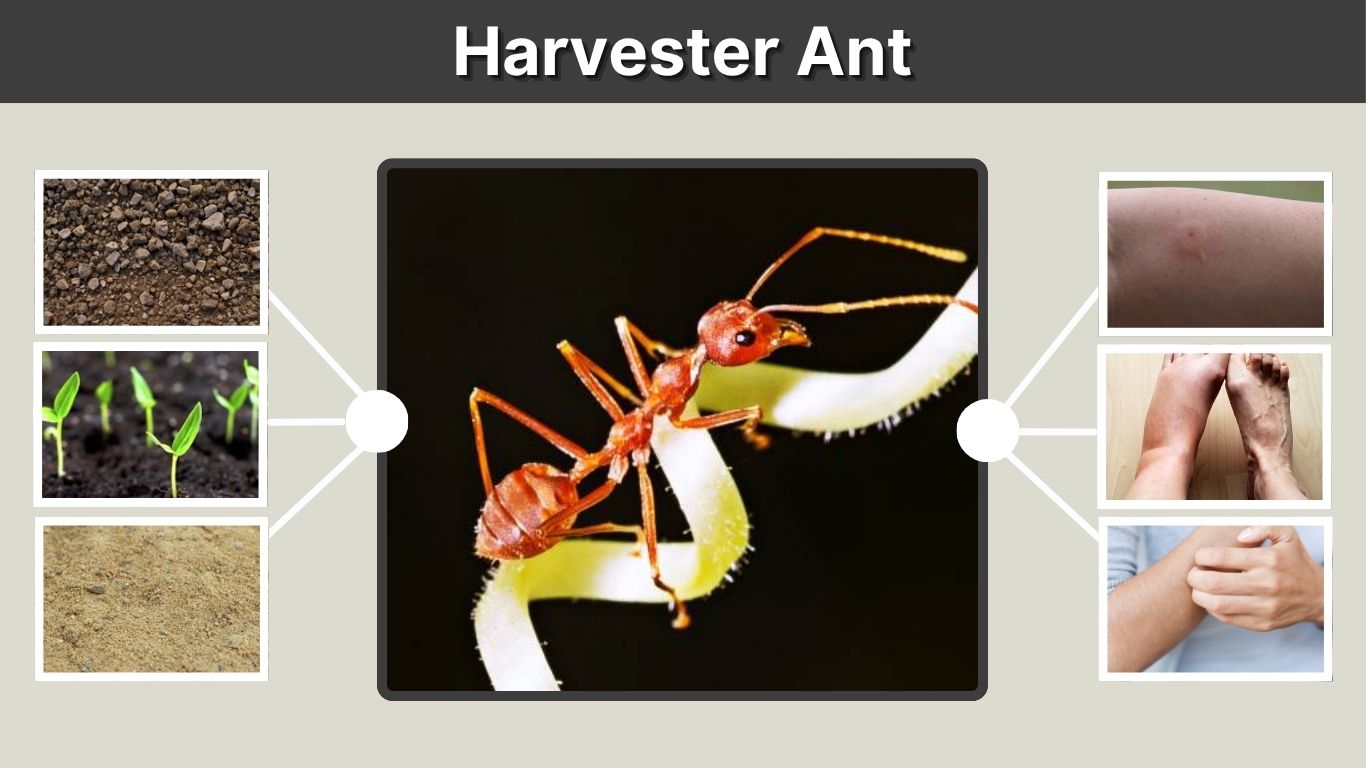
Harvester ants are ground-nesting ants known for collecting seeds, clearing open areas around their nests, and delivering painful stings when disturbed. They are common in dry, open habitats and play an important role in ecosystems by spreading seeds and improving soil. Although they are useful in nature, harvester ants can become a concern around yards, trails, gardens, farms, and places where people or pets may step near their nests.
What Is a Harvester Ant?
A harvester ant is a seed-collecting ant that belongs to several related ant groups. The name comes from their habit of harvesting seeds and storing them inside underground nests. These ants are especially common in grasslands, deserts, dry fields, open woodlands, and sandy areas.
Harvester ants are not the same as fire ants, carpenter ants, or household sugar ants. They usually live outdoors and build noticeable ground nests. Many species are larger than common house ants and may be red, brown, black, or a mix of colors.
Some harvester ants are famous for their painful sting. They are not usually aggressive far from the nest, but they defend their colony strongly if the nest is disturbed.
What Do Harvester Ants Look Like?
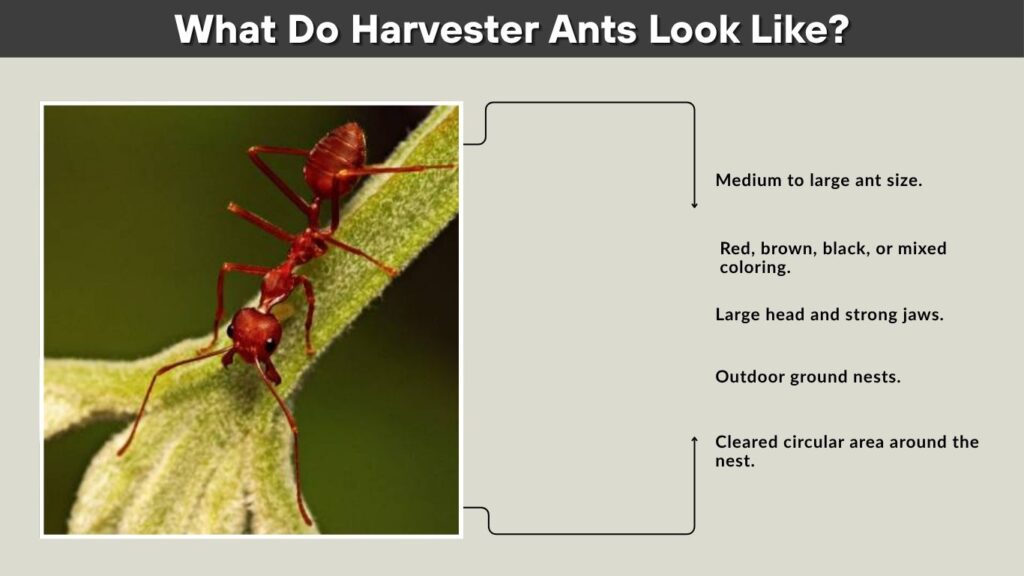
Harvester ants are usually medium to large ants with strong jaws and sturdy bodies. Many species are reddish-brown, orange-red, dark brown, or black. Their body color depends on the species and location.
They often have a rough or slightly hairy appearance compared with tiny indoor ants. Their workers may be seen carrying seeds, plant pieces, dead insects, or soil particles near the nest entrance.
Common Identification Signs
You may recognize harvester ants by:
- Medium to large ant size
- Red, brown, black, or mixed coloring
- Large head and strong jaws
- Outdoor ground nests
- Cleared circular area around the nest
- Seed husks or plant material near the entrance
- Ants moving in trails from the nest
- Painful sting when the colony is disturbed
Harvester ants are easiest to identify by their nest and behavior, not only by body color. Many ants look similar at first glance.
Harvester Ant Size and Appearance
Harvester ant size varies by species. Some workers are around a quarter inch long, while others may be larger. Queens are usually bigger than workers and remain inside the nest most of the time.
The body has the same basic ant structure: head, thorax, narrow waist, and abdomen. Harvester ants often look powerful because of their larger head and strong mandibles. These mandibles help them cut, carry, and process seeds.
| Feature | Harvester Ant Description |
|---|---|
| Common colors | Red, brown, black, orange-red, or mixed |
| Main food | Seeds, plant material, and sometimes insects |
| Nest type | Underground nest with open ground around it |
| Common habitat | Dry fields, deserts, grasslands, sandy soil |
| Defense | Bite and sting in many species |
| Main risk | Painful sting near disturbed nests |
| Home concern | Outdoor nests in yards, trails, or lawns |
| Ecological role | Seed movement, soil turnover, food for wildlife |
Where Do Harvester Ants Live?
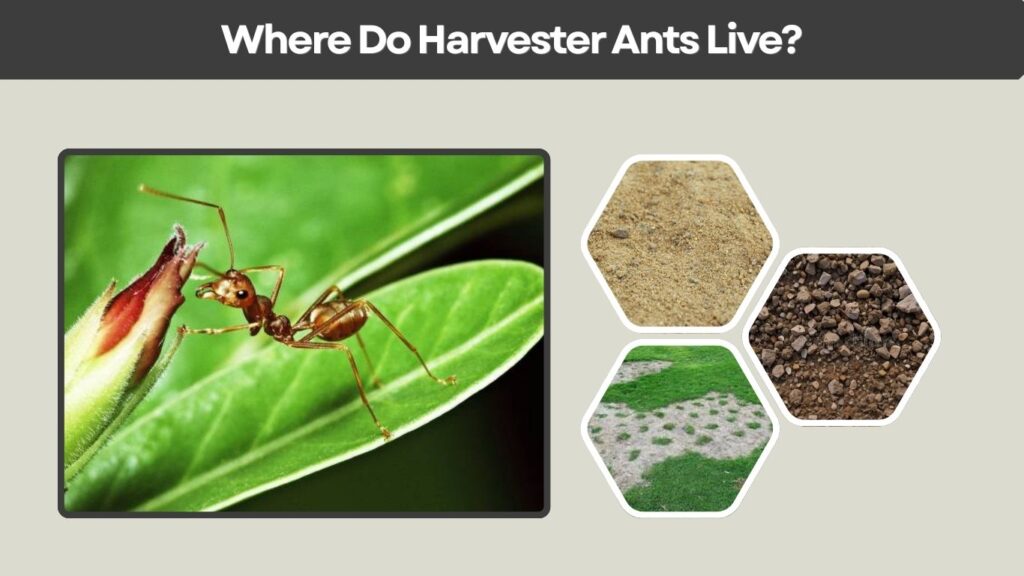
Harvester ants are most common in dry and open environments. They prefer places where seeds are available and soil is suitable for digging. Many species live in deserts and grasslands, while others may appear in fields, pastures, roadsides, lawns, and open yards.
Their nests are usually underground and may be deep. Some colonies create large cleared areas around the entrance by removing vegetation. This open space helps regulate nest temperature, reduce plant cover, and make it easier for ants to move.
Common Nesting Areas
Harvester ants may nest in:
- Sandy soil
- Gravelly soil
- Dry lawns
- Open fields
- Pastures
- Desert flats
- Roadsides
- Garden edges
- Trails
- Bare ground near plants
A nest may look like a bare circular patch with a hole or mound in the center. Some nests have seed husks or small debris scattered nearby.
What Do Harvester Ants Eat?
Harvester ants mainly eat seeds. They collect seeds from grasses, weeds, and other plants, then carry them back to the colony. Inside the nest, the seeds may be stored in underground chambers. Workers may remove seed husks and process the food for the colony.
Although seeds are their main food, some harvester ants may also eat dead insects or small arthropods. This extra protein can help support the colony, especially during growth.
Why Seed Collection Matters
Harvester ants affect the plant community around them. By collecting seeds, they influence which plants grow nearby. Some seeds are eaten, while others may be dropped or buried and later sprout. In this way, harvester ants can help shape desert and grassland ecosystems.
Harvester Ant Nest Behavior
Harvester ant colonies can be highly organized. Workers leave the nest to search for seeds, defend the entrance, clean the nest area, and care for the queen and young. The queen’s main role is egg-laying, while workers handle most daily colony tasks.
Nest activity often depends on temperature. In very hot climates, ants may be more active during cooler hours. In cooler weather, they may forage when the ground warms up. Rain, drought, and seasonal seed availability also affect activity.
Signs of an Active Nest
An active harvester ant nest may show:
- Ants entering and leaving a central hole
- Workers carrying seeds
- Cleared soil around the entrance
- Small piles of seed husks
- Ant trails moving outward
- Defensive ants gathering if the nest is disturbed
Avoid stepping on or digging into the nest. Many stings happen when people accidentally disturb a colony.
Harvester Ant Bite and Sting
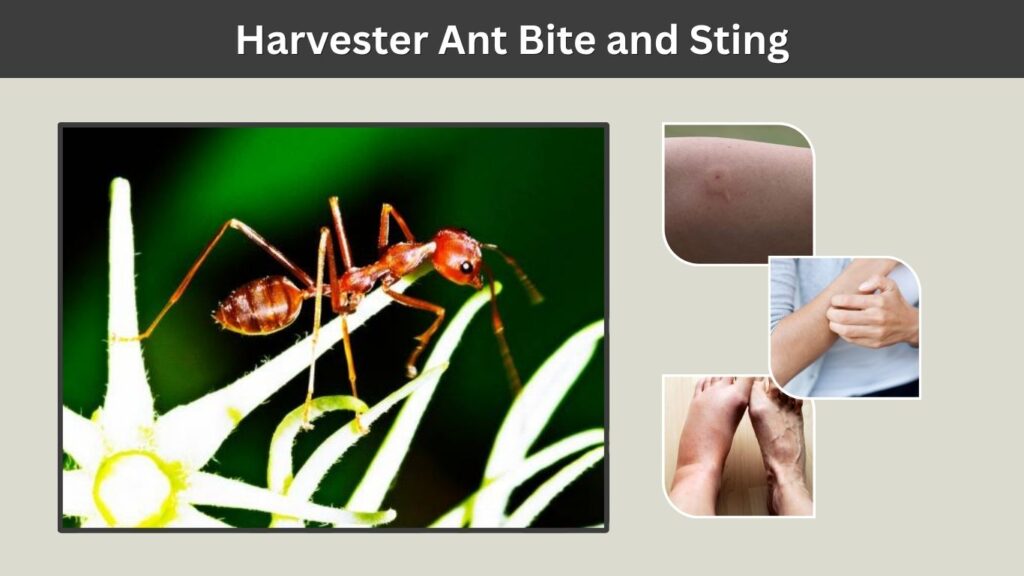
Harvester ants can bite, but the sting is usually the painful part. Some species grab the skin with their jaws and then sting. The sting can cause sharp pain, redness, swelling, itching, and tenderness.
The pain may last from minutes to hours depending on the species, number of stings, and the person’s sensitivity. Some people may develop more swelling or irritation than others.
Possible Sting Symptoms
A harvester ant sting may cause:
- Immediate burning or sharp pain
- Redness around the sting
- Swelling
- Itching
- Tenderness
- Small raised bump
- Warmth near the area
- Rare allergic reaction
Most stings are local and improve with basic care. However, multiple stings or allergic symptoms need more caution.
Are Harvester Ants Dangerous?
Harvester ants can be dangerous if a person or pet receives many stings or has an allergic reaction. For most healthy adults, a single sting is painful but not life-threatening. The risk is higher for children, pets, people with insect-sting allergies, and anyone who disturbs a large nest.
Pets may be stung on the paws, nose, mouth, or belly if they dig into a nest. Dogs may yelp, lick their paws, limp, or develop swelling.
When to Seek Help
Get medical help if a sting causes breathing trouble, dizziness, swelling of the face or throat, widespread hives, vomiting, fainting, or rapid worsening symptoms. These may be signs of a serious allergic reaction.
For pets, contact a veterinarian if there is facial swelling, repeated vomiting, weakness, breathing difficulty, or many stings.
Harvester Ants vs Fire Ants
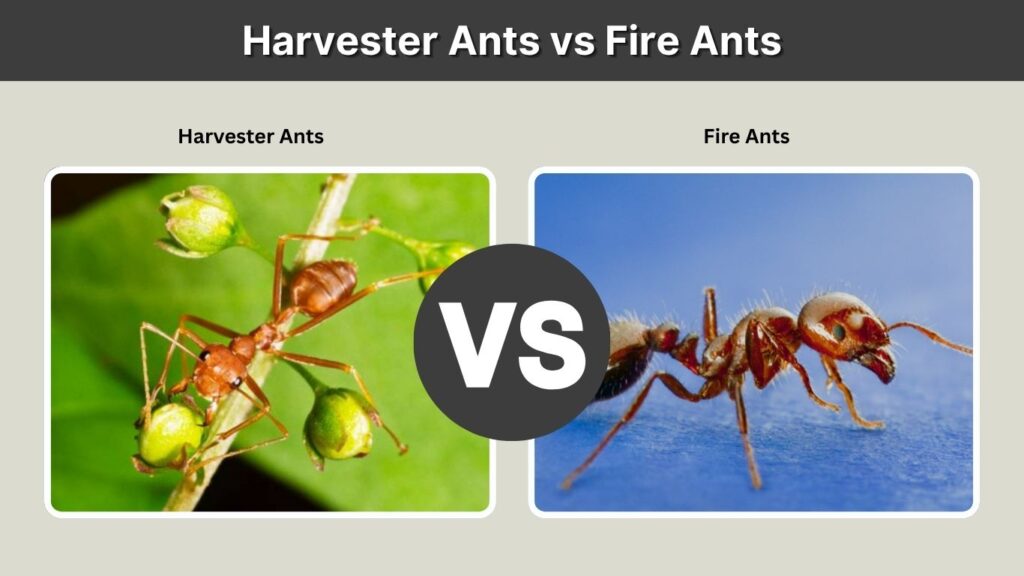
Harvester ants and fire ants are often confused because both can sting and both live in the ground. However, they are different ants with different nesting habits and behavior.
Fire ants often build mounds and may swarm aggressively when disturbed. Harvester ants usually have a more open cleared nest area and are strongly associated with seed collection. Harvester ants are often larger than many fire ant workers.
Simple Differences
Harvester ants are usually seen around bare ground nests with seed debris. Fire ants often create loose soil mounds and may attack in large numbers when the mound is disturbed. Both should be avoided, but correct identification matters for treatment.
Harvester Ants in the Yard
A harvester ant nest in a remote part of a property may not need treatment. These ants are useful in nature and help with soil movement, seed collection, and wildlife food webs. However, nests near patios, playgrounds, sidewalks, pet areas, or garden paths can be a safety concern.
The decision to control them depends on location and risk. If the nest is far from people and pets, leaving it alone may be the best choice. If someone could step on it or children play nearby, control may be needed.
Yard Safety Tips
To reduce sting risk:
- Mark nest areas clearly.
- Keep children away from nests.
- Do not let pets dig near colonies.
- Wear shoes outdoors.
- Avoid mowing directly over active nests.
- Do not disturb nests with sticks or tools.
- Move outdoor seating away from nest areas.
If nests are close to high-traffic areas, consider professional pest control.
How to Get Rid of Harvester Ants
Harvester ant control can be difficult because nests may be deep and colonies may be well protected. Random spraying may not reach the queen or nest chambers. Treatment should focus on the nest, not just visible foragers.
If you need to remove a nest, use products labeled for ants and follow all directions carefully. Some baits or mound treatments may work depending on the species and location. In sensitive areas, professional treatment is often safer.
Control Steps
A practical control plan may include:
- Confirming the ant species
- Locating the main nest entrance
- Keeping people and pets away
- Avoiding unnecessary disturbance
- Using labeled ant bait or nest treatment
- Treating during active foraging periods
- Monitoring for continued activity
- Calling a professional for large or risky nests
Do not pour gasoline, bleach, or harsh chemicals into nests. These methods are unsafe, may contaminate soil, and often do not solve the problem.
Natural Ways to Manage Harvester Ants
Natural management focuses on reducing conflict rather than wiping out every colony. Since harvester ants live outdoors and play a role in the ecosystem, removal is not always necessary.
You can create distance between people and nests by redirecting foot traffic, moving pet areas, and keeping play areas away from colonies. In some cases, improving lawn coverage may make the area less attractive, though harvester ants often prefer open ground.
Low-Risk Management Ideas
Try these approaches when possible:
- Leave remote nests alone.
- Create barriers around nest areas.
- Move garden paths away from nests.
- Keep grass healthier in high-use areas.
- Remove seed spills near patios.
- Avoid feeding birds directly over bare soil.
- Keep pets from digging in dry open patches.
These methods may not eliminate ants, but they can reduce sting risk.
Harvester Ants and the Ecosystem
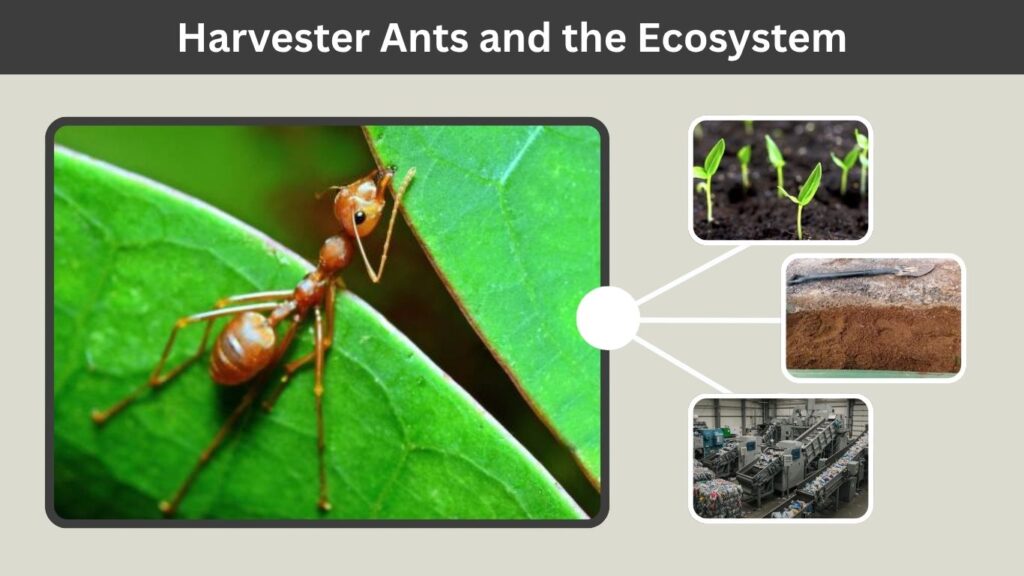
Harvester ants are important in many dry ecosystems. They collect seeds, mix soil, create underground tunnels, and provide food for other animals. Some lizards, birds, spiders, and mammals feed on harvester ants or benefit from their nest activity.
Their seed harvesting can influence plant growth. Their digging helps aerate soil and move nutrients. Although they can be pests around homes, they are not simply “bad” insects.
Why They Matter
Harvester ants help ecosystems by:
- Moving seeds
- Turning soil
- Feeding wildlife
- Recycling plant material
- Creating microhabitats
- Influencing plant communities
This is why control should be targeted only where nests create a real safety or property concern.
How to Prevent Harvester Ant Problems
You may not be able to prevent all harvester ants, especially in dry regions where they are native and common. However, you can reduce problems around living areas.
Keep outdoor food and seed sources controlled. Birdseed spills, grass seed, and plant debris can attract foraging ants. Maintain walkways, patios, and play areas so nests are noticed early. Teach children not to poke ant nests or stand near bare mound areas.
Prevention Checklist
Helpful prevention steps include:
- Clean spilled birdseed.
- Keep pet food indoors.
- Watch for bare circular nest patches.
- Wear shoes in dry open yards.
- Inspect play areas regularly.
- Keep trails away from nests.
- Avoid disturbing active colonies.
- Contact pest control for nests near people.
Prevention is mostly about awareness and reducing accidental contact.
FAQs
Do harvester ants bite or sting?
Harvester ants can bite and many species can sting. The sting is usually the most painful part and may cause burning, redness, swelling, and itching. Most single stings are not dangerous to healthy adults, but multiple stings or allergic symptoms need medical attention.
Are harvester ants dangerous to dogs?
Harvester ants can be dangerous to dogs if the dog steps on, digs into, or bites at a nest. Stings may occur on paws, nose, mouth, or belly. Watch for swelling, limping, drooling, vomiting, or weakness. Contact a veterinarian if symptoms are severe or there are many stings.
What attracts harvester ants?
Harvester ants are mainly attracted to seeds and dry open nesting areas. They collect grass seeds, weed seeds, and other plant material. Bare soil, sandy ground, seed spills, and open sunny spaces may support colonies. They are usually outdoor ants rather than indoor pantry pests.
Should I remove harvester ants from my yard?
You do not always need to remove harvester ants. If the nest is far from people and pets, it may be best left alone because these ants help the ecosystem. Removal is more reasonable when nests are near patios, play areas, sidewalks, pet spaces, or heavy foot traffic.
How do I control harvester ants safely?
First confirm the ant type and locate the nest. Keep people and pets away, then use a labeled ant bait or nest treatment according to directions. Avoid unsafe home remedies such as gasoline, bleach, or boiling chemicals. For large colonies or high-risk areas, call a pest control professional.
