
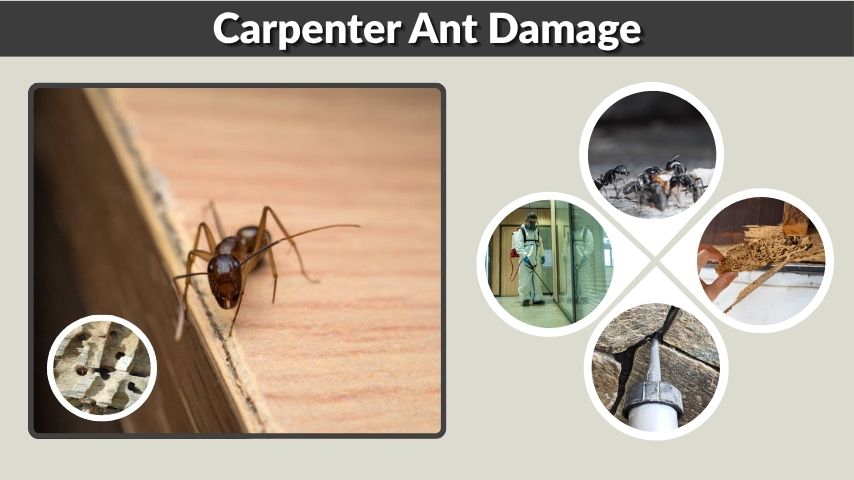
Carpenter ant damage is a serious concern for homeowners because it often develops quietly inside wood, walls, floors, decks, and trees. Unlike termites, carpenter ants do not eat wood. Instead, they tunnel through it to build nests and galleries. Over time, this activity can weaken wooden structures, especially when moisture problems already exist. Many people first notice carpenter ants when they see large black ants indoors, piles of sawdust-like debris, or winged ants near windows. Understanding the signs of carpenter ant damage early can help prevent expensive repairs and protect your home from long-term structural problems.
What Is Carpenter Ant Damage?
Carpenter ant damage happens when carpenter ants excavate wood to create nesting spaces. They prefer damp, soft, or decaying wood, but once a colony grows, they may also expand into dry wood nearby. Their tunnels are usually smooth and clean because they remove wood shavings rather than eating them.
This is one reason carpenter ants are different from termites. Termites consume wood for food, while carpenter ants remove wood to make room for the colony. Even though they do not eat wood, carpenter ants can still cause serious damage if the infestation is ignored.
Why Carpenter Ants Damage Wood
Carpenter ants need protected spaces for their colony. Wood provides shelter, warmth, and room for the colony to expand. Moist wood is especially attractive because it is easier for ants to tunnel through.
Common moisture sources include leaking roofs, damaged gutters, plumbing leaks, poor ventilation, wet crawl spaces, and rotting window frames. If these conditions are present, carpenter ants are more likely to establish a nest.
Where Carpenter Ant Damage Usually Happens
Carpenter ant damage can occur in many parts of a home. The most common areas include:
- Window frames and door frames
- Wall voids and baseboards
- Attics and rooflines
- Bathrooms and kitchens
- Crawl spaces and basements
- Decks, porches, and fences
- Wood floors and subfloors
- Trees, stumps, and logs near the house
Because carpenter ants often nest in hidden spaces, the damage may not be obvious until the colony becomes larger.
Signs of Carpenter Ant Damage in a House
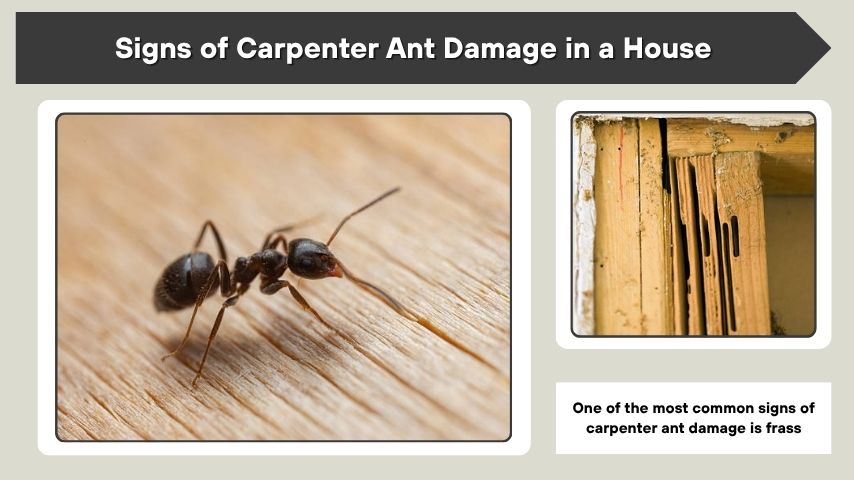
The early signs of carpenter ant damage can be subtle. You may see a few ants and assume they are harmless. However, repeated sightings indoors, especially large black ants, should not be ignored.
Sawdust-Like Frass
One of the most common signs of carpenter ant damage is frass. Frass looks like fine sawdust or wood shavings. Carpenter ants push this material out of their tunnels as they excavate wood.
You may find frass near baseboards, window sills, door frames, under cabinets, in basements, or around wooden beams. Sometimes it contains tiny insect parts or debris from the nest.
Large Black or Reddish Ants Indoors
Carpenter ants are usually larger than many household ants. They may be black, reddish-black, brown, or a mix of colors. Seeing one ant indoors does not always mean there is damage, but repeated sightings can indicate a nest nearby.
Worker ants are often seen searching for food at night. If you notice ants moving along the same path repeatedly, they may be traveling between a food source and a hidden nest.
Winged Carpenter Ants
Winged carpenter ants are another warning sign. These ants are reproductive swarmers that leave a mature colony to mate and start new colonies. If you see flying carpenter ants indoors, especially more than once, it may mean a colony is already established inside the home.
Discarded wings near windows, doors, or light fixtures can also suggest carpenter ant activity.
Rustling Sounds in Walls
In some infestations, homeowners hear faint rustling sounds inside walls, ceilings, or wooden structures. These sounds may come from ants moving through tunnels. This sign is more noticeable at night when the house is quiet.
Soft or Hollow-Sounding Wood
Wood damaged by carpenter ants may sound hollow when tapped. It may also feel soft, weak, or spongy if moisture damage is present. In advanced cases, trim, floors, or beams may show visible weakening.
Carpenter Ant Damage vs Termite Damage
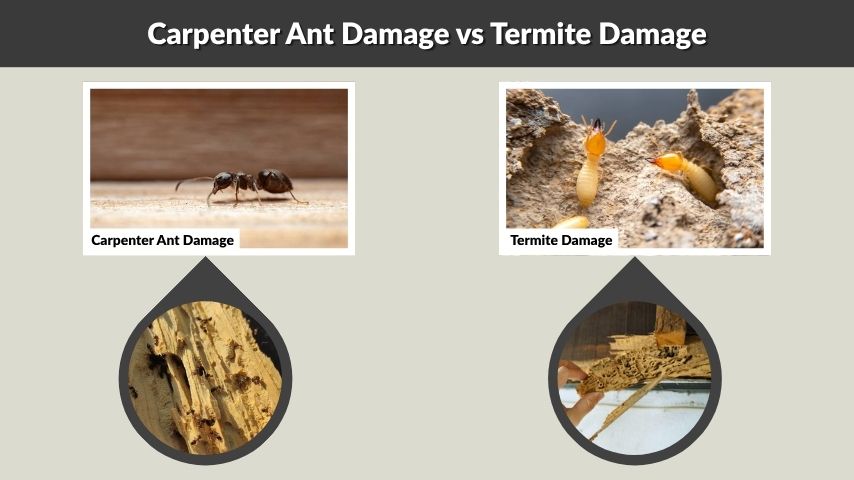
Many homeowners search for carpenter ant damage vs termite damage because both pests are associated with wood problems. However, the type of damage they cause is different.
| Feature | Carpenter Ant Damage | Termite Damage |
| Cause | Ants tunnel through wood to build nests | Termites eat wood for food |
| Tunnel appearance | Smooth, clean galleries | Muddy or layered galleries |
| Debris | Sawdust-like frass may be visible | Usually little or no sawdust |
| Moisture link | Often starts in damp or decaying wood | Can attack wood with or without obvious moisture |
| Insect appearance | Pinched waist, bent antennae | Straight body, straight antennae |
| Winged insects | Front wings usually longer than back wings | Wings are usually equal length |
Which Is Worse: Termites or Carpenter Ants?
Termites are often considered more destructive because they eat wood continuously. However, carpenter ants can still cause significant structural damage over time, especially if the colony is large or the nest is hidden inside the house.
The safest approach is to identify the pest quickly and treat the source of the problem. Waiting too long can allow either pest to cause expensive damage.
How Much Damage Can Carpenter Ants Do?
The amount of damage carpenter ants can cause depends on the size of the colony, how long it has been active, and where the nest is located. A small outdoor colony may cause little concern. A large indoor colony inside wall voids, beams, or floor joists can become a serious problem.
Carpenter ants usually damage wood more slowly than termites, but that does not mean they are harmless. If moisture-damaged wood is already weak, carpenter ants can make the problem worse.
Can Carpenter Ants Cause Structural Damage?
Yes, carpenter ants can cause structural damage if the infestation continues for a long time. They may weaken wood by hollowing it out for nesting galleries. This is especially concerning in support beams, floor joists, wall studs, roof structures, decks, and porches.
Structural damage is more likely when carpenter ants are ignored for months or years.
How Long Does It Take Carpenter Ants to Cause Damage?
There is no exact timeline because every infestation is different. Damage may take months or years to become serious. The process depends on colony size, moisture conditions, and how much wood the ants are excavating.
A mature colony with satellite nests can cause more damage than a small new colony. If you are seeing winged ants indoors, the colony may already be well established.
Carpenter Ant Damage to Wood, Drywall, Floors, and Decks
Carpenter ants mainly target wood, but their activity can affect nearby materials too. For example, ants may travel behind drywall or use wall voids as pathways. The drywall itself is not usually their main target, but damage behind it may be hidden.
Carpenter Ant Wood Damage
Carpenter ant wood damage often appears as hollowed-out galleries. The tunnels are usually smooth and clean, almost as if they were sanded. This is different from termite damage, which often contains mud, soil, or rough material.
Wood damage may be found in trim, framing, subfloors, window frames, and areas affected by leaks.
Carpenter Ant Drywall Damage
Carpenter ants do not usually feed on drywall, but they may move through gaps behind it. If ants are nesting in wall studs or damp wood behind drywall, you may see ants entering through cracks, outlets, baseboards, or small openings.
In some cases, drywall may show stains or softness because of the moisture problem that attracted the ants.
Carpenter Ant Wood Floor Damage
Wood floors can be affected if there is moisture beneath them. Carpenter ants may damage subflooring, floor joists, or wood near leaking doors and windows. Signs may include soft spots, creaking, hollow sounds, or visible ant activity near the floor.
Carpenter Ant Deck and Fence Damage
Decks, fences, porches, and outdoor stairs are vulnerable because they are exposed to rain and moisture. Carpenter ants may nest in rotting boards, railings, posts, and support structures.
If the wood feels soft, cracks easily, or produces sawdust-like debris, carpenter ants may be part of the problem.
Carpenter Ant Tree Damage
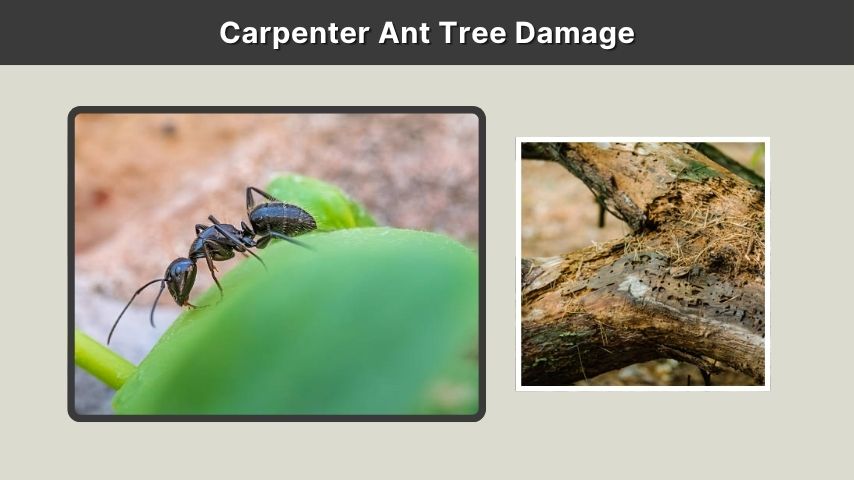
Carpenter ants are often found in trees, especially trees with decay, cavities, or dead branches. They usually do not attack healthy wood first. Instead, they take advantage of existing rot or damage.
Do Carpenter Ants Damage Trees?
Carpenter ants can worsen existing tree damage by expanding tunnels inside decayed areas. However, their presence often means the tree already has internal decay or moisture problems.
If you see carpenter ants moving in and out of a tree, stump, or log, inspect the tree carefully. A tree with large cavities or weak branches may become a safety risk.
Can Tree Nests Lead to House Infestations?
Yes. Carpenter ants nesting in trees, stumps, logs, or firewood near the home may eventually enter the house while searching for food or nesting space. Branches touching the roof or siding can act like bridges.
To reduce risk, trim branches away from the home and remove dead wood from the yard.
How to Inspect for Carpenter Ant Damage
A good inspection helps you find the source of the infestation. Killing visible ants is not enough because the main colony may be hidden.
Check Moisture-Prone Areas
Start with areas where water problems are common. Inspect around sinks, bathtubs, dishwashers, washing machines, roof leaks, windows, doors, and basement walls.
Look for soft wood, stains, mold, peeling paint, or swelling. These signs often point to moisture damage that may attract carpenter ants.
Look for Ant Trails at Night
Carpenter ants are often more active at night. Use a flashlight to follow worker ants. They may lead you toward a nest, food source, or entry point.
Watch where they disappear. Common entry points include cracks, utility openings, baseboards, vents, and gaps around pipes.
Tap and Probe Wood
Tap suspicious wood and listen for hollow sounds. Use a screwdriver or similar tool to gently test soft spots. Be careful not to damage structural areas unnecessarily.
If the wood breaks apart easily or contains smooth tunnels, carpenter ant damage may be present.
How to Get Rid of Carpenter Ants and Stop Damage
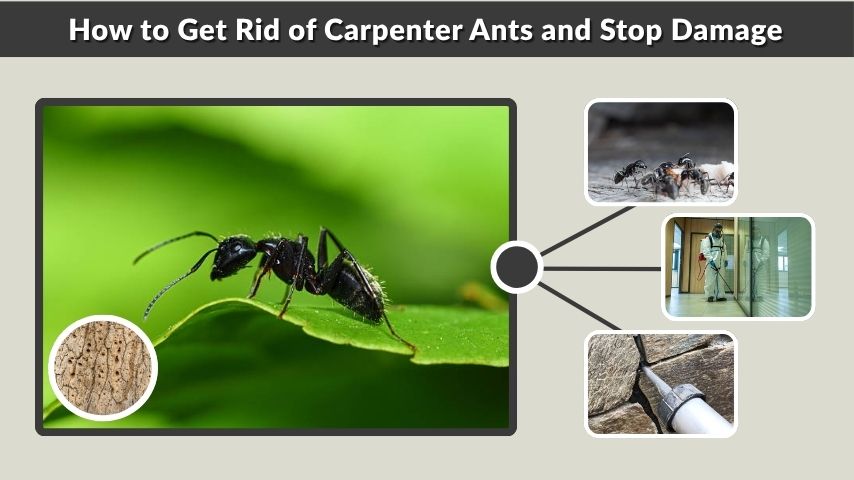
To stop carpenter ant damage, you need to eliminate the colony and correct the conditions that attracted it.
Remove Moisture Problems
Moisture control is one of the most important steps. Fix leaks, improve ventilation, clean gutters, and repair damaged flashing. Replace rotting wood when needed.
If moisture remains, carpenter ants may return even after treatment.
Use Carpenter Ant Bait
Bait can be effective because worker ants carry it back to the colony. However, bait must be placed where ants are actively foraging. Avoid using repellent sprays near bait because sprays can cause ants to avoid the area.
Different colonies may prefer sweet or protein-based bait depending on the season, so baiting may require patience.
Treat the Nest
The most effective treatment targets the nest directly. If the nest is inside a wall, ceiling, or structural wood, professional help may be needed. Pest control professionals can identify nest locations and choose appropriate treatments.
Seal Entry Points
Seal cracks around windows, doors, siding, pipes, vents, and foundation openings. Keep tree branches and shrubs away from the house. Store firewood away from exterior walls and keep it elevated.
Repairing Carpenter Ant Damage
Repairing carpenter ant damage should happen after the infestation is controlled. If you repair the wood before eliminating the colony, ants may continue damaging the new material.
Step 1: Confirm the Colony Is Gone
Before repairs, make sure ant activity has stopped. Continue monitoring for worker ants, frass, and winged ants. If activity returns, the colony may still be active.
Step 2: Remove Damaged Wood
Badly damaged or rotted wood should be removed and replaced. This may include trim, framing, deck boards, porch posts, or subflooring.
For structural components, hire a qualified contractor. Structural repairs must be done safely.
Step 3: Fix the Moisture Source
Repairing wood without fixing moisture is a temporary solution. Find and correct the leak, drainage problem, or ventilation issue that allowed the damage to begin.
Step 4: Prevent Future Infestations
After repairs, keep the area dry and sealed. Inspect the home regularly, especially after heavy rain or plumbing issues.
Is Carpenter Ant Damage Covered by Homeowners Insurance?
In many cases, homeowners insurance does not cover carpenter ant damage because pest damage is often considered preventable maintenance. However, coverage depends on the policy and the cause of the damage.
For example, if ants were attracted because of a sudden covered water event, there may be some related coverage, but this varies. Always check your policy and speak with your insurance provider.
Do not assume carpenter ant damage is covered. Document the damage, take photos, and get inspection reports if needed.
FAQs
What does carpenter ant damage look like?
Carpenter ant damage often looks like smooth, hollow tunnels inside wood. You may also see sawdust-like frass near baseboards, windows, doors, or wooden structures. The outside of the wood may look normal while the inside is hollowed out.
Do carpenter ants damage houses?
Yes, carpenter ants can damage houses by tunneling through wood to create nests. They are especially attracted to damp or decaying wood. If left untreated, a large colony can weaken structural wood over time.
How can you tell carpenter ant damage from termite damage?
Carpenter ant tunnels are usually smooth and clean, with sawdust-like debris nearby. Termite damage often has muddy, rough galleries because termites eat wood and use soil or waste in their tunnels.
Can carpenter ants damage trees?
Yes, carpenter ants can live in trees and expand tunnels in decayed areas. Their presence often means the tree already has rot or internal damage. Large damaged trees should be inspected for safety.
Should I repair carpenter ant damage myself?
Small cosmetic repairs may be manageable after the ants are gone. However, structural damage should be inspected and repaired by a professional. Always eliminate the colony and fix moisture problems before replacing damaged wood.
