
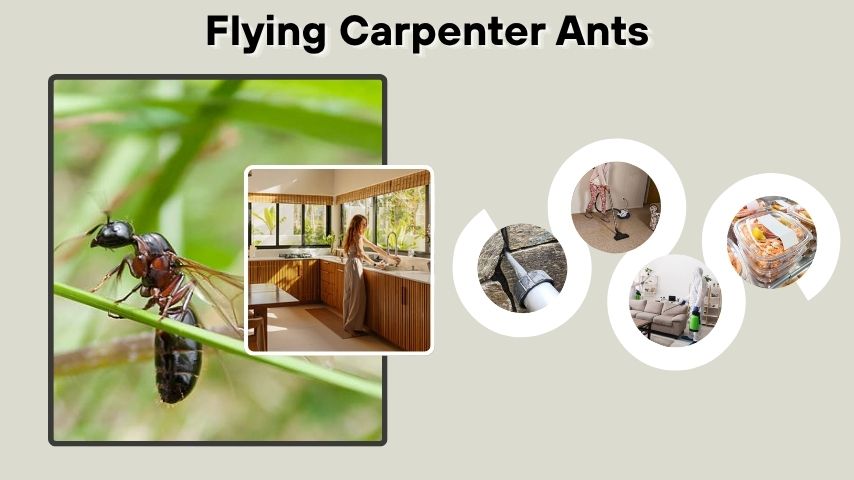
Flying carpenter ants can be alarming, especially when they suddenly appear near windows, lights, bathrooms, kitchens, or wooden areas inside the home. These winged ants are not a separate species; they are reproductive carpenter ants, also called swarmers. Their job is to leave an established colony, mate, and start new colonies elsewhere. Seeing one or two may not always mean a serious problem, but repeated sightings indoors can be a warning sign of a hidden carpenter ant nest, moisture-damaged wood, or an active infestation that needs attention.
What Are Flying Carpenter Ants?
Flying carpenter ants are mature male and female carpenter ants that develop wings during certain times of the year. These winged ants leave the nest in a swarm to reproduce. After mating, the males die, while fertilized queens shed their wings and search for a suitable nesting site.
Carpenter ants are known for tunneling through wood. Unlike termites, they do not eat wood. Instead, they excavate it to create smooth galleries where the colony can live and expand.
Why Do Carpenter Ants Grow Wings?
Carpenter ants grow wings when the colony is mature enough to produce reproductive ants. This usually means the colony has been active for some time. The winged ants are produced to spread the colony to new locations.
A carpenter ant colony does not usually produce swarmers immediately. If you are seeing flying carpenter ants inside your house, it may suggest that a colony nearby or inside your home has already developed.
Are Flying Carpenter Ants Different From Regular Carpenter Ants?
They are the same type of ant, but they have a different role. Regular worker carpenter ants search for food, care for the colony, and expand tunnels. Flying carpenter ants are reproductive ants. Their purpose is to mate and begin new colonies.
Once a queen mates, she loses her wings. This is why you may sometimes find small piles of discarded wings near windowsills, doors, baseboards, or light fixtures.
Why Do Flying Ants Suddenly Appear?
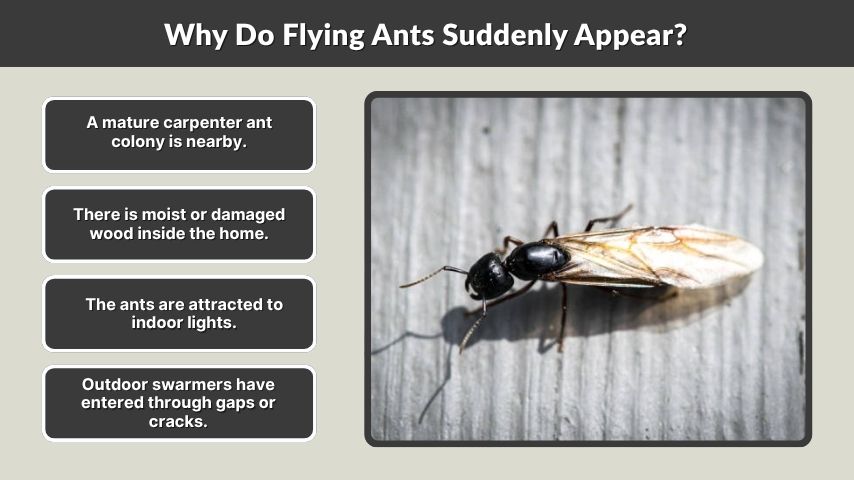
Flying carpenter ants often appear suddenly because swarming happens in groups. A colony may release many winged ants at once when the conditions are right. This can make it seem like they came out of nowhere.
Swarming is commonly triggered by warmth, humidity, seasonal changes, and maturity of the colony. Indoors, heating systems can sometimes confuse ants and cause swarmers to emerge earlier than expected.
Common Reasons Flying Carpenter Ants Appear
Flying carpenter ants may suddenly show up because:
- A mature carpenter ant colony is nearby.
- There is moist or damaged wood inside the home.
- The ants are attracted to indoor lights.
- Outdoor swarmers have entered through gaps or cracks.
- A hidden nest exists in walls, ceilings, crawl spaces, or attics.
If the ants appear only once and near an open door or window, they may have flown in from outside. But if they keep appearing indoors, especially in the same room, a nest may be inside the structure.
When Are Flying Carpenter Ants Most Active?
Flying carpenter ants are most common in spring and early summer, although indoor infestations can produce swarmers at other times. In warm indoor spaces, they may appear during winter or early spring because the colony is protected from outdoor temperatures.
They are often noticed in the evening because many flying ants are attracted to light. You may find them near lamps, windows, porch lights, or bright screens.
Flying Carpenter Ants Size and Appearance
Flying carpenter ants are usually larger than many other household ants. Their size can vary depending on whether they are male or female and the specific carpenter ant species. In general, carpenter ants are among the larger ants found around homes.
Most flying carpenter ants are black, dark brown, reddish-black, or a combination of red and black. They have a narrow waist, bent antennae, and two pairs of wings.
How Big Are Flying Carpenter Ants?
Flying carpenter ants are commonly about 1/4 inch to 1/2 inch long. Queens may be larger. Their wings can make them look even bigger, especially when they are crawling on windows or walls.
Size alone should not be the only way to identify them because termites and other flying ants may look similar from a distance. Body shape, antennae, waist, and wing length are more reliable signs.
Carpenter Ants With Wings vs Termites
Many people confuse winged carpenter ants with termites. This is important because both can be connected to wood damage, but they behave differently and require different treatment.
| Feature | Flying Carpenter Ants | Winged Termites |
| Waist | Narrow, pinched waist | Broad, straight waist |
| Antennae | Bent or elbowed | Straight |
| Wings | Front wings longer than back wings | Wings are equal length |
| Body color | Often black, brown, or reddish-black | Often pale brown, tan, or dark depending on type |
| Wood damage | Tunnel through wood but do not eat it | Eat cellulose in wood |
| Frass/dust | May leave sawdust-like debris | Usually no sawdust piles like carpenter ants |
The easiest visual difference is the body shape. Carpenter ants have a clearly pinched waist, while termites have a more uniform body shape.
Are Flying Carpenter Ants Dangerous?
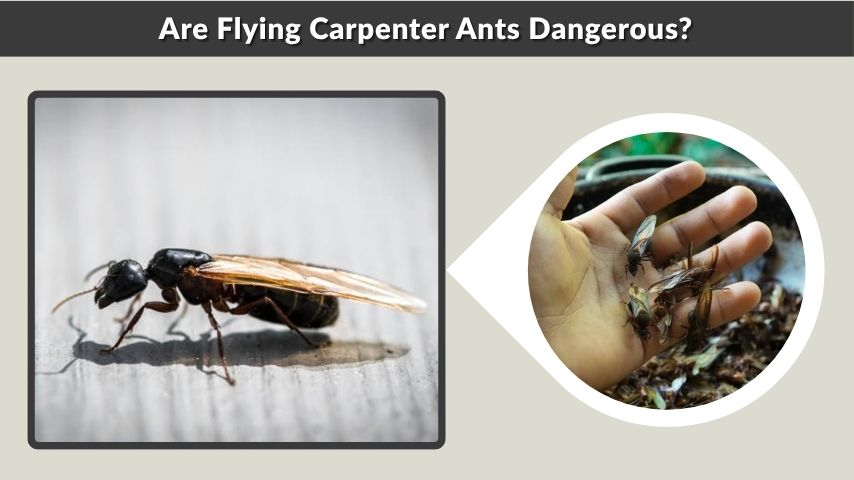
Flying carpenter ants are not usually dangerous to people, but they can be a warning sign for property damage. The biggest concern is not the flying ants themselves. The concern is the hidden colony that may be tunneling through wood.
Carpenter ants prefer damp or softened wood, but they can also extend into dry wood after a colony becomes established. Over time, their tunneling can weaken wooden structures, trim, beams, wall voids, window frames, and other areas.
Do Flying Carpenter Ants Bite?
Yes, carpenter ants can bite, including winged carpenter ants. However, they are not aggressive like some stinging insects. They usually bite only when handled, trapped, or threatened.
A carpenter ant bite may feel like a sharp pinch. It can cause mild redness or irritation, but it is not usually serious for most people. Carpenter ants do not sting like wasps or fire ants.
Are Flying Carpenter Ants Harmful to Homes?
They can be harmful if they are connected to a colony inside the structure. Carpenter ants do not consume wood like termites, but their galleries can still create damage over time.
The risk is higher when the home has:
- Leaky pipes or roof leaks
- Poor ventilation
- Damp crawl spaces
- Rotting window frames
- Moisture-damaged decks or porches
- Firewood stored too close to the house
- Tree branches touching the roof or siding
Moisture control is one of the most important steps in preventing carpenter ant problems.
Why Are Flying Carpenter Ants in the House?
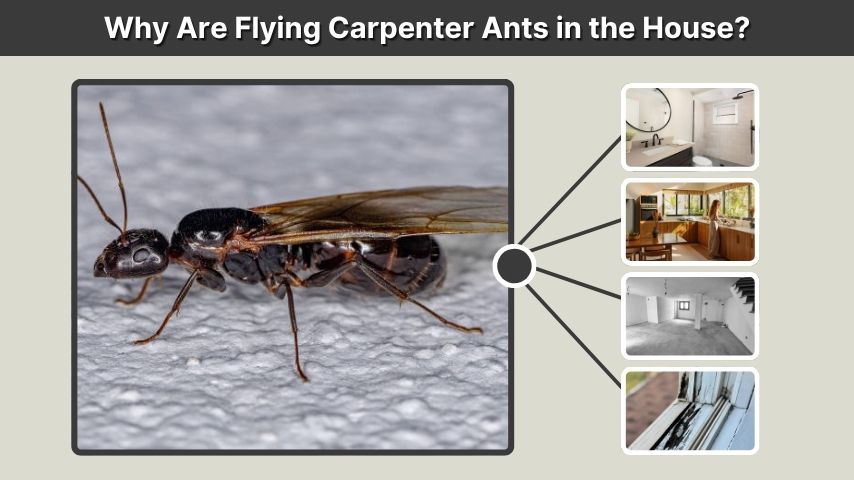
Winged carpenter ants in the house can mean two things: they either came from outside, or they emerged from a nest inside. The difference matters.
If they are near an open door, window, or porch light, they may have entered from outdoors. But if you find them in multiple rooms, near walls, or appearing repeatedly, the colony may be inside.
Common Indoor Nesting Areas
Carpenter ants often nest in areas where wood has been softened by moisture. Indoors, they may be found near:
- Bathrooms
- Kitchens
- Laundry rooms
- Attics
- Basements
- Crawl spaces
- Window frames
- Wall voids
- Roof leaks
- Door frames
- Areas around plumbing
They may also nest in foam insulation, hollow doors, or voids behind walls, especially if there is nearby moisture.
Signs of a Carpenter Ant Infestation
Flying ants are one sign, but they are not the only clue. You may also notice sawdust-like material called frass. This material may include wood shavings, insect parts, and debris pushed out from the tunnels.
Other signs include faint rustling sounds inside walls, large black ants moving at night, trails near food or moisture sources, and repeated sightings in the same area.
Are Flying Carpenter Ants Attracted to Light?
Yes, flying carpenter ants are often attracted to light. This is why they may gather near windows, lamps, outdoor lights, and glass doors. At night, porch lights can draw swarmers from outside toward the home.
Indoor swarmers may also move toward windows because they are trying to escape toward natural light. This is why homeowners often find dead or trapped winged ants on windowsills.
How to Reduce Light Attraction
You can reduce flying ant activity around lights by:
- Turning off unnecessary outdoor lights during swarm season
- Using yellow or warm-toned exterior bulbs
- Keeping window screens repaired
- Closing curtains or blinds at night
- Sealing gaps around doors and windows
- Moving firewood and debris away from the home
These steps help reduce entry, but they will not solve an indoor nest. If ants are emerging from inside the structure, the colony must be located and treated.
How to Get Rid of Carpenter Ants With Wings
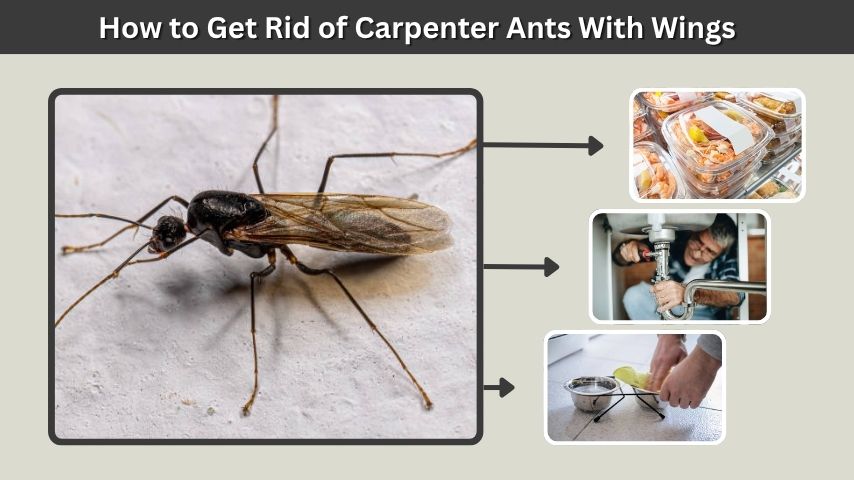
Getting rid of flying carpenter ants requires more than killing the ants you see. Swarmers are only part of the problem. If a colony is present, the nest must be found and removed or treated.
Spraying visible ants may provide temporary relief, but it often fails to eliminate the colony. The best approach is inspection, moisture correction, entry sealing, and targeted treatment.
Step 1: Confirm the Insect
Before treatment, make sure you are dealing with carpenter ants and not termites. Look at the waist, antennae, and wings. If you are unsure, collect a sample in a small container or take a clear photo for identification.
This matters because termite control and carpenter ant control are different. Misidentifying the insect can waste time and allow damage to continue.
Step 2: Find Where They Are Coming From
Watch where the ants appear. Check windowsills, baseboards, bathrooms, kitchens, attic areas, crawl spaces, and damp wood. Look for small piles of frass or ant activity at night.
Carpenter ants are often more active after dark. Using a flashlight, you may be able to follow worker ants back toward a wall void, trim area, pipe opening, or exterior entry point.
Step 3: Remove Food and Water Sources
Carpenter ants need food and moisture. Cleaning and moisture control make your home less attractive.
Helpful steps include:
- Wipe up sugary spills and crumbs.
- Store food in sealed containers.
- Fix leaking pipes and faucets.
- Improve ventilation in damp areas.
- Remove standing water.
- Keep pet food bowls clean.
- Empty trash regularly.
This will not always eliminate an established colony, but it helps reduce activity and supports long-term prevention.
Step 4: Fix Moisture and Damaged Wood
Moisture is one of the biggest carpenter ant attractants. If you ignore moisture problems, ants may return even after treatment.
Repair roof leaks, plumbing leaks, damaged flashing, clogged gutters, and rotting wood. Replace wood that is badly decayed. Improve drainage around the foundation and make sure gutters direct water away from the house.
Step 5: Seal Entry Points
Outdoor carpenter ants can enter through small gaps. Seal cracks around doors, windows, utility lines, vents, siding, and foundation openings.
Trim tree branches and shrubs so they do not touch the house. Carpenter ants often travel from trees, stumps, fences, decks, and firewood into homes.
Step 6: Use Baits or Professional Treatment
Carpenter ant bait can work when worker ants carry it back to the colony. However, bait success depends on using the right product and placing it where ants are actively foraging.
Avoid spraying repellents near bait because this can stop ants from taking the bait. For serious infestations, repeated indoor swarms, or suspected wall nests, professional pest control is often the most effective option.
Natural Ways to Reduce Flying Carpenter Ants
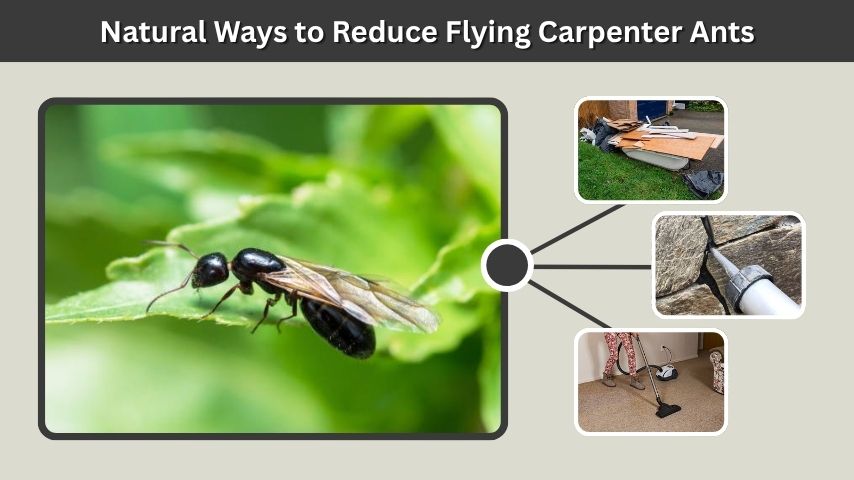
Natural methods may help reduce activity, but they are usually not enough for a large hidden colony. Still, they can support prevention and make your home less attractive.
Helpful Natural Prevention Methods
You can try:
- Removing damp wood around the home
- Keeping firewood elevated and away from walls
- Cleaning food residue
- Using a dehumidifier in damp rooms
- Repairing leaks quickly
- Sealing gaps and cracks
- Vacuuming visible swarmers
Vacuuming flying ants is a simple way to remove them indoors. Empty the vacuum outside afterward. This removes the visible ants but does not treat the nest.
Be Careful With DIY Sprays
Many DIY sprays kill ants on contact, but they rarely solve the source of the problem. Spraying random areas can scatter ants and make the colony harder to locate.
If you use any product, follow the label carefully. Never apply pesticides in a way that is unsafe for children, pets, food areas, or indoor air quality.
How to Prevent Flying Carpenter Ants From Returning
Prevention focuses on making the home dry, sealed, and less attractive to carpenter ants. Since carpenter ants are strongly linked to moisture and wood conditions, regular maintenance is important.
Outdoor Prevention Tips
Keep the area around your home clear and dry. Remove dead stumps, logs, and rotting wood. Store firewood at least several feet away from the house and keep it off the ground.
Trim trees and shrubs so they do not touch the roof or siding. Carpenter ants can use branches as bridges into the home.
Indoor Prevention Tips
Inside the home, control moisture and keep food sources sealed. Pay attention to bathrooms, kitchens, laundry rooms, and basements. These areas often provide both moisture and shelter.
Check windows and doors for soft wood. If wood feels spongy, cracked, or damp, repair the moisture source and replace damaged material.
When Should You Call a Professional?
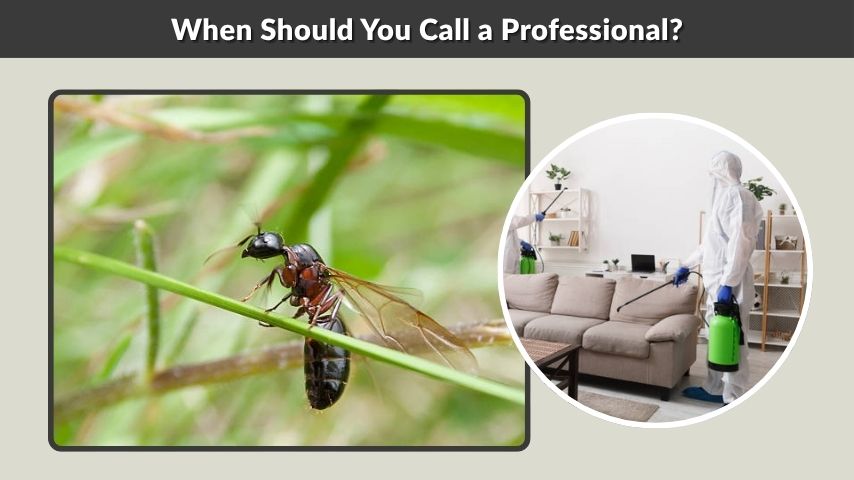
You should consider calling a pest control professional if flying carpenter ants keep appearing indoors, if you find frass, or if you suspect a nest inside walls. Professional inspection can help locate hidden colonies and identify whether there are satellite nests.
Carpenter ant colonies can be difficult to eliminate because the main colony may be outdoors while satellite colonies are indoors. Treating only the visible ants may not solve the larger problem.
Strong Signs You Need Help
Call a professional if:
- Winged carpenter ants appear indoors repeatedly.
- You find piles of sawdust-like frass.
- Ants are coming from walls, ceilings, or baseboards.
- You hear faint rustling inside walls.
- There is moisture-damaged wood.
- DIY treatment has not worked.
- You are unsure whether the insects are ants or termites.
A professional can also check for structural conditions that may be attracting the ants.
FAQs
Why do flying carpenter ants suddenly appear?
Flying carpenter ants suddenly appear when a mature colony releases winged reproductive ants to mate and start new colonies. This usually happens during warm, humid conditions. If they appear indoors repeatedly, it may mean a colony is nesting inside or near your home.
Do flying carpenter ants bite?
Yes, flying carpenter ants can bite, but they usually do so only when threatened or handled. Their bite may feel like a sharp pinch and can cause mild irritation. They do not sting like wasps or fire ants.
Are flying carpenter ants dangerous?
Flying carpenter ants are not usually dangerous to people, but they can signal a wood-damaging infestation. The real concern is the colony behind them. Carpenter ants tunnel through wood, and over time this activity can damage parts of a home.
Are flying carpenter ants attracted to light?
Yes, flying carpenter ants are often attracted to lights, especially during swarming. They may gather around windows, lamps, porch lights, and glass doors. Turning off unnecessary lights and sealing entry points can reduce how many enter the home.
How do I get rid of carpenter ants with wings?
Start by confirming they are carpenter ants, then look for the nest, moisture problems, and entry points. Vacuum visible swarmers, remove food sources, repair leaks, and seal gaps. For repeated indoor swarms or hidden nests, professional treatment is usually the best solution.
