
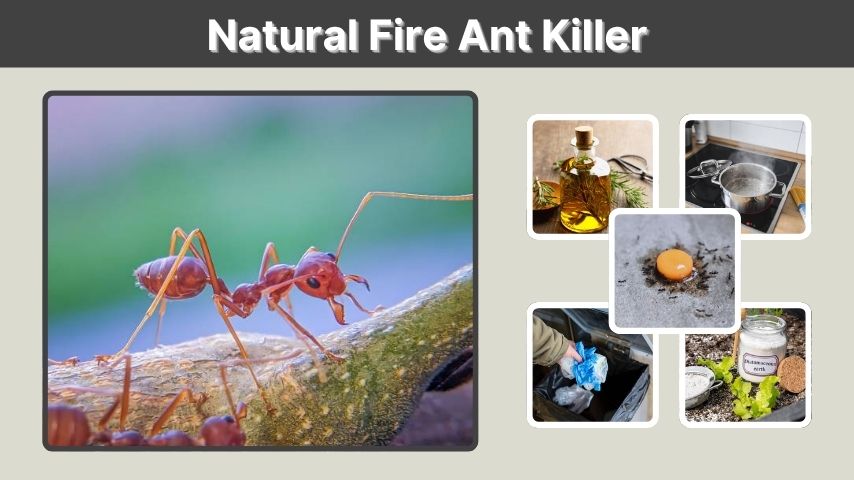
Fire ants can quickly turn a peaceful yard into an uncomfortable and potentially dangerous space. Their painful stings and aggressive behavior make them one of the most troublesome outdoor pests. While chemical insecticides are commonly used for control, many homeowners prefer natural alternatives that are safer for children, pets, gardens, and the environment. Fortunately, several natural fire ant killer methods can reduce or eliminate colonies when used correctly. This guide explores the most effective natural treatments and explains how they work against fire ants.
Why Choose a Natural Fire Ant Killer?
Many people look for natural fire ant control methods because they want to avoid exposing their family, pets, and plants to harsh chemicals. Natural solutions can often provide effective results while minimizing environmental impact. Although some methods may require patience and repeated applications, they remain popular among homeowners seeking safer pest control alternatives.
Benefits of Natural Fire Ant Control
Natural treatments offer several advantages:
- Reduced chemical exposure
- Safer for gardens
- Lower environmental impact
- Better protection for pets
- Suitable for organic landscaping
These benefits make natural solutions appealing for long-term pest management.
When Natural Methods Work Best
Natural fire ant killers are often most effective when colonies are detected early. Smaller nests are generally easier to manage than large, established colonies.
Regular monitoring and prompt treatment can significantly improve the success of natural control methods.
What Is the Best Natural Fire Ant Killer?
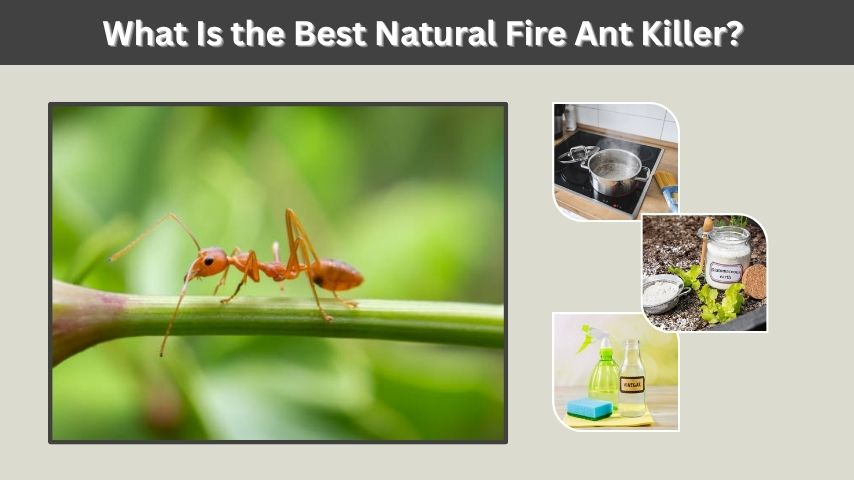
Several natural treatments are commonly recommended for controlling fire ants. The best option often depends on the size of the infestation, the location of the nest, and how quickly results are needed. Some methods focus on immediate colony reduction, while others work gradually over time.
Boiling Water
Boiling water is one of the simplest natural methods for killing fire ants. Pouring hot water directly onto a mound can destroy many worker ants and damage parts of the colony.
However, this method does not always reach the queen, which means the colony may eventually recover if not completely eliminated.
Diatomaceous Earth
Diatomaceous earth is a naturally occurring powder made from fossilized aquatic organisms. It works by damaging the protective outer layer of insects, causing them to lose moisture and dehydrate.
Because it acts physically rather than chemically, it is widely used in natural pest management programs.
Vinegar Solutions
Vinegar is often used as a natural pest control ingredient. While it may not completely eliminate a large colony, it can disrupt ant trails and discourage foraging activity around treated areas.
Repeated applications may help reduce fire ant presence in specific locations.
Homemade Fire Ant Killer Remedies
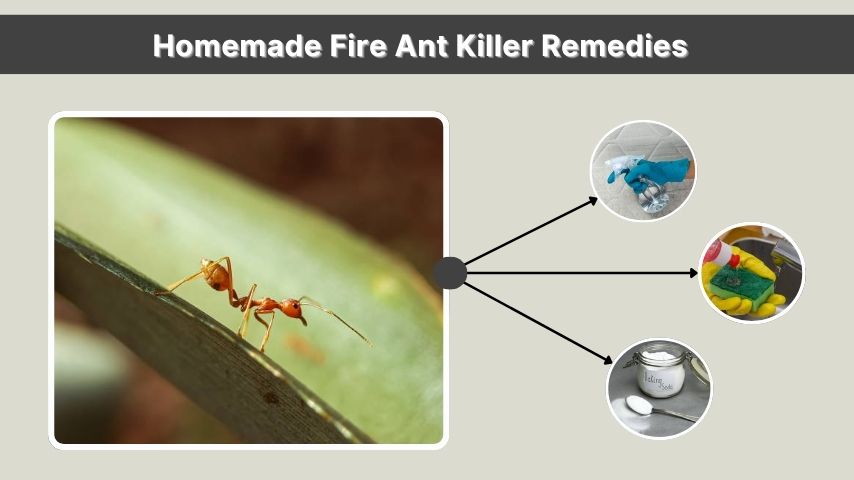
Many homeowners prefer homemade solutions because they are affordable and easy to prepare. Common household ingredients can often be combined into simple treatments that help manage fire ant activity. Although results vary, these remedies remain popular for small infestations and routine maintenance.
Vinegar and Water Spray
A mixture of vinegar and water is frequently used to treat ant trails and nesting areas. The strong scent can interfere with chemical signals that ants use to communicate and navigate.
This solution is commonly applied around patios, walkways, and garden edges.
Dish Soap Solution
Dish soap can help break down the protective coating on insects and may improve the effectiveness of certain treatments.
When mixed with water and applied directly to fire ant activity, it can reduce surface populations and disrupt colony movement.
Popular Homemade Ingredients
Many DIY fire ant remedies use:
- Vinegar
- Dish soap
- Citrus peels
- Baking soda
- Hot water
These ingredients are inexpensive and often readily available in most homes.
Diatomaceous Earth for Fire Ant Control
Diatomaceous earth has become one of the most trusted natural pest control products available. Its effectiveness against a variety of crawling insects makes it a popular option for homeowners seeking chemical-free solutions. When applied correctly, it can help reduce fire ant activity without introducing synthetic pesticides into the environment.
How Diatomaceous Earth Works
The microscopic particles in diatomaceous earth have sharp edges that damage the waxy outer coating of insects. Once this protective layer is compromised, insects gradually lose moisture and die from dehydration.
Because the product works mechanically, insects cannot develop resistance to it.
How to Apply It
Diatomaceous earth is typically sprinkled around fire ant mounds, trails, and areas where ants are frequently observed.
For best results, the product should remain dry. Moisture can reduce its effectiveness and limit its ability to control insect populations.
Advantages and Limitations
Diatomaceous earth offers several advantages:
- Chemical-free control
- Long-lasting protection
- Safe for gardens
- Effective against many insects
- Low environmental impact
However, it may work more slowly than conventional insecticides and often requires multiple applications.
Natural Fire Ant Killers for Gardens
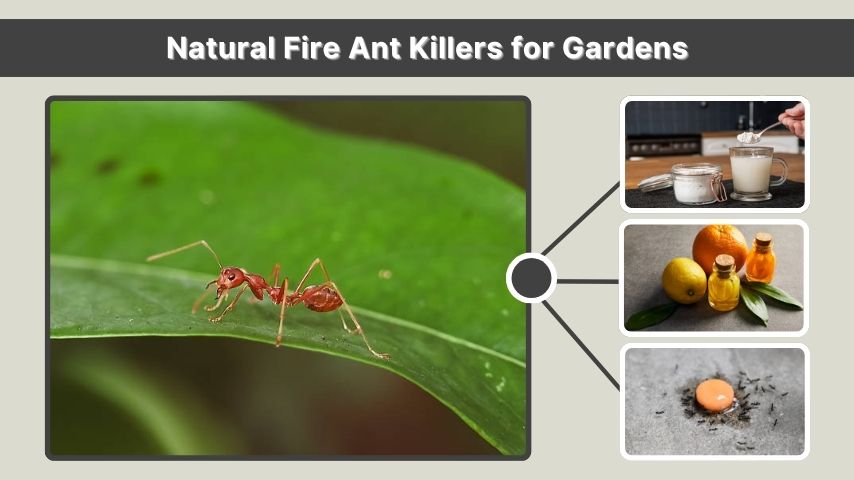
Gardens present unique challenges when controlling fire ants. Many gardeners want to eliminate pests without harming vegetables, flowers, pollinators, or beneficial insects. Natural treatments can provide a balanced approach that reduces fire ant activity while helping preserve the overall health of the garden ecosystem.
Garden-Safe Treatment Options
Several natural methods are commonly used in garden settings. These treatments focus on minimizing environmental disruption while targeting fire ant colonies.
Common garden-friendly options include:
- Diatomaceous earth
- Boiling water
- Citrus-based treatments
- Organic ant baits
- Physical mound removal
Selecting the appropriate method depends on the size and location of the infestation.
Protecting Plants During Treatment
When applying natural treatments, care should be taken to avoid damaging nearby roots, seedlings, and delicate plants. Proper application techniques help ensure that fire ant control efforts support a healthy and productive garden.
Pet-Safe Natural Fire Ant Killers
Pet owners often worry about using pest control products around dogs, cats, and other animals. Natural fire ant treatments can be a safer choice when used carefully, but not every natural ingredient is automatically pet-safe. The best approach is to choose low-risk methods, apply them properly, and keep pets away from treated areas until the site is stable.
Safe Options for Homes With Pets
Some safer options include diatomaceous earth, boiling water applied carefully to outdoor mounds, and certain organic bait products labeled for pet-sensitive areas.
Always follow product directions and avoid letting pets dig, lick, or roll in treated soil.
Treatments to Avoid Around Pets
Some essential oils, strong vinegar mixtures, and homemade chemical combinations may irritate a pet’s skin, paws, nose, or stomach.
Even natural substances can cause problems if swallowed or applied in large amounts, so caution is always important.
Natural Fire Ant Repellents
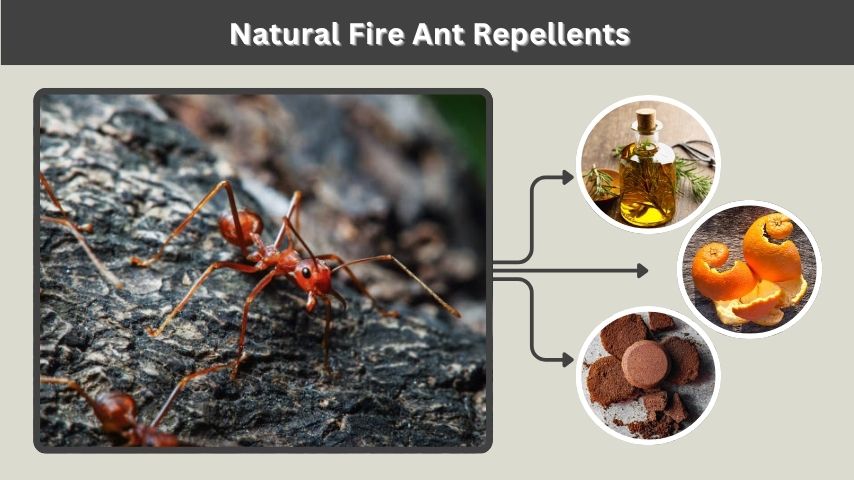
Natural repellents may not eliminate an established fire ant colony, but they can discourage ants from entering certain areas. These methods are useful around patios, walkways, garden borders, and outdoor eating spaces. Repellents work best as part of a broader control plan that also targets existing nests.
Essential Oils
Some people use peppermint, tea tree, citrus, or clove oil to discourage ant activity. These oils have strong scents that may interfere with ant trails.
However, essential oils should be diluted and used carefully, especially around pets, children, and edible plants.
Citrus Peels
Citrus peels contain natural compounds that many ants dislike. Placing citrus peels near problem areas may help reduce ant activity temporarily.
Citrus-based treatments are often used around gardens, compost areas, and outdoor pathways.
Coffee Grounds
Used coffee grounds are sometimes spread near ant trails or around garden edges. While coffee grounds may help repel some ants, they are usually not strong enough to eliminate a fire ant colony on their own.
Common Mistakes When Using Natural Fire Ant Killers
Natural treatments can be helpful, but many people become disappointed when results are slow or incomplete. Most failures happen because the treatment does not reach the queen or because only the visible ants are affected. Understanding common mistakes can improve your chances of long-term fire ant control.
Mistakes to Avoid
Avoid these common errors:
- Treating only the surface of the mound
- Using too little product
- Applying treatments before rain
- Ignoring nearby colonies
- Expecting instant results
- Using unsafe mixtures around pets
Correct timing and repeated monitoring are essential for better results.
Ignoring the Queen
A fire ant colony can survive if the queen remains alive underground. Surface sprays and repellents may reduce activity temporarily, but they rarely eliminate the entire colony unless the treatment reaches deep enough.
This is why bait-based approaches often work better for long-term control.
How to Prevent Fire Ants Naturally
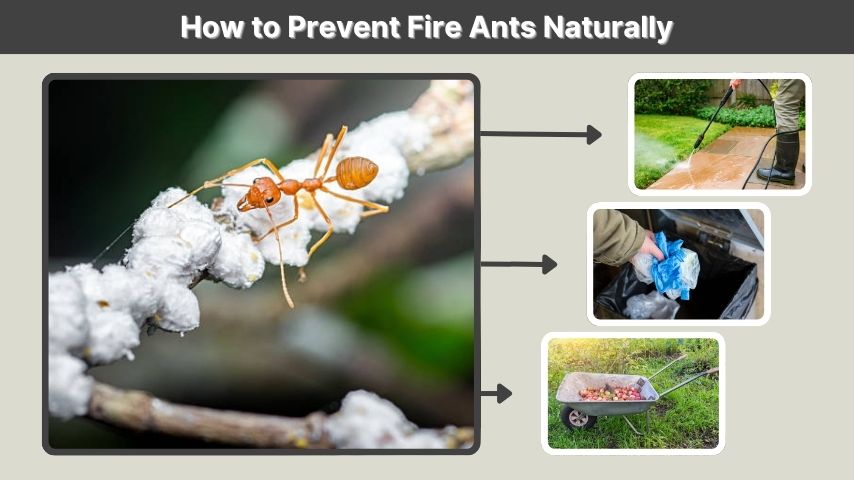
Prevention is one of the most effective parts of natural fire ant control. By making your yard less attractive, you can reduce the chances of new colonies becoming established. Good sanitation, moisture control, and regular inspections can make a major difference over time.
Lawn and Garden Maintenance
Keep grass trimmed, remove yard debris, and avoid leaving piles of organic material where ants can shelter.
Healthy, well-maintained lawns are easier to inspect, allowing you to spot new mounds before they become large infestations.
Reduce Food and Water Sources
Fire ants are attracted to food scraps, pet food, sugary spills, and moisture. Removing these resources can discourage foraging activity.
Simple prevention steps include:
- Cleaning outdoor eating areas
- Storing garbage securely
- Bringing pet food indoors
- Fixing leaking hoses
- Removing fallen fruit
- Avoiding overwatering
These habits help reduce fire ant pressure around the home.
FAQs
What is the best natural fire ant killer?
Diatomaceous earth, boiling water, and organic fire ant baits are among the most common natural options. The best choice depends on the nest location and infestation size.
Does vinegar kill fire ants?
Vinegar may kill some ants on contact and disrupt trails, but it usually does not eliminate a full colony by itself.
Is diatomaceous earth effective against fire ants?
Yes, diatomaceous earth can help control fire ants when kept dry and applied correctly around mounds and trails.
Can boiling water eliminate a fire ant mound?
Boiling water can kill many ants in a mound, but it may not always reach the queen. Multiple applications may be needed.
What natural fire ant killer is safe for pets?
Food-grade diatomaceous earth and properly applied organic baits are commonly used around pet-sensitive areas, but pets should still be kept away during application.
