
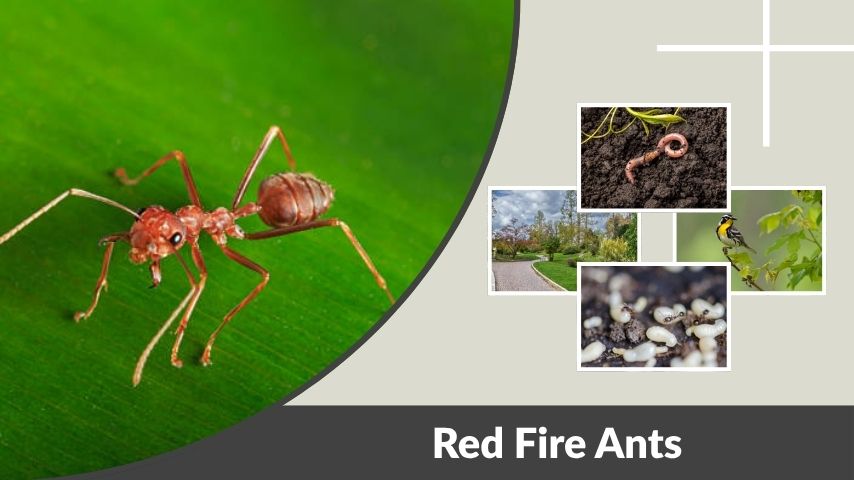
Red fire ants are among the most aggressive and invasive ant species in the world. Known for their painful stings, large underground colonies, and rapid spread, these insects have become a major concern for homeowners, farmers, and environmental scientists. Many people confuse red ants with fire ants, but not all red ants are fire ants. Understanding their appearance, habitat, behavior, diet, and life cycle can help identify infestations and support effective control measures. Their ecological impact makes them one of the most studied invasive insects today.
What Are Red Fire Ants?
Red fire ants are stinging ants belonging to the genus Solenopsis. They are highly social insects that live in large colonies containing thousands of workers and one or more queens. Their aggressive nature and ability to rapidly establish new colonies have contributed to their spread across many regions. These ants are best known for their painful stings, which can cause discomfort and allergic reactions in sensitive individuals.
Scientific Classification
The most common species is the red imported fire ant, scientifically known as Solenopsis invicta. This species belongs to the family Formicidae and is considered one of the world’s most invasive insects.
Why Are They Called Fire Ants?
The name “fire ant” comes from the burning sensation produced by their sting. Unlike many ants that only bite, fire ants bite to anchor themselves and then sting repeatedly, injecting venom into the skin.
Red Imported Fire Ants
The red imported fire ant is the species responsible for most fire ant infestations found in the United States. Originally native to South America, it has spread extensively and become a significant pest in residential, agricultural, and natural environments.
Where Did Red Imported Fire Ants Come From?
Scientists believe red imported fire ants entered the United States through shipping ports during the early twentieth century. Cargo transported from South America likely introduced colonies that later expanded throughout suitable habitats.
Why Are They Considered Invasive?
Several characteristics contribute to their invasive success:
- Rapid reproduction
- Large colony sizes
- Aggressive behavior
- Adaptability to various habitats
- Ability to outcompete native ants
These traits allow fire ants to establish themselves quickly and dominate local ecosystems.
Are Red Ants and Fire Ants the Same?
Many people use the terms “red ants” and “fire ants” interchangeably, but they are not always the same. Red coloration alone does not automatically indicate that an ant is a fire ant.
What Is a Red Ant?
A red ant is simply an ant species with red or reddish coloration. Numerous ant species display red coloring but lack the aggressive behavior and painful sting associated with fire ants.
What Is a Fire Ant?
Fire ants belong to specific species within the Solenopsis genus. They possess venomous stings and typically build large mound-like colonies. While many fire ants are reddish in color, not every red ant is a fire ant.
Fire Ants vs Red Ants
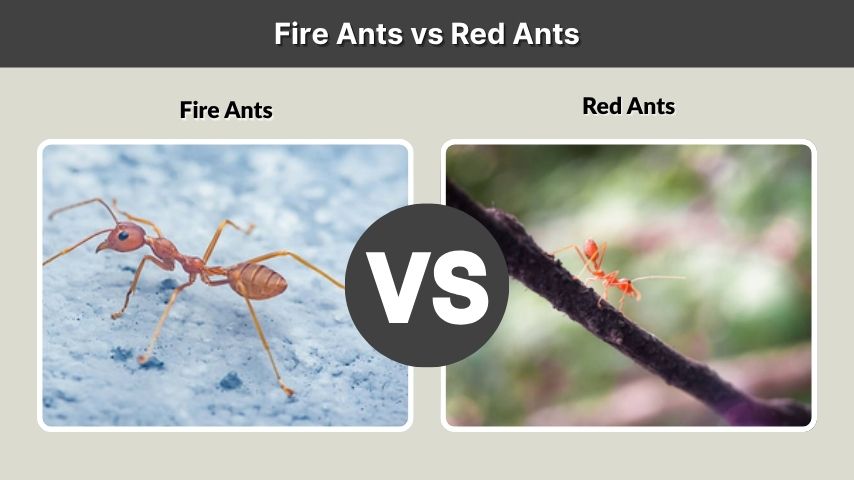
Understanding the differences between fire ants and other red ants can help with proper identification and treatment. Although they may appear similar at first glance, several important distinctions exist.
Key Differences
Fire ants differ from many red ant species in several ways:
- Possess painful venomous stings
- Build large soil mounds
- Display highly aggressive behavior
- Form massive colonies
- Spread rapidly in favorable environments
These characteristics make fire ants significantly more problematic than most ordinary red ants.
Bite and Sting Comparison
Most red ants may bite when disturbed, but fire ants both bite and sting. Their venom causes a burning sensation that often leads to itchy, white pustules forming after the sting.
Red Fire Ant Appearance
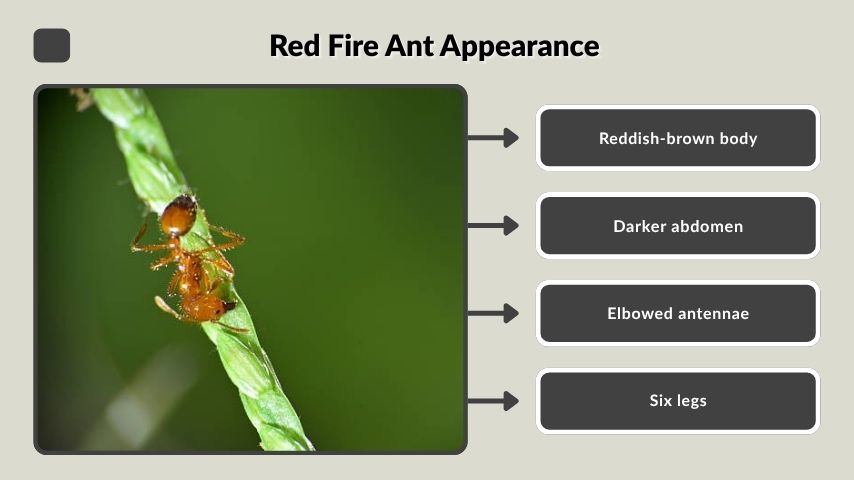
Identifying red fire ants correctly is important for effective management. Their appearance varies slightly depending on worker caste and colony age, but several common characteristics make recognition easier.
Size and Color
Worker ants vary considerably in size, even within the same colony. Most individuals display reddish-brown coloration with darker abdominal segments.
Common physical traits include:
- Reddish-brown body
- Darker abdomen
- Elbowed antennae
- Six legs
- Segmented body structure
These features help distinguish fire ants from many other common ant species.
Worker and Queen Differences
Queens are significantly larger than workers and are responsible for producing eggs. Worker ants perform tasks such as foraging, nest maintenance, and colony defense.
Red Fire Ant Habitat
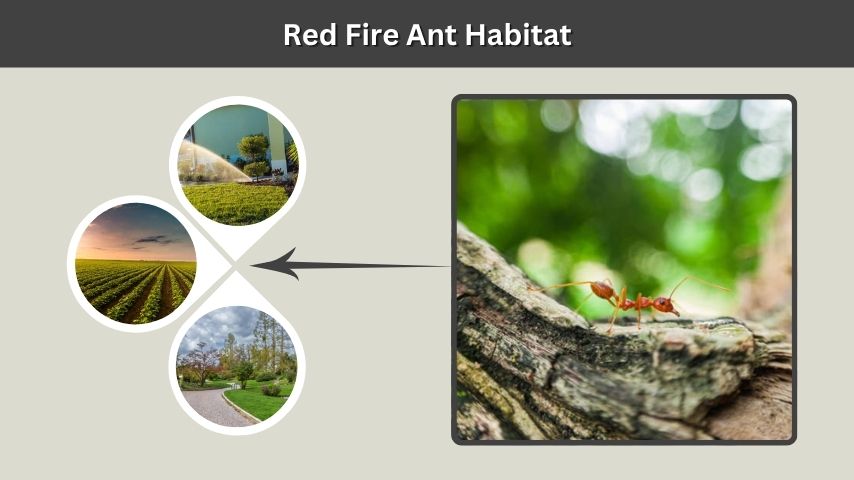
Red fire ants are highly adaptable and can survive in a wide range of environmental conditions. Their ability to colonize diverse habitats contributes greatly to their success as an invasive species.
Where Do Red Fire Ants Live?
These ants are commonly found in open, sunny areas where soil conditions allow mound construction. Lawns, fields, parks, roadsides, and agricultural lands frequently support large colonies.
Preferred Habitat Conditions
Fire ants thrive in environments that provide:
- Warm temperatures
- Loose soil
- Access to food sources
- Moderate moisture
- Open sunlight
Such conditions allow colonies to grow rapidly and expand into surrounding areas.
Red Fire Ant Diet
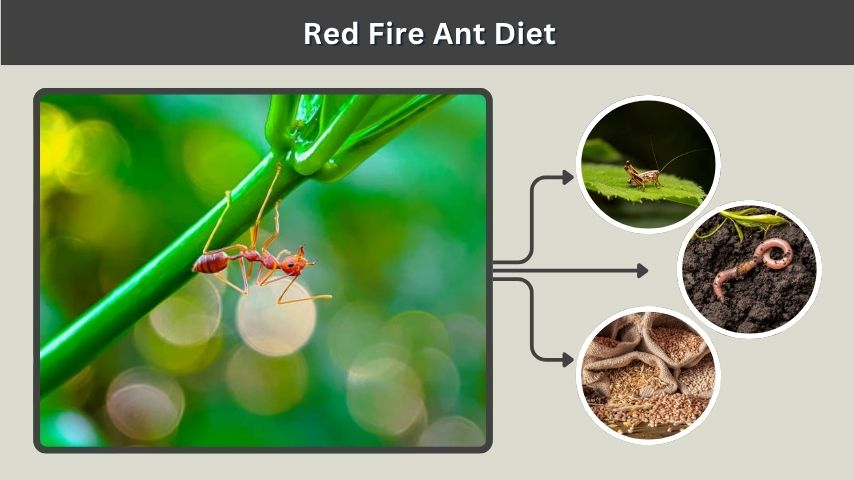
Red fire ants are opportunistic feeders capable of consuming a wide variety of food sources. Their flexible diet contributes to their success as an invasive species because they can adapt to changing environmental conditions and exploit available resources. Colonies continuously search for food to support thousands of workers, developing larvae, and reproductive individuals.
What Do Red Fire Ants Eat?
Fire ants consume both plant and animal materials depending on availability. They are aggressive foragers and often compete with native insects for food resources.
Common food sources include:
- Insects and insect larvae
- Earthworms
- Seeds and grains
- Fruits
- Nectar
- Small animals
- Human food scraps
Their broad diet allows colonies to thrive in residential, agricultural, and natural environments.
Feeding Behavior
Worker ants leave the colony in search of food and communicate discoveries through chemical trails. These trails guide additional workers to food sources, allowing colonies to quickly exploit available resources.
Red Fire Ant Life Cycle
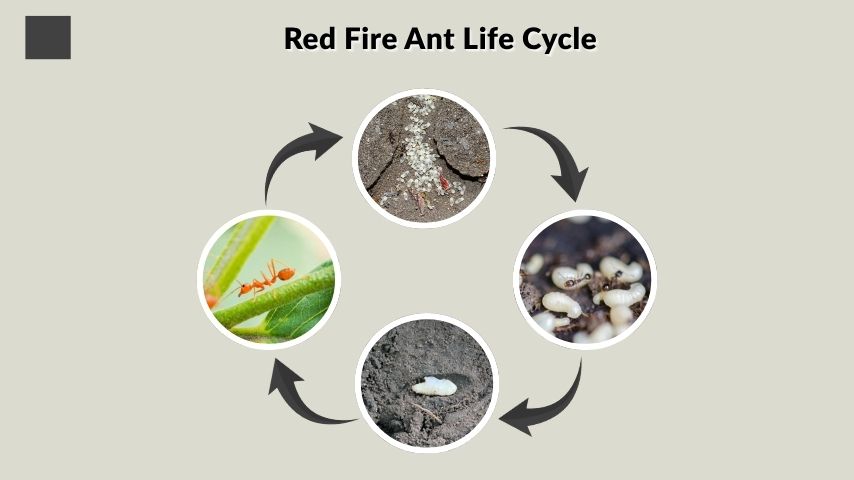
The life cycle of the red imported fire ant consists of several developmental stages. Colony growth depends on successful reproduction, favorable environmental conditions, and a healthy queen capable of producing large numbers of eggs.
Stages of Development
Like other ants, fire ants undergo complete metamorphosis before reaching adulthood.
The life cycle includes:
- Egg stage
- Larval stage
- Pupal stage
- Adult worker
- Reproductive adults
Each stage plays an important role in colony development and expansion.
Colony Growth
A mature colony may contain hundreds of thousands of ants. Under ideal conditions, populations can increase rapidly, creating new colonies and expanding into surrounding areas.
Red Fire Ant Queen
The queen is the most important individual within a fire ant colony. Her primary responsibility is reproduction, and the survival of the colony depends heavily on her health and productivity.
Role of the Queen
After establishing a colony, the queen lays eggs continuously. These eggs develop into workers, reproductive males, and future queens that support colony growth.
How Long Does a Queen Live?
Fire ant queens can survive for several years under favorable conditions. During their lifetime, they may produce hundreds of thousands of offspring, contributing significantly to population expansion.
Red Fire Ant Bites and Stings
Fire ants are famous for their painful stings. Unlike many ant species that only bite, fire ants use a combination of biting and stinging to defend themselves and their colony.
Bite vs Sting
The ant first bites the skin to secure itself and then pivots its body to deliver multiple stings. This process injects venom into the skin and creates the burning sensation commonly associated with fire ant encounters.
Common Symptoms
Fire ant stings often cause:
- Immediate burning pain
- Redness and swelling
- Itching
- Small white pustules
- Temporary discomfort
Most reactions are mild, although some individuals may experience more severe allergic responses.
Are Red Fire Ants Dangerous?
Red fire ants pose risks to both humans and animals. Their aggressive behavior and venomous stings make them one of the most troublesome invasive insects in many regions.
Risks to Humans
Most stings result in localized irritation, but sensitive individuals may experience severe allergic reactions. Medical attention should be sought if symptoms include difficulty breathing, dizziness, or widespread swelling.
Risks to Pets and Wildlife
Fire ants can injure pets, livestock, and wildlife. Young animals are particularly vulnerable because they may be unable to escape large numbers of attacking ants.
Red Fire Ant Predators
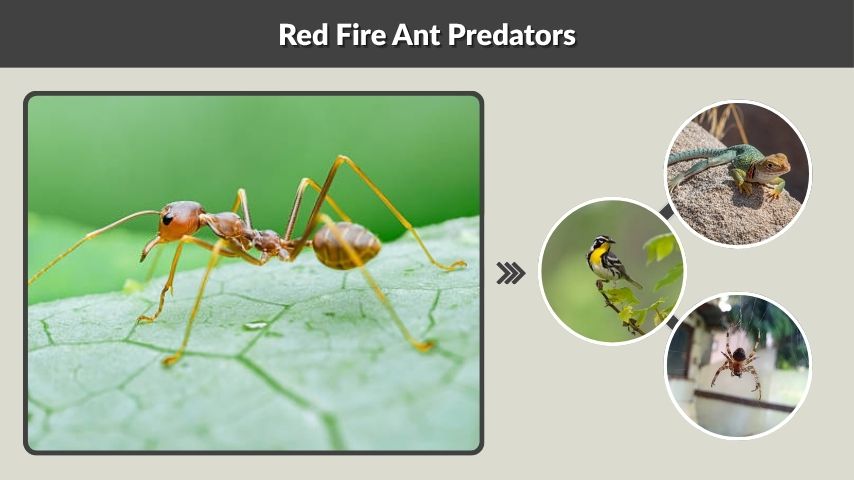
Although red fire ants are aggressive and highly successful, they still face predation from a variety of animals and insects. Natural predators help limit populations in some ecosystems.
Common Predators
Several species prey on fire ants:
- Birds
- Lizards
- Spiders
- Ant-eating insects
- Parasitic flies
These predators rarely eliminate colonies completely but may help reduce local populations.
Natural Population Control
Predators contribute to ecological balance by limiting fire ant numbers and reducing competition with native species.
Impact on Ecosystems
The red imported fire ant has significantly affected ecosystems throughout its introduced range. Its aggressive behavior and large colony sizes often place pressure on native wildlife and insect communities.
Ecological Effects
Fire ants frequently compete with native ants and other insects for food and nesting sites. Their presence may alter local biodiversity and disrupt natural ecological relationships.
Economic Impact
Fire ants also create economic challenges through:
- Agricultural losses
- Property damage
- Veterinary costs
- Medical expenses
- Pest control expenditures
These impacts contribute to their reputation as one of the world’s most costly invasive insect species.
How to Get Rid of Red Fire Ants
Effective fire ant control requires eliminating both workers and queens. Successful management strategies focus on targeting the entire colony rather than simply treating visible ants.
Common Control Methods
Several proven approaches are used to manage infestations:
- Fire ant baits
- Granular insecticides
- Mound drenches
- Broadcast treatments
- Professional pest control services
Combining treatment methods often produces the most reliable long-term results.
Preventing Reinfestation
Routine monitoring, lawn maintenance, and preventive treatments can help reduce the likelihood of future infestations and support long-term fire ant management.
FAQs
Do Red Fire Ants Have a Queen?
Yes, every fire ant colony has at least one queen responsible for laying eggs and maintaining the colony’s population. Some colonies contain multiple queens, allowing them to grow faster and establish larger infestations.
Where Did Red Imported Fire Ants Come From?
Red imported fire ants originated in South America, particularly in areas of Brazil, Argentina, Paraguay, and Uruguay. They were accidentally introduced into the United States through shipping activities during the early 1900s.
Are Red Fire Ants Dangerous to Dogs and Cats?
Yes, red fire ants can sting pets if they disturb a mound. Multiple stings may cause pain, swelling, irritation, and allergic reactions. Young, elderly, or sensitive animals may require veterinary attention after severe encounters.
What Does a Red Fire Ant Mound Look Like?
A red fire ant mound usually appears as a dome-shaped pile of loose soil ranging from a few inches to over a foot in height. Unlike some ant nests, fire ant mounds often have no visible entrance hole on the surface.
Why Are Fire Ant Stings So Painful?
Fire ant stings contain venom made up of toxic alkaloids and proteins. The venom causes a burning sensation, redness, swelling, and itchy white pustules that may develop within a day after being stung.
