
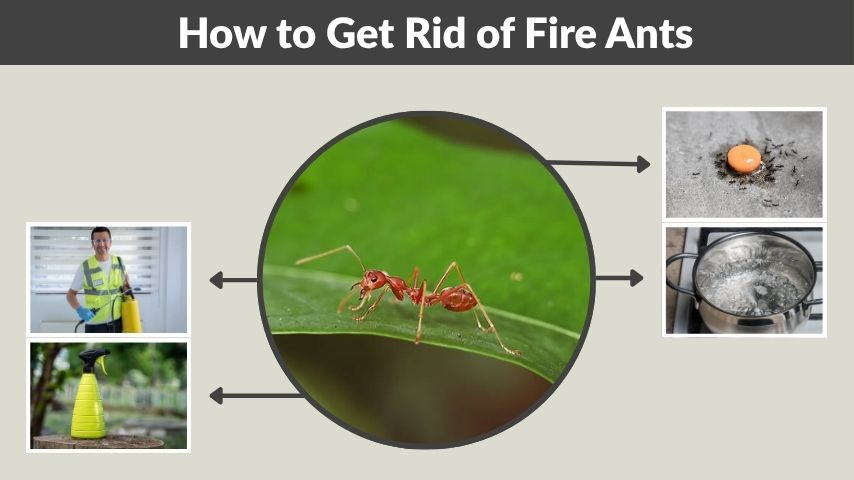
Fire ants are aggressive pests that can quickly take over lawns, gardens, and even homes. Their painful stings, large underground colonies, and ability to reproduce rapidly make them difficult to eliminate without a proper treatment plan. Many homeowners search for ways to get rid of fire ants permanently, whether through natural remedies, bait treatments, or professional pest control services. Understanding how fire ants live, spread, and build colonies is the first step toward choosing the most effective control methods and preventing future infestations.
What Are Fire Ants?
Fire ants are invasive ants known for building large soil mounds and defending their colonies aggressively. Originally introduced from South America, they have spread throughout many warm regions and become a major pest in residential, agricultural, and recreational areas. Their ability to establish large colonies makes them difficult to control once an infestation becomes established.
Common Fire Ant Species
Several fire ant species exist, but the red imported fire ant is the most widespread and destructive. This species is responsible for most fire ant infestations found in yards, gardens, and public spaces throughout the southern United States.
Why Fire Ants Are Difficult to Eliminate
Fire ants live in highly organized colonies that often contain thousands of workers and one or more queens. Eliminating visible ants without destroying the queen usually results in the colony rebuilding itself within a short period.
Signs You Have a Fire Ant Infestation
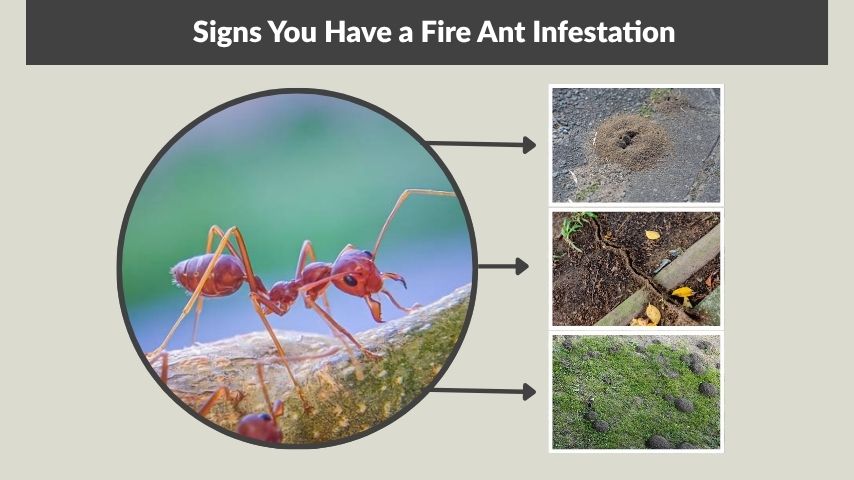
Early identification of fire ant activity can help prevent colonies from spreading throughout a property. Fire ants create distinctive signs that are often easy to recognize once you know what to look for.
Common Warning Signs
Several indicators suggest an active fire ant infestation:
- Large soil mounds in lawns
- Ant trails across outdoor surfaces
- Aggressive ants when disturbed
- Multiple mounds appearing after rain
- Increased insect activity near nesting sites
Identifying these signs early makes treatment more effective and reduces the risk of colony expansion.
Where Fire Ants Commonly Nest
Fire ants prefer sunny locations with loose soil. Lawns, gardens, playgrounds, pastures, roadside areas, and landscaped beds frequently provide ideal nesting conditions.
How to Get Rid of Fire Ants Fast
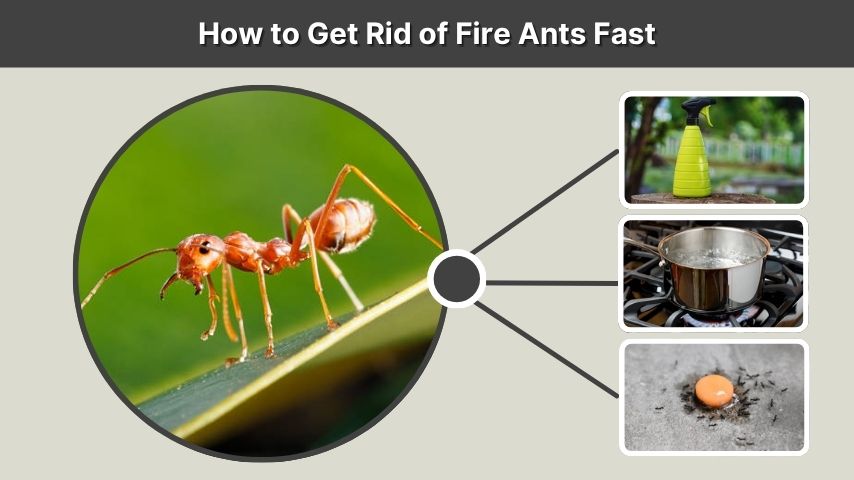
When immediate action is needed, several treatment methods can reduce fire ant activity quickly. While fast treatments may kill many workers, long-term control requires eliminating the queen and the entire colony.
Quick Treatment Options
Homeowners commonly use several methods for rapid results:
- Contact insecticide sprays
- Granular mound treatments
- Boiling water applications
- Fast-acting ant baits
- Liquid mound drenches
These solutions may provide noticeable reductions in activity within hours or days depending on the product used.
Why Fast Treatments Don’t Always Work Permanently
Many quick-control products only affect the ants they contact directly. If the queen survives underground, the colony may recover and continue producing workers.
How to Get Rid of Fire Ants in Your Yard
Yards are one of the most common locations for fire ant infestations. Effective yard treatments target both visible mounds and hidden colonies that may not yet be noticeable.
Treating Fire Ant Mounds
Visible mounds should be treated carefully because disturbing them can cause the colony to relocate. Applying bait products before disturbing the mound often improves control success.
Lawn-Wide Treatment Strategies
For larger infestations, treating the entire lawn may be necessary. Broadcast applications help eliminate colonies before they become visible and reduce the likelihood of future outbreaks.
How to Get Rid of Fire Ant Hills and Mounds
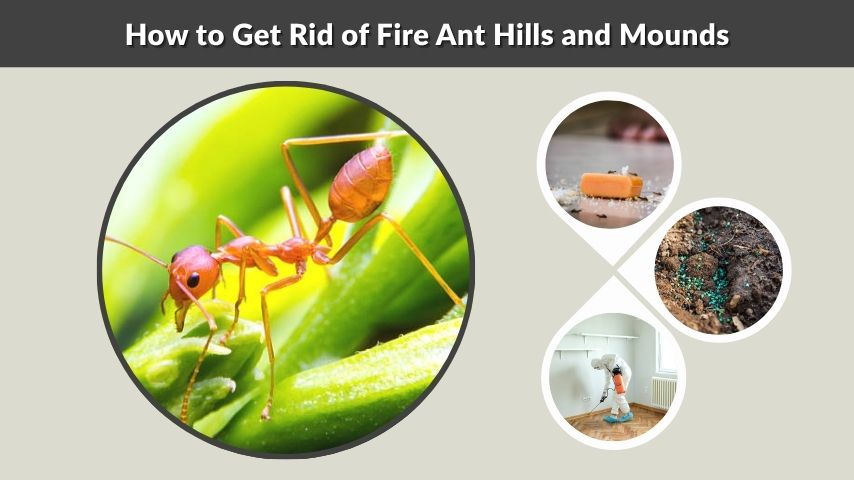
Fire ant hills and mounds are often the first signs homeowners notice. Although destroying the mound may seem like a simple solution, successful control requires reaching the queen deep underground.
Why Mounds Return
A fire ant mound is only the visible portion of a much larger underground colony. When treatments fail to reach the queen, workers can rebuild the mound within days or weeks.
Best Mound Control Methods
Several proven options are available for treating mounds:
- Fire ant bait products
- Mound drenches
- Granular insecticides
- Professional treatments
- Integrated pest management strategies
Using a combination of treatments often produces the best results for long-term control.
How to Get Rid of Fire Ants Naturally
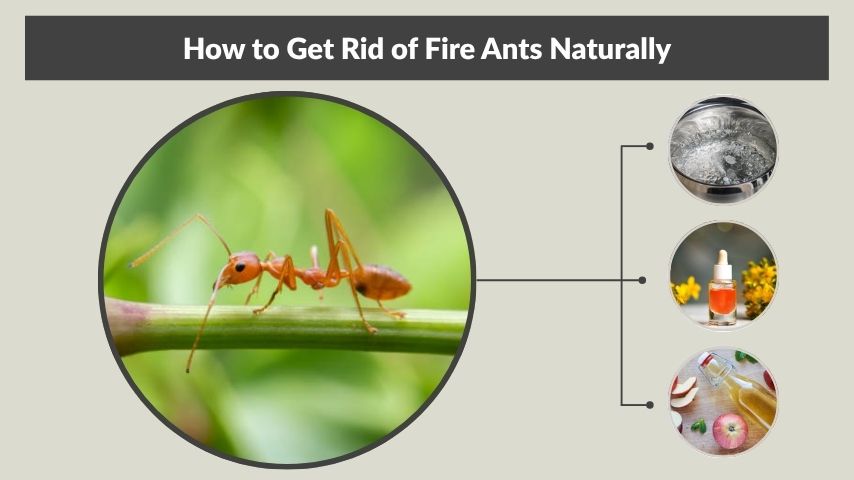
Many homeowners prefer natural solutions that minimize chemical use while still reducing fire ant populations. Although natural remedies may require repeated applications, they can be useful in certain situations.
Popular Natural Remedies
Several natural treatments are commonly used:
- Boiling water
- Diatomaceous earth
- Orange oil solutions
- Vinegar mixtures
- Beneficial nematodes
These options vary in effectiveness and are generally most successful when applied to smaller infestations.
Benefits of Natural Fire Ant Control
Natural methods can reduce environmental impact and may be preferred in gardens, around pets, or near sensitive landscaping. Consistent monitoring and repeated treatments are often necessary for lasting results.
How to Get Rid of Fire Ants in the House
Fire ants sometimes enter homes in search of food, water, or shelter. Indoor infestations can become a serious nuisance if entry points are not identified and addressed quickly.
Common Indoor Entry Points
Fire ants frequently enter through cracks, gaps around doors, damaged screens, plumbing penetrations, and foundation openings. Identifying these access points is essential for preventing recurring infestations.
Signs of Indoor Fire Ant Activity
Indoor infestations may be indicated by visible ant trails, ants gathering near food sources, or increased activity around moisture-prone areas such as kitchens and bathrooms.
How to Get Rid of Fire Ants in a Garden
Gardens provide ideal conditions for fire ants because they offer loose soil, moisture, and abundant food sources. Fire ant colonies can damage plant roots, interfere with gardening activities, and make it difficult to maintain healthy flower beds and vegetable gardens. Effective garden treatments should eliminate ants while minimizing risks to plants, beneficial insects, and surrounding wildlife.
Protecting Vegetable Gardens
When treating fire ants in vegetable gardens, choose products labeled for edible plants and carefully follow application instructions. Organic and natural treatments are often preferred in these environments.
Garden Treatment Options
Several methods can help reduce fire ant populations:
- Organic fire ant baits
- Boiling water treatments
- Beneficial nematodes
- Diatomaceous earth
- Targeted mound treatments
Using a combination of methods often provides the best balance between effectiveness and environmental safety.
How to Get Rid of Fire Ant Colonies Permanently
Permanent fire ant control requires more than simply killing visible workers. Successful long-term management focuses on eliminating the queen and preventing new colonies from becoming established. Because fire ants can migrate from nearby properties, ongoing prevention is often necessary.
Targeting the Queen
The queen is responsible for producing thousands of new ants. If she survives treatment, the colony can continue functioning and eventually rebuild. Bait products are especially effective because workers carry the treatment deep into the colony.
Building a Long-Term Control Plan
Consistent monitoring and preventive treatments help reduce reinfestation risks. Properties that receive routine inspections are less likely to develop large infestations.
Pet-Safe Fire Ant Control
Many homeowners worry about protecting pets while treating fire ants. Fortunately, several products and treatment methods are designed to minimize risks when used according to label instructions. Proper application is essential for maintaining a safe outdoor environment.
Choosing Safe Products
Products specifically labeled as pet-safe are generally the best option for households with dogs and cats. Always follow manufacturer recommendations regarding reentry times and treatment areas.
Safety Tips for Pet Owners
Important precautions include:
- Keep pets away during treatment
- Store products securely
- Follow label instructions carefully
- Avoid overapplication
- Monitor treated areas
These steps help reduce accidental exposure while maintaining effective fire ant control.
Professional Fire Ant Control Services
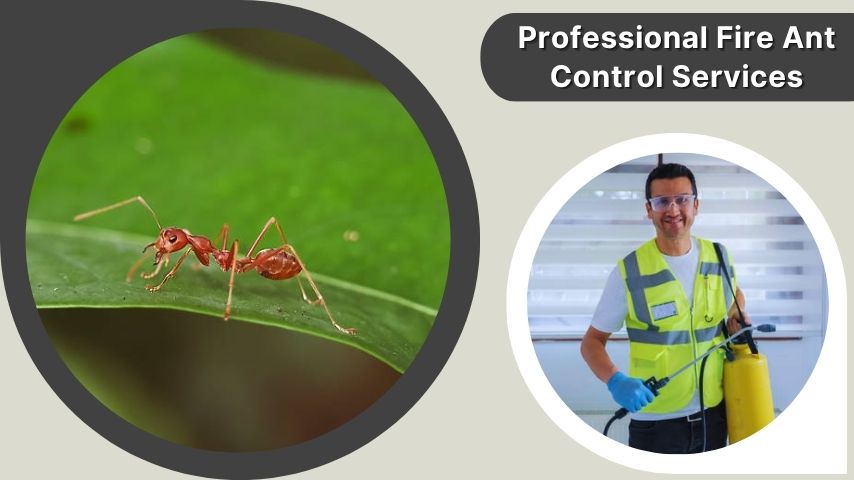
Large infestations or recurring fire ant problems may require professional assistance. Pest control companies have access to commercial-grade products and specialized treatment techniques that may not be available to homeowners.
When to Call a Professional
Professional treatment is often recommended when multiple colonies are present, infestations cover large properties, or previous treatments have failed. Experts can identify hidden nests and develop customized treatment plans.
Benefits of Professional Treatment
Professional fire ant control offers several advantages:
- Comprehensive inspections
- Advanced treatment options
- Faster colony elimination
- Ongoing monitoring
- Preventive management plans
These services often provide longer-lasting results than many do-it-yourself approaches.
Fire Ant Prevention Tips
Preventing future infestations is an essential part of any fire ant management strategy. Once colonies are eliminated, preventive measures help reduce the likelihood of reinfestation and minimize long-term treatment costs.
Simple Prevention Strategies
Property owners can lower infestation risks by:
- Monitoring for new mounds
- Maintaining healthy turf
- Eliminating excess moisture
- Scheduling routine inspections
- Applying preventive baits
Consistent maintenance makes properties less attractive to fire ants and allows early detection of new colonies.
Importance of Routine Monitoring
Regular inspections help identify developing infestations before they become widespread. Early treatment is generally easier, less expensive, and more effective than managing large established colonies.
Common Fire Ant Control Mistakes
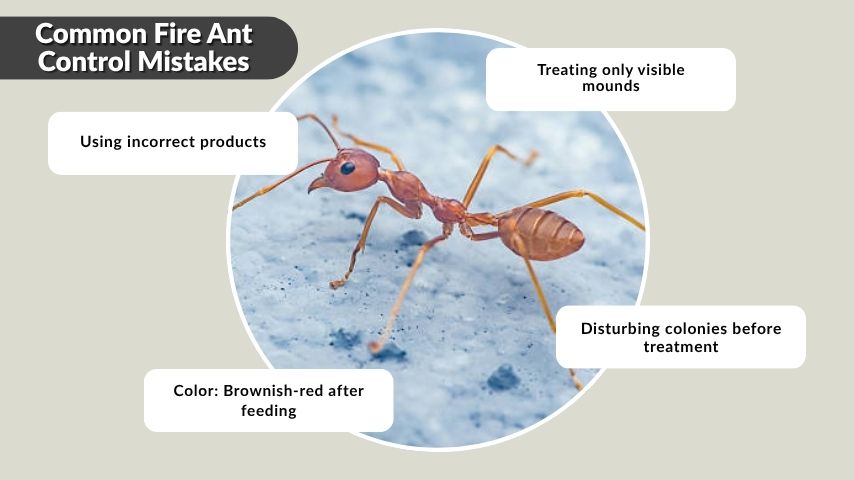
Many fire ant infestations persist because of treatment errors or unrealistic expectations. Understanding common mistakes can improve success rates and help homeowners avoid unnecessary frustration.
Mistakes to Avoid
Frequently observed errors include:
- Treating only visible mounds
- Disturbing colonies before treatment
- Using incorrect products
- Applying too little bait
- Skipping follow-up treatments
Avoiding these mistakes greatly improves the chances of complete colony elimination.
Why Follow-Up Matters
Even successful treatments may not prevent future infestations. Regular inspections and maintenance treatments help ensure long-term protection and reduce the likelihood of new colonies becoming established.
Fire Ant Bite Treatment
Although prevention is the best strategy, fire ant stings sometimes occur during outdoor activities. Understanding how to manage bites can reduce discomfort and lower the risk of complications.
How to Treat Fire Ant Bites
Most mild reactions can be managed by cleaning the affected area, applying a cold compress, and using over-the-counter anti-itch products if necessary.
When to Seek Medical Help
Medical attention may be necessary if symptoms include:
- Difficulty breathing
- Severe swelling
- Widespread rash
- Persistent pain
- Signs of infection
Individuals with known insect sting allergies should seek immediate medical care if serious reactions occur.
FAQs
What is the fastest way to get rid of fire ants?
Fast-acting mound drenches, contact insecticides, and boiling water treatments can reduce fire ant activity quickly, although complete colony elimination may take longer.
How do I get rid of fire ants forever?
Permanent control requires eliminating the queen, treating surrounding colonies, and maintaining a preventive treatment program to stop reinfestation.
Do natural fire ant remedies really work?
Natural remedies such as boiling water, orange oil, and diatomaceous earth can help reduce colonies, especially smaller infestations, but may require repeated applications.
How long does it take to kill a fire ant colony?
Depending on the treatment method, complete colony elimination may take several days to several weeks. Bait products often require more time because they must be carried back to the queen.
Are fire ant control products safe around pets?
Many products are designed to be pet-safe when used according to label instructions. Always follow safety guidelines and keep pets away from treated areas until the product has settled or dried.
