
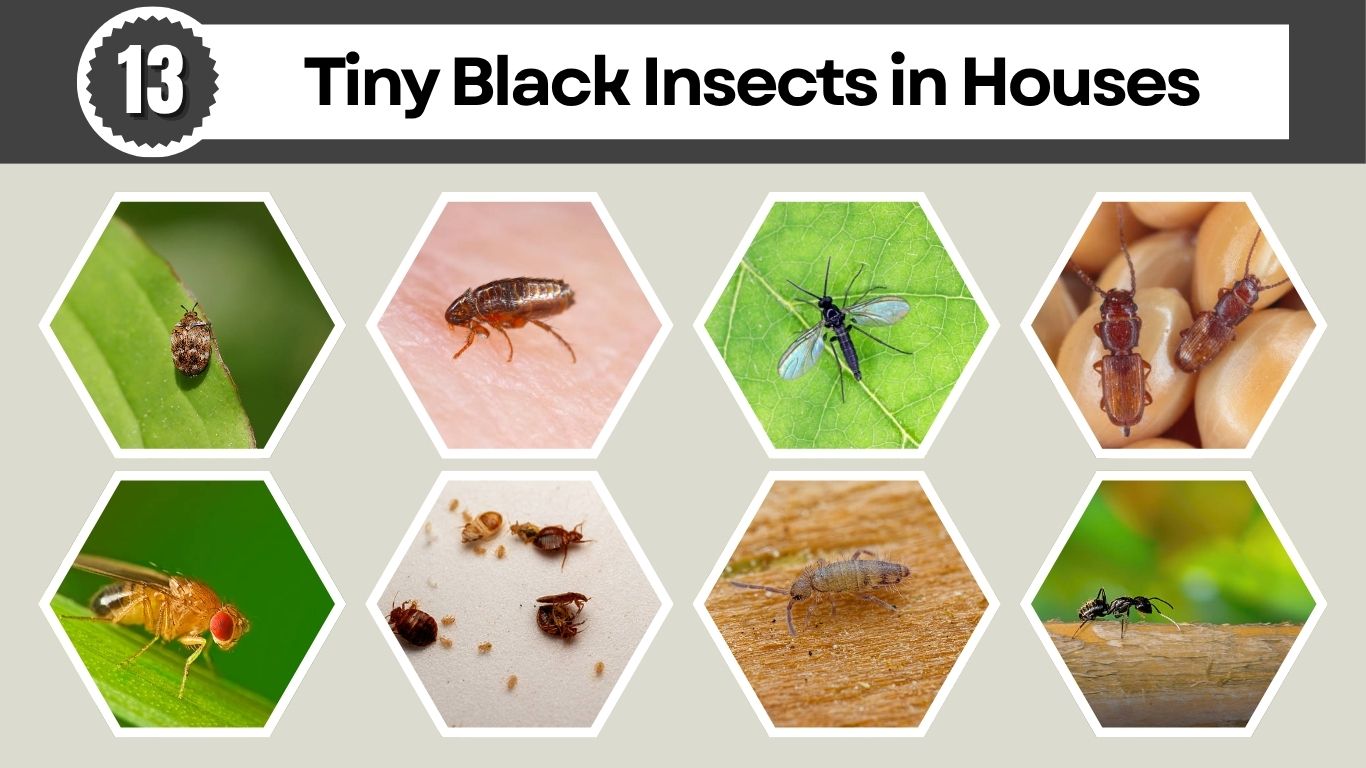
Tiny black insects in houses are a common concern for many homeowners. These pests can appear in kitchens, bathrooms, bedrooms, and even around indoor plants, often attracted by food, moisture, or shelter. While some are harmless, others can contaminate food, damage fabrics, or irritate the skin. Identifying the specific type of insect is important because each one has different habits and control methods. Understanding where they come from and why they appear can help you take the right steps to eliminate them and prevent future infestations effectively.
1. Carpet Beetles
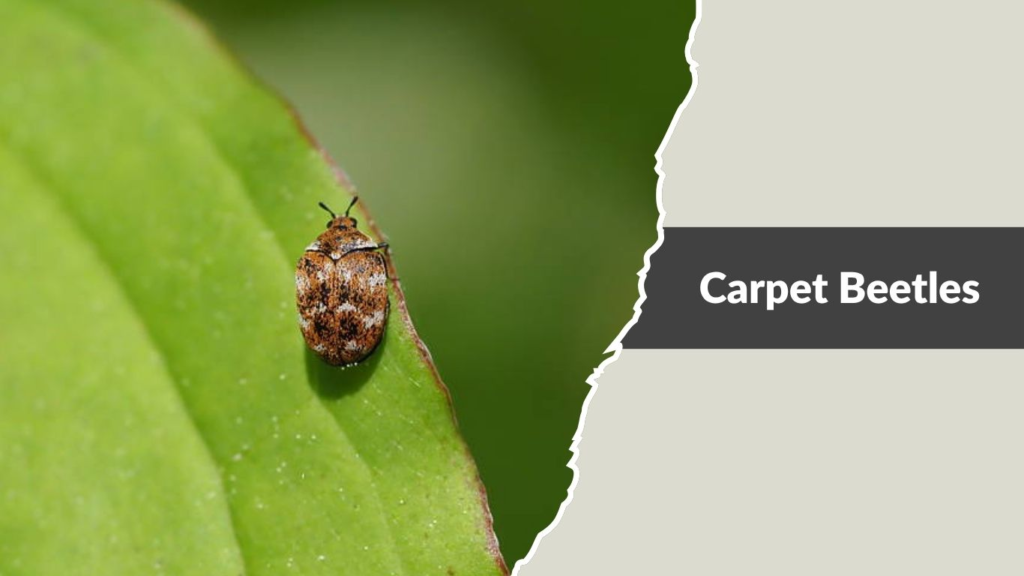
Carpet beetles are tiny black insects commonly found inside homes, especially in areas with natural fibers and stored fabrics. Although the adult beetles are harmless, their larvae can cause significant damage to carpets, clothing, upholstery, and other household items. These pests often go unnoticed until visible damage appears. They are attracted to organic materials and can thrive in hidden areas such as closets, under furniture, and along baseboards.
Identification
- Small, oval-shaped insects about 2–4 mm long
- Color ranges from black to dark brown, sometimes with patterned scales
- Slow-moving adults, often found near windows or light sources
- Larvae are hairy and slightly elongated in shape
- Shed skins and damaged fabric are common signs
Habitat
Carpet beetles prefer dark, undisturbed areas where they can find natural materials to feed on. Common hiding spots include carpets, rugs, closets, air vents, and underneath furniture. They may also be found near windows, as adults are attracted to light. Homes with poor ventilation or accumulated dust are more likely to support infestations.
Behaviors
Adult carpet beetles are mostly active during the day and are often seen flying near windows. However, the larvae are more destructive and tend to stay hidden while feeding. They move slowly and avoid light, making them harder to detect. Carpet beetles can spread easily throughout the house if not controlled early.
Diet and Lifecycle
Carpet beetle larvae feed on natural fibers such as wool, silk, leather, and even pet hair or lint. Adults, on the other hand, primarily feed on pollen and nectar. The lifecycle includes egg, larva, pupa, and adult stages. The larval stage can last several weeks to months, during which most of the damage occurs.
2. Fleas
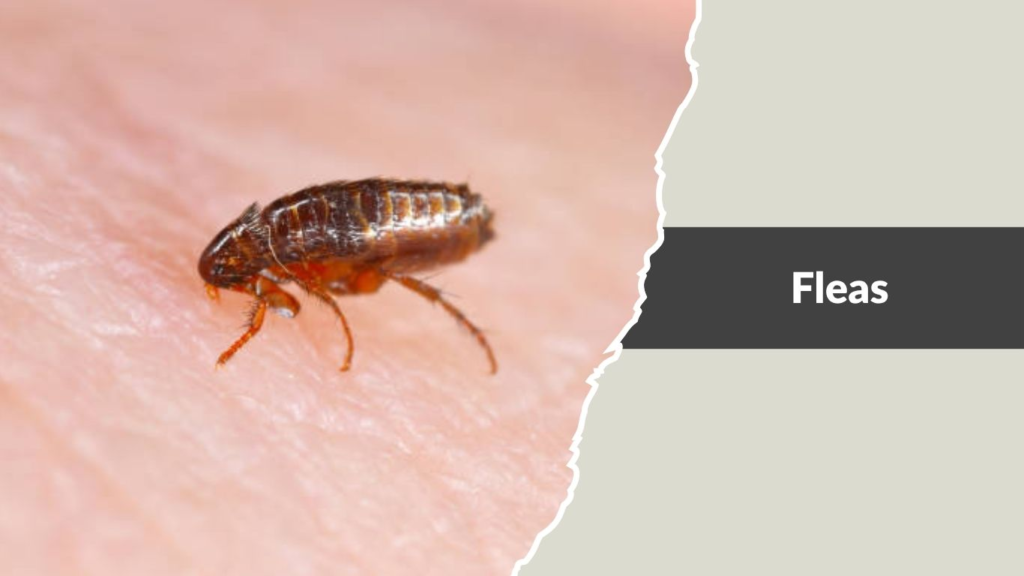
Fleas are tiny black or dark brown insects that are commonly found in homes, especially where pets are present. These pests are known for their ability to jump long distances and feed on the blood of animals and humans. Fleas can quickly multiply and spread throughout carpets, bedding, and furniture, making them a persistent household problem. Their bites can cause itching and discomfort, and in some cases, allergic reactions.
Identification
- Very small, about 1–3 mm long
- Dark brown to black in color
- Flattened bodies that allow easy movement through fur or fabric
- Strong hind legs adapted for jumping
- Quick movement, often seen jumping rather than crawling
Habitat
Fleas prefer warm, humid environments and are commonly found in carpets, pet bedding, upholstery, and cracks in flooring. They tend to stay close to their hosts, such as dogs or cats, but can also survive in household fabrics and hidden areas. Eggs and larvae often develop in dusty, undisturbed places.
Behaviors
Fleas are active feeders that rely on blood for survival. They are most active when a host is nearby and can jump onto humans or pets to feed. Fleas reproduce rapidly, laying eggs that fall into carpets and other surfaces. Their ability to jump and hide makes them difficult to catch and control.
Diet and Lifecycle
Fleas feed on the blood of animals and humans. Their lifecycle includes four stages: egg, larva, pupa, and adult. Eggs hatch into larvae that feed on organic debris before forming pupae. Adult fleas emerge when they sense a host nearby. The entire cycle can complete quickly under favorable conditions, leading to fast infestations.
3. Fungus Gnats
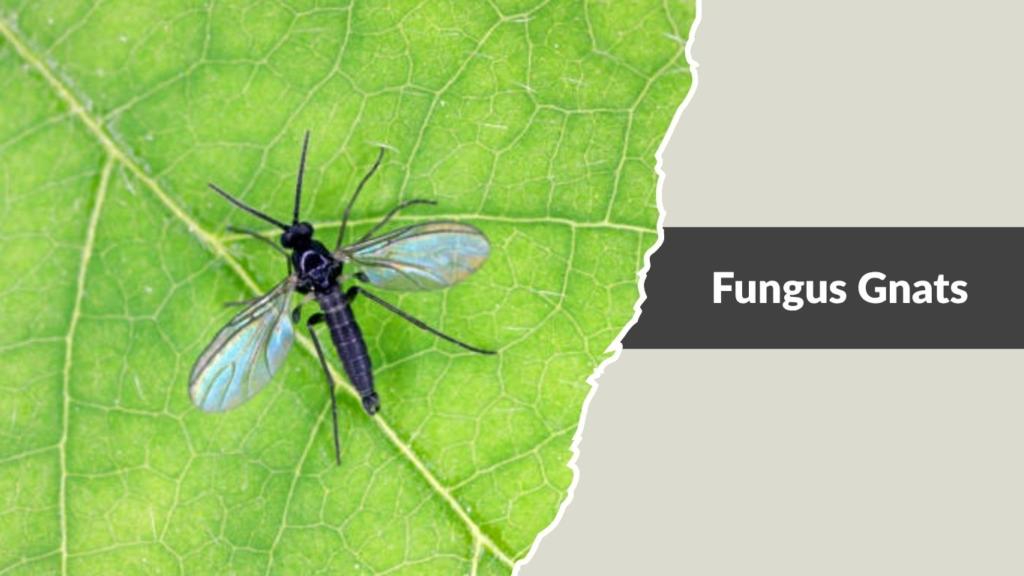
Fungus gnats are tiny black flying insects commonly found indoors, especially around houseplants. They are attracted to moist soil and organic matter, making overwatered plants a perfect breeding ground. While adult fungus gnats are mostly a nuisance, their larvae can damage plant roots if the infestation becomes severe. These insects are often seen flying near windows, lights, or hovering around indoor plants.
Identification
- Very small, about 2–4 mm long
- Black or dark gray with slender bodies
- Long legs and delicate wings
- Weak fliers, often seen hovering rather than flying fast
- Commonly found near potted plants or damp soil
Habitat
Fungus gnats thrive in damp environments, particularly in the soil of indoor plants. Overwatered pots, decaying organic matter, and poor drainage create ideal conditions for them. They may also be found near windows, sinks, or areas with high humidity.
Behaviors
Adult fungus gnats are weak fliers and tend to stay close to their breeding sites. They are often seen hovering around plants or crawling on soil surfaces. The larvae live in the soil and feed on organic material and plant roots. Although adults are harmless, their presence usually indicates excess moisture.
Diet and Lifecycle
Fungus gnat larvae feed on fungi, organic matter, and sometimes plant roots. Adults do not feed much and live only for a short time. Their lifecycle includes egg, larva, pupa, and adult stages, and it can be completed in a few weeks under ideal conditions. Overwatering accelerates their reproduction cycle.
4. Drain Flies
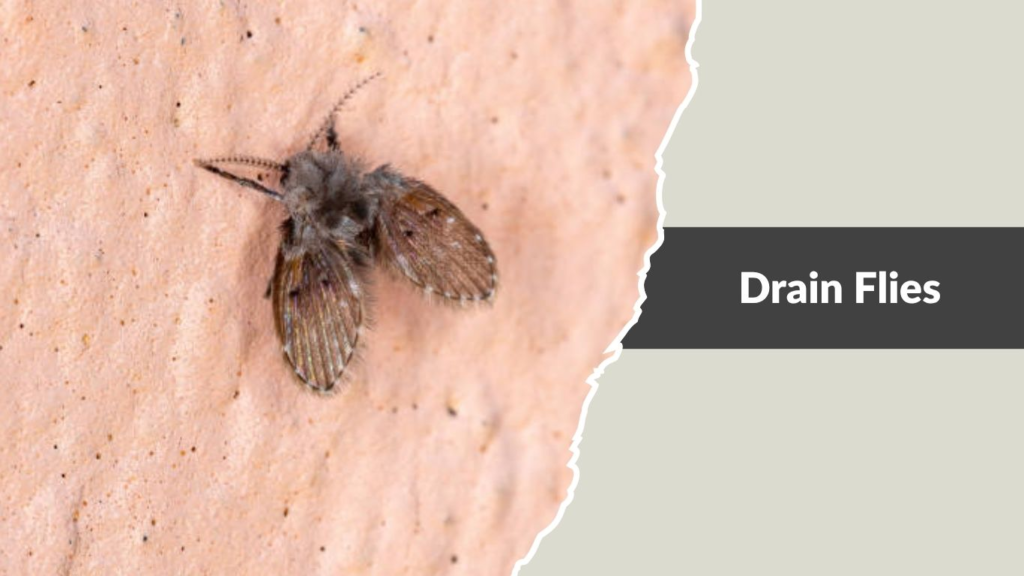
Drain flies are tiny black or dark gray insects often found in kitchens and bathrooms, especially around sinks and drains. They are commonly seen resting on walls or flying slowly near damp areas. These insects thrive in moist environments where organic matter builds up, such as inside pipes. While they do not bite or spread diseases directly, their presence usually indicates poor sanitation or clogged drains that need attention.
Identification
- Very small, about 2–5 mm long
- Dark gray or black with fuzzy, moth-like bodies
- Wings appear hairy and held roof-like over the body
- Weak fliers, often seen hopping or resting on walls
- Commonly found near sinks, drains, and damp surfaces
Habitat
Drain flies prefer moist, organic-rich environments. They are commonly found inside kitchen and bathroom drains, garbage disposals, and sewage systems. Any area with standing water or buildup of organic debris can become a breeding site. They may also gather around leaking pipes or poorly cleaned drains.
Behaviors
Drain flies are slow-moving and are usually active during the evening. They tend to rest on nearby walls or ceilings during the day and become more active at night. These insects do not travel far from their breeding site, so seeing them usually means the infestation source is nearby.
Diet and Lifecycle
Drain fly larvae feed on organic sludge, bacteria, and decaying matter found in drains. Their lifecycle includes egg, larva, pupa, and adult stages, and it can be completed within one to three weeks. Eggs are laid in moist environments, and larvae develop in the buildup inside pipes, making regular cleaning essential to control them.
5. Booklice
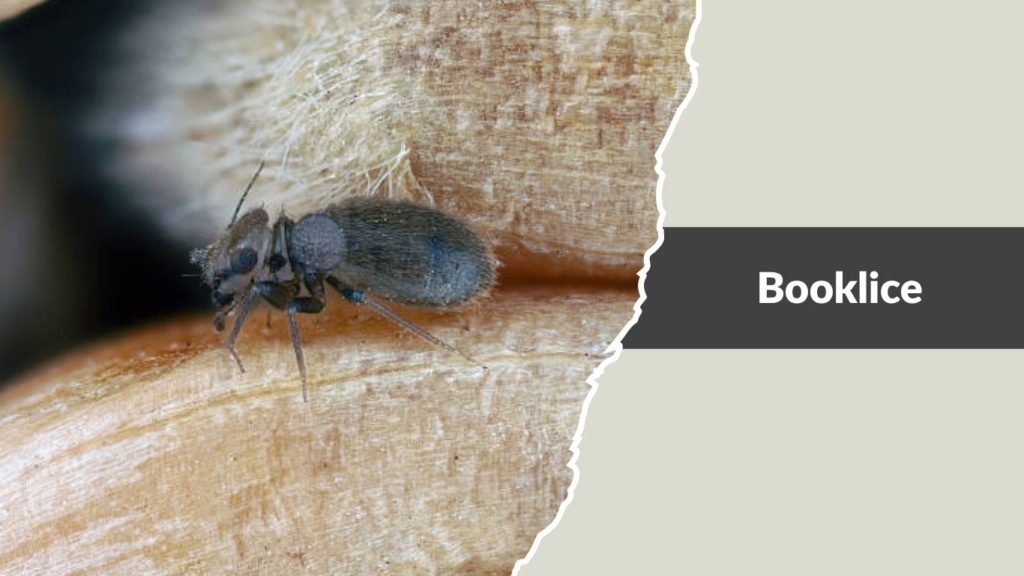
Booklice are tiny, soft-bodied insects commonly found in homes, especially in areas with high humidity. Despite their name, they are not true lice and do not live on humans. They are often seen in kitchens, bathrooms, or near stored food and paper materials. Booklice thrive in damp environments where mold and fungi are present. While they do not bite or cause direct harm, they can become a nuisance when they appear in large numbers.
Identification
- Extremely small, about 1–2 mm long
- Pale gray, white, or light brown in color
- Soft-bodied with a slightly elongated shape
- Slow-moving and often found in clusters
- Wingless or with very small wings in some cases
Habitat
Booklice prefer warm, humid environments with poor ventilation. They are commonly found in damp areas such as bathrooms, kitchens, basements, and around windows. They also hide in books, cardboard boxes, wallpaper, and stored food items where moisture and mold are present.
Behaviors
Booklice are not harmful but are attracted to moisture and mold. They tend to gather in hidden, damp areas and may spread if humidity levels remain high. These insects are slow movers and are often noticed when they appear in groups on surfaces like walls, shelves, or food packaging.
Diet and Lifecycle
Booklice feed on mold, fungi, and organic debris found on damp surfaces. Their lifecycle includes egg, nymph, and adult stages. They reproduce quickly in humid conditions, allowing populations to grow rapidly if moisture is not controlled. Reducing humidity is key to managing their presence.
6. Springtails
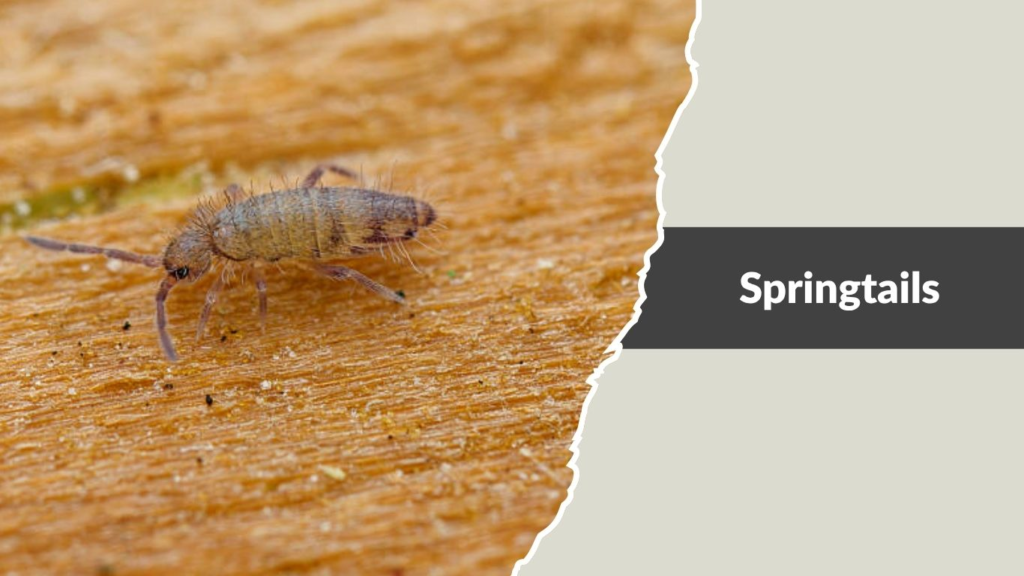
Springtails are tiny black or dark-colored insects often found in damp areas inside homes. They are commonly seen in bathrooms, kitchens, and near sinks or houseplants. These insects are harmless to humans but can become a nuisance when they appear in large numbers. Springtails are named for their ability to “spring” or jump when disturbed, which helps them escape predators. Their presence usually indicates excess moisture or humidity in the home.
Identification
- Very small, about 1–2 mm long
- Black, gray, or sometimes white in color
- Soft-bodied with a slightly elongated shape
- Known for their jumping or “springing” movement
- Often found in groups near moisture sources
Habitat
Springtails thrive in moist environments with high humidity. They are commonly found in bathrooms, kitchens, basements, and around sinks or leaking pipes. They may also live in the soil of houseplants or under damp materials. Any area with excess moisture can support their growth.
Behaviors
Springtails are active in damp conditions and tend to gather in large numbers. When disturbed, they use a specialized structure to jump away quickly. They do not bite or cause damage to household items, but their sudden movement and large presence can be unsettling. They usually remain close to their moisture source.
Diet and Lifecycle
Springtails feed on mold, fungi, algae, and decaying organic matter. Their lifecycle includes egg, juvenile, and adult stages. They reproduce quickly in humid conditions, allowing populations to grow rapidly. Controlling moisture levels is the most effective way to manage and reduce their presence indoors.
7. Black Ants
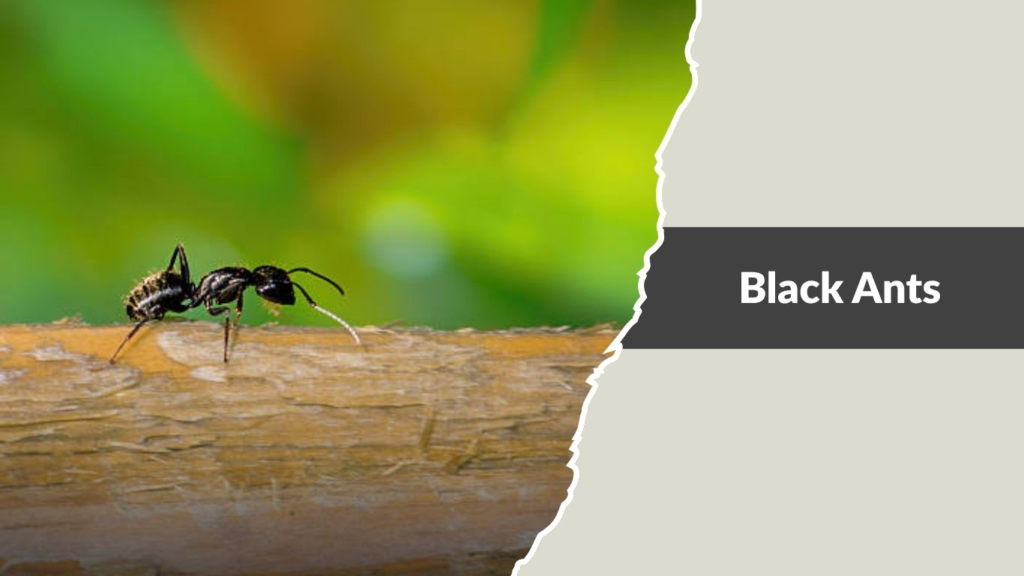
Black ants are among the most common tiny black insects found in houses. They often enter homes in search of food and water, especially in kitchens and storage areas. These ants can quickly form visible trails as they move between their nest and food sources. While they are generally harmless, their presence can be annoying and may lead to food contamination if not controlled early.
Identification
- Small ants, typically 1.5–3 mm long
- Shiny black in color
- Segmented body with a narrow waist
- Move in long, organized trails
- Often seen near food crumbs or spills
Habitat
Black ants usually build their nests outdoors in soil, under stones, or near foundations. However, they enter homes through small cracks and gaps to find food. Indoors, they are commonly found in kitchens, near sinks, and along baseboards where food and moisture are available.
Behaviors
Black ants are highly organized and follow scent trails left by other ants. Once a food source is found, they quickly recruit others, forming long lines. They are active foragers and can travel significant distances. Although they do not pose serious threats, they can become persistent if a food source is consistently available.
Diet and Lifecycle
Black ants feed on a variety of foods, including sweets, grease, and proteins. Their lifecycle includes egg, larva, pupa, and adult stages. Colonies can grow quickly, especially in warm conditions. The queen lays eggs continuously, allowing the population to expand if not properly managed.
8. Weevils
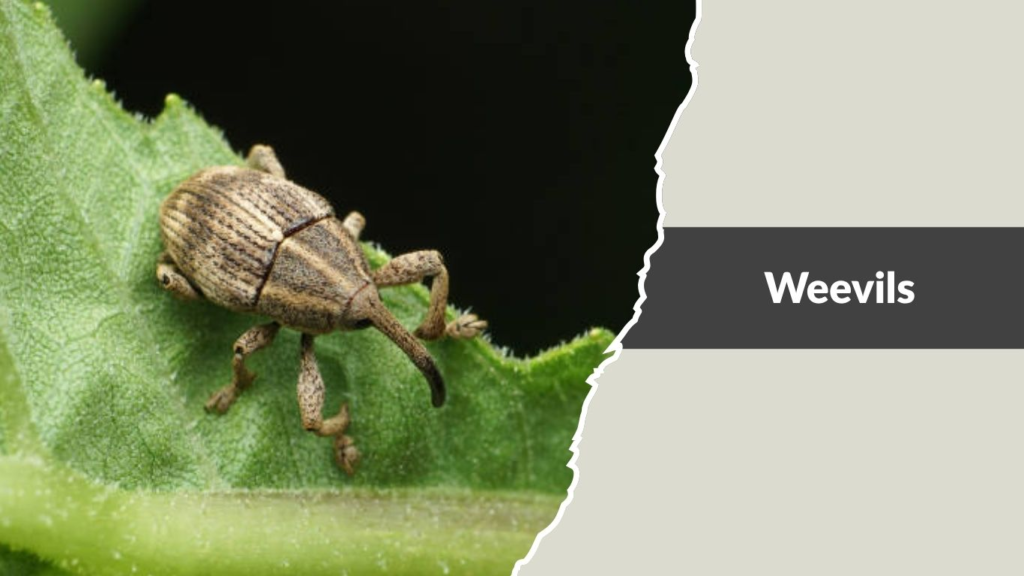
Weevils are tiny black or dark brown insects commonly found in homes, especially in kitchens and pantry areas. They are known for infesting stored food products like rice, flour, grains, and cereals. These pests often go unnoticed until they appear in large numbers inside food containers. While they do not pose serious health risks, they can contaminate food and cause waste, making them a common household nuisance.
Identification
- Small beetles, about 2–4 mm long
- Dark brown to black in color
- Distinct elongated snout (nose-like feature)
- Hard outer shell with a slightly oval body
- Often found inside stored food products
Habitat
Weevils are mostly found in kitchens, pantries, and food storage areas. They prefer dry goods such as rice, flour, grains, pasta, and cereals. They can enter homes through packaged food items and spread to other stored products. Warm and undisturbed storage areas provide ideal conditions for infestation.
Behaviors
Weevils are slow-moving insects that tend to stay hidden inside food containers. They are not strong fliers and usually spread through infested food items rather than moving around the house. Once inside a food source, they multiply quickly and remain there until the food is consumed or discarded.
Diet and Lifecycle
Weevils feed on grains and other dry food products. Their lifecycle includes egg, larva, pupa, and adult stages, all of which may occur inside the same food source. Females lay eggs directly inside grains, where larvae develop and feed. This allows infestations to grow unnoticed until adults emerge.
9. Pantry Beetles
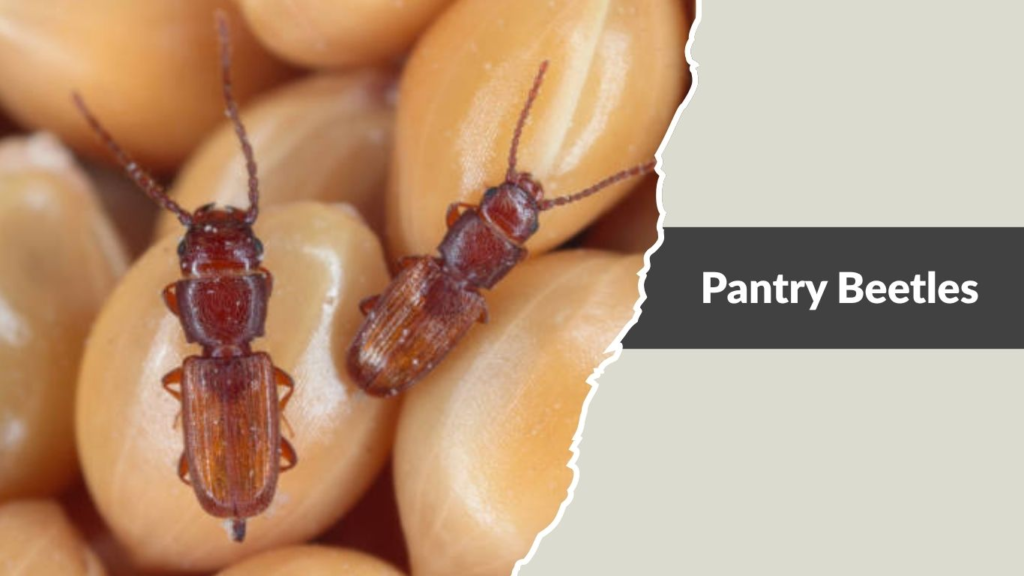
Pantry beetles are tiny black or dark-colored insects that commonly infest stored food in homes. They are often found in kitchen cabinets, pantries, and food storage containers. These pests can quickly spread from one food item to another, especially if products are not properly sealed. While they are not harmful to humans, they can contaminate food and cause significant waste, making them a frustrating household problem.
Identification
- Small insects, about 2–3 mm long
- Dark brown to black in color
- Oval-shaped body with a hard shell
- Often found crawling inside food packages
- Presence of larvae or fine powder in food is a common sign
Habitat
Pantry beetles thrive in dry food storage areas such as kitchen cabinets and pantries. They are commonly found in flour, grains, cereals, spices, and dried foods. They often enter homes through infested packaged goods and spread to other nearby items if not controlled.
Behaviors
Pantry beetles are slow-moving and tend to remain close to their food source. They are not strong fliers but can crawl easily between stored items. Infestations often go unnoticed until multiple food packages are affected. They are most active in warm environments and can spread quickly if food is left unsealed.
Diet and Lifecycle
Pantry beetles feed on a wide range of dry food products, including grains, flour, and processed foods. Their lifecycle includes egg, larva, pupa, and adult stages. Eggs are laid inside or near food sources, and larvae feed directly on the food. This allows the infestation to grow rapidly within stored products if not addressed promptly.
10. Spider Beetles
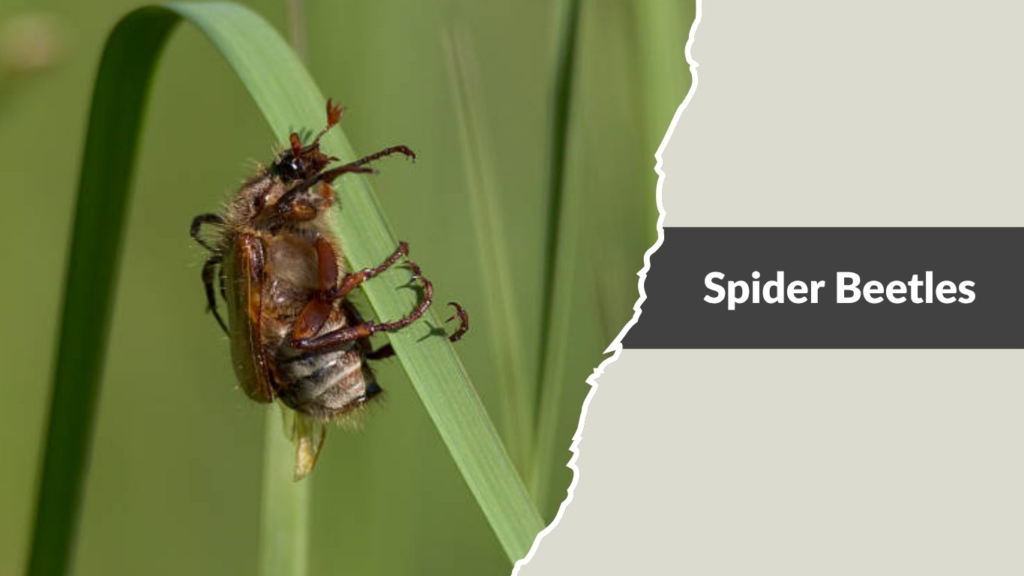
Spider beetles are tiny black or reddish-brown insects that are often found in homes, especially in kitchens and storage areas. They get their name from their long legs and round bodies, which give them a spider-like appearance. These pests are known to infest stored food and organic materials. Although they are not harmful to humans, they can contaminate food and become a nuisance if their population increases.
Identification
- Small insects, about 1.5–3.5 mm long
- Dark brown, reddish, or black in color
- Round, bulb-like body with long legs
- Resemble small spiders in appearance
- Often found crawling in food storage areas
Habitat
Spider beetles prefer dark, undisturbed places such as pantries, cupboards, basements, and storage boxes. They are commonly found near stored food, old fabrics, and organic debris. These insects thrive in warm environments and can hide in cracks, corners, and behind stored items.
Behaviors
Spider beetles are mostly active at night and tend to hide during the day. They move slowly and are often found near their food source. These insects can survive in a variety of conditions and may spread throughout the home if food is easily available. Their secretive nature makes infestations harder to detect early.
Diet and Lifecycle
Spider beetles feed on a wide range of materials, including grains, dried foods, fabrics, and even animal-based products. Their lifecycle includes egg, larva, pupa, and adult stages. Eggs are laid near food sources, and larvae feed as they grow. The lifecycle can vary depending on environmental conditions, but infestations can develop over time if not controlled.
11. Thrips
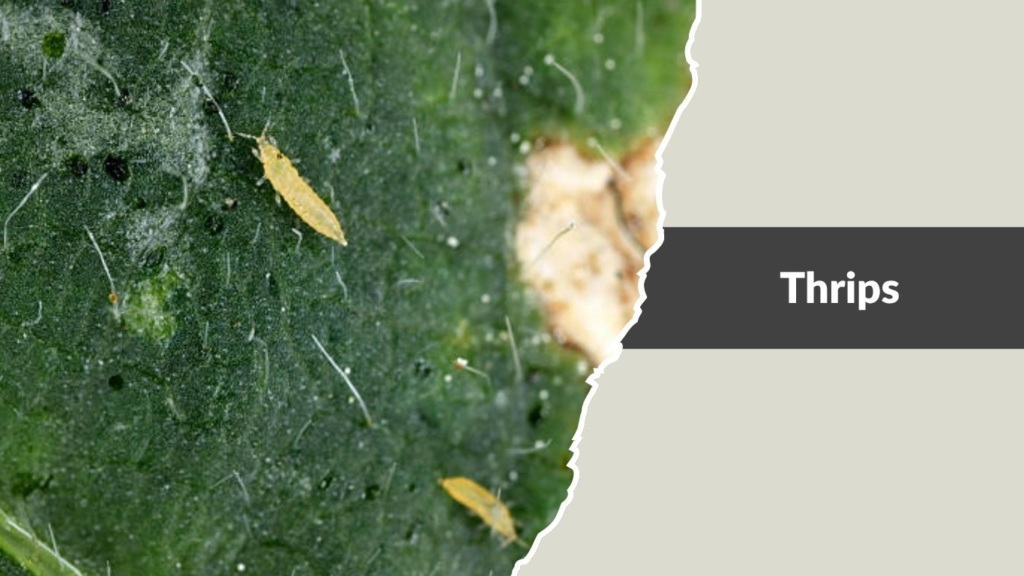
Thrips are tiny, slender insects that can sometimes be found inside homes, especially near windows or indoor plants. Although they are more commonly outdoor pests, they can enter houses in search of light or food. These insects are known for feeding on plant material, and their presence indoors is often linked to infested houseplants. While they do not harm humans, they can damage plants and become a nuisance when they appear in large numbers.
Identification
- Very small, about 1–2 mm long
- Black or dark brown in color
- Slender, elongated body
- Narrow wings with fringed edges (in adults)
- Often found on leaves or near windows
Habitat
Thrips are usually found on indoor plants, window sills, and areas with natural light. They prefer environments where plants are present, as these provide both food and shelter. They may also gather near windows as they are attracted to light sources.
Behaviors
Thrips are active feeders that puncture plant tissues and suck out the contents. They are weak fliers but can move quickly and may spread from one plant to another. Indoors, they are often noticed when they appear in groups on leaves or flying near light. Their activity can cause visible damage to plants, such as discoloration or spots.
Diet and Lifecycle
Thrips feed mainly on plant sap and organic material. Their lifecycle includes egg, larva, pupa, and adult stages. Eggs are laid inside plant tissue, and larvae begin feeding immediately after hatching. The lifecycle can complete quickly in warm conditions, allowing populations to grow rapidly if not controlled.
12. Fruit Flies
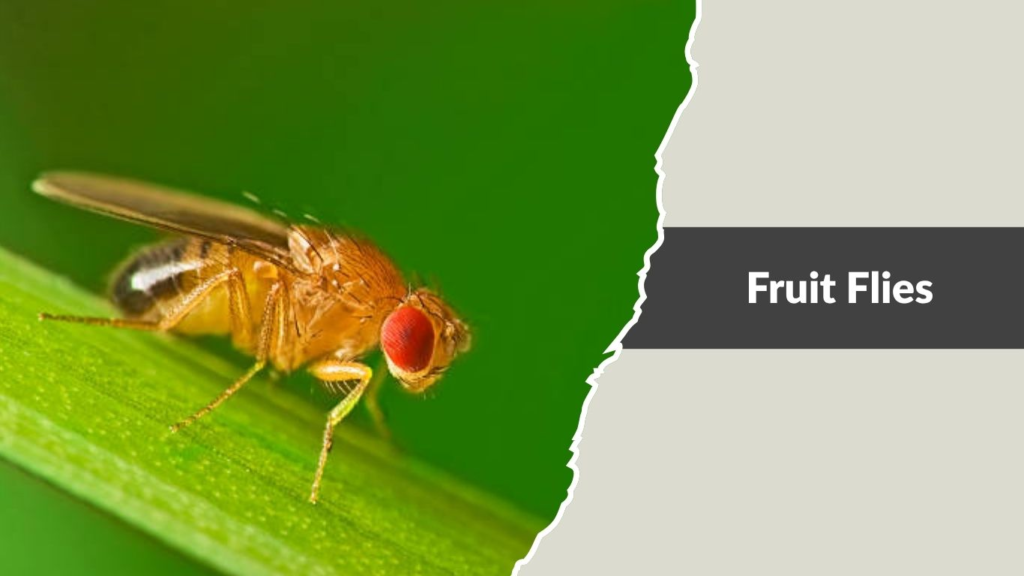
Fruit flies are tiny black or dark-colored insects commonly found in homes, especially in kitchens. They are strongly attracted to ripe, rotting, or fermented fruits and vegetables. These insects reproduce quickly and can become a noticeable nuisance within a short time. Fruit flies are often seen flying around food, garbage bins, and drains. While they are not harmful, their presence can be annoying and may lead to food contamination.
Identification
- Very small, about 2–3 mm long
- Light brown to black in color with red eyes (in many cases)
- Small, rounded body with clear wings
- Slow, hovering flight pattern
- Commonly seen around fruits, trash, or drains
Habitat
Fruit flies thrive in areas where food is exposed, especially kitchens. They are commonly found near overripe fruits, vegetables, garbage bins, and drains. Any place with fermenting organic material can serve as a breeding ground. Poor sanitation and uncovered food increase the chances of infestation.
Behaviors
Fruit flies are highly attracted to the smell of fermentation. They tend to gather in groups and are most active around food sources. These insects are quick breeders and can multiply rapidly if conditions are favorable. They often stay close to where they find food and rarely travel far.
Diet and Lifecycle
Fruit flies feed on fermenting fruits, vegetables, and organic matter. Their lifecycle includes egg, larva, pupa, and adult stages, and it can be completed in just a few days under ideal conditions. Eggs are laid on the surface of food, and larvae begin feeding immediately after hatching, allowing populations to grow quickly.
13. Bed Bug Nymphs
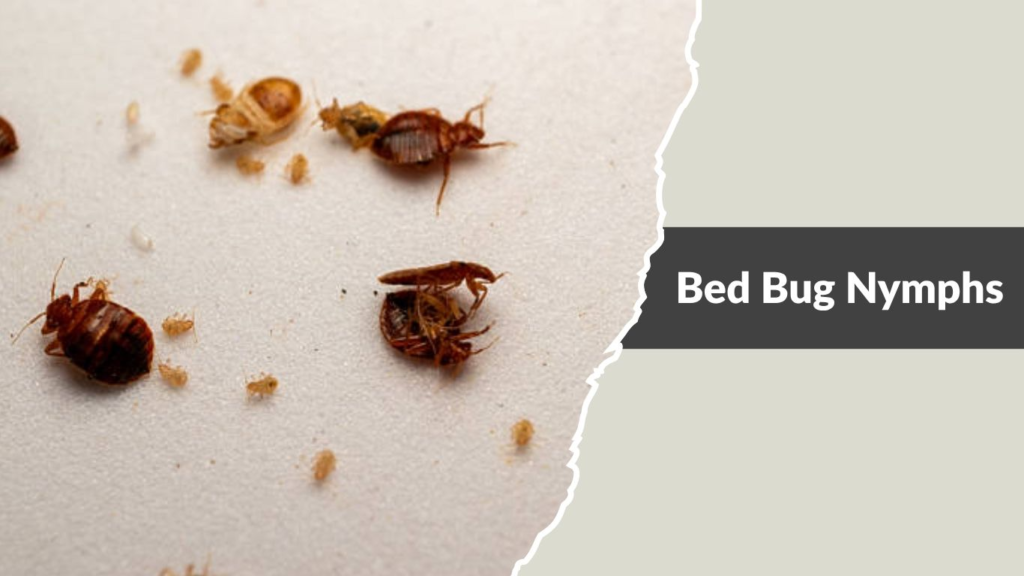
Bed bug nymphs are the immature stage of bed bugs and are often mistaken for tiny black or dark insects in the house. Although newly hatched nymphs are pale, they turn darker after feeding on blood, which makes them more noticeable. These pests are commonly found in bedrooms, hiding in mattresses, bed frames, and cracks. Like adult bed bugs, nymphs feed on human blood and can quickly grow into adults if not controlled early.
Identification
- Very small, about 1–4 mm long depending on stage
- Light in color when unfed, turning reddish-brown after feeding
- Oval, flat body similar to adult bed bugs
- No wings and slow-moving
- Often found near bedding, seams, and cracks
Habitat
Bed bug nymphs live in the same areas as adult bed bugs. They are commonly found in mattresses, bed frames, headboards, furniture, and cracks in walls or floors. They prefer dark, hidden spaces close to where people sleep, as they rely on blood meals to grow and develop.
Behaviors
Nymphs are active feeders and must consume blood to molt and grow into the next stage. They usually come out at night and hide during the day. Like adults, they are attracted to body heat and carbon dioxide. Their small size allows them to remain hidden, making infestations harder to detect early.
Diet and Lifecycle
Bed bug nymphs feed exclusively on blood, usually from humans. Their lifecycle includes egg, multiple nymph stages, and adult. After each feeding, they molt and grow larger. Under favorable conditions, they can develop into adults within a few weeks, allowing infestations to spread quickly if not treated.
FAQs
What causes tiny black insects to appear in houses?
Tiny black insects usually appear due to food, moisture, or shelter. Poor sanitation, exposed food, damp areas, and clutter create ideal conditions for them. Some insects also enter from outside through cracks, windows, or infested items brought into the home.
Are tiny black insects harmful to humans?
Most tiny black insects are not directly harmful to humans, but some can cause issues. For example, fleas can bite, and pantry pests can contaminate food. While many are just a nuisance, it’s important to identify them to understand any potential risks.
How can I identify tiny black insects in my home?
You can identify them by observing their size, shape, color, movement, and where they are found. For example, insects near food may be pantry pests, while those near plants may be fungus gnats. Proper identification helps in choosing the right control method.
How do I get rid of tiny black insects quickly?
The fastest way is to clean affected areas, remove food sources, and reduce moisture. Vacuuming, sealing entry points, and using targeted treatments can help eliminate them. Consistent cleaning and monitoring are key to stopping infestations effectively.
How can I prevent tiny black insects from coming back?
Preventing them involves maintaining cleanliness, storing food properly, fixing leaks, and sealing cracks or gaps. Regular inspection of hidden areas and proper ventilation can also reduce the chances of reinfestation and keep your home insect-free.
