
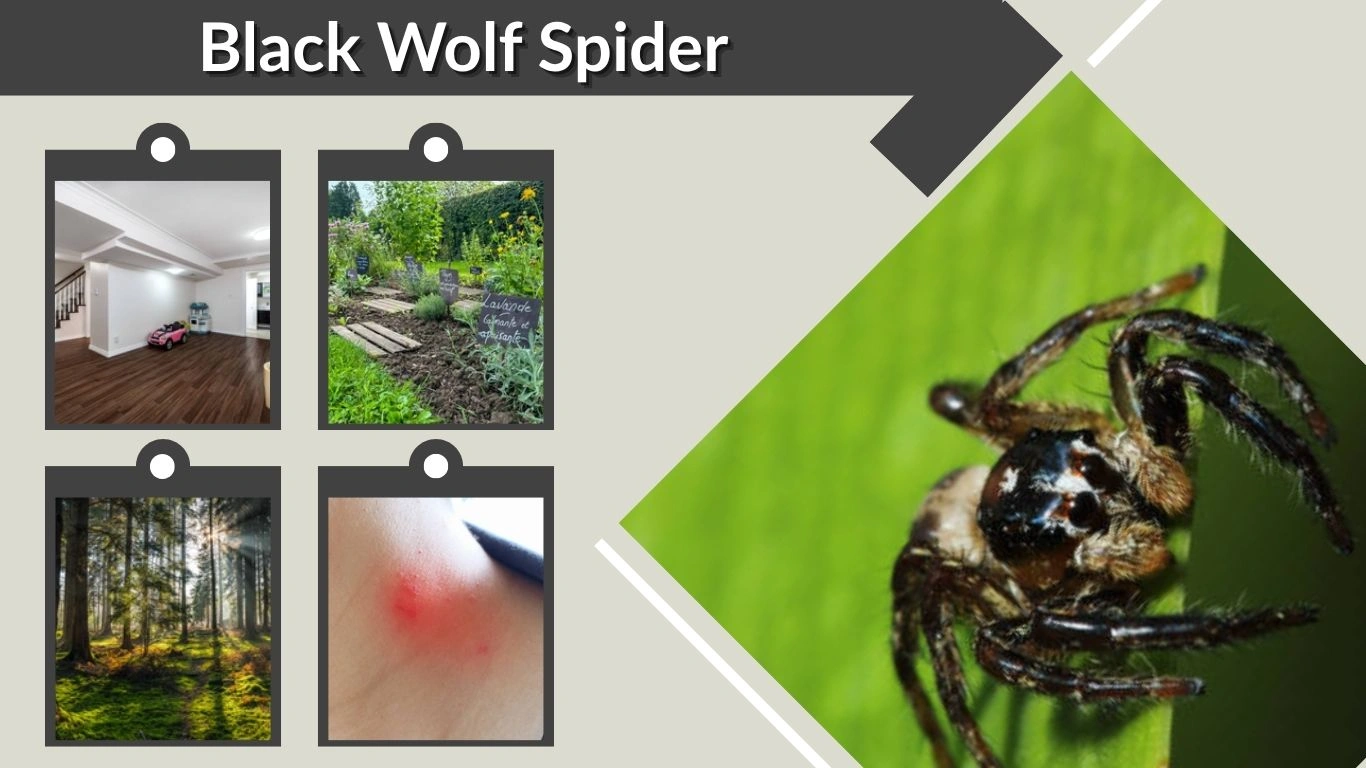
Black wolf spiders are large, fast-moving hunters that often alarm people due to their size and dark color. Unlike web-building spiders, they actively chase their prey and are commonly found in gardens, homes, and outdoor spaces. Many people confuse them with more dangerous species like black widows, leading to unnecessary fear. In reality, black wolf spiders are generally harmless to humans. This guide explains how to identify them, their size, behavior, and what to expect if you encounter one.
What Is a Black Wolf Spider?
Black wolf spiders belong to the Lycosidae family, a group known for their speed, strong vision, and hunting skills. These spiders do not spin webs to catch prey; instead, they roam and hunt on the ground. While not all wolf spiders are black, some species appear very dark or nearly black depending on lighting and age. Their rugged appearance and active behavior make them one of the most noticeable spiders in many environments.
How to Identify a Black Wolf Spider
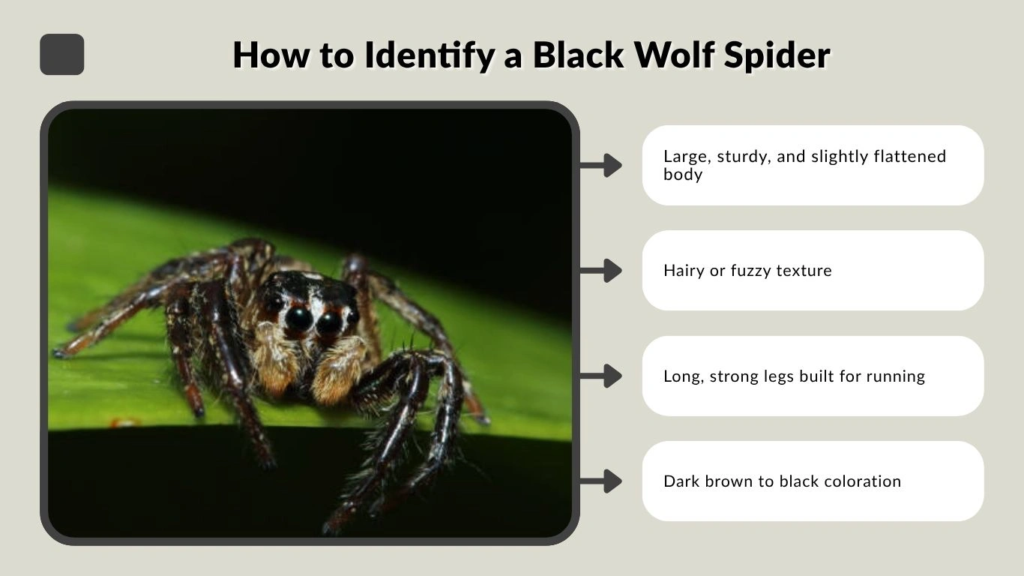
Identifying a black wolf spider can be easier when you focus on its body shape, movement, and eye pattern. While colors may vary, their overall structure remains consistent across species.
Physical Characteristics
- Large, sturdy, and slightly flattened body
- Hairy or fuzzy texture
- Long, strong legs built for running
- Dark brown to black coloration
Eye Arrangement
- Eight eyes arranged in three rows
- Two large eyes in the center
- Excellent vision, especially at night
Size Variations
- Small individuals under 1 cm
- Medium-sized commonly seen outdoors
- Large or “giant” species with noticeable leg span
Color Variations of Black Wolf Spiders
Although often described as black, wolf spiders rarely appear as a pure solid black. Most have subtle patterns or markings that help with camouflage. These variations can include stripes, spots, or mixed tones, depending on the species and environment.
Black and White Wolf Spider
- White stripes or markings on the back
- Helps break up their outline in nature
- Common in many regions
All Black or Jet Black Wolf Spider
- Appears completely dark under certain lighting
- Less common than patterned varieties
- Often confused with other black spiders
Types of Black Wolf Spiders
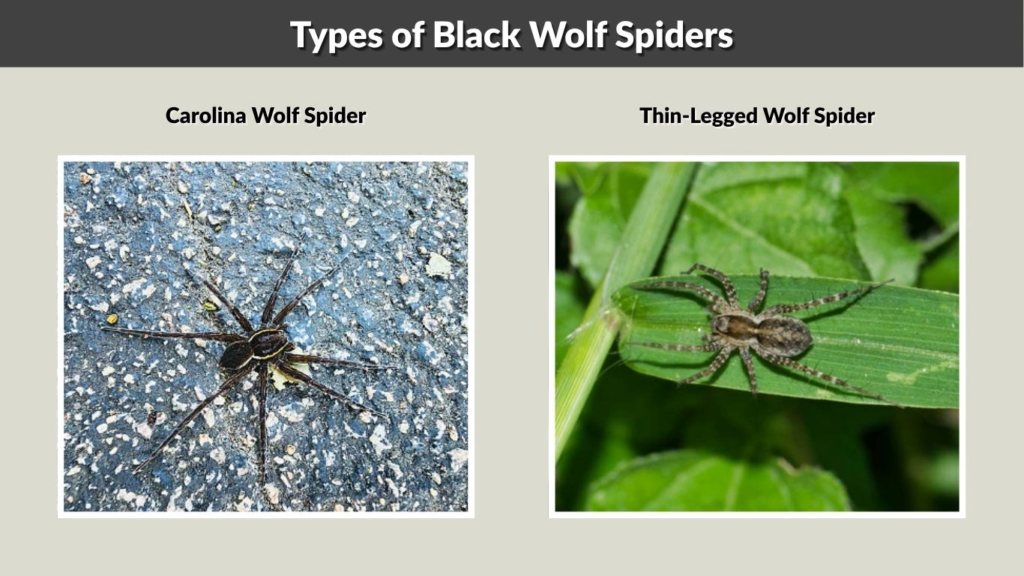
There are several species commonly referred to as black wolf spiders. While they share similar traits, their size, markings, and habitat can differ slightly depending on location.
Carolina Wolf Spider
- One of the largest wolf spider species
- Often dark brown to black in appearance
- Found in various parts of North America
Thin-Legged Wolf Spider
- More slender body and longer legs
- Fast and agile hunter
- Often seen in grassy or open areas
Black Wolf Spider Habitat
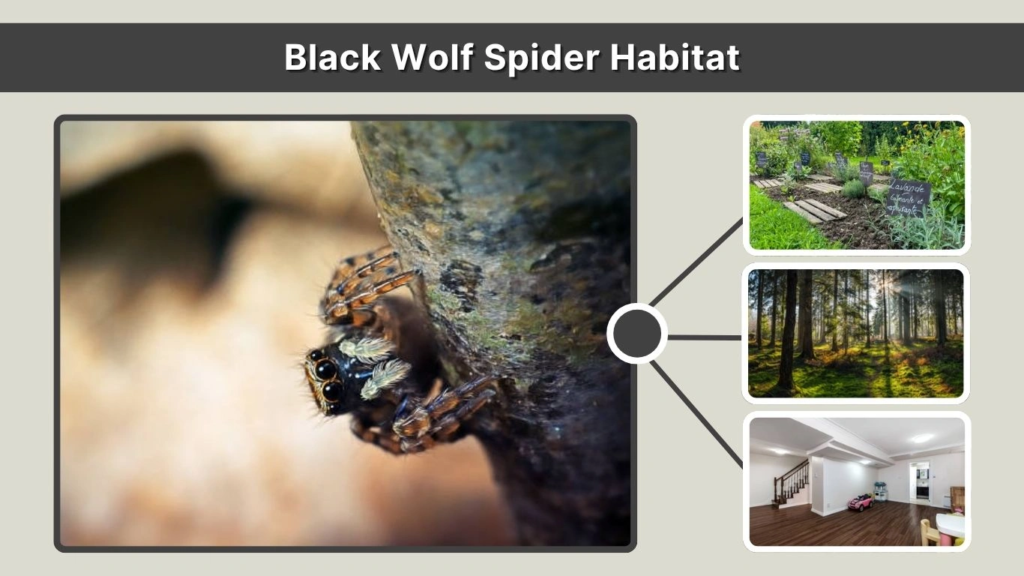
Black wolf spiders are highly adaptable and can live in a wide range of environments. They prefer areas where they can easily hunt and hide during the day. These spiders are commonly found both outdoors and occasionally inside homes.
Common Places to Find Them
- Gardens, lawns, and forests
- Under rocks, logs, or debris
- Basements, garages, and ground-level rooms
Behavior and Movement
- Active hunters, especially at night
- Do not build webs to catch prey
- Quick runners that rely on speed
Black Wolf Spider Distribution by Location
Black wolf spiders are widely distributed across North America and other parts of the world. They are commonly found in states such as Texas, California, Ohio, Michigan, Illinois, and Pennsylvania, as well as in regions of Canada like Ontario and Alberta. Their adaptability allows them to survive in different climates, from warm southern areas to cooler northern regions. Although their appearance may vary slightly by location, their behavior and role in the ecosystem remain consistent.
Are Black Wolf Spiders Poisonous?
Black wolf spiders are often described as “poisonous,” but the correct term is venomous. They use venom to subdue prey, not to harm humans. Their venom is mild and typically not dangerous to people. Most encounters with these spiders are harmless, and they prefer to run away rather than bite. Understanding this helps reduce fear and prevents unnecessary attempts to kill them.
Black Wolf Spider Bite
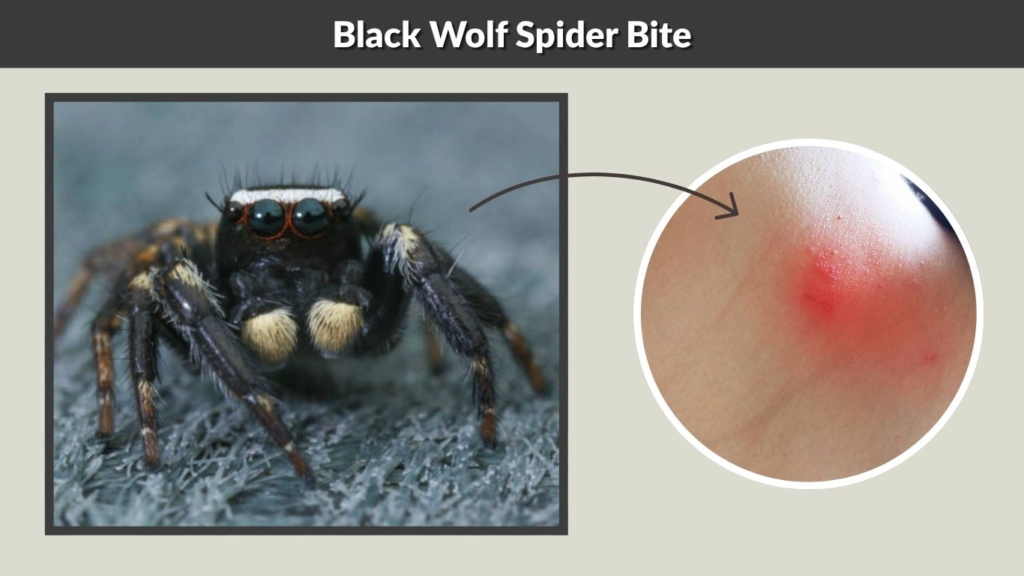
Although bites can occur, they are rare and usually happen only when the spider feels threatened. In most cases, a bite is mild and does not require medical treatment. Knowing the symptoms and how to respond can help you stay calm and handle the situation properly.
Bite Symptoms
- Mild pain or stinging sensation
- Redness and slight swelling
- Occasional itching or irritation
When Do They Bite?
- When handled or provoked
- If trapped against the skin
- As a defensive reaction
Black Wolf Spider vs Black Widow
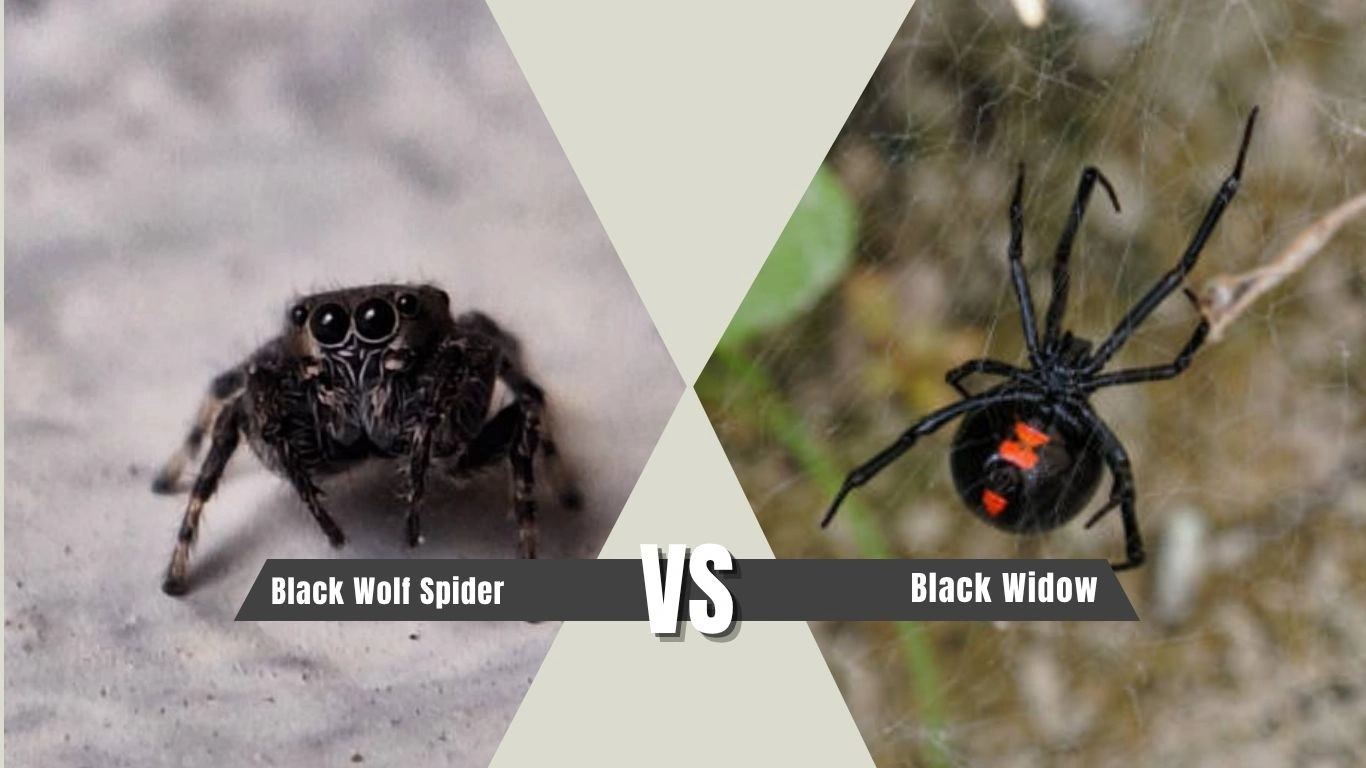
Black wolf spiders are often compared to black widows because of their dark color. However, they are very different in both behavior and danger level. Wolf spiders are active hunters that roam freely, while black widows stay in webs. In terms of risk, wolf spiders are far less dangerous, and their bites are rarely serious. This distinction is important for proper identification and avoiding unnecessary panic.
Key Differences
- Wolf spiders are hairy and robust; black widows are smooth and shiny
- Wolf spiders hunt actively; black widows build webs
- Wolf spiders are low-risk; black widows have stronger venom
Behavior and Hunting Style
Black wolf spiders are skilled hunters that rely on speed and vision rather than webs. They are mostly active at night, using their excellent eyesight to track prey. Their ability to run quickly and react instantly makes them efficient predators. These spiders play a useful role in controlling insect populations, which benefits both natural ecosystems and human environments.
Black Wolf Spider Size and Appearance Details
Black wolf spiders can look intimidating due to their size and hairy bodies. However, their size varies widely depending on species and location. Their legs are long and strong, designed for running rather than climbing. The combination of body shape and eye arrangement makes them easy to distinguish from other spiders once you know what to look for.
Male vs Female Differences
- Females are usually larger and heavier
- Males tend to be smaller and more active
- Females may carry egg sacs
Interesting Facts About Black Wolf Spiders
- Females carry their egg sacs attached to their bodies
- Spiderlings often ride on the mother’s back
- They have excellent night vision
- They do not spin webs to catch prey
FAQs
Are black wolf spiders dangerous to humans?
Black wolf spiders are not dangerous to humans. Their bites are rare and usually cause only mild irritation, making them far less harmful than many people assume.
How big can a black wolf spider get?
Some species can grow quite large, with noticeable leg spans. However, most remain moderate in size and are more intimidating in appearance than in actual threat.
Do black wolf spiders live in houses?
Yes, they can enter homes, especially while hunting for insects. They are often found in basements, garages, or ground-level areas.
What should I do if bitten by a black wolf spider?
Clean the bite with soap and water, apply ice to reduce swelling, and monitor symptoms. Seek medical care if unusual reactions occur.
Can a wolf spider kill a black widow?
In some cases, wolf spiders may prey on smaller spiders, including black widows. However, such encounters are rare and not typical behavior.
