
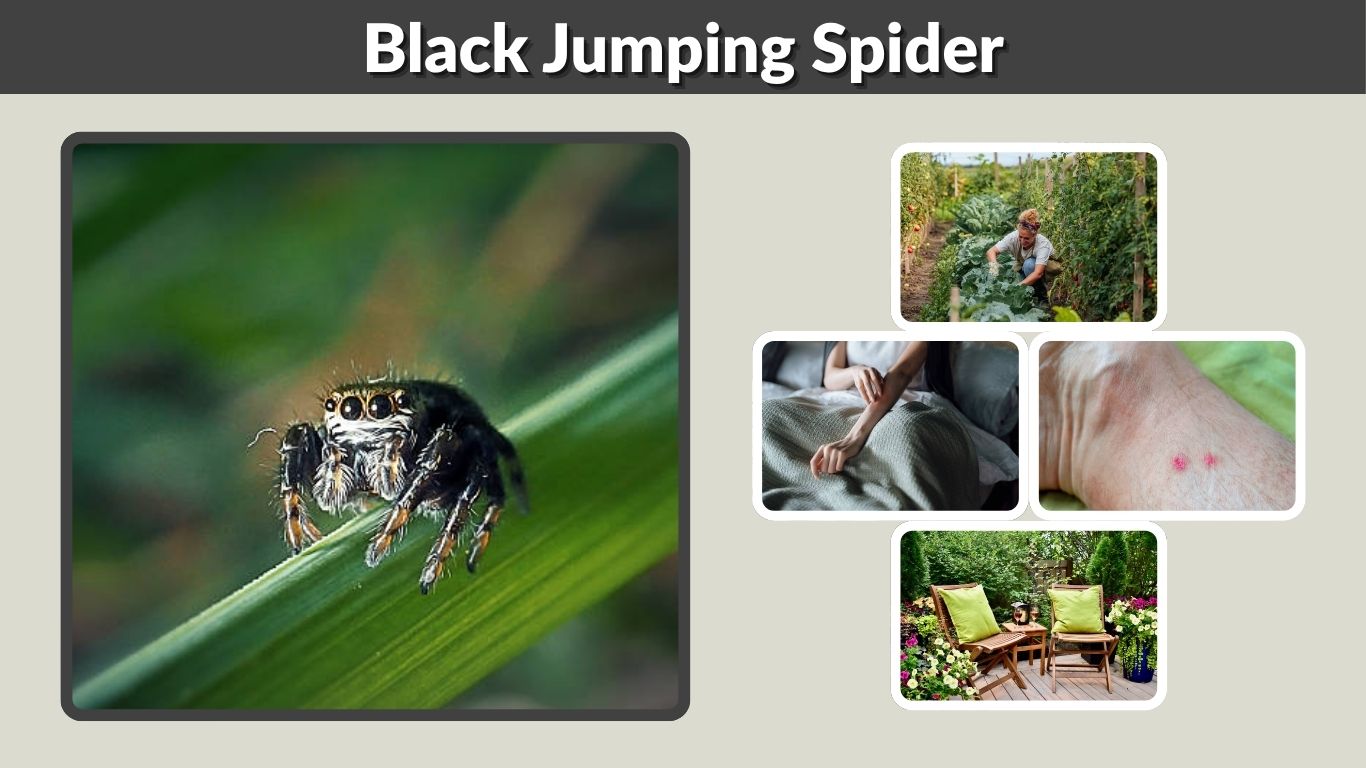
Black jumping spiders are small, active hunters known for their curious behavior and excellent vision. Unlike many spiders, they do not rely on webs to catch prey but instead stalk and jump on their targets. Their fuzzy bodies, large eyes, and quick movements make them easy to recognize. While their dark color can make them seem intimidating, they are generally harmless to humans. This guide explains how to identify black jumping spiders, their color variations, and what makes them unique.
What Is a Black Jumping Spider?
Black jumping spiders belong to the Salticidae family, which includes thousands of species worldwide. These spiders are known for their jumping ability, sharp eyesight, and active hunting style. Although many appear black, they often have colorful markings that vary by species. They are commonly found in gardens, homes, and outdoor structures, where they help control insect populations.
How to Identify a Black Jumping Spider
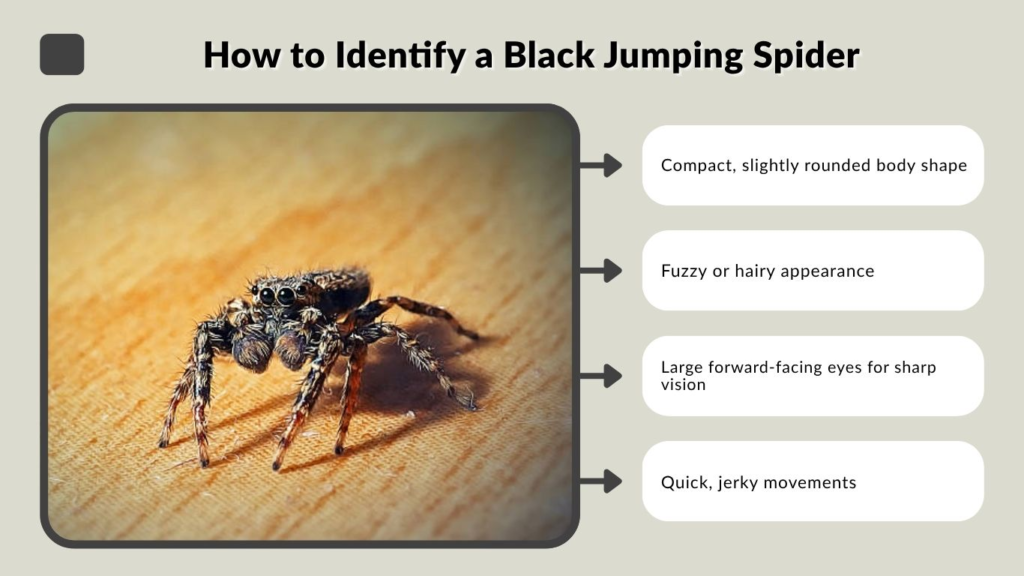
Black jumping spiders are easy to recognize once you know their key features. Their body shape, eye arrangement, and movement patterns make them stand out from other spiders. However, size and markings can vary depending on species and age.
Common Physical Features
- Compact, slightly rounded body shape
- Fuzzy or hairy appearance
- Large forward-facing eyes for sharp vision
- Quick, jerky movements
Size Variations
- Tiny and small species under 5 mm
- Medium-sized spiders commonly seen around homes
- Larger species known as bold or regal jumpers
Color Variations of Black Jumping Spiders

Although called “black” jumping spiders, many species display a mix of colors and patterns. These variations can include stripes, dots, or bright markings, making identification both interesting and sometimes confusing.
Black and White Jumping Spider
- White stripes or spots on a black body
- Often seen on walls and fences
- One of the most common color patterns
Black with Red or Orange Markings
- Bright red or orange dots on the back
- May resemble more dangerous spiders at first glance
- Usually harmless despite bold coloring
Black with Yellow or Green Features
- Yellow stripes or highlights
- Some species have metallic green or blue fangs
- Colors may appear brighter in sunlight
Types of Black Jumping Spiders
There are several species commonly referred to as black jumping spiders. While they share similar traits, each has distinct markings and behaviors that help differentiate them.
Bold Jumping Spider (Phidippus audax)
This is one of the most common species in North America. It typically has a black body with white spots on its abdomen and may show hints of orange or red in younger individuals.
Regal Jumping Spider
The regal jumping spider is larger and often more colorful. It can appear mostly black but may include white bands or subtle patterns that vary by region.
Black Jumping Spider Habitat
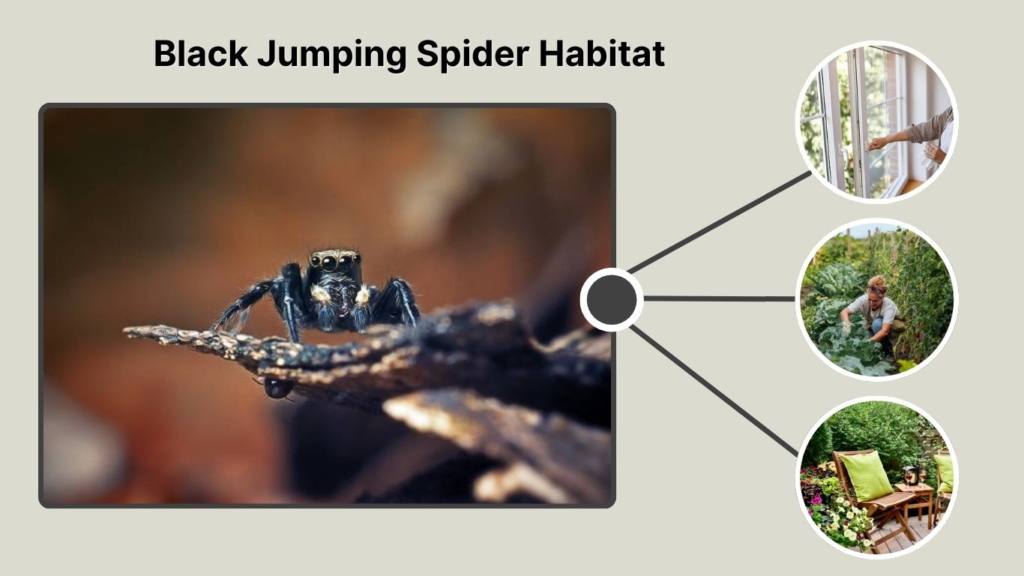
Black jumping spiders are highly adaptable and can live in a wide range of environments. They prefer areas where they can easily spot and hunt prey. Unlike web-building spiders, they are active during the day and rely on their vision.
Common Places to Find Them
- Walls, windows, and fences
- Gardens, plants, and outdoor furniture
- Inside homes near light sources
Behavior and Movement
- Active during daylight hours
- Jump to catch prey or escape danger
- Often pause and “observe” surroundings
Black Jumping Spider Distribution by Location
Black jumping spiders are found in many parts of the world, especially in warm and temperate regions. In North America, they are commonly seen across states like Texas, California, Ohio, Michigan, Pennsylvania, Oregon, and Colorado. Their adaptability allows them to thrive in both urban and rural environments. While their appearance may vary slightly depending on location, their behavior and characteristics remain consistent across regions.
Are Black Jumping Spiders Poisonous?
Black jumping spiders are often misunderstood when it comes to safety. Like most spiders, they are venomous, meaning they use venom to subdue prey. However, their venom is very mild and not harmful to humans. They are not aggressive and usually avoid contact, making them one of the safest spiders to encounter in homes or gardens.
Black Jumping Spider Bite
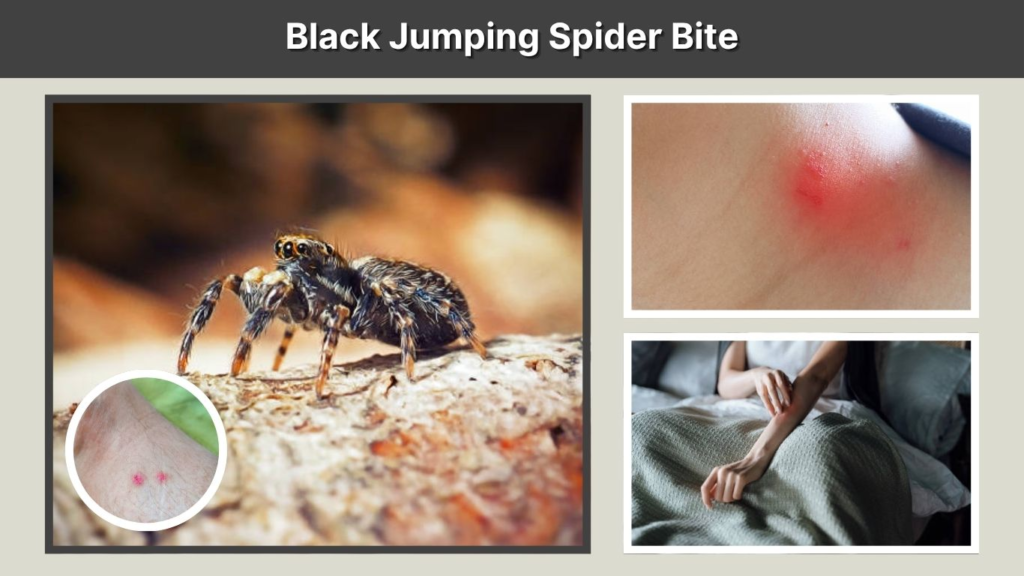
Although bites are rare, they can happen if the spider feels threatened or is accidentally pressed against the skin. In most cases, the bite is harmless and does not require medical attention. Understanding how bites occur and what to do helps reduce unnecessary fear.
Bite Symptoms
- Mild redness or irritation at the bite site
- Slight itching or swelling
- Temporary discomfort that fades quickly
When Do They Bite?
- When handled or disturbed
- If trapped between clothing or skin
- As a defensive reaction
Behavior and Personality
Black jumping spiders are known for their unique and almost curious behavior. They actively explore their surroundings and rely on their excellent eyesight to track movement. Unlike many spiders, they do not hide constantly but instead move confidently in search of prey. Their ability to jump several times their body length makes them efficient hunters and fascinating to observe.
Jumping Spider vs Black Widow
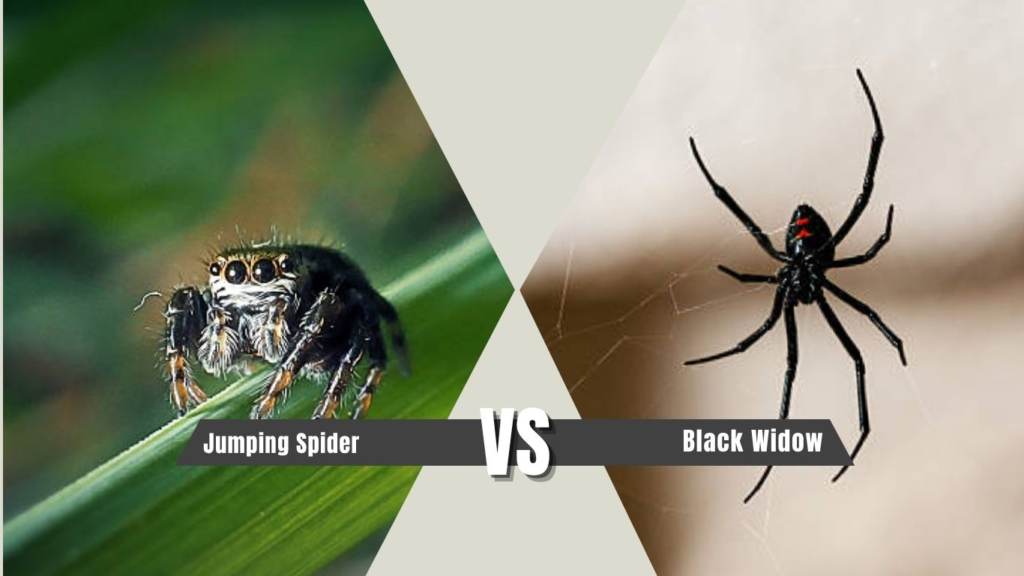
It is common to compare jumping spiders with black widow spiders due to their dark coloration. However, they are very different in behavior, appearance, and danger level. Jumping spiders are harmless and active hunters, while black widows are more reclusive and possess stronger venom.
Key Differences
- Jumping spiders are small, fuzzy, and active hunters
- Black widows have smooth bodies and build webs
- Jumping spiders are harmless, black widows are more dangerous
Size and Appearance Details
Black jumping spiders may appear larger due to their fuzzy bodies, but they are generally small in size. Their eye structure is one of their most distinctive features, giving them excellent vision and a unique “face-like” appearance. These traits make them easy to identify compared to other spider species.
Interesting Facts About Black Jumping Spiders
- They can jump several times their body length
- Their vision is among the best of all spiders
- Some species have colorful, metallic fangs
- They do not rely on webs to catch prey
FAQs
Are black jumping spiders dangerous to humans?
Black jumping spiders are not dangerous to humans. Their venom is mild, and bites are rare. Even if a bite occurs, it usually causes only minor irritation and does not require medical treatment.
How can I identify a black jumping spider?
You can identify them by their small, fuzzy bodies and large forward-facing eyes. Many have white spots, stripes, or colorful markings that make them stand out from other spiders.
Do black jumping spiders bite often?
No, they rarely bite humans. Bites typically happen only when the spider feels threatened or is accidentally pressed against the skin.
Where are black jumping spiders commonly found?
They are found in homes, gardens, and outdoor structures. They prefer sunny areas where they can actively hunt insects during the day.
What do black jumping spiders eat?
They feed on small insects like flies, mosquitoes, and other pests. Their hunting behavior helps control insect populations naturally.
