

The Brazilian black tarantula is one of the most popular pet spiders due to its calm temperament and striking appearance. Known for its deep black, velvet-like body, this species is often recommended for beginners. Despite its large size, it is gentle and rarely aggressive. Understanding its behavior, habitat, and care needs can help owners provide a healthy environment. This guide covers essential details, including size, lifespan, temperament, and basic care for this fascinating tarantula.
What Is a Brazilian Black Tarantula?
The Brazilian black tarantula, scientifically known as Grammostola pulchra, is a terrestrial species native to South America. It is widely admired for its solid black coloration and slow, deliberate movements. This tarantula is often chosen by hobbyists because of its docile nature and ease of care compared to more aggressive species.
Scientific Name and Classification
- Scientific name: Grammostola pulchra
- Family: Theraphosidae
- Common name: Brazilian black tarantula
Key Identification Features
- Uniform jet-black coloration
- Thick, velvety body hairs
- Strong legs with a sturdy build
Brazilian Black Tarantula Appearance and Size
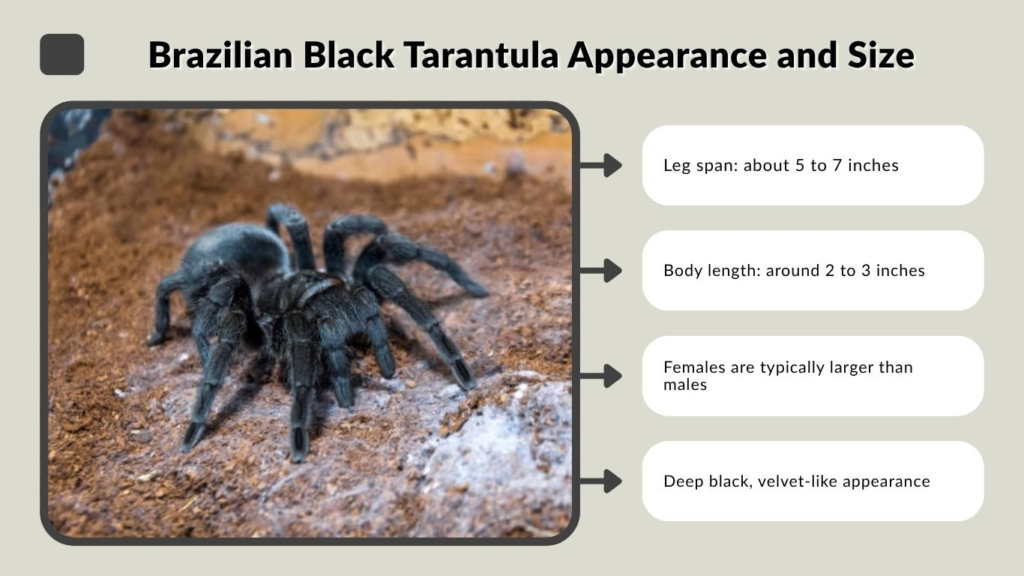
The Brazilian black tarantula is known for its striking look and moderate to large size. Its glossy black body gives it a unique, almost polished appearance. Although it grows slowly, it eventually becomes an impressive spider that stands out among other tarantula species.
How Big Do Brazilian Black Tarantulas Get?
- Leg span: about 5 to 7 inches
- Body length: around 2 to 3 inches
- Females are typically larger than males
Color and Physical Features
- Deep black, velvet-like appearance
- Dense hairs covering the body
- Prominent fangs used for feeding
Brazilian Black Tarantula Lifespan and Growth
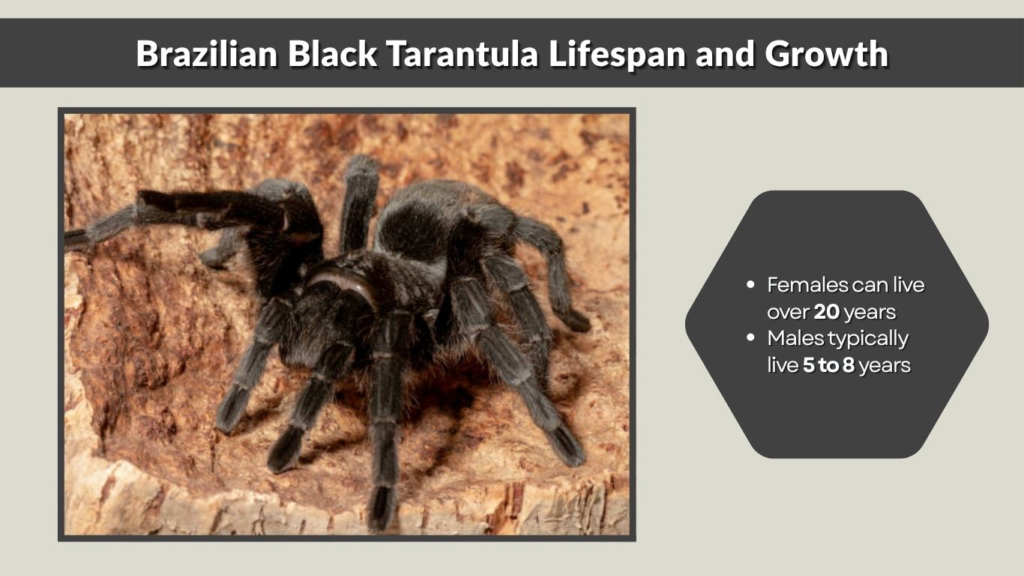
The Brazilian black tarantula is known for its long lifespan, especially in females. It is a slow-growing species, meaning it takes years to reach full maturity. This long life cycle makes it a long-term commitment for pet owners but also a rewarding one.
How Long Do They Live?
- Females can live over 20 years
- Males typically live 5 to 8 years
- Lifespan depends on care and environment
Growth Rate and Molting
- Slow growth compared to other species
- Juveniles molt more frequently
- Adults molt less often as they age
Brazilian Black Tarantula Temperament and Behavior
The Brazilian black tarantula is widely known for its calm and docile temperament. It is one of the least aggressive tarantulas, making it ideal for beginners. While it can defend itself if threatened, it usually prefers to stay still or retreat rather than show aggression.
Are Brazilian Black Tarantulas Friendly?
- Very calm and non-aggressive
- Rarely display defensive behavior
- Prefer to remain stationary
Are They Good for Beginners?
- Easy to care for
- Low maintenance requirements
- Suitable for first-time owners
Do They Burrow?
- Light burrowers
- Prefer hiding spots
- Spend time on the ground rather than climbing
Brazilian Black Tarantula Habitat and Natural Environment
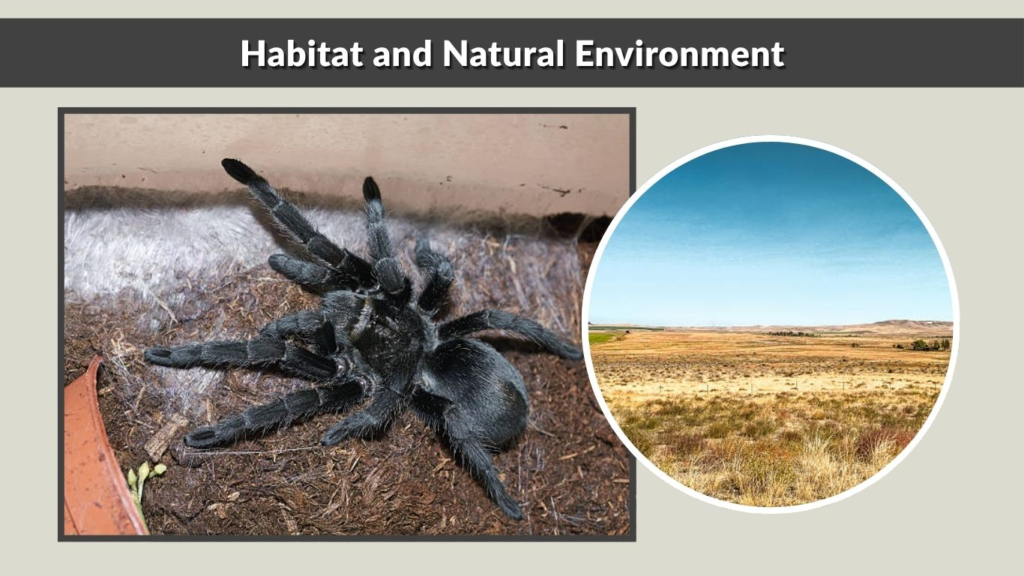
The Brazilian black tarantula originates from South America, particularly Brazil and Uruguay. It thrives in warm, slightly humid environments and is adapted to living on the ground. Its natural habitat influences how it should be kept in captivity to ensure proper health and comfort.
Where Do They Live in the Wild?
They are found in grasslands and open areas where the soil allows for shallow burrowing. These regions provide the warmth and shelter needed for survival.
Arboreal or Terrestrial?
This species is terrestrial, meaning it lives on the ground rather than in trees. It prefers stable environments with access to hiding spaces rather than vertical climbing areas.
Diet: What Do Brazilian Black Tarantulas Eat?
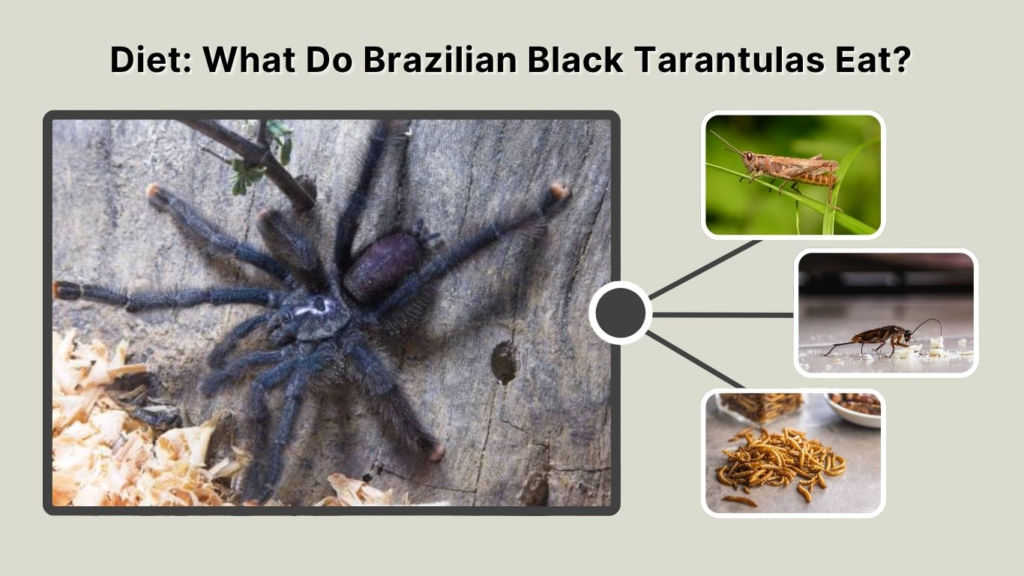
The Brazilian black tarantula is a carnivorous predator that feeds on a variety of live prey. In captivity, its diet is simple and easy to manage, making it suitable for beginners. Proper feeding ensures healthy growth and reduces stress. The size and frequency of meals depend on the tarantula’s age and overall condition.
Common Food Sources
- Crickets and roaches
- Mealworms and superworms
- Occasional small vertebrates (rare in captivity)
Feeding Schedule
- Juveniles: 2–3 times per week
- Adults: once every 7–10 days
- Remove uneaten prey after 24 hours
Brazilian Black Tarantula Care Guide
Providing proper care is essential for maintaining a healthy and stress-free tarantula. This species does not require complex setups, but its enclosure should mimic natural conditions. Temperature, humidity, and cleanliness play a major role in its overall well-being and longevity.
Enclosure Setup
- Tank size: 5–10 gallons
- Use soft substrate for burrowing
- Add a hide or shelter
Temperature and Humidity
- Ideal temperature: 70–80°F
- Moderate humidity levels
- Avoid overly damp conditions
Maintenance Tips
- Clean enclosure regularly
- Provide fresh water
- Monitor behavior and feeding
Brazilian Black Tarantula Handling and Safety
The Brazilian black tarantula is calm, but handling should still be limited. These spiders are delicate and can be easily injured if dropped. While their venom is mild, it is always better to avoid unnecessary interaction. Observing rather than handling is the safest approach for both the owner and the tarantula.
Can You Handle Them?
They can be handled occasionally, but it is not recommended frequently. Stress and accidental falls pose greater risks than their temperament. Gentle and minimal interaction is best.
Bite and Venom
Their bite is rare and usually occurs only when threatened. The venom is mild and typically causes minor pain, similar to a bee sting, with little to no long-term effects.
Male vs Female Brazilian Black Tarantula
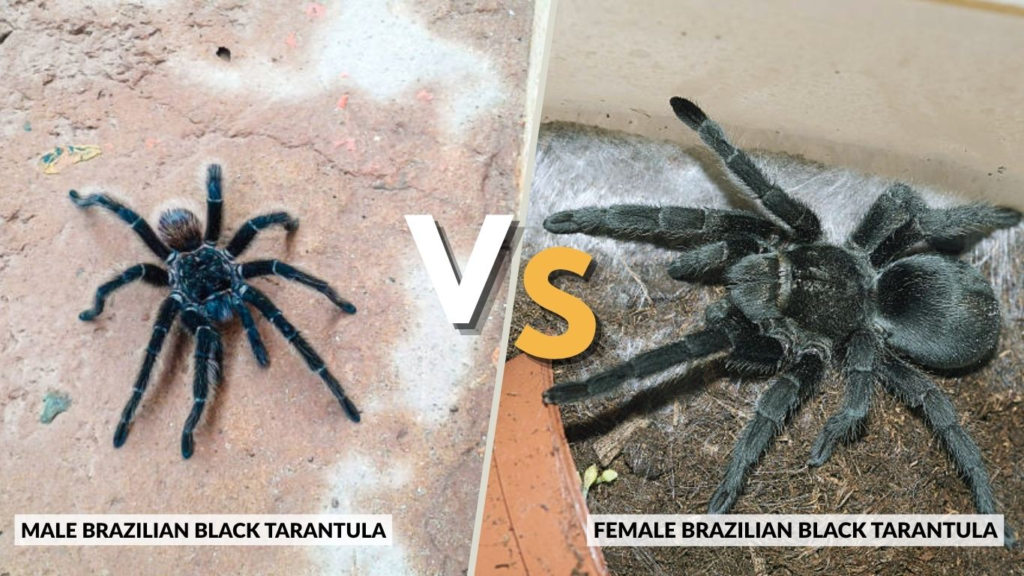
Male and female Brazilian black tarantulas differ in appearance, lifespan, and behavior. These differences become more noticeable as they mature. Knowing how to distinguish between them helps owners better understand their pet and its life cycle.
Key Differences
- Females are larger and heavier
- Males have longer, thinner legs
- Males mature faster
Lifespan Differences
- Females: 20+ years
- Males: 5–8 years
Price and Buying Guide
The Brazilian black tarantula is considered a premium species due to its popularity and slow growth. Prices can vary depending on age, size, and gender. Buyers should always choose reputable sellers to ensure the health and authenticity of the tarantula.
Price Range
- Spiderlings: $50–$150
- Juveniles: $150–$300
- Adult females: $300–$600+
Where to Buy
- Reputable breeders
- Online exotic pet stores
- Reptile expos and events
FAQs
Are Brazilian black tarantulas venomous?
Yes, Brazilian black tarantulas are venomous, but their venom is mild and not dangerous to humans. A bite usually results in minor pain and swelling, similar to a bee sting, and serious reactions are very rare.
Are Brazilian black tarantulas good for beginners?
They are considered one of the best tarantulas for beginners due to their calm temperament and simple care requirements. Their slow movement and low aggression make them easy to manage for new owners.
How big do Brazilian black tarantulas get?
They can reach a leg span of about 5 to 7 inches when fully grown. Females are generally larger and bulkier, while males are slimmer with longer legs.
How long do Brazilian black tarantulas live?
Females can live over 20 years with proper care, making them a long-term pet. Males usually live between 5 and 8 years and often die after reaching maturity.
How much does a Brazilian black tarantula cost?
The cost varies depending on age and size. Spiderlings are more affordable, while adult females can be quite expensive due to their rarity and long lifespan.
