
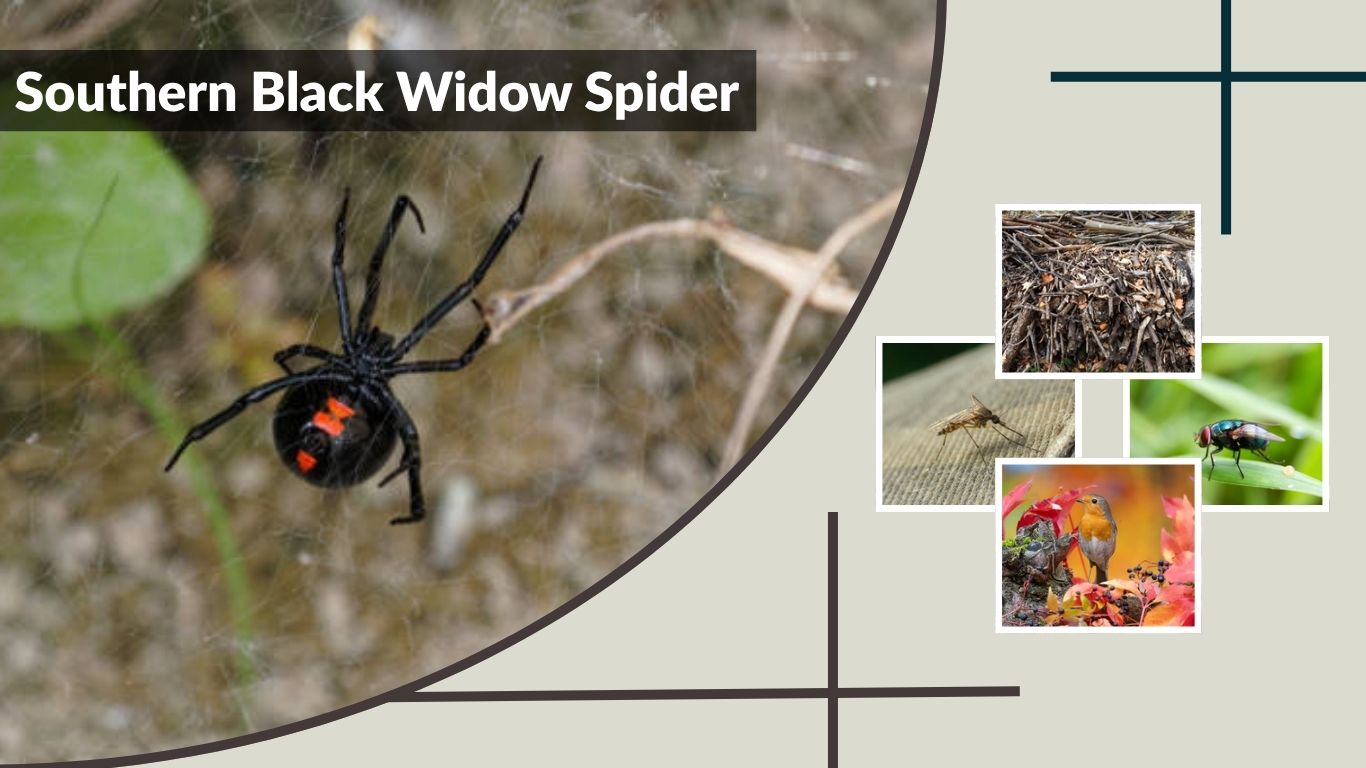
The southern black widow spider is one of the most well-known venomous spiders in North America. Recognized for its shiny black body and red hourglass marking, it often causes concern due to its reputation. Despite this, it is not aggressive and usually avoids human contact. Understanding its behavior, habitat, and bite effects can help reduce fear. This guide covers identification, safety, and key facts to help you recognize and better understand this fascinating but misunderstood spider.
What Is a Southern Black Widow Spider?
The southern black widow spider, scientifically known as Latrodectus mactans, belongs to a group of widow spiders known for their potent venom. It is commonly found in warm regions and prefers quiet, sheltered environments. This species plays an important ecological role by controlling insect populations and maintaining balance in its habitat.
Scientific Name and Classification
- Scientific name: Latrodectus mactans
- Family: Theridiidae
- Common name: Southern black widow
Key Identification Features
- Glossy black body
- Distinct red hourglass marking
- Long, slender legs
Southern Black Widow Appearance and Identification
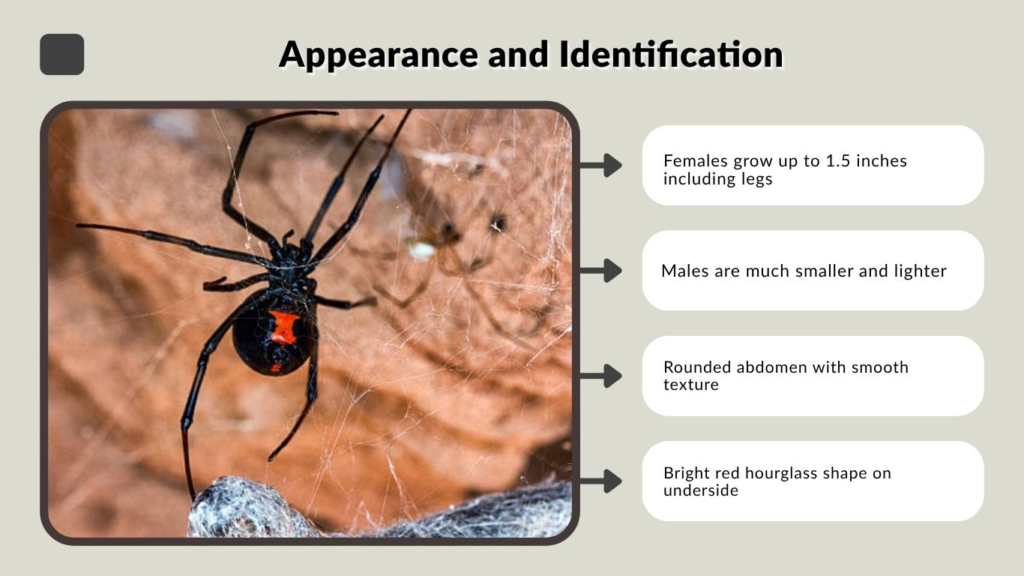
The southern black widow spider is easy to recognize due to its unique appearance. Its shiny body and bright markings make it stand out, especially in low-light environments. While females are more noticeable, males are smaller and less striking, often leading to confusion when identifying the species.
Size and Physical Characteristics
- Females grow up to 1.5 inches including legs
- Males are much smaller and lighter
- Rounded abdomen with smooth texture
Color Markings
- Bright red hourglass shape on underside
- Occasionally orange or yellow variations
- Juveniles may show lighter patterns
Male vs Female Southern Black Widow
Male and female southern black widows differ significantly in size, appearance, and behavior. These differences are important for proper identification and understanding their risk level. Females are more commonly encountered and are responsible for most medically significant bites.
Key Differences Between Male and Female
- Females are larger and darker
- Males are smaller with lighter markings
- Females have stronger venom
Behavior Differences
- Females stay in webs
- Males wander in search of mates
- Males rarely bite
Southern Black Widow Habitat and Range
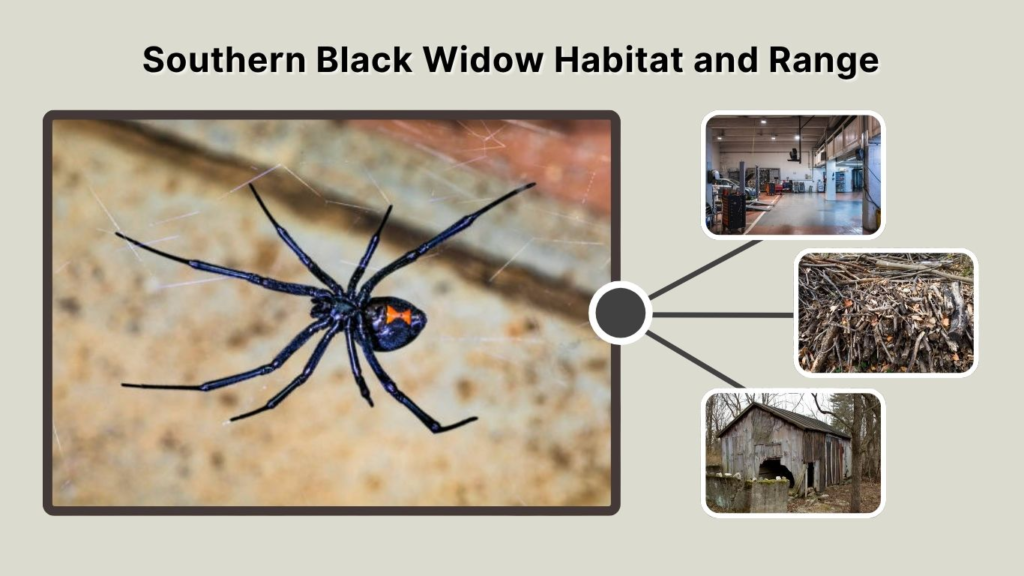
The southern black widow spider is widely distributed across the southern United States. It thrives in warm climates and prefers hidden, undisturbed locations. Its adaptability allows it to live near human structures without being easily noticed.
Where Do They Live?
They are commonly found in states like Texas, California, Georgia, and Florida. They may also appear in other regions with suitable conditions, especially during warmer months.
Preferred Environment
They prefer dark, sheltered places such as garages, woodpiles, sheds, and under outdoor furniture. These areas provide protection and easy access to prey.
Southern Black Widow Behavior and Lifestyle
The southern black widow spider is a nocturnal species that remains inactive during the day. It relies on its web to capture prey and rarely leaves it unless disturbed. This spider prefers to avoid confrontation and will only act defensively if threatened.
Web and Hunting Behavior
- Builds irregular, tangled webs
- Uses sticky silk to trap prey
- Waits for vibrations to detect food
Daily Activity
- Active mostly at night
- Stays hidden during the day
- Avoids human interaction
Southern Black Widow Spider Bite
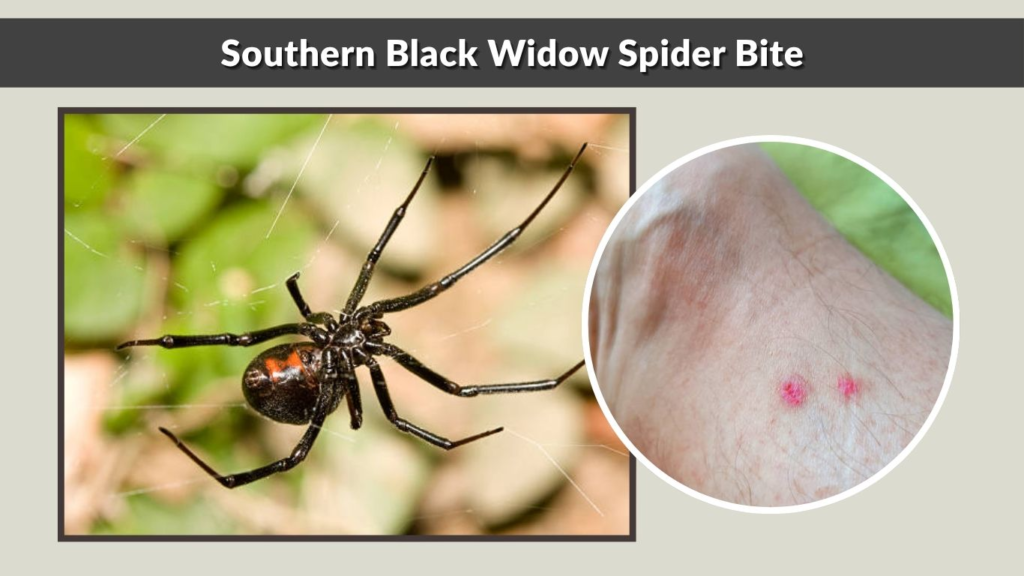
The bite of a southern black widow spider is often feared due to its venom. While it can cause discomfort and noticeable symptoms, it is rarely life-threatening with modern medical care. Understanding the effects of a bite can help people respond calmly and appropriately.
How Dangerous Is the Bite?
- Venom affects the nervous system
- Rarely fatal in healthy adults
- Medical treatment is effective
Common Symptoms in Humans
- Pain at the bite site
- Muscle cramps and stiffness
- Sweating and nausea
Are Southern Black Widow Spiders Poisonous or Venomous?
The southern black widow spider is often misunderstood when it comes to safety. It is venomous, meaning it injects venom through its bite rather than being harmful to touch. While the venom is potent, the spider is not aggressive. Most encounters do not result in bites, and serious complications are uncommon with proper awareness and care.
Venom vs Poison Explained
- Venom is injected through fangs
- Poison is harmful if touched or eaten
- Black widows are venomous, not poisonous
Risk Level to Humans
- Bites are rare and usually defensive
- Most cases are mild to moderate
- Severe reactions are uncommon
Southern Black Widow Diet and Feeding
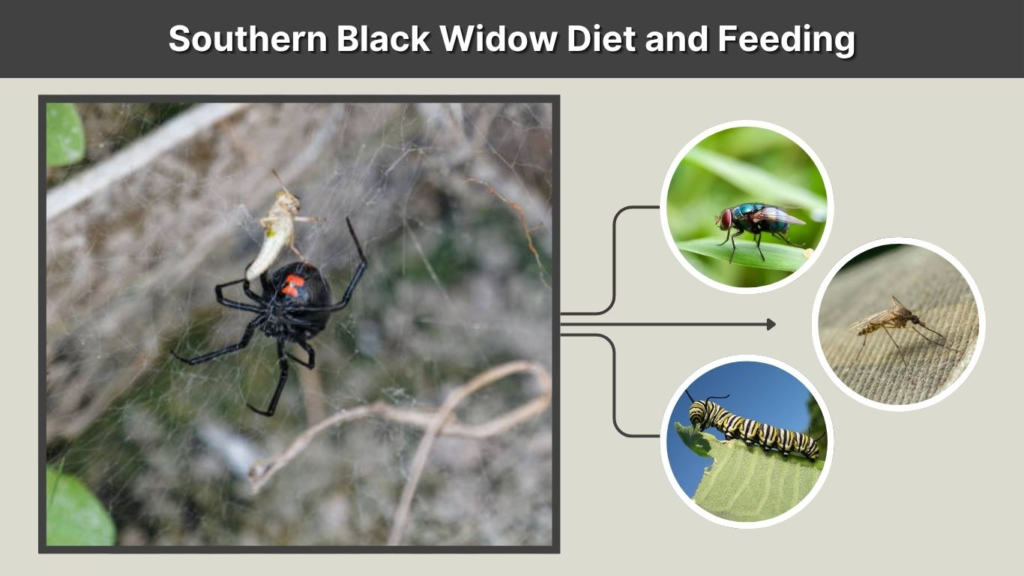
The southern black widow spider plays an important role in controlling insect populations. It feeds on a variety of small prey that get trapped in its web. This feeding behavior helps maintain balance in ecosystems and reduces pest populations in human environments.
Common Prey
- Insects such as flies and mosquitoes
- Beetles and caterpillars
- Occasionally other spiders
Feeding Behavior
- Waits for prey to get caught in web
- Injects venom to immobilize prey
- Consumes liquefied body contents
Southern Black Widow vs Other Spiders
The southern black widow is often confused with other similar-looking spiders. Understanding the differences helps prevent misidentification and unnecessary fear. While some species resemble black widows, their behavior and danger level can vary significantly.
Northern vs Southern Black Widow
- Southern species has a clear hourglass marking
- Northern species may have broken markings
- Slight differences in range and habitat
Redback Spider vs Southern Black Widow
- Redback has a red stripe on top
- Found mainly in Australia
- Similar venom strength
How to Identify a Southern Black Widow Safely
Correct identification is important for safety and awareness. The southern black widow has several distinct features that make it easier to recognize. Observing from a safe distance is always recommended to avoid unnecessary risk.
Key Identification Tips
- Look for a shiny black body
- Check for red hourglass marking underneath
- Notice irregular, tangled web structure
Predators and Natural Threats
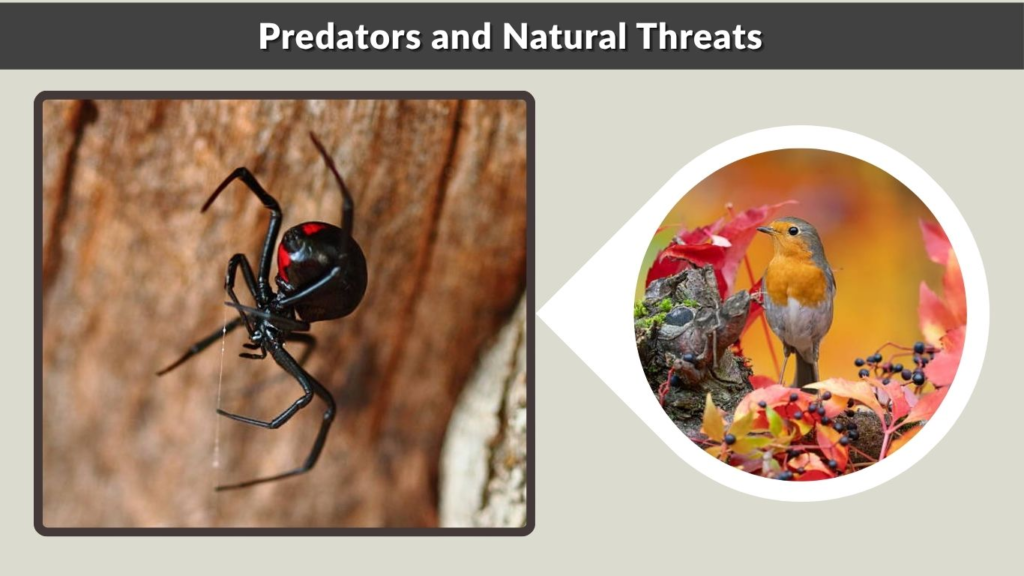
Although the southern black widow is venomous, it still faces threats in the wild. Various predators and environmental factors limit its population. Its defensive behaviors help it survive, but it is not immune to natural dangers.
Natural Predators
- Birds and small reptiles
- Wasps that specialize in hunting spiders
- Some mammals
Survival Strategies
- Hiding in dark, sheltered spaces
- Remaining still when threatened
- Using venom only when necessary
FAQs
How lethal is the southern black widow spider?
The southern black widow’s bite is rarely fatal, especially with modern medical care. While the venom is strong and can cause painful symptoms, most healthy adults recover fully with proper treatment and rest.
Are southern black widow spiders dangerous?
They can be dangerous due to their venom, but they are not aggressive. Bites usually occur only when the spider is disturbed or feels threatened, making encounters generally low-risk.
What should you do if bitten by a southern black widow?
Clean the bite area with soap and water, apply a cold compress, and seek medical attention if symptoms worsen. Prompt care helps manage pain and prevents complications.
Where are southern black widow spiders commonly found?
They are commonly found in warm regions of the southern United States. They prefer dark, quiet places such as garages, sheds, woodpiles, and under outdoor structures.
How can you identify a southern black widow spider?
You can identify it by its shiny black body and the red hourglass marking on the underside of its abdomen. Its messy, irregular web is another key indicator.
