
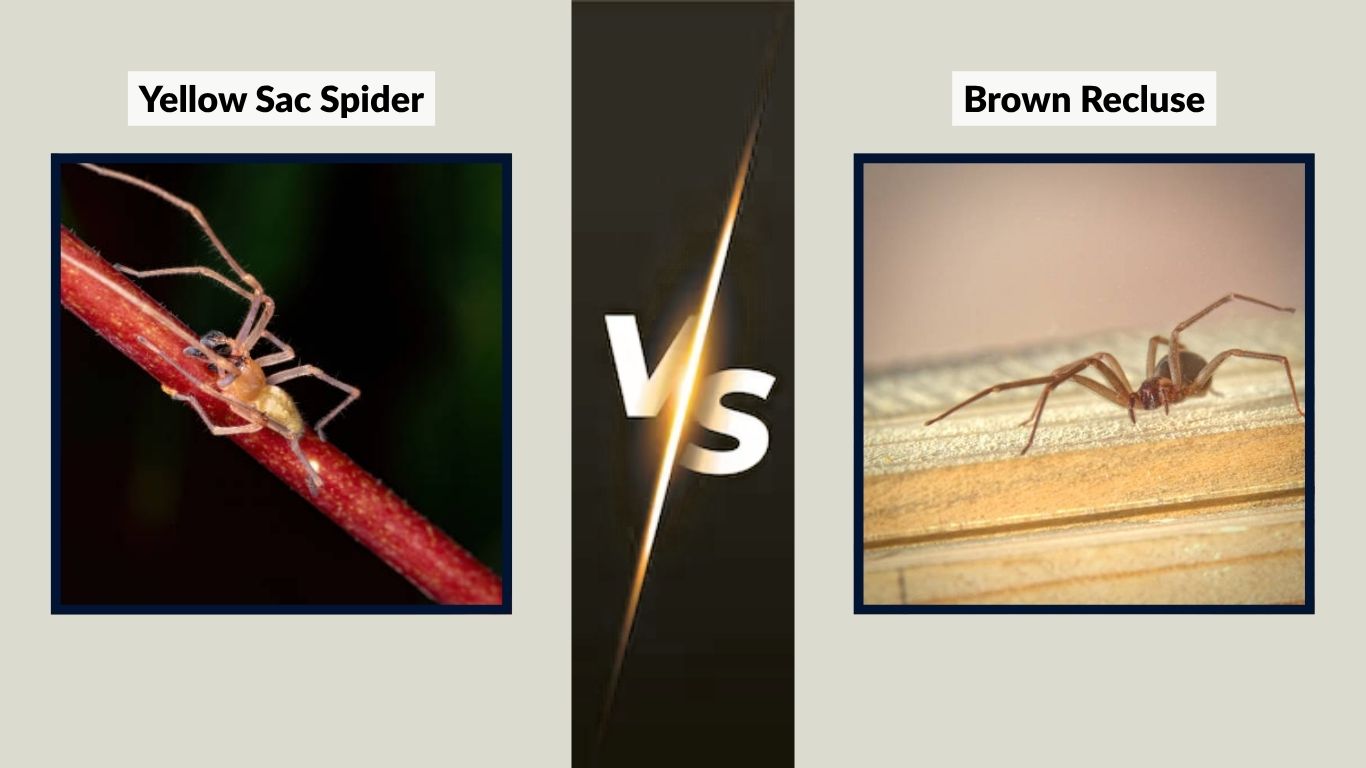
Yellow sac spiders and brown recluse spiders are often confused due to their similar size and indoor presence. However, they differ significantly in appearance, behavior, and bite severity. Understanding these differences can help you identify them correctly and respond appropriately if you encounter one.
Quick Comparison: Yellow Sac Spider vs Brown Recluse
If you need a fast answer, the biggest difference is this: brown recluse spiders are more dangerous and have a violin-shaped marking, while yellow sac spiders are lighter in color and far less harmful.
Table 1: Key Differences at a Glance
| Feature | Yellow Sac Spider | Brown Recluse Spider |
| Color | Pale yellow to light green | Light to dark brown |
| Size | Small (5–10 mm) | Medium (6–20 mm) |
| Marking | No violin shape | Distinct violin marking |
| Eyes | 8 eyes | 6 eyes (unique) |
| Bite Severity | Mild to moderate | Potentially serious |
| Habitat | Indoors & outdoors | Dark, undisturbed areas |
| Aggression | More active hunter | Shy, reclusive |
How to Identify Each Spider
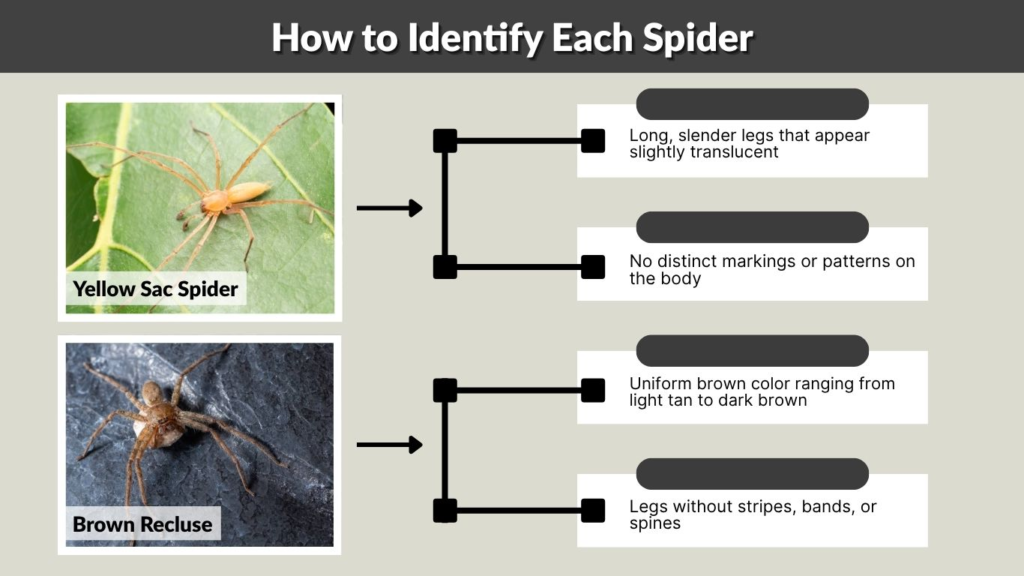
Correct identification is crucial because many harmless spiders are often mistaken for brown recluse spiders. Knowing what to look for can prevent unnecessary panic.
Yellow Sac Spider Identification
Yellow sac spiders are small, pale, and often overlooked. Their body typically appears light yellow, cream, or slightly greenish, making them blend easily into walls and ceilings.
Key identification features include:
- Long, slender legs that appear slightly translucent
- No distinct markings or patterns on the body
- A smooth, soft-looking appearance
- Active movement, especially at night
They are commonly found indoors, particularly on ceilings, walls, and corners. Unlike web-building spiders, they are active hunters, meaning they roam around searching for prey instead of waiting in a web.
Brown Recluse Identification
Brown recluse spiders are more distinctive but still frequently misidentified. Their most recognizable feature is the dark violin-shaped marking on the upper body (cephalothorax), with the neck of the violin pointing toward the abdomen.
Important traits include:
- Uniform brown color ranging from light tan to dark brown
- Six eyes arranged in three pairs (unlike most spiders, which have eight)
- Legs without stripes, bands, or spines
- A slightly larger and more robust body compared to yellow sac spiders
They prefer dark, undisturbed environments such as basements, closets, attics, and storage boxes. Because of their secretive nature, they are rarely seen unless their hiding place is disturbed.
Bite Comparison: Which One Is More Dangerous?
One of the most searched concerns is whether a bite from either spider is dangerous. While both spiders can bite, the severity differs significantly.
Table 2: Bite Symptoms Comparison
| Symptom | Yellow Sac Spider Bite | Brown Recluse Bite |
| Pain | Mild burning sensation | Mild at first, increases over time |
| Redness | Common | Common |
| Swelling | Moderate | Moderate to severe |
| Tissue Damage | Rare | Possible in severe cases |
| Healing Time | Few days | Weeks in some cases |
| Medical Risk | Low | Higher, may need treatment |
Yellow sac spider bites are usually mild and localized, causing temporary redness, itching, or slight swelling. Most cases heal within a few days without medical intervention.
In contrast, brown recluse bites can be more serious. While not every bite leads to complications, some may cause tissue damage (necrosis), leading to longer healing times and the need for medical attention.
Habitat and Behavior Differences
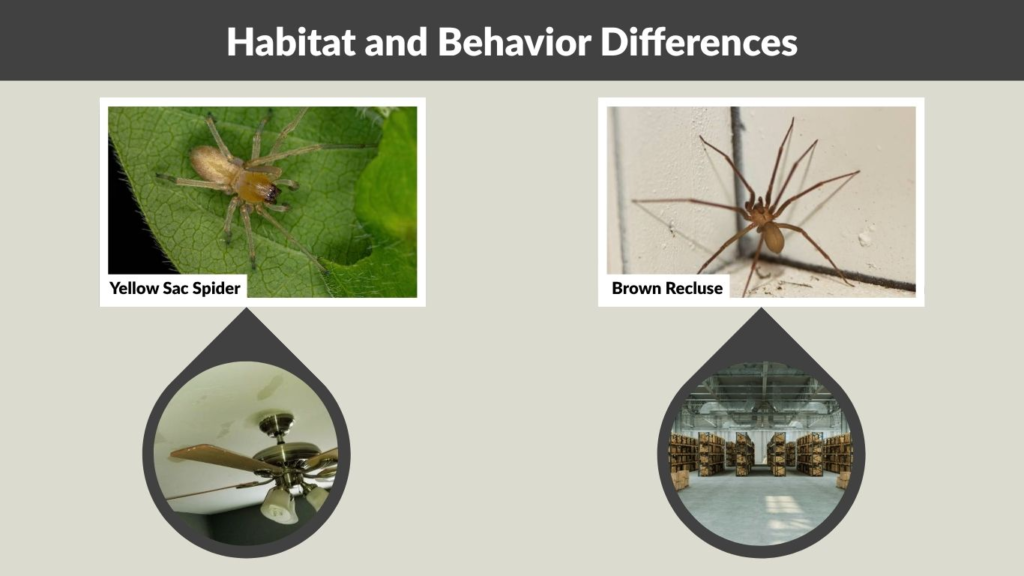
Understanding where these spiders live and how they behave can help you quickly determine which one you’re dealing with.
Yellow Sac Spider Behavior
- Active hunters that roam at night
- Frequently found in homes, especially on ceilings and walls
- Build small silk sacs (hence the name) to rest in during the day
These spiders are more likely to come into contact with humans simply because they move around more.
Brown Recluse Behavior
- Prefer hiding in quiet, undisturbed areas
- Common in storage spaces, woodpiles, and rarely used rooms
- Avoid light and human activity
Brown recluse spiders are not aggressive and typically bite only when they feel threatened, such as when trapped in clothing or bedding.
Northern Yellow Sac Spider vs Brown Recluse
Many people specifically search for the northern yellow sac spider when comparing it to the brown recluse. This is because the northern species is more commonly encountered in homes, leading to frequent confusion.
The northern yellow sac spider (Cheiracanthium mildei) is widely distributed and often found indoors. In contrast, the brown recluse has a more limited geographic range, primarily in certain regions.
Key differences:
- Northern yellow sac spiders are more widespread and commonly seen
- Brown recluse spiders are region-specific and less frequently encountered
- Most suspected brown recluse sightings are actually misidentified yellow sac spiders
This distinction is important because it reduces unnecessary fear—many people assume the worst when they spot a small pale spider indoors.
Yellow Sac Spider or Brown Recluse? How to Tell Quickly
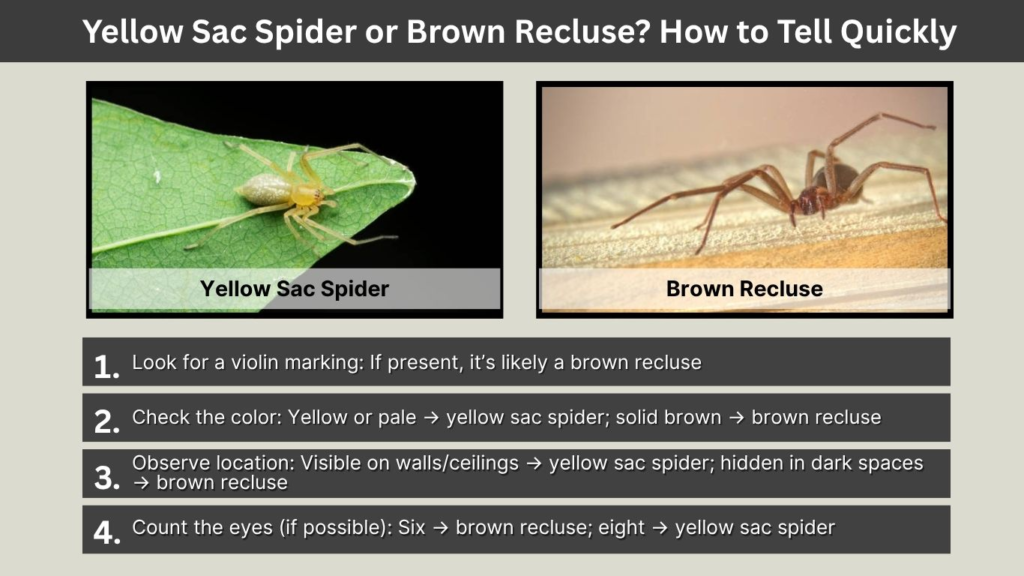
If you’re unsure which spider you’ve found, these quick checks can help you identify it in seconds.
- Look for a violin marking: If present, it’s likely a brown recluse
- Check the color: Yellow or pale → yellow sac spider; solid brown → brown recluse
- Observe location: Visible on walls/ceilings → yellow sac spider; hidden in dark spaces → brown recluse
- Count the eyes (if possible): Six → brown recluse; eight → yellow sac spider
In most everyday situations, location and color are the easiest clues for quick identification.
Common Misidentifications
Misidentification is extremely common, especially with brown recluse spiders. Many harmless spiders are incorrectly labeled as dangerous.
- Yellow sac spiders are often mistaken for brown recluse due to their size
- Other house spiders are frequently misidentified as well
- Online images can exaggerate features, leading to confusion
One major issue is that people tend to assume any brown or small spider is a brown recluse, which is rarely the case. Accurate identification requires attention to specific features, not just general appearance.
What to Do If You Get Bitten
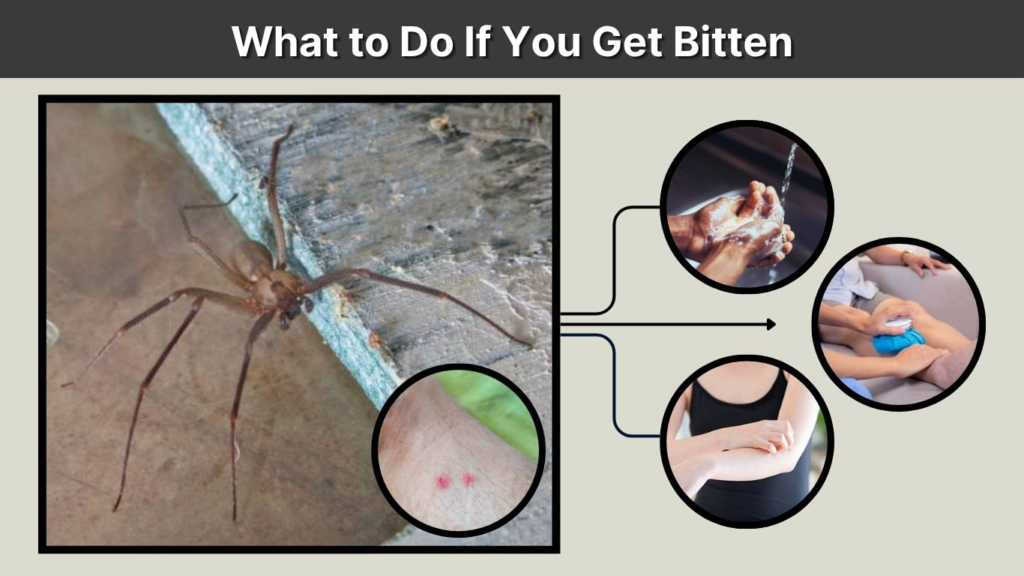
Most spider bites are not serious, but proper care is still important to avoid complications.
- Wash the area with soap and water immediately
- Apply a cold compress to reduce swelling
- Avoid scratching to prevent infection
- Monitor symptoms over the next 24–48 hours
If you notice increasing pain, spreading redness, or unusual skin changes, seek medical attention. This is especially important if a brown recluse bite is suspected.
Prevention Tips: Keeping Spiders Out of Your Home
Prevention is the best way to avoid spider encounters and bites altogether.
- Seal cracks and gaps around windows and doors
- Reduce clutter where spiders can hide
- Shake out clothing, shoes, and bedding before use
- Keep storage areas clean and organized
These simple steps can significantly reduce the chances of encountering either spider indoors.
FAQ
Is a yellow sac spider bite dangerous?
Yellow sac spider bites are generally mild and cause temporary discomfort such as redness, itching, and slight swelling. Most cases heal within a few days without medical treatment. Serious reactions are rare, making them far less concerning than brown recluse bites.
How can I tell if it’s a brown recluse?
The most reliable sign is the violin-shaped marking on its back. Additionally, brown recluse spiders have six eyes instead of eight and prefer dark, undisturbed areas. If these features are missing, it is likely another species.
Which spider is more aggressive?
Yellow sac spiders are more active and may bite if disturbed, especially during nighttime activity. Brown recluse spiders are shy and avoid humans, typically biting only when trapped against the skin, such as inside clothing.
Are brown recluse spiders common everywhere?
No, brown recluse spiders are limited to specific regions and are not found everywhere. Many reported sightings outside their range are actually misidentified spiders, often yellow sac spiders or other harmless species.
Should I worry about a spider bite at home?
Most spider bites are harmless and resolve quickly without treatment. However, if symptoms worsen—such as severe pain, spreading redness, or signs of tissue damage—it is important to seek medical attention promptly to rule out complications.
