
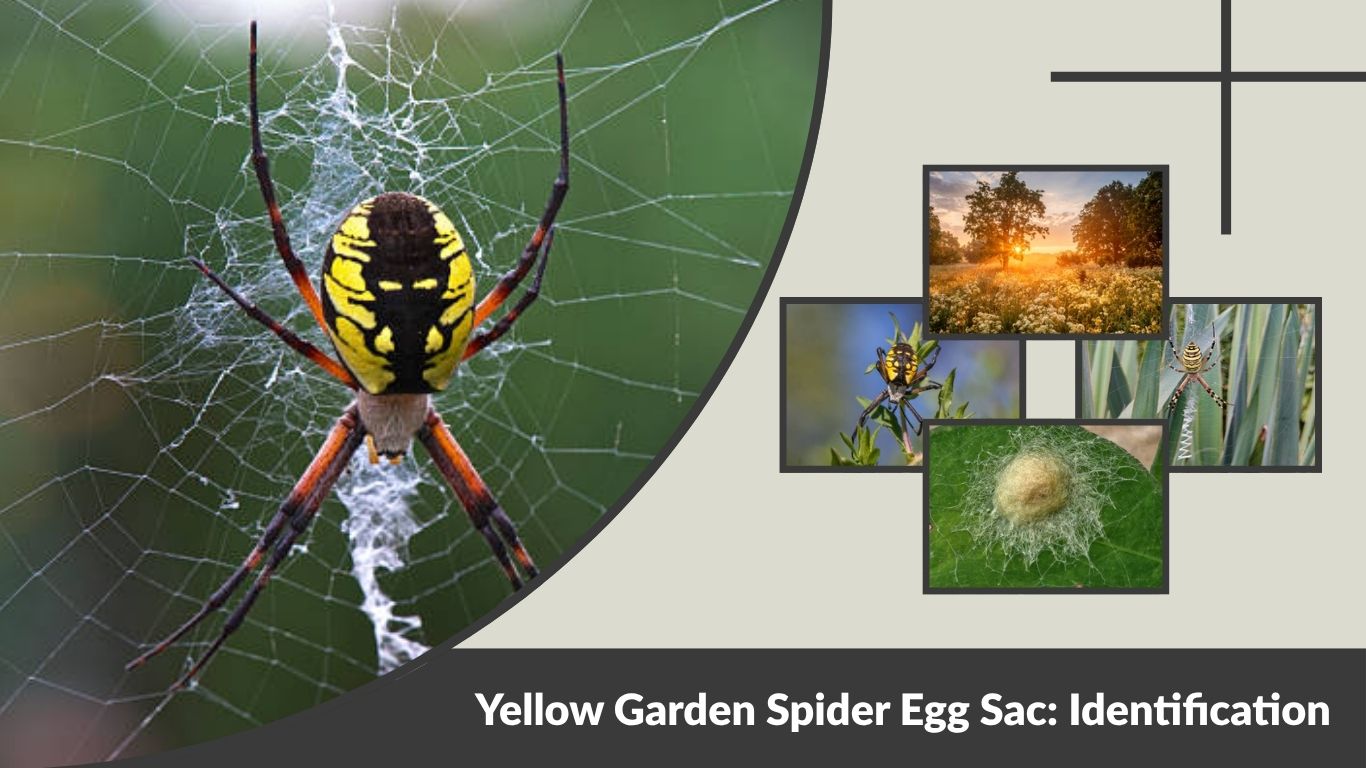
Yellow garden spider egg sacs are a common sight in late summer and fall, especially in gardens and outdoor spaces. These small silk structures hold hundreds of developing spiderlings and play a crucial role in the spider’s life cycle. If you’ve spotted one and aren’t sure what it is, understanding its appearance and behavior can help you identify it correctly.
What Is a Yellow Garden Spider Egg Sac?
A yellow garden spider egg sac is a protective silk casing created by the female black and yellow garden spider (Argiope aurantia). Inside this sac, the spider deposits hundreds of eggs that will eventually develop into spiderlings.
These egg sacs are typically produced toward the end of the spider’s life cycle, usually in late summer or early fall. After laying the eggs, the female often dies as temperatures drop, leaving the sac behind to protect the next generation.
The sac itself is designed to withstand environmental conditions such as cold weather, wind, and predators. It acts as a natural shield, ensuring that the eggs remain safe until they are ready to hatch.
What Does a Yellow Garden Spider Egg Sac Look Like?
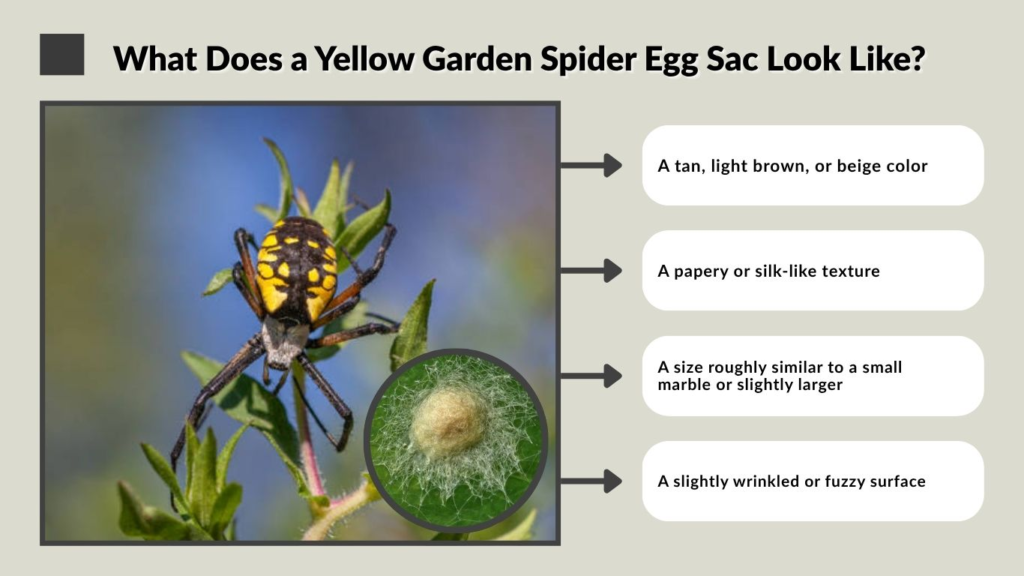
A yellow garden spider egg sac has a distinct appearance that makes it easier to recognize once you know what to look for. It is usually round or slightly oval in shape, with a soft but durable outer layer.
Key visual characteristics include:
- A tan, light brown, or beige color
- A papery or silk-like texture
- A size roughly similar to a small marble or slightly larger
- A slightly wrinkled or fuzzy surface
These egg sacs are often attached near the spider’s web, typically on plants, stems, fences, or other nearby structures. Unlike some other spider egg sacs that are hidden, yellow garden spider egg sacs are often visible and exposed, making them easier to spot.
Because of their neutral color, they can sometimes blend into dry leaves or branches, which is why they may go unnoticed unless you look closely.
Black and Yellow Garden Spider Egg Sac vs Others
Yellow garden spider egg sacs are often confused with those of other spider species. However, there are a few features that set them apart.
Compared to other egg sacs, they are:
- Larger and more noticeable than many common house spider egg sacs
- More structured, with a firm outer layer
- Typically placed near a large, well-built web
Other spiders may hide their egg sacs in cracks, corners, or sheltered spaces. In contrast, yellow garden spiders tend to place theirs in more open areas, often near vegetation where their web is located.
This visibility is one of the main reasons people frequently notice and search for them.
When Do Yellow Garden Spider Egg Sacs Appear?
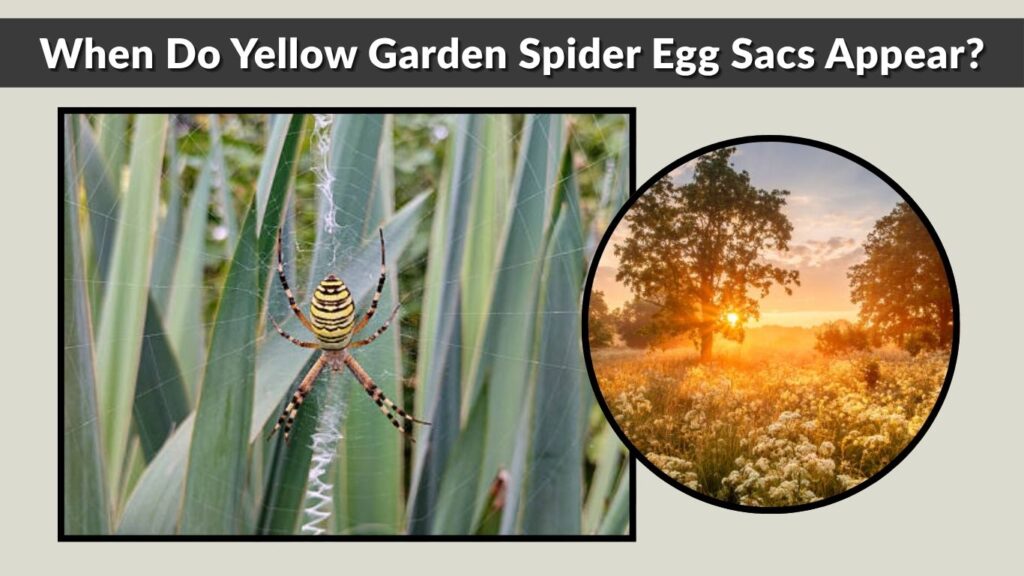
Yellow garden spider egg sacs are most commonly seen during late summer through early fall, with August being a peak time in many regions. This timing aligns with the end of the adult spider’s life cycle.
During this period:
- Female spiders produce and attach egg sacs near their webs
- The sacs remain in place even after the spider is gone
- They stay intact throughout the colder months
Because the sacs persist into winter, you may notice them long after the spider that created them has disappeared. They can remain attached to plants, fences, or garden structures for several months.
This seasonal pattern makes them especially noticeable in gardens during autumn cleanup or early spring when vegetation is sparse.
How Long Does It Take for a Yellow Garden Spider Egg Sac to Hatch?
The development timeline of a yellow garden spider egg sac can be a bit surprising. While the eggs themselves hatch relatively quickly, the spiderlings do not emerge right away.
Here’s how the process works:
- Eggs typically hatch within a few weeks after being laid
- The spiderlings remain inside the sac instead of leaving immediately
- They stay protected inside during winter
The actual emergence happens later, usually in spring when temperatures rise. This delayed emergence helps ensure that the young spiders enter an environment with more food and better survival conditions.
This means that even if an egg sac looks inactive during winter, it may still contain living spiderlings waiting for the right time to come out.
Yellow Garden Spider Egg Sac Hatching Process
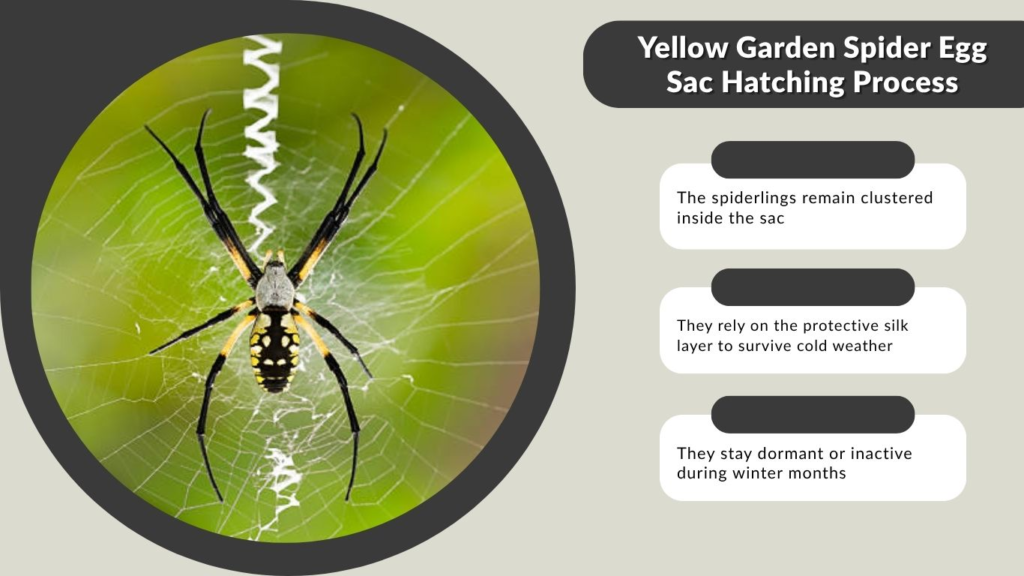
The hatching process of yellow garden spider egg sacs follows a natural cycle designed for survival. It begins when the eggs inside the sac develop into spiderlings.
Once hatched:
- The spiderlings remain clustered inside the sac
- They rely on the protective silk layer to survive cold weather
- They stay dormant or inactive during winter months
When spring arrives and temperatures increase, the spiderlings become more active. At this stage, they prepare to leave the sac and disperse into the surrounding environment.
One of the most fascinating parts of this process is how they spread. Many spiderlings use a method known as ballooning, where they release fine silk threads that catch the wind, allowing them to travel to new locations.
This natural dispersal helps reduce competition and allows the species to spread across wider areas.
How Many Egg Sacs Can a Yellow Garden Spider Lay?
A female yellow garden spider can produce multiple egg sacs during her lifetime, depending on environmental conditions and her health. In most cases, she lays between one and four egg sacs before the end of the season.
Each egg sac can contain hundreds of eggs, which means a single spider has the potential to produce a large number of offspring. However, not all spiderlings survive to adulthood due to predators, weather conditions, and lack of food.
The number of egg sacs and eggs helps ensure that at least some spiderlings survive and continue the species. This high reproduction rate is common among many spider species and plays an important role in maintaining ecological balance.
Can You Move a Yellow Garden Spider Egg Sac?
Yes, you can move a yellow garden spider egg sac if necessary, but it should be done with care. These sacs are delicate, and damaging them can harm the developing spiderlings inside.
If you decide to move one:
- Gently detach it without crushing or tearing the silk
- Place it in a similar outdoor environment
- Keep it attached to a stable surface like a branch or fence
Relocating an egg sac may be helpful if it is in a high-traffic area where it could be disturbed. However, if possible, it is best to leave it in place to avoid disrupting the natural process.
Should You Remove or Kill an Egg Sac?
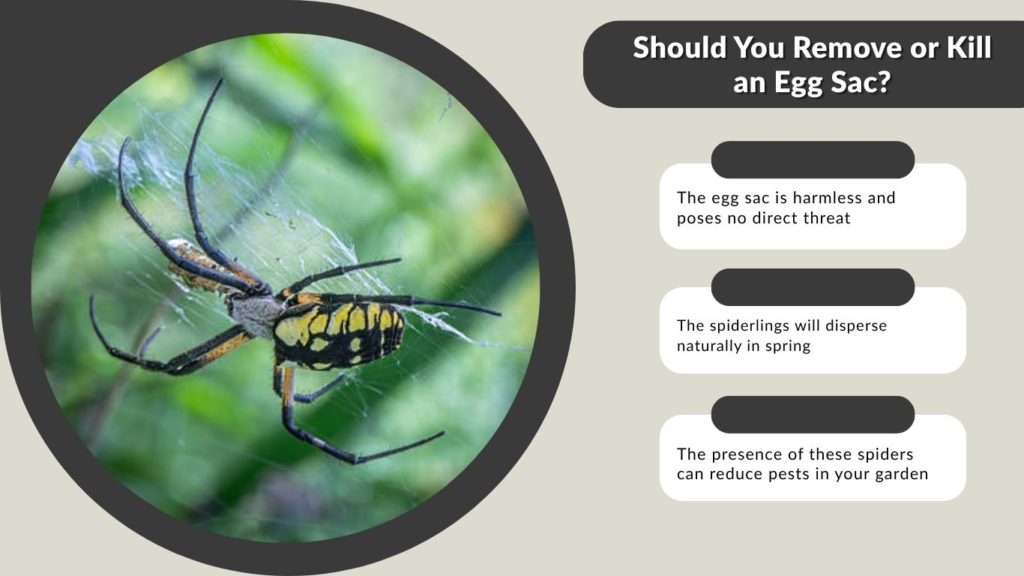
Yellow garden spiders are considered beneficial because they help control insect populations. For this reason, removing or destroying their egg sacs is usually unnecessary.
In most situations:
- The egg sac is harmless and poses no direct threat
- The spiderlings will disperse naturally in spring
- The presence of these spiders can reduce pests in your garden
If removal is necessary, relocation is a better option than destruction. Avoid direct contact and use simple tools if needed to move the sac safely.
Where Are Egg Sacs Commonly Found?
Yellow garden spider egg sacs are typically found in outdoor environments where the spiders build their webs.
Common locations include:
- Gardens and landscaped areas
- Shrubs, tall grasses, and plants
- Fences, railings, and corners of structures
- Areas near large, visible spider webs
Because these spiders prefer open spaces with good access to flying insects, their egg sacs are often placed in locations that provide both visibility and protection.
You are more likely to notice them during seasonal changes, especially when plants lose leaves and the sacs become easier to see.
Are Yellow Garden Spider Egg Sacs Dangerous?
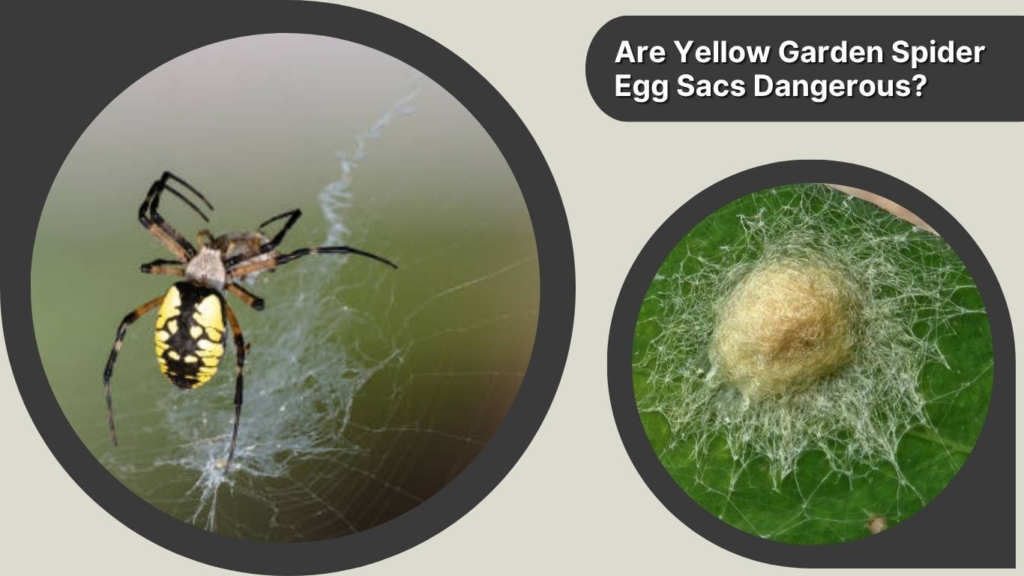
Yellow garden spider egg sacs are not dangerous to humans. They are simply protective structures containing developing spiderlings.
Important points to understand:
- The egg sac itself cannot harm you
- The spiderlings inside are not aggressive
- This species is generally non-threatening
Even when the spiderlings emerge, they disperse quickly and rarely interact with humans. In fact, these spiders are helpful in controlling pests such as flies and mosquitoes.
Understanding this can help reduce fear and prevent unnecessary removal or destruction of egg sacs.
FAQ
What does a yellow garden spider egg sac look like?
A yellow garden spider egg sac is round or slightly oval with a tan or light brown color. It has a papery, silk-like texture and is usually attached near a web or on nearby plants, fences, or structures.
How long does it take for the egg sac to hatch?
The eggs hatch within a few weeks after being laid, but the spiderlings remain inside the sac during winter. They typically emerge in spring when temperatures become warmer and conditions are more favorable.
Can I move a yellow garden spider egg sac?
Yes, it can be moved carefully if needed. It should be relocated to a similar outdoor environment and handled gently to avoid damaging the protective silk structure or harming the spiderlings inside.
How many egg sacs does a yellow garden spider lay?
A female yellow garden spider usually lays between one and four egg sacs. Each sac can contain hundreds of eggs, increasing the chances that some spiderlings will survive to adulthood.
Are yellow garden spider egg sacs harmful?
No, they are not harmful. They do not pose any danger to humans, and the spiders that emerge are beneficial because they help control insect populations in gardens and outdoor spaces.
