
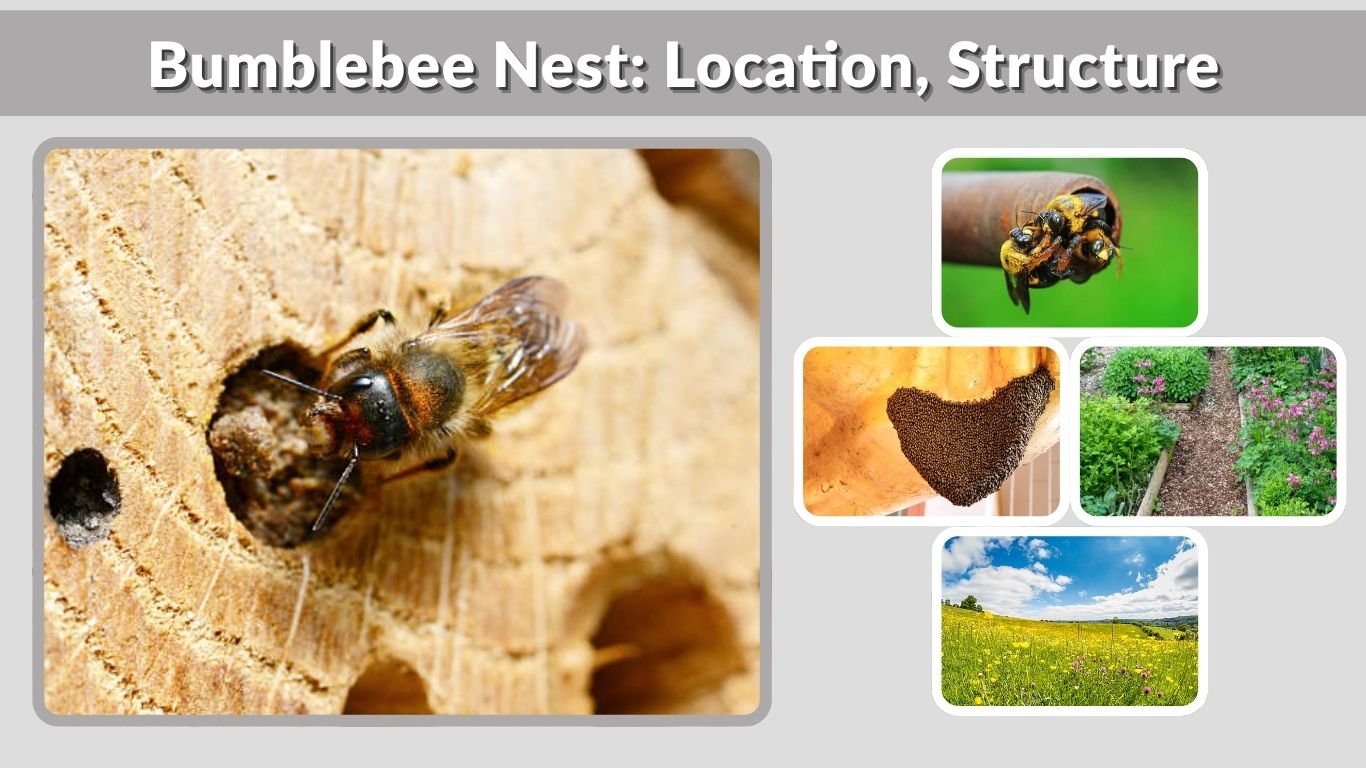
Bumblebee nests are essential for the survival and growth of bumblebee colonies. Unlike honey bees, which build large and permanent hives, bumblebees create smaller, temporary nests that last for only one season. These nests serve as a safe space for raising young, storing food, and protecting the colony. Understanding where and how bumblebees build their nests can help us protect these important pollinators and support a healthy ecosystem.
What Is a Bumblebee Nest?
Definition and Purpose
A bumblebee nest is a sheltered space where a colony of bumblebees lives, reproduces, and stores food. It acts as the center of all colony activities, including egg-laying, larval development, and nectar storage.
Unlike honey bee hives, bumblebee nests are less organized and smaller in size. They are designed for short-term use and are typically abandoned at the end of the season.
Colony Size
Bumblebee colonies are relatively small compared to honey bees. A typical nest contains:
- Around 50 to 400 bees
- One queen
- Several worker bees and drones
This smaller colony size makes bumblebee nests less noticeable and easier to overlook in nature.
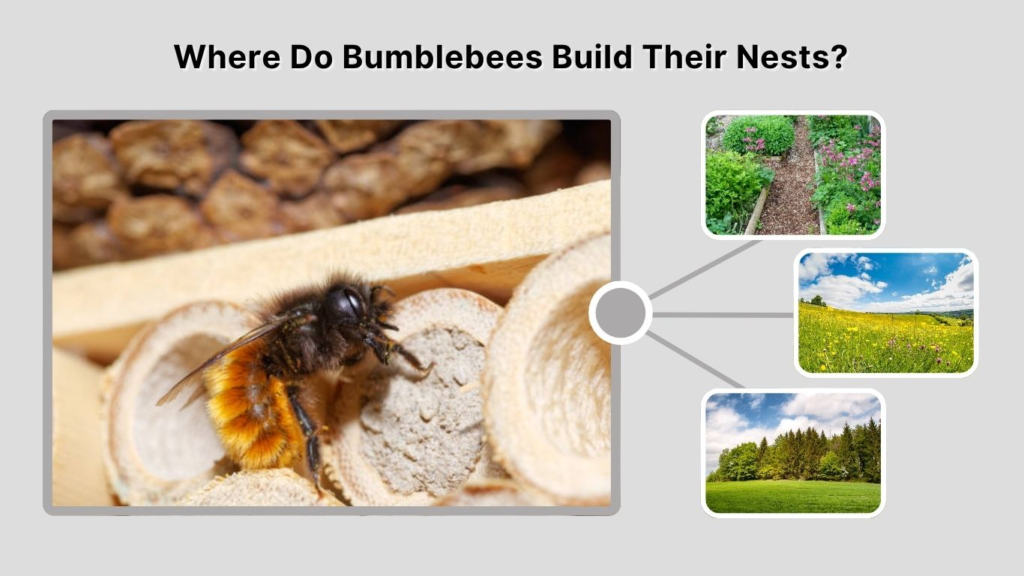
Where Do Bumblebees Build Their Nests?
Underground Nesting
Most bumblebees prefer to build their nests underground. Common underground locations include:
- Abandoned rodent burrows
- Natural holes in the soil
- Spaces beneath rocks or roots
These underground sites provide protection from weather and predators, making them ideal for nesting.
Above-Ground Nesting
Although less common, some bumblebees build nests above ground. These may include:
- Thick grass or vegetation
- Leaf piles or compost heaps
- Cavities in walls or structures
Above-ground nests are usually well hidden to avoid disturbance.
Common Nest Locations
Bumblebee nests are typically found in:
- Gardens and backyards
- Meadows and grasslands
- Forest edges
- Quiet, undisturbed areas
They prefer places with easy access to flowers, which provide nectar and pollen for the colony.
Structure of a Bumblebee Nest
Nest Materials
Bumblebees build their nests using materials available in their environment. These include:
- Wax produced by the bees
- Dry grass and leaves
- Animal fur or plant fibers
These materials help insulate the nest and protect it from external conditions.
Internal Structure
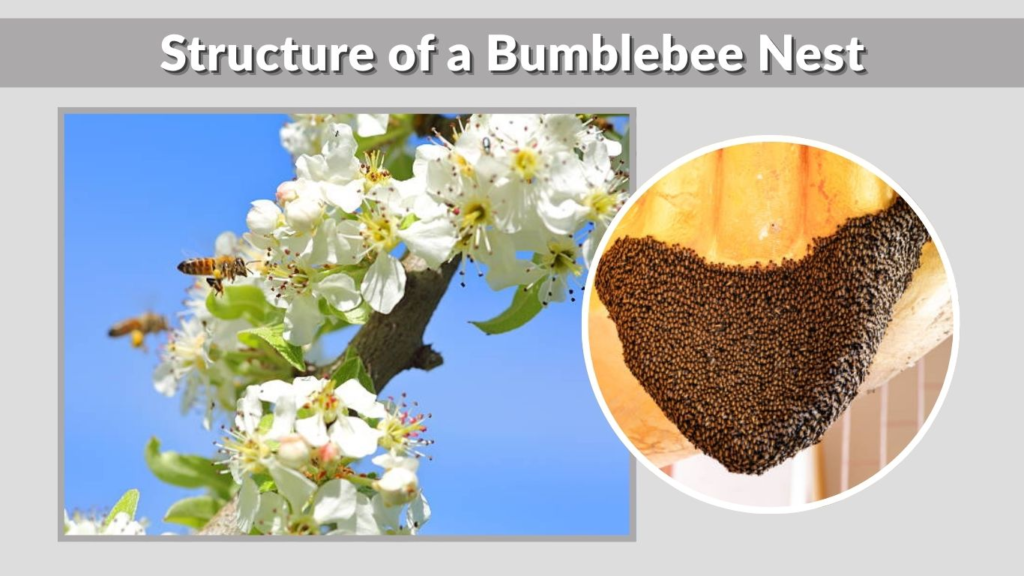
Unlike the neat hexagonal honeycombs of honey bees, bumblebee nests have an irregular structure. Inside the nest:
- Wax cells are uneven and loosely arranged
- Some cells store nectar and pollen
- Others are used for developing larvae
This less organized structure reflects the temporary nature of the nest.
Differences from Honey Bee Hive
Bumblebee nests differ from honey bee hives in several ways:
- Smaller and less complex
- Irregular cell arrangement
- Designed for seasonal use only
These differences highlight how bumblebees adapt their nesting behavior to their life cycle.
Bumblebee Nest Life Cycle
Nest Formation
The life of a bumblebee nest begins with a single queen. After emerging from winter hibernation, the queen searches for a suitable nesting site. Once she finds a location, she begins building the nest and lays her first batch of eggs.
She collects nectar and pollen to feed the developing larvae, taking on all responsibilities herself in the early stage.
Colony Growth
As the eggs hatch and develop into worker bees, the colony begins to grow. The workers take over tasks such as:
- Foraging for food
- Expanding the nest
- Caring for the larvae
This allows the queen to focus solely on laying more eggs, increasing the colony size.
End of the Colony
Towards the end of the season, the bumblebee colony begins to decline. The queen produces new queens and drones instead of worker bees. After mating:
- The old queen, workers, and drones die
- Only the newly fertilized queens survive
These new queens leave the nest and find a safe place to hibernate during winter. The nest itself is abandoned and not reused.
Bumblebee Nest Behavior
Daily Activity
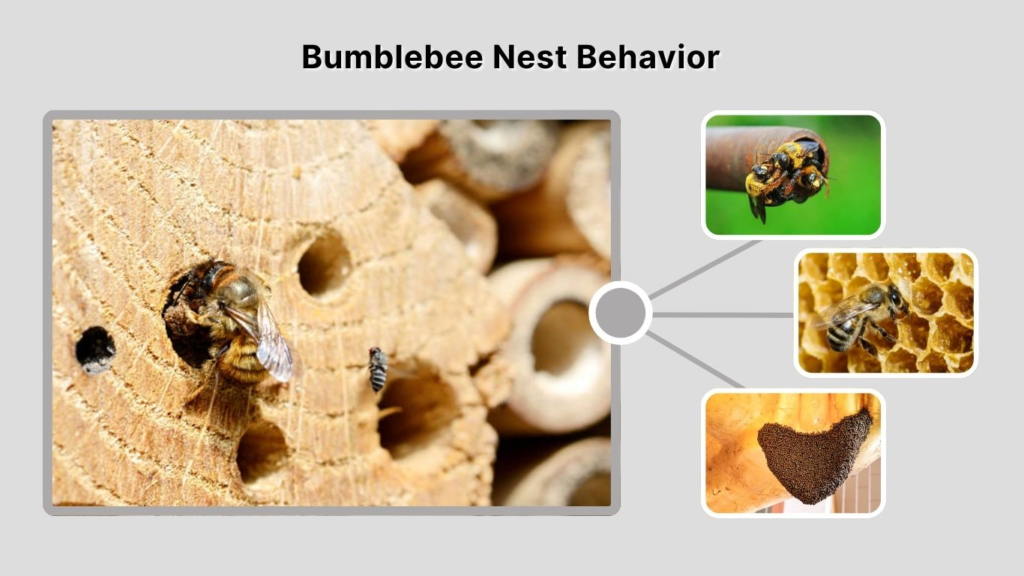
Inside and around the nest, bumblebees are constantly active. Worker bees leave the nest to collect nectar and pollen from nearby flowers. They return to:
- Feed the larvae
- Store food
- Maintain the nest structure
This continuous activity keeps the colony functioning efficiently throughout its life cycle.
Defense Mechanisms
Bumblebees are generally peaceful insects. However, they will defend their nest if disturbed.
- They may buzz loudly as a warning
- Stinging occurs only when necessary
Because of their calm nature, bumblebee nests are usually safe if left undisturbed.
Do Bumblebees Reuse Nests?
Seasonal Nature
Bumblebee nests are temporary and used for only one season. Unlike honey bees, they do not maintain permanent colonies.
What Happens After Winter
After the colony dies, the nest remains empty. The next generation of queens does not return to the same nest. Instead, each new queen builds her own nest in a new location the following season.
Bumblebee Nest vs Honey Bee Hive
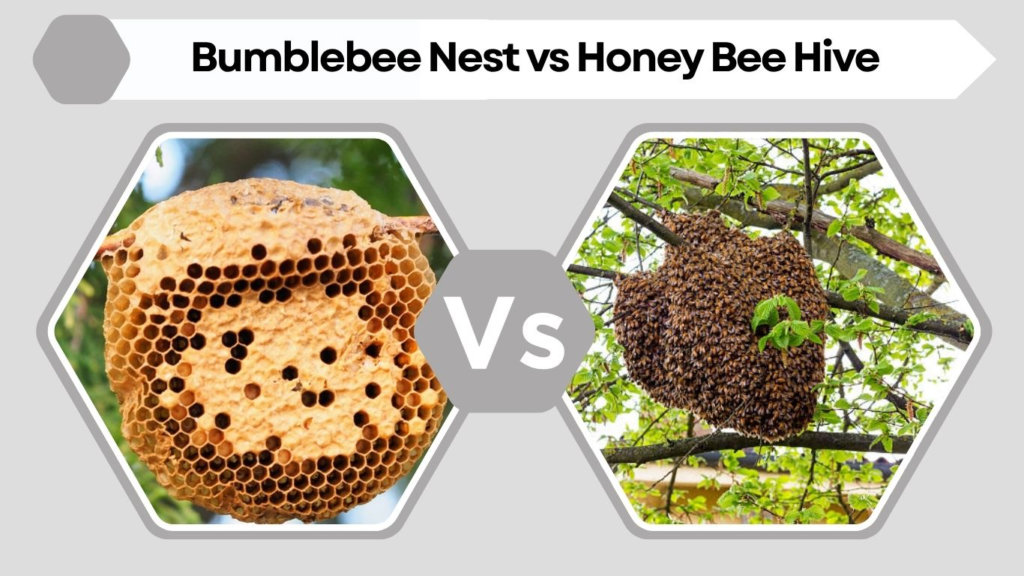
Size and Population
- Bumblebee nests are small, with a few hundred bees
- Honey bee hives can contain thousands of bees
Structure Differences
- Bumblebee nests: irregular and loosely organized
- Honey bee hives: highly structured with hexagonal honeycombs
Honey Production
- Bumblebees produce only small amounts of honey for immediate use
- Honey bees produce large quantities of honey for long-term storage
Interesting Facts About Bumblebee Nests
- Bumblebee nests are often hidden and difficult to find
- They are built quickly at the start of the season
- The nest provides insulation to protect developing bees
- Colonies remain relatively small compared to honey bees
- Each nest is unique in structure and location
Importance of Bumblebee Nests
Bumblebee nests are crucial for maintaining healthy bee populations. They provide a safe space for reproduction and allow colonies to grow and pollinate nearby plants.
By supporting plant reproduction, bumblebee nests indirectly contribute to food production and biodiversity. Protecting these nests helps maintain balanced ecosystems.
How to Protect Bumblebee Nests
- Avoid disturbing nests if found in your garden
- Preserve natural habitats like grasslands and hedgerows
- Plant a variety of flowering plants
- Reduce or avoid pesticide use
Simple actions can make a big difference in protecting these valuable pollinators.
FAQs
Where are bumblebee nests usually found?
Bumblebee nests are commonly found underground in abandoned burrows, or in sheltered areas like grass clumps and wall cavities.
Are bumblebee nests dangerous?
No, bumblebee nests are generally not dangerous. Bumblebees are calm and only sting when their nest is threatened.
How long does a bumblebee nest last?
A bumblebee nest lasts for one season, usually from spring to late summer or early autumn.
Can you remove a bumblebee nest safely?
It is best not to disturb a bumblebee nest. If removal is necessary, it should be handled by professionals to avoid harming the bees.
Do bumblebees reuse old nests?
No, bumblebees do not reuse old nests. Each new queen builds a fresh nest in a new location every season.
Conclusion
Bumblebee nests are small yet vital structures that support the life cycle and survival of these important pollinators. From their hidden locations and simple structure to their seasonal nature, they reflect the unique behavior of bumblebees. Although often unnoticed, these nests play a key role in pollination and ecosystem balance. By protecting bumblebee nests and their habitats, we can help ensure a healthier environment and a sustainable future for both bees and humans.
