
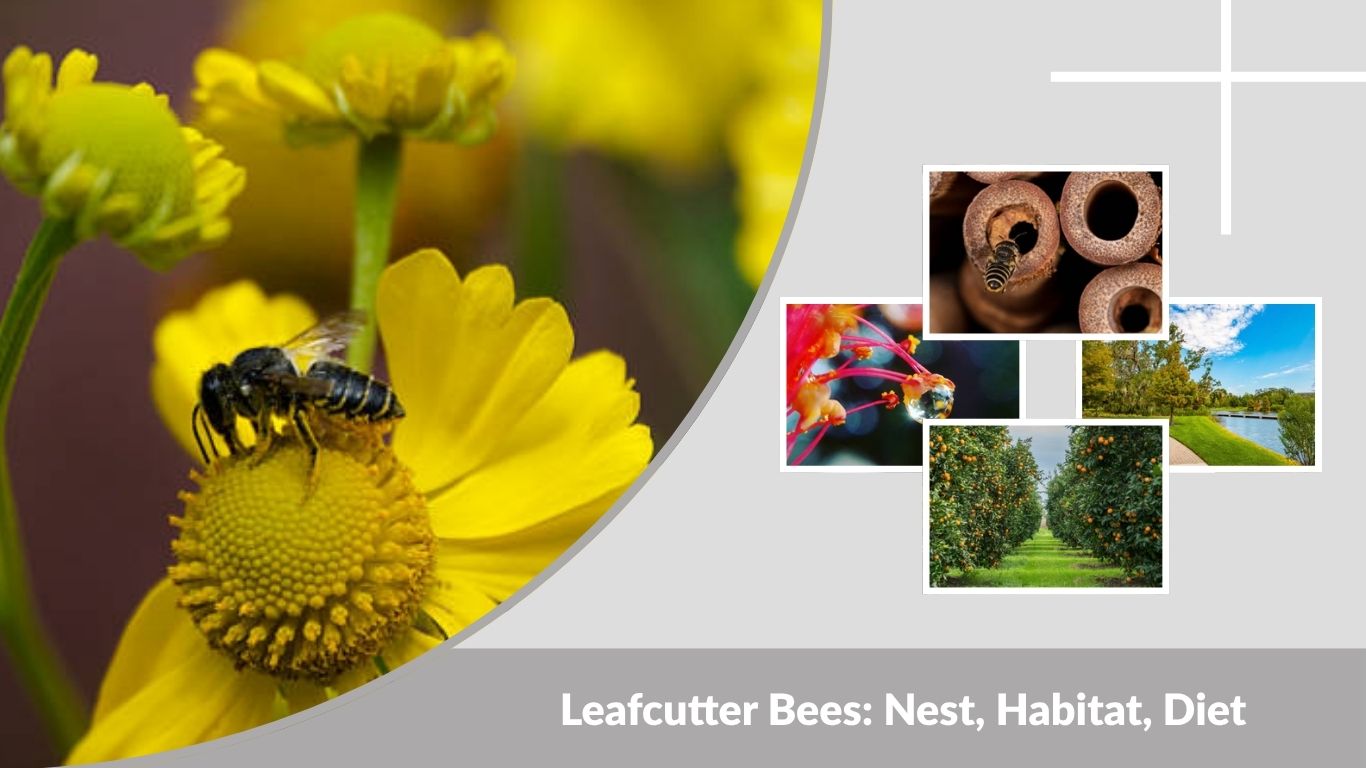
Leafcutter bees are unique and beneficial pollinators known for their unusual habit of cutting neat, circular pieces from leaves. Unlike honey bees, they are solitary insects and do not live in large colonies. These bees play an important role in pollination, especially in gardens and agricultural areas. Understanding their nesting behavior, habitat, diet, and impact on plants helps us appreciate their value and coexist with them effectively.
Leafcutter Bees Identification
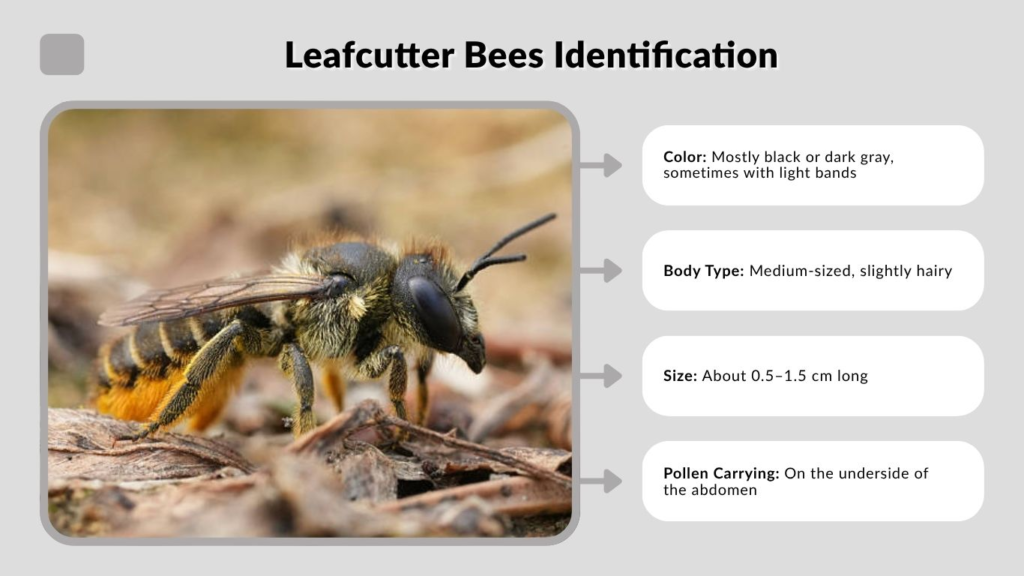
Leafcutter bees are small, solitary pollinators that are best known for their unique behavior of cutting neat pieces from leaves. Unlike honey bees or bumblebees, they do not live in large colonies and are usually seen alone. Their appearance and behavior make them easy to recognize, especially in gardens and areas with flowering plants.
Key Identification Features
- Color: Mostly black or dark gray, sometimes with light bands
- Body Type: Medium-sized, slightly hairy
- Size: About 0.5–1.5 cm long
- Pollen Carrying: On the underside of the abdomen (yellow/orange dust)
- Wings: Transparent with quick, direct flight
Types of Leafcutter Bees
- Female Leafcutter Bee: Builds nests and cuts leaves
- Male Leafcutter Bee: Does not build nests, mainly mates
Quick Identification Tips
- Look for clean, circular cuts on leaves
- Often seen flying near plants and flowers
- Usually solitary and non-aggressive
- Notice pollen carried under the abdomen instead of legs
This simple identification guide helps distinguish leafcutter bees from other bees and highlights their unique and beneficial nature.
Leafcutter Bee Habitat
Natural Habitats
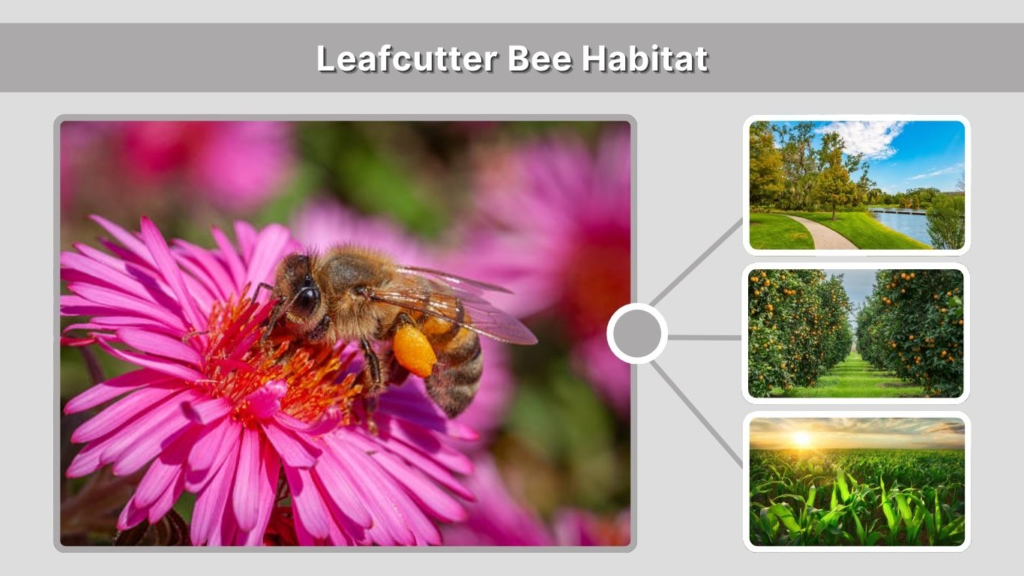
Leafcutter bees are commonly found in:
- Gardens and backyards
- Forest edges
- Grasslands and meadows
They prefer areas rich in flowering plants, which provide nectar and pollen for food.
Leafcutter Bees Habitats in Urban Areas
These bees adapt well to human environments and are frequently found in:
- Parks and residential gardens
- Farms and orchards
- Bee hotels and wooden structures
Providing suitable nesting spaces can encourage their presence.
Environmental Needs
For survival, leafcutter bees require:
- A variety of flowering plants
- Access to soft leaves for nest building
- Safe nesting sites like holes in wood or stems
- Warm temperatures for activity
Leafcutter Bee Nest
What Is a Leafcutter Bee Nest?
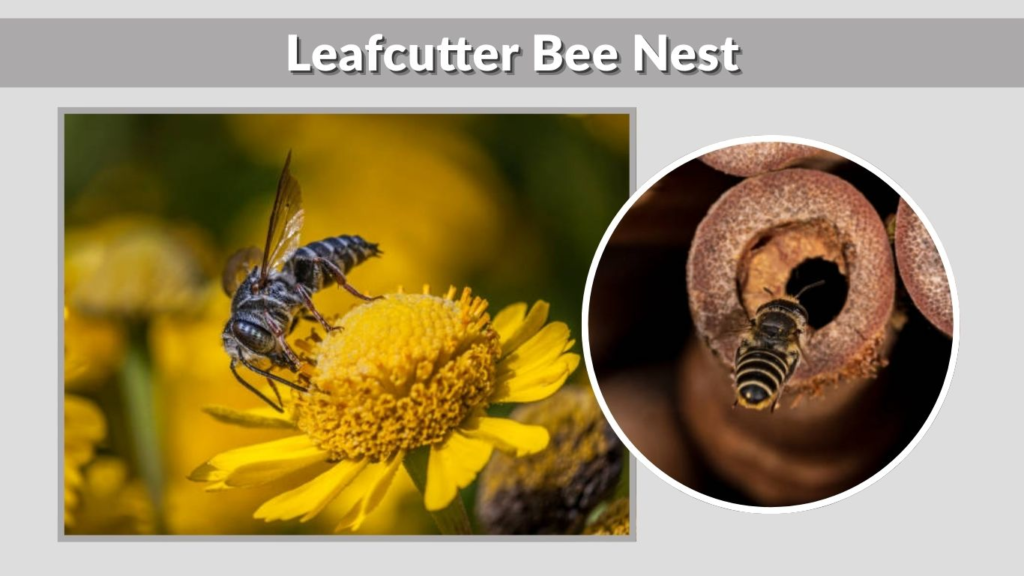
A leafcutter bee nest is a series of small chambers built inside narrow spaces, where the female bee lays her eggs and stores food for the larvae. Unlike social bees, each nest is created and maintained by a single female.
Nesting Locations
Leafcutter bees build nests in pre-existing cavities such as:
- Hollow plant stems
- Holes in wood
- Cracks in walls
- Man-made bee hotels
These narrow spaces provide protection from predators and environmental conditions.
Nest Construction
One of the most fascinating aspects of leafcutter bees is how they build their nests. The female bee:
- Cuts neat, circular or oval pieces from leaves
- Uses these leaf pieces to line and seal each nest cell
- Creates separate chambers for each egg
Each chamber contains pollen and nectar as food for the developing larva.
Leafcutter Bee Diet
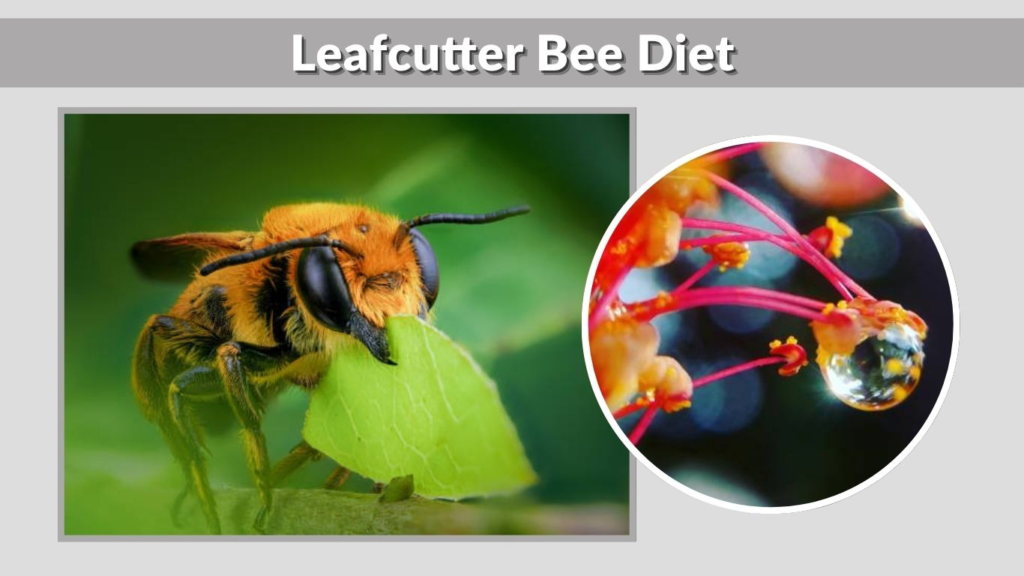
What Do Leafcutter Bees Eat?
Leafcutter bees feed primarily on:
- Nectar: Provides energy for flight and daily activities
- Pollen: Supplies protein for growth and reproduction
Feeding Behavior
These bees are active foragers and visit many flowers throughout the day. While collecting food, they transfer pollen between plants, making them excellent pollinators. Their activity benefits both wild plants and agricultural crops.
Leafcutter Bee Life Cycle
Life Cycle Stages
Leafcutter bees go through complete metamorphosis, consisting of four stages:
- Egg: The female lays an egg inside a leaf-lined cell
- Larva: The egg hatches, and the larva feeds on stored pollen and nectar
- Pupa: The larva transforms into a pupa inside the sealed chamber
- Adult: A fully developed bee emerges
Nest Development
Each nest contains multiple cells arranged in a row. The female carefully prepares each cell with food before laying an egg and sealing it with leaf material. This process continues until the nesting space is filled.
The larvae develop independently within these sealed chambers, protected by the leaf lining.
Leafcutter Bee Damage
Why Do They Cut Leaves?
Leafcutter bees cut leaves not to eat them, but to use them as building material for their nests. The circular or oval pieces they remove are used to line and seal the chambers where their eggs develop. This behavior is essential for protecting their offspring.
Is the Damage Harmful?
The damage caused by leafcutter bees is usually minimal and mostly cosmetic. Although the leaves may have visible holes, the overall health of the plant is rarely affected. Most plants continue to grow normally despite the cuts.
How to Manage Damage
If leaf damage becomes noticeable:
- Accept minor damage as a natural process
- Use garden netting to protect specific plants
- Avoid using pesticides, as these bees are beneficial
In most cases, no action is needed because the benefits of pollination outweigh the small damage.
Leafcutter Bee Sting or Bite
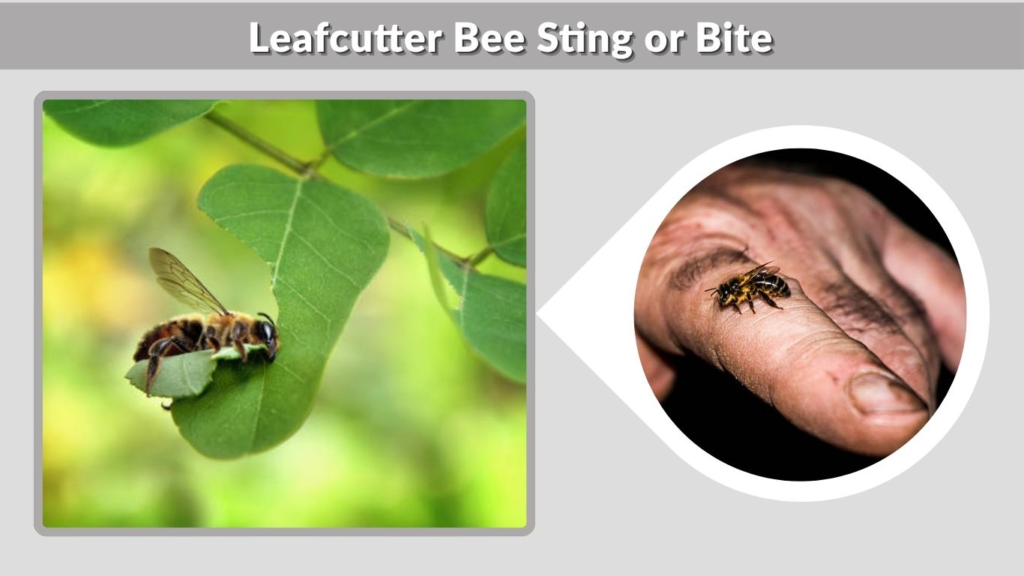
Do Leafcutter Bees Sting?
Yes, leafcutter bees can sting, but it is very rare. They are gentle insects and only sting if they are directly handled or threatened.
Are They Dangerous?
Leafcutter bees are not considered dangerous. Their sting is mild compared to other bees, and they are far less aggressive than honey bees or wasps.
Bite vs Sting
Leafcutter bees do not typically bite humans. If disturbed, they may sting as a defense mechanism, but this rarely happens in normal situations.
Interesting Leafcutter Bee Facts
- Leafcutter bees are solitary, not social like honey bees
- Each female builds her own nest without help
- They are among the best pollinators for many crops
- Their leaf-cutting behavior is unique among bees
- They are commonly used in agriculture to pollinate plants like alfalfa
Importance of Leafcutter Bees
Leafcutter bees play a vital role in pollination, helping plants reproduce and maintain biodiversity. They are especially valuable in agriculture, where they improve crop yields and support food production.
Because they are efficient pollinators, their presence in gardens and farms is highly beneficial. Protecting these bees helps maintain a healthy ecosystem and sustainable agriculture.
How to Attract Leafcutter Bees
- Plant a variety of flowering plants
- Provide nesting spaces like bee hotels or hollow stems
- Leave some natural areas undisturbed
- Avoid pesticides and harmful chemicals
Creating a bee-friendly environment encourages leafcutter bees to thrive.
Conclusion
Leafcutter bees are fascinating and highly beneficial insects known for their unique nesting behavior and excellent pollination abilities. Although they may leave small holes in leaves, the damage is minimal compared to the benefits they provide. Their gentle nature and important role in agriculture make them valuable allies in maintaining healthy ecosystems. By understanding and supporting leafcutter bees, we can help protect biodiversity and promote sustainable plant growth.
FAQs
How can you identify a leafcutter bee?
Leafcutter bees can be identified by their dark-colored bodies and the way they carry pollen on the underside of their abdomen. They are also known for cutting neat, circular pieces from leaves.
Are leafcutter bees aggressive?
No, leafcutter bees are very gentle and non-aggressive. They rarely sting and prefer to avoid human interaction.
Why do leafcutter bees cut leaves?
They cut leaves to use as building material for their nests. The leaf pieces are used to line and protect the cells where their eggs develop.
Where are leafcutter bees commonly found?
Leafcutter bees are commonly found in gardens, parks, farms, and areas with plenty of flowering plants and suitable nesting spaces.
Do leafcutter bees live in colonies?
No, leafcutter bees are solitary insects. Each female builds and manages her own nest without the help of other bees.
