
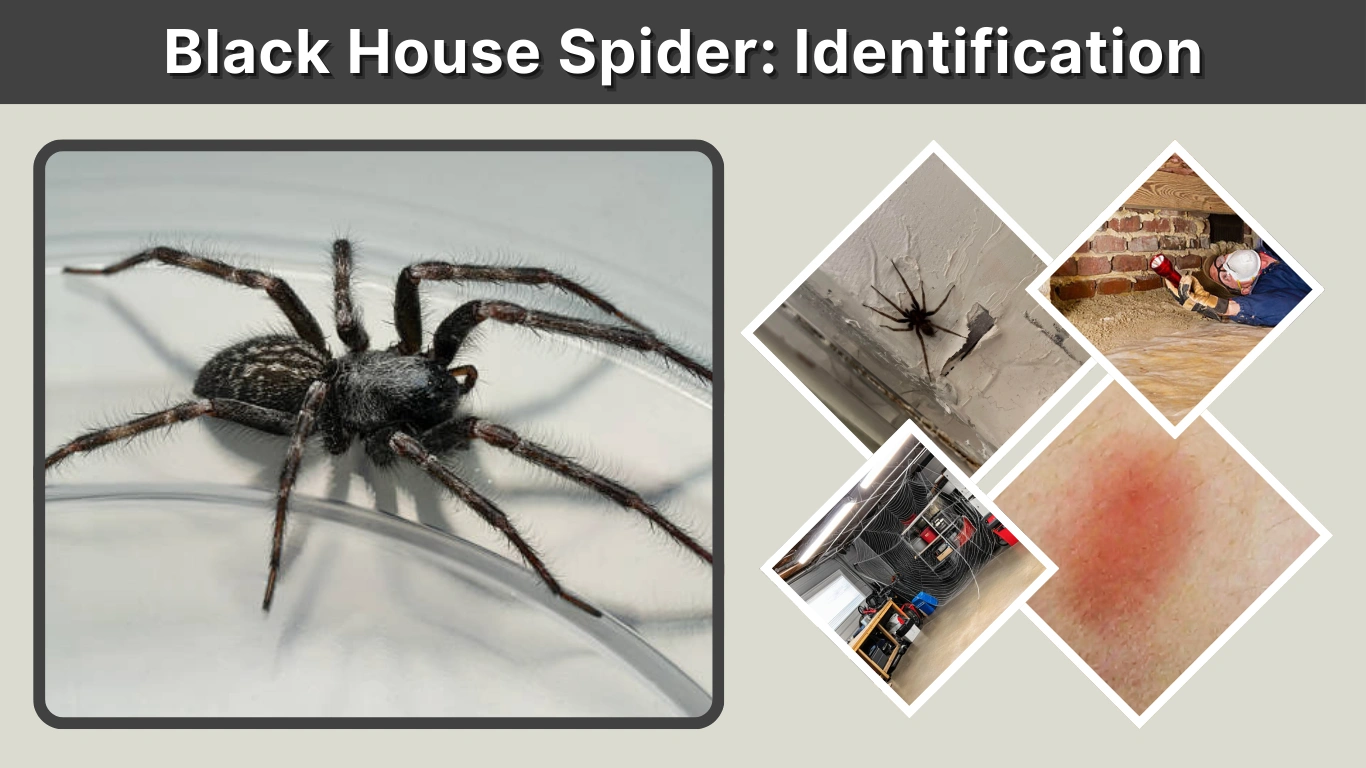
Black house spiders are commonly found inside homes and often cause alarm due to their dark color and sometimes large size. Many people worry that a big black spider in the house could be poisonous or dangerous, especially when it resembles a black widow or moves quickly across the floor. The confusion comes from the fact that “black house spider” is a broad term used for several different spider species. This article explains how to identify black house spiders, how big they get, where they live, and whether they pose any real danger to humans.
What Is a Black House Spider?
A black house spider is not a single species but a general name used for dark-colored spiders that live indoors. These spiders adapt well to human environments because homes provide warmth, shelter, and a steady supply of insects.
Many spiders that are black or very dark brown may be labeled as black house spiders, including common house spiders, wolf spiders, and southern house spiders. Most of these species are harmless and do not seek contact with people.
Black House Spider Identification
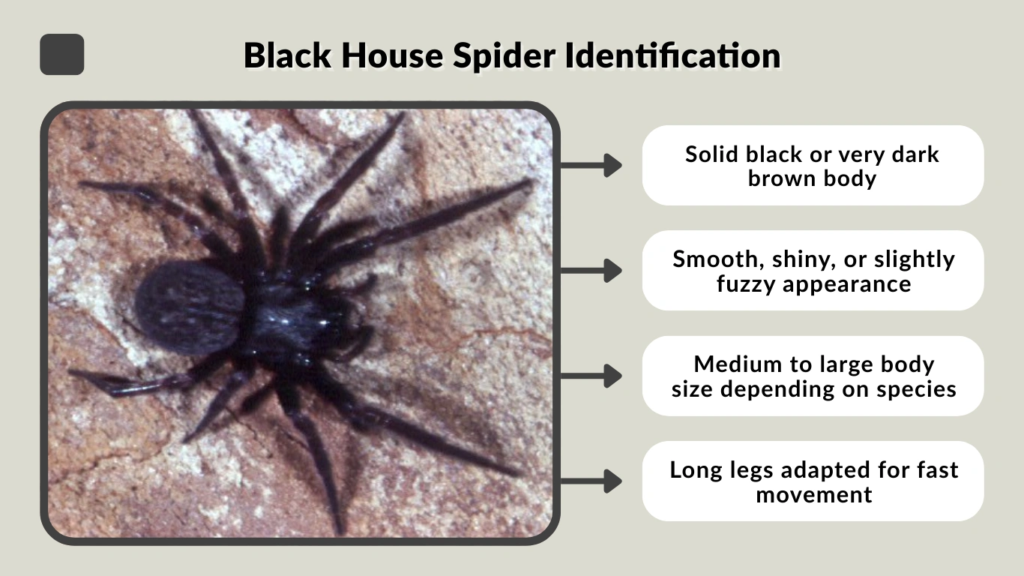
- Solid black or very dark brown body
- Smooth, shiny, or slightly fuzzy appearance
- Medium to large body size depending on species
- Long legs adapted for fast movement
- Commonly seen on walls, ceilings, basements, and garages
What Does a Black House Spider Look Like?
Black house spiders vary in appearance based on the species. Some have glossy, shiny bodies, while others appear fuzzy or hairy. Their coloration may range from deep black to dark brown or black-gray.
Occasionally, people notice black spiders with white stripes or spots. These markings usually indicate a different species and not a true black house spider. Many of these spiders are harmless look-alikes and are often mistaken for dangerous species.
Black House Spider Size
How Big Is a Black House Spider?
Black house spider size varies widely. Smaller species may have bodies less than half an inch long, while larger species, such as wolf spiders or giant house spider relatives, can appear much bigger due to their long legs.
Leg span often makes black spiders look massive, even when the body itself is relatively small.
Why Black Spiders Look Bigger Indoors
Indoor lighting, light-colored walls, and the spider’s extended legs can make black house spiders appear larger than they really are. Sudden movement also adds to the perception of size and danger.
Types of Black House Spiders Found Indoors

Common Black House Spider
This category includes dark-colored common house spiders that build messy cobwebs in corners and ceilings. They are slow-moving and usually remain near their webs.
Wolf Spider (Black Variants)
Some wolf spiders appear almost entirely black. These spiders do not build webs and instead hunt prey on the ground. Their speed and size often cause fear, but they are not dangerous.
Southern House Spider (Black Forms)
Southern house spiders sometimes appear dark brown or black. Males are often seen wandering indoors, while females stay hidden near webs. These spiders are harmless.
Black Widow Look-Alikes
Several black spiders are mistaken for black widows. Unlike black widows, these spiders lack the distinctive red hourglass marking and do not have medically significant venom.
Black House Spider Habitat and Behavior
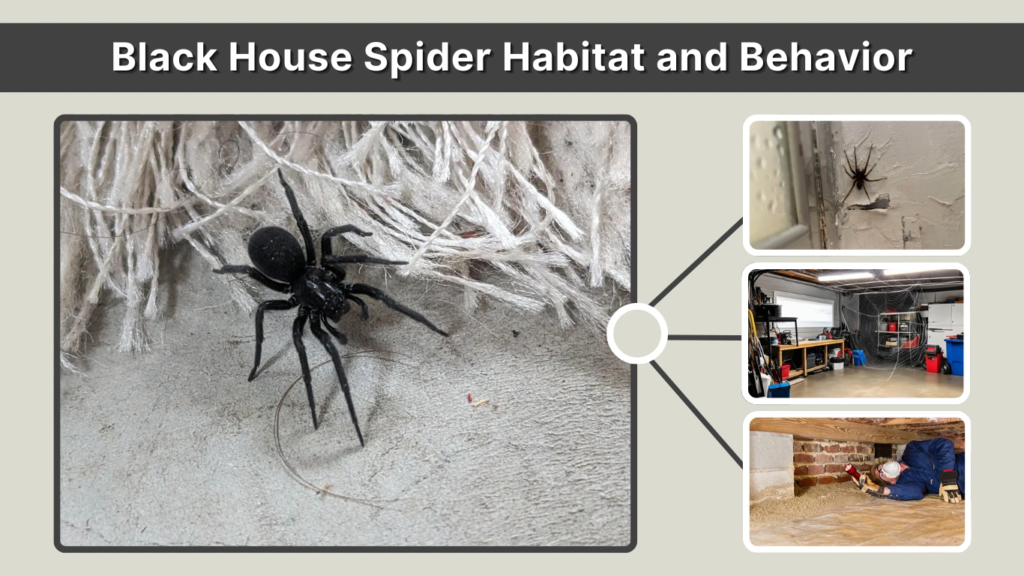
Where Black House Spiders Live Indoors
Black house spiders prefer quiet, undisturbed areas. Common locations include basements, garages, crawl spaces, closets, and wall corners. They avoid high-traffic areas and remain hidden during the day.
Behavior and Movement
Some black house spiders are web builders, while others roam freely at night. Fast-running black spiders often cause alarm, but their speed is a defense mechanism, not aggression. Most avoid human contact whenever possible.
Black House Spider Bite Overview
Black house spider bites are rare. These spiders are not aggressive and bite only when threatened or trapped. Many bites attributed to black house spiders are actually caused by insects or skin irritations unrelated to spiders.
What Does a Black House Spider Bite Look Like?
A black house spider bite usually causes mild redness and slight swelling. It may appear as a small raised bump similar to a mosquito bite. Serious reactions are uncommon, and symptoms typically improve within a few days.
Black House Spider Bite Symptoms

When a black house spider bite does occur, symptoms are usually mild and localized. Most people experience slight redness, minor swelling, or mild itching at the bite site. Some bites may cause a small raised bump that feels tender for a short time.
Pain is typically minimal and does not worsen over time. Severe reactions are rare. If symptoms such as spreading redness, intense pain, or fever develop, the cause is likely something other than a house spider bite, such as an infection or allergic reaction.
Is a Black House Spider Poisonous?
Black house spiders are venomous in the technical sense, as most spiders produce venom to subdue prey. However, their venom is not considered medically significant to humans.
Their fangs are often too small to effectively penetrate human skin, and even when a bite occurs, the venom does not cause serious effects. This is very different from spiders like black widows, whose venom affects the nervous system.
Is a Black House Spider Dangerous?
Black house spiders are not dangerous to humans or pets. They are shy, non-aggressive spiders that prefer to hide rather than bite. Most encounters happen when a spider is accidentally disturbed.
Fear around black house spiders is largely due to their dark color and size, not actual risk. In reality, these spiders are among the least threatening household arachnids.
Black House Spider vs Black Widow
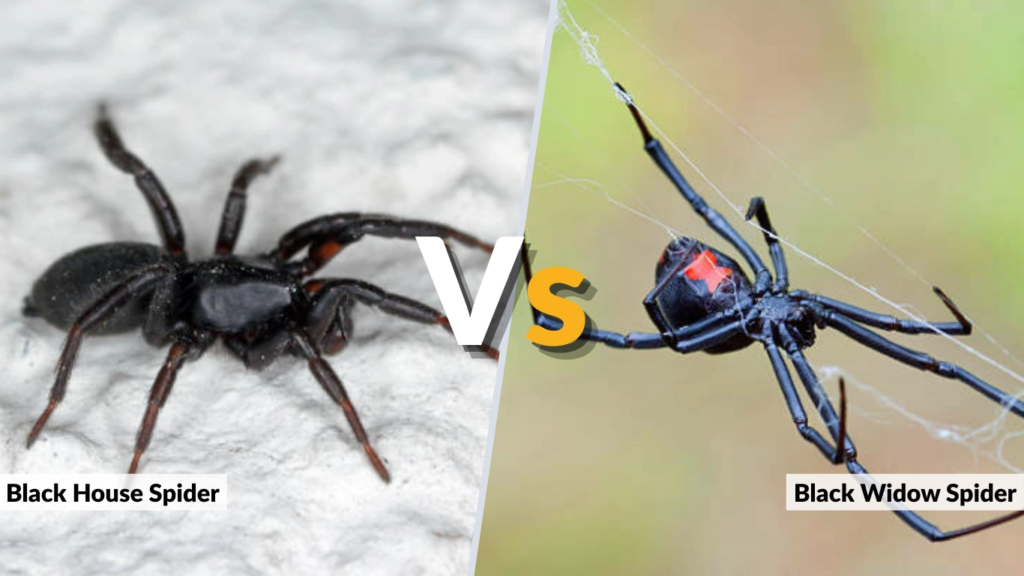
Black house spiders are frequently mistaken for black widows, but there are important differences. Black widows have a round, glossy abdomen and a distinctive red hourglass marking on the underside. Their venom is medically significant.
Black house spiders lack the red hourglass, usually have a flatter or more oval body, and do not pose the same danger. Correct identification helps avoid unnecessary panic.
Black House Spider vs Wolf Spider
Wolf spiders are larger, hairier, and more active hunters compared to black house spiders. They do not build webs and are often seen running across floors.
Both spiders are harmless to humans. Wolf spider bites may be slightly more noticeable, but neither species is considered dangerous.
Big Black Spider in the House: What It Means
Seeing a big black spider indoors does not mean your home is infested or unsafe. Large spiders often appear during seasonal changes, especially in fall, when males search for mates or seek warmer environments.
Their presence usually indicates a healthy insect population, which attracts spiders. Size alone does not increase danger.
Black House Spider by Location (United States)
Black house spiders are reported across much of the United States, including California, Texas, Florida, Illinois, Michigan, Ohio, New York, New Jersey, Georgia, and North Carolina. Because “black house spider” is a general term, sightings vary by region.
Geographic location is helpful for ruling out dangerous species. For example, black widows have more limited and specific habitats compared to common black house spiders.
How to Get Rid of Black House Spiders
Prevention Tips
Sealing cracks and gaps around doors and windows reduces spider entry. Removing clutter in basements and garages limits hiding spots. Reducing insects indoors also makes the environment less attractive to spiders.
Control Options
Spider sprays can help with individual spiders, but spider bombs are rarely effective. Physical removal and prevention work better long term and are safer for homes and pets.
FAQs
Is a black house spider poisonous?
Black house spiders have venom, but it is not dangerous to humans and rarely causes symptoms.
Are black house spiders dangerous?
No. They are harmless and prefer to avoid contact with people.
Why do I keep seeing big black spiders in my house?
Large spiders are more noticeable and often appear during seasonal changes or mating periods.
How can I tell a black house spider from a black widow?
Look for the red hourglass marking on black widows. Black house spiders lack this feature.
Should I kill or remove a black house spider?
Removal is usually sufficient. These spiders help control insects and pose no threat.
Conclusion
Black house spiders are common indoor spiders that are widely misunderstood. Despite their dark color and sometimes large size, they are not dangerous and rarely bite. Most black spiders found indoors are harmless species that help control insects. Understanding how to identify them and knowing the facts about their behavior can reduce fear and allow for calm, practical coexistence.
