

The common house spider is one of the most frequently encountered spiders inside homes. Many people become concerned after seeing a large black or brown spider indoors and wonder if it is dangerous or capable of biting. The confusion increases because the term “house spider” refers to several different species rather than one specific spider. This article explains what a common house spider is, how to identify it, the species most often found indoors, and whether house spiders pose any real danger to humans.
What Is a Common House Spider?
A common house spider is not a single species but a general term used to describe spiders that regularly live indoors. These spiders adapt well to human environments because homes provide warmth, shelter, and a steady supply of insects.
Most house spiders spend their entire lives inside buildings, rarely venturing outdoors. They are considered domestic spiders rather than invasive pests. Unlike outdoor spiders, house spiders usually build webs in quiet, undisturbed areas and remain hidden for long periods.
Common House Spider Identification
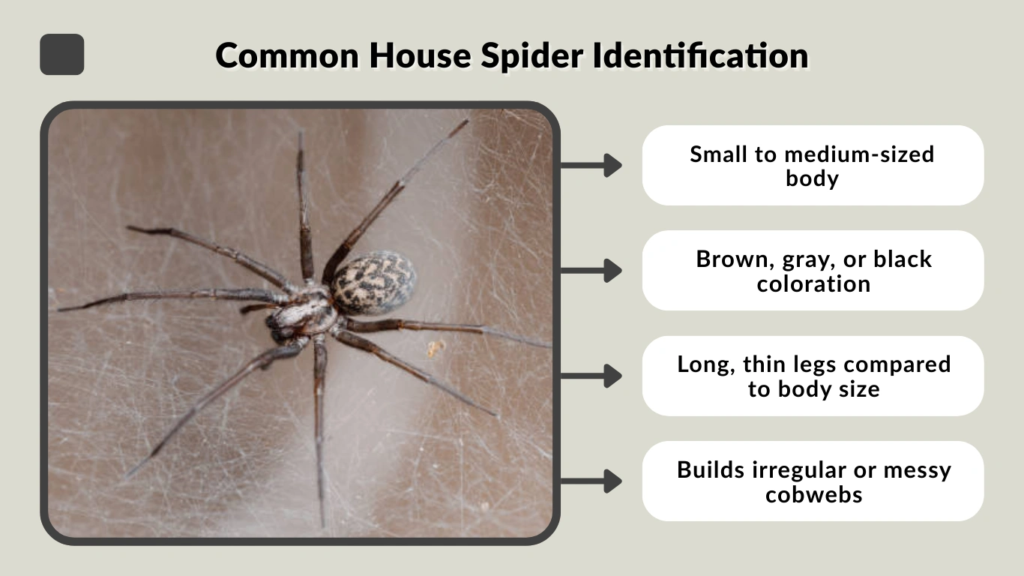
- Small to medium-sized body
- Brown, gray, or black coloration
- Long, thin legs compared to body size
- Builds irregular or messy cobwebs
- Commonly found in corners, ceilings, basements, and garages
What Does a House Spider Look Like?
House spiders vary widely in appearance depending on the species. Most have rounded or oval bodies with thin legs and muted colors that help them blend into indoor environments. Some appear light brown or gray, while others are dark brown or nearly black.
Male house spiders are often smaller and more slender, while females tend to be larger and remain near their webs. Because of this variation, many spiders seen indoors are mistakenly assumed to be dangerous species.
House Spider Species Commonly Found Indoors

American House Spider
The American house spider (Parasteatoda tepidariorum) is the most common indoor spider in North America. It is small to medium in size and usually brown or gray. This spider builds messy cobwebs in corners, ceilings, and behind furniture. It is harmless and rarely bites.
Giant House Spider
The giant house spider (Eratigena or Tegenaria species) is one of the largest spiders found indoors. Despite its intimidating size and fast movement, it is not dangerous. Giant house spiders are commonly found in Washington, Oregon, and other parts of the Pacific Northwest.
Black House Spider
Black house spiders are usually dark brown or black and may appear shiny. They are often mistaken for more dangerous spiders due to their color. In reality, most black house spiders found indoors in the United States are harmless.
Brown House Spider
Brown house spiders are among the most commonly misidentified spiders. Many people confuse them with brown recluse spiders. However, brown house spiders lack the distinctive violin-shaped marking and are not medically significant.
Giant House Spider Overview
Giant House Spider Size
Giant house spiders can have a body length of up to ¾ inch, with leg spans reaching several inches. Their long legs make them appear much larger than they actually are, which often causes fear when they are spotted indoors.
Giant House Spider Location
These spiders are most commonly found in the Pacific Northwest, including Washington and Oregon. They prefer cool climates and are often seen indoors during fall when temperatures drop.
House Spider Habitat and Behavior
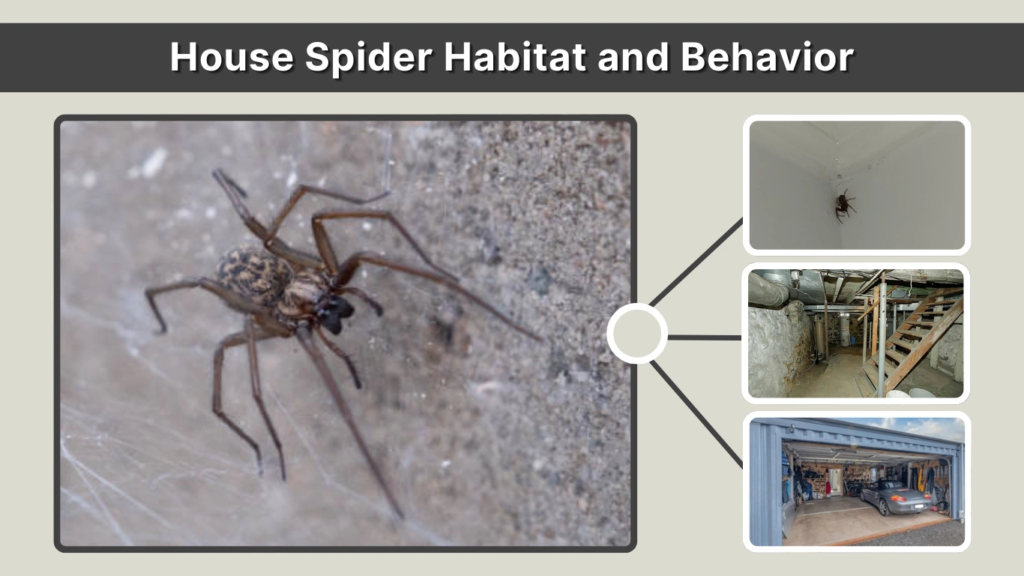
Where House Spiders Live Indoors
House spiders prefer quiet, undisturbed areas. Common locations include ceiling corners, basements, garages, crawl spaces, closets, and behind furniture. They avoid high-traffic areas and are most active at night.
Behavior and Activity Patterns
Most house spiders are web builders and remain near their webs waiting for prey. They are not aggressive and usually flee when disturbed. Seeing a spider wandering indoors often means it is a male searching for a mate.
House Spider Lifespan
House spiders can live surprisingly long lives indoors. Females may live one to two years or longer if conditions are favorable. Males typically live shorter lives, often dying shortly after mating. Indoor environments allow house spiders to survive year-round without seasonal interruptions.
House Spider Eggs and Reproduction
Female house spiders produce egg sacs that are usually white or light brown. These sacs are often hidden in corners or attached to webs. Each egg sac can contain dozens of spiderlings. Most do not survive to adulthood, which keeps indoor populations under control.
House Spider Bites Overview
House spider bites are rare. These spiders are not aggressive and only bite when trapped or threatened. Many bites attributed to house spiders are actually caused by insects or skin irritations unrelated to spiders.
What Does a House Spider Bite Look Like?

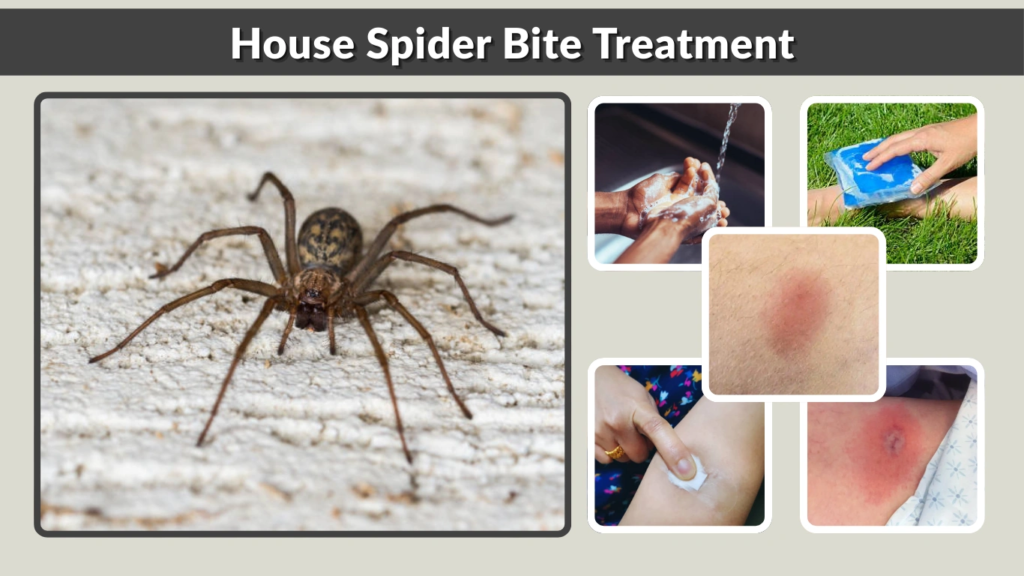
A house spider bite usually causes mild redness and slight swelling. It may resemble a mosquito or ant bite. Serious reactions are uncommon, and symptoms typically resolve on their own within a few days.
Common House Spider Bite Symptoms
Most house spider bites cause only mild, localized symptoms. Because these spiders have weak venom and rarely bite, serious reactions are uncommon. When a bite does occur, symptoms may include slight redness, mild swelling, and light itching around the bite area.
Some people may experience minor tenderness or a small raised bump. Symptoms usually improve within a few days without medical treatment. Severe pain, spreading redness, or fever is unlikely and may indicate a different cause, such as an infection.
Are House Spiders Dangerous?
House spiders are not considered dangerous to humans. Although they are venomous, their venom is not medically significant. Their small fangs often cannot penetrate human skin, and when they do, the effects are mild.
House spiders are far less dangerous than spiders such as the brown recluse or black widow. In most cases, they are beneficial because they help control flies, mosquitoes, and other household insects.
House Spider Bite Treatment
Immediate First Aid
If you suspect a house spider bite, wash the area gently with soap and water. This helps reduce the risk of infection. Applying a cold compress can ease swelling and discomfort.
Home Treatment Options
Over-the-counter pain relievers can help with mild pain, while antihistamines may reduce itching. Avoid scratching the bite, as this can cause irritation or infection. Medical attention is usually unnecessary unless symptoms worsen or persist.
Big Black Spider in the House
Seeing a big black spider indoors often causes alarm, but size and color do not indicate danger. Many large black house spiders are harmless species such as giant house spiders or wolf spiders.
Large spiders are more noticeable and therefore more frightening, but they are not more dangerous than smaller ones. Most large spiders found indoors are accidental visitors or harmless residents.
House Spider vs Brown Recluse
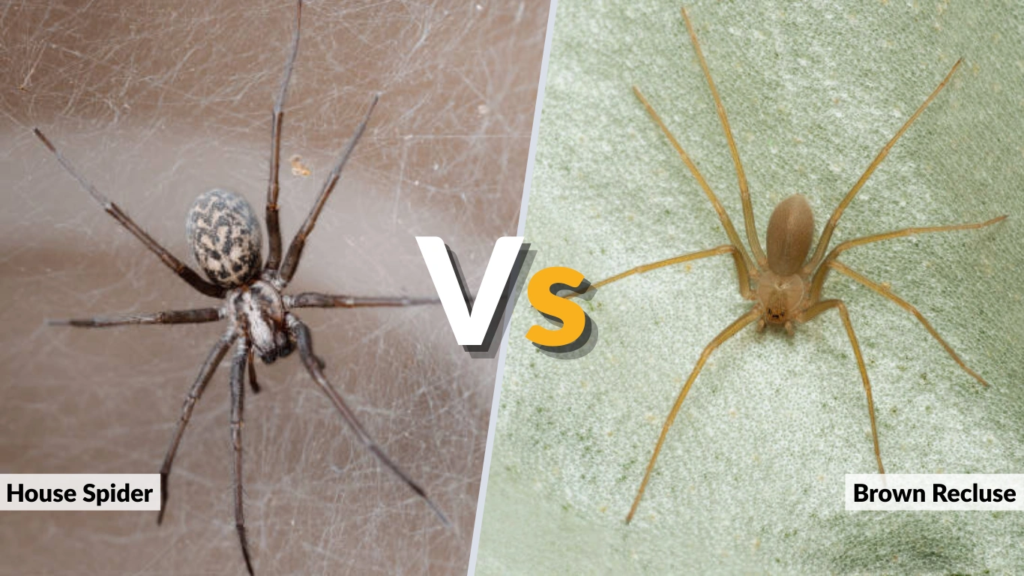
House spiders are frequently confused with brown recluse spiders. However, brown recluse spiders have a distinct violin-shaped marking on their back and are primarily found in the central and southern United States.
House spiders lack this marking and are common across a much wider geographic range. Brown recluse bites can be medically significant, while house spider bites are mild and rarely require treatment.
Hobo Spider vs House Spider
Hobo spiders and house spiders differ in behavior and habitat. Hobo spiders typically build funnel-shaped webs near ground level, while house spiders build messy cobwebs higher up indoors.
Both species are considered low risk to humans. Neither is aggressive, and bites from either spider are rare and mild.
Giant House Spider vs Hobo Spider
Giant house spiders are larger and faster than hobo spiders and are commonly found indoors in the Pacific Northwest. Hobo spiders usually stay closer to the ground and outdoors.
Despite their size difference, both spiders pose little danger to humans. Giant house spiders may look intimidating but are harmless.
Wolf Spider vs House Spider
Wolf spiders do not build webs and actively hunt prey, while house spiders rely on webs. Wolf spiders are bulkier and hairier, which can make them look more threatening.
Bites from both spiders are uncommon and typically mild. Neither species is considered dangerous.
How to Get Rid of House Spiders
Prevention Tips
Sealing cracks and gaps around doors and windows helps prevent spiders from entering the home. Reducing clutter, especially in basements and garages, limits hiding places. Controlling insects indoors also reduces spider activity.
Spider Control Options
Spider sprays may help with individual spiders, but spider bombs are usually unnecessary and ineffective. Physical removal and prevention are more effective and safer long-term solutions.
FAQs
Are common house spiders dangerous?
No. Common house spiders are harmless and rarely bite humans.
Do house spiders bite humans?
They can bite, but it is rare and usually causes only mild symptoms.
How long does a spider live in a house?
Female house spiders may live one to two years indoors, while males live shorter lives.
Why do I keep seeing big spiders in my house?
Large spiders are more noticeable and often appear during seasonal changes or mating periods.
Should I kill house spiders or remove them?
Removal is usually sufficient. House spiders help control insects and do not pose a threat.
Conclusion
Common house spiders are harmless indoor residents that are often misunderstood. Although they may look unsettling, they rarely bite and pose no real danger to humans. Most species help control household pests and prefer to remain hidden. Understanding their behavior and appearance can help reduce fear and allow for calm, practical coexistence.
