

A fruit fly infestation in the house can start small but quickly become overwhelming. These tiny flies multiply rapidly and are attracted to food, moisture, and organic waste commonly found indoors. Many homeowners are surprised by how suddenly fruit flies appear and how difficult they can be to eliminate once established. Knowing what to do immediately and how to address the root cause is essential. This guide explains why fruit flies invade homes, how to recognize an infestation, and the first critical steps you should take.
What Is a Fruit Fly Infestation?
A fruit fly infestation occurs when fruit flies find suitable conditions inside a home to feed and reproduce. Fruit flies are small, light brown insects with red eyes that thrive in warm environments with access to fermenting food. Unlike occasional flies that enter through doors or windows, an infestation means the flies are breeding indoors.
Fruit flies often enter homes by hitchhiking on fruits and vegetables from grocery stores or gardens. Once inside, they lay eggs on ripening produce, in trash containers, or inside drains where organic residue builds up. Because their life cycle is extremely short, populations can grow within days if conditions are favorable.
Common Causes of Fruit Fly Infestation in a House

Understanding what attracts fruit flies is the first step toward eliminating them. Most infestations are caused by everyday household habits rather than poor hygiene.
Common causes include:
- Overripe or uncovered fruits and vegetables
- Open or overflowing trash cans
- Unrinsed bottles and cans in recycling bins
- Sticky spills from juice, wine, or soda
- Dirty sink drains or garbage disposals
- Compost bins or exposed pet food
Even small amounts of fermenting residue are enough to sustain fruit flies, which is why infestations often persist despite regular cleaning.
Early Signs of a Fruit Fly Infestation
Fruit fly infestations are easiest to control when caught early. Recognizing the warning signs can help prevent a larger problem.
Typical signs include:
- Small flies hovering around fruit bowls or countertops
- Flies gathering near sinks, drains, or trash areas
- A noticeable increase in flies over a short period
- Flies reappearing shortly after being swatted
Seeing just a few fruit flies usually indicates that eggs or larvae are already present somewhere in the house.
What Should You Do Immediately?
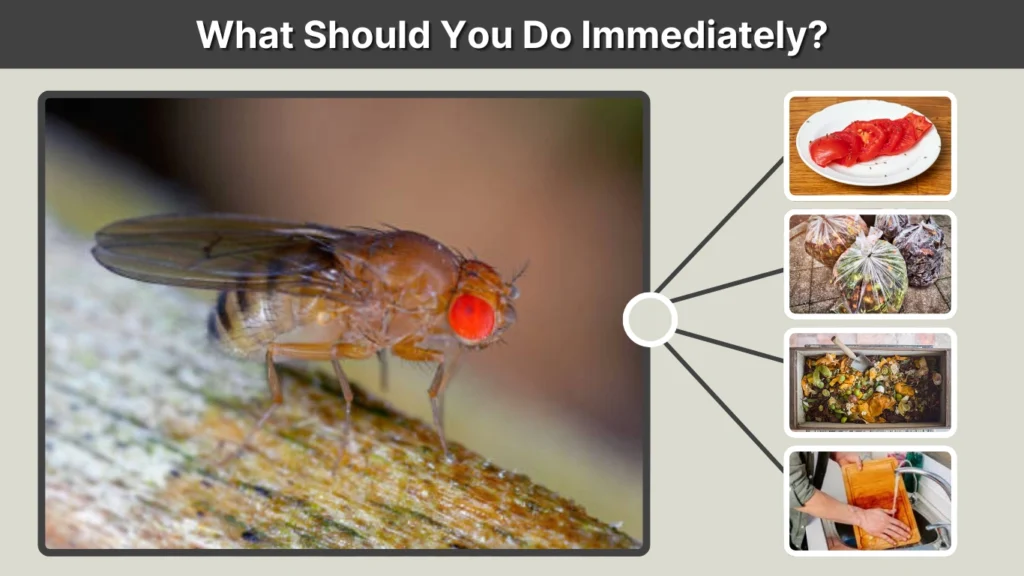
Quick action is essential once you notice fruit flies. Delaying even a day can allow dozens more flies to emerge.
Start with these immediate steps:
- Remove all exposed fruits and vegetables
- Dispose of overripe produce in sealed trash bags
- Take out garbage and recycling
- Wipe down counters, tables, and sticky surfaces
- Observe where flies gather most often
These actions reduce the flies’ food supply and help you pinpoint their breeding location.
Step-by-Step: How to Get Rid of Fruit Flies in Your House
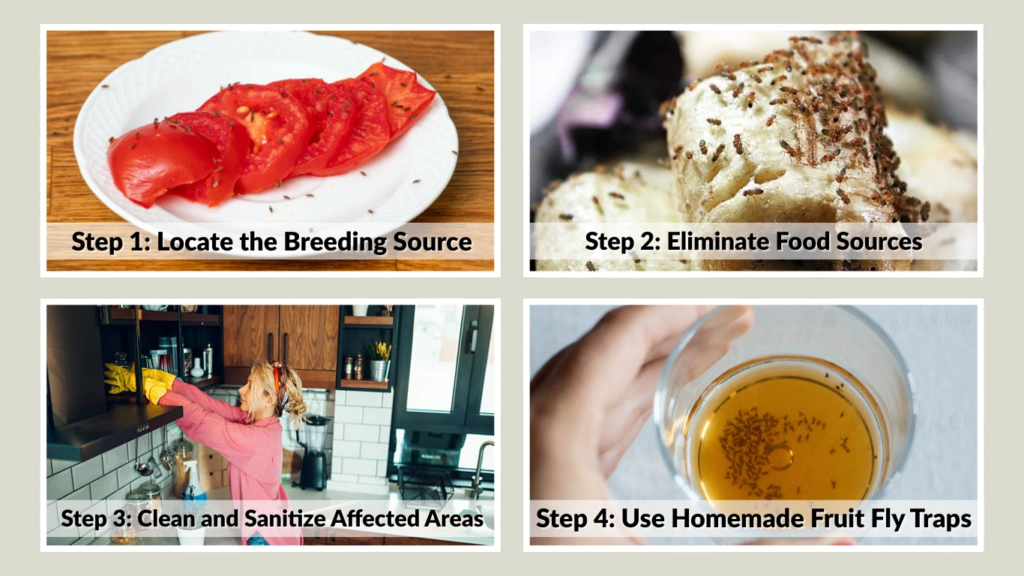
Step 1: Locate the Breeding Source
Finding the breeding source is the most important part of eliminating a fruit fly infestation. Without removing it, traps and sprays will only provide temporary relief.
Inspect common problem areas such as:
- Fruit bowls and pantry shelves
- Trash cans and recycling containers
- Sink drains and garbage disposals
- Under appliances like refrigerators and microwaves
- Empty bottles, cans, or food containers
Fruit flies tend to gather near their breeding site, making their movement patterns a helpful clue.
Step 2: Eliminate Food Sources
Once the source is identified, remove everything that could support fruit fly reproduction.
Effective actions include:
- Throwing away infested or overripe food
- Storing fresh produce in sealed containers or the refrigerator
- Cleaning spills immediately
- Covering pet food and compost bins
This step alone can dramatically reduce fruit fly numbers within 24 to 48 hours.
Step 3: Clean and Sanitize Affected Areas
After removing food sources, thorough cleaning is necessary to stop fruit flies from breeding again. Fruit flies lay eggs in moist, organic buildup that is often invisible.
Focus on:
- Washing countertops, cabinets, and shelves
- Scrubbing sink drains with hot water and dish soap
- Cleaning garbage disposals using baking soda and vinegar
- Washing trash cans and recycling bins with soap and water
- Replacing old sponges and cleaning mop buckets
Drains are a common breeding site, so cleaning them properly is especially important.
Step 4: Use Homemade Fruit Fly Traps
Homemade traps help remove adult fruit flies already flying around your house.
Apple Cider Vinegar Trap
- Pour apple cider vinegar into a small bowl
- Add a few drops of dish soap
- Place near areas where flies are most active
Fruit and Plastic Wrap Trap
- Place a piece of ripe fruit in a bowl
- Cover tightly with plastic wrap
- Poke small holes in the top
These traps attract fruit flies and prevent them from escaping.
Natural Ways to Control Fruit Flies
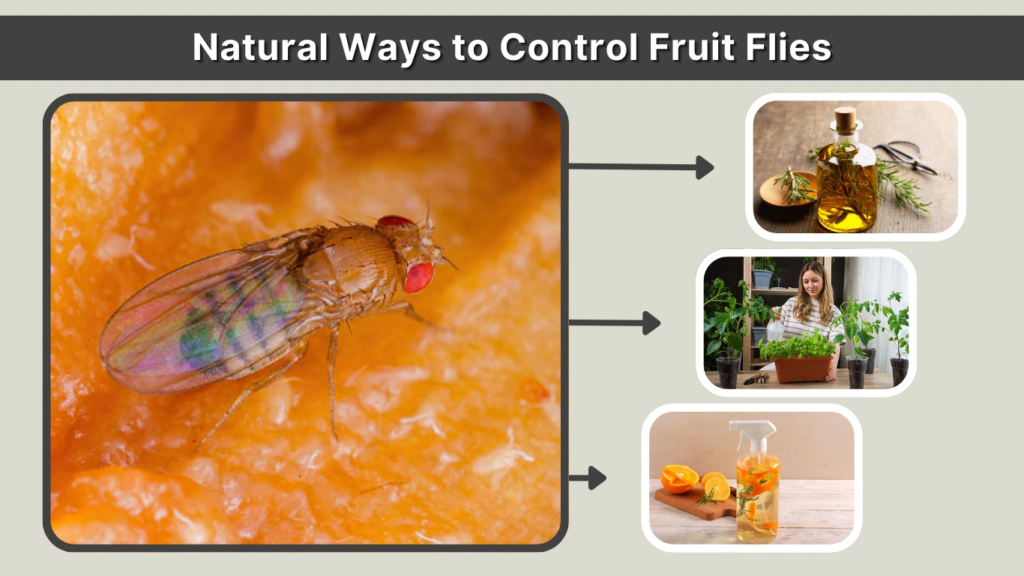
Natural repellents can help reduce fruit fly activity and discourage reinfestation.
Effective natural options include:
- Essential oils such as peppermint, eucalyptus, or lemongrass
- Fresh herbs like basil or mint placed near food areas
- Vinegar and citrus-based sprays
Regular use of natural repellents works best when combined with cleaning and trapping.
Store-Bought Treatments: When and What to Use
If fruit flies persist despite home remedies, store-bought solutions may be necessary.
| Product Type | Purpose | Best For |
| Sticky traps | Capture adult flies | Light infestations |
| Drain cleaners | Remove larvae | Drain-related breeding |
| Insect sprays | Kill adult flies | Severe infestations |
Always follow label instructions and avoid spraying near food preparation areas.
How Long Does It Take to Eliminate a Fruit Fly Infestation?
The time required depends on how severe the infestation is and how consistently steps are followed. Minor infestations can be controlled within two to three days, while larger infestations may take one to two weeks. Missing even one breeding source can delay results.
Preventing Fruit Fly Infestations in the Future
Once fruit flies are gone, prevention keeps them from returning.
Key prevention tips:
- Store produce in sealed containers or the refrigerator
- Clean kitchen surfaces daily
- Rinse bottles and cans before recycling
- Flush drains weekly with hot water
- Take out trash regularly
Consistency is the most effective long-term solution.
Common Mistakes Homeowners Make
Avoid these common errors:
- Relying only on traps without cleaning
- Ignoring drains and garbage disposals
- Leaving food exposed overnight
- Inconsistent cleaning routines
These mistakes often cause infestations to return.
When Should You Call a Professional?
Professional pest control may be necessary if:
- Fruit flies return repeatedly
- The infestation spreads beyond the kitchen
- Breeding sources cannot be located
Professionals can identify hidden breeding sites and apply targeted treatments.
FAQs
Why do fruit flies suddenly appear in my house?
Fruit flies often enter on produce or through doors and windows. Once inside, they reproduce rapidly if food and moisture are available.
Can fruit flies live in drains?
Yes, drains are a common breeding site due to organic buildup and moisture, making regular drain cleaning essential.
Are fruit fly infestations dangerous?
Fruit flies are not harmful, but they can contaminate food and surfaces, making them a hygiene concern.
Do fruit flies go away on their own?
No, infestations usually worsen without intervention because fruit flies reproduce quickly.
What is the fastest way to get rid of fruit flies?
Removing food sources, deep cleaning, and using traps together is the fastest and most effective approach.
