

Flesh flies are a diverse group of insects known for their gray-striped bodies and unique reproductive behavior. Many species play essential roles in decomposition, while others can impact livestock or human health through myiasis. Understanding their traits, habitats, and behaviors helps identify them in nature and manage potential risks. This guide introduces 15 flesh fly species and highlights what makes each one distinct.
1. Sarcophaga carnaria

The Sarcophaga carnaria flesh fly is a widespread species known for its gray-striped thorax and biological role in decomposition. It commonly appears around decaying organic matter and is active in both natural and urban environments.
Identification
- Gray thorax with three distinct black stripes
- Checkered abdomen pattern (typical of flesh flies)
- Large reddish-brown compound eyes
- Clear wings with pronounced dark veins
- Robust, medium-to-large body size
Habitat
Sarcophaga carnaria thrives in temperate regions and is often found in forests, gardens, grasslands, and urban environments. It prefers areas with access to carrion, garbage, or dead insects. During cooler months, it may enter buildings seeking warmth.
Behaviors
This species is known for larviposition—females deposit live larvae instead of eggs. They quickly arrive at carcasses and decomposing matter. Adults are strong daytime fliers and are often seen resting on walls, vegetation, or garbage containers.
Diet and Lifecycle
Adults feed on sugary liquids, nectar, and decomposing organic fluids. Females place live larvae directly onto carrion or moist waste. Larvae grow rapidly, then pupate in soil or debris before emerging as adults. The lifecycle generally completes in 2–3 weeks, depending on temperature.
2. Sarcophaga haemorrhoidalis
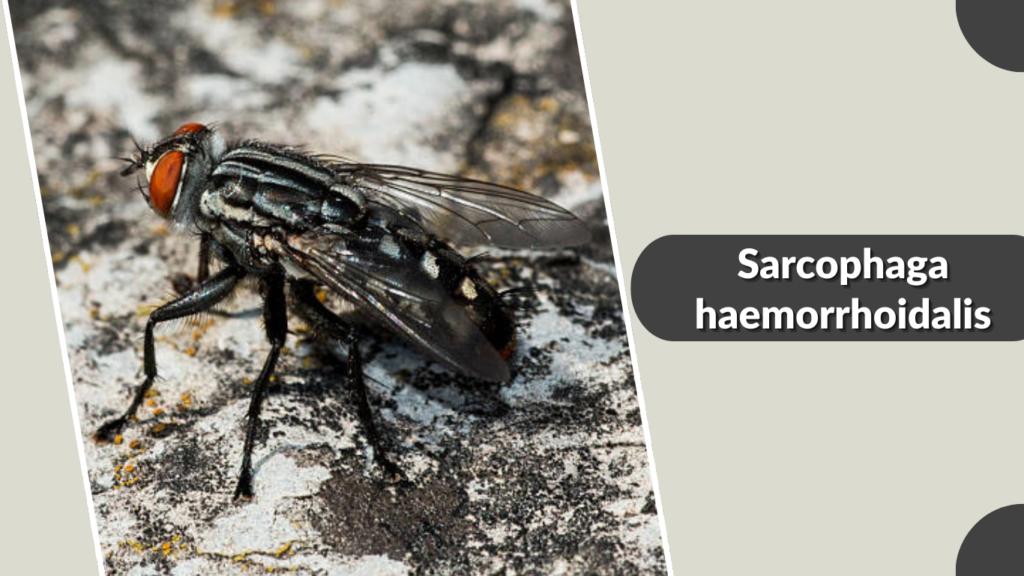
The Sarcophaga haemorrhoidalis flesh fly is a recognizable species known for its red-tipped abdomen and preference for decaying organic matter. It is common in urban and rural areas and is one of the more frequently encountered flesh flies.
Identification
- Gray body with three bold black thoracic stripes
- Checkered abdomen with a distinctive red tail tip
- Large reddish-brown eyes
- Clear wings with dark, strong veins
- Medium-to-large size with a robust shape
Habitat
This species inhabits forests, fields, farms, and urban environments. It is commonly found near animal enclosures, garbage sites, carcasses, and shaded outdoor areas. Indoors, it may appear around windows or food waste, especially in warmer seasons.
Behaviors
Sarcophaga haemorrhoidalis females deposit live larvae directly onto carrion, wounds, or decaying organic material. Adults are strong, steady fliers active during daylight. They are early responders to animal remains and often gather around waste-rich environments.
Diet and Lifecycle
Adults feed on sugary fluids, decaying tissue liquids, and nectar. Larvae feed on decomposing organic matter and develop quickly before pupating in soil or dry debris. The full lifecycle typically completes in 2–3 weeks depending on temperature.
3. Sarcophaga peregrina
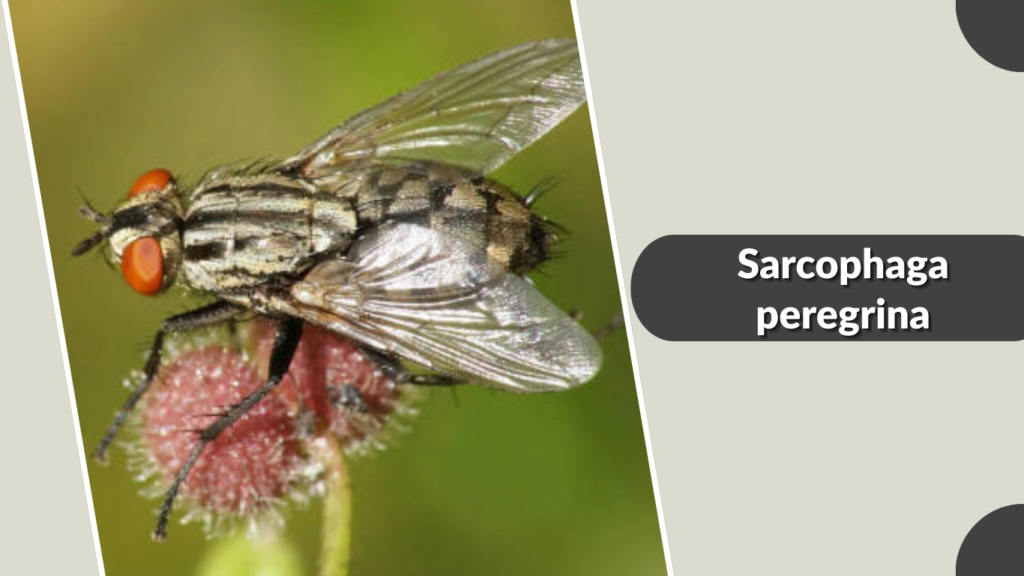
The Sarcophaga peregrina flesh fly is a widespread species often found near human activity. Known for its strong flight and adaptability, it is commonly encountered in warm regions and plays an important role in decomposition.
Identification
- Gray thorax with three black longitudinal stripes
- Checkered black-and-gray abdomen
- Large reddish-brown compound eyes
- Clear wings with dark veins
- Medium-sized, with a sturdy, muscular appearance
Habitat
Sarcophaga peregrina thrives in warm temperate and tropical regions. It is frequently found around garbage sites, markets, animal pens, compost piles, and decaying organic debris. It readily enters homes and buildings in search of food sources.
Behaviors
Females of this species perform larviposition, depositing live larvae on carrion or decaying waste. Adults are highly active during the day, flying swiftly and responding quickly to odors from decomposition. They often rest on sunny walls, fences, or vegetation.
Diet and Lifecycle
Adults feed on sugary substances, nectar, and decomposing organic fluids. Larvae feed on carrion, moist waste, or dead animals. They develop rapidly and pupate in nearby soil or sheltered debris. The complete lifecycle is temperature-dependent but typically spans 2–3 weeks.
4. Sarcophaga bullata
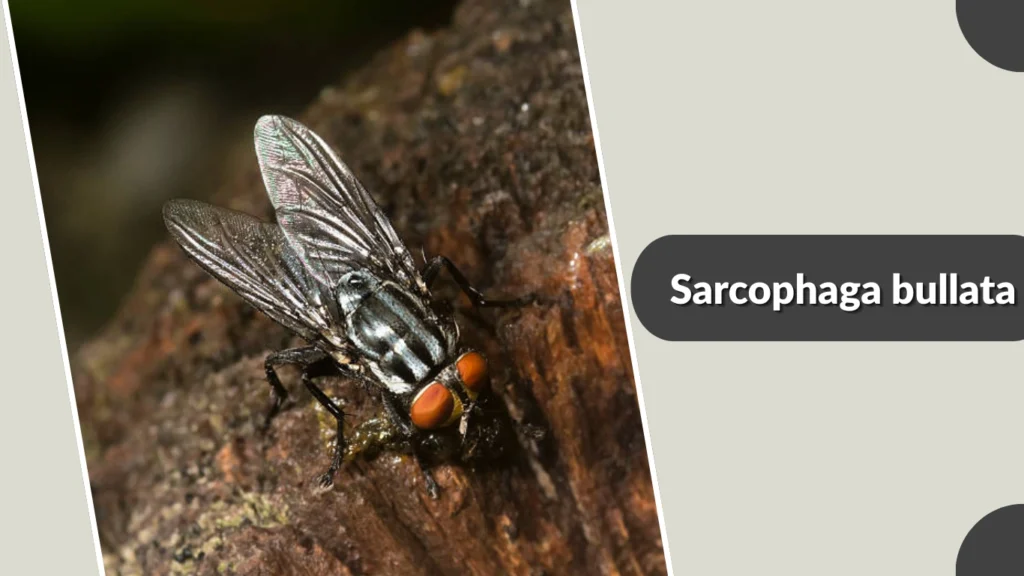
The Sarcophaga bullata flesh fly is a well-known species in North America, commonly used in laboratory research and often observed around decaying organic matter. It has a classic flesh fly appearance with a robust body and checkered abdomen.
Identification
- Gray thorax with three bold black stripes
- Distinct black-and-gray checkered abdomen
- Large reddish-brown eyes
- Clear wings with prominent dark veins
- Thick, sturdy body typical of flesh flies
Habitat
Sarcophaga bullata inhabits forests, grasslands, suburban areas, and farms. It is frequently found near animal carcasses, garbage sites, compost piles, and manure. Indoors, it may appear near windows or waste areas during warm months.
Behaviors
This species is known for larviposition—females deposit live larvae directly on carrion or decaying organic matter. Adults are strong daytime fliers and respond rapidly to odors from decomposition. They often rest on sunlit walls or vegetation.
Diet and Lifecycle
Adults consume sugary liquids, nectar, and decomposing organic fluids. Larvae develop on carrion or moist waste before dropping to soil to pupate. The life cycle is typically completed in 2–3 weeks, depending on environmental temperature.
5. Sarcophaga africa
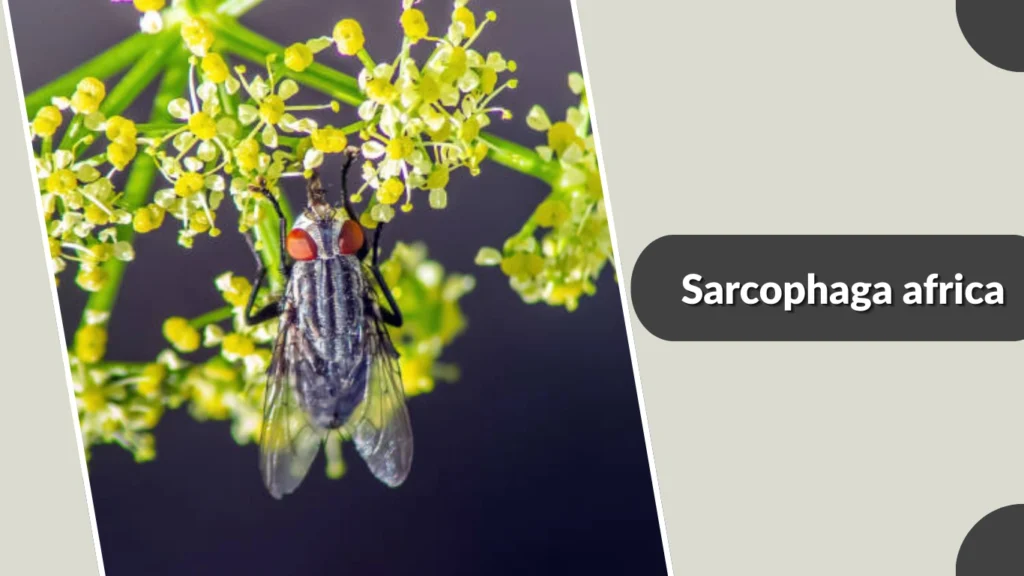
The Sarcophaga africa flesh fly is a widespread species found throughout Africa and parts of southern Asia. It is known for its adaptability, strong flight, and association with decaying organic matter in natural and human environments.
Identification
- Gray thorax with three dark stripes
- Checkered black-and-gray abdomen
- Large reddish-orange compound eyes
- Clear wings with darkened veins
- Medium-to-large robust body typical of Sarcophaga species
Habitat
Sarcophaga africa inhabits savannas, forests, urban areas, farms, and rural villages. It thrives in warm climates and is commonly found around carcasses, garbage heaps, livestock areas, and open waste. Indoors, it may appear near windows and food debris.
Behaviors
Females deposit live larvae (larviposition) onto carrion or decaying waste. This species is attracted quickly to dead animals and strongly responds to decomposition odors. Adults are active during warm daylight hours and frequently rest on sunny surfaces.
Diet and Lifecycle
Adults feed on nectar, decomposing organic fluids, and sugary materials. Larvae consume carrion or moist organic waste and mature rapidly. After feeding, they drop to the soil to pupate. The full lifecycle generally completes within 2–3 weeks in warm conditions.
6. Sarcophaga tibialis
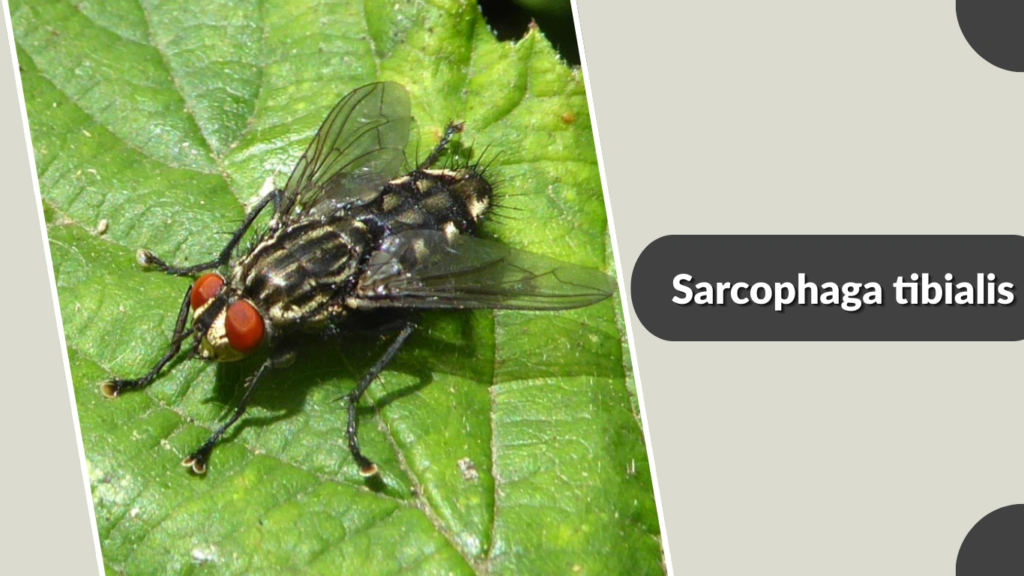
The Sarcophaga tibialis flesh fly is a widely distributed species recognized for its typical gray-striped appearance and association with carrion and decaying organic matter. It is frequently encountered in both natural and urban environments.
Identification
- Gray thorax with three dark longitudinal stripes
- Checkered black-and-gray abdomen
- Reddish-brown compound eyes
- Clear wings with pronounced venation
- Medium-sized, sturdy fly with darkened leg segments (“tibialis”)
Habitat
Sarcophaga tibialis thrives in temperate and warm regions. It is commonly found in forests, fields, urban areas, farms, and around carcasses or waste deposits. Indoors, it may enter through windows when attracted to food scents or organic debris.
Behaviors
This species practices larviposition, depositing live larvae on carrion or decaying waste. Adults are strong daytime fliers and quickly respond to odors of decomposition. They often rest on sunlit walls, fences, or vegetation when not feeding.
Diet and Lifecycle
Adult S. tibialis feed on sugary liquids, nectar, and decomposing organic fluids. Larvae develop on carrion or moist waste material, then pupate in nearby soil or sheltered debris. The lifecycle usually completes in 2–3 weeks, depending on temperature.
7. Sarcophaga falculata
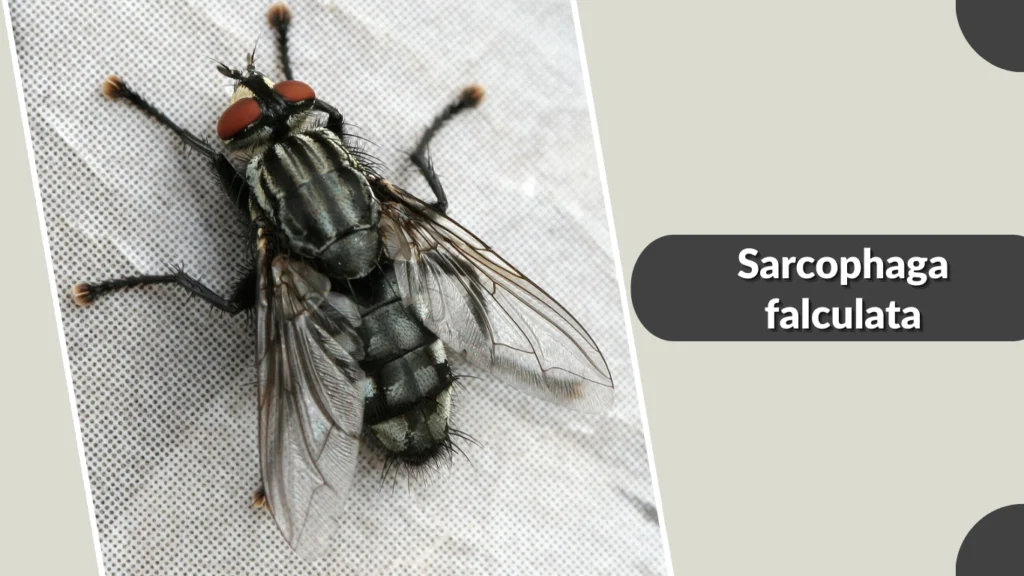
The Sarcophaga falculata flesh fly is a distinctive species often encountered in warm regions. It is recognized for its robust appearance and role in breaking down decaying organic material, making it ecologically important.
Identification
- Gray thorax with three strong black stripes
- Checkered abdomen in black and gray
- Large reddish-brown eyes
- Clear wings with bold, dark venation
- Medium-to-large body with a slightly elongated shape
Habitat
Sarcophaga falculata inhabit warm temperate and subtropical environments. It is commonly found in woodlands, grasslands, farms, and urban settings. It often appears near carcasses, waste piles, garbage dumps, and animal enclosures.
Behaviors
Females practice larviposition, depositing live larvae directly on carrion or decaying waste. Adults are highly active during daylight hours, flying quickly and responding strongly to odors of decomposition. They frequently rest on walls, fences, and vegetation.
Diet and Lifecycle
Adults feed on sugary liquids, nectar, and decomposing organic fluids. Larvae develop on carcasses or moist organic waste, feeding aggressively before pupating in soil or sheltered debris. The complete lifecycle generally spans 2–3 weeks, depending on environmental temperature.
8. Sarcophaga crassipalpis
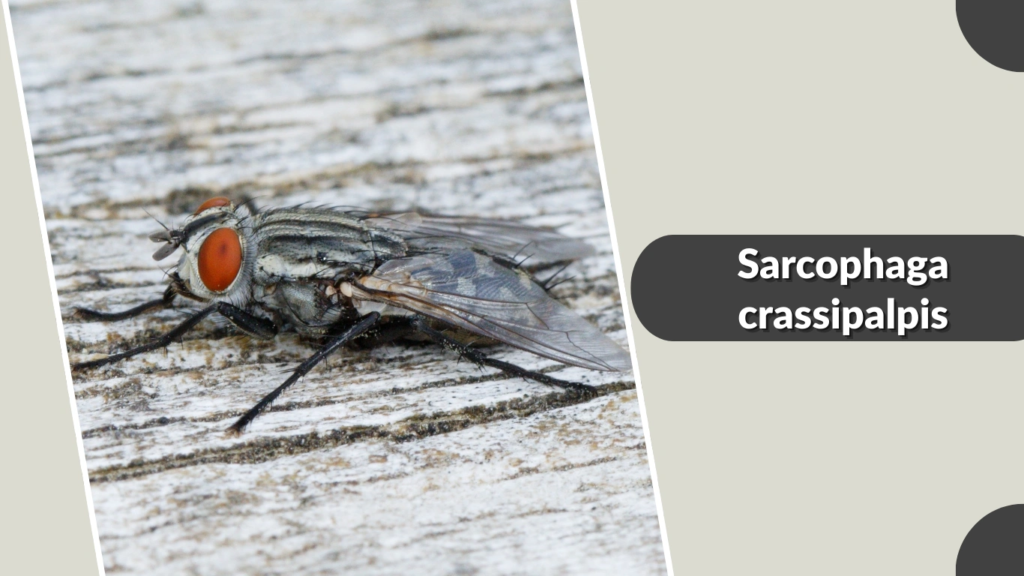
The Sarcophaga crassipalpis flesh fly is well known in scientific research and forensic studies due to its predictable development patterns. It is commonly found around decomposing organic matter and is widespread in many regions.
Identification
- Gray thorax with three bold black stripes
- Black-and-gray checkered abdomen
- Large reddish-brown compound eyes
- Clear wings with dark venation
- Medium-to-large body with noticeably thick palps (“crassipalpis”)
Habitat
Sarcophaga crassipalpis thrives in warm and temperate climates. It is frequently seen near carcasses, compost piles, garbage sites, livestock areas, and wooded environments. Indoors, it may appear near windows or food waste.
Behaviors
This species exhibits larviposition, with females depositing live larvae directly on carrion or waste material. It is an early colonizer of decomposing bodies and is important in forensic entomology. Adults are active daytime fliers and often rest on sunlit surfaces.
Diet and Lifecycle
Adults feed on decomposing organic fluids, nectar, and sugary substances. Larvae develop on carrion or moist organic debris and grow quickly before pupating in nearby soil or protected areas. The lifecycle typically completes in 2–3 weeks, depending on temperature.
9. Sarcophaga argyrostoma
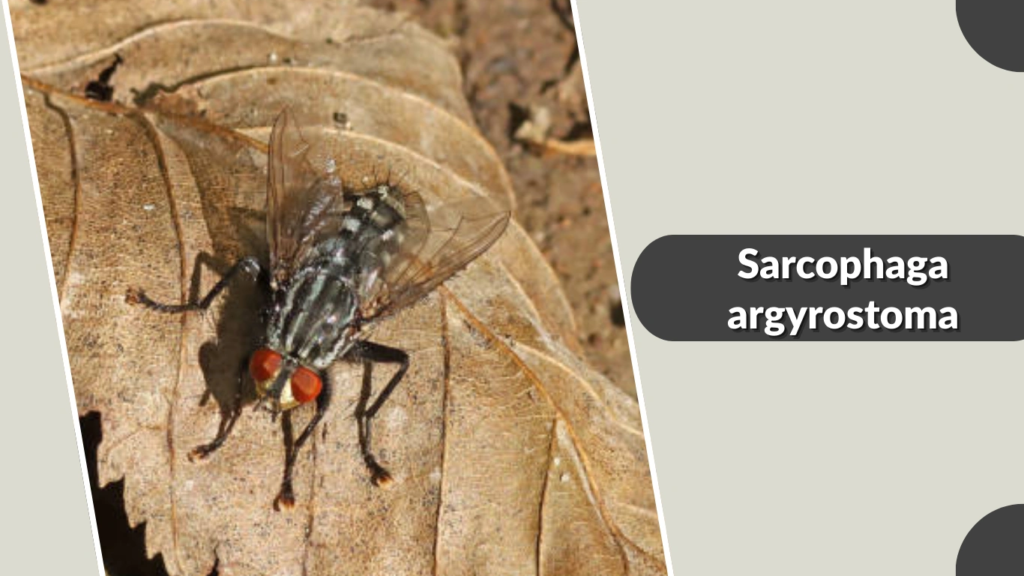
The Sarcophaga argyrostoma flesh fly is a globally distributed species often encountered in urban and suburban environments. It is known for its association with decaying organic matter and its medical and forensic significance.
Identification
- Gray thorax with three dark longitudinal stripes
- Silver-gray checkered abdomen (“argyrostoma” meaning “silver mouth”)
- Large reddish-brown eyes
- Clear wings with strong dark veins
- Medium to large body, typical of Sarcophaga species
Habitat
This species thrives in temperate and warm regions and is commonly found in cities, rural areas, farms, and forest edges. It prefers environments with abundant carrion, garbage, and organic waste. Indoors, it often appears near windows or food storage areas.
Behaviors
Females deposit live larvae (larviposition) on carrion, wounds, or moist organic waste. They are strong fliers and arrive early at decomposing remains, making them valuable in postmortem interval estimation. Adults often rest on fences, walls, and vegetation.
Diet and Lifecycle
Adult S. argyrostoma feed on nectar, sugary liquids, and decomposing organic fluids. Larvae develop on carrion or waste material, feeding rapidly before dropping to pupate in soil or debris. The complete lifecycle typically takes 2–3 weeks depending on climate.
10. Sarcophaga misera
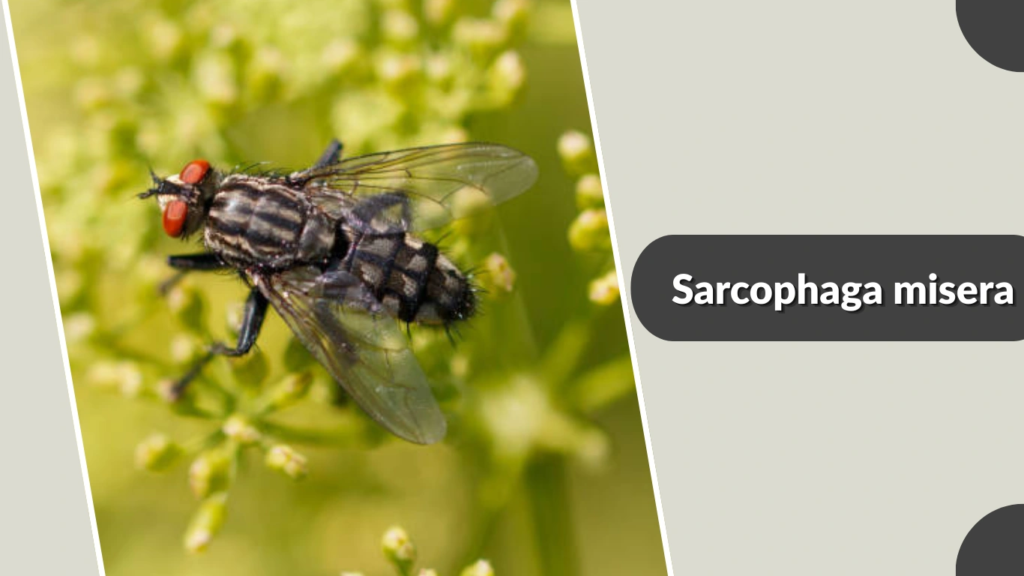
The Sarcophaga misera flesh fly is a widely distributed species associated with decaying organic material in natural and urban habitats. It is frequently encountered near carcasses and waste, contributing to decomposition processes.
Identification
- Gray thorax with three dark black stripes
- Checkered black-and-gray abdomen
- Reddish-brown compound eyes
- Clear wings with well-defined dark veins
- Medium-sized, typical flesh fly appearance
Habitat
Sarcophaga misera thrives in warm and temperate climates. It is commonly found around garbage sites, compost heaps, animal enclosures, forest edges, and rural areas. Indoors, it may appear near windows or waste when attracted to food scents.
Behaviors
Females deposit live larvae on carrion or moist organic waste through larviposition. The species is an early responder to decaying material and quickly detects suitable breeding sites. Adults are active daytime fliers and often rest on sunny walls or vegetation.
Diet and Lifecycle
Adults feed on sugary liquids, nectar, and decomposing organic fluids. Larvae consume carrion or moist organic matter and mature rapidly. They drop to soil or debris to pupate, completing their lifecycle in roughly 2–3 weeks depending on temperature.
11. Sarcophaga dux
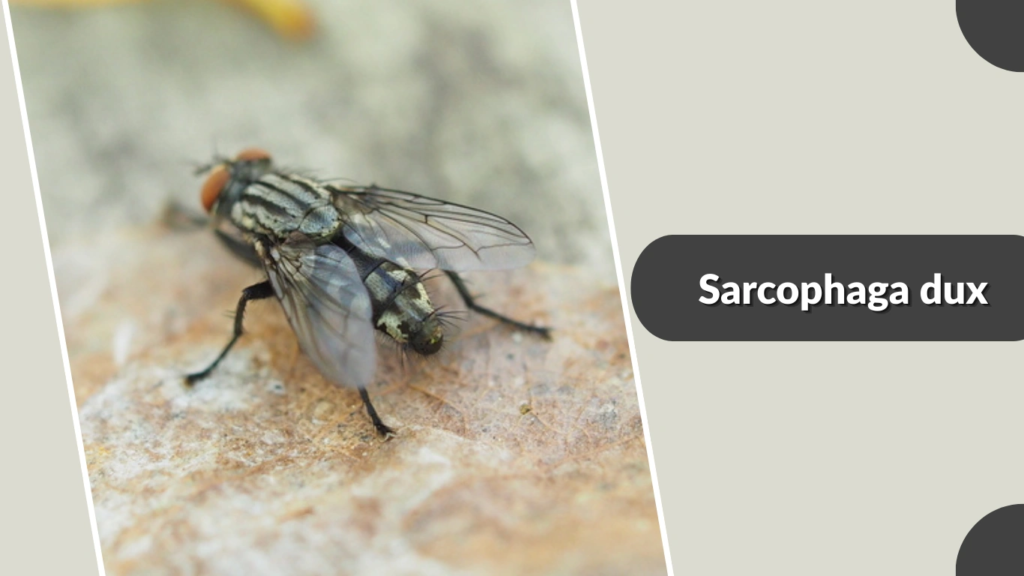
The Sarcophaga dux flesh fly is a common and widespread species found throughout Asia, Africa, and parts of Europe. It is well-known for its association with decaying matter and is frequently encountered in human-dominated environments.
Identification
- Gray thorax with three distinct black stripes
- Checkered black-and-gray abdomen
- Large reddish-brown eyes
- Clear wings with bold dark venation
- Medium to large body size typical of Sarcophaga flies
Habitat
Sarcophaga dux thrives in tropical, subtropical, and warm temperate regions. It is regularly found near garbage sites, markets, compost piles, animal pens, and rural villages. It may enter homes and buildings while searching for food or breeding sites.
Behaviors
Females deposit live larvae directly onto carrion or moist waste through larviposition. This species is highly responsive to decomposition odors and is often among the early visitors to carcasses. Adults are strong daytime fliers and frequently rest on fences, walls, or vegetation.
Diet and Lifecycle
Adults feed on nectar, sugary liquids, and decomposing organic fluids. Larvae develop on carrion, waste, or dead animals, feeding rapidly before dropping to pupate in soil or sheltered debris. The lifecycle typically completes in 2–3 weeks depending on temperature.
12. Sarcophaga lehmanni
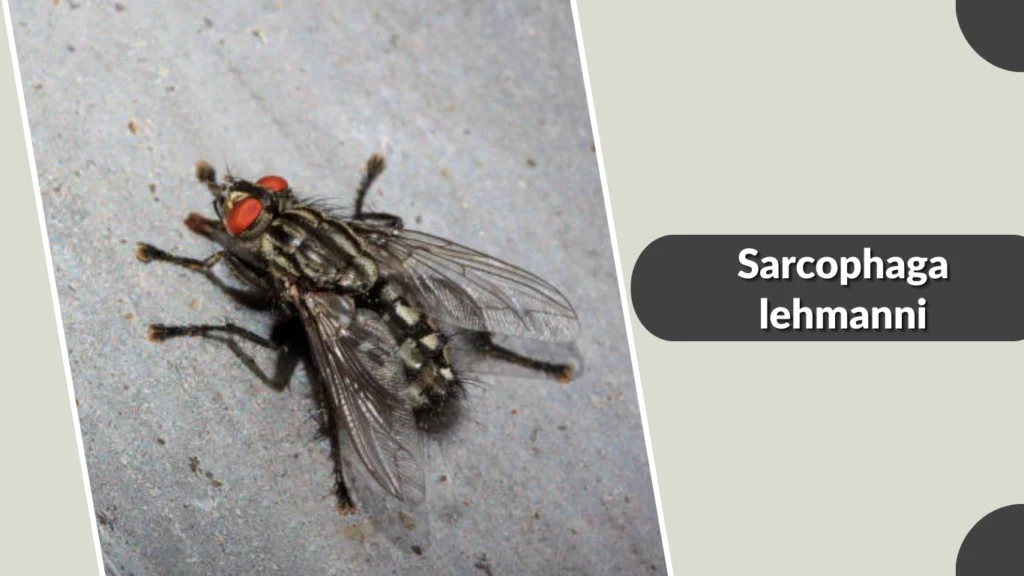
The Sarcophaga lehmanni flesh fly is a lesser-known but widely distributed species, typically found in environments rich in decomposing organic matter. Its appearance and behavior closely resemble other members of the Sarcophaga genus.
Identification
- Gray thorax marked with three bold black stripes
- Checkered black-and-gray abdomen
- Large reddish-brown eyes
- Clear wings with dark venation
- Medium-sized, with a sturdy flesh fly build
Habitat
Sarcophaga lehmanni inhabits temperate and warm regions, commonly appearing around carcasses, compost piles, garbage dumps, and agricultural areas. It may also enter homes or buildings when drawn to food odors or organic waste.
Behaviors
Females use larviposition, depositing live larvae directly on carrion or moist waste. This species is an early colonizer of decomposing bodies and is attracted rapidly by the scent of decay. Adults fly actively during the day and often rest on sunny outdoor surfaces.
Diet and Lifecycle
Adults feed on sugary liquids, decomposing tissue fluids, and nectar. Larvae develop on carrion or waste, feeding quickly before dropping to the soil to pupate. The lifecycle typically spans 2–3 weeks, influenced by temperature and moisture.
13. Sarcophaga ruficornis
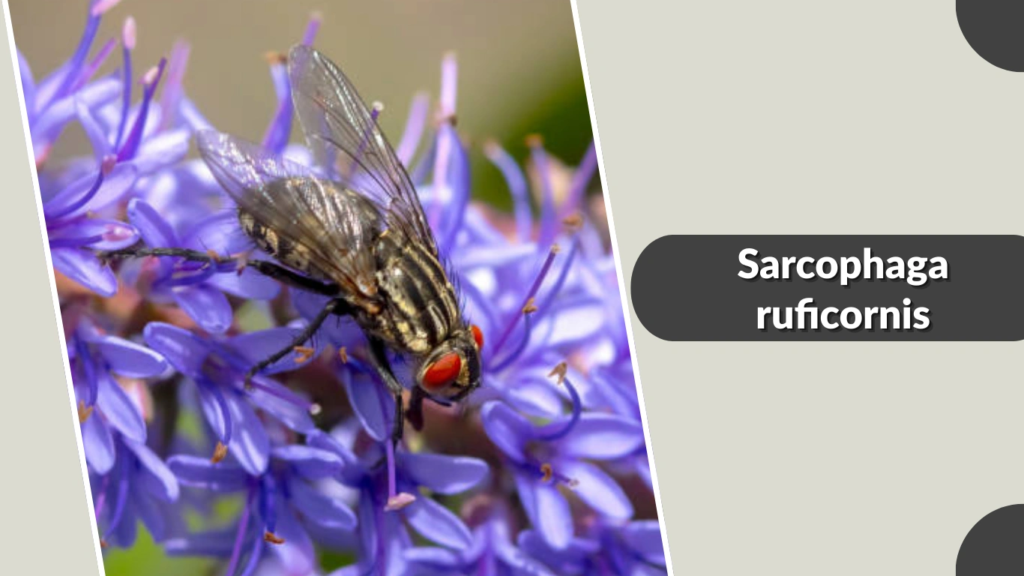
The Sarcophaga ruficornis flesh fly is a widespread species commonly found in tropical and subtropical regions. Known for its reddish antennae and strong association with decaying matter, it plays a significant role in natural decomposition.
Identification
- Gray thorax with three dark stripes
- Checkered black-and-gray abdomen
- Distinct reddish or orange antennae (“ruficornis”)
- Clear wings with strong dark veins
- Medium-sized, robust flesh fly appearance
Habitat
Sarcophaga ruficornis thrives in warm climates and is frequently found around garbage sites, markets, livestock areas, compost piles, and decaying organic debris. It often enters homes, especially where food waste or moisture is present.
Behaviors
Females perform larviposition, depositing live larvae on carrion or moist organic waste. This species is an early visitor to dead animals and responds quickly to decomposition odors. Adults are active daytime fliers and often rest on exterior walls, fences, or plants.
Diet and Lifecycle
Adults feed on sugary liquids, nectar, and decomposing tissue fluids. Larvae consume carrion or moist waste, developing rapidly before dropping to soil or debris to pupate. The lifecycle generally completes within 2–3 weeks depending on environmental temperature.
14. Sarcophaga similis
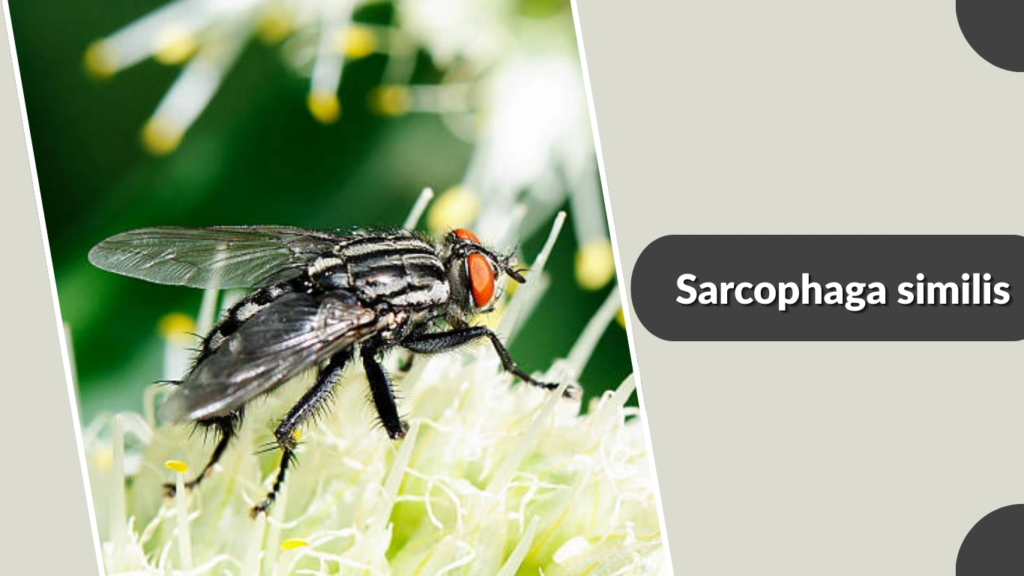
The Sarcophaga similis flesh fly is a common species across many temperate regions. It closely resembles other Sarcophaga flies, hence the name “similis,” meaning similar. It is frequently found around decomposing matter and waste environments.
Identification
- Gray thorax featuring three bold black stripes
- Checkered black-and-gray abdomen
- Reddish-brown compound eyes
- Clear wings with strong, dark venation
- Medium-sized with a typical sturdy flesh fly build
Habitat
Sarcophaga similis thrives in temperate climates and is often found in forests, meadows, suburban areas, and farms. It frequently appears around carcasses, garbage piles, compost heaps, and other decaying organic material. Indoors, it may appear near windows or trash areas.
Behaviors
Females deposit live larvae (larviposition) onto carrion or moist waste. This species responds quickly to the scent of decomposition and is often one of the early colonizers of decaying bodies. Adults are strong, steady fliers and rest on sunny surfaces when not feeding.
Diet and Lifecycle
Adults feed on sugary liquids, nectar, and decomposing organic fluids. Larvae feed rapidly on carrion or moist waste, then drop into soil or debris to pupate. The lifecycle typically lasts 2–3 weeks, depending on environmental temperature.
15. Wohlfahrtia magnifica
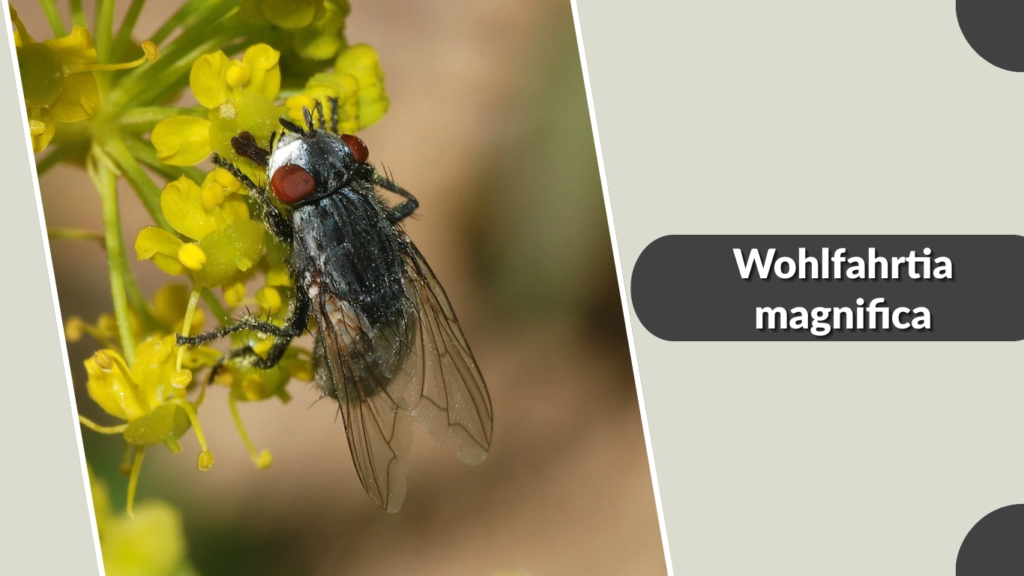
The Wohlfahrtia magnifica flesh fly is a medically significant species known for causing traumatic myiasis in livestock and occasionally humans. It is one of the most harmful flesh fly species due to its larvae feeding on living tissue.
Identification
- Gray thorax with dark longitudinal stripes
- Checkered black-and-gray abdomen
- Large reddish-brown eyes
- Clear wings with strong venation
- Medium-sized with a robust, muscular build
Habitat
Wohlfahrtia magnifica thrives in warm, dry climates and is commonly found in southern Europe, parts of Asia, and the Middle East. It frequents pastures, farms, barns, and livestock areas where animals may have open wounds or moist skin folds.
Behaviors
Females deposit live larvae directly onto wounds, eyes, or mucous membranes of livestock. These larvae penetrate living tissue, causing severe damage and infection. Adults are strong fliers and respond intensely to the scent of blood, wounds, and body secretions.
Diet and Lifecycle
Adults feed on nectar and decompose organic fluids. Larvae are obligate parasites that feed on living tissue. After feeding, they drop to the soil to pupate before emerging as adults. The full lifecycle can complete in 2–3 weeks under warm conditions.
FAQs
What are flesh flies commonly attracted to?
Flesh flies are attracted to carrion, decaying organic matter, garbage, animal waste, and open wounds. Their keen sense of smell allows them to locate suitable breeding sites quickly. Some species are also drawn to moist or contaminated surfaces where larvae can thrive.
Are flesh flies dangerous to humans or animals?
Most flesh flies are harmless and only feed on decaying material. However, certain species—such as Wohlfahrtia magnifica and Sarcophaga ruficornis—can cause myiasis by depositing larvae in wounds or sensitive areas. Proper sanitation and wound care greatly reduce risks.
Why do flesh flies deposit live larvae instead of eggs?
Flesh flies use a reproductive strategy called larviposition, giving them a survival advantage. By depositing live larvae directly onto a food source, they bypass the egg stage, allowing larvae to begin feeding immediately. This speeds up development and increases larval survival.
How long does the flesh fly lifecycle take?
The typical lifecycle—larva to pupa to adult—takes about 2–3 weeks, depending on temperature and food availability. Warmer conditions accelerate development, while cooler temperatures slow it down. Some medically significant species may develop even faster.
How can flesh fly infestations be prevented?
To prevent flesh fly activity, remove decaying organic matter promptly, seal garbage containers, clean up animal waste, and maintain good sanitation. Keeping wounds on livestock or pets clean and covered helps prevent parasitic species from depositing larvae.
