

Fruit flies are a diverse group of insects found around fermenting fruit, decaying vegetation, and even fresh crops. While some species are harmless and thrive mainly on yeast, others pose major agricultural threats by infesting healthy fruit. Understanding the different types of fruit flies helps identify pests, manage infestations, and appreciate their ecological roles. This guide highlights 27 common species and their distinctive characteristics.
1. Drosophila melanogaster
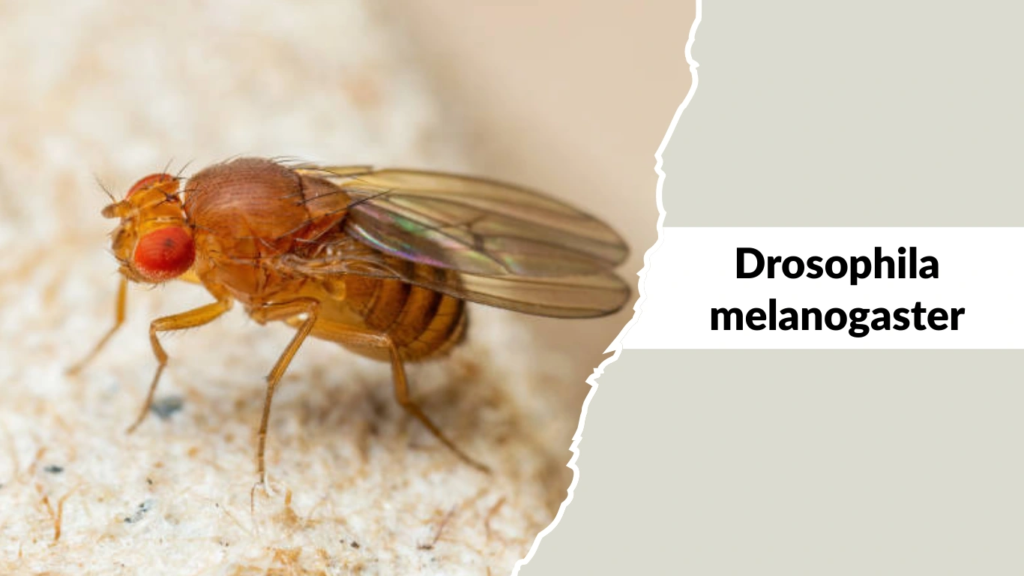
The Drosophila melanogaster, commonly known as the common fruit fly, is one of the most widespread and studied insects in the world. Often found around ripe or fermenting fruit, it plays a major role in genetics research and everyday household environments.
Identification
- Light tan body with darker brown abdominal bands
- Bright red eyes (most common form)
- Translucent wings held flat over the body
- Small size, typically 2–3 mm long
- Males have a darker, rounded abdomen tip
Habitat
Drosophila melanogaster thrives wherever fermenting fruit or sugary organic material is present. Common habitats include kitchens, orchards, fruit markets, compost bins, and areas with overripe produce. Indoors, they gather near drains, trash, and moist organic residue.
Behaviors
These fruit flies are highly drawn to fermentation odors and rapidly locate overripe fruit to feed and reproduce. They exhibit quick flight patterns and often stay close to food sources. Their strong attraction to yeast makes them essential in laboratory studies on genetics and behavior.
Diet and Lifecycle
Adults feed on yeast, fermenting fruit juices, and sugary residues. Females lay eggs on moist, fermenting fruit where larvae feed on yeast and decaying material. The lifecycle is fast—completing in about 7–10 days under warm conditions—allowing populations to grow rapidly.
2. Drosophila simulans
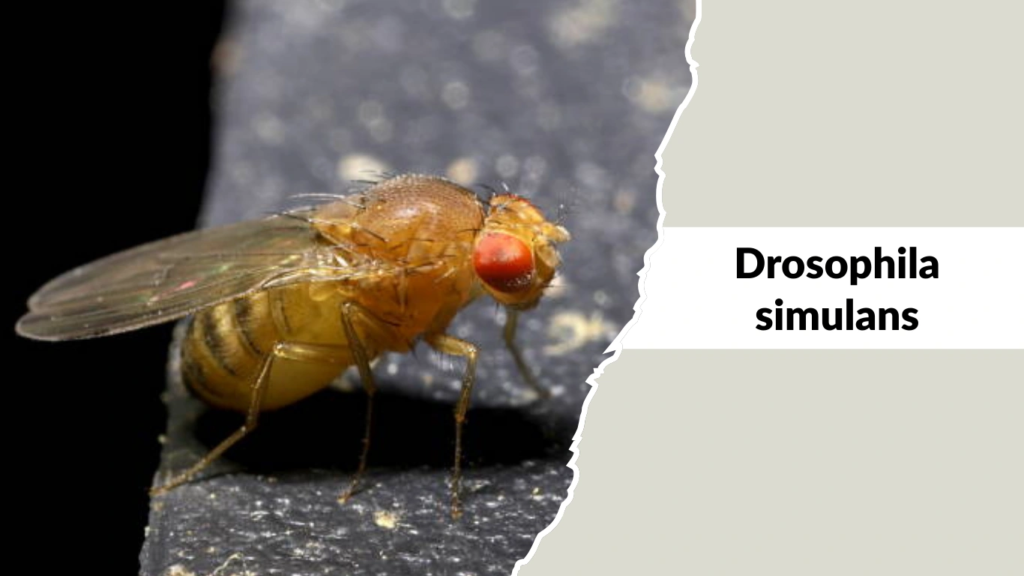
The Drosophila simulans fruit fly is a close relative of Drosophila melanogaster, often appearing in similar environments. Though nearly identical in appearance, it has subtle differences and plays a significant role in evolutionary and genetic research.
Identification
- Light tan body with faint abdominal banding
- Red eyes similar to D. melanogaster
- Slender body and slightly elongated shape
- Translucent wings with simple venation
- Males resemble D. melanogaster but have a narrower abdomen tip
Habitat
Drosophila simulans thrives around fermenting fruit, vegetable waste, orchards, vineyards, and household kitchens. It prefers warm, moist environments rich in yeast and decaying organic matter. Indoors, it clusters near fruit bowls, drains, and garbage areas.
Behaviors
This species is highly adaptable and frequently co-occurs with D. melanogaster. It responds quickly to fermentation odors and is active during daylight hours. Its rapid breeding behavior and ability to exploit household waste make it a common nuisance species.
Diet and Lifecycle
Adults feed on yeast, sugary liquids, and fermenting fruit. Females lay eggs on moist organic substrates where larvae feed on yeast-rich material. The lifecycle completes quickly—around 8–12 days in warm conditions—supporting rapid population growth.
3. Drosophila suzukii (Spotted-wing Fruit Fly)

The Drosophila suzukii, known as the spotted-wing fruit fly, is a major agricultural pest. Unlike most fruit flies that target rotting fruit, this species attacks fresh, ripening fruit, making it a serious threat to berry and cherry crops worldwide.
Identification
- Light brown body with darker abdominal bands
- Bright red eyes
- Males have a distinct black spot on each wing
- Females have a serrated ovipositor (egg-laying organ)
- Slightly larger than typical fruit flies (2.5–4 mm)
Habitat
Drosophila suzukii prefers orchards, berry fields, vineyards, gardens, and areas with abundant soft fruit. It thrives in warm, humid conditions and may also be found near wild berry patches. Indoors, it rarely breeds unless fresh fruit is left exposed.
Behaviors
This species is unique for laying eggs inside unripe or freshly ripened fruit, which causes softening and collapse of the fruit. Adults are active fliers and quickly respond to fruity odors. They exhibit high reproductive rates and can produce multiple generations per season.
Diet and Lifecycle
Adults feed on fruit juice, yeast, and sugary liquids. Larvae develop inside intact fruit, feeding on the pulp until the fruit begins to rot. Once mature, larvae drop to the soil to pupate. The lifecycle can complete in 10–14 days, enabling rapid infestation growth.
4. Drosophila immigrans
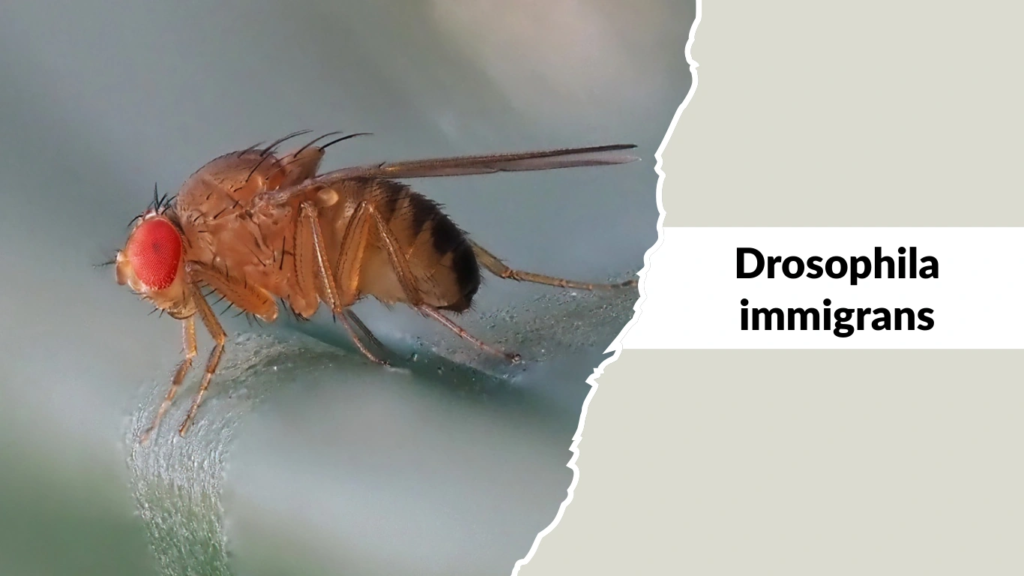
The Drosophila immigrans fruit fly is a common species found in both indoor and outdoor environments. It is often seen around fermenting fruit, damp organic debris, and household waste, making it a frequent visitor in kitchens and markets.
Identification
- Yellowish-tan body with subtle abdominal stripes
- Reddish eyes, slightly duller than many related species
- Slender body with pale legs
- Clear wings with simple venation
- Slightly larger than D. melanogaster (about 3–4 mm)
Habitat
Drosophila immigrans thrive in moist, nutrient-rich environments such as fruit markets, compost piles, drains, decaying vegetation, and overripe fruit. It is especially common in humid climates and easily adapts to indoor settings where organic residues accumulate.
Behaviors
This species responds rapidly to fermentation odors and is attracted to both fruit and damp organic waste. Adults are active during the day and frequently hover around produce displays or kitchen counters. They co-exist easily with other fruit fly species.
Diet and Lifecycle
Adults feed on yeast, sugary liquids, and fermenting juices. Females lay eggs on moist, decaying fruit or organic debris. Larvae feed on yeast-rich materials and pupate in surrounding substrates. The lifecycle typically completes within 10–12 days under warm conditions.
5. Drosophila hydei
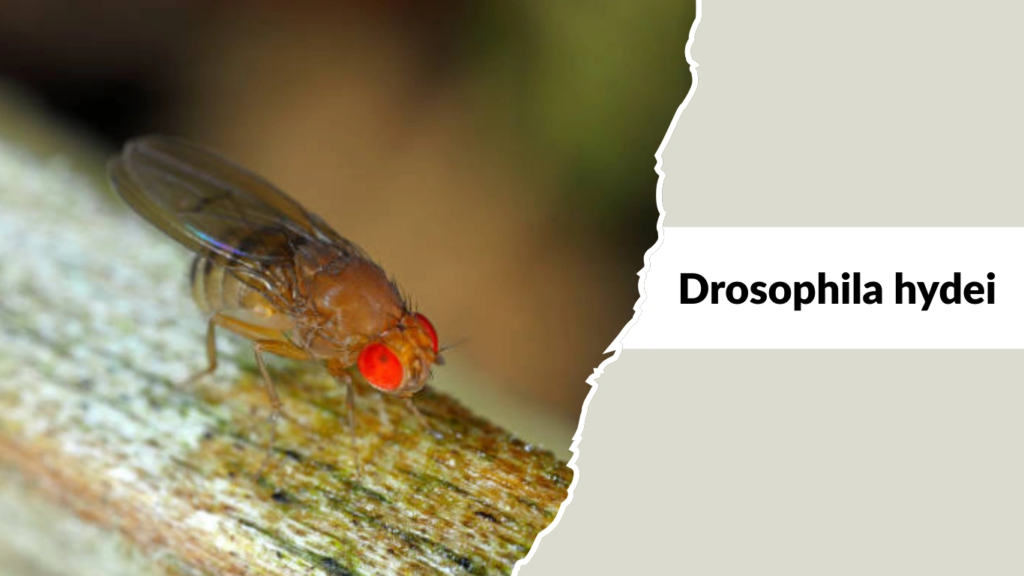
The Drosophila hydei fruit fly is a larger species within the Drosophila genus and is commonly used in laboratory and pet-feeding colonies. It thrives around fermenting fruit and organic waste in natural and indoor environments.
Identification
- Light brown to tan body with faint abdominal striping
- Red eyes, slightly darker than many related species
- Larger than D. melanogaster, typically 3–4 mm
- Clear wings that extend slightly beyond the abdomen
- Males show a darker, rounded abdominal tip
Habitat
Drosophila hydei occurs in warm, humid environments rich in fermenting fruit, vegetable waste, and organic debris. It is commonly found in kitchens, fruit stands, gardens, compost heaps, and drains. Indoors, it thrives near exposed produce and sugary residues.
Behaviors
This species is a strong flyer and is highly attracted to fermenting odors. It often co-occurs with other fruit flies but can dominate breeding sites due to its size and reproductive efficiency. It is active during daylight hours and frequently hovers around fruit bowls or waste bins.
Diet and Lifecycle
Adults feed on yeast, sugary liquids, and fermentation by-products. Females lay eggs on slightly decaying fruit or moist organic substrates. Larvae develop quickly, feeding on yeast-rich material before pupating in drier surroundings. The full lifecycle generally completes in 10–14 days under warm conditions.
6. Drosophila pseudoobscura
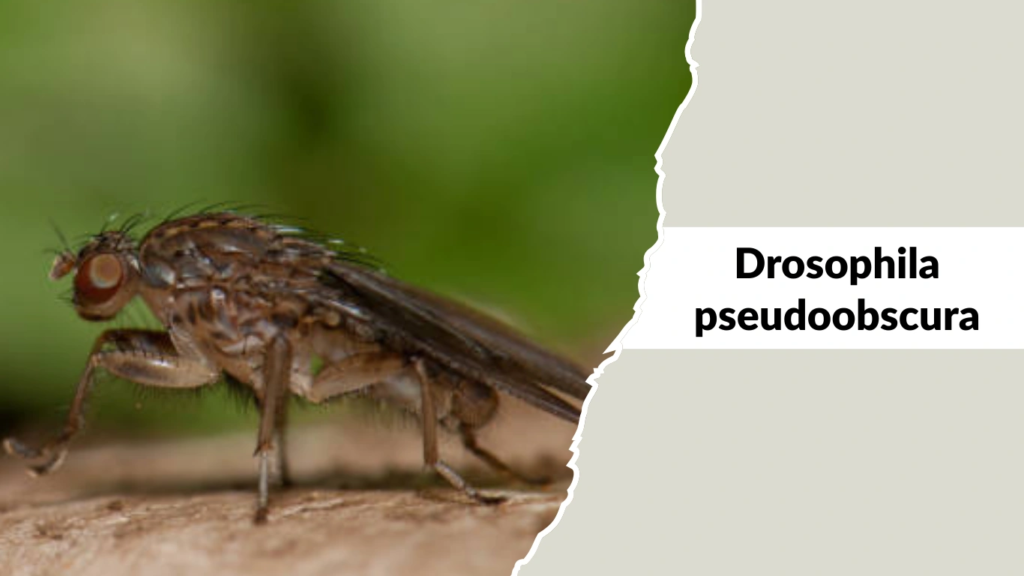
The Drosophila pseudoobscura fruit fly is a well-known species in evolutionary genetics and natural selection research. Found mainly in woodland and mountainous regions, it differs from many household fruit flies by preferring natural fermenting materials.
Identification
- Brown body with darker abdominal bands
- Red eyes, typical of Drosophila species
- Slightly elongated body form
- Clear wings with distinct vein patterns
- Around 3–4 mm in length, moderately sized
Habitat
Drosophila pseudoobscura thrives in forested areas, mountainous habitats, and places with fermenting tree sap, fallen fruits, and decaying vegetation. It is less common indoors and appears mainly outdoors in natural environments.
Behaviors
This species is strongly influenced by environmental factors such as temperature and altitude. Adults hover around fermenting sap flows, fallen forest fruits, and decomposing leaf litter. It is less attracted to kitchen waste compared to common household fruit flies.
Diet and Lifecycle
Adults feed on yeast, tree sap, and sugars from fermenting plant material. Females lay eggs on natural substrates like fermenting fruit or vegetation. Larvae develop steadily and pupate in soil or dry organic debris. Lifecycle duration varies but typically takes 12–16 days in warm conditions.
7. Drosophila busckii
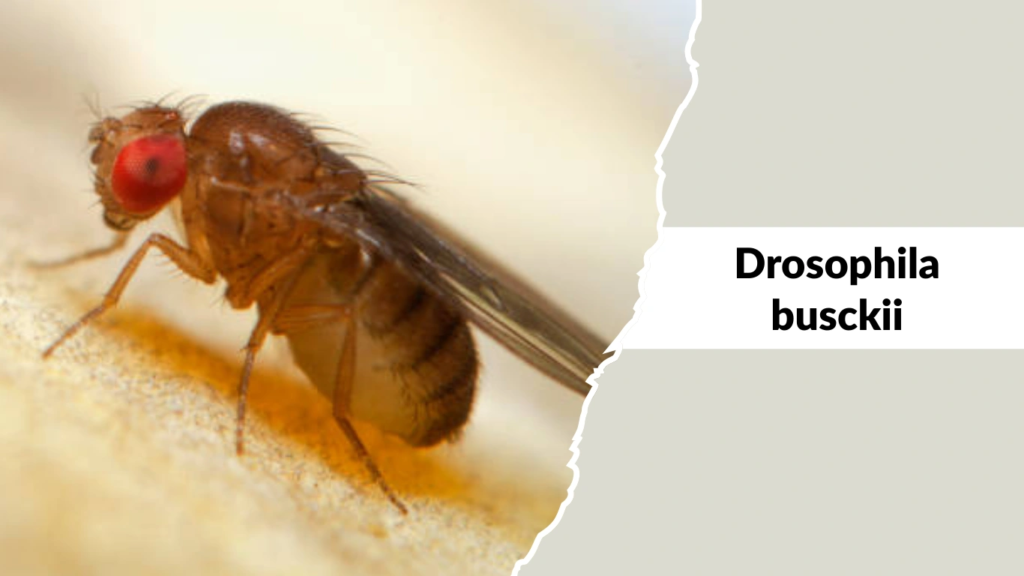
The Drosophila busckii fruit fly is a pale, easily recognizable species often found around decaying fruit, vegetables, and organic waste. It is one of the more common household fruit flies worldwide.
Identification
- Pale yellow to light brown body
- Distinct brown abdominal bands
- Reddish eyes, sometimes duller in appearance
- Wings slightly longer than the abdomen
- Small to medium size, around 2.5–3.5 mm
Habitat
Drosophila busckii thrives in kitchens, markets, compost piles, and areas with decaying fruit or vegetables. It favors moist environments where organic material is fermenting. Outdoors, it inhabits gardens, orchards, and damp plant debris.
Behaviors
This species is highly attracted to fermenting plant matter and sugary residues. It readily enters homes and food storage areas, hovering near fruit bowls, garbage bins, and drain residues. Adults are active during daylight and capable of rapid breeding.
Diet and Lifecycle
Adults feed on yeast, fermenting fruit juices, and sugary liquids. Females lay eggs on moist, decaying organic substrates. Larvae feed on yeast-rich materials, then pupate in nearby dry areas. The lifecycle generally completes within 10–12 days under warm conditions.
8. Drosophila subobscura
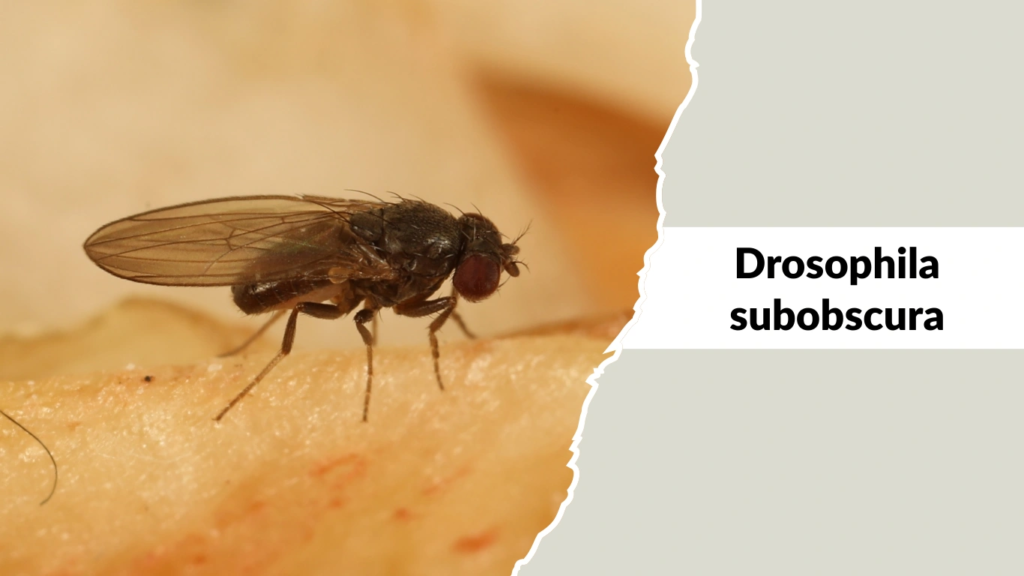
The Drosophila subobscura fruit fly is widely distributed across Europe and parts of the Americas. It is often found in natural outdoor habitats rather than homes, making it distinct from common household fruit flies.
Identification
- Brown body with subtle, darker abdominal shading
- Red eyes, typical of Drosophila species
- Slender body with slightly rounded abdomen
- Clear wings with well-defined venation
- Medium-sized, around 3–4 mm
Habitat
Drosophila subobscura prefers cool, moist environments such as forests, orchards, meadows, and shaded gardens. It is commonly found near fermenting fruits, decaying vegetation, and tree sap flows. Indoor appearances are rare and usually accidental.
Behaviors
This species is strongly influenced by seasonal temperature changes and is more active in cool conditions. Adults often gather around fallen fruits, sap flows, and decaying plant matter. They fly low and hover close to vegetation when feeding or searching for egg-laying sites.
Diet and Lifecycle
Adults feed on yeast, fermenting plant juices, and sugary liquids. Females lay eggs on decaying fruits or moist vegetation. Larvae develop steadily and pupate in soil or leaf litter. The lifecycle typically spans 12–16 days in warm weather but slows in cooler climates.
9. Drosophila virilis
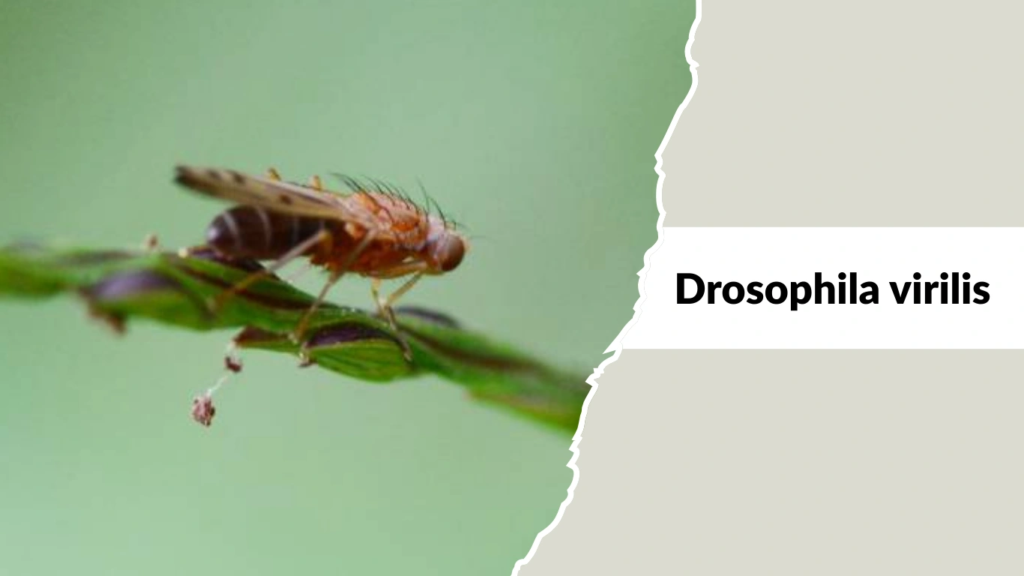
The Drosophila virilis fruit fly is a large, hardy species commonly used in genetic and developmental biology research. In nature, it prefers outdoor environments rich in fermenting materials and is less common inside homes.
Identification
- Larger than many fruit flies (4–5 mm)
- Brown to reddish-brown body
- Red eyes, often darker than related species
- Clear wings extending beyond the abdomen
- Robust body with distinct abdominal banding
Habitat
Drosophila virilis thrives in outdoor areas such as forests, orchards, gardens, and fields. It is attracted to fermenting fruit, tree sap, and decaying vegetation. Indoors, it appears rarely unless large amounts of fruit waste are present.
Behaviors
This species prefers cooler environments and is often active in shaded or moist areas. Adults fly strongly and remain close to natural fermenting substrates. They are less likely than household fruit flies to hover around kitchens or drains.
Diet and Lifecycle
Adults feed on yeast, fermenting fruit liquids, and sugary plant residues. Females lay eggs on decaying fruits or plant matter. Larvae develop steadily and pupate in nearby soil or debris. The complete lifecycle usually takes 12–18 days depending on temperature.
10. Drosophila repleta
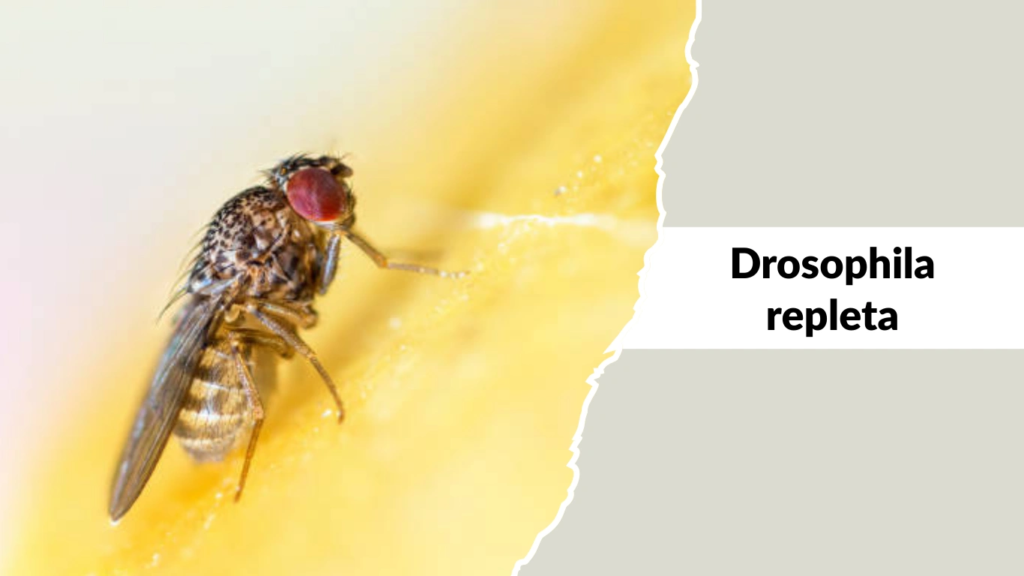
The Drosophila repleta fruit fly is strongly associated with moist, fermenting environments and is especially common around decaying fruits and vegetables. It is a hardy species that thrives both indoors and outdoors.
Identification
- Light brown to tan body
- Distinct darker abdominal bands
- Red eyes, often slightly duller than other species
- Clear wings with simple venation
- Medium size, typically 3–4 mm
Habitat
Drosophila repleta prefers warm, moist environments such as kitchens, restaurants, fruit markets, compost piles, and drains. It is especially attracted to fermenting fruit juices and organic residues in damp areas, including sink traps and wet garbage.
Behaviors
This species is highly responsive to fermentation odors and often congregates around spills, drains, and overripe fruit. It has strong breeding habits in moist organic waste, making it a common nuisance indoors. Adults fly quickly and remain close to food sources.
Diet and Lifecycle
Adults feed on yeast, fermenting fruit juices, and sugary liquids. Females lay eggs on moist organic debris or decaying fruits. Larvae feed on yeast-rich material and pupate in nearby dry areas. The lifecycle completes in about 10–12 days under warm conditions.
11. Drosophila bifurca
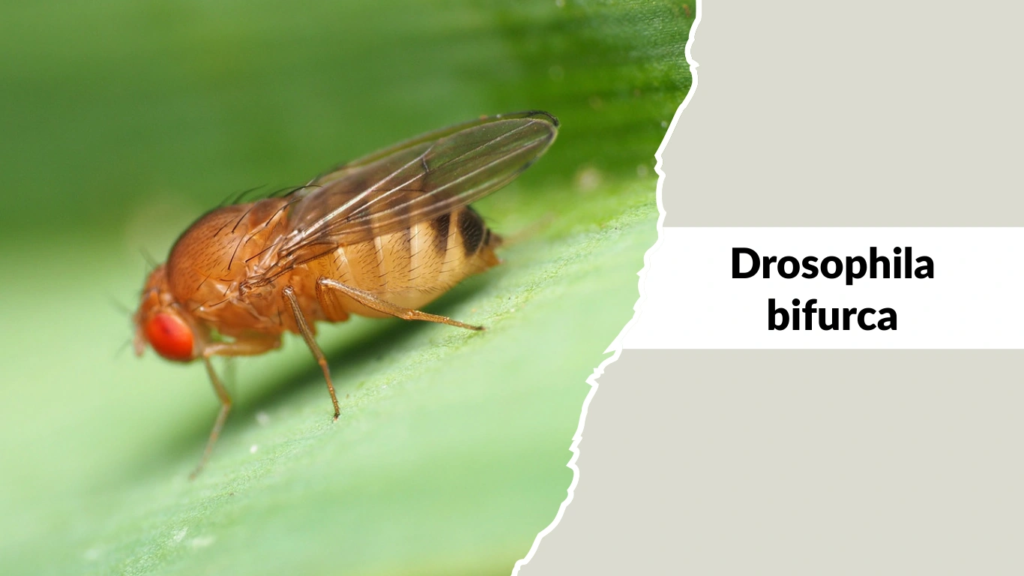
The Drosophila bifurca fruit fly is best known for being a research species with unusually large sperm cells. In the wild, it inhabits warm outdoor environments rich in fermenting organic matter.
Identification
- Light brown body with faint abdominal banding
- Red eyes, typical of Drosophila species
- Slender body with long legs
- Clear wings extending slightly beyond the abdomen
- Medium-sized, around 3–4 mm
Habitat
Drosophila bifurca is commonly found in warm, dry regions, especially around fermenting fruit, decaying vegetation, and compost. It is more common outdoors than indoors, often seen in orchards, gardens, and woodland edges.
Behaviors
This species displays strong flight activity and responds quickly to odors from fermenting plant materials. It is less attracted to household waste compared to other fruit flies and prefers natural, outdoor breeding sites.
Diet and Lifecycle
Adults feed on yeast, fermenting plant juices, and sugary residues. Females lay eggs on decaying fruits or organic materials. Larvae develop steadily and pupate in the surrounding soil or dry debris. The lifecycle typically spans 12–15 days in warm conditions.
12. Drosophila ananassae
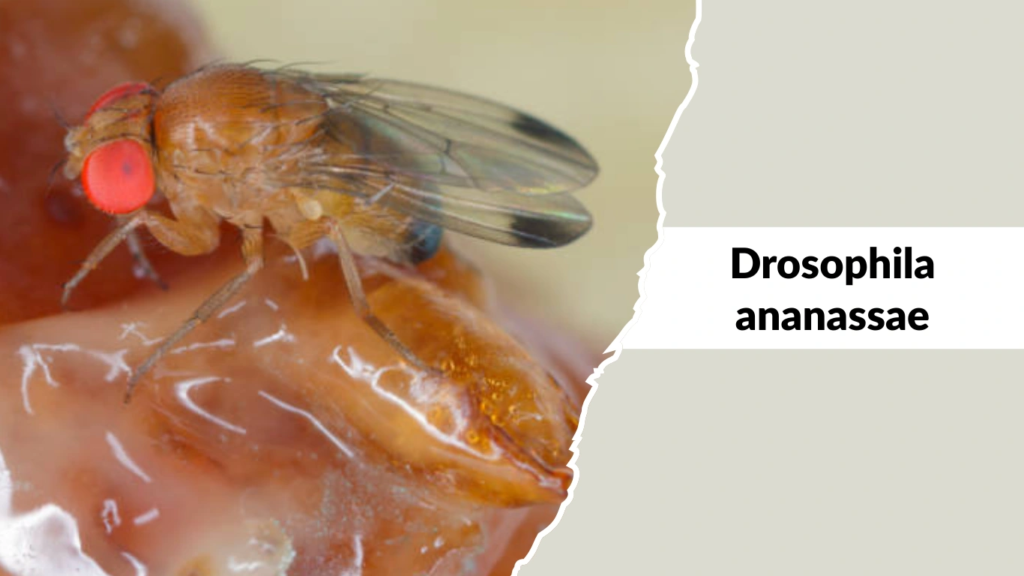
The Drosophila ananassae fruit fly is a globally distributed species known for thriving in tropical and subtropical environments. It is commonly found around fermenting fruit and plays a major role in genetic research.
Identification
- Light yellowish to tan body
- Distinct dark abdominal striping
- Bright red eyes
- Slender body with elongated wings
- Medium-sized, typically 3–4 mm
Habitat
Drosophila ananassae prefers warm, humid environments and is common in tropical forests, fruit markets, gardens, and compost piles. Indoors, it appears near overripe fruit and residues from sugary foods or drinks.
Behaviors
This species is highly active and responds rapidly to fruity and fermenting odors. Adults often hover around produce stands, fruit bowls, and garbage bins. They reproduce quickly, allowing populations to grow rapidly where food sources are abundant.
Diet and Lifecycle
Adults feed on yeast, fermenting plant juices, and sugary liquids. Females lay eggs on decaying or fermenting fruit. Larvae develop rapidly and pupate in surrounding dry material. The lifecycle usually completes in 10–12 days in warm conditions.
13. Drosophila funebris
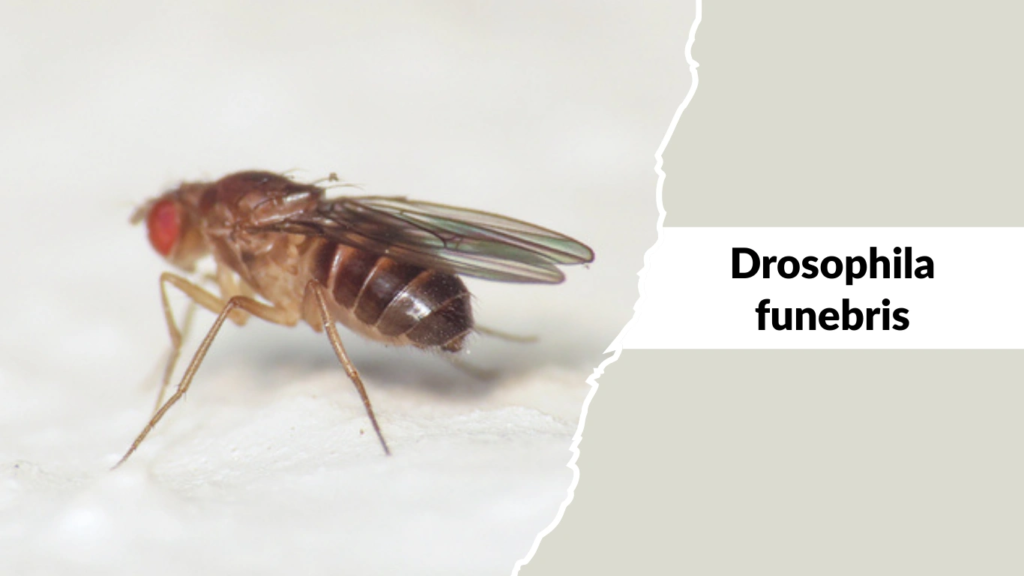
The Drosophila funebris fruit fly is one of the older-known species in the Drosophila genus and is commonly found in both natural and urban environments. It is frequently seen around fermenting fruit and household waste.
Identification
- Dark brown to nearly black body
- Subtle abdominal banding
- Red eyes, less bright than many species
- Clear wings with strong venation
- Medium-sized, about 3–4 mm
Habitat
Drosophila funebris thrives in orchards, forests, markets, and homes where fermenting organic material is present. It is often found near fruit bowls, compost, damp garbage, and spilled sugary liquids. Outdoors, it inhabits areas with decaying vegetation and fallen fruit.
Behaviors
This species is strongly attracted to fermenting fruit juices and yeast. It is a frequent indoor pest and readily breeds in poorly cleaned drains or food waste. Adults fly actively during daylight and often hover close to organic residue.
Diet and Lifecycle
Adults feed on yeast, fermenting fruit liquids, and sugary substrates. Females lay eggs on decaying fruit or moist organic matter. Larvae develop quickly and pupate in nearby dry material. The lifecycle generally spans 10–14 days depending on temperature.
14. Drosophila grimshawi
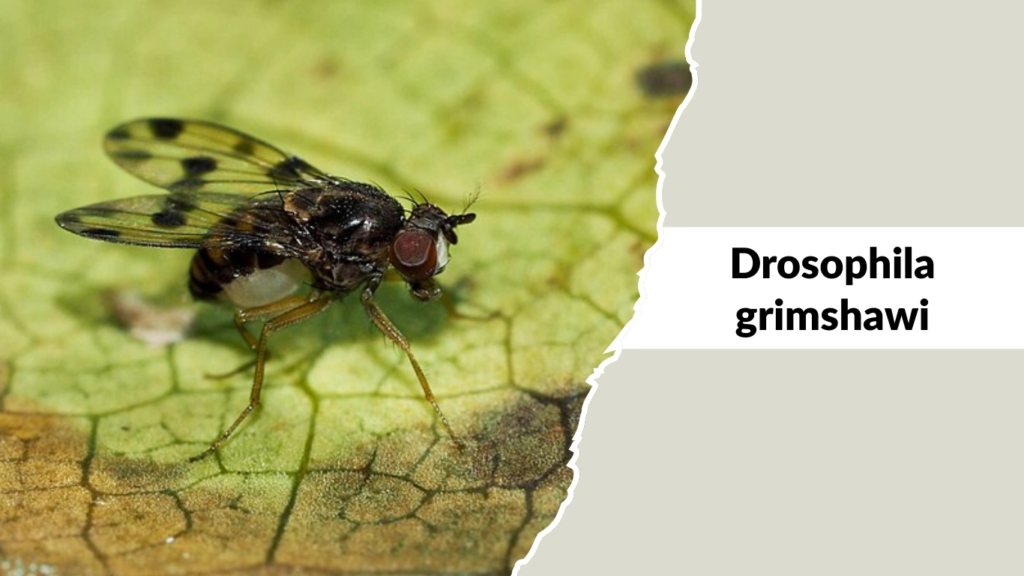
The Drosophila grimshawi fruit fly is a Hawaiian species known for its distinctive coloration and preference for natural fermenting plant materials. It is an important species in evolutionary biology research.
Identification
- Yellowish-brown body with dark brown markings
- Red eyes with a slightly orange tint
- Wings often patterned with darker spots
- Elongated body and legs
- Medium-sized, around 4–5 mm
Habitat
Drosophila grimshawi is native to Hawaii and thrives in forests, volcanic slopes, and areas with abundant rotting plant matter. It is commonly found near fermenting fruits, tree bark sap flows, and decaying vegetation. It is not typically seen in homes.
Behaviors
This species is adapted to natural environments and does not usually target human food waste. Adults hover near decomposing plant material and often gather around tree sap. They fly in short bursts and remain close to breeding sites.
Diet and Lifecycle
Adults feed on yeast and sugary plant juices. Females lay eggs on fermenting plant matter or soft decaying fruits. Larvae develop steadily in moist organic substrates and pupate in surrounding debris. The lifecycle varies but typically completes in 12–18 days under warm conditions.
15. Ceratitis capitata (Mediterranean Fruit Fly)
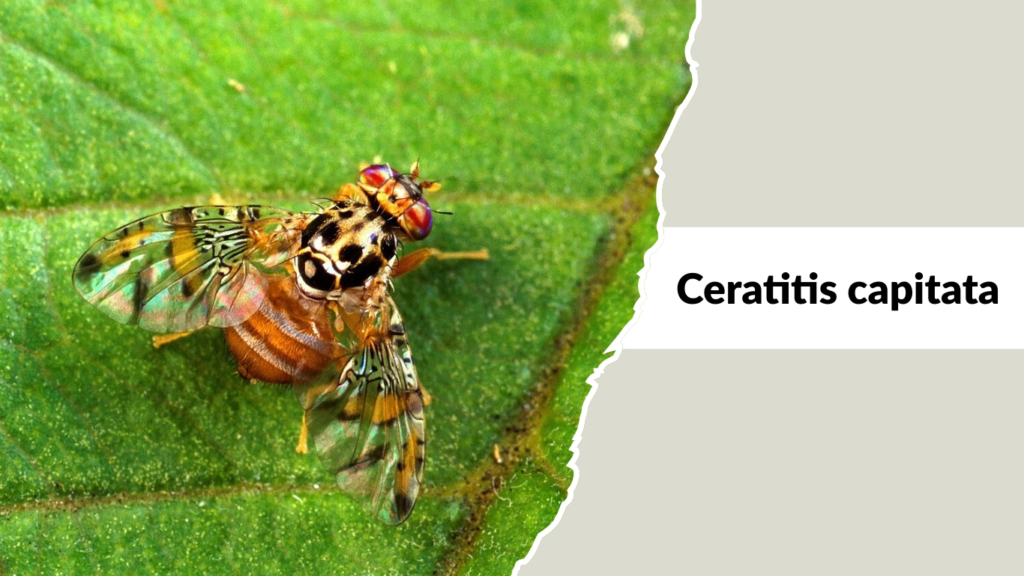
The Ceratitis capitata, commonly known as the Mediterranean fruit fly or “medfly,” is one of the world’s most destructive agricultural pests. Unlike common Drosophila species, it infests fresh, healthy fruit, causing major crop damage.
Identification
- Yellowish-brown body with darker markings
- Distinctive patterned wings with brown bands
- Large, bright reddish eyes
- Black and white facial markings
- Slightly larger than household fruit flies (4–5 mm)
Habitat
The medfly thrives in warm, subtropical, and Mediterranean climates. It is commonly found in orchards, fruit farms, gardens, and areas with abundant fresh fruit. Indoors, it appears primarily when infested fruit is brought inside.
Behaviors
Females pierce the skin of fresh fruit to deposit eggs, causing the fruit to rot from the inside. Adults fly strongly, disperse widely, and respond quickly to fruity odors. The species is highly invasive and difficult to control once established.
Diet and Lifecycle
Adults feed on sugary plant juices and nectar. Larvae feed on the flesh of living fruit, causing internal damage. After feeding, larvae drop to soil to pupate. The lifecycle can complete in 10–14 days in warm weather, allowing explosive population growth.
16. Bactrocera dorsalis (Oriental Fruit Fly)
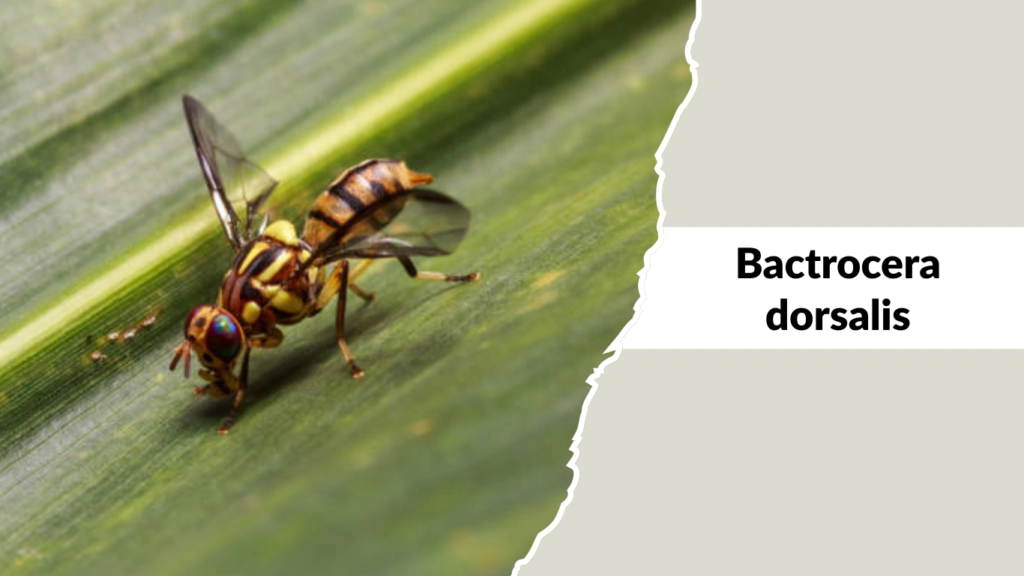
The Bactrocera dorsalis, or Oriental fruit fly, is a highly invasive agricultural pest known for attacking a wide variety of fresh fruits and vegetables. It causes significant economic damage in tropical and subtropical regions.
Identification
- Yellow and black body with distinctive patterns
- Clear wings with slight yellowish tint
- Reddish eyes
- Dark central stripe running along the thorax
- Medium-sized, typically 6–8 mm (larger than common fruit flies)
Habitat
This species thrives in warm, humid climates across Asia, Africa, and many Pacific islands. It is commonly found in orchards, fruit farms, markets, and gardens where fresh host fruits are abundant. Indoors, it appears only when infested fruit is present.
Behaviors
Female Oriental fruit flies puncture the skin of healthy fruit to lay eggs inside, making the species a major crop pest. Adults fly strongly and disperse widely. They are attracted to a broad range of fruit odors and can infest many commercial crops.
Diet and Lifecycle
Adult flies feed on nectar, plant sap, and sugary juices. Larvae develop inside live fruit, consuming the pulp until the fruit becomes soft and spoiled. After maturing, larvae drop to the soil to pupate. The lifecycle completes in about 12–16 days in warm conditions.
17. Bactrocera cucurbitae (Melon Fly)

The Bactrocera cucurbitae, or melon fly, is a major pest of cucurbit crops such as melons, cucumbers, pumpkins, and squash. It attacks fresh produce by laying eggs under the skin, causing rapid fruit collapse.
Identification
- Yellowish-brown body with bold black markings
- Transparent wings with a slight brown tint
- Reddish eyes
- Distinctive “T-shaped” thorax marking
- Medium-sized, about 6–8 mm
Habitat
Melon flies thrive in tropical and subtropical climates. They are abundant in vegetable farms, gardens, markets, and agricultural fields where cucurbit crops are grown. Indoors, they appear only when infested vegetables are brought inside.
Behaviors
Females pierce the skin of fresh cucurbit fruits to lay eggs, causing premature rotting. Adults fly strongly, move between fields, and are highly responsive to plant odors. This species is notorious for rapidly spreading through crop-growing regions.
Diet and Lifecycle
Adult melon flies feed on plant sap, nectar, and sweet juices. Larvae feed inside healthy cucurbit fruits, damaging them from the inside. Mature larvae drop to soil to pupate. The full lifecycle generally completes in 10–14 days under warm conditions.
18. Bactrocera tryoni (Queensland Fruit Fly)
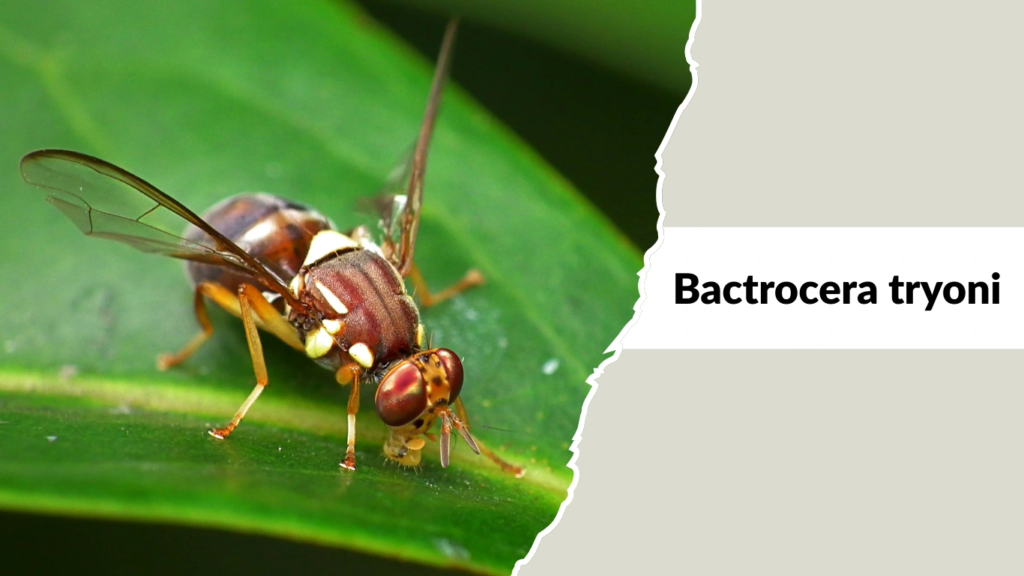
The Bactrocera tryoni, commonly called the Queensland fruit fly, is one of Australia’s most destructive fruit pests. It infests a wide range of fresh fruits and commercial crops, making it a major concern for growers.
Identification
- Reddish-brown body with yellow markings
- Clear wings with slight brown shading
- Prominent reddish eyes
- Distinct yellow “T-shaped” thorax pattern
- Medium-sized, typically 6–8 mm
Habitat
This species thrives in warm, humid climates throughout eastern Australia. It inhabits orchards, home gardens, fruit markets, and agricultural fields. Indoors, it may appear when infested fruit is stored.
Behaviors
Queensland fruit flies pierce the skin of fresh fruit to lay eggs, causing internal breakdown and crop loss. Adults fly strongly, disperse widely, and respond to a variety of fruit odors. They can produce many generations per year in favorable climates.
Diet and Lifecycle
Adults feed on nectar, plant juices, and sweet residues. Larvae feed within the flesh of fresh fruit until the pulp collapses. Mature larvae drop to the ground to pupate. The full lifecycle is rapid, often completing in 12–16 days in warm weather.
19. Bactrocera oleae (Olive Fruit Fly)
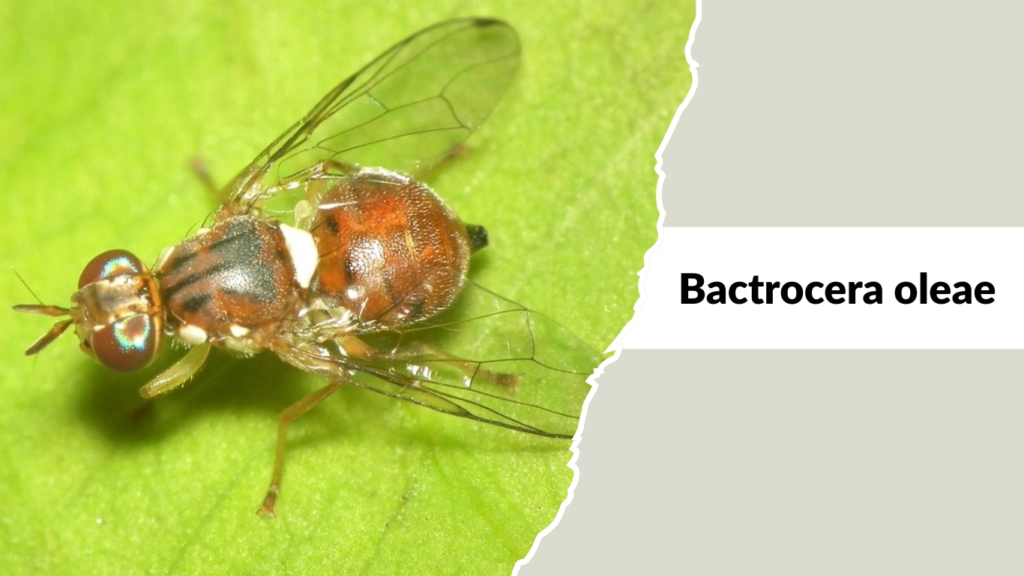
The Bactrocera oleae, or olive fruit fly, is a specialized pest that exclusively targets olive trees. It is one of the most damaging insects to olive production worldwide.
Identification
- Small, brownish body with lighter markings
- Clear wings featuring a distinct dark spot near the tip
- Reddish eyes
- Light-colored thorax with subtle patterns
- About 4–5 mm in length
Habitat
This species lives wherever olive trees are grown, including Mediterranean regions, the Middle East, parts of Africa, and California. It thrives in orchards, groves, and wild olive stands. Indoors, it is rarely seen unless infested olives are stored.
Behaviors
Female olive fruit flies lay eggs inside developing olives, causing premature fruit drop and quality loss. Adults fly actively in warm conditions and are strongly attracted to olive odors. Their populations surge during the fruiting season.
Diet and Lifecycle
Adults feed on plant sap, nectar, and olive-related residues. Larvae develop entirely inside olive fruits, feeding on the pulp until maturity. After feeding, larvae exit the fruit and pupate in soil. The lifecycle completes in 15–20 days during warm months.
20. Bactrocera zonata (Peach Fruit Fly)
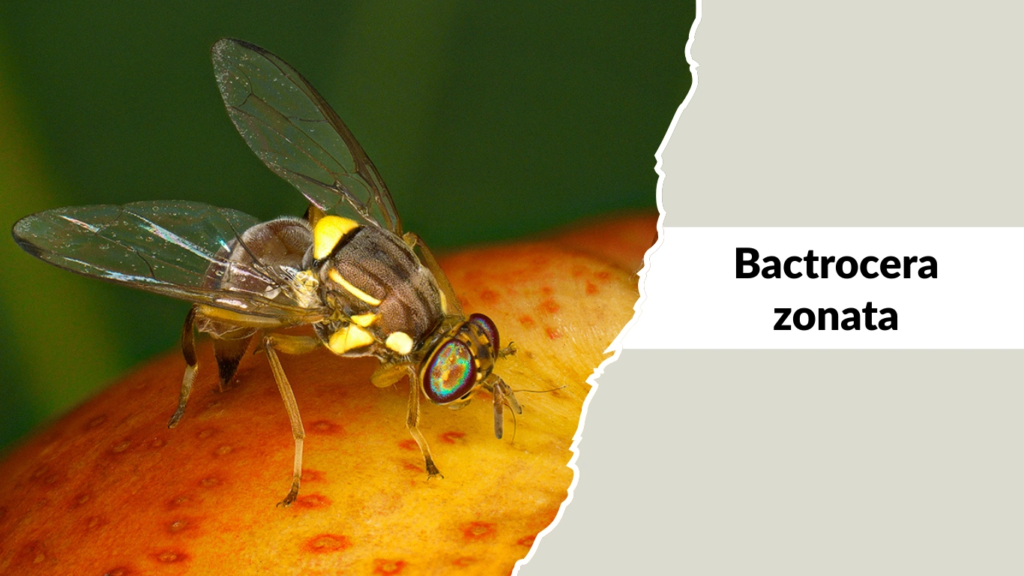
The Bactrocera zonata, or peach fruit fly, is a highly destructive pest that attacks a wide range of soft fruits, especially peaches, guavas, and citrus. It is considered one of the most aggressive invasive fruit fly species.
Identification
- Reddish-brown body with yellow markings
- Clear wings with faint brown shading
- Bright reddish eyes
- Distinct yellow banding on the abdomen
- Medium-sized, typically 5–7 mm
Habitat
This species thrives in warm tropical and subtropical regions across South Asia, the Middle East, and parts of Africa. It is commonly found in orchards, fruit markets, gardens, and agricultural fields where soft fruits are abundant.
Behaviors
Female peach fruit flies puncture the skin of fresh, healthy fruit to lay their eggs, leading to internal decay and crop loss. Adults are strong fliers and disperse quickly. They respond to a broad variety of fruit odors and often infest multiple fruit types simultaneously.
Diet and Lifecycle
Adults feed on nectar, plant juices, and sweet residues. Larvae develop inside fresh fruit, feeding on the pulp until it softens and collapses. Once mature, larvae drop to the soil to pupate. The lifecycle typically completes in 12–16 days under warm conditions.
21. Rhagoletis pomonella (Apple Maggot Fly)
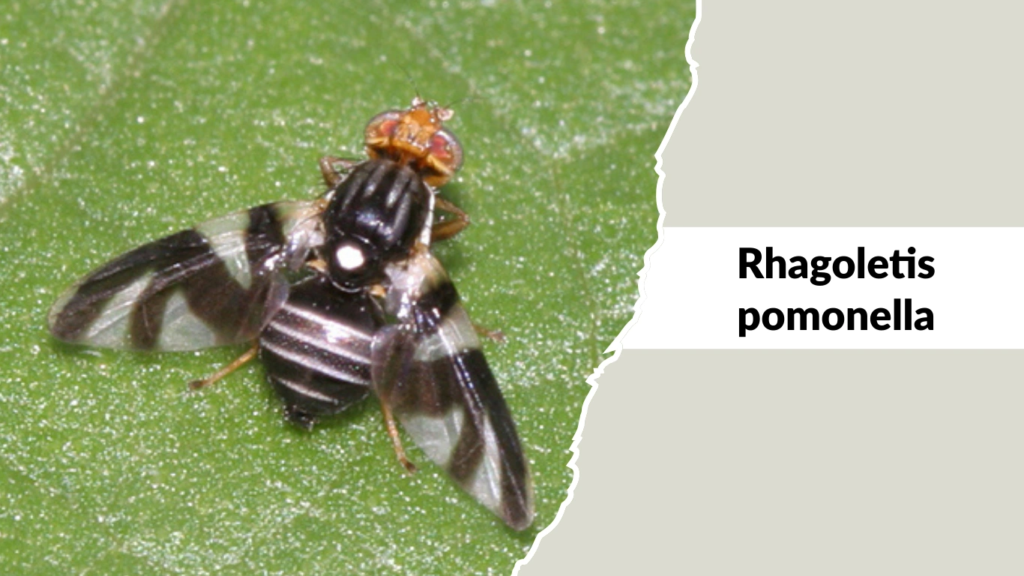
The Rhagoletis pomonella, commonly known as the apple maggot fly, is a major pest that targets fresh apples, causing internal tunneling and fruit deformation.
Identification
- Black body with white stripes
- Distinctive banded wings with black patterns
- Bright red eyes
- Yellowish markings on the thorax
- About 4–5 mm in length
Habitat
This species is widespread in North America and thrives in apple orchards, forests containing wild hawthorn, gardens, and fruit markets. Indoors, it only appears when infested apples are brought inside.
Behaviors
Female flies pierce the skin of fresh apples to deposit eggs, causing internal tunnels as larvae feed. Adults are strong, patterned-wing fliers that hover around fruit trees and respond specifically to apple-related odors.
Diet and Lifecycle
Adults feed on sugary residues, nectar, and plant juices. Larvae develop inside apples, feeding on the flesh until the fruit deteriorates. When mature, larvae drop to the soil to pupate. The lifecycle usually completes in 3–5 weeks depending on temperature.
22. Rhagoletis cerasi (European Cherry Fruit Fly)
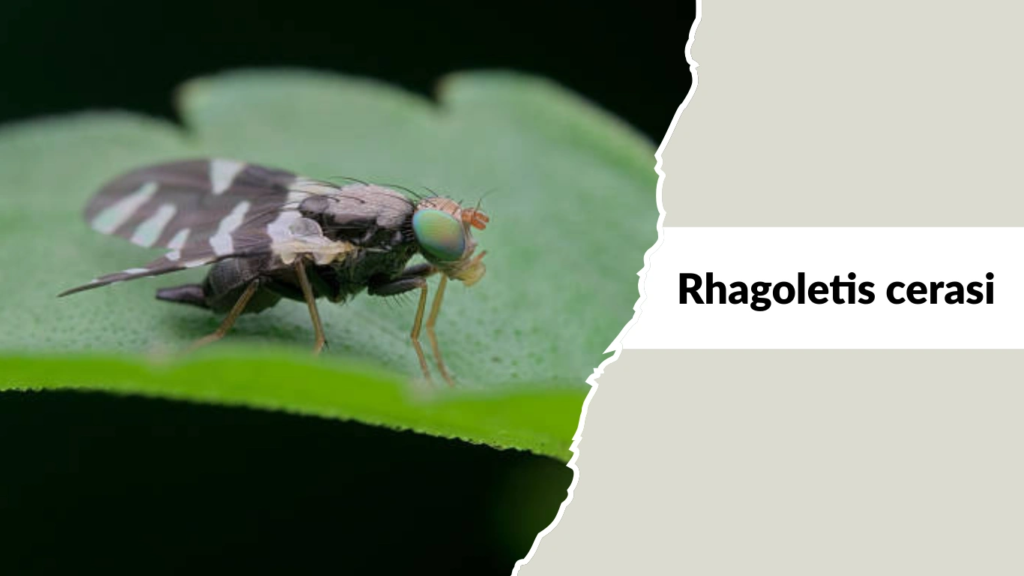
The Rhagoletis cerasi, or European cherry fruit fly, is the primary pest of sweet and sour cherries across Europe and parts of Asia. It damages fruit by laying eggs inside ripening cherries.
Identification
- Black body with yellow markings
- Prominent clear wings with bold black bands
- Bright reddish eyes
- Yellow “shield-like” marking on the thorax
- Small to medium size, around 4–5 mm
Habitat
This species thrives in cherry orchards, home gardens, and areas with wild cherry trees. It is widespread in Europe and is becoming more common in Central Asia. It rarely appears indoors unless infested cherries are stored.
Behaviors
Female flies lay eggs inside ripening cherries, causing internal breakdown and making fruits unsuitable for consumption. Adults are slow, hovering fliers that congregate on cherry trees, especially during warm sunny days.
Diet and Lifecycle
Adults feed on nectar, sugary plant juices, and fruit residues. Larvae develop inside cherries, tunneling through the pulp until maturity. Once finished feeding, they exit the fruit and pupate in soil. The lifecycle is typically completed in 3–5 weeks.
23. Rhagoletis completa (Walnut Husk Fly)
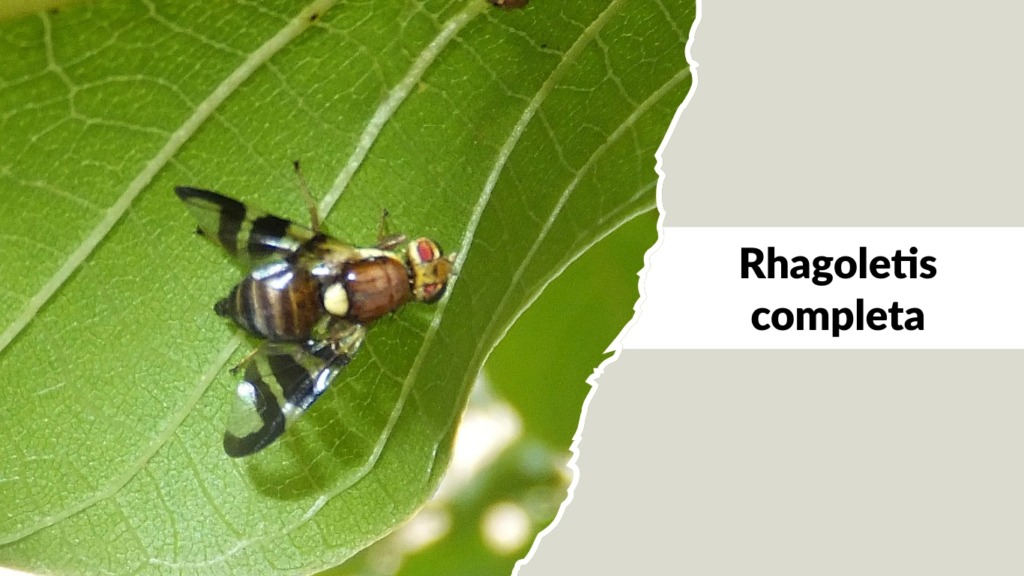
The Rhagoletis completa, known as the walnut husk fly, is a significant pest of walnut trees. It damages developing nuts by infesting the soft green husk surrounding the shell.
Identification
- Black body with light yellow markings
- Distinctive wings with bold dark bands
- Reddish-brown eyes
- Yellowish thorax with dark patches
- Medium-sized, typically 4–6 mm
Habitat
This species is common in walnut orchards, home gardens, and forested areas where wild walnut trees grow. It is widespread in North America and parts of Europe. It does not typically appear indoors unless infested walnuts are stored.
Behaviors
Females deposit eggs inside the green walnut husk, causing the husk to blacken and decay. Adults fly slowly and hover around walnut trees, especially during warm, sunny periods. Infestations can severely reduce nut quality and yield.
Diet and Lifecycle
Adults feed on nectar, honeydew, and sugary plant juices. Larvae feed inside the walnut husk until mature, after which they drop to the soil to pupate. Depending on temperature, the lifecycle typically completes in 4–6 weeks.
24. Anastrepha ludens (Mexican Fruit Fly)
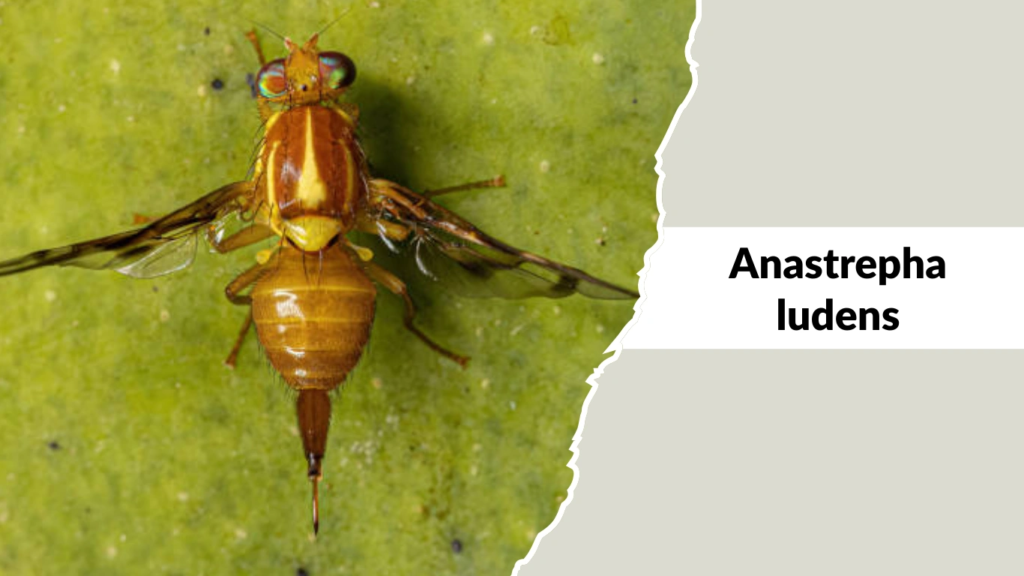
The Anastrepha ludens, or Mexican fruit fly, is a major agricultural pest that attacks a wide variety of citrus and tropical fruits. It causes severe economic damage in regions where it becomes established.
Identification
- Yellowish-brown body
- Distinctive patterned wings with orange and brown markings
- Large reddish eyes
- Elongated abdomen with darker bands
- Medium to large size, about 7–10 mm
Habitat
This species thrives in warm climates such as Mexico, Central America, and parts of the southern United States. It is common in citrus orchards, tropical fruit farms, gardens, and markets. It rarely appears indoors unless infested fruit is present.
Behaviors
Female flies pierce the skin of fresh, developing fruit to lay eggs, leading to internal breakdown. Adults are strong fliers and disperse widely across fruit-growing regions. They respond strongly to citrus odors and are known for large, fast-growing populations.
Diet and Lifecycle
Adults feed on nectar, plant sap, and sweet residues. Larvae develop inside living fruit, feeding on pulp until the fruit collapses. Once mature, larvae drop to the ground to pupate. The lifecycle completes in about 18–25 days under warm conditions.
25. Anastrepha suspensa (Caribbean Fruit Fly)
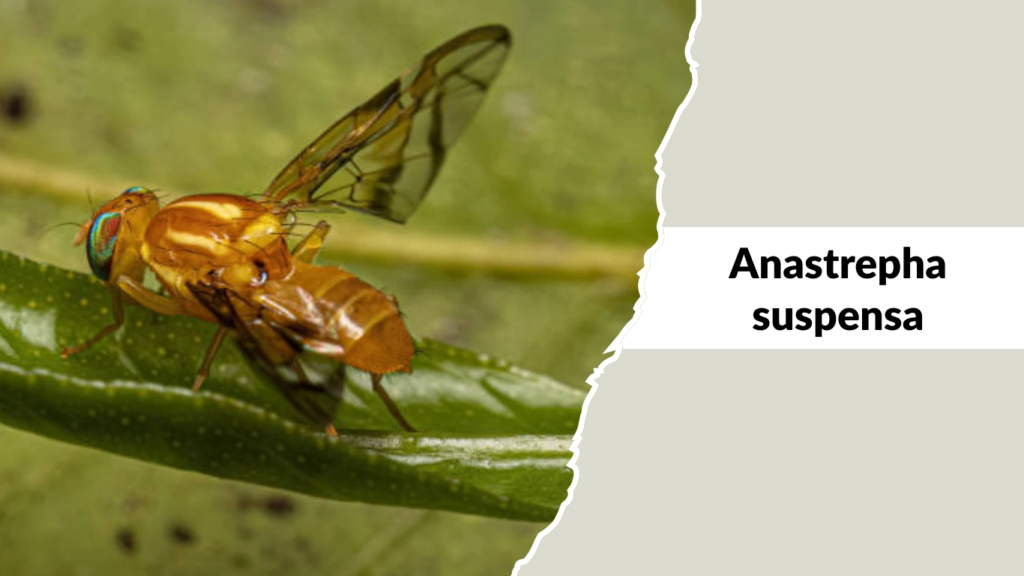
The Anastrepha suspensa, or Caribbean fruit fly, is an important pest of tropical and subtropical fruits, especially guava, loquat, and citrus. It is common in the Caribbean and parts of the southeastern United States.
Identification
- Yellowish to orange-brown body
- Wings with distinctive brown patterns and curved banding
- Reddish-brown eyes
- Elongated abdomen with dark lateral stripes
- Medium size, typically 5–7 mm
Habitat
This species thrives in warm, humid regions such as Florida, the Caribbean Islands, and Central America. It is frequently found in orchards, fruit markets, home gardens, and tropical forests. It rarely appears indoors unless infested fruit is brought inside.
Behaviors
Female Caribbean fruit flies lay eggs inside fresh, ripening fruit, causing softening, discoloration, and spoilage. Adults hover near fruit trees and respond strongly to fruity aromas. They are capable of multiple generations per year in tropical climates.
Diet and Lifecycle
Adults feed on nectar, plant juices, and sugary residues. Larvae develop inside fruit, feeding on pulp until fully grown. Mature larvae drop to the soil to pupate. The lifecycle usually completes in 2–3 weeks under warm conditions.
26. Anastrepha obliqua (West Indian Fruit Fly)
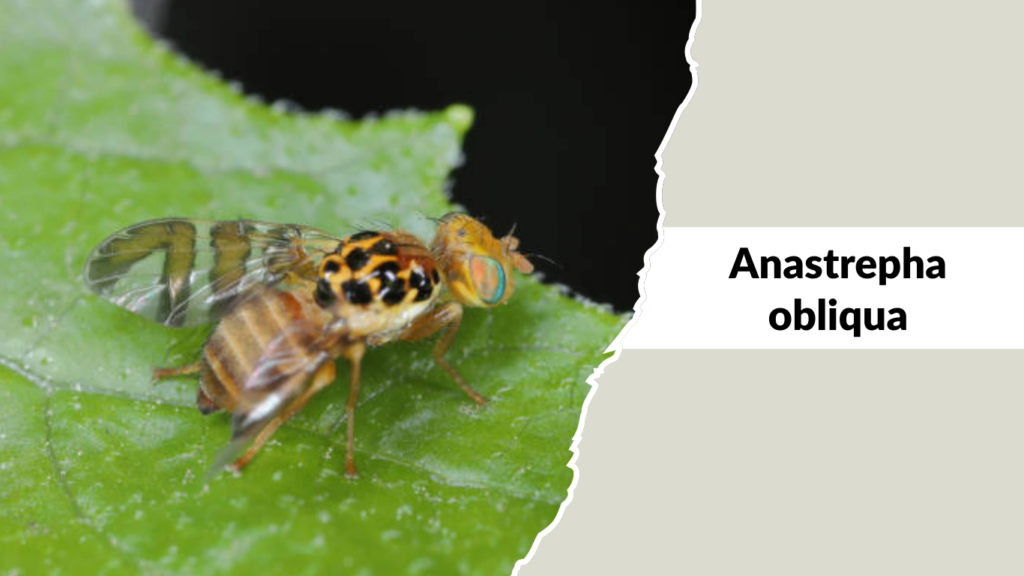
The Anastrepha obliqua, known as the West Indian fruit fly, is a major pest of mangoes and other tropical fruits. It is widespread across the Caribbean, Central America, and northern regions of South America.
Identification
- Yellowish-orange body with darker abdominal bands
- Wings with brown curved markings typical of Anastrepha species
- Prominent reddish eyes
- Elongated body shape
- Medium-sized, about 6–8 mm
Habitat
This species thrives in tropical and subtropical climates, especially in mango orchards, guava groves, fruit markets, and backyard gardens. It rarely enters homes unless infested fruit is present.
Behaviors
Female flies pierce the skin of fresh tropical fruits—especially mangoes—to lay eggs. Infestation leads to internal decay and premature fruit drop. Adults hover near fruit trees and respond strongly to sweet, fruity odors.
Diet and Lifecycle
Adults feed on nectar, plant juices, and fermenting fruit residues. Larvae develop inside fresh fruit, feeding on pulp until fully grown. Mature larvae exit the fruit to pupate in the soil. The lifecycle typically completes in 16–25 days in warm environments.
27. Tephritis bardanae (Common Tephritid Fruit Fly)
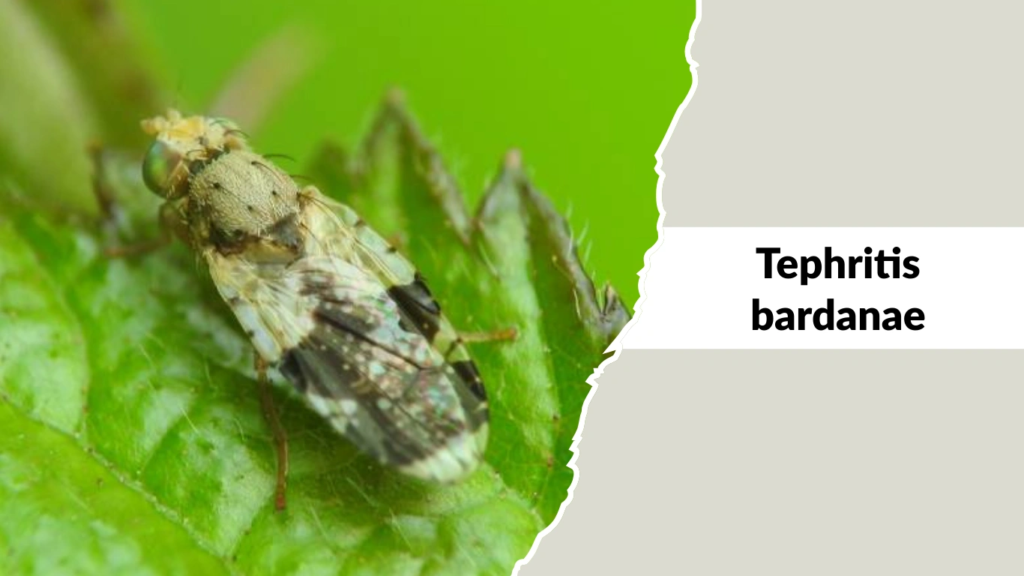
The Tephritis bardanae is a tephritid fruit fly species commonly found in Europe and parts of North America. Unlike household fruit flies, it specializes in infesting thistle plants, particularly burdock.
Identification
- Small body with light brown coloration
- Distinctive patterned wings with dark spots and bands
- Red eyes, typical of fruit flies
- Slender legs and compact body structure
- Usually 3–5 mm in length
Habitat
Tephritis bardanae thrives in meadows, grasslands, roadsides, forest edges, and areas where burdock plants grow. It is rarely found indoors, as it prefers wild plant hosts rather than human food sources.
Behaviors
Females lay eggs within the flower heads of burdock plants. Larvae develop inside, feeding on plant tissues. Adults hover near host plants and display short, darting flight patterns. They are active during warm daylight hours.
Diet and Lifecycle
Adults feed on nectar and plant juices. Larvae develop inside burdock flower heads, consuming plant tissue until maturity. After feeding, larvae pupate inside plant material or in soil beneath the host plant. The lifecycle duration varies with climate but often spans 3–5 weeks.
FAQs
What attracts fruit flies the most?
Fruit flies are primarily attracted to fermenting or overripe fruits, sugary liquids, and yeast-rich residues. They also gather around drains, garbage bins, and spilled juice. Many pest species seek healthy fruit as well, especially members of the genera Bactrocera, Anastrepha, and Rhagoletis.
Are all fruit flies harmful to crops?
No. Many fruit flies, especially Drosophila species, feed only on decaying or fermenting fruit and pose no threat to agriculture. However, pest species like Bactrocera dorsalis, Ceratitis capitata, and Anastrepha ludens attack healthy fruit and can cause severe crop damage.
Why do fruit flies appear inside homes?
Fruit flies enter homes when overripe fruit, damp organic debris, or sugary spills are available. They can also breed in drains, compost containers, and trash bins. Even small residues of juice or alcohol can attract them from outdoors.
How long is the fruit fly lifecycle?
The fruit fly lifecycle typically lasts 7–14 days for small Drosophila species, but agricultural pests may take 2–4 weeks. Warmer temperatures and abundant food speed development, while cooler conditions slow it down. Fast breeding leads to rapid population increases.
How can fruit fly infestations be prevented?
Preventing fruit flies involves removing overripe produce, storing fruit in sealed containers, cleaning drains, and keeping surfaces free of spills. Regularly emptying trash and compost bins and maintaining dry, clean kitchen areas greatly reduces breeding opportunities.
