
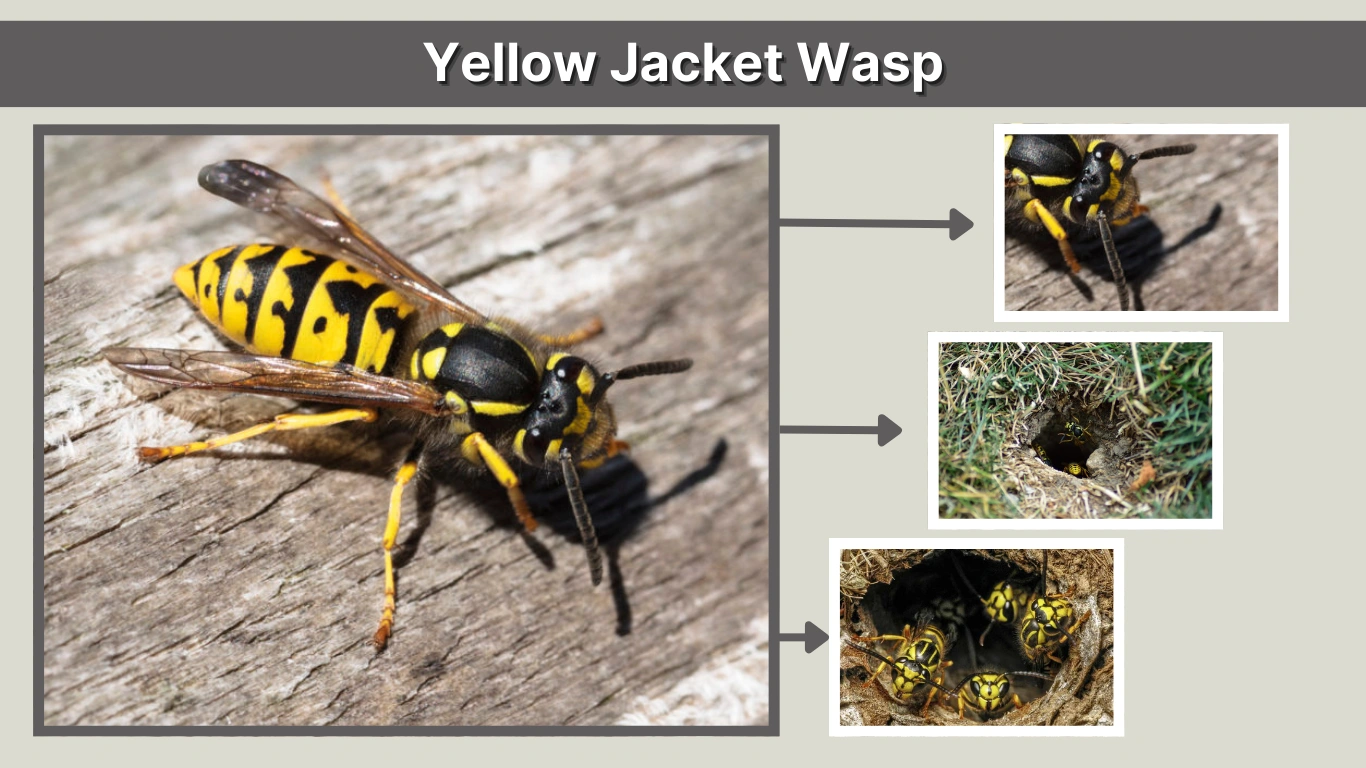
Yellow jacket wasps are among the most recognizable stinging insects, often confused with bees because of their bold black-and-yellow stripes. Unlike bees, however, they have sleek, hairless bodies and can sting multiple times, making them more aggressive when threatened. Correct identification is important not only for safety but also for distinguishing them from other beneficial insects like honey bees or less aggressive paper wasps. This guide explores in detail what yellow jacket wasps look like and how to identify them accurately.
General Appearance of Yellow Jacket Wasps

Yellow jackets are medium-sized wasps with smooth, glossy bodies and a bright pattern of alternating yellow and black markings. Their bodies are more slender compared to the rounder, hairy bodies of bees. When seen up close, yellow jackets appear sleek and shiny, with a streamlined shape built for fast, darting flight. Their bodies consist of three clear segments—the head, thorax, and abdomen—joined by a narrow waist, a defining feature of wasps.
Size and Shape
Body Length
Adult yellow jacket wasps generally range between 10 to 16 millimeters in length, depending on the species and whether they are workers, queens, or males. Queens are noticeably larger, sometimes exceeding 19 mm, while workers are smaller but still robust in build.
Body Shape
The body of a yellow jacket is sturdy but compact, with a pinched “waist” that separates the thorax from the abdomen. Unlike the more delicate paper wasps with long, dangling legs, yellow jackets have shorter legs that stay close to their bodies during flight. Their body proportions give them a powerful, compact look, which reflects their aggressive nature.
Color Patterns and Markings
The most striking feature of a yellow jacket is its bright black-and-yellow striped abdomen. These bold patterns act as a warning to predators and are a major reason why people often mistake them for bees.
- Their abdomen displays alternating black and yellow bands, with slight variations between species.
- Eastern Yellow Jacket species tend to have more solid black areas, while Western Yellow Jackets often display brighter yellow segments.
- Their exoskeleton is smooth and shiny, unlike the fuzzy, pollen-carrying bodies of bees.
Key Color Traits of Yellow Jackets:
- Bold yellow and black stripes across abdomen.
- Smooth, glossy body surface.
- Slightly different stripe patterns depending on species.
Head and Antennae
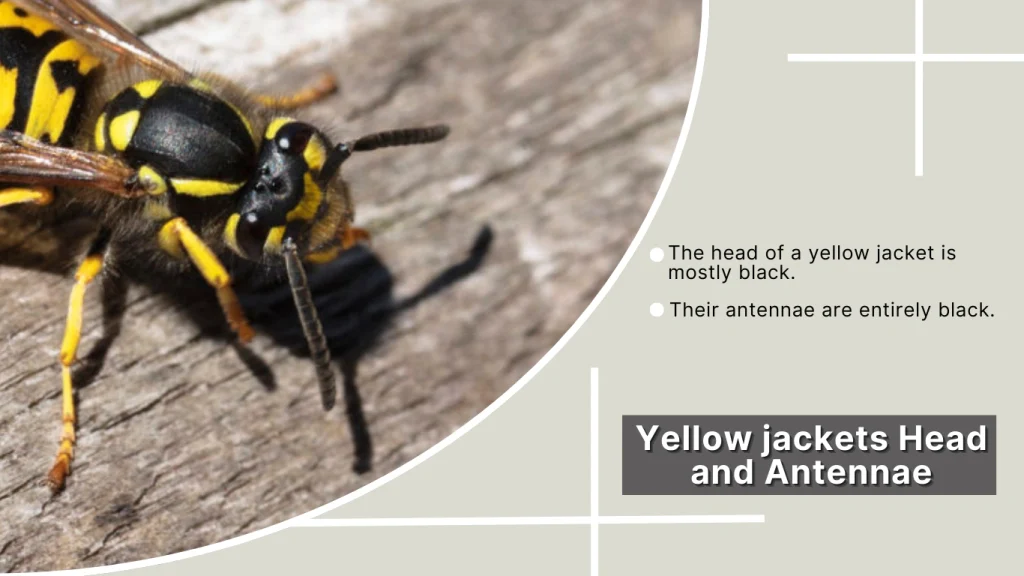
The head of a yellow jacket is mostly black with prominent compound eyes positioned on either side, giving them a wide field of vision. Their antennae are entirely black, which is an important clue for identification—honey bees often have brownish or partly hairy antennae. Yellow jackets also have strong mandibles used for chewing prey, building nests, and defending their colony.
Wings and Flight Behavior
Yellow jackets have two pairs of transparent wings that may appear slightly smoky in color under certain light. When at rest, their wings fold neatly along their bodies. In flight, they move quickly and with a jerky, darting motion, unlike bees, which tend to hover steadily over flowers. This rapid flight style reflects their highly active and defensive nature.
Distinguishing Yellow Jackets from Similar Insects

Because yellow jackets share the same yellow-and-black warning colors as many insects, they are often confused with bees, hornets, or paper wasps. Recognizing the differences is key to accurate identification.
Main Differences Between Yellow Jackets and Similar Insects:
- Yellow Jacket vs. Honey Bee: Yellow jackets have smooth, shiny bodies with no hair, while bees are fuzzy and collect pollen. Bees also die after stinging, but yellow jackets can sting repeatedly.
- Yellow Jacket vs. Hornet: Hornets are larger, bulkier, and often darker with more reddish-brown markings. Yellow jackets are smaller and more brightly striped.
- Yellow Jacket vs. Paper Wasp: Paper wasps are slimmer, with longer legs that dangle while flying. Yellow jackets are stockier and keep their legs tucked close during flight.
Nesting Identification
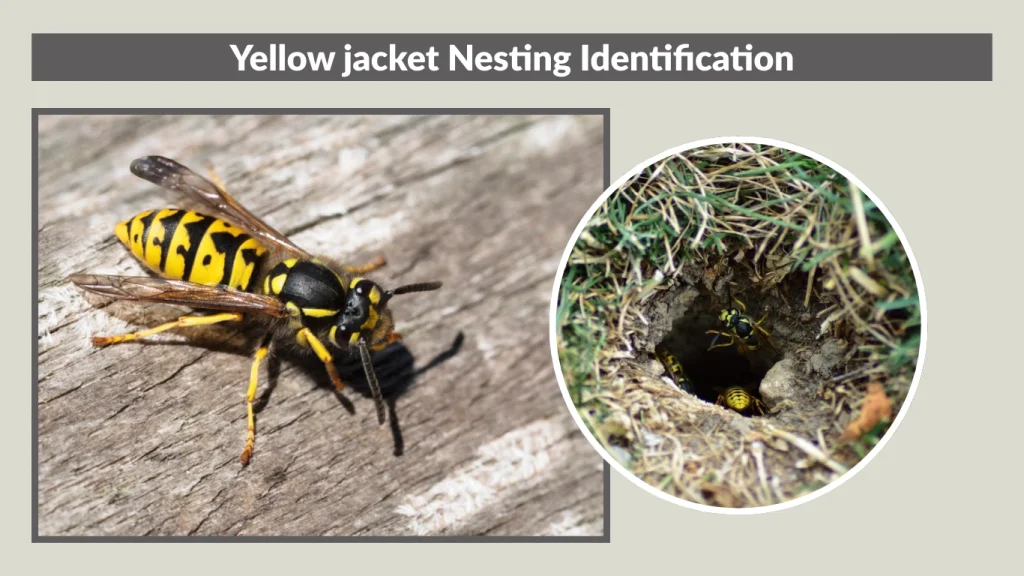
While identification is mostly based on body appearance, nests also provide clues. Yellow jackets build nests from a papery material created by chewing wood fibers mixed with saliva. Unlike paper wasps that create umbrella-shaped nests, yellow jacket nests are enclosed with multiple layers of cells inside.
- They often nest underground in abandoned rodent burrows, but can also be found in wall voids, attics, or shrubs.
- Large colonies can contain thousands of individuals, making nest recognition important for safety.
Seasonal Appearance Changes
Yellow jacket colonies change with the seasons, and this affects how they appear. In spring, large queens emerge from hibernation to start new colonies. Workers are most visible in summer, when food demand peaks. By fall, colonies are at their largest and most aggressive, with new queens and males produced for reproduction. After winter, only the fertilized queens survive to restart the cycle.
Why Identification Matters
Being able to identify yellow jacket wasps is important for both ecological and safety reasons. Unlike bees, which are essential pollinators and relatively docile, yellow jackets are more aggressive and can sting multiple times. Correctly distinguishing them helps people avoid unnecessary harm to beneficial insects and take proper precautions around nests. It also allows pest control professionals to manage infestations safely and effectively.
FAQs
How big are yellow jacket wasps?
Adult yellow jackets typically measure between 10–16 mm, though queens can grow larger, reaching up to 19 mm. Their compact size makes them smaller than hornets but slightly bulkier than many paper wasps.
What color are yellow jacket wasps?
They are bright yellow and black, with bold stripes across the abdomen. Their bodies are smooth and shiny, without the fuzzy hair seen on bees. The exact pattern can vary depending on the species.
How can you tell the difference between a bee and a yellow jacket?
Bees are hairy, round-bodied, and carry pollen, while yellow jackets have sleek, shiny bodies with no hair. Bees sting only once, whereas yellow jackets can sting repeatedly.
Do yellow jackets look different from hornets?
Yes. Hornets are larger, darker, and often have reddish-brown markings. Yellow jackets are smaller, more brightly striped, and more likely to be encountered around human activity.
Can yellow jackets be identified by their nests?
Yes. Their papery nests are often built underground, inside walls, or in sheltered outdoor spaces. They are enclosed with multiple layers and can house thousands of wasps by late summer.
