
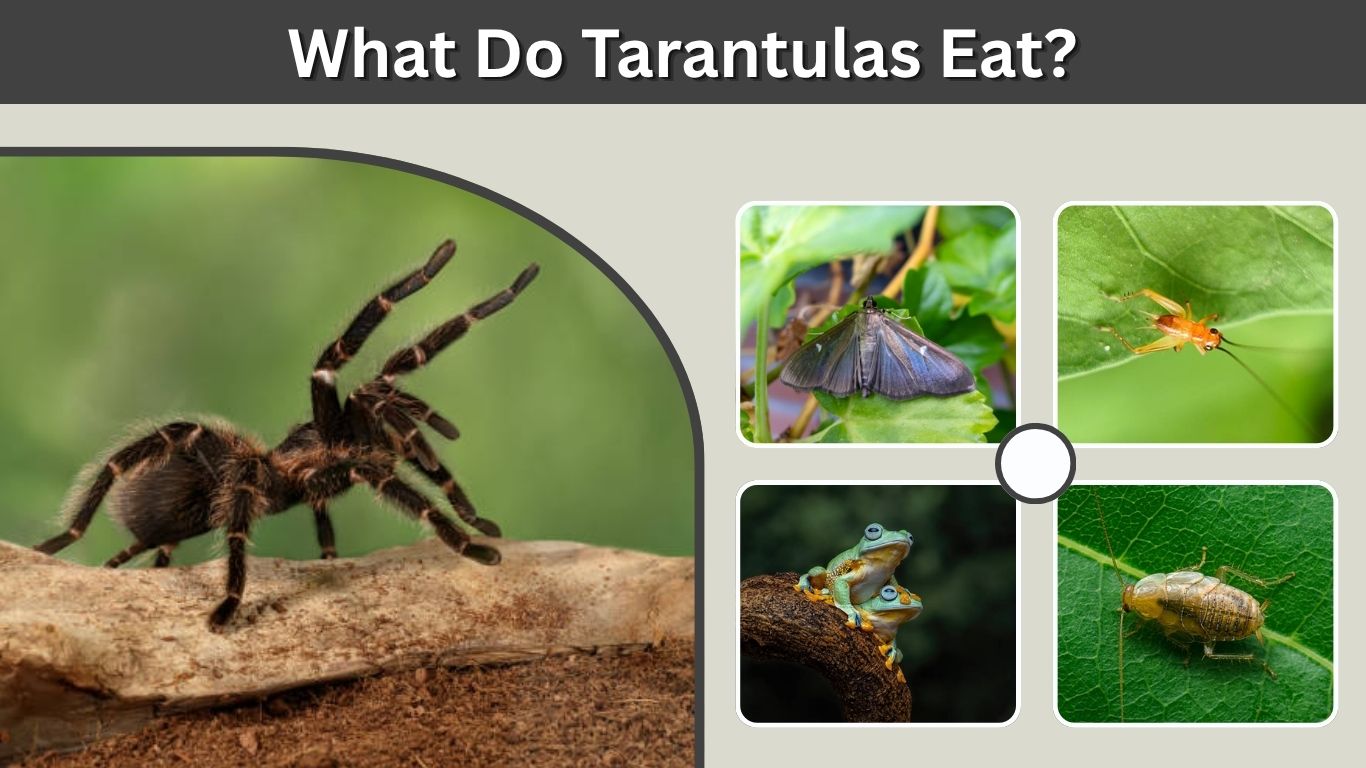
Tarantulas are carnivorous spiders that mainly eat insects and other small animals. In the wild, their diet depends on their size, species, and habitat, while pet tarantulas are usually fed crickets, roaches, worms, and similar feeder insects. Some large tarantulas are capable of eating small vertebrates, but these are not necessary for a healthy captive diet. Understanding what tarantulas eat, how often they eat, and what foods are safest is especially important for anyone keeping one as a pet.
What Do Tarantulas Eat?
Tarantulas are predators, and most of their diet consists of live prey. Rather than chewing food, a tarantula bites its prey, uses venom to subdue it, releases digestive fluids, and then consumes the liquefied tissues.
Common Foods Tarantulas Eat
Typical foods include:
- Crickets
- Cockroaches
- Grasshoppers
- Beetles
- Beetle larvae
- Mealworms
- Superworms
- Dubia roaches
- Small moths
- Caterpillars
- Other spiders
- Small insects and arthropods
Very large tarantulas can occasionally capture small lizards, frogs, rodents, or other vertebrates in nature. However, insects and other invertebrates make up the more practical and common portion of their diet.
What Do Tarantulas Eat in the Wild?
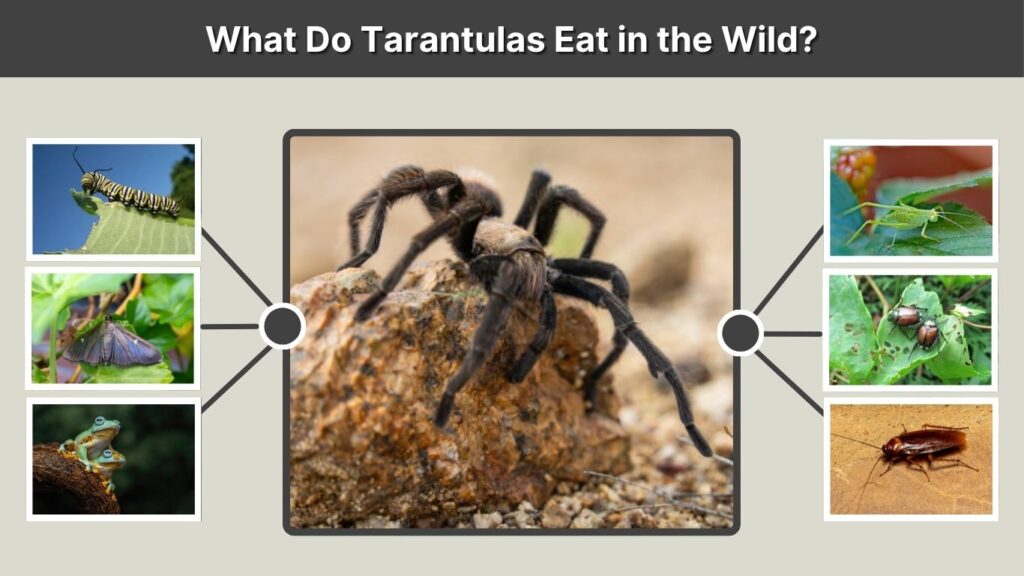
Wild tarantulas are opportunistic hunters. They usually remain near a burrow, webbed retreat, or hiding place and wait for suitable prey to approach.
Ground-dwelling species often detect vibrations from insects moving nearby before rushing forward and grabbing them.
Wild Tarantula Diet
Depending on location and species, wild tarantulas may eat:
- Crickets and grasshoppers
- Beetles
- Cockroaches
- Caterpillars
- Moths
- Other spiders
- Centipedes and similar arthropods
- Small frogs
- Small lizards
They do not need to eat every day. A successful meal can provide enough energy to last for a considerable period.
What Do Pet Tarantulas Eat?
Pet tarantulas generally do best with appropriately sized captive-bred feeder insects. A varied insect diet can provide suitable nutrition without introducing unnecessary risks.
Best Foods for Pet Tarantulas
Some commonly used feeders include:
- Crickets: One of the most widely available tarantula foods.
- Dubia roaches: Nutritious, easy to manage, and unable to climb smooth surfaces well.
- Red runner roaches: Active movement can stimulate a strong feeding response.
- Mealworms: Convenient but best offered as part of a varied diet.
- Superworms: Suitable for larger tarantulas when appropriately sized.
- Other captive-bred insects: Certain larvae and roaches can add dietary variety.
Avoid collecting insects from outdoors for a pet tarantula. Wild insects may have been exposed to pesticides, parasites, or contaminants.
What Do Tarantulas Eat Besides Crickets?
Crickets are convenient, but they are not the only option. Many keepers rotate several feeder insects.
Roaches are one of the most popular alternatives because they are nutritious and relatively easy to keep. Mealworms and superworms can also be used, although worms may burrow into loose substrate if they are not eaten quickly.
Tarantulas generally do not need mice, lizards, or other vertebrates as food. Feeding vertebrate prey can create unnecessary injury and hygiene risks.
What Do Baby Tarantulas Eat?
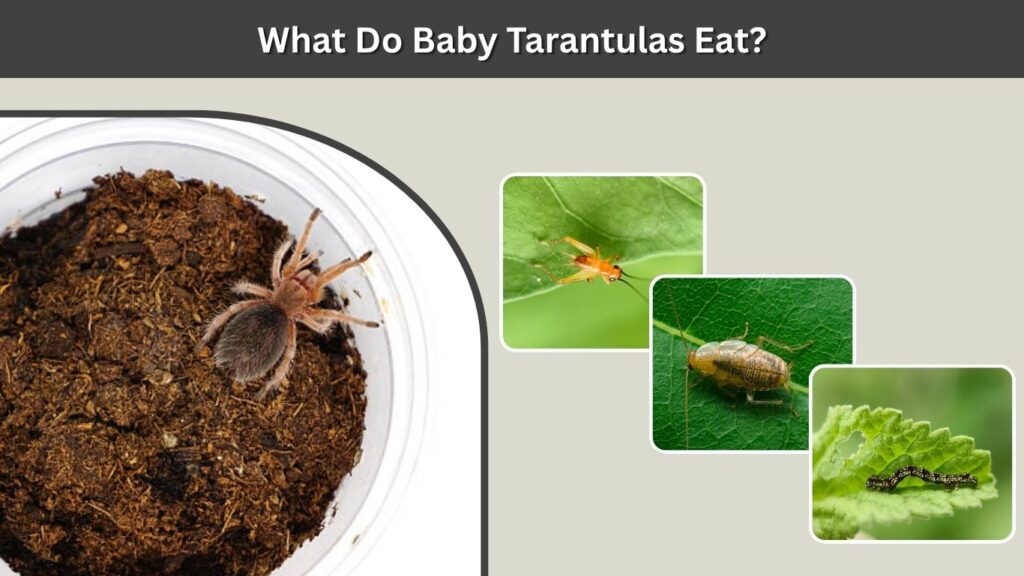
Baby tarantulas, often called slings, need much smaller prey than adults.
Foods for Small Tarantulas
Suitable options can include:
- Pinhead crickets
- Small cricket nymphs
- Tiny roach nymphs
- Small pieces of mealworm
- Small feeder larvae
- Pre-killed appropriately sized insects
Very tiny slings can sometimes scavenge freshly killed prey, making pre-killed feeder pieces useful when live insects are too large.
As the tarantula grows, the size of its prey can gradually increase.
What Do Tarantulas Drink?
Tarantulas drink fresh water.
Most juvenile and adult captive tarantulas should have access to a shallow water dish. The water should be changed regularly so it remains clean.
Tarantulas also receive some moisture from their prey, but this does not usually mean a water dish should be omitted.
Avoid using deep containers that are difficult for the spider to access comfortably.
What Do Desert Tarantulas Eat?
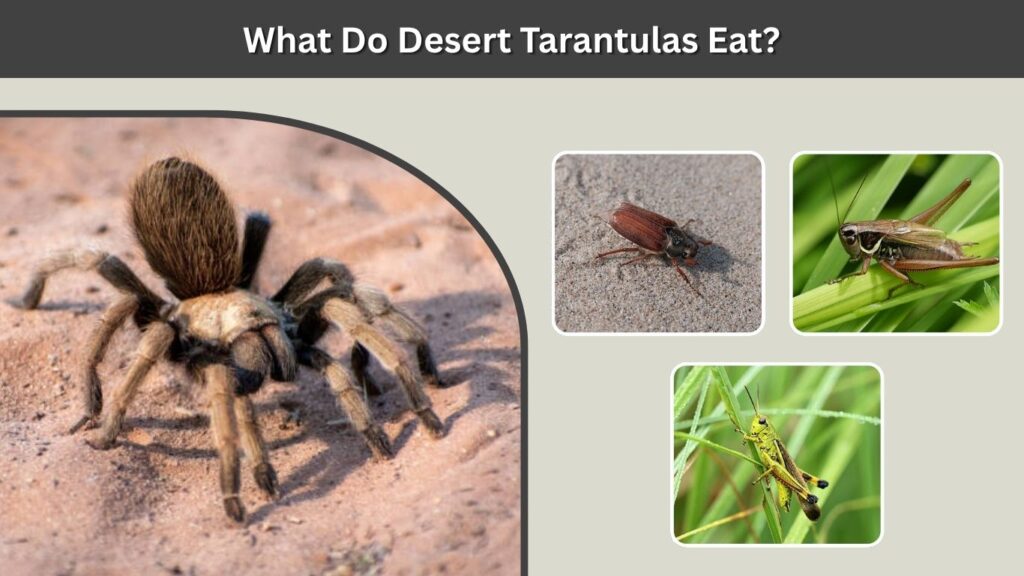
Desert tarantulas, including species found in Arizona, Texas, California, Nevada, New Mexico, and Mexico, mostly eat animals available around their burrows.
Their natural prey may include beetles, crickets, grasshoppers, roaches, and other desert arthropods.
The Arizona blonde tarantula and Texas brown tarantulas, for example, are terrestrial hunters that commonly rely on insects and other small invertebrates rather than actively chasing large animals over long distances.
What Do Rainforest Tarantulas Eat?
Rainforest habitats contain an enormous variety of potential prey.
Arboreal species such as pink toe tarantulas may encounter moths, roaches, crickets, and other insects that move across vegetation or near their retreats.
Large tropical terrestrial species may capture a broader range of animals when opportunities arise.
Despite names such as “bird-eating tarantula,” birds are not necessarily a regular part of these spiders’ diets.
What Do Different Pet Tarantula Species Eat?
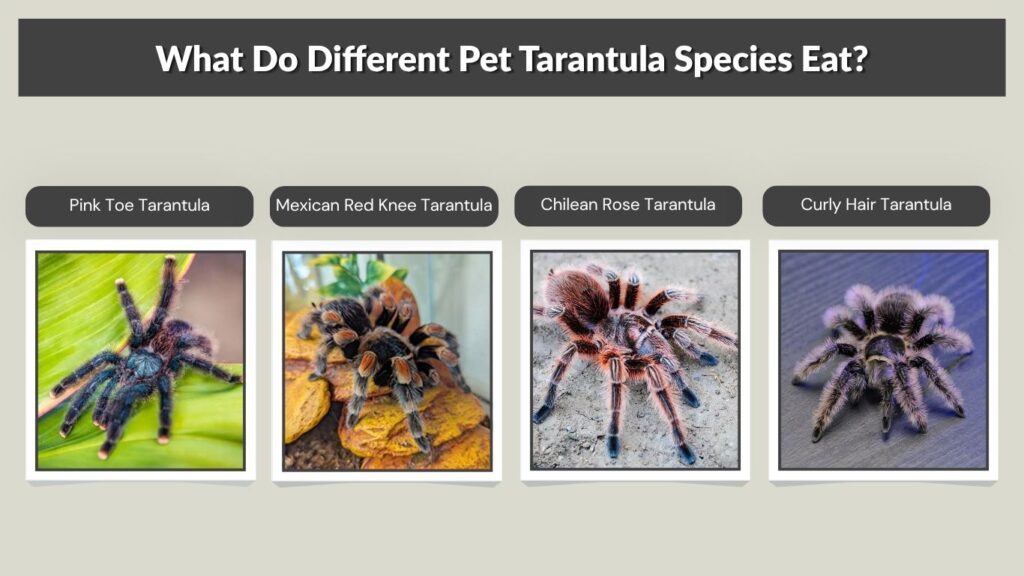
Most commonly kept tarantula species can eat similar captive feeder insects even though their natural habitats differ.
Pink Toe Tarantula
Pink toe tarantulas commonly accept crickets and roaches. Because they are arboreal, feeders that move through the enclosure can trigger their hunting response.
Mexican Red Knee Tarantula
Mexican red knees usually do well on crickets, roaches, mealworms, and similar appropriately sized feeders.
Chilean Rose Tarantula
Chilean rose tarantulas commonly eat crickets and roaches. They may sometimes refuse food for extended periods, particularly around molting.
Curly Hair Tarantula
Curly hair tarantulas are generally enthusiastic feeders that accept crickets, roaches, worms, and similar insects.
Brazilian Black Tarantula
Brazilian black tarantulas can be offered appropriately sized crickets, roaches, and other common feeder insects.
Cobalt Blue Tarantula
Cobalt blue tarantulas primarily eat insects and other invertebrates. In captivity, roaches and crickets are commonly offered.
How Often Do Tarantulas Eat?
There is no single feeding schedule suitable for every tarantula.
Young, actively growing tarantulas generally eat more frequently than large adults. Depending on prey size and the individual spider, juveniles may be offered food several times a week, while many adults are fed roughly once every one to two weeks.
The spider’s abdomen and behavior can help guide feeding decisions.
Tarantula Feeding Frequency
General considerations include:
- Slings usually eat more frequently than adults.
- Juveniles may eat one or several small feeders per week.
- Adults often require less frequent meals.
- Large meals may allow more time between feedings.
- Feeding often decreases before a molt.
Overfeeding should be avoided, especially when the abdomen becomes excessively large.
Why Is My Tarantula Not Eating?
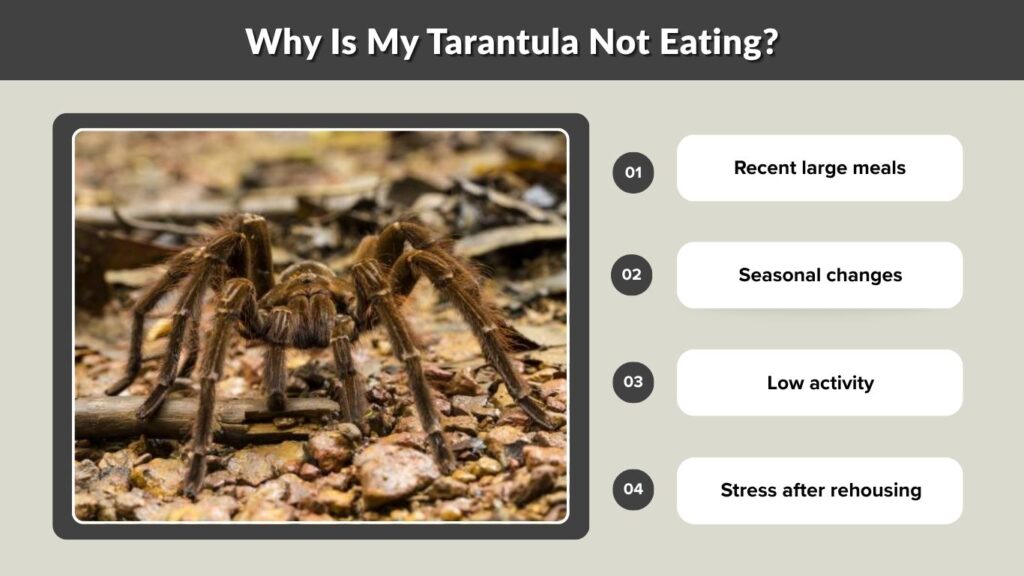
Food refusal is common in tarantulas and does not automatically indicate a problem.
One of the most frequent reasons is premolt. Before shedding its exoskeleton, a tarantula may stop eating for days or even weeks. Some adults can go considerably longer without accepting prey.
Other reasons can include:
- Recent large meals
- Seasonal changes
- Low activity
- Stress after rehousing
- Unsuitable enclosure conditions
- Maturity
- Approaching molt
Remove uneaten live prey, especially when the tarantula appears to be preparing to molt. Crickets and other feeders can disturb or injure a vulnerable freshly molted spider.
Foods You Should Avoid Feeding Tarantulas
Not everything a tarantula is physically capable of capturing is appropriate captive food.
Avoid:
- Wild-caught insects exposed to pesticides
- Fireflies and other potentially toxic insects
- Prey much larger than the tarantula
- Spoiled or decomposing food
- Processed human foods
- Fruit and vegetables
- Meat intended for human consumption
Tarantulas are predators and do not require plant foods.
FAQs
Do Tarantulas Eat Other Spiders?
Yes. Tarantulas can prey on other spiders when the opportunity arises. However, other spiders are not necessary as feeder animals for captive tarantulas.
Do Tarantulas Eat Mice?
Very large tarantulas are capable of killing small rodents, but mice are not a normal requirement for captive tarantulas. Insect feeders are generally safer and easier to manage.
What Insects Do Tarantulas Eat?
Tarantulas commonly eat crickets, cockroaches, grasshoppers, beetles, moths, caterpillars, and various other arthropods.
Can Tarantulas Eat Mealworms?
Yes. Mealworms can be offered to many tarantulas. Remove uneaten worms or use a feeding dish because they may burrow into the substrate.
How Long Can Tarantulas Go Without Food?
Healthy tarantulas can sometimes survive surprisingly long periods without eating, particularly adults and spiders preparing to molt. The exact period depends on species, age, body condition, temperature, and access to water. Regular access to clean water remains important even when a tarantula refuses food.
