
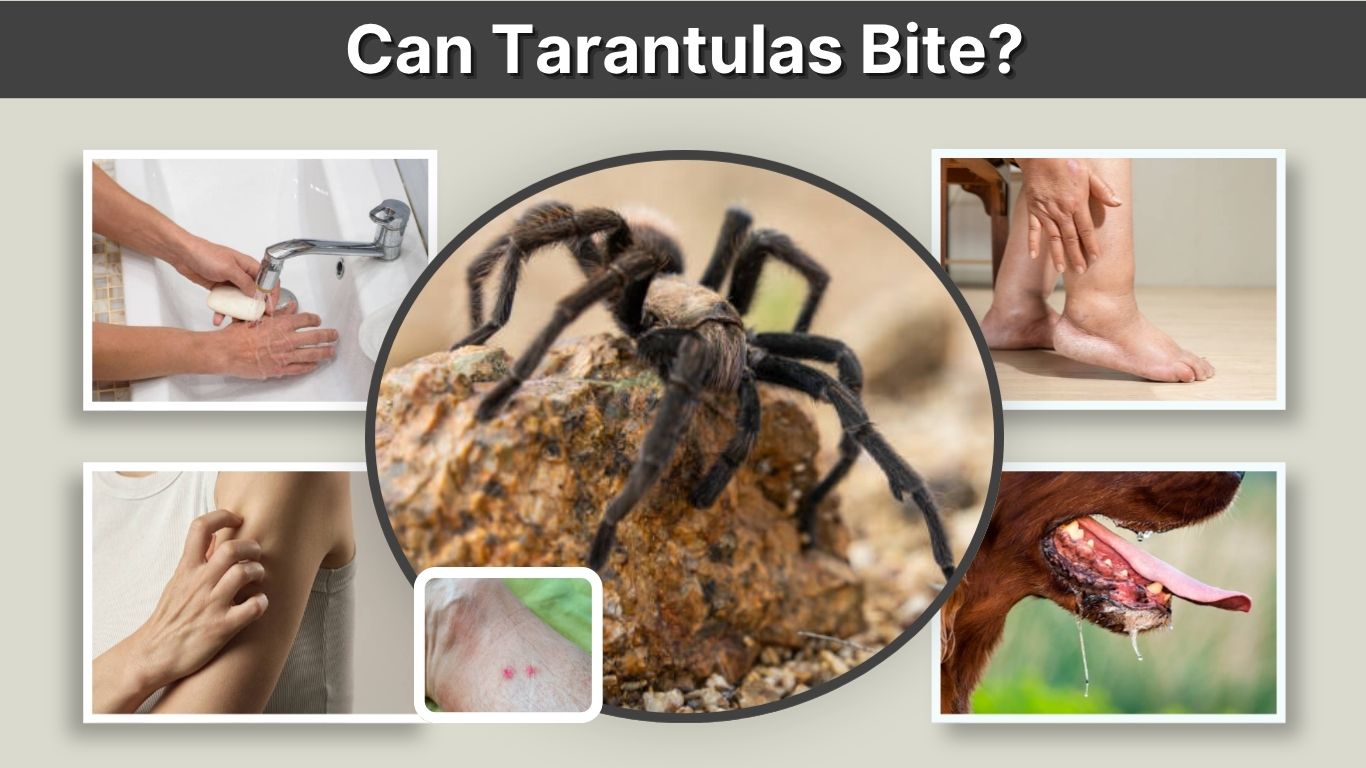
Yes, tarantulas can bite, but bites are relatively uncommon and usually happen when the spider feels threatened, trapped, or handled incorrectly. Tarantulas use their fangs and venom mainly to subdue prey rather than attack people. For most healthy adults, a tarantula bite is painful but not considered life-threatening. However, the severity can vary by species, and some tarantulas can cause stronger reactions than others. Understanding why tarantulas bite, what a bite feels like, and what to do afterward can help you stay safe around these large spiders.
Can Tarantulas Bite Humans?
Yes, tarantulas can bite humans. Their fangs are strong enough to pierce human skin, especially in larger adult species.
However, tarantulas generally prefer to escape rather than bite. A bite is typically a defensive response that occurs when the spider believes it cannot get away.
Why Tarantulas May Bite
Common situations that can trigger a defensive bite include:
- Handling a stressed tarantula
- Grabbing or restraining the spider
- Reaching suddenly into its enclosure
- Accidentally trapping it against skin
- Disturbing its burrow or hiding area
- Mistaking fingers for prey during feeding
- Ignoring defensive body language
Many tarantulas give warning signals before attempting to bite. A threatened spider may raise its front legs, expose its fangs, strike defensively, or retreat into a burrow.
What Does a Tarantula Bite Feel Like?
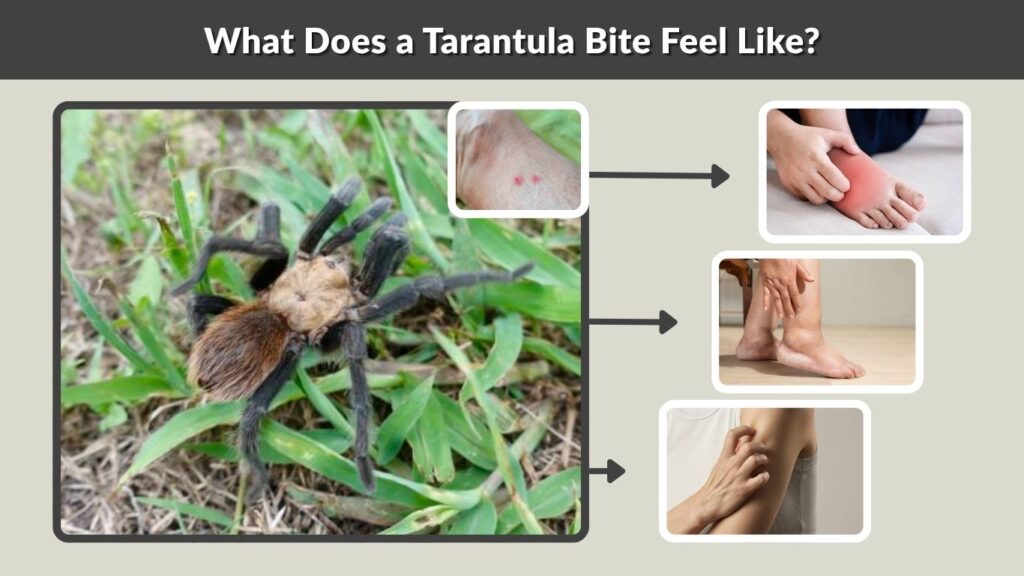
A tarantula bite can feel similar to being punctured by two sharp needles. The immediate pain often comes from the large fangs themselves rather than the venom.
Some people may experience localized discomfort around the bite site.
Possible Tarantula Bite Symptoms
Symptoms can include:
- Immediate sharp pain
- Two small puncture marks
- Redness
- Mild swelling
- Tenderness
- Burning or itching
- Temporary numbness or tingling
Symptoms vary depending on the tarantula species, the amount of venom delivered, the bite location, and the person’s individual reaction.
New World tarantulas from the Americas generally have venom considered relatively mild to humans. Some Old World tarantulas from Africa and Asia can produce more intense pain and other symptoms.
Can a Tarantula Bite Kill You?
A tarantula bite is not generally considered fatal to humans, and confirmed deaths from tarantula bites are extraordinarily rare to nonexistent in typical documented encounters.
Most bites cause localized pain and swelling rather than severe poisoning.
That does not mean every bite should be ignored. Certain species have more medically significant venom, and individual reactions can differ.
People who develop severe symptoms after any spider bite should seek medical attention.
When to Seek Medical Help
Medical attention is especially important if someone experiences:
- Difficulty breathing
- Severe or rapidly increasing swelling
- Intense muscle cramps
- Persistent vomiting
- Severe dizziness
- Widespread rash
- Increasing pain
- Signs of infection
Anyone with a known history of serious allergic reactions should be particularly cautious.
Do Tarantulas Bite or Sting?
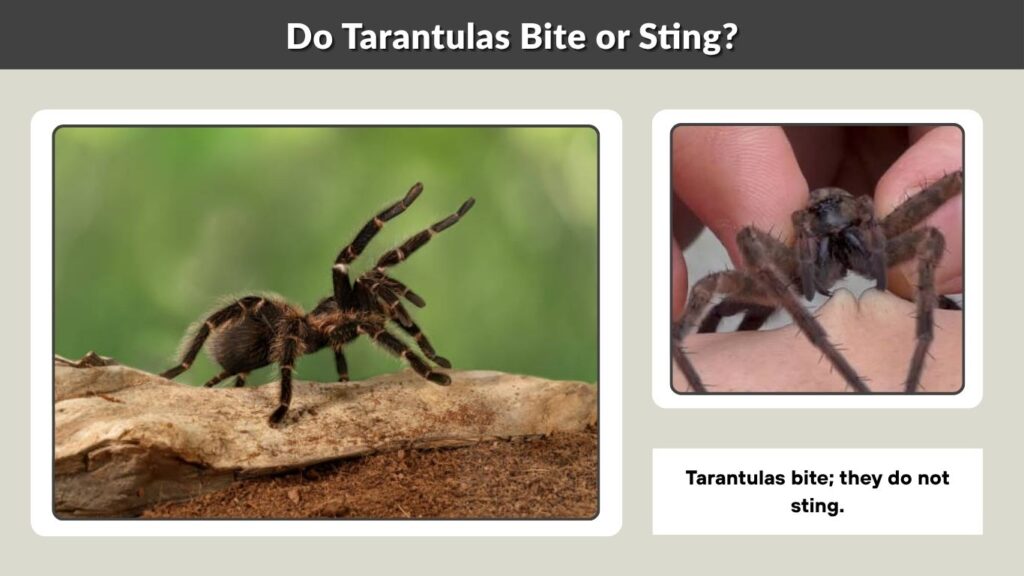
Tarantulas bite; they do not sting.
They have two large fang-like structures called chelicerae. The fangs inject venom into prey or defensive targets.
However, many New World tarantulas have another defense that sometimes causes more irritation than a bite: urticating hairs.
These tiny barbed hairs are found on the abdomen of many species from North and South America. A threatened tarantula may kick the hairs toward a predator.
The hairs can irritate the skin and may cause considerably more serious problems if they enter the eyes or respiratory system.
Can Pet Tarantulas Bite?
Yes, pet tarantulas can bite their owners, although many captive tarantulas rarely attempt to do so when properly cared for.
Even species known for relatively calm behavior should never be assumed incapable of biting.
A tarantula is a wild animal rather than a domesticated pet. Temperament can vary between individuals, and even a normally calm spider may become defensive during certain situations.
Situations When Pet Tarantulas May Become Defensive
A pet tarantula may become more defensive when:
- It is stressed
- Its enclosure is disturbed
- It is hungry
- It is protecting a retreat
- It is recently rehoused
- It is being repeatedly handled
- It mistakes movement for prey
Using feeding tongs and avoiding unnecessary handling greatly reduces the chance of accidental bites.
Can Baby Tarantulas Bite?
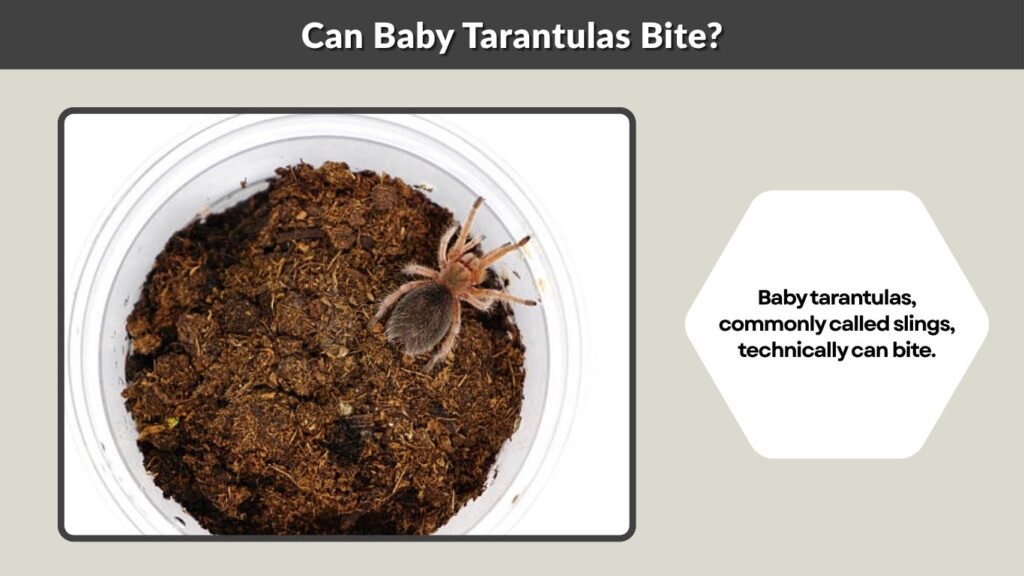
Baby tarantulas, commonly called slings, technically can bite.
However, very small slings have tiny fangs that may have difficulty penetrating human skin. Their venom quantity is also much smaller than that of an adult.
As they grow, their fangs become larger and more capable of penetrating skin.
Regardless of size, tarantulas should be treated gently and should not be handled unnecessarily.
Can Tarantulas Bite Through Human Skin?
Yes. Medium and large tarantulas have fangs capable of puncturing human skin.
Large species may have fangs approaching or exceeding a centimeter in length, allowing them to deliver a noticeable mechanical injury even if little venom is injected.
Sometimes tarantulas perform what is called a dry bite, meaning they puncture the skin without injecting much or any venom.
The spider may conserve venom because venom is valuable for catching prey.
Can Tarantulas Bite Through Gloves?
Whether a tarantula can bite through gloves depends on the glove material and thickness.
Thin disposable gloves may provide little protection against the fangs of a large tarantula. Thick protective gloves may reduce the chance of penetration, but wearing gloves does not make unnecessary handling safe.
The safest approach is generally to avoid direct contact rather than relying on gloves.
For enclosure maintenance, keepers commonly use long tools, catch cups, or soft brushes to guide the spider when necessary.
Can Tarantulas Bite Dogs?
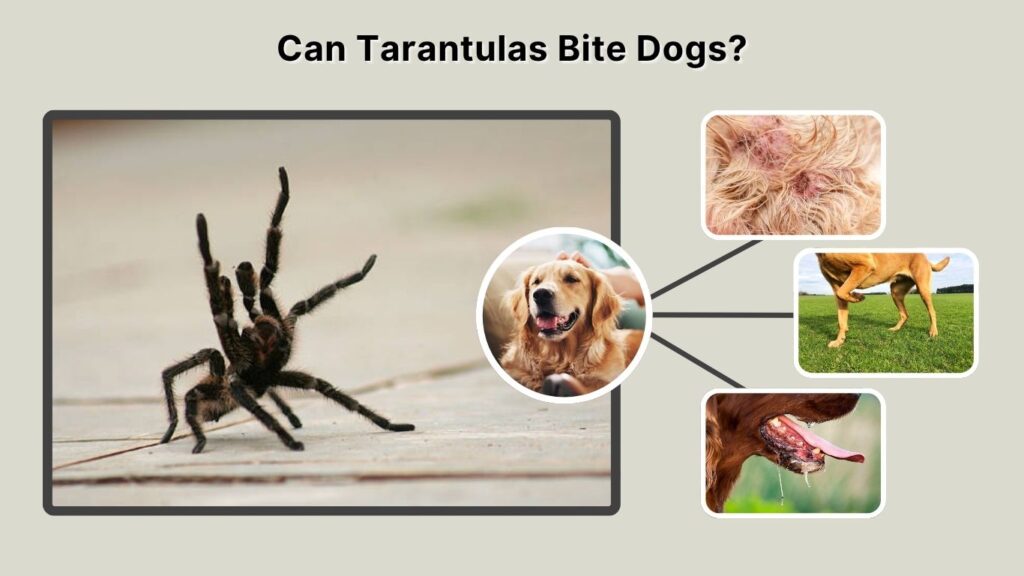
Yes. A tarantula can bite a dog if the dog approaches, paws at, or tries to bite the spider.
Dogs may also be exposed to urticating hairs from New World tarantulas, especially around the nose, mouth, or eyes.
Signs to Watch for in Dogs
Possible signs after an encounter include:
- Pawing at the face
- Facial swelling
- Drooling
- Whining or signs of pain
- Redness
- Limping
- Eye irritation
- Unusual weakness or behavior
If a dog is bitten by a tarantula or develops significant symptoms after interacting with one, contacting a veterinarian is the safest option.
Are Rose Hair Tarantulas Likely to Bite?
Chilean rose hair tarantulas are often described as relatively calm compared with many other species, but they are still capable of biting.
Individual temperament varies considerably. One rose hair tarantula may tolerate disturbance while another becomes defensive quickly.
They can also use urticating hairs as a defense.
Because temperament can change, especially during feeding, molting, or environmental stress, even commonly kept “docile” species should be treated with respect.
What Should You Do If a Tarantula Bites You?
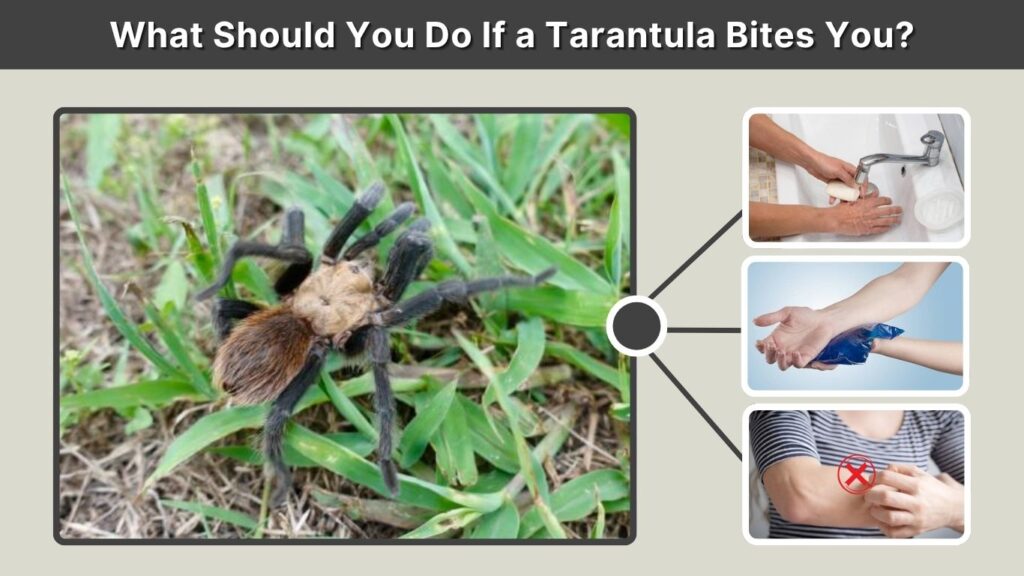
Most uncomplicated tarantula bites can be managed initially like other minor puncture wounds.
Basic First-Aid Steps
- Move away from the spider safely.
- Wash the bite gently with soap and water.
- Apply a cold pack wrapped in cloth to help with swelling.
- Keep the wound clean.
- Avoid scratching or irritating the area.
- Monitor symptoms for several hours.
Do not attempt to cut the wound or suck out venom.
If symptoms become severe, unusual, or progressively worse, seek medical care.
How to Avoid a Tarantula Bite
The easiest way to prevent tarantula bites is to minimize direct handling.
Tarantulas do not require physical affection or handling to remain healthy.
Tarantula Safety Tips
- Avoid picking up tarantulas unnecessarily.
- Use feeding tongs for prey.
- Keep fingers away during feeding.
- Give the spider space when it displays a threat posture.
- Avoid disturbing a tarantula preparing to molt.
- Use a catch cup during enclosure transfers.
- Never tease or provoke the spider.
Avoiding handling also protects the tarantula. A dropped tarantula can suffer a fatal abdominal rupture even from a relatively short fall.
FAQs
Can Tarantulas Bite People?
Yes. Tarantulas can bite people when threatened or accidentally provoked. They normally prefer escaping over attacking.
Are Tarantula Bites Poisonous?
Tarantulas are venomous rather than poisonous because they inject venom through their fangs. For most species commonly kept as pets, the venom is not considered life-threatening to healthy humans.
Does a Tarantula Bite Hurt?
Yes. The large fangs can cause immediate sharp pain, and venom may produce additional burning, swelling, or discomfort.
Can You Hold a Tarantula Without Getting Bitten?
Some tarantulas may tolerate brief handling, but no tarantula can be guaranteed not to bite. Minimizing handling is safer for both the spider and the owner.
Are Pet Tarantulas Dangerous?
Most commonly kept pet tarantulas pose a relatively low risk when treated appropriately. Bites are uncommon, but defensive bites and irritating urticating hairs are still possible.
